DD
MM
YYYY

PAGES

DD
MM
YYYY

spot_img

PAGES

Home Blog Page 261

Top Crypto to Buy Now: BlockDAG, Hyperliquid, XRP, and Tron Lead the Race for 2025 Gains

0

Crypto markets have seen another wild week, but some projects continue to show real progress backed by strong performance and active development. Whether through new architecture, solid fundamentals, or expanding real-world adoption, market watchers are again focusing on the top crypto to buy now. Among the most discussed names are BlockDAG, Hyperliquid, XRP, and Tron, all showing promising signals for near-term growth.

What makes these stand out isn’t hype, it’s real delivery. Each has proven traction through testnets, technical upgrades, or billion-dollar ecosystems. Here’s why these projects are leading attention in the current market cycle.

1. BlockDAG: The Presale Giant Powering Toward Launch

BlockDAG has emerged as the biggest presale phenomenon of 2025, having raised over $430 million with more than 315,000 holders worldwide. Its unique hybrid framework combines Bitcoin-level Proof-of-Work security with a Directed Acyclic Graph (DAG) structure that can handle 2,000 to 15,000 transactions per second. This design makes it fast, secure, and scalable, setting BlockDAG apart as the top crypto to buy now for those watching the evolution of blockchain infrastructure.

BlockDAG will host an exclusive AMA on Binance this Friday, October 24, at 3 PM UTC, featuring roadmap updates and insights ahead of Keynote 4 and Genesis Day. With over $430M raised, BDAG remains priced at $0.0015 in Batch 31. Users can apply code “TGE” for extra rewards before the Dashboard V4 upgrade and upcoming price rise.

The project’s live “Awakening Testnet,” which supports the Ethereum Virtual Machine, allows seamless dApp development and testing. Currently, Batch 31 coins are available at $0.0015, ahead of the confirmed mainnet launch price of $0.05. With a growing community of over 27 billion coins sold and partnerships like the multi-year collaboration with the BWT Alpine Formula 1® Team, BlockDAG (BDAG) is already positioned for a high-impact debut.

Led by CEO Antony Turner and advised by computing expert Dr. Maurice Herlihy, BlockDAG pairs transparency with technical depth. Backed by security audits from CertiK and Halborn, it’s one of the few projects combining proven delivery with verifiable credibility. For early participants, this balance of innovation, security, and a clear growth path cements BDAG as a front-runner among the top crypto to buy now.

2. Hyperliquid: Redefining Decentralized Trading

Hyperliquid’s HIP-3 upgrade has reshaped how decentralized perpetual trading operates. For the first time, anyone who stakes 500,000 HYPE (around $20 million) can create new perpetual markets without centralized oversight.

This new setup empowers creators and traders while maintaining control through validator slashing and strict open-interest limits. The network’s framework blends freedom with structure, a rare mix in DeFi today.

Hyperliquid has also executed large-scale buybacks worth around $644 million this year, removing more than 21 million HYPE from circulation. That’s nearly 2% of the total supply burned, reinforcing scarcity and long-term stability.

Currently, HYPE trades near $40.10 with strong daily volume and growing market participation. With this mix of advanced design, governance, and consistent activity, Hyperliquid stands as a strong contender among the top cryptos to buy now for those exploring liquidity-focused opportunities in decentralized finance.

3. XRP: Awaiting Its Defining ETF Decision

XRP has seen pressure recently, dropping from $2.49 to about $2.41, as one of the ten pending XRP ETF applications nears its SEC review deadline this week. Despite the decline, analysts believe the broader setup remains healthy, suggesting the drop stems more from liquidations than weakness. Should ETF approval arrive, XRP could attract significant institutional engagement.

The asset’s daily volume remains massive at $5.56 billion, though it’s down 17% from last week, and open interest has reduced to $4.2 billion as leveraged positions unwind. Market watchers expect a rebound once large holders ease selling pressure. That possible reversal keeps XRP in focus among the top crypto to buy now, especially for those anticipating regulatory clarity and mainstream integration through ETFs.

4. Tron: The Steady Force in Stablecoin Activity

TRON (TRX) continues to dominate in transaction count and stablecoin transfers. Currently priced near $0.322 with daily volume above $770 million, TRX maintains solid support around $0.32. Analysts predict a move toward $0.35 if this zone continues to hold, showing signs of steady accumulation by holders.

Beyond price, TRON remains a preferred platform for USDT movement, handling billions in transactions every day. Its low fees and high-speed network make it appealing for fintech use cases. A recent study titled Decoding TRON highlighted its vast on-chain usage and leadership in stablecoin volume, proving it’s built on active utility, not just speculation.

With continuous growth, a mature DeFi landscape, and strong technical traction, TRON earns its place among the top cryptos to buy now for those who favor stability and consistent blockchain use.

Final Thoughts

From progress to adoption, each of these projects brings a unique strength to the market. BlockDAG leads with breakthrough technology and a record presale crossing $430 million. Hyperliquid is changing decentralized finance with its permissionless perpetuals.

XRP stands near a pivotal regulatory milestone with ETFs on the horizon, while TRON continues to anchor stablecoin activity across the blockchain world. Together, they represent the diversity and potential of shaping the crypto landscape today.

Whether drawn to infrastructure, DeFi, payment systems, or stablecoin ecosystems, these four are the top cryptos to buy now, not because of hype, but because of progress, proof, and momentum.


The Future of PR: Trends to Watch in 2025

0

Public relations continues to transform as it responds to technological progress, changing consumer behaviors, and worldwide patterns. The upcoming year, 2025, will bring multiple significant advancements in PR, transforming business communication with publics, reputation management, and audience engagement. These advancements will include two major PR developments: artificial intelligence (AI) and data-based approaches to public relations.

1. AI-Powered PR Tools

Artificial intelligence (AI) is set to revolutionize public relations work. AI systems process extensive data collections to generate predictions and develop PR plans that were previously unattainable. These tools currently help organizations monitor media coverage, track brand sentiment, and generate automated press releases and social media content.

AI technology will drive PR professionals to use automated systems for handling routine work, discovering new business prospects, and enhancing operational performance during 2025. AI platforms will enable PR teams to evaluate media effects, measure campaign success, and generate story ideas based on trending subjects and audience preferences. A public relations firm that implements AI tools will achieve better client service delivery through data-driven insights at large scales.

2. Data-Driven PR

The PR industry will experience a data analytics revolution, helping professionals make better decisions and prove their work’s value to clients and management. In 2025, PR campaigns will use data to achieve precise audience targeting, monitor audience interactions, and optimize their messaging content.

Implementing data-based decision-making in PR planning will allow organizations to deliver customized messages that reach specific audience segments at optimal times. The success evaluation of press releases and social media brand sentiment analysis will become more important for PR strategy development.

3. Personalization and Audience Segmentation

The practice of sending general messages to large audiences has become obsolete. The current PR environment demands targeted approaches that focus on individualized communication methods. PR specialists will use various audience characteristics to develop customized communication that connects with each segment effectively.

Personalization will evolve into a fundamental requirement for businesses to succeed in 2025. Organizations will need to develop individualized connections with their audience through customized experiences that extend past basic name recognition. This includes creating individualized email campaigns, developing specific social media content, and designing press materials that address particular audience segments to build trust and customer loyalty.

4. Voice Search and PR Optimization

The growing use of voice search technology through Amazon Alexa, Google Home, and Siri requires PR professionals to develop new strategies for information retrieval. Optimizing content for voice search will become essential for PR professionals aiming to boost their search engine rankings in 2025.

The way people search using voice requires PR professionals to create content that uses natural speech patterns and answers typical questions users ask. The optimization process for voice search requires PR professionals to create content that uses natural language and answers frequently asked questions while ensuring their brand content appears in voice-powered search results.

5. PR and Social Media Integration

Social media serves as a fundamental PR channel, but its connection with PR strategies will achieve complete unity by 2025. Social media platforms now use advanced algorithms to enable brands to connect with their audiences through new features such as live streaming, stories, and ephemeral content.

PR professionals will need to master new social media tools that they must incorporate into their strategies to achieve better audience interaction. PR teams must monitor social media trends, handle influencer campaigns, create real-time content, and respond to social media emergencies. A public relations firm will help businesses optimize their social media presence through strategic guidance.

6. Influencer PR 2.0

The current impact of influencer marketing on PR will expand into new dimensions by 2025. The integration of influencers into brand strategies requires PR professionals to discover new methods for working with influencers who connect with their target audience through authentic relationships.

The future of influencer PR will shift away from using famous endorsements and one-time promotional activities. It will focus on building enduring relationships with small influencers who maintain dedicated fan bases within specific interest groups. This new approach will create authentic relationships that produce superior results for building audience trust and credibility.

7. Corporate Social Responsibility (CSR) and PR

The growing consumer demand for value-based brands will make Corporate Social Responsibility (CSR) an essential element of PR strategies in the coming years. Brands will need to establish their positions on vital social, environmental, and political matters through their PR initiatives by 2025.

The development and promotion of CSR initiatives will depend heavily on PR professionals. These professionals will lead efforts to demonstrate brand dedication to environmental stewardship, social equity, and other important causes. The need for brand transparency will peak as consumers demand proof of corporate responsibility from their preferred brands. PR professionals will lead the effort to present CSR initiatives through authentic and audience-friendly communication methods.

8. Visual and Video Content in PR

Visual content remains vital for PR, but video content will shift toward video-based storytelling by 2025. The growing popularity of YouTube, TikTok, and Instagram requires PR specialists to develop visual content that grabs audience attention.

Video content will establish itself as a fundamental element in all PR marketing initiatives. The development of video content expertise will become essential for PR professionals, who will need to create media outreach materials, social media content, and brand promotion videos by 2025.

9. The Continued Rise of Employee Advocacy

A brand’s most valuable resource for public relations is its employee base. The practice of employee advocacy will become an essential element of PR strategies during the upcoming years of 2025. The spread of positive PR depends on employees who distribute company news, engage in content, and serve as social media representatives for their organization.

Organizations will dedicate resources to teach their staff members how to promote their company through their personal networks, which will enhance brand reputation and trust. This trend will have significant effects on recruitment and talent acquisition, as job seekers now base their decisions on companies that demonstrate a positive public image. PR firms will lead businesses in creating employee advocacy programs that generate authentic brand promotion through effective methods.

Conclusion

The future of PR holds exciting prospects, offering numerous possibilities. The advancement of technology will create new analytical tools, personalized content methods, and influencer collaboration approaches for PR professionals to connect with their target audiences. The PR industry of 2025 will present an interactive and data-driven environment that surpasses all previous levels of complexity.

PR professionals who anticipate these developments will maintain their position as industry leaders while achieving successful outcomes for their brands. The success of public relations firms depends on their ability to adjust to new trends while maintaining a focus on building authentic relationships with audiences through engagement. The organizations that adopt these new developments will establish themselves as leaders in the upcoming PR industry.

Spartans, BetRivers, and Golden Nugget Compared: Which Casino Offers the Best ROI and Player Rewards in 2025?

0

The top online casino competition is intensifying as BetRivers, Golden Nugget, and Spartans roll out their biggest plays. BetRivers is capturing attention in Pennsylvania with a $250 match bonus and a rare 1× wagering requirement, signaling low risk and high user retention potential. Golden Nugget expands into Ontario with over 2,000 games and a licensed framework that strengthens investor confidence. Both moves prove these brands understand how to scale inside regulated markets.

But the standout is Spartans, which offers a 300% sports welcome bonus, instant cashouts, and the disruptive 10% CASHRAKE™ feature. By combining aggressive rewards with a trusted license, Spartans gives players and investors a path to higher ROI and long-term value that neither BetRivers nor Golden Nugget can match.

BetRivers’ $250 Match Bonus in PA Spells Safe Crypto Betting Potential for Investors

BetRivers is offering new users in Pennsylvania a chance to double their first deposit up to $250 using the code “PACASINO250.” The bonus comes with a 1× wagering requirement, considered exceptionally low, meaning players must only bet through the bonus amount one time before making a withdrawal. Since BetRivers is regulated by the Pennsylvania Gaming Control Board and requires users to verify identity (KYC), this bonus sits within a legal, transparent framework. For investors interested in crypto?adjacent gaming platforms, this is a signal worth watching. Low rollover bonuses and regulated operations often correlate with higher trust and retention among users, both of which can lead to stronger revenue growth. If the match bonus drives user acquisition and maintains daily active usage, it could support healthier tokenomics or platform valuations.

Golden Nugget Launches in Ontario, Boosting Crypto Gaming Growth

Golden Nugget, owned by DraftKings, has officially launched its online and mobile casino in Ontario after securing a provincial license. The platform offers more than 2,000 slots plus classic table games like blackjack, roulette, and craps. It joins Ontario as the fifth regulated market for Golden Nugget, following Michigan, New Jersey, Pennsylvania, and West Virginia. Golden Nugget’s scale of games and app availability across iOS and Android improve user reach; moreover, regulation reduces legal risk and supports trust among depositors. With over 50 operators now live in the province and revenue topping CA$2.4 billion in FY 2024-25, the market is large, competitive, and rewarding. Golden Nugget’s launch may not just earn stable users, it could strengthen its valuation trajectory.

Spartans Sports Edge: 300% Welcome Bonus Supercharges Every Bet

Spartans is raising the stakes for sports bettors with its powerful 300% welcome bonus on sports bets, giving new users one of the strongest starting offers in the industry. A minimum deposit of just $5 unlocks the deal, instantly tripling the bankroll and creating unmatched flexibility for football, cricket, basketball, UFC, and other major markets. This means a $20 deposit immediately becomes $60 in playable credit, allowing players to spread their action across multiple single bets or high-reward combos without worrying about early losses.

Unlike legacy sportsbooks where small deposits limit early strategies, Spartans rewards newcomers with immediate firepower to chase bigger wins. Bettors can combine the 300% sports bonus with Spartans’ instant cashouts, 10% CASHRAKE™ system, and extensive in-play betting options for a fully loaded experience. With coverage spanning global leagues, best odds in early markets, and the same trusted licensing that governs its casino platform, Spartans provides both the excitement of crypto betting and the safety of a regulated sportsbook.For sports fans looking to grow their bankroll fast, Spartans transforms every first deposit into an opportunity for larger profits. This is not just a bonus; it is a head start on every match, every parlay, and every winning streak.

Spartans Secures the Top Online Casino Edge

Crypto investors seeking sustainable growth should consider factors such as regulation, user incentives, and scalability. BetRivers remains attractive with its $250 match bonus and minimal rollover, but its growth depends on regional promotions. Golden Nugget gains ground in Ontario with a massive game library and cross-platform availability, yet its expansion carries heavy competition in a crowded market.

Spartans, however, blends aggressive bonuses and breakthrough features into a single platform built for scale. With a 300% sports welcome bonus, 10% CASHRAKE™, instant FIAT and crypto payouts, and thousands of betting markets, Spartans delivers stronger ROI potential than any rival.

For players and investors exploring the top online casino landscape, Spartans is not only the safest bet but the smartest move for long-term growth and high-value engagement.


Find Out More About Spartans:

Website: https://spartans.com/

Instagram: https://www.instagram.com/spartans/

Twitter/X: https://x.com/SpartansBet

YouTube: https://www.youtube.com/@SpartansBet

Oil Prices Soar as U.S. Sanctions Hit Russia’s Energy Giants Rosneft and Lukoil, Forcing China and India to Reassess Imports

0

Oil prices climbed sharply on Thursday, marking their biggest daily gains in four months, after Washington imposed sweeping sanctions on Russian oil majors Rosneft and Lukoil, tightening pressure on Moscow over its war in Ukraine and jolting the global energy market.

Brent crude rose $3.40, or 5.4%, to settle at $65.99 a barrel, while U.S. West Texas Intermediate (WTI) crude advanced $3.29, or 5.6%, to $61.79. The two benchmarks hit their highest levels since early October, underscoring how the U.S. measures against two of Russia’s largest energy companies are reshaping global supply expectations.

“The announcement of sanctions by the U.S. on Rosneft and Lukoil is a major escalation in the targeting of Russia’s energy sector and could be a big enough shock to flip the global oil market into a deficit next year,” said David Oxley, chief climate and commodities economist at Capital Economics.

Russia was the world’s second-largest crude producer in 2024, behind only the United States. The sanctions mark the most aggressive step yet by Washington to restrict Moscow’s oil revenues, as previous measures had left Russian exports largely intact through alternative shipping and payment routes.

The immediate market reaction was swift. U.S. diesel futures surged nearly 7%, driving refining margins to their highest levels since February 2024. Analysts said the move reflects tightening supply fears as refiners in Asia begin reassessing their reliance on Russian barrels.

Ole Hansen, head of commodity strategy at Saxo Bank, explained that “refineries in China and India, major buyers of Russian oil, will need to seek alternative suppliers to avoid exclusion from the Western banking system.”

According to multiple trading sources cited by Reuters, Chinese state oil giants have already suspended seaborne purchases from Rosneft and Lukoil, signaling a potential redirection of Asian crude flows that could further tighten global markets.

Kuwait’s oil minister said the Organization of the Petroleum Exporting Countries (OPEC) would be ready to compensate for any supply shortfall by rolling back existing output cuts. Yet Moscow’s response suggested defiance rather than retreat.

“This is, of course, an attempt to put pressure on Russia,” President Vladimir Putin said. “But no self-respecting country and no self-respecting people ever decides anything under pressure.”

The U.S. government, meanwhile, warned that more sanctions could follow if Moscow refuses to agree to an immediate ceasefire in Ukraine.

Pavel Molchanov, an investment strategy analyst at Raymond James, said the latest sanctions may raise logistical costs for Russia but were unlikely to completely derail its exports.

“The various U.S. and EU sanctions thus far have had essentially no effect on Russia’s ability to export oil, so we doubt that this latest round will be game-changing,” he said. “That said, the Kremlin may need to use more intricate methods to ship its oil covertly, thereby increasing costs.”

Molchanov noted that Russian crude accounts for roughly 7% of global oil supply, making the sanctions a potentially destabilizing factor for a market already vulnerable to geopolitical risks.

The sanctions come amid a broader Western campaign to limit Russia’s energy income. Britain recently sanctioned Rosneft and Lukoil, while the European Union this week approved its 19th package of Russia-related penalties, including a ban on imports of Russian liquefied natural gas (LNG). The EU also added two Chinese refiners—together capable of processing 600,000 barrels per day—and Chinaoil Hong Kong, a PetroChina trading arm, to its sanctions list.

UBS analyst Giovanni Staunovo said the full impact on global oil markets will depend largely on how India responds.

“If Indian refiners comply fully, the short-term disruption could be significant. But if Russia quickly finds new buyers, the market impact may ease,” he said.

India has been one of the biggest beneficiaries of discounted Russian oil since 2022, when Western buyers shunned Moscow’s exports after the invasion of Ukraine. But industry insiders say the new round of U.S. sanctions is already prompting a shift.

Sources told Reuters that privately owned Reliance Industries, India’s top buyer of Russian crude, plans to scale down or completely halt such imports to remain in compliance with U.S. restrictions. The move, analysts say, could also help New Delhi advance negotiations on trade and energy deals with Washington.

For now, the sanctions have injected new uncertainty into an already volatile market. If both Chinese and Indian refiners significantly cut Russian imports, analysts warn that the resulting supply gap could push Brent prices back toward the $70 mark in the coming weeks—unless OPEC steps in with additional output.

Nokia Shares Surge 10.6%, Highest in Three Years, as AI and Cloud Demand Power Strong Third-Quarter Results

0

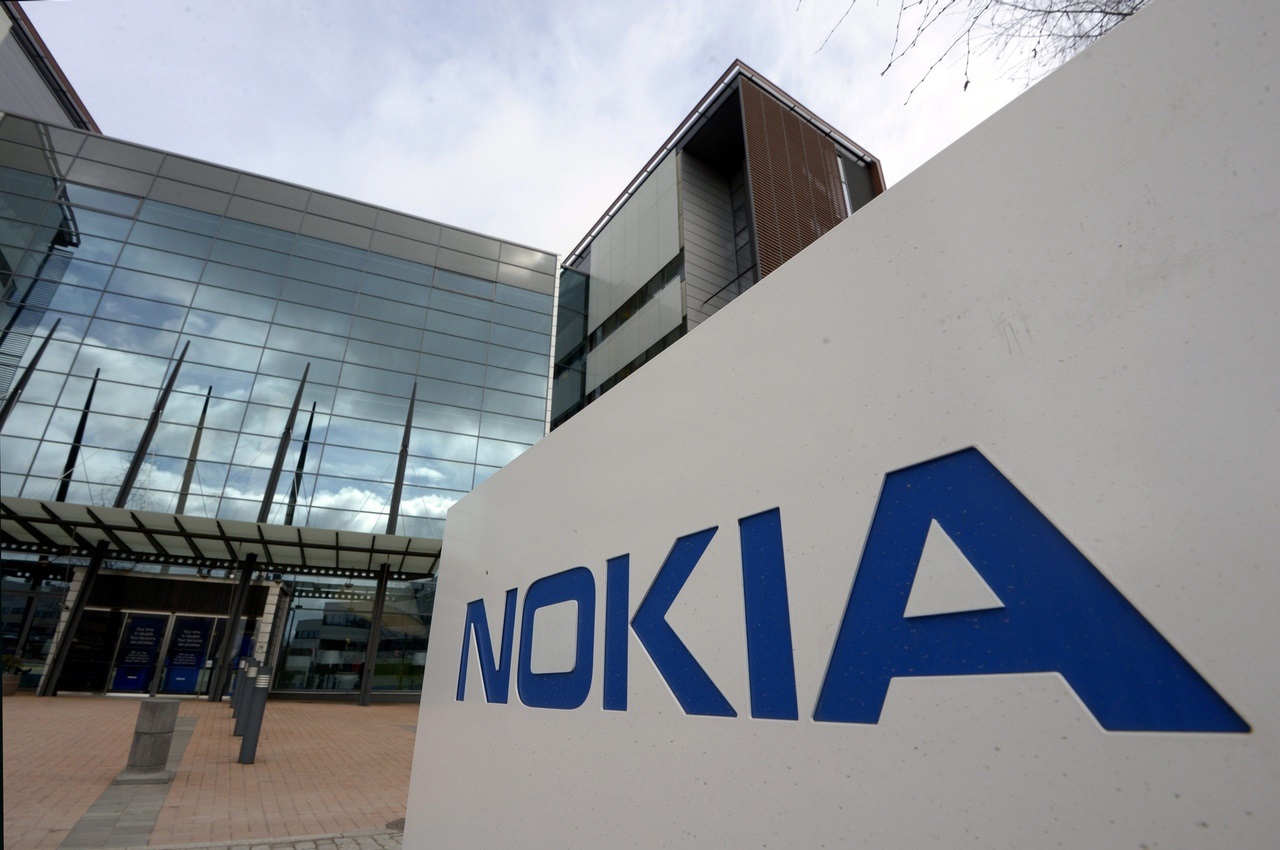
Nokia reported stronger-than-expected third-quarter earnings on Thursday, boosted by surging demand for optical networks and AI-driven cloud services following its acquisition of U.S. optical networking firm Infinera.

The Finnish telecom equipment maker’s shares jumped 10.6% to €5.20 — their highest level in more than three years — adding roughly €3 billion to its market capitalization.

Comparable operating profit for the quarter through September rose to €435 million ($507 million), easily beating analyst expectations of €342 million, according to data compiled by LSEG. Group net sales climbed 12% to €4.83 billion, ahead of the €4.6 billion forecast. The results marked a sharp rebound for Nokia, which only months earlier had issued a profit warning amid U.S. tariffs, currency headwinds, and a slowdown in global telecom spending.

CEO Justin Hotard said the company’s pivot toward high-capacity data networks and AI-related infrastructure is now bearing fruit.

“AI and data center demand continues to be robust. In fact, it continues to accelerate from our perspective,” Hotard told reporters during a post-earnings call.

Nokia stated that AI and cloud customers accounted for 6% of the company’s total group sales and 14% of its network infrastructure revenue, underscoring the growing significance of the company’s non-mobile segments. Its Optical Networks division was a standout performer, expanding 19% on a constant-currency basis — driven by hyperscaler demand and next-generation data center connectivity.

The results come amid a period of strategic repositioning for Nokia after years of losing ground to rivals in its core mobile networks business. U.S. carrier AT&T began phasing out its 5G contract with Nokia in favor of Swedish rival Ericsson, which secured a $14 billion deal in 2023. The setback prompted Nokia to expand into new growth areas like optical networking and AI-powered cloud infrastructure to diversify revenue streams.

The Infinera acquisition, completed earlier this year, has strengthened Nokia’s position in high-speed optical transmission, an increasingly critical backbone for AI workloads and cloud computing. Analysts say it also gives Nokia a stronger foothold in the North American enterprise market, where demand for next-generation data links is accelerating despite weakness in telecom operator spending.

In an effort to maintain momentum, Nokia said it now expects full-year operating profit to range between €1.7 billion and €2.2 billion, up slightly from a previous upper limit of €2.1 billion. The company reiterated its guidance that the second half of 2025 would outperform the first, helped by seasonal demand and improved supply-chain conditions.

The upgrade partly reflects changes in how Nokia reports results from its venture fund, after it announced plans to scale down passive investment activities and focus on core operational performance.

Despite persistent challenges from a weaker dollar and price competition in Europe and Asia, Nokia’s ability to offset declining mobile sales with strong optical and cloud momentum marks a crucial inflection point for the 159-year-old firm. It also pinpoints how firms are boosting growth by pivoting to AI infrastructure and cloud services.

With major AI infrastructure investments sweeping across global markets, Nokia’s repositioning appears well-timed. Its renewed focus on optical technology, cloud interconnectivity, and AI-centric networking positions it to capture a growing slice of the digital infrastructure powering the next phase of global connectivity.