DD
MM
YYYY

PAGES

DD
MM
YYYY

spot_img

PAGES

Home Blog Page 2676

MicroStrategy’s Bitcoin Acquisition and Its Impact on MSTR Stock Performance

0

In a bold move that underscores the growing acceptance of cryptocurrencies as a legitimate asset class, MicroStrategy has announced a massive purchase of 27,200 Bitcoin (BTC) over the past two weeks. This acquisition, valued at over $2 billion, has significantly bolstered the company’s cryptocurrency holdings, bringing the total to approximately $23.5 billion. This strategic investment comes at a time when analysts are increasingly bullish on Bitcoin, with some predicting a trajectory that could see the cryptocurrency’s value reach $100,000.

Bitcoin’s emergence as a prominent financial asset has brought significant changes to traditional financial markets. As a decentralized digital currency, Bitcoin operates independently of a central bank, offering a new form of asset that has attracted a diverse range of investors. Initially perceived as an independent asset class, Bitcoin has shown an increasing correlation with traditional markets, particularly stocks. This growing alignment suggests that Bitcoin is becoming integrated into the broader financial system, influencing and being influenced by market movements.

MicroStrategy’s foray into Bitcoin began in 2020, and since then, the company has been aggressively increasing its Bitcoin reserves. This latest purchase is the largest since 2020 and has raised MicroStrategy’s Bitcoin holdings to around 279,420 BTC. The company’s unwavering commitment to Bitcoin has been a key factor in the remarkable performance of its stock (MSTR), which has set a new all-time high, surpassing the previous peak achieved in 2000.

The surge in MSTR stock is a testament to the market’s positive reception of MicroStrategy’s investment strategy. By leveraging Bitcoin as a hedge against inflation and a means to amplify its buying power, MicroStrategy has seen its stock rise more than 2,500% since August 2020. This performance is not only a reflection of the company’s investment acumen but also of the broader market’s increasing confidence in Bitcoin as an asset.

The impact of MicroStrategy’s investment strategy extends beyond its own financial health. As the largest publicly traded corporate holder of Bitcoin, the company’s actions have a ripple effect across the cryptocurrency market. Its aggressive accumulation of Bitcoin has been a contributing factor to the digital currency’s price increase, which has, in turn, influenced the entire crypto ecosystem.

The integration of Bitcoin into financial markets has prompted regulatory bodies to develop new frameworks to address the unique challenges posed by cryptocurrencies. This includes ensuring consumer protection, market integrity, and financial stability while fostering innovation.

MicroStrategy’s success story is a clear indicator of the potential that Bitcoin and other cryptocurrencies hold for corporate investment strategies. As traditional financial institutions and investors continue to explore the possibilities within the crypto space, MicroStrategy’s approach may serve as a blueprint for others to follow.

The company’s recent purchase and the subsequent rise in its stock price also highlight the evolving relationship between the traditional stock market and the burgeoning cryptocurrency market. As these two worlds become increasingly intertwined, it will be interesting to observe how companies like MicroStrategy navigate the opportunities and challenges that lie ahead.

For investors and market watchers alike, MicroStrategy’s bold moves in the cryptocurrency space are a subject of keen interest. Whether this will pave the way for more widespread corporate adoption of Bitcoin remains to be seen, but one thing is certain: MicroStrategy has firmly positioned itself at the forefront of this financial revolution.
Bitcoin Flips Silver in Market Capitalization Amid Tether Minting $2B on Ethereum

0

In a remarkable turn of events, Bitcoin has surpassed Silver in market capitalization, marking a significant milestone in the digital asset’s journey. This achievement is not just a number; it represents the shifting tides in the investment world, where traditional assets like silver are now being challenged by the burgeoning cryptocurrency market.

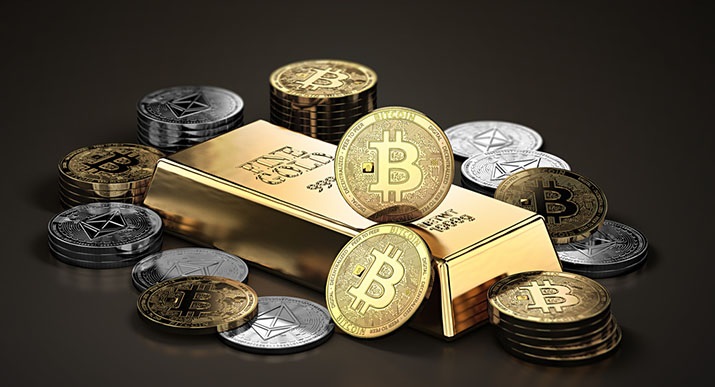
Bitcoin’s market capitalization has reached approximately $1.72 trillion, slightly edging out silver’s $1.71 trillion. This places Bitcoin as the world’s eighth-largest asset by valuation, a feat that is even more impressive considering that Bitcoin has been around for just over a decade, while silver has been valued for millennia.

The rapid rise of Bitcoin’s market cap reflects growing institutional interest, regulatory clarity, and its status as a decentralized store of value. It’s a stark contrast to the long-standing value of silver and highlights Bitcoin’s rapid growth and increasing adoption. Other top assets by market cap include giants like Gold, NVIDIA, and Alphabet (Google), with Bitcoin now ranking close to these established corporations in terms of market value.

This news comes amid another significant development in the crypto space: Tether’s Treasury minting an additional $2 billion USDT on the Ethereum network. This move was made to replenish Tether’s inventory and is part of a chain swap procedure in collaboration with exchanges. The minting of such a large amount of USDT is a strategic decision aimed at optimizing liquidity and meeting the growing demand on the Ethereum network.

The implications of these developments are far-reaching. Bitcoin’s surpassing of silver in market cap is a clear indicator of the digital asset’s staying power and growing acceptance among investors as a legitimate asset class. Meanwhile, Tether’s minting on Ethereum showcases the dynamic nature of the crypto market and the need for stablecoins to facilitate transactions and provide stability.

As we witness these historical moments unfold, it’s essential to consider the broader trends they represent. The rise of cryptocurrencies is not just about the assets themselves but also about the changing landscape of finance and investment. The traditional financial system is being challenged, and new forms of value are emerging. Bitcoin’s new ranking and Tether’s strategic minting are testaments to the evolving nature of money and investment in the 21st century.

Investors may consider diversifying their portfolios to include digital assets like Bitcoin, which are proving to be significant in terms of market capitalization. The crypto market is known for its high volatility. Investors should be aware of the potential for rapid price changes and manage their investments accordingly.

As the crypto market matures, investors should stay informed about the evolving regulatory environment, which can significantly impact market dynamics. The use of blockchain technology and the growth of stablecoins like Tether indicate a shift towards more technologically advanced financial instruments. The market sentiment around cryptocurrencies is becoming increasingly positive, which could lead to more mainstream adoption and potentially higher returns for early adopters.

For investors, these developments may present new opportunities and challenges. The volatility of the crypto market is well-known, and the regulatory environment continues to develop. However, the potential for growth and innovation in this space cannot be ignored. As Bitcoin and other cryptocurrencies continue to make headlines, it’s clear that they are becoming an increasingly important part of the global financial conversation.

Technology Shifts – From Semiconductors to AI And Wealth of Nations

0

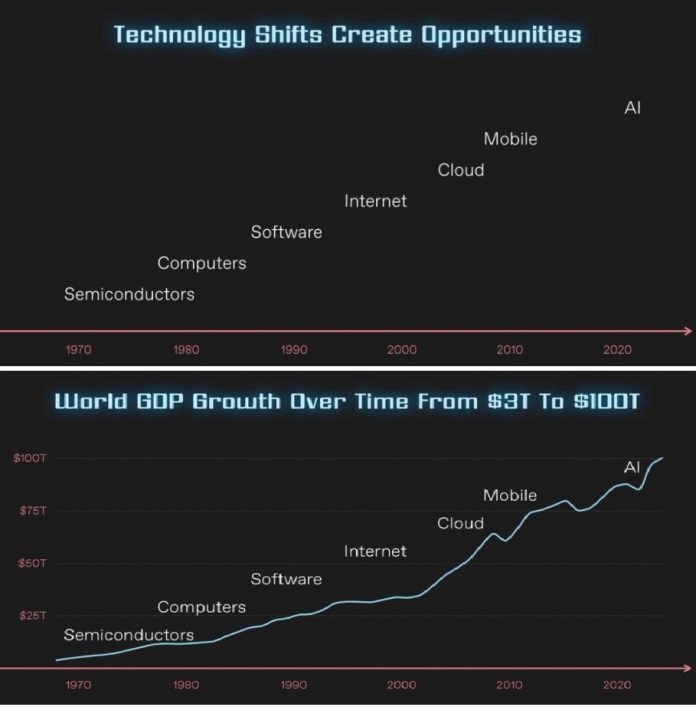
Make sure you are not a spectator because this era must not happen without your productive participation. When the semiconductor era began, your ancestors did not pay attention.  But over time, you joined the Internet age at the consumerism downstream level. In this fledgling AI era, move upstream, and capture value as the economic acceleration will be huge.

Good People, there is abundance in this world. Think and unlock great things because we must move from the invention society era to an innovation one in Africa.

The trajectory is clear: when numbers are well understood, nations rise. Build and bake AI into whatever you build.


You’re Invited To Interswitch Verve Cross-Border Payment Masterclass, anchored by Ndubuisi Ekekwe

0

Join us this Saturday for this academic festival on payment. Simply, at the end of everything we do in business, the final destination is payment. Looking at this from that perspective, payment is the operating system of commerce. When you do not have that or when there are frictions in the payment vectors, opportunities stall.

In this masterclass, we will all take a class together as masters because we’re all masters of our personal economies. Join us and let us co-learn and thrive.  Those words of Shakespearean Hamlet “words, words, words” are now “payment, payment, payment” because all firms work to earn revenue, a reward for fixing frictions in markets, and payment ecosystems enable the attainments of the necessary transactions equilibrium. Saturday is a payment learning day; pick your free seat!

Verve Announcement

We’re set for another loaded masterclass in the hashtagVerveWebinar series,
powered by hashtagVerve, from its vantage position and perspective, being Africa’s 1st and largest domestic payments cards scheme with footprints across 22+ African countries and our rapidly expanding regional and international acceptance?…

Forthcoming Saturday, 16 November, starting 11:00AM (WAT), join us for two (2) illuminating hours, incisively dissecting key elements of the cross-border payments market system, specifically focusing on business growth opportunities through the integration of markets enabled by payments/fintech innovation…

We’re delighted to welcome Ndubuisi Ekekwe of Tekedia Capital/Tekedia Institute as lead anchor for the webinar, which will bring together a cross-section of fintech/payments thought-leaders and active practitioners.

Register here at https://lnkd.in/e_MzgsdE and save the date!?

Global Payment Processing Solutions Market to Reach $139.7 Billion by 2032, Driven by Digital Payment Adoption- Report

0

According to the latest S&S Insider report, the Payment Processing Solutions Market is expected to grow significantly, driven by a rise in the adoption of digital payments.

The payment processing solutions market which was valued at $52.1 billion in 2023, is projected to reach $139.7 billion by 2032, expanding at a CAGR of 11.6% from 2024 to 2032.

This robust growth is spurred by the continuous shift towards e-commerce as more businesses move towards meeting the demands of a smartphone-led online shopping culture, with cards and digital wallets gaining prominence.

With the rapid transition of businesses towards online sales, more people are now embracing digital payments, as merchants continuously improve their payment infrastructure to provide users with a smooth shopping experience.

Also, the robust growth in the Payment Processing Solutions Market is spurred by government initiatives to promote digital payments and a decline in cash transactions. In the U.S., the Federal Reserve reported a 19% increase in digital payments in 2023, and similarly, the European Central Bank noted a 16% rise in cashless transactions across the Eurozone.

As the payment processing solutions market continues to grow, Governments across nations are not only encouraging digital payments but are also enforcing stricter rules to combat fraud, thus boosting demand for secure efficient payment processing solutions. A key driver of this growth is the emphasis on security and fraud prevention in payment processing, which fosters consumer trust and safeguards sensitive data.

Technologies like encryption, which masks payment data during transmission, and two-factor authentication, which adds a security layer, are essential for safe online transactions. Real-time payment capabilities are also increasing in demand, driven by consumer and business expectations for instant transactions.

However, according to the World Bank, around 1.7 billion people remain unbanked highlighting the need for efficient, low-cost payment solutions that can cater to diverse demographics. Mobile wallets have gained popularity for their ability to deliver instant, secure payments, enhancing financial inclusion. Real-time payments improve customer satisfaction and support business liquidity management, yet the evolving regulatory landscape poses challenges for payment processors, who must adapt to increasingly stringent compliance standards, raising operational costs and complexities.

As payment systems advance, they also attract cyber threats, posing a significant barrier to the growth of the industry. Cyberattacks can lead to data breaches, fraud, and identity theft, damaging customer trust and resulting in financial and reputational losses. Security measures like encryption, multi-factor authentication and real-time fraud detection are standard, but high costs and technical complexity can strain smaller businesses, leaving some transactions vulnerable. Non-compliance can also result in severe penalties, highlighting the need for robust cybersecurity in payment processing.

In terms of payment methods, credit cards led the market in 2023, capturing a 35% revenue share. Credit card usage is bolstered by convenience, loyalty rewards, and robust fraud protection. Particularly in markets like the U.S., where over 75% of adults reportedly have at least one credit card.

The E-wallet is expected to be the fastest-growing segment during the forecast period. The main drivers that explain this assumption are the growing customer demand for such digital wallets, which are convenient and fast and, therefore, ensure the safest transactions. According to recent data, the global e-wallet is expected to grow significantly, which presupposes the promotion of mobile technology, which also contributes to the strong adoption as the majority of people have smartphones.

Regionally, North America dominated the Payment Processing Solutions Market, with a 35% share due to high digital payment penetration and a widespread acceptance of credit and debit cards. The region benefits from strong governmental support for cashless transactions and hosts key players like PayPal, Stripe, and Square which further strengthens the region’s market position in payment processing solutions.