DD
MM
YYYY

PAGES

DD
MM
YYYY

spot_img

PAGES

Home Blog Page 27

From AI Infrastructure to Defensive Stocks: Markets Seek a New Safe Haven

0

Monday’s equity-market rotation offered a revealing snapshot of how investors are navigating a market increasingly shaped by artificial intelligence, elevated valuations and shifting expectations around economic growth.

Money moved out of AI infrastructure names and into sectors perceived as more defensive, while cybersecurity stocks emerged as an unexpected standout.

The move was not simply a retreat from technology. Instead, it reflected a broader reassessment of where investors could find resilience as Treasury yields eased after briefly approaching the 5% threshold.

The S&P 500 and Nasdaq, which had suffered steep early declines, recovered a significant portion of their losses as bond-market pressure moderated. Healthcare was among the beneficiaries. Johnson & Johnson and Eli Lilly strengthened as investors sought companies whose demand is less directly tied to corporate technology spending or aggressive economic expansion.

Pharmaceutical businesses can offer a degree of earnings visibility because healthcare consumption tends to remain relatively resilient even when financial conditions become less supportive.

Consumer staples attracted similar interest. Kimberly-Clark and Costco benefited as investors moved toward companies associated with everyday consumption.

These businesses occupy a different part of the economic cycle from high-growth technology companies, making them attractive when investors begin questioning whether lofty growth expectations are adequately reflected in stock prices.

Yet the most striking move came from cybersecurity. CrowdStrike and Palo Alto Networks surged roughly 14%, highlighting an important paradox within the technology sector. While investors were reducing exposure to portions of the AI infrastructure trade, they were simultaneously buying companies positioned to protect the increasingly digital economy.

Artificial intelligence is expanding the attack surface for businesses, governments and financial institutions. AI systems can accelerate productivity, but they can also generate new vulnerabilities, automate sophisticated attacks and increase the speed at which malicious actors can exploit weaknesses.

As organizations deploy more AI applications and connect more data to cloud infrastructure, cybersecurity becomes less of an optional technology expense and more of a fundamental operating requirement. That dynamic creates a powerful investment thesis.

The greater the adoption of AI and digital infrastructure, the greater the potential demand for security products capable of defending those systems. This does not mean cybersecurity stocks are immune to valuation concerns.

Companies such as CrowdStrike and Palo Alto Networks remain growth-oriented technology businesses, and their valuations can still respond sharply to changes in interest rates, earnings expectations and risk appetite. A 14% jump in a single session can also reflect positioning and short-covering rather than a permanent change in fundamental value.

The rotation illustrates how investors are differentiating within technology rather than abandoning the sector altogether. AI infrastructure companies remain central to the long-term technological transformation, but the market is beginning to distinguish between businesses financing AI expansion and those providing essential services around it.

The broader lesson is that defensive investing in the AI era may look different from previous market cycles. Investors do not necessarily have to leave technology to become defensive. Cybersecurity can itself function as a defensive growth theme because its importance rises alongside digital complexity.

Monday’s trading therefore represented more than a sector rotation. It was a reminder that markets constantly search for the next combination of growth, resilience and necessity.

Healthcare and consumer staples provided traditional shelter, while cybersecurity offered a newer form of protection—one built around the risks created by the very technological revolution investors are still trying to capture.


Bitcoin Falls Under $76,000 as Crypto Clarity Act Negotiations Stall

0

The price of Bitcoin has fallen below the $76,000 mark as uncertainty over the progress of the U.S. Crypto Clarity Act weighs on investor sentiment, adding fresh pressure to the world’s largest cryptocurrency.

The decline, which took the leading cryptocurrency to as low as around $75,568, came as optimism faded over the prospects of major U.S. crypto market-structure legislation advancing in the Senate.

On Tuesday, the Senate was scheduled to hold a key procedural cloture vote that required 60 senators to agree to begin formal debate on the bill. Republicans hold a majority but still need several Democratic votes to clear the threshold.

Senate Republicans released what they described as a final revised draft over the weekend, incorporating more than 100 changes requested by Democrats, including updated ethics provisions related to officials’ digital-asset holdings and measures addressing banking-sector concerns about stablecoin yields and potential deposit flight.

Democrats responded with a late counteroffer seeking further adjustments. Republican negotiators, including key figures such as Senator Cynthia Lummis, pushed back, stating that the latest text already reflected substantial concessions and that additional demands risked moving the goalposts.

Prediction markets reflected the uncertainty. Odds that the bill would become law in 2026 fell sharply from above 30% on Monday to the mid-teens or lower by Tuesday.

Market participants linked the Bitcoin sell-off in part to the reduced chances of near-term regulatory clarity. Broader crypto assets, including ether, solana, and XRP, also declined.

Additional pressure came from rising oil prices, which climbed toward or above $100–$103 per barrel, and expectations surrounding the Federal Reserve’s policy decision later in the week, with markets pricing in a possible rate increase.

The Digital Asset Market Clarity Act, often called the Clarity Act or CLARITY Act, aims to establish clearer rules for digital assets by dividing regulatory oversight between the Commodity Futures Trading Commission (for digital commodities) and the Securities and Exchange Commission (for securities).

The House of Representatives passed a version of the bill in 2025 with strong bipartisan support. The Senate Banking Committee advanced its version earlier in 2026, but full Senate consideration has been delayed by partisan negotiations.

The Clarity Act has been viewed by many in the industry as a potential catalyst for greater institutional participation by reducing legal ambiguity around digital-asset classification and trading.

Sen. Elizabeth Warren, who has repeatedly called for stronger cryptocurrency legislation to combat illicit finance and protect investors, says she remains determined to get a bill signed into law, even if she doesn’t support the current Clarity Act.

The Massachusetts Democrat told reporters Tuesday that the Clarity Act represents Washington’s “first chance for meaningful crypto regulation.” But she said any bill must include rules governing public officials’ crypto investments, protect national security and consumers, and strengthen efforts to combat illicit finance and terrorism.

“I’d be happy to sit down with other Democrats, with the Republicans, and with the industry and hammer out a meaningful crypto bill that protects our national security, that protects our economy and that dials back the corruption,” she said. “I think we could get that done, but it will require the Republicans’ willingness to stand up to Donald Trump — and that’s a pretty tall order.”

Failure to advance the procedural vote would likely shelve meaningful progress until after the midterm elections, prolonging the current regulatory environment. Even a successful cloture vote would only open the door to further debate and amendments rather than guarantee final passage.

Bitcoin’s price action on the day underscored the market’s sensitivity to U.S. legislative developments. After a period of relative strength earlier in September, the rapid reversal highlighted how tightly short-term sentiment remains tied to political progress on crypto frameworks.

Traders and analysts continue to monitor both the Senate outcome and macroeconomic signals for the next directional cues.

Outlook

Looking ahead, Bitcoin’s near-term direction is likely to remain sensitive to developments around the Clarity Act and broader U.S. monetary policy.

A breakthrough in Senate negotiations or a successful procedural vote could restore confidence in the crypto market by reviving expectations of clearer regulatory rules and greater institutional participation.

Conversely, a prolonged deadlock or failure to advance the legislation could keep investors cautious and extend selling pressure, particularly if higher oil prices and tighter monetary-policy expectations continue to weigh on risk assets.

Ethereum Ranks 62 Hegotá Proposals as Network Targets Better Transactions and Censorship Resistance

0

Ethereum’s next major protocol upgrade is taking shape around two priorities that could materially influence how the network handles users, transactions and censorship resistance.

The Ethereum Foundation’s Protocol cluster has ranked 62 proposed Ethereum Improvement Proposals (EIPs) for the Hegotá upgrade, identifying Fork-choice Enforced Inclusion Lists (FOCIL) and Frame Transactions as the two highest-priority proposals.

The ranking is significant because Hegotá is not being designed simply as another collection of incremental Ethereum improvements.

Instead, the process reflects a broader attempt to strengthen the network’s foundations while making accounts more flexible and transactions harder to suppress. The Foundation said its assessment involved roughly 60 researchers and engineers across its Protocol teams, producing a unified view of which proposals deserve priority.

FOCIL, or EIP-7805, occupies the consensus-layer spotlight. Its purpose is to strengthen transaction inclusion by preventing a single block builder from quietly excluding valid transactions. Under the proposed mechanism, validators can collectively enforce inclusion requirements.

Meaning builders would have less freedom to censor transactions that users have successfully propagated to the network.  That matters because Ethereum’s block-building ecosystem has become increasingly specialized. Professional builders compete to construct economically valuable blocks, while validators select proposals.

This architecture has improved efficiency, but it also creates a potential concentration point. FOCIL is intended to add another layer of protection, ensuring that transaction inclusion is not determined solely by whoever controls block construction.

The second Hegotá centerpiece is EIP-8141, known as Frame Transactions. This proposal takes Ethereum toward native account abstraction, allowing transaction validation, execution and fee payment to become more programmable at the protocol level.

Instead of requiring every user account to operate around the traditional externally owned account model, applications could build more flexible account experiences.

The implications extend beyond convenience. Frame Transactions could support sponsored transactions, alternative signature systems and more flexible payment arrangements.

It also creates a pathway toward stronger cryptographic resilience, including the ability for accounts to adopt new signature schemes without requiring a separate hard fork for every future cryptographic change.  The combination of FOCIL and Frames is therefore particularly important.

One proposal focuses on whether a transaction can reach the chain; the other changes how users authorize, execute and pay for transactions. Together, they address two different weaknesses in Ethereum’s transaction architecture.

Other proposals remain under consideration. The Foundation classified 15 proposals as expected to ship, while eight B-tier proposals have additional requirements and seven C-tier proposals sit below the inclusion line. Twenty-eight proposals were declined, while two remain undecided pending further evidence.

This filtering process illustrates an increasingly disciplined approach to Ethereum upgrades. Rather than maximizing the number of features included in every fork, developers are emphasizing security, testing and long-term protocol coherence.

The Foundation has explicitly indicated that the two Hegotá headliners must be delivered together safely, with their interaction tested as part of the upgrade’s core engineering work. For Ethereum users and developers, the direction is consequential.

Hegotá, currently targeted for 2027, could make the network more resistant to censorship while moving accounts toward a more programmable model.

The ranking of 62 proposals ultimately says as much about what Ethereum will not ship as what it will.

Hegotá is emerging as a focused effort to reinforce Ethereum’s core guarantees: users should be able to transact, accounts should become more flexible, and no individual intermediary should gain excessive power over what reaches the blockchain.

Why the AI Race Is Unlikely to Slow Despite Calls for Caution

0

Dario Amodei’s call for the artificial-intelligence industry to reconsider the pace of frontier development has exposed one of the central contradictions shaping the technology sector: nearly everyone can acknowledge the risks of moving too quickly, while almost nobody appears willing to be the company that slows down first.

The Anthropic chief executive’s weekend essay arrived at a moment when frontier AI development has become increasingly defined by enormous computing requirements, rapidly expanding model capabilities and intense competition among the world’s largest technology companies.

His argument for greater restraint therefore carries significance beyond Anthropic. It asks whether the industry can collectively recognize that technological acceleration may be creating risks that individual companies cannot responsibly manage alone.

The response from rivals has been broadly sympathetic, but carefully qualified. Microsoft, OpenAI and xAI have all shown varying degrees of support for a more cautious approach, creating an unusual appearance of consensus around responsible development.

Yet the agreement comes with an important condition: caution cannot become surrender. Microsoft AI chief Mustafa Suleyman captured that tension by emphasizing that the industry still has to keep developing, only with greater “caution and care.”

That distinction is crucial. The debate is not really between developing AI and stopping AI. It is about whether companies can continue pushing the technological frontier while building sufficient safeguards around increasingly powerful systems.

From a competitive perspective, voluntarily slowing down is extraordinarily difficult. Deutsche Bank’s assessment reflects the underlying economics of the race: if one company reduces its investment in frontier models while competitors continue spending billions on chips, data centers, researchers and model training.

The cautious company could sacrifice technological leadership without receiving any guarantee that others will follow. This creates a classic collective-action problem. Every major laboratory may prefer an environment where development is safer and more deliberate.

But each also has an incentive to move aggressively if it believes rivals are doing the same. The result is a system in which companies can publicly support responsible AI while simultaneously maintaining enormous investments in capability development.

There is also a strategic dimension. Frontier AI is increasingly viewed not simply as another software category but as foundational infrastructure for the next generation of computing, enterprise software, search, robotics, autonomous systems and financial services.

Falling behind could therefore mean losing influence across several industries at once. That reality makes Amodei’s argument both important and difficult to implement. Calls for restraint become considerably harder when technological progress is tied to corporate valuations, national competitiveness and expectations about future productivity.

The deeper question is consequently not whether the AI race will stop. It almost certainly will not. The more realistic question is whether the race can evolve from a competition primarily measured by model capability into one where safety, reliability, transparency and controllability become competitive advantages themselves.

That would require companies to treat safeguards as infrastructure rather than public-relations language. It would also require governments, researchers and industry leaders to establish standards that prevent responsible development from becoming a competitive disadvantage.

For now, the industry’s message appears contradictory but revealing: slow down where necessary, build safeguards, exercise caution—but keep moving. The frontier AI race is therefore less likely to end than to become more carefully managed.

The challenge is ensuring that “caution and care” become operational principles rather than qualifications attached to an otherwise relentless race for technological supremacy.

China’s Exit Rules, Allowing Travel Bans Over Technology Security Risks, Take Effect

0

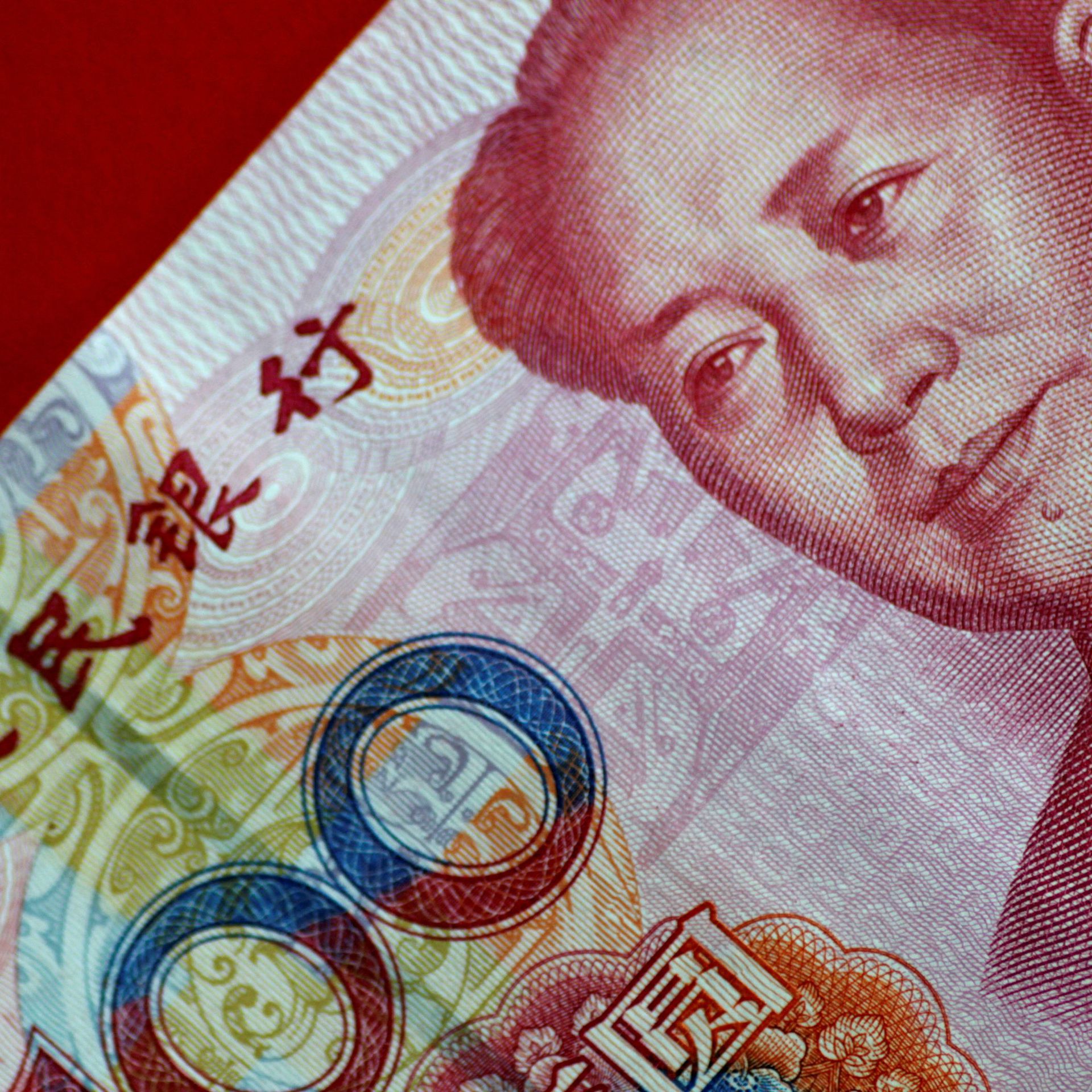
China’s tightened controls over international travel have been rolled out, with new exit-and-entry rules taking effect Tuesday that allow authorities to prevent citizens from leaving the country if they are deemed a potential threat to national technology or industrial security.

The measures add a formal legal framework to Beijing’s growing scrutiny of cross-border movement by people with access to sensitive information, technology or business activities that the government considers relevant to national security.

Chinese citizens are generally free to travel abroad, a sharp contrast with the restrictions that characterized the country during the height of the Cold War. Beijing has, however, maintained tighter controls over the foreign travel of people considered security risks, particularly government officials and employees of state-linked organizations with access to confidential information.

The new rules were unveiled in July and specifically address violations involving export controls and technology import and export regulations where such conduct could endanger China’s industrial or technological security.

Under the rules, Chinese citizens who return to the country after committing illegal or criminal acts abroad that harm national security or national interests can be barred from leaving China again for between six months and three years.

The regulations also give authorities powers affecting foreign nationals. Foreigners can be denied entry to China for one to five years if they provide false statements in visa applications.

The changes come as Beijing has increasingly treated technology, data and international business links as components of national security. That approach has already affected the movement of officials, researchers and employees of state-affiliated companies, while foreign governments have reported cases involving people who were prevented from leaving China amid security-related investigations.

Technology Workers Face Greater Uncertainty

The new rules formalize restrictions that have previously operated through a combination of administrative measures and security investigations.

Reuters reported in 2023 that Chinese civil servants and employees of state-linked enterprises were facing tighter restrictions on private overseas travel and increased scrutiny of their foreign connections as Beijing intensified a campaign against foreign influence.

The latest regulations could extend that security framework into technology-related activity, creating particular uncertainty for people whose work involves sensitive technologies, exports or international business.

Taiwan has already warned its citizens to exercise greater caution when traveling to mainland China following the implementation of the new rules. Beijing considers Taiwan part of China and regards people from Taiwan as Chinese citizens, while Taiwan operates its own government and rejects Beijing’s sovereignty claims.

Shen Yu-chung, deputy head of Taiwan’s Mainland Affairs Council, said the rules effectively “legalize” border-control practices that previously lacked a clear legal basis while expanding the discretion available to enforcement agencies.

He identified the provisions concerning “export control” and “technology import-export management” as a particular concern, especially for Taiwanese working in the technology industry.

The concern reflects the blurred line between commercial activity and national security in China’s technology policy. Employees working in industries such as semiconductors, advanced manufacturing and other strategically important technologies may have legitimate reasons to travel internationally, but their professional activities could also place them within the scope of security-related restrictions.

For companies operating across China and overseas, the rules add another compliance consideration alongside existing export controls, data-security requirements and restrictions on the transfer of sensitive technology.

Broader Security Crackdown

China’s expanding use of national-security legislation has also raised concerns over the ability of authorities to restrict the movement of individuals during investigations.

Last month, Min Zin, a Myanmar expert and U.S. citizen designated by Washington, was wrongfully detained after Chinese authorities arrested him in June over allegations that he had endangered national security.

Foreign governments have previously documented other cases in which individuals were prevented from leaving China, often in connection with investigations involving national security.

Beijing, meanwhile, has presented the new rules as an effort to establish clearer legal procedures rather than simply expand arbitrary restrictions. The government has dismissed Taiwan’s concerns, saying the regulations provide stronger legal protection for Taiwanese people.

The practical impact could depend heavily on how broadly Chinese authorities interpret the technology and national-security provisions. The reference to export controls and technology import-export management gives enforcement agencies another legal basis for intervening in the international travel of people whose activities are considered sensitive.

That could become crucial as technology competition between China and the United States intensifies. Semiconductor equipment, artificial intelligence, advanced computing and other strategic technologies have become central to national-security policies on both sides, making the movement of people and knowledge across borders more politically sensitive.