DD
MM
YYYY

PAGES

DD
MM
YYYY

spot_img

PAGES

Home Blog Page 2781

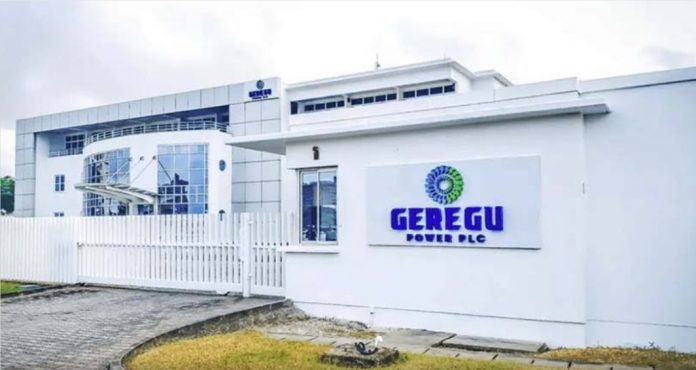
Geregu Power Reports N36.2bn Pre-tax Profit For The First Nine Months of The Year

0

Geregu Power Plc, Nigeria’s first listed power generation company, has announced remarkable financial results for the first nine months of 2024, showcasing a significant increase in profitability.

The company reported a pre-tax profit of N36.2 billion, a 107% rise from the N17.4 billion recorded during the same period in 2023. This growth highlights Geregu Power’s strong operational performance despite industry challenges.

Financial Performance Breakdown

The company’s profit after tax stood at N24.1 billion, and when annualized, its projected profits could reach N32.1 billion, suggesting a compounded annual growth rate (CAGR) of 23% over the past five years. This marks an impressive increase from N16 billion in profits after tax recorded in 2023.

Geregu Power’s revenue for the nine months reached N112.5 billion, reflecting a 102% year-on-year increase. The revenue was primarily driven by N71.4 billion in energy sales and N41.1 billion from capacity charges. The company also maintained a solid gross profit of N54.6 billion, despite inflationary pressures and rising costs, with gross margins exceeding 41%—though this was slightly below the historical margin of 50%.

Key Financial Highlights:

  • Revenue: N112.5 billion (+102%)
  • Gross Profit: N54.6 billion (+89.2%)
  • Operating Profit: N37 billion (+80.1%)
  • Pre-tax Profit: N36.2 billion (+107.4%)
  • Profit after tax: N24.1 billion (+111.9%)
  • EPS: N9.63
  • Cash Balance: N40.4 billion
  • Net Asset: N49.2 billion
  • Total Assets: N221 billion

Industry Influence and Growth Prospects

Geregu Power’s impressive growth can be linked to favorable developments in Nigeria’s electricity sector. Key reforms, such as the Nigerian Electricity Regulatory Commission (NERC) approval of higher tariffs in 2023, have improved revenue alignment with operational costs, enhancing profitability for power generation companies (GenCos) like Geregu. Stakeholders had expected additional tariff increases in 2024, though political and economic factors have stood in the way.

Furthermore, the government’s continued investments in grid infrastructure and privatization of critical power assets create additional opportunities for Geregu Power to enhance its capacity and further unlock growth potential.

Share Price Surge and Future Growth

Geregu Power’s share price has surged 188% year-to-date, underlining strong investor confidence. The stock currently has a price-to-earnings (P/E) ratio of 102x, positioning it as a high-growth asset. Despite operating at only 50% capacity due to grid constraints, the company’s doubling of profits signals significant growth potential.

With profits growing at a CAGR of 23%, investors are betting on the company’s ability to expand its earnings further. There are also indications that Geregu Power may pursue acquisitions to bolster its capacity, which could have a transformative impact on its revenue and profitability.

Geregu Power has maintained a consistent record of dividend payments, with an average payout ratio exceeding 100% over the last three years. This commitment, combined with its robust 2024 performance, has made the company’s stock particularly attractive to income-focused investors. The sustained strong performance is expected to support continued dividend payouts, further boosting investor confidence.

Outlook for the Final Quarter

Geregu Power projects a pre-tax profit of N16.8 billion and a profit after tax of N11 billion for the final quarter of 2024. If these targets are met, the company’s full-year pre-tax profit could rise to N53 billion, representing a 118% year-on-year increase. This forecast underscores the company’s potential for continued robust earnings growth, positioning it as a leading player in Nigeria’s evolving power sector.

Elon Musk Unveils Tesla’s New Robotaxi, Cybercab, And Robovan, Operated by AI

0

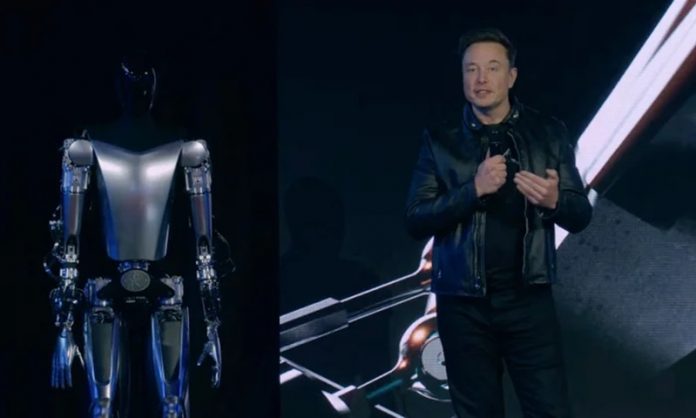
At a much-anticipated event in Los Angeles, Tesla CEO Elon Musk stepped onto the Warner Bros. stage to introduce a future many have dreamt of but few thought achievable any time soon: a world where cars drive themselves, where steering wheels are relics of the past, and where the hustle of daily commuting is replaced by peaceful, autonomous journeys.

With the unveiling of Tesla’s new robotaxi and an unexpected debut of a robovan, Musk announced without words that Tesla’s future isn’t about more affordable electric cars; it’s about changing the very nature of transportation.

Musk, in his signature leather jacket, looked out at the gathered crowd and declared, “The autonomous future is here.” He had, once again, laid out a bold vision. This time, however, the stakes were higher. Gone were the promises of more mass-market EVs. Instead, he was betting big on robotaxi fleets and autonomous public transportation, with Tesla at the center of it all.

The star of the show was the “Cybercab,” a sleek vehicle with two gull-wing doors and, perhaps most importantly, no steering wheel or pedals. This is not just a car, Musk implied—it’s a new way of thinking about mobility. Production of the Cybercab is slated for 2026, and the price is less than $30,000, a surprisingly affordable figure for such advanced technology.

“This will change how people think about transportation,” Musk said. “With autonomy, you get your time back.” And time, he emphasized, is the most valuable resource.

Musk also introduced the robovan, a vehicle capable of carrying up to 20 passengers. The details were sparse, but the concept was enough to stir excitement—a vehicle designed not for individuals, but for mass transit, operated entirely by AI.

Musk spoke passionately about the cost-effectiveness of these vehicles. The Cybercab, he explained, would cost only 20 cents per mile to run, and the robovan would be even cheaper, operating at an astonishing 5 cents per mile. Charging would be inductive, meaning no more plugs, just seamless wireless charging.

For Musk, the numbers were compelling. “This will revolutionize urban mobility,” he asserted. Yet even as he spoke, there was an air of caution among analysts and industry experts who know all too well the roadblocks ahead.

The Road Ahead for Robotaxis

Elon Musk has a long history of painting bright pictures of the future—sometimes brighter than reality allows. In 2019, he was “very confident” that Tesla would have operational robotaxis by 2020. Four years later, the promise remains elusive. This time, Musk didn’t offer hard timelines for when the robotaxi fleet might become a reality, and for good reason.

The challenges are immense. Building the technology is just the beginning. Autonomous vehicles must navigate regulatory frameworks that differ from state to state, country to country. Ensuring the safety and reliability of such vehicles—particularly in adverse weather, complex intersections, or in the unpredictable presence of pedestrians—is another hurdle that cannot be easily overcome.

“Getting a robotaxi network operational takes years,” noted Jessica Caldwell, head of insights at Edmunds, a car research and buying platform. “Musk did a fantastic job of painting an ideal future for transportation that promises to both free up our time and increase safety. But many questions remain about how this will be achieved from a practical standpoint.”

In fact, some competitors in the space have already pulled back. General Motors’ Cruise program, for instance, indefinitely suspended plans for its autonomous “Origin” vehicle due to similar challenges. Meanwhile, Alphabet’s Waymo, a key competitor, has a fleet of around 700 robotaxis in operation but is still far from scaling up to Musk’s vision.

Musk’s strategy diverges from his competitors in another key area: the use of lidar technology. Unlike Waymo, which relies on lidar sensors, Tesla’s vehicles use only cameras and AI for navigation. While Musk has long dismissed lidar as expensive and unnecessary, many experts remain skeptical. They believe that relying solely on AI and cameras could present serious technical challenges, especially in environments where precision is key.

However, Musk is confident in his idea and the technology that will make it happen.

“We expect to start fully autonomous unsupervised FSD (Full Self-Driving) in Texas and California next year,” he said, referencing Tesla’s current self-driving technology, which still requires driver supervision.

While the Cybercab was the expected highlight of the event, the reveal of the robovan caught many by surprise. Designed to carry up to 20 people, the robovan could potentially disrupt the public transportation space, offering a cleaner, cheaper alternative to traditional buses. Musk didn’t dive into specifics about how the robovan would operate or when it might hit the streets, but the concept was bold enough to stir speculation.

“It’s about making transportation more accessible and affordable,” Musk explained, reinforcing Tesla’s vision of not just individual vehicles but an entire ecosystem of AI-driven transportation options.

The event, dubbed “We, Robot,” seemed to borrow inspiration from Isaac Asimov’s science-fiction stories. Tesla, Musk suggested, should not be seen as merely an automaker but as a leader in AI and robotics. To underscore this point, Musk also took the opportunity to highlight Tesla’s progress with Optimus, its humanoid robot, which could one day be available for $20,000 to $30,000. Optimus, Musk believes, could take over many daily tasks, freeing up time and energy for humans.

A Growing Market, But at What Cost?

For all the futuristic vision, Tesla is facing headwinds in the present. Despite being the leader in the electric vehicle (EV) market, Tesla may see its first-ever drop in deliveries this year. Reuters has reported that Tesla’s recent price cuts have failed to attract enough new buyers, leading to squeezed profit margins and slower sales of its aging EV lineup.

The introduction of the Cybercab and robovan appears to be a pivot—a calculated bet on future technology to reignite interest and secure Tesla’s dominance.

However, the competition is fierce. Alphabet’s Waymo is currently the only U.S. company operating uncrewed robotaxis that collect fares, and others like Amazon’s Zoox are testing purpose-built autonomous vehicles. But these companies have also faced significant losses. The robotaxi market is proving tougher to crack than initially anticipated.

Still, Musk remains undeterred. His vision for Tesla transcends cars, expanding into a world where autonomy and AI reshape industries, from transport to labor.

“With Tesla’s approach, we can make transportation cheaper, faster, and more sustainable,” Musk declared, though he acknowledged that timelines could shift.

As with many of Musk’s announcements, there are those who remain unconvinced. Equity trader Dennis Dick, for instance, voiced his frustration.

“I’m a shareholder and pretty disappointed. I think the market wanted more definitive timelines,” he said.

Musk’s presentation, watched by nearly four million people on his X platform, lasted less than half an hour but left a long trail of questions. How quickly can Tesla overcome regulatory challenges? Can it truly bring down the cost of autonomy to such low levels? And will Tesla’s new focus on robotic vehicles pay off in a way that mass-market EVs have struggled to recently?

For now, the future Musk describes remains a glittering possibility, tantalizing in its scope but elusive in its execution. Tesla’s robotaxis, the Cybercab, the robovan, and even Optimus may be within reach, but whether they can meet the grand vision laid out by Musk will be a story told in the years ahead.

Whale Awakens After Nearly a Decade in Hibernation, Stacking up DTX Exchange (DTX), Toncoin (TON) and Ripple (XRP)

0

It is a period of accumulation—perhaps the final chance to buy altcoins this cheap before the imminent bull run. A crypto whale recently woke up after nearly a decade of inactivity, stacking up Toncoin (TON), Ripple (XRP) and DTX Exchange (DTX), a new altcoin at the crossroads between TradFi and DeFi.

This event has stirred up much buzz, sparking questions about whether these might be the biggest winners this cycle. DTX, a new blockchain-based project, combines the best elements of centralized and decentralized exchanges, making it one of the new DeFi projects poised for massive adoption.

DTX Exchange (DTX): Primed for a 50x Upswing Post-Launch

DTX Exchange (DTX) is on whales’ radars for several reasons, notably its novelty and significant upside potential. Unlike most new ICOs, it isn’t all hype and no tangible applications—it stands at the intersection of DEX and CEX.

Its unique offering is a hybrid trading platform designed to meet traders’ needs, from an intuitive user experience to security and privacy. It further stands out by implementing smart contracts, which will facilitate secure and automated transactions. Further, its blend of TradFi and DeFi will give access to thousands of asset classes, putting it at the forefront of the $3.2 billion global trading market.

Another layer of appeal is its growth prospects. This knowledge isn’t lost on savvy investors and whales, contributing to its explosive surge past $4 million in presale. Meanwhile, a token costs only $0.06 in the third round and is on track for a 50x gain post-launch. This bullish forecast makes it more compelling than Toncoin (TON) and Ripple (XRP).

Toncoin (TON): Road to $10

Toncoin (TON), popularly associated with the Telegram messaging app, is one of the top altcoins. It is a top-10 cryptocurrency and plays a key role as a payment-based protocol. Outperforming the crypto market, it recorded significant gains this year.

The Toncoin (TON) price soared from $2 to an all-time high of $8.24 in June. While there has been about a 40% downturn since then, savvy investors have been taking advantage of the dip and stockpiling ahead of the next leg of its bull run.

Despite recent volatility, a bullish Toncoin price prediction hints at a sustained trajectory in the coming weeks. The altcoin is tipped to soar past $10 before the year’s end, positioning it among the best cryptos to invest in.

Ripple (XRP) Sails Toward a New Peak

Despite the ongoing SEC case, Ripple (XRP) is one of the best altcoins to invest in. The August court decision by Judge Analisa Torres was believed to be the end of this legal standoff, until the regulator’s appeal earlier this month.

Nevertheless, its outlook this year is promising, having created a solid support at $0.5. With recovery gradually unfolding, Ripple (XRP) is one of the altcoins to watch out for. Moreover, at the current market price, XRP presents a good and attractive entry.

Meanwhile, a popular XRP price prediction suggests a jump above $2 in the coming weeks. As it sails toward a new peak, the payment-based altcoin is a promising wave not to miss out on—a good crypto to buy, if any.

Conclusion

A crypto whale recently woke from nearly a decade of hibernation and stockpiled DTX Exchange (DTX), Toncoin (TON) and Ripple (XRP). This represents a vote of confidence in their appeal and offerings, especially DTX. This new player is on the verge of explosive growth given its hybrid approach to trading and growing community—one of the best cryptos to invest in.

Learn more:

Buy Presale

Visit DTX Website

Join The DTX Community

African Investors Accounted Only for 19.45% of Nigeria’s Total Capital Importation in Q2 2024

0

In the second quarter of 2024, Nigeria experienced a notable shift in foreign capital inflows, with overall capital importation in Q2 2024 witnessing a 22.85% decline, falling from $3.37 billion in Q1 to $2.60 billion, according to the latest data from the National Bureau of Statistics (NBS).

There is also notable shift from African investors, who accounted for 19.45% of the total capital importation. Out of the total $2.60 billion in foreign capital received by Nigeria, $506.68 million came from investors within Africa, excluding Nigerian contributions. This data marks a drop of interest from African investors who recorded 22.97% in Q1 2024.

While African investors continue to play a significant role in Nigeria’s capital importation, Q2 2024 saw a 34.65% quarter-on-quarter decline from the $775.47 million received in Q1 2024. However, year-on-year comparisons reveal substantial growth, with African contributions rising by 98.22% from $255.56 million in Q2 2023 to $506.68 million in Q2 2024.

Despite this decline from Q1, the year-on-year rise underscores an overall increase in Nigeria’s appeal to investors within the continent. Analysts suggest that this growing interest could be linked to Nigeria’s recent economic policies, new investment opportunities, and shifts in regional dynamics, which have made the market more attractive than it was a year ago.

Mauritius and South Africa Are Major Contributors

Breaking down the numbers, two countries stood out as the primary sources of foreign capital from Africa in Q2 2024: Mauritius and the Republic of South Africa. Mauritius was the largest contributor, providing $250.70 million, a staggering rise from $17.05 million in Q2 2023.

South Africa, on the other hand, contributed $255.98 million in Q2 2024, though this represents a decrease from the $582.34 million it invested in Q1 2024. Despite the drop, South Africa remains a major player in African investment in Nigeria.

While external African investments flourished, Nigerian local investors contributed only $3.63 million in Q2 2024. This is a slight recovery from a negligible $0.07 million in Q1 2024 but still pales in comparison to the $99.74 million recorded in Q2 2023. The sharp decline in domestic contributions signals a growing reluctance among Nigerian investors to reinvest in the local economy. Experts attribute this to economic uncertainties and the allure of more attractive investment opportunities abroad.

The minimal contribution from Nigerian investors highlights a broader trend of reliance on foreign capital, with domestic investors’ contributions accounting for less than 1% of the total capital inflows from African sources in Q2 2024.

Capital from Non-African Countries

Although there is significant involvement of African investors, non-African countries continued to dominate Nigeria’s foreign capital inflows. The United Kingdom led the pack with $1.12 billion in Q2 2024, though this was down from $1.81 billion in Q1 2024. The decline reflects a potential shift or re-evaluation by UK investors, who may be reassessing Nigeria’s evolving business climate.

Similarly, capital inflows from the United States dropped slightly, with the US contributing $81.58 million in Q2 2024, compared to $89.27 million in the previous quarter. However, the United Arab Emirates (UAE) bucked the trend, increasing its investment in Nigeria to $143.44 million in Q2 2024, up from $101.76 million in Q1. This rise indicates growing Middle Eastern interest, particularly in sectors such as real estate, infrastructure, and energy.

Other contributors, include Hong Kong with $15.47 million, and Germany with $13.88 million.

Despite these investments, Nigeria’s overall capital importation in Q2 2024 witnessed a 22.85% decline, falling from $3.37 billion in Q1 to $2.60 billion. This drop, though significant, still represents a 152.8% year-on-year increase compared to Q2 2023, when capital importation was just $1.03 billion.

The Foreign Direct Investment (FDI) figures, however, present a different picture. FDI in Q2 2024 dropped sharply to $29.83 million, the lowest level on record since 2013. This is a 65.33% decrease from the $86.03 million recorded in Q2 2023, highlighting a broader trend of dwindling investor confidence in long-term, on-the-ground investments in Nigeria.

The reasons for this decline are multifaceted, with analysts pointing to persistent economic uncertainties, security concerns, and policy inconsistencies as key factors deterring investors from making substantial direct investments in the country.

Mobile Betting Innovations: How Apps Are Revolutionizing Access and Engagement

0

The rapid advancement of mobile technology has transformed various industries, with sports betting being no exception. Mobile betting apps are revolutionizing how users engage with sports betting, offering enhanced accessibility, convenience, and interactive features. This article explores the innovations in mobile betting, the benefits and challenges they present, and the importance of responsible gambling practices in this digital age.

Innovations in Mobile Betting Apps

1. Personalized User Experience:

Utilizing data analytics, betting apps can offer personalized recommendations and notifications based on user preferences and betting history. This customization enhances user engagement by tailoring content to individual interests, including features like free soccer picks.

2. Live Betting and Streaming:

Mobile apps have made live betting more accessible by allowing users to place bets in real-time as events unfold. Additionally, some apps offer live streaming of sports events, providing an immersive experience that keeps users engaged.

3. User-Friendly Interfaces:

Modern betting apps prioritize intuitive and user-friendly interfaces, making it easier for users to navigate through options, place bets, and manage their accounts. The design often incorporates seamless navigation, clear displays of odds, and quick access to live events.

4. Enhanced Security Features:

With the increasing risk of cyber threats, mobile betting apps have integrated advanced security measures such as biometric authentication, encryption, and two-factor authentication to protect user data and ensure secure transactions.

5. Integration with Social Media:

Many mobile betting platforms now offer social features, allowing users to share their bets, follow friends, and participate in community discussions. This social integration fosters a sense of community and shared experience among users.

6. Gamification Elements:

To increase engagement, some apps incorporate gamification elements like leaderboards, achievements, and rewards. These features make the betting experience more interactive and entertaining for users.

Benefits of Mobile Betting Innovations

  1. Convenience: Mobile apps allow users to place bets anytime and anywhere, offering unparalleled convenience compared to traditional betting methods.
  2. Real-Time Updates: Users receive instant notifications and updates on their bets and the outcomes of sporting events, keeping them informed on the go.
  3. Wider Access: Mobile apps break down geographical barriers, enabling users from different regions to participate in sports betting.

Challenges and Considerations

  1. Addiction Risks: The ease of access through mobile apps can lead to increased risks of gambling addiction. It’s crucial for users to remain vigilant about their betting habits.
  2. Regulatory Compliance: Mobile betting operators must navigate complex regulatory landscapes to ensure compliance with local laws and regulations.
  3. Security Threats: Despite advanced security measures, the risk of data breaches and cyber attacks remains a concern for both operators and users.

Responsible Gambling Practices

The rise of mobile betting apps underscores the need for robust responsible gambling practices. Bettors should be encouraged to set limits on their spending and time spent on betting activities. Mobile apps often include features that allow users to self-exclude or set personal limits, promoting safer gambling habits.

Organizations such as the Responsible Gambling Council (RG) provide valuable resources and support for individuals seeking to gamble responsibly. These resources offer guidance on recognizing problem gambling behaviors and accessing support services when needed.

Conclusion

Mobile betting apps have significantly transformed the sports betting landscape by enhancing accessibility, convenience, and user engagement. However, as the industry evolves, it is vital to prioritize responsible gambling practices to mitigate the risks associated with increased access. Leveraging resources from organizations like the Responsible Gambling Council can help ensure a safe and sustainable betting experience for all users.