DD
MM
YYYY

PAGES

DD
MM
YYYY

spot_img

PAGES

Home Blog Page 2824

A Foray into Tesla’s Self-Driving Robovan

0

Tesla, the company synonymous with electric vehicles and innovative technology, has once again captured the world’s attention with its latest unveiling: the self-driving Robovan. This new addition to Tesla’s lineup promises to revolutionize transportation in high-density areas by offering a fully autonomous vehicle capable of carrying up to 20 passengers or serving as a cargo transport.

The Robovan was introduced at Tesla’s “We, Robot” event, and it stands out with its unique design that seems to blend retro-futuristic aesthetics with practical functionality. The vehicle’s appearance has been described as a cross between a bus from “The Jetsons” and a toaster from the 1950s, featuring sleek metallic sides, black detailing, and strips of light that run parallel to the ground along its sides.

Inside, the Robovan is designed with simplicity and efficiency in mind. It boasts rows of seats facing the center, accessed via a sliding side door, and large screens at each end for passenger entertainment or information display. The absence of a steering wheel underscores its fully autonomous nature.

Tesla’s CEO, Elon Musk, has expressed his vision for changing the look of roads, stating that “the future should look like the future.” The Robovan seems to be a step in that direction, with its design and capabilities hinting at a new era of transportation. It’s not just about moving people; the Robovan is also envisioned as a versatile vehicle that could assume roles such as a school bus, wedding limousine, or even a service vehicle equipped with Tesla’s Optimus robots for roadside assistance.

However, the road to realization for the Robovan is not without its challenges. Tesla’s history with the Robotaxi’s delayed promises raises questions about the feasibility and timeline for the Robovan’s deployment. Musk’s announcement did not include details on production, cost, or a definitive release date, leaving many to speculate on when this ambitious project will come to fruition. Musk’s projections place the Robotaxi on the road by 2026 or 2027, with the Robovan’s production schedule yet to be confirmed.

Despite the excitement, the Robovan is currently in the realm of prototypes, with real-world application still a topic of speculation. The challenges of full autonomy in unpredictable traffic and weather conditions remain significant hurdles. However, Tesla’s track record of pushing boundaries in electric vehicle technology suggests that the Robovan could become a reality, potentially reshaping urban mobility and logistics.

Despite the uncertainties, the potential impact of the Robovan on urban transportation and logistics cannot be understated. Its ability to navigate complex environments autonomously, coupled with its capacity for both passenger and cargo transport, positions it as a game-changer in the industry. As Tesla aims to produce 20 million vehicles per year by 2030, the Robovan could play a significant role in achieving this goal and reshaping the future of mobility.

In conclusion, Tesla’s self-driving Robovan represents a bold step forward in the evolution of autonomous vehicles. While it may currently reside in “pipe dream territory,” its promise of a more efficient, futuristic, and versatile mode of transportation holds the potential to alter our roads and cities profoundly. The world will be watching closely to see if Tesla can deliver on its vision and bring the Robovan from prototype to reality.

World Bank’s Endorsement of Nigeria’s Economic Reforms: Is the Destination Worth the Journey?

0

The World Bank’s recent endorsement of Nigeria’s economic reforms has reignited a heated debate about the country’s economic trajectory, with many warning that an unwavering adherence to the prescriptions of Bretton Woods institutions could push the nation to the brink of social unrest.

While the international financial institution has commended policies such as the removal of fuel subsidies and the unification of multiple foreign exchange markets, local experts have expressed grave concerns about the impact on the everyday lives of Nigerians, who are grappling with a steep rise in the cost of living.

The current administration, led by President Bola Tinubu, made sweeping economic reforms from its very first day in office, including the elimination of fuel subsidies and restructuring of the foreign exchange system. While these policies were intended to stabilize the economy and attract foreign investments, their immediate effects have been painful for the average citizen. The price of fuel skyrocketed from N198 per liter to over N1,000, and the naira, once valued at below N500 to the dollar, has tumbled to above N1,700 on the parallel market. Inflation now stands at a staggering 32.15%, with the cost of essential goods and services spiraling out of reach for many.

At the 30th Nigerian Economic Summit held in Abuja on Monday, Indermit Gill, Senior Vice President and Chief Economist of the World Bank Group, echoed the institution’s support for the reforms, urging the administration to maintain its policies for at least the next 10 to 15 years.

“Nigeria will need to stay the course of current economic reforms for at least the next 10 to 15 years to transform its economy,” he stated, adding, “It is very difficult to implement such reforms, but the rewards will be massive if they are maintained.”

Also, Dr. Ndiame Diop, the World Bank Country Director for Nigeria, was resolute in his support for the reforms at the launch of the Nigeria Development Update (NDU) report in Abuja on Thursday. He noted, “Reversing these reforms would be detrimental and would spell doom for Nigeria.”

The World Bank’s position was clear that the nation must stay the course if it is to overcome its economic woes. The recent NDU report stated that while the reforms may be challenging in the short term, they are deemed essential for long-term growth and stability.

However, this narrative of eventual prosperity offers little solace to the millions of Nigerians who face the stark reality of empty dinner plates and dwindling purchasing power. Many economic analysts have issued dire warnings, contending that the country’s present economic trajectory could sow the seeds of civil unrest. The pain points are not merely numbers in a report; they are reflected in the lives of families who struggle daily to afford basic necessities.

Some observers see the government’s steadfastness as a gamble. The removal of the fuel subsidy, a long-standing burden on public finances, was hailed by international lenders as a step towards fiscal discipline. Yet, the reality for many Nigerians is that the absence of the subsidy has resulted in exorbitant transportation and production costs, making it increasingly difficult for ordinary citizens to cope. The unified foreign exchange regime, meanwhile, has led to wild swings in the currency’s value, intensifying economic volatility.

Minister of Finance and Coordinating Minister of the Economy, Mr. Wale Edun, reassured Nigerians of the government’s commitment to navigating the storm. He affirmed, “Any effort that is not sustained will be a waste. Together with the Governor of the Central Bank of Nigeria and the Minister of Budget and National Planning, we’ve been discussing how to stay on course, tackle inflation, and ensure we move in the right direction.”

Edun indicated that the administration is banking on attracting significant investments in sectors like industry to create jobs and mitigate the hardships brought by its policies.

However, critics have warned the government about being overly dependent on the economic roadmap laid out by the World Bank and the International Monetary Fund (IMF), institutions whose recommendations are often critiqued for neglecting the social fabric of the countries they advise.

Nigeria’s current situation echoes past experiences where similar economic reforms, implemented under the guidance of these institutions, resulted in severe austerity measures that exacerbated poverty levels without delivering the promised growth. Skeptics caution that this could be history repeating itself, with the poorest Nigerians bearing the brunt of policies designed to cater more to macroeconomic metrics than to human needs.

The warnings from local experts have become increasingly urgent. Some predict that if the economic situation does not improve, the nation could face a wave of civil unrest reminiscent of past protests over fuel price hikes. The specter of demonstrations similar to the #EndSARS movement looms large, as frustration continues to build among citizens who see their economic prospects diminishing day by day.

Andrew Mamedu, Country Director of ActionAid Nigeria, did not mince words when he described the World Bank’s endorsement of the ongoing reforms as “insulting.” He argued that pushing Nigerians to endure “unprecedented economic hardship” without a clear safety net in place was not just unsustainable but dangerous.

“We demand that the government rethinks its blind allegiance to the World Bank’s economic blueprint and starts prioritizing the welfare of its people. The government must reject the idea that growth must come at the expense of human lives and begin to invest meaningfully in local industries, small businesses, and sustainable economic models that empower Nigerians rather than enslave them.

“This call assumes that continuity and persistence in these policies will yield transformative results, but the evidence tells otherwise. While long-term reform is important, the strategies proposed by the World Bank seem disconnected from the immediate socio-economic realities of Nigeria, especially regarding poverty, weak institutional capacity, and structural economic deficiencies,” he said.

Beyond the immediate hardship, the broader question of whether these reforms will lead to sustainable development remains contentious. While the World Bank and the Nigerian government highlight the potential for long-term gains, many are asking whether the country can afford to wait. The patience of the populace is wearing thin as inflation bites, unemployment remains high, and social safety nets appear inadequate to address the fallout.

The current administration has pledged to stay the course, but unless the benefits of these reforms start to manifest in the lives of ordinary citizens, the country may find itself on the verge of a social and economic crisis.

Mamedu cited an instance in the past where following the advice of the International Monetary Fund (IMF) led to a severe economic downturn in Nigeria. He noted how the Structural Adjustment Programme (SAP) introduced in the late 1980s crippled the nation’s local industries, especially the textile sector, and opened the floodgates for Nigeria to become heavily dependent on imported goods.

“Before the SAP, Nigeria’s textile industry was a vibrant hub employing hundreds of thousands of workers. However, with the IMF-driven policies forcing cuts in subsidies, import liberalization, and currency devaluation, Nigeria was pushed to shut down its own production capacity,” he said.

Mamedu said that given Nigeria’s current economic realities, driven by recent reforms of President Bola Tinubu’s administration, it is inhumane to accept any advice that will worsen the people’s suffering.

“It is not only unacceptable but inhumane to ask Nigerians to endure 15 more years of suffering in the name of reforms that have historically failed us. Millions of Nigerians can barely afford food, fuel, or basic services today. Asking them to wait over a decade for ‘things to get better’ is an affront to their dignity and a reckless gamble with the nation’s future.

“The question is, how many Nigerians will be alive till then to reap the benefits of this reforms, what does the future hold for our children who are currently feeling the brunt of the hardship, will there still be hope for them in 15 years’ time?” he asked.

For now, the government’s response to these objections is one of perseverance and hope for future rewards. However, a growing chorus of voices urges caution, warning that the cost of inaction—or worse, miscalculated actions—could yield more than the country can bear. The World Bank may believe that Nigeria’s road to economic transformation requires enduring the current storm, but many Nigerians are beginning to question if the destination is worth the journey.

Binance Expands Crypto Access in Africa With Mobile Money Integration

0

Binance, a leading cryptocurrency exchange platform, is integrating its crypto services with mobile money payments across Africa.

The cryptocurrency exchange will launch the service in West and Central African countries, which includes Benin, Cameroon, Ivory Coast, the Democratic Republic of Congo (DRC), Togo, and Senegal, enabling users to purchase cryptocurrency directly through mobile money payments.

Powered by local partnerships, this innovation underscores Binance’s commitment to expanding cryptocurrency access and driving financial inclusion across Africa. Spokeswoman for Binance Samantha Fuller, emphasized the company’s focus on advancing crypto adoption across the continent. She stated that the expansion into West and Central Africa is a significant step in Binance mission to increase crypto adoption for millions of people.

In her words

“We remain focused on advancing financial inclusion and delivering user-friendly solutions for crypto adoption across Africa. This expansion into West and Central Africa, is a significant step in our mission to increase crypto adoption, providing millions of people with more direct access to the global digital economy”.

It is however worth noting that Binance crypto-to-mobile money service currently supports only BUY transactions, simplifying the entry point for new users and ensuring a reliable, secure platform for acquiring digital assets. This initiative aligns with Binance’s broader vision of financial inclusion, leveraging the widespread use of mobile money in Africa to democratize access to cryptocurrency.

The integration of Binance’s cryptocurrency services with mobile payments across Africa brings several significant advantages to the continent which includes the following;

1. Increased Financial Inclusion

One of the most pressing issues across Africa is the large unbanked population, with millions of people having limited or no access to traditional financial services. Mobile money has already revolutionized how people in Africa handle money, especially in regions with low banking penetration. By integrating cryptocurrency purchases into mobile money platforms, Binance opens up access to a wider range of financial tools, allowing more Africans to participate in the global digital economy. It provides an alternative means of saving, transferring money, and accessing global financial services, even for those without a formal bank account. 

2. Empowering Entrepreneurs and Small Businesses

Mobile money and crypto integration can provide African entrepreneurs and small businesses with direct access to global markets. Stablecoins and other cryptocurrencies offer solutions for handling cross-border payments with minimal fees, faster transaction times, and reduced currency conversion risks. This is particularly important for African businesses trading with international partners or receiving payments from clients abroad. It could reduce reliance on costly and slow traditional banking systems, helping small businesses grow and operate more efficiently.

3. Mitigating Currency Volatility

Many African countries face issues of inflation and currency instability, which can erode savings and reduce purchasing power. Cryptocurrencies, particularly stablecoins (which are tied to stable assets like the US dollar), can provide an effective hedge against local currency fluctuations. By enabling users to purchase and hold cryptocurrency through mobile money, Binance gives Africans a more stable store of value and a way to preserve wealth in the face of economic challenges.

Binance’s integration of cryptocurrency services with mobile money payments in Africa represents a major leap toward financial inclusion and digital empowerment on the continent. By leveraging the popularity of mobile money, Binance can democratize access to cryptocurrencies, offer affordable financial solutions, and address real-world challenges like currency instability and cross-border payment inefficiencies.

This move not only boosts Binance’s footprint in Africa but also contributes to the broader goal of economic growth, innovation, and digital transformation across the region.

Buying Your First Car at an Auction: Top Reasons

0

Purchasing your first car is undoubtedly a very special experience. Becoming a vehicle owner is not only about achieving some kind of new status in life, it’s also about accepting huge responsibility and becoming a truly mature person. This is why it is important to make this process as smooth as possible.

When it comes to business, however, things usually get increasingly complicated. Buying a new car is quite pricey and requires a lot of paperwork, especially if you decide to take a loan from the bank to get your vehicle.

On the other hand, buying a used car requires a lot of attention in order not to get scammed, and it can also be pricey at times. This is where the Trenton car auction turns this game the other way around.

A Powerful Combination

If you think about it, purchasing a car at an auction combines the best of the two aforementioned methods. On the one hand, you get the opportunity to choose a car you want at a reasonable price.

On the other hand, the process is completely legal and often involves additional extremely important processes, like tech inspection. Besides, car auctions are very accessible. If you’re looking for your local auction, check out CARS4.BID for Trenton car auction locations, and you’ll find one in no time.

On top of that, you can find all the information about the car’s price and state there as well. So, there should be no surprises, and you’ll likely have the best experience while purchasing your first car. Here are some more reasons to look into this subject if you’re planning your first vehicle purchase now:

  • wide selection – diversity is a strong side of car auctions, as lots of sellers offer a wide variety of models in nearly every category, so the choice can be virtually unlimited;
  • great deals and prices – it’s not only about buying a used car, it’s also about bidding, and the best price always wins, so it’s almost always up to you how much you’ll spend on your first vehicle;
  • easy paperwork – not only are car auctions legal, but they also make sure that all papers are clear and in order;
  • free tech inspection – with a variety of cars offered at an auction and the number of potential sellers, auto inspection is one of the obligatory processes in car auctions, so you’ll get your first car checked for free;
  • insightful experience – finally, car auctions always involve lots of like-minded buyers and sellers, so you’ll learn a lot about car ownership here as well.

Buying your first car can be much easier than you think, so there’s no reason to put it away for better times. Becoming a driver can be an essential event in your life, and it’s a good investment. Car auctions, being safe and accessible, can greatly help you through this process, which can be challenging at times.

Making the First Steps

Owning and driving a car is one of those crucial factors that make you not just an adult, but also a mature individual. It’s not only about a skill or legal status but also about responsibility and opportunities.

A great car that you crave might help you go places, both literally and philosophically. Who knows, maybe you can start your own transportation business or go to another city where you can settle and eventually live your dream life.

Nvidia’s Ongoing Battle in Court

0

In recent months, interest in Nvidia from both investors and analysts has continued to grow with the boom in artificial intelligence. However, a looming trial has cast a shadow, creating ongoing uncertainty that has persisted for several years. The class-action lawsuit against Nvidia, filed in 2018, is still unfolding, and recent statements from the U.S. Securities and Exchange Commission (SEC) and the Department of Justice highlight their involvement in the case.

The lawsuit against Nvidia, initiated by the Schall law firm, accuses the company of misrepresenting financial results related to video card sales used for cryptocurrency mining. In particular, the plaintiffs allege that Nvidia did not disclose information about the dependence of its financial results on fluctuations in the cryptocurrency market. According to the plaintiffs, this led to a distorted understanding of the company’s income. The group of investors claims that in 2017-2018, Nvidia earned about $1.73 billion from selling equipment to crypto miners, $1.126 billion of which was reportedly misclassified under the gaming segment. This, they argue, obscured Nvidia’s growing reliance on the cryptocurrency market.

After cryptocurrency prices crashed in 2018, Nvidia stock took a major hit, intensifying investor concerns. Nvidia’s alleged failure to properly account for these risks has led to the SEC and the DOJ, which have expressed support for the class action and shown increasing interest in investigating the matter further.

The SEC and the DOJ stressed that valid private lawsuits are a crucial complement to criminal prosecutions and enforcement actions. Both agencies emphasized that supporting private lawsuits is essential to ensure compliance with financial market norms and standards. This case sets a precedent for other companies, reinforcing the importance of honest reporting and transparency to protect investors’ interests.

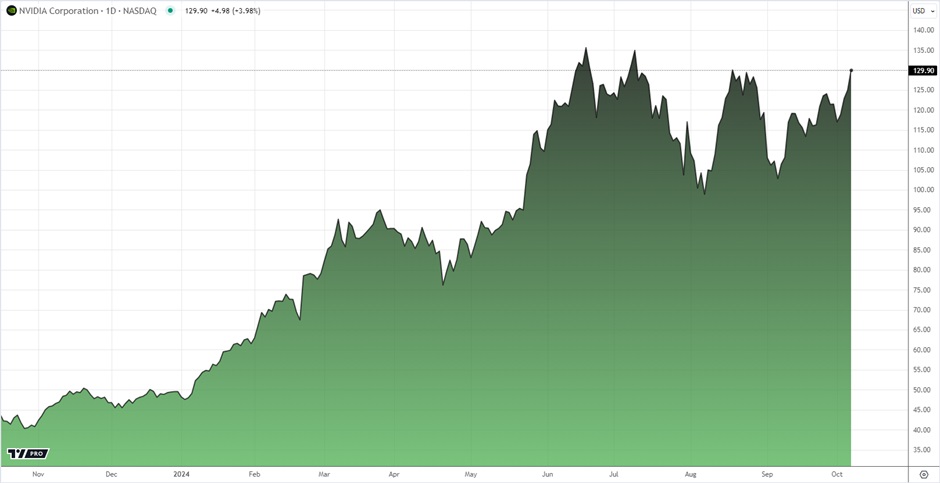
Nvidia, on the other hand, is defending itself, claiming the lawsuit is based on incorrect assumptions and misinterpretations of its business model and revenue streams. Just a few days ago, Nvidia stock rose on optimism surrounding the AI sector, and this positive trend appears to have been unaffected by the latest legal developments.

As the case proceeds, it’s important to consider the potential consequences for Nvidia. Uncertainty resulting from litigation could impact investor sentiment and lead to stock volatility. Thus, the market will closely monitor developments that might affect the company’s long-term outlook.

Traders and investors should stay vigilant and seize key opportunities on the chart. The free market replay feature can help analyze historical data and may be useful in assessing how the trial could influence the market. Since concerns over potential litigation often trigger price swings, traders can use this tool to build more informed trading strategies.

The lawsuit against Nvidia serves as a prominent example of legal challenges amidst growing attention from regulators and investors. The support from the SEC and the Department of Justice suggests that the case is a significant step toward ensuring financial market transparency. Only time will tell how this will impact Nvidia’s future and its attractiveness to investors. As Nvidia navigates the fast-growing AI sector, it will need to address both its financial and legal challenges, with success in one likely influencing the other.