DD
MM
YYYY

PAGES

DD
MM
YYYY

spot_img

PAGES

Home Blog Page 2844

Nigeria Welcomes ExxonMobil’s $10 Billion Deep-Water Investment Amid Shifts in Oil Industry Dynamics

0

The Federal Government of Nigeria has expressed enthusiasm over ExxonMobil’s plans to invest $10 billion in Nigeria’s deep-water oil operations. This development comes at a crucial time for Nigeria’s energy sector, which is undergoing significant shifts as international oil companies (IOCs) increasingly pivot from onshore to offshore ventures due to security, operational, and regulatory challenges.

The announcement was made by Vice President Kashim Shettima during a meeting with ExxonMobil executives on the sidelines of the ongoing 79th United Nations General Assembly in New York, United States. Shettima said that the proposed investment aligns with President Bola Tinubu’s economic reforms and investment-friendly policies aimed at revitalizing the Nigerian oil sector.

“This potential investment by ExxonMobil aligns perfectly with the President’s vision for a more investment-friendly Nigeria. We are committed to creating an enabling environment for such transformative projects,” Shettima stated.

ExxonMobil is one of several IOCs that have shifted focus from Nigeria’s onshore operations, marked by persistent security threats, regulatory uncertainties, and environmental concerns, to the more stable and potentially lucrative deep-water oil fields in the Niger Delta. The deep-water pivot is seen as a safer and more profitable venture, underscoring a broader industry trend as oil majors seek to de-risk their portfolios and streamline operations.

Shane Harris, Chairman and Managing Director of ExxonMobil Affiliates in Nigeria, reaffirmed the company’s long-term commitment to Nigeria, spotlighting the Owo project—a major subsea tie-back—which represents a significant portion of the proposed $10 billion investment. This ambitious project aims to expand deep-water exploration and production capabilities, marking a new chapter in ExxonMobil’s operations in Nigeria.

“Our commitment to Nigeria remains unwavering. As we celebrate 70 years of oil production and 8 billion barrels produced, we’re not retreating but refocusing our investments on deep-water opportunities,” Harris said. “We’re working closely with the President’s office and the Special Adviser to the President to secure favorable fiscal arrangements that will make this significant investment possible.”

ExxonMobil plans to inject $1 billion annually into maintenance operations and an additional $1.5 billion aimed at boosting production by 50,000 barrels per day over the next few years. This strategy aligns with the company’s broader objective to enhance production efficiency and explore untapped deep-water resources in Nigeria’s oil-rich Niger Delta region.

Shifting Tides: IOCs Exit Onshore, Embrace Offshore Ventures

ExxonMobil’s deep-water investment is part of a broader trend among IOCs, who are increasingly divesting from onshore assets plagued by operational challenges. In recent years, Nigeria’s onshore oil sector has been marred by issues such as oil theft, pipeline vandalism, and community conflicts, prompting companies to reconsider their onshore stakes.

In addition to ExxonMobil, other oil majors like Shell and TotalEnergies have also adopted divestment strategies, focusing on offshore operations while offloading onshore assets. Earlier this year, Shell reached an agreement to sell its Nigerian onshore oil assets to a local consortium for over $1.3 billion, pending government approval. The consortium, named Renaissance, includes ND Western, Aradel Energy, First E&P, Waltersmith, and Petrolin. Shell’s divestment plan includes additional payments of up to $1.1 billion contingent upon meeting certain conditions.

Similarly, TotalEnergies announced plans to divest its minority stake in a significant Nigerian onshore oil joint venture, following Shell’s exit strategy. These moves reflect a growing consensus among IOCs that offshore operations offer a more stable and less contentious environment for oil production.

In parallel to its offshore investments, ExxonMobil is also in the process of divesting its onshore assets. The company’s $1.2 billion deal with Seplat Energy, which has been in negotiation since 2022, recently gained momentum following President Tinubu’s intervention. The move is part of a broader effort to resolve regulatory hurdles and streamline the divestment process, further solidifying ExxonMobil’s strategic shift away from Nigeria’s onshore segment.

These divestments underscore a significant restructuring within Nigeria’s oil and gas sector, where onshore assets are increasingly transferred to indigenous companies that are better positioned to manage local challenges.

ExxonMobil’s deep-water investment is being viewed by Nigerian officials as a vote of confidence in the country’s economic reforms and policy adjustments aimed at attracting foreign investment.


BNB and SEI on the Rise, But Raboo’s AI-Meme Blend Positions It To Dominate The Crypto Market!

0

With BNB and SEI gaining momentum in the crypto market, Raboo’s innovative AI-meme strategy positions it as a standout contender. As BNB nears a major breakout and SEI’s TVL surpasses $1 billion, Raboo’s focus on AI-meme analysis could revolutionize the space, offering unique investment opportunities amid an evolving landscape.

Bullish sentiment surrounds BNB amid major news

Binance Coin (BNB) edges closer to breaking a critical resistance level. At the moment BNB trades at around $593. BNB climbed 8% in the past week. This rise is mostly driven by expectations around the imminent release of Changpeng Zhao (CZ). His release is just days away and the anticipation fuels positive sentiment, mainly as CZ still controls 90% of Binance’s shares.

Technical indicators support this bullish trend, with the Directional Movement Index (DMI) showing a strong accumulation phase. The positive DMI line has crossed above the negative, indicating robust buying activity. The Balance of Power (BoP) indicator is also positive at 0.30, reflecting buyers’ dominance over sellers. If BNB breaks past the $597.80 resistance level, the next target could be $645.80.

SEI gains momentum as TVL surges past $1 billion

The SEI blockchain saw remarkable growth. Its Total Value Locked (TVL) reached a new milestone of $1.1 billion. This represents a 53% increase in just the past week, which signals robust adoption of SEI’s decentralized finance (DeFi) protocols. The rapid expansion of the network attracted significant attention from institutional players, including Grayscale, which recently introduced a SEI Trust to its portfolio.

SEI’s performance over the last seven days was stellar, the price surged 45% to $1.72. The upcoming token unlock event, scheduled for October 1, will release $100 million worth of SEI tokens, accounting for 2.4% of the current circulating supply.

Raboo’s AI-meme strategy set to redefine the crypto market

Raboo already raised $2.5 million during its presale, with tokens priced at just $0.0057. This indicates strong early-stage support. What sets Raboo apart is its development of the Rabooscan tool, which uses AI to analyze meme trends and community sentiment. This provides the project with a unique edge.

Recent updates from the Raboo team reveal that they have successfully completed the data collection, cleaning, and organization phases for Rabooscan. This meticulous groundwork will enable the tool to offer in-depth, real-time insights into meme coin trends, making it a valuable resource for both investors and the community.

With 63% of its 1.8 billion $RABT tokens allocated to presale buyers, Raboo’s tokenomics are designed to reward long-term holders. This structure, combined with the project’s community-driven approach and AI-driven analytics, positions Raboo as a standout in the meme coin space. As the market for AI-meme projects grows, Raboo’s unique proposition could see it outperform not only other meme coins but also more established assets.

As the crypto market prepares for its next major rally, projects like Raboo are poised to capture investor attention. For those looking to diversify their portfolios with innovative assets, Raboo represents a new frontier in the intersection of AI and meme culture. Its strategic focus on leveraging AI for market insights, combined with strong community backing, makes it a project to watch closely in the coming months.

You can participate in the Raboo presale here.

Telegram: https://t.me/RabootokenPortal

Twitter: https://twitter.com/Raboo_Official


When everyone is farming, hunger is the result

0

It is counterintuitive: a nation where everyone is an employer is poor, and a place where everyone is a farmer has more hungry people. So, do not celebrate that more than 30% of Nigeria’s working population work in agriculture: “Nigeria’s agriculture sector continues to be the largest employer in 2023, engaging over 25 million individuals in farming, forestry, and fishing activities. According to the latest report by the National Bureau of Statistics (NBS), agriculture remains the backbone of the Nigerian workforce, accounting for 30.1% of the country’s total employment.”

The NBS data indicates that 25,341,219 individuals are actively employed in the agriculture sector, which surpasses the wholesale and retail trade sector, Nigeria’s second-largest employer. The trade sector employs 23,133,193 people, representing 27.5% of the workforce.

This latest figure underlines the importance of agriculture in filling Nigeria’s unemployment gap, especially in rural communities where access to other employment opportunities remains limited.

It is time for Nigeria to industrialize, and move away from where everyone is doing the same thing, and scaling poverty and hunger in the land of farmers. In America, just 2% of the working population do the farming and they can feed themselves and also export big time. We must clone whatever they’re doing.

Nigeria’s weakest link remains electricity as farmers cannot really invest more without energy to avoid post harvest wastages which could hit up to 37% in some places.

Agriculture Was Nigeria’s Largest Employer in 2023, Engaged Over 25M Workers

DOJ Files Antitrust Lawsuit Against Visa, Accuses Company of Stifling Competition in Debit Card Market

0

The U.S. Justice Department has filed an antitrust lawsuit against Visa, alleging that the financial giant uses its dominance to hinder competition in the debit card market, leading to billions of dollars in extra costs for consumers and businesses.

The lawsuit filed in the Southern District of New York, claims that Visa penalizes merchants and banks for using alternative payment processors, forcing them to rely on Visa’s payment processing technology. This has allowed Visa to maintain its dominance, with 60% of debit transactions in the U.S. running through its network, resulting in over $7 billion in annual fees.

In its complaint, the DOJ alleges that Visa’s pricing structures, such as volume discounts and exclusivity agreements, make it difficult for smaller rivals to compete. Visa is also accused of entering into partnerships with fintech companies like PayPal and Square to further block competition. The DOJ highlighted Visa’s internal strategy to “neutralize” fintech competitors, viewing companies like Apple Pay as existential threats to its debit card dominance.

Part of the lawsuit reads,

“Visa maintains its dominant position not by competing on a level playing field but by insulating itself from competition through exclusionary and anticompetitive means. Visa uses its size, scale, and centrality to the debit transaction ecosystem to penalize those who would switch to a different debit network or to companies that could develop alternative debit products. It uses its dominance to limit the growth of existing competitors and to deter others from developing new and innovative alternatives.

Visa profits from its monopoly by collecting a higher fraction of each debit transaction than it would if it faced competition. Visa’s schemes are largely invisible to consumers, in part because its debit transaction fees make up a relatively small fraction of each transaction, but total billions of dollars annually. Collectively, however, Visa’s systematic efforts to limit competition for debit transactions have resulted in significant additional fees imposed on American consumers and businesses and slowed innovation in the debit payments ecosystem.

“As Visa’s internal documents make clear, Visa feared a future where newer, better, or cheaper alternatives would force Visa to compete harder to win customers’ business or, worse. Without intervention, Visa will continue to insulate itself from the competition and subvert the competitive process in this essential industry that fuels U.S., commerce. Visa offers a modern-day Hobson’s choice. Visa leverages its control over non-contestable transactions and extracts routing deals that limit competition for contestable transactions.”

The lawsuit further adds that Visa’s conduct subverts the competitive process which deprives smaller rivals of the scale they need to compete effectively on both price and quality.

American lawyer and jurist, Merrick Garland stated that Visa’s actions allow it to extract fees far higher than what could be charged in a competitive market. These increased costs are ultimately passed on to consumers in the form of higher prices or reduced services. Garland emphasized that the impact of Visa’s conduct affects the cost of “nearly everything” that Americans purchase.

In his words,

“We allege that Visa has unlawfully amassed the power to extract fees that far exceed what it could charge in a competitive market. Merchants and banks pass along those costs to consumers, either by raising prices or reducing quality or service. As a result, Visa’s unlawful conduct affects not just the price of one thing but the price of nearly everything.”

Visa responded to the lawsuit, calling it “meritless” and vowing to defend itself. Julie Rottenberg, Visa’s general counsel, argued that the company is one of many competitors in the growing debit space, emphasizing the value and security Visa provides to businesses and consumers.

“Today’s lawsuit ignores the reality that Visa is just one of many competitors in a debit space that is growing, with entrants who are thriving,” When businesses and consumers choose Visa, it is because of our secure and reliable network, world-class fraud protection, and the value we provide”, she added.

The lawsuit is part of a broader effort by the Biden administration to tackle monopolistic behavior, with the DOJ pursuing similar actions against other major companies like Apple and Google.

Franklin Templeton to launch a mutual fund on Solana Blockchain

0

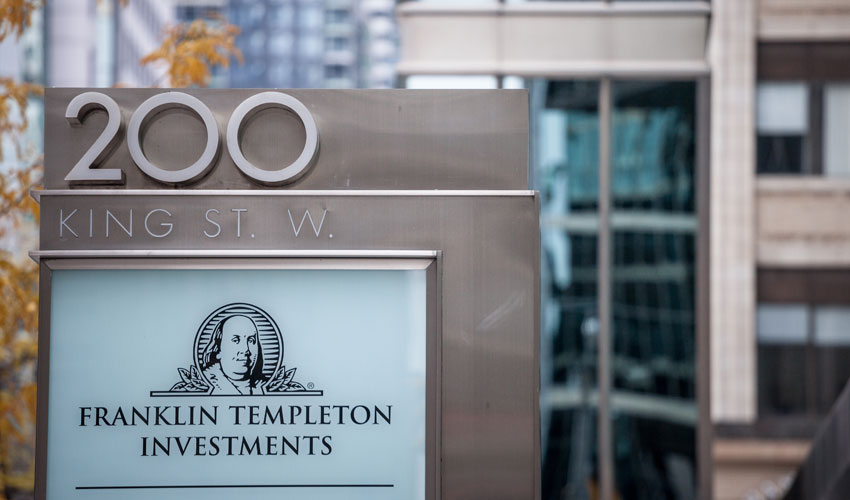
In a groundbreaking move that bridges traditional finance with the burgeoning world of decentralized finance (DeFi), Franklin Templeton, the global investment giant, has announced its plans to launch a mutual fund on the Solana blockchain. This initiative marks a significant step forward in the integration of blockchain technology into mainstream financial services.

The proposed mutual fund aims to leverage the high-speed and low-cost benefits of the Solana blockchain to offer investors a more efficient and transparent way to participate in the money market. The fund will focus on short-term US government securities, providing a secure and stable investment option for those looking to enter the crypto space without the typical volatility associated with digital assets.

Franklin Templeton’s move is a testament to the firm’s innovative approach to investment strategies and its commitment to staying ahead of the curve in a rapidly evolving market. By choosing Solana, known for its fast transaction speeds and low fees, Franklin Templeton is positioning itself to capitalize on the advantages of blockchain technology, which include enhanced efficiency, security, and accessibility.

Solana’s blockchain technology offers several advantages for mutual funds, making it an attractive platform for financial institutions like Franklin Templeton. Here are some key benefits:

Speed: Solana is renowned for its high throughput, capable of processing tens of thousands of transactions per second. This speed ensures that mutual fund transactions can be executed almost instantaneously, which is a significant improvement over traditional systems that can take days to settle.

Cost-Effectiveness: With lower transaction costs compared to other blockchains, Solana makes it more economical for investors to participate in mutual funds. The reduction in fees can potentially lead to higher net returns for investors.

Scalability: Solana’s architecture is designed to scale with demand without compromising on security or decentralization. This means that as the mutual fund grows, Solana can handle the increased load without a drop in performance.

Transparency: Blockchain technology provides an immutable record of all transactions. This transparency gives investors’ confidence in the integrity of the mutual fund and its operations.

Security: Solana’s blockchain is secure and resilient against various types of attacks, ensuring the safety of the mutual fund’s assets and investors’ information.

Innovation: By leveraging a cutting-edge platform like Solana, Franklin Templeton can offer innovative financial products and services that may not be possible with traditional systems.

Accessibility: Solana’s blockchain can be accessed from anywhere in the world, making it easier for a global audience to invest in the mutual fund.

Interoperability: Solana’s ability to interact with other blockchains and traditional financial systems can facilitate a seamless experience for investors who wish to diversify their portfolios across different asset classes.

By utilizing Solana’s blockchain, Franklin Templeton’s mutual fund stands to benefit from these advantages, potentially leading to a more efficient, secure, and user-friendly investment experience. This move could herald a new chapter in the evolution of mutual funds, combining the reliability of traditional finance with the innovation of decentralized finance.

The decision to build on Solana also reflects the growing interest from traditional financial institutions in DeFi and blockchain-based funds. With over $1.5 trillion in assets under management, Franklin Templeton’s foray into blockchain-based mutual funds could signal a new era of investment opportunities, blending the best of both worlds: the reliability of traditional finance and the innovation of DeFi.

As the financial landscape continues to shift towards digitalization, Franklin Templeton’s initiative could pave the way for other major players to explore and adopt blockchain solutions. This could lead to a more inclusive financial system where blockchain technology plays a central role in facilitating investments and transactions across the globe.

For investors, this development offers a glimpse into the future of finance, where blockchain technology not only enhances existing financial products but also creates new avenues for investment that were previously unimaginable. It’s an exciting time for the financial industry, and Franklin Templeton’s announcement is just the beginning of what promises to be a transformative journey for investors and institutions alike. Franklin Templeton’s plans to launch a mutual fund on Solana are a clear indication of the potential that blockchain technology holds for revolutionizing the financial sector.