
DD
MM
YYYY

PAGES

DD
MM
YYYY

spot_img

PAGES

Home Blog Page 285

Tinubu Urges Judiciary to Master Blockchain as Nigeria Softens Stance on Cryptocurrency

0

President Bola Ahmed Tinubu has called on Nigeria’s judiciary to deepen its understanding of blockchain technology, cryptocurrency, and other emerging digital systems, signaling what analysts see as a clear shift from the country’s previous hardline stance on crypto under the former Central Bank of Nigeria (CBN) leadership.

Speaking at the Economic and Financial Crimes Commission (EFCC)–National Judicial Institute (NJI) Workshop for Justices and Judges in Abuja, Tinubu said the sophistication of modern financial crimes requires new judicial tools and digital competence. He urged judicial officers to adapt quickly to the realities of a technology-driven financial world.

Represented by Vice President Kashim Shettima, Tinubu stated that Nigeria’s justice system must evolve to handle the complex financial offenses now being committed through digital currencies and blockchain-based platforms.

“How does one do justice in a cryptocurrency fraud case except one is grounded in such matters?” the President asked.

“Learning and relearning is no longer a buzz phrase but an essential undertaking for continued relevance in this digital age,” he said in a statement issued by his Senior Special Assistant on Media and Communications, Stanley Nkwocha.

Tinubu’s comments mark a notable shift in tone for Nigeria’s policy direction on cryptocurrency. Until recently, authorities maintained a tough stance against crypto assets, citing their use in money laundering, terrorism financing, and capital flight.

Under former CBN Governor Godwin Emefiele, the apex bank in February 2021 issued a circular directing all financial institutions to close accounts dealing in or facilitating cryptocurrency transactions. Banks were also prohibited from engaging with crypto exchanges, a move that effectively froze digital currency activities within the formal financial system.

The CBN defended the decision as a measure to protect the financial system from illicit flows, arguing that cryptocurrencies lacked intrinsic value and operated in an unregulated environment. However, the move drew heavy criticism from fintech innovators, investors, and international observers, who said it stifled innovation and isolated Nigeria from the global digital finance ecosystem.

Despite the restrictions, Nigeria quickly emerged as one of the world’s most active peer-to-peer crypto markets. Platforms like Binance saw rising activity from Nigerian users, indicating that digital currency adoption was growing beyond the reach of traditional regulation.

Analysts say Tinubu’s recent admonition to the judiciary represents a recognition of this new reality — that cryptocurrency is no longer a fringe activity, but an integral part of global finance requiring judicial literacy, regulatory clarity, and institutional adaptation.

In his address, Tinubu also warned judicial officers to uphold integrity and independence, stressing that compromise within the justice system undermines national morality.

“The moral foundation of our nation rests squarely on the integrity of its judicial system. We draw our moral distinction as a people from the judiciary, and we owe it the reverence and autonomy to remain the last sanctuary of our collective conscience,” he stated.

He assured that his administration remains committed to enhancing judges’ welfare and protecting judicial autonomy, citing recent remuneration reviews and reforms to strengthen institutional independence.

According to Tinubu, justice delivery in the digital era must be technologically driven, ethically upright, and swift enough to restore public confidence in the rule of law.

Tinubu also noted that many Nigerians are frustrated by prolonged corruption cases involving high-profile defendants, while smaller cybercrime cases are resolved with speed.

“The theme of this year’s workshop—Enhancing Justice in the Fight Against Economic and Financial Crimes—comes at a time when many Nigerians are angered by delayed adjudication in serious corruption cases,” he said.

He urged the judiciary to embrace continuous digital learning, warning that new financial crimes exploit gaps in digital literacy.

“Your vantage position on the Bench does not insulate you from the consequences of corruption,” the President warned. “There are no special roads, hospitals, or communities for judges. A Nigeria free of corruption is possible if we all commit to doing what is right.”

Broader government recognition of digital risks

Tinubu’s comments come amid renewed government interest in understanding and regulating Nigeria’s expanding digital economy. Earlier this month, Speaker of the House of Representatives Abbas Tajudeen inaugurated an ad hoc committee to assess the economic, regulatory, and security implications of cryptocurrency adoption and Point-of-Sale (POS) operations.

Speaking in Abuja, Tajudeen said the committee was formed in response to “growing concerns over fraud, cybercrime, and consumer exploitation in the digital finance space.”

The development follows ongoing efforts by the CBN and the Securities and Exchange Commission (SEC) to design a coherent regulatory framework for digital assets — one that balances innovation with investor protection.

Analysts say Tinubu’s call to the judiciary completes a triangular shift in Nigeria’s institutional approach to crypto — from prohibition under Emefiele, to cautious re-engagement under the SEC, and now to digital literacy and judicial readiness under Tinubu’s administration.
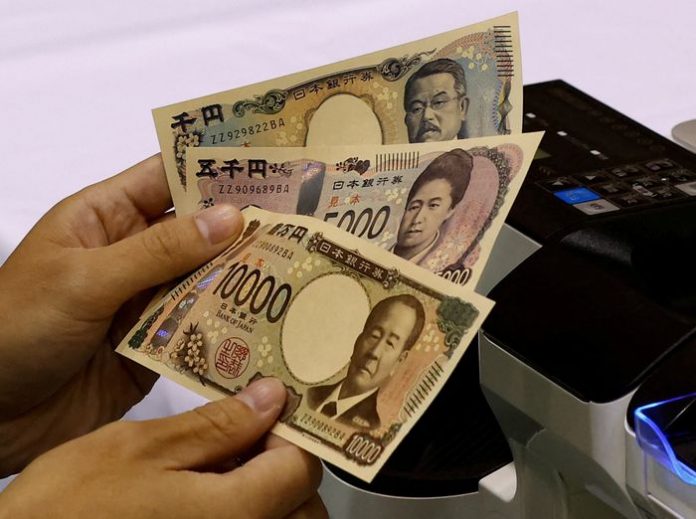

Yen Falls, JGB Yields Slip as Japan’s Takaichi Becomes First Woman Prime Minister

0

Japan’s financial markets saw a muted but symbolically significant session on Tuesday as the Nikkei 225 closed at a record high, while the yen weakened and government bond yields fell, following the parliamentary confirmation of Sanae Takaichi as Japan’s first woman prime minister.

The Nikkei benchmark index rose as much as 1.55% during early trading before paring gains amid choppy afternoon moves to close 0.3% higher at 49,316.06 — a fresh all-time high. The broader Topix index was little changed by the end of the session.

Japanese government bonds (JGBs) rallied, sending yields lower across the curve. The benchmark 10-year yield eased 1 basis point to 1.655%, while the five-year yield dropped 2 basis points to 1.22%. The yen fell 0.4% to 151.36 per U.S. dollar, reflecting continued weakness as investors reassessed Japan’s fiscal outlook under Takaichi’s administration.

A new chapter in Japanese politics

Takaichi’s victory marks a historic milestone for Japan, a country that has never before elected a woman to its highest political office. The 63-year-old conservative lawmaker, known for her nationalist leanings and support for large-scale fiscal stimulus, secured 237 votes in the 465-seat lower house, comfortably surpassing the threshold needed to assume power.

The parliamentary confirmation came after a politically charged month in which Takaichi won the Liberal Democratic Party (LDP) leadership race but faced delays in forming a government after her long-time ally, Komeito, split from the ruling coalition.

Markets had already priced in much of the optimism surrounding her policy stance — dubbed the “Takaichi trade” — which combines expectations of equity strength, a softer yen, and weakness in long-term bonds on the back of expansive fiscal measures.

Markets brace for pragmatism

However, analysts now suggest that Takaichi’s fiscal ambitions may face limits. Despite her victory, the LDP’s new alliance with the Japan Innovation Party (Ishin) leaves the ruling bloc short of a clear parliamentary majority, constraining her ability to push through aggressive stimulus or major structural reforms.

“We think the administration will be compelled to take a pragmatic approach to economic policy and do not expect the Takaichi trade to gain significant traction in the medium term,” said Yusuke Matsuo, senior market economist at Mizuho Securities, in a note to clients.

Investors are watching closely to see how the new administration will navigate Japan’s fragile economic recovery and manage its debt load — the highest among developed nations, at more than 250% of GDP.

Market attention has also shifted toward cabinet appointments, especially those overseeing fiscal and monetary coordination. Broadcaster FNN reported that Takaichi plans to name Satsuki Katayama, a former regional revitalization minister and finance ministry bureaucrat, as finance minister. Katayama told Reuters earlier that Japan’s “economic fundamentals suggest the yen’s real value is stronger than where it has traded of late,” hinting at possible discomfort with excessive yen weakness.

A market torn between optimism and caution

The modest rally in equities suggests that investors see continuity rather than radical change ahead. Consumer and domestic demand stocks led Tuesday’s gains, with video game maker DeNA rising 6.6% and online fashion retailer ZOZO up 4.1%. In total, there were 125 advancers against 99 decliners on the Nikkei index.

Traders say Takaichi’s rise has rekindled optimism among domestic investors that the government may pursue policies aimed at revitalizing Japan’s consumer economy, including targeted subsidies and digital transformation initiatives. But with inflation still below the Bank of Japan’s (BOJ) 2% target and real wages under pressure, analysts caution that fiscal expansion alone may not be enough to sustain the rally.

The yen’s decline following the confirmation points to market expectations that any immediate shift toward fiscal tightening or monetary normalization remains unlikely. Japan’s central bank has continued to maintain ultra-loose policy under Governor Kazuo Ueda, even as other major central banks have begun to ease off their own tightening cycles.

“Takaichi trade” — from reflation hope to realism

When Takaichi emerged as the frontrunner for the LDP leadership earlier this month, investors rushed into what became known as the Takaichi trade — betting on rising equities, falling bond prices, and a weaker yen in anticipation of pro-growth spending and accommodative monetary policies.

However, Nomura Securities’ Naka Matsuzawa, chief macro strategist, said that expectations for an aggressive reflation push are overblown.

“The new Takaichi trade is more of a flattening of the yield curve and a stock market rally driven by domestic demand stocks,” Matsuzawa said. “The stock market will probably lose momentum after investors realize that Takaichi is not as reflationary as they thought and the yen actually strengthens.”

This view reflects growing skepticism among Japanese economists that large-scale fiscal stimulus — without accompanying structural reforms — will do little to address Japan’s long-term stagnation. While Takaichi has championed government-led investment in technology, defense, and regional development, such programs may be difficult to sustain without widening Japan’s fiscal deficit.

JGB prices rose across maturities as traders bet that the new government will proceed cautiously on fiscal expansion. The 10-year yield, which had recently tested its highest level since 2011, eased slightly amid subdued inflation and weak household spending data.

A flatter yield curve suggests that markets expect the BOJ to remain dovish for now, even as it faces pressure to gradually normalize policy to ease distortions in the bond market.

Yelp Launches AI Tools to Manage Restaurant Calls, Reservations, and Bookings

0

Yelp’s new AI-powered tools promise to answer calls, take reservations, and manage bookings for “understaffed” restaurants.

The twin solutions, Yelp Host and Yelp Receptionist, mark a new chapter in the company’s evolution as it leans heavily into artificial intelligence to streamline customer management “around the clock.”

The move signals a deeper shift in the hospitality and service industries toward automation. Yelp is no longer just a review platform; it’s positioning itself as a digital infrastructure provider for small and medium businesses struggling with labor shortages and rising operating costs.

Host, an AI agent, can answer calls from guests and manage tables, according to Yelp. The system can take reservations over the phone, modify or cancel bookings, provide real-time waiting times, and even capture special requests. It can also answer common questions — like whether the restaurant offers vegan options or welcomes dogs — and send guests links to menus or help them join waitlists. The AI can also trigger automated follow-up texts to place pickup or delivery orders.

The company first previewed Yelp Host in April. The service will be available to restaurants starting from $149 per month, or $99 for existing Yelp Guest Manager customers. New features are already in the pipeline. Yelp said Host will soon be able to add diners directly to the Yelp Waitlist “in the coming weeks,” a feature designed to further reduce friction between customers and restaurant staff.

Alongside Host, Yelp is launching Yelp Receptionist, another AI agent built to handle incoming calls for businesses. Like Host, Receptionist will respond to customer questions, collect details needed to vet leads, provide quotes, and schedule appointments. Both AI systems come pre-trained on Yelp’s business data and are designed to “work out-of-the-box to answer calls 24/7, or only when extra coverage is needed.”

Receptionist will first roll out to “eligible” businesses, starting at $99 per month, with a wider release planned “in the coming months.” Yelp said it intends to make the feature accessible to local businesses across various sectors, from restaurants and salons to home service providers.

These AI products are part of a larger slate of updates announced during Yelp’s fall release roster. Other features include expanding its AI chatbot assistant to all platforms and Canada, a new visual recognition tool that lets users point their phone at a menu to instantly bring up related photos and reviews, and an AI-powered voice search that allows users to find services “by searching like how you’d speak.” Yelp has also been experimenting with AI systems that summarize customer reviews and automatically create composite restaurant profiles by stitching together user-generated content.

Vocal AI agents like Host and Receptionist are part of a broader trend in the service economy. Companies such as DoorDash, Uber Eats, and OpenTable have been testing automation as a way to help restaurants cope with staffing challenges and improve operational efficiency. For many restaurants, especially independent ones, hiring full-time hosts or receptionists is a growing expense. Yelp’s tools aim to fill that gap — not by replacing staff entirely, but by giving them digital assistance that never sleeps.

The timing of Yelp’s push is strategic. Across the U.S. and other markets, restaurants continue to struggle with rising labor costs and high turnover rates. According to the National Restaurant Association, 62% of operators say they don’t have enough staff to meet customer demand. AI-driven support tools could therefore become a lifeline for small businesses looking to scale service quality without hiring more employees.

Yelp’s move also mirrors broader shifts in how technology companies are approaching conversational AI. Google’s Duplex, for example, allows users to ask Google Assistant to make restaurant reservations or hair appointments over the phone — speaking directly to humans in natural language. Yelp’s Host and Receptionist flip that dynamic. Instead of the customer outsourcing their calls to AI, businesses are now doing it. The result is a system where, increasingly, AIs are talking to AIs.

This inversion also underlines how differently major tech players see the future of AI-mediated interaction. Google’s Duplex, though powerful, is fundamentally consumer-oriented: its goal is to help users skip queues and manage errands. Yelp, by contrast, is focusing on the business side — embedding AI directly into the workflow of customer-facing industries. The difference highlights a quiet divide emerging in the automation race: one side building tools for users, the other building tools for those being called.

DoorDash is taking yet another path. Earlier this year, the food delivery giant began testing AI voice ordering for restaurants that struggle to answer phone calls during rush hours. Using automated voice models trained on restaurant menus, the system can take phone orders and send them directly into a restaurant’s point-of-sale system. Like Yelp, DoorDash said the feature was designed to reduce missed calls and increase sales.

The growing adoption of these systems signals the rise of a new kind of digital employee — one that lives in the cloud but manages human interaction with uncanny efficiency. Still, it raises questions about authenticity and the loss of the “human touch” in service encounters. While Yelp emphasizes that its AIs can hand off complex or emotional conversations to real staff, the company is betting that many customers won’t notice — or won’t mind — when they’re talking to a machine.

The question now is whether businesses and their customers will embrace the change. Early adopters say AI scheduling tools have improved efficiency and cut no-show rates, but others worry that the technology could depersonalize the hospitality industry.

Goldman Sachs Warns of Rising Global Risks from China’s Rare Earth Dominance as U.S. and Australia Strike Minerals Pact

0
The logo for Goldman Sachs is seen on the trading floor at the New York Stock Exchange (NYSE) in New York City, New York, U.S., November 17, 2021. REUTERS/Andrew Kelly/Files

Goldman Sachs has warned that global supply chains for rare earths and other critical minerals are facing mounting risks as China tightens export controls and extends its dominance over key stages of mining, refining, and manufacturing.

The bank’s latest note came at the heels of growing challenges confronting nations and industries seeking to build independent supply chains in the face of what it called China’s entrenched leverage in the critical minerals market.

The caution comes after Beijing expanded its export curbs on October 9, adding five new rare earth elements to its restricted list and imposing tighter scrutiny on semiconductor-related users. The move, announced just weeks ahead of an expected summit between U.S. President Donald Trump and Chinese President Xi Jinping, reinforced fears that China could increasingly weaponize its control of strategic materials in response to escalating trade tensions.

China’s Supply Chain Leverage

Goldman Sachs said China now controls about 69% of global rare earth mining, 92% of refining capacity, and 98% of magnet manufacturing, giving it an unrivaled grip on the supply chains that power modern technologies. Rare earth elements (REEs), though produced in relatively small volumes, are essential for high-tech industries and strategic applications — from electric vehicle batteries and computer chips to artificial intelligence systems, advanced robotics, and defense equipment.

While the global rare earth market was valued at $6 billion last year — a fraction of the copper market, which is 33 times larger — Goldman warned that a 10% disruption in industries reliant on REEs could wipe out $150 billion in global economic output. Such a disruption, the bank noted, could also trigger inflationary pressures as shortages ripple through manufacturing, energy, and defense sectors.

Goldman Sachs identified samarium, graphite, lutetium, and terbium as particularly vulnerable to Chinese export restrictions. Samarium, used in heat-resistant samarium-cobalt magnets, plays a critical role in aerospace and defense systems. Lutetium and terbium, which are used in semiconductors, sensors, and lasers, are also at risk, with potential GDP losses if supplies are disrupted.

The bank further noted that light rare earths — such as cerium and lanthanum — could become future targets for export curbs, given China’s dominant role in both refining and mining. These elements are widely used in catalysts, glass polishing, and hybrid vehicle components.

While Western producers such as Lynas Rare Earths (LYC.AX) in Australia and Solvay in Europe could help ease shortages, Goldman said global reliance on China remains substantial. Even companies with domestic refining capacity still depend on Chinese feedstock or intermediate processing.

Barriers to Building Independent Supply Chains

Countries have accelerated efforts to develop independent rare earth and magnet supply chains, but Goldman Sachs highlighted deep structural and environmental barriers that make near-term independence unlikely.

The bank said heavy rare earth elements (HREEs), which include terbium, dysprosium, and lutetium, are especially scarce outside China and Myanmar. Known deposits elsewhere tend to be small, lower-grade, or radioactive, making them economically and environmentally challenging to develop. It typically takes eight to ten years to bring a new rare earth mine into production.

Refining capacity poses another hurdle. Goldman said building and optimizing a new refinery takes at least five years, requiring advanced expertise and specialized infrastructure to separate and purify elements with extremely similar chemical properties. Few countries have the necessary facilities or environmental tolerance to process these materials at scale.

Even as magnet manufacturing expands in the United States, Japan, and Germany, Goldman noted that production remains constrained by China’s control of key inputs such as samarium and neodymium.

Investment and Commodity Risks

Goldman Sachs recommended equities as a potential hedge against rare earth supply disruptions, highlighting Iluka Resources (ILU.AX), Lynas Rare Earths (LYC.AX), and MP Materials Corp (MP.N) as key players positioned to benefit from investment flows into alternative supply chains. The bank forecast a deficit in supplies of Neodymium-Praseodymium Oxide (NdPrO) — a compound crucial for high-strength permanent magnets used in electric vehicles, wind turbines, and smartphones.

The report also extended its caution beyond rare earths. Goldman Sachs warned that other commodities — including cobalt, oil, and natural gas — face rising risks of supply disruptions amid intensifying geopolitical tensions and growing resource nationalism. It cited recent developments in the Middle East and Africa, where instability has already affected exports of strategic materials essential for clean energy technologies.

U.S. and Australia Move to Counter China’s Grip

Amid growing concern about China’s dominance, President Donald Trump and Australian Prime Minister Anthony Albanese on Monday signed an agreement at the White House intended to boost supplies of rare earths and other critical minerals. The pact will see the U.S. and Australia jointly contribute $3 billion to a pipeline of projects worth $8.5 billion over the next six months, according to both governments.

As part of the agreement, the U.S. Department of Defense will invest in a gallium refinery in Western Australia capable of producing 100 tons per year. The U.S. currently imports roughly 21 tons of gallium, representing 100% of its domestic consumption, according to the U.S. Geological Survey. Gallium is used in microwave circuits, blue and violet LEDs, and other advanced electronics that are vital for defense and high-tech industries.

The deal reflects a concerted push by Washington and Canberra to counter China’s control of critical minerals markets — particularly after Beijing’s recent tightening of export controls. It also builds on previous U.S.-Australia cooperation under the Critical Minerals Partnership, which seeks to diversify sources of essential materials for defense, clean energy, and semiconductors.

China responded on Tuesday to the U.S.-Australia critical minerals agreement by calling on resource-rich countries to help maintain supply chain stability. Speaking in Beijing, Guo Jiakun, a spokesperson for China’s Ministry of Foreign Affairs, was asked about the deal, which has been widely viewed as an effort to counter Beijing’s dominance.

“The formation of global production and supply chains is the result of market and corporate choices,” Guo said, according to NBC. “Resource-rich nations with critical minerals should play a proactive role in safeguarding the security and stability of the industrial and supply chains, and ensure normal economic and trade cooperation,” he added.

While Guo did not directly criticize the U.S.-Australia agreement, the statement signaled Beijing’s intention to frame its dominance as market-driven and legitimate, even as Western nations increase efforts to reduce dependency on Chinese raw materials.

Coca-Cola Lifts Earnings Above Estimates but Admits Soft Global Demand

0

Coca-Cola posted third-quarter results that exceeded Wall Street expectations on both earnings and revenue, but the beverage giant acknowledged that demand for its drinks remains soft across several key markets, particularly among lower-income consumers in the United States and parts of Latin America.

The company reported adjusted earnings per share of 82 cents, topping the 78 cents analysts expected, according to estimates from LSEG. Adjusted revenue came in at $12.41 billion, slightly above the $12.39 billion anticipated.

For the quarter ended September, net income attributable to shareholders rose to $3.7 billion, or 86 cents per share, up from $2.85 billion, or 66 cents per share, a year earlier. Excluding restructuring charges and other items, earnings stood at the same 82 cents per share that outpaced projections.

Net sales rose 5% year over year to $12.46 billion, while organic revenue — which excludes currency fluctuations, acquisitions, and divestitures — increased 6%, reflecting modest underlying growth even as volumes remained largely stagnant in several regions.

Shares climbed nearly 3% in premarket trading, signaling investor optimism about the company’s ability to maintain profitability despite global economic pressures that continue to weigh on household spending.

Volume growth still fragile

Coca-Cola’s unit case volume, a key indicator of consumer demand that strips out the effects of pricing and currency, rose 1%, reversing a decline seen in the previous quarter. However, the rebound was uneven.

Volume in both North America and Latin America — traditionally strong revenue bases — was flat. Executives have previously acknowledged that lower-income consumers in the U.S. have been cutting back on beverage purchases as higher living costs erode disposable income. The company has responded by expanding its portfolio of “affordable options” to retain price-sensitive customers.

While volumes in some segments improved, others remained pressured. The company’s sparkling soft drinks, which include its flagship Coca-Cola brand, were flat, while its juice, value-added dairy, and plant-based beverages segment saw a 3% contraction in global volume.

In contrast, Coca-Cola’s water, sports, coffee, and tea category showed the most promising growth. Bottled water and sports drinks each rose 3%, and coffee and tea products recorded 2% volume growth. The performance underscores the shift in consumer preferences toward hydration and wellness-focused products, a trend that has been reshaping the global beverage industry.

Mixed results across regions

Coca-Cola’s flat performance in the Americas points to both consumer fatigue and the effect of tighter spending patterns in developing markets. Inflation has squeezed purchasing power across Latin America, while in the United States, discount retailers and private-label beverage brands continue to chip away at the company’s lower-end market.

Still, the 1% global volume increase marks a modest improvement from the prior quarter, when higher prices led to a dip in sales volumes. The company has relied heavily on pricing power in recent years to offset cost pressures from commodities and logistics, but with inflation moderating in several markets, analysts have warned that Coca-Cola’s ability to raise prices further may be limited.

Steady outlook amid macro headwinds

Coca-Cola reaffirmed its full-year forecast, projecting comparable earnings per share to rise 3% and organic revenue to increase between 5% and 6%. The company said it expects “a slight tailwind” to both revenue and earnings from currency fluctuations in 2026, but it will provide a detailed forecast for the coming year with its fourth-quarter results.

For now, management appears focused on balancing pricing discipline with innovation across its product lines. In addition to expanding its range of smaller, affordable packages, Coca-Cola has continued investing in digital marketing and localized distribution to reach cost-conscious consumers.

The company has also emphasized premiumization in select markets — pushing higher-margin drinks such as Coca-Cola Zero Sugar and flavored sparkling waters — to sustain revenue growth even where overall volumes remain flat.

Shifting consumption patterns

Coca-Cola’s report comes amid broader signs that the global beverage industry is navigating a transitional phase. Soft drink consumption has slowed in mature markets, while emerging economies face uneven recoveries from the pandemic and inflation-driven slowdowns.

Analysts say the company’s performance reflects this global rebalancing. The solid top-line figures underscore Coca-Cola’s resilience, but the muted volume gains highlight the challenges of sustaining growth when price increases are no longer the primary driver.

Even as Coca-Cola pushes toward healthier and diversified offerings, the flat demand for its core sparkling beverages denotes the enduring challenge of modernizing a century-old brand for shifting consumer preferences.

The near-term question for investors is whether Coca-Cola can reignite demand without eroding its margins.  Some analysts believe that while affordability campaigns can stabilize volumes, they risk squeezing profitability if not offset by efficiency gains.

Coca-Cola’s management has not announced any significant restructuring or cost-cutting measures this quarter, but the company’s past filings suggest ongoing efforts to streamline operations and leverage its global bottling partnerships for efficiency.

With currency volatility easing and input costs stabilizing, analysts expect Coca-Cola to deliver steady, if unspectacular, growth in the coming quarters. The company’s ability to maintain a strong pricing mix, they say, will determine whether the modest rebound in volume can translate into sustainable long-term momentum.