DD
MM
YYYY

PAGES

DD
MM
YYYY

spot_img

PAGES

Home Blog Page 2868

No Price Gain Or Change By Virtue Of Starlink’s Entry Into Nigeria: It’s A Big Fish In A Small Pond – An Interview With Diseye Isoun

0

In January 2023, when Elon Musk’s SpaceX’s Starlink satellite internet began operation in Nigeria, the news sent a ripple of jittery and excitement across the country’s telecom market. For internet subscribers, it was exciting to have an alternative to local internet providers whose services have been judged as poor over the years.

Nigeria ranked 99th in the world for mobile speeds and 132nd for fixed broadband speeds in August 2024, with a mobile download speed of 20.19Mbps and 30ms Latency. The fixed broadband download speed was 21.59Mbps while its latency was 26ms. Against this backdrop, the launch of Starlink with a download speed between 25 and 220 Mbps and a latency range between 25 and 60ms, was a cause for concern for local internet providers, whose market share is believed to have come under threat.

More than a year after launch, Starlink has become Nigeria’s third largest Internet Service Provider (ISP) by subscriber number and is setting up ground stations across the country to secure more market share. This development has boosted the discussion around the influence of Starlink in Africa, especially Nigeria, the continent’s largest telecom market.

In this interview with Tekedia’s Samuel Nwite, Diseye Isoun, an African broadband development expert, offers valuable insights that enrich this subject.

Isoun was instrumental in introducing satellite connectivity to the Nigerian government and helped establish key components of the Ministry of Communications (et al.), including Galaxy Backbone and Nigcomsat. He works at Content Oasis, with a focus on delivering connectivity to underserved areas and securing a USTDA grant for broadband feasibility studies.

Among other things, Isoun believes that although Starlink has the upper hand, the road to being the dominant internet provider in Africa is littered with cramps – keeping the market open for everyone.

QUESTION 1: What are the potential implications of Starlink’s ground stations in Nigeria for the country’s internet connectivity, particularly in underserved regions?

ANSWER: In the case of the ground stations, the whole idea I think is that Starlink has seen an opportunity in Nigeria that I think that they are quite hopeful on and to that end now that they’ve started to provide service and gather data on the opportunity, they see and are able to attempt to forecast demand and also want to ensure that the users continue to get the best service possible. To that end, they’re deploying ground stations to ensure the quality of service and perhaps, over time, to ensure they can step up to demand.

QUESTION 2: Do you see the entry of Starlink, with its ground stations, impacting the market share of traditional ISPs like Spectranet and FibreOne in Nigeria?

ANSWER: Sure, I mean I had this conversation earlier with a friend and I think I used the cliché or the well-known framing to say that the ISP market is small in Nigeria as compared to the ways in which most Nigerians access the Internet. Most Nigerians access the Internet over mobile networks and by doing so mostly by phones.

Now by many definitions in the West or in developed countries, this would not be broadband but at the end of the day, it is the way most people can connect to the Internet whether that is at 1megabyte or 10megabyte or unreliable or reliable. 98% of folks connect to the Internet that way. MTN, Airtel, and Glo are basically their ISP. Now, traditional ISPs like Spectranet, Smile, and FibreOne make up about 2% or less of the total number of people accessing the Internet.

And yes, in some ways, that Internet access is better than what you get on your phone but at the end of the day, it’s 2%. So when you hear about Starlink being the third highest provider of Internet all of a sudden in Nigeria, it is the third highest of 1% to 2%. So they are a large fish in a small pond and they will probably go to number one within that small ISP quite quickly but once again they’ll be a big fish in a small pond and the opportunity still exists to deepen the penetration of broadband not necessarily taking from the mobile operators because they’re not providing true broadband anyway. True broadband does not truly exist and the opportunity is still there for some to take that with some strategies I have discussed and can discuss it again.

QUESTION 3: Starlink is collaborating with Equinix following the acquisition of MainOne, how significant is this partnership in strengthening Starlink’s position in Nigeria’s telecom industry?

ANSWER: It will continue strengthening and ensuring that they have a good presence and a good service in Nigeria but there are still quite a few unanswered questions about how this service will expand in Nigeria over the next 2 to 5 years. Regardless of these kinds of partnerships, we are more about ensuring service and providing service to the richest of Nigerians, that’s currently where we are.

QUESTION 4: What advantages do Starlink’s ground stations offer in terms of latency and overall internet performance compared to the existing infrastructure used by traditional ISPs?

ANSWER: Again, I think I would say not just ground stations. I would tilt the question a bit to simply say, what are the advantages of Starlink service over the traditional ISPs and the Telco internet? Indeed higher speed, low latency, increased reliability. Once again, Starlink reduces its reliability when there’s heavy rain just like we’re used to it through our DSTV and we’re watching the football and they are about to score and it will go off. But like I always make the distinction, downtime that you expect is much better than downtime that you cannot explain. So even though there will be moments when our heavy rain will affect the performance in general, it is far and beyond a better service from any number of variables than what exists today.

QUESTION 5: How might the construction of ground stations influence the pricing dynamics in the Nigerian ISP market, especially given Starlink’s premium pricing compared to local providers?

ANSWER: Again, I think that some of the little details are important, I mean Starlink’s one-time fee is about N456,000 including shipping fees. Smile or Spectranet may give you a module for N50,000. With MTN you can use your smartphone if you have one and you don’t have to pay for any equipment (quote on quote). You can buy a plan and you can tether that to your laptop and you’re on but the benefit that Starlink has over the traditional ISPs is ubiquitousness. Starlink is everywhere in Nigeria, just put up your dish and you’re on, whereas Smile and Spectranet and all these fiber-to-the-home folks like FibreOne are in only specific markets because their models don’t allow them to build out that way.

So the one-time fee is much more for Starlink but it’s everywhere in the country and then although MTN is kind of in a lot of places in the country, the speed cannot be compared to that of Starlink. The recurring fee of Starlink is competitive to the Smile and the Spectranet of the world, they are about on par. So in my own opinion, there’s really no price gain or change by virtue of Starlink’s entry because they’re quite in their own niche in that matrix of cost, quality of service, and availability across the country.

QUESTION 6: In what ways could Starlink’s local ground stations reduce Nigeria’s reliance on international data centers, and what are the potential benefits for end-users?

ANSWER: The reduction of reliance on international data centers will come from a few places but certainly to the extent that ground stations ensure that data stays local. I think that will assist and reduce the reliance on international data centers but in addition, increase the number of data centers locally, and improve intra-city fiber (middle mile as they call it) such as the 90,000-kilometer projects that have been discussed by the minister, etc. This will also have a lot of positive impact on that.

QUESTION 7: What challenges do you foresee for Starlink as it seeks to expand its presence in Nigeria, particularly in terms of regulatory hurdles or competition from established ISPs?

ANSWER: I think regulatory hurdles shouldn’t be a big issue because they’ve already gotten their licenses. They require a gateway license, ISP license, and installation license and they have done their homework there. They may eventually provide what we call backhaul to last mile folks or even Telcos ISPs. So they may need to have a little bit of consideration regulatory-wise that way. But I don’t see any major hurdle for them there and in terms of competition from established ISPs, again, I see Starlink coming into a niche where nobody is playing currently. So it’s not a question of competition.

The equipment for Starlink is currently 400-450,000 Naira. And it’s not going to go down, if it goes down they are subsidizing and our Naira is also not getting much better. So, let’s just assume that’s a pretty reasonable price, 400-450,000 Naira. Now, let’s put it this way – how many Nigerians are making 400,000 Naira a month? It is a low number and if they made 400,000 Naira a month how many of them would want to spend that one month’s salary on a Starlink kit?

So, you have to really think about the fact that there’s only a niche – I mean, there are some businesses, of course, that can also use it, but there is only a very small niche of Nigerians that can afford to buy a Starlink kit. And by the way, being good Nigerians, there’s a very healthy secondary market where a lot of people are buying the kits and reselling them at an even higher price than the official price.

So you may be talking about 100- 250,000 kits that can be ruled out at that price relatively easily after which the purchasing power of Nigerians is then challenged for growth above and beyond that. So in that context, if you are a Nigerian that cannot afford N400,000 up front, you then are looking at different ISPs that they’re not competing against anyway.

They are trying some credit rules and spreading out the costs in Kenya so that you can pay over a period of time. Regarding credit structure, although Kenya is not so great either, our credit structures here are not great too and people don’t have a culture of paying back. So you also have a system where they’re not paying, you have to be able to go and collect your Starlink kit without getting rabies from dog bites, so these are the realities on the ground.

QUESTION 8: Do you think Starlink’s satellite-based technology will address the connectivity challenges faced by rural and remote areas in Nigeria?

ANSWER: Yes, I think they can but they will need to address the high cost of the kits and that can be done through certain kinds of collaboration and additional value-added technologies that will allow their equipment to be used by multiple users. So, there are ways around or ways in which that can be done, but it will need to go via collaboration.

QUESTION 9: With Starlink rapidly gaining customers since its 2022 entry, how do you think the traditional ISPs can adapt to maintain their competitiveness in the evolving market?

ANSWER: Yes again, traditional ISPs are fine in the sense that they don’t charge 400,000 Naira for equipment, they charge 30 to 50,000 Naira. So they may lose the very high-end customers, but they can still target customers that cannot afford that while they can also partner ultimately, with Starlink, if Starlink will allow for that kind of model so that they can do certain kinds of point-to-multipoint services and leverage Starlink as a kind of backhaul. So, I think those are possibilities that may exist in the future.

QUESTION 10:The cost of Starlink is undoubtedly high and unaffordable for most underserved areas in Nigeria, do you see a possibility of subsidy from USTDA, or is the organization focused on ISPs when it comes to internet access?

ANSWER: Yeah. I mean I can simply bring to our attention, the Universal Service Provision Fund which is mandated to assist in connectivity in underserved areas, especially areas where telecommunication companies may not roll out due to the lack of economic viability. And yes, it is possible that certain kinds of agencies and initiatives like that may be subsidized. They come up with a program where they subsidize Starlink services in some ways so that at least the initial costs can be reduced, and ensure that the service can get out to underserved parts of the country.

QUESTION 11:  Starlink just announced that its satellites will have an advanced Evolved Node B (eNodeB) modern onboard that will act like a cellphone tower in space, allowing network integration similar to that of a standard roaming partner. This “Direct to Cell” will handle the radio interface with mobile devices, connecting directly with ordinary, unmodified 4G LTE devices.

Do you think this will provide leverage for ISPs and foster sustainable growth for the telecom market given that Starlink will need to forge partnerships with existing telcos who will provide the needed LTE spectrum for satellite signals?

ANSWER: There definitely would be the structure as they try to play it out. In the US, it does indeed involve partnering with the equivalent of our MTN and Airtel – T-Mobile, AT&T, etc. But at this point, the revenues that come from that kind of service are quite low, because this direct-to-cell is simply for things like texting, emergency connectivity, and very low bandwidth so there’s not a lot of revenue. It is a nice to have service, not a need to have so I don’t see any major revenue benefits in the short to medium time on this.

Nigeria No Longer Depends On Ways and Means for Fiscal Obligations – Finance Minister

0

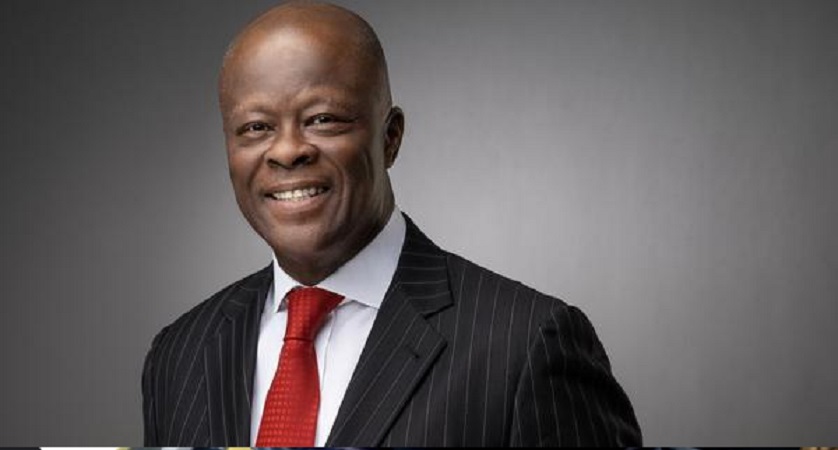
At the 2024 Access Corporate Forum held in Lagos, Nigeria’s Minister of Finance and Coordinating Minister of the Economy, Mr. Wale Edun, made a significant declaration regarding the federal government’s fiscal management approach. He announced that the federal government had ceased relying on the controversial “Ways and Means” financing mechanism, a form of borrowing from the Central Bank of Nigeria (CBN) that involves printing money to cover the government’s deficit.

Edun’s statement at the forum, themed “Nigeria’s Economic Rebirth: Hopes and Implications,” disclosed that the federal government is now focused on managing its debt obligations without resorting to Ways and Means.

He explained, “We have exited Ways and Means. What does that mean? It means that the government, when it has to pay domestic debt service or foreign debt service, does not go to the central bank to debit the consolidated revenue fund of the government, which means just printing the money.”

This announcement marks a departure from a practice that had been heavily criticized by economists and financial experts. Under former President Muhammadu Buhari’s administration, the government borrowed over N22 trillion from the CBN through Ways and Means, compounding inflationary pressure and impacting Nigeria’s macroeconomic stability.

Edun’s claim signals that the current administration, under President Bola Tinubu, aims to exercise greater fiscal responsibility by ending this controversial practice. The minister also noted that the government is putting in place a “world-class treasury and liability management system” to ensure better financial management.

This decision is framed as part of a broader effort to revamp Nigeria’s financial management system. However, while this move is being touted as a sign of fiscal discipline, it is notable that the government’s borrowing continues through other channels, raising questions about the sustainability of Nigeria’s debt profile.

The current administration continues to borrow both domestically and externally to finance critical infrastructure and budget deficits. Recent moves underscore the government’s continued dependence on loans, despite its claim to fiscal reform.

Nigeria is in discussions with several international lenders, including the African Development Bank (AfDB) and other financial institutions, to secure more loans for infrastructure projects, which raises concerns about the long-term sustainability of this borrowing spree.

Against this backdrop, Professor of Capital Market, Professor Uche Uwaleke, who was also at the forum, said the right instruments were not being deployed in the country’s debt market. He pointed out that the Sukkuk bond for infrastructure development constituted less than two percent of the federal government’s debt structure.

“If you look at the borrowings that have been done overtime, in my view, the right instruments have not been used in borrowing in the domestic market,” he said.

“When we borrow from the market, it is important that we use more of infrastructure bonds instruments because that is when we can be sure that the proceeds are tied to projects. My recommendation here is that we should choose to use more of infrastructure bonds.”

However, Edun expressed confidence that President Tinubu’s economic reforms were beginning to show positive results, citing evidence of improving macroeconomic stability, such as stable exchange rates, increasing government revenues, and positive trade balances.

The finance minister outlined key elements of the government’s economic stabilization plan, including the mobilization of 360,000 farmers to cultivate 360,000 hectares of land to produce essential crops like maize, wheat, and cassava. This agricultural push, according to Edun, is designed to make Nigeria self-sufficient in food production and reduce dependency on imports. While such initiatives are laudable, they require significant funding, much of which may come from further borrowing.

He also noted the government’s plan to simplify the tax system, reducing the number of taxes businesses must pay to a single digit, and exempting foods, pharmaceuticals, and health products from VAT, are designed to boost investment and ease economic pressure on the private sector.

Corporate Leaders Weigh In

During the forum, prominent business figures like Aliko Dangote and Roosevelt Ogbonna also voiced their views on Nigeria’s economic trajectory. Dangote, the President of Dangote Group, stressed the importance of supporting local manufacturing as a more effective strategy than seeking foreign investments abroad. He argued that creating an enabling environment for domestic businesses is key to attracting foreign capital.

“What attracts foreign investment is domestic investment. No domestic investments, no foreign investments! So, we have to make sure that we support our domestic investors,” Dangote said.

He also pointed out a glaring issue with Nigeria’s import reliance, noting that even simple products like biscuits were being imported from China, thereby creating jobs abroad while contributing to poverty at home.

Mr. Bismarck Rewane, Managing Director of Financial Derivatives Company Limited (FDC), and co-lead speaker at the forum, offered a sobering assessment of Nigeria’s power sector, urging the federal government to write off the existing debts of Distribution Companies (DISCOs) and pursue reforms that could enhance electricity supply. Rewane emphasized that sustained investments in telecoms infrastructure and power are essential to driving economic growth.

He warned that without such investments, Nigeria would face significant setbacks.

“If Airtel, Glo, and MTN shut down their systems, there will be no e-transactions in the financial and aviation sectors; no INEC’s elections, no BVAS and people will riot immediately,” Rewane remarked.

He also projected that Nigeria’s economy would grow to $400 billion by 2026, up from its current size of $368 billion, but stressed that growth should be the government’s top priority.

“Revenue is necessary but not sufficient. Growth is both necessary and more sufficient,” he said.

Other key business figures at the event raised concerns about policy implementation and its impact on business growth. Dr. Chinyere Almona, Director General of the Lagos Chamber of Commerce and Industry (LCCI), highlighted the plight of small and medium-sized enterprises (SMEs), arguing that government policies often stifle business rather than support it.

“Sometimes the policies are great, but their implementations are zero,” Almona said.

Similarly, Mr. Segun Ajayi-Kadir, Director General of the Manufacturers Association of Nigeria (MAN), criticized the government for its inconsistent support of the manufacturing sector. He noted that the sector was operating at less than 50 percent of its installed capacity due to inadequate government policies and the unresolved issue of foreign exchange (FX) forward contracts with the CBN.

Top 3 Cryptos for the Bull Run: Dogecoin to Reach $1, Shiba Inu to Hit $0.0001, and Rexas Finance (RXS) to Climb Over $10 from $0.04 today

0

As the crypto market gears up for a bullish phase, three cryptocurrencies are capturing significant attention: Dogecoin (DOGE), Shiba Inu (SHIB), and Rexas Finance (RXS). Dogecoin with its backing of a loyal and large community is set to cross the $1 mark. Shiba Inu with the help of an expanding ecosystem plans to achieve a $0.0001. At the same time, Rexas Finance (RXS) seems quite promising with the potential to increase more than 10000% up to $ 10 because of the increasing demand for financial services and investments. These cryptos are expected to give high returns and hence are recommended for the next bull market. 

Rexas Finance (RXS)

The token of Rexas Finance, RXS, may increase by more than 10,000% to $10 as the platform offers the possibility to tokenize real-world assets under the RWA protocol, including real estate, precious metals, etc. At the time of writing, the coin is priced at $0.04 and has attracted the attention of investors because it has made asset tokenization relatively easy for most of the users through the platform. Comparisons are made between RXS and early-stage Solana, and its ability to grow at a fast rate because of its low-cost transactions and partnerships. Other features such as the Rexas Token Builder available within the platform also add to the platform’s strength by allowing users to create tokens without the need to code. Also, the increase in the adoption of asset tokenization in the financial sector puts RXS in a strategic place to benefit from a massive unexplored market. These technological advancements and strategic moves in the market provide a positive sentiment that RXS will have a path toward the $10 mark.

Dogecoin (DOGE)

Dogecoin (DOGE) is on the path to attaining $1 under robust community backing, celebrity adoption, and a growing use case. As of now, DOGE is priced at $0. 15 with a market capitalization of over $20 billion; it has the support of popular personalities such as Elon Musk who has referred to it as ‘the people’s crypto’ which has led to a massive pump-and-dump frenzy. Moreover, the adoption of this digital currency by big firms like AMC Theatres and the Dallas Mavericks and the incorporation of this digital currency into payment processors like BitPay increases the usability of the coin. From the technical aspect, there are signs of bullish formation which means that there may be breakouts due to the momentum of the market and the sentiment of the investors. These together with the constant innovations aimed at enhancing the transaction speed and cutting the charges provide a solid ground for Dogecoin to possibly hit the $1 mark in the course of the expected bull run. 

Shiba Inu (SHIB)

It is forecasted that Shiba Inu (SHIB) will rise to $0. 0001 because of the appearance of a great number of applications and services, as well as because of correct planning. As of the time of writing this article, SHIB is equivalent to $0. 000013 and has proved that it has the capability of operating and even growing. Shibarium is a Layer-2 blockchain solution that will improve the transaction speed and low fees, therefore, the appeal of SHIB.  Also, the development of the Shiba Inu metaverse and the Shiboshi NFTs has given more utility to the token and more attention and traffic. Fundamentally, the charts are bullish, and SHIB has continued to defend the key short-term moving averages, including the 20-day and 50-day EMAs. These factors coupled with the increasing investors’ interest and market trends make it possible for SHIB to hit the $0. 0001 target.

Conclusion

When the crypto market begins the bullish cycle, Dogecoin (DOGE), Shiba Inu (SHIB), and Rexas Finance (RXS) could be the best choices to make massive profits. Despite the relative infancy of this cryptocurrency, Dogecoin and its solid community and endorsements will get to the $1 mark. Shiba Inu, with the help of the constantly growing ecosystem and further advancements, is targeting $0. 0001. However, Rexas Finance (RXS) seems to be relatively unique by its capacity to skyrocket more than 10,000% up to $10 with the help of the innovative Real-World Asset (RWA) tokenization solution and increasing demand among investors. These cryptocurrencies are expected to give good returns in the future and therefore they are ideal for the next bull market.


For more information about Rexas Finance (RXS) visit the links below:

Website: https://rexas.com

Whitepaper: https://rexas.com/rexas-whitepaper.pdf

Twitter/X: https://x.com/rexasfinance

Telegram: https://t.me/rexasfinance

Qualcomm Moves to Acquire Intel, Pushing Its Shares Up

0

Qualcomm recently made a move toward acquiring struggling chipmaker Intel, sources cited by CNBC confirmed, marking a potential mega-deal in the technology industry.

This news, initially reported by the Wall Street Journal, caused Intel’s shares to jump by 3%, while Qualcomm’s stock fell by a similar margin. If this deal were to materialize, it could become one of the largest technology mergers in history, given Intel’s current market capitalization of over $90 billion.

However, it’s unclear whether Intel has engaged in discussions with Qualcomm or what terms were proposed, as the details remain confidential, according to a source familiar with the situation.

Intel’s Decline and Qualcomm’s Interest

Intel, once the world’s largest chipmaker, has faced a prolonged downturn that worsened in 2024. After reporting disappointing earnings in August, Intel’s stock took its largest one-day drop in over 50 years. For the year, Intel shares are down 53%, with investors questioning the company’s expensive plans to manufacture and design its own chips.

Intel’s ongoing struggles may have prompted Qualcomm’s approach. Although both companies compete in markets like PC and laptop chips, Qualcomm operates differently from Intel. Unlike Intel, Qualcomm doesn’t manufacture its own chips, relying instead on third-party manufacturers like Taiwan Semiconductor Manufacturing Company (TSMC) and Samsung.

Intel’s financial difficulties also come amid its costly foundry business project, which CEO Patrick Gelsinger reiterated in a memo following a board meeting. The project could cost $100 billion over the next five years as Intel aims to build its own chip manufacturing capacity. The company is also exploring outside investment to support this ambitious endeavor, further reflecting its need for external funding.

The Missed AI Opportunity

Another blow to Intel has been its absence from the artificial intelligence (AI) boom that has captured the attention of Wall Street. While AI programs, including OpenAI’s ChatGPT, rely on Nvidia’s graphics processing units (GPUs), Intel’s central processors (CPUs) have struggled to capture a share of this rapidly growing market. Nvidia currently dominates the AI chip market, holding over 80%, a position analysts say Intel has missed out on.

Qualcomm, while not as large as Intel, reported $35.8 billion in sales for fiscal year 2023, compared to Intel’s $54.2 billion. This potential merger could bring synergies between Qualcomm’s efficient, design-focused model and Intel’s manufacturing expertise, though integrating these companies would be no small feat.

However, any potential deal between Qualcomm and Intel would likely face significant regulatory scrutiny, especially given past failures in major semiconductor mergers. Both companies do business in China, and previous acquisition attempts have been blocked by Chinese antitrust authorities. Intel’s attempt to acquire Tower Semiconductor and Qualcomm’s bid to acquire NXP Semiconductor were both thwarted due to regulatory pushback.

On a broader scale, government intervention has derailed other large chip-related mergers. In 2017, Broadcom’s $100 billion bid for Qualcomm was blocked by the Trump administration on national security grounds, as Broadcom was then headquartered in Singapore. Additionally, Nvidia’s attempt to acquire Arm for $40 billion in 2021 faced antitrust lawsuits from the U.S. Federal Trade Commission (FTC) and opposition from European and Asian regulators, ultimately leading to the deal being scrapped in 2022.

Potential Complications

The merger of Qualcomm and Intel would likely face complex challenges. Apart from antitrust issues, both companies’ significant exposure to the Chinese market could attract scrutiny from multiple governments. The broader trend in the semiconductor industry has seen governments around the world tighten their control over chip manufacturing and technology transfers, as evidenced by the U.S. government’s restrictions on chip exports to China and Europe’s focus on maintaining technological independence.

A potential Qualcomm-Intel deal would therefore require approval from regulators across several major markets, including the U.S., China, and Europe. The geopolitical ramifications, given ongoing trade tensions between the U.S. and China, would likely add another layer of difficulty to the deal.

Qualcomm has initiated acquisition talks with chipmaking competitor Intel, but an agreement is “far from certain,” The Wall Street Journal reported, citing anonymous sources. With a market value of $93.2 billion, an Intel takeover would be one of the largest tech pacts ever, and the deal would almost certainly draw antitrust scrutiny. Qualcomm’s overture comes at a turbulent time for Intel, which has embarked on turnaround initiatives, including cutting 15% of its workforce. Earlier this week, Intel announced it would create an AI chip for Amazon and spin off its foundry business.

Coca-Cola $1bn Investment Pledge: Nigerian Government Responds to Allegations of Recycled Propaganda

0

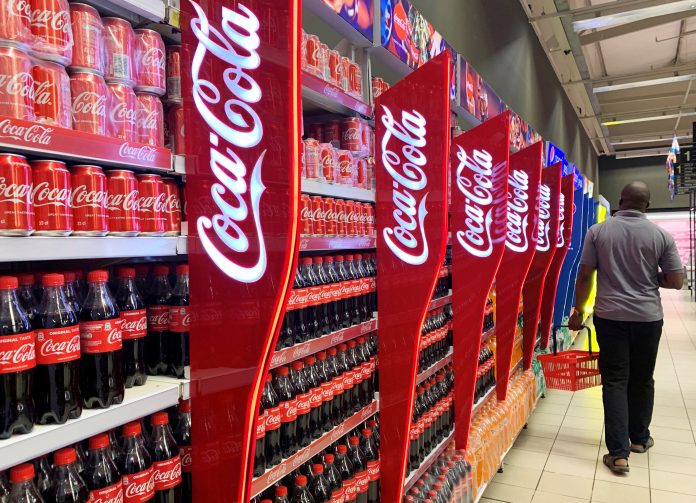
The presidency has addressed concerns raised about Coca-Cola’s recent announcement to invest $1 billion in Nigeria over the next five years, responding to criticism from Nigerians who viewed the pledge as recycled propaganda.

Following the announcement on Thursday, critics pointed out that the company had previously announced a similar investment plan in 2021.

Responding to the backlash, the presidency explained that the initial pledge was delayed due to challenging economic conditions but has now been renewed under improved circumstances.

Bayo Onanuga, the Special Adviser to the President on Information and Strategy, issued a statement on Thursday addressing the criticism and clarifying the timeline of Coca-Cola’s investment plans. He acknowledged that the $1 billion investment was indeed announced in 2021 but explained that the company was forced to halt the execution of this commitment due to unfavorable business conditions, including the imposition of excise taxes.

“Naysayers and doubters scorned the $1 billion fresh investment pledge in Nigeria made by the company’s global leadership to President Bola Tinubu today in Abuja, saying the company made a similar promise in 2021. Yes, the company made a similar promise three years ago. But it couldn’t fulfil it because of the challenging business environment prevailing in Nigeria then,” Onanuga stated.

He went on to explain that the company’s ability to follow through on its investment pledges depends largely on the economic environment in which it operates.

“As the company’s spokesperson said, while the company made the commitment in 2021, it was also hit by excise taxes,” he said.

The special adviser further explained that the renewed investment commitment is based on the stable and predictable environment fostered by the Tinubu government’s economic stabilization plan. Onanuga reassured Nigerians that the improved conditions have rekindled Coca-Cola’s confidence in Nigeria as a promising market for future investments.

“Our investment pledges are always predicated on a predictable and stable environment. The $1 billion pledge has now been renewed based on the stable environment, which has been promised through the Tinubu government economic stabilization plan,” he explained.

Coca-Cola’s Commitment and Past Investments in Nigeria

While addressing the criticisms, the presidency also highlighted that Coca-Cola and its local partner, the Nigeria Bottling Company, have already invested $1.5 billion in Nigeria over the last decade. This significant capital was channeled toward the expansion of production capacity, supply chain improvements, and logistics.

“The Coca-Cola Company and its local partner, Nigeria Bottling Company, have already invested $1.5 billion in Nigeria over the space of 10 years,” Onanuga noted in his statement.

This figure reflects Coca-Cola’s long-term engagement in the Nigerian market, despite the challenges posed by economic instability and taxation policies. The company’s decision to invest an additional $1 billion over the next five years underscores its confidence in the country’s potential for growth.

Background of The Initial $1 Billion Pledge in 2021

In 2021, Coca-Cola announced its intention to invest $1 billion in Nigeria over a period of five years as part of its strategy to expand its presence in Africa’s most populous nation. However, soon after the announcement, the business environment in Nigeria took a turn for the worse. The country grappled with foreign exchange shortages, rising inflation, and additional excise taxes that negatively affected both local and foreign businesses.

The introduction of new excise duties on beverages added significant cost pressures on companies like Coca-Cola, leading them to reassess their investment plans. Coca-Cola is said to be unable to fully implement its $1 billion investment plan as a result of these new fiscal challenges.

However, according to the presidency, with the recent economic reforms introduced by President Tinubu’s administration, including efforts to stabilize the naira, ease foreign exchange constraints, and attract foreign direct investments (FDI), Coca-Cola has regained confidence in the Nigerian market. This has led to the reaffirmation of its investment plan during the recent visit of Zoran Bogdanovic, the Chief Executive Officer of Coca-Cola Hellenic Bottling Company, to President Tinubu.

During the meeting with President Tinubu, Bogdanovic expressed Coca-Cola’s optimism about Nigeria’s economic future and its long-term commitment to the country. He assured the president of the company’s determination to execute the investment plan over the next five years, provided the business environment remains stable and predictable. According to Bogdanovic, Coca-Cola believes that Nigeria has tremendous potential for growth, and the company is willing to work closely with the government to unlock this potential.

“I am very pleased to announce that, with a predictable and enabling environment in place, we plan to invest an additional $1 billion over the next five years. We believe Nigeria’s potential is tremendous, and we are committed to working with the government to realize this potential,” Bogdanovic stated during his visit to the President.

However, this pledge is coming weeks after Coca-Cola came at odds with the Nigerian regulatory watchdog, the Federal Competition and Consumer Protection Commission (FCCPC), over allegations of misleading trade descriptions and unfair marketing tactics. The FCCPC accused Coca-Cola Nigeria Ltd and its bottling subsidiary, NBC, of misleading consumers by promoting the “Original Taste, Less Sugar” variant as having the same formulation as the original Coca-Cola.

The FCCPC further warned that the company’s alleged abuse of market dominance would be subject to penalties under the Federal Competition and Consumer Protection Act (FCCPA) and the Administrative Penalties Regulation 2020 (APR), with regulatory action expected in the future.

Against this backdrop, many believe that Coca-Cola’s attempt to reintroduce the $1 billion pledge is a clever attempt to curry favor from the government and quell the ongoing probe of its operations in the country.