DD
MM
YYYY

PAGES

DD
MM
YYYY

spot_img

PAGES

Home Blog Page 2873

Nigeria Threatens to Jail Employers Paying Below N70,000 Minimum Wage, But It Could Compound Unemployment Crisis

0

The Federal Government of Nigeria has issued a firm warning to private sector recruitment agencies, emphasizing the need to adhere to the newly established N70,000 minimum wage.

The government stressed that failure to comply with this mandate would not be tolerated, underscoring that the new wage structure is essential to address the harsh economic realities faced by workers in Nigeria.

Speaking at the 13th Annual General Meeting of the Employers Association for Private Employment Agencies of Nigeria in Ikeja, Lagos, the Permanent Secretary of the Federal Ministry of Labour and Employment, Alhaji Ismaila Abubakar, reiterated that the N70,000 minimum wage applies to both government and private sector employees.

Represented by the Director of Employment and Wages, John Nyamali, Abubakar clarified that paying workers less than the minimum wage constitutes a crime punishable by law.

According to Abubakar, “The minimum wage is now a law, and as a result, it is a punishable crime for any employer to pay less than N70,000 to any of its workers.”

He added that the private employment agencies should ensure that the new wage floor is included in any employment contract they secure. Abubakar was clear that after all deductions, no worker should receive less than N70,000 as take-home pay, warning that non-compliance could result in severe legal penalties.

The Federal Government’s commitment to enforcing the new wage structure comes amid growing concerns over the rising cost of living in Nigeria, spurred by high inflation and the removal of fuel subsidies earlier this year. President Bola Tinubu had promised to implement the wage increase by May 1, aiming to alleviate the financial burden on the country’s workforce.

Concerns and Ambiguities

While the Federal Government’s intentions are clear, certain ambiguities surrounding the implementation of the new minimum wage persist. The President of the Employers Association for Private Employment Agencies of Nigeria, Dr. Olufemi Ogunlowo, has called for clarification on whether the N70,000 wage is based on net or gross income, urging the government and the Nigeria Labour Congress (NLC) to resolve this uncertainty. Ogunlowo’s remarks highlight the need for a more comprehensive explanation of the wage laws, as employers seek clarity to ensure compliance.

Government officials have yet to provide a definitive answer on whether the wage is calculated before or after deductions such as taxes and pension contributions. This lack of clarity is believed to have led some employers to delay full implementation as they wait for more detailed guidelines.

The Troubling Unemployment Reality on the Ground

While the government pushes for strict adherence to the N70,000 minimum wage, the reality on the ground paints a more complex picture. With median incomes in Nigeria reportedly hovering around N300,000 per year (below N30,000 per month), many workers earn far less than the newly prescribed minimum. The government’s push to punish employers who fall short of this target has raised eyebrows, with critics describing the move as “draconian”—especially as the government itself has yet to fully implement the new wage.

As of now, only a handful of states have committed to paying the N70,000 minimum wage, with many still grappling with funding challenges. For most Nigerian workers, particularly those in the informal sector surviving on low salaries, the wage increase remains a distant promise in a rapidly deteriorating economy.

Potential Implications for the Nigerian Labor Market

While the intent behind the new minimum wage is to support workers, there are growing concerns about its potential to further disrupt Nigeria’s already fragile employment market. With the unemployment rate exceeding 33%, many argue that forcing private employers to meet the wage increase could inadvertently lead to layoffs, particularly in the informal sector, where many businesses operate on thin profit margins.

Employers in industries such as retail, hospitality, and manufacturing have expressed worries that the new wage law if enforced without proper economic adjustments, could push businesses to cut their workforce to remain viable.

The International Labor Organization (ILO) has previously warned that wage policies not carefully tailored to the realities of developing economies could backfire, resulting in higher unemployment rates and increased poverty levels.

Against this backdrop, labor experts argue that the government must balance wage enforcement with support mechanisms that encourage business growth. They note that the risk of over-regulating an already strained private sector could hinder job creation and further aggravate the unemployment crisis.


Litecoin (LTC) Whales On The Move Again Spurred On By Bitcoin (BTC) Recovery

0

Bitcoin (BTC) recovery has restored investors’ confidence in the broader crypto market. Crypto Whales have again begun accumulating coins they believe will enjoy significant price gains when the bull run kicks into full gear. Specifically, Litecoin (LTC) and ETFSwap (ETFS) are two coins that have caught the attention of these Whales following the Bitcoin (BTC) recovery. 

Whales Are Accumulating ETFSwap (ETFS)

Whales are accumulating ETFSwap (ETFS) following the Bitcoin (BTC) recovery, with over 4 million tokens sold as the flagship crypto rebounded. These whales are looking to position themselves since ETFS is among the tokens that will outperform the market once the bull run led by Bitcoin (BTC) begins. 

ETFSwap’s (ETFS) utility is the reason why investors, including Litecoin (LTC) whales, are confident that the decentralized finance (DeFi) token will stand out during the bull rally. As the utility token of the ETFSwap investment platform, ETFS makes the traditional and crypto markets easily accessible. Investors can simply swap the token for tokenized exchange-traded funds (ETFs) or crypto assets on the trading platform. 

With such utility, ETFSwap (ETFS) will witness an astonishing number of investors looking to gain exposure to all asset classes in one place. The platform’s user-friendly interface allows ETFS to serve as a bridge between traditional finance (TradFi) and DeFi, as investors can easily swap their crypto assets to ETFs and vice versa. 

The ETFSwap (ETFS) token has other use cases. For instance, it provides access to other exciting offerings on the decentralized investment platform, including perpetual futures for ETFs. Investors and traders can hold derivative contracts that allow them to bet on the future price of the underlying asset without expiration. 

The utility token also provides access to artificial intelligence (AI) powered trading tools that ensure traders maximize their profits on the platform. These trading tools, ETF Screener and ETF Tracker provide the best ETF recommendations, assisting investors in betting on the most profitable assets. These tools also provide insights into the future outcome of a potential trade idea. 

ETFSwap (ETFS) users will need the utility token to invest in the trading platform’s ETF when it launches next year. The token is also the key to accessing other exclusive investment options on the platform. 

Meanwhile, token holders can enjoy passive income by holding their tokens. They will receive monthly airdrops from the ETFS rewards pool. Token holders can also provide liquidity or stake their tokens and earn high yields. Those who stake their tokens earn up to 80% annual percentage yield (APY), while liquidity providers earn up to 30% of fees made from token swaps. 

With such a bullish outlook, it is no surprise that analysts say that ETFSwap (ETFS) can record a 20,000% price gain in this market cycle. The team, certified by SolidProof, has also put in much effort to make the project successful. They have vested their tokens for five years, further committing to its long-term success.

Litecoin (LTC) Whales Go On Shopping Spree Following Bitcoin (BTC) Recovery

Litecoin (LTC) Whales are on a shopping spree following the Bitcoin (BTC) recovery. Data from the on-chain analytics platform Santiment showed that Litecoin (LTC) has witnessed a “consistently higher level of Whale activity than usual” since late August, when the Bitcoin (BTC) recovery began following the August 5 market crash. 

These Litecoin (LTC) Whales have been massively accumulating as transactions worth $100,000 and above have skyrocketed. This move from these Litecoin (LTC) Whales isn’t surprising since Litecoin could enjoy a significant price surge as the Bitcoin (BTC) recovery continues. 

Meanwhile, in addition to the increased activity among Litecoin (LTC) Whales, social discussions involving the crypto have “erupted.” Based on this, Santiment noted that it is worth keeping an eye on LTC, especially if these Litecoin (LTC) Whales continue accumulating at this rate. 

Conclusion

ETFSwap (ETFS) stands out as the best investment opportunity, with investors set to make up to 200x returns, which explains why Litecoin (LTC) whales are allocating a significant amount of their capital to the token. Investors who have yet to buy ETFSwap (ETFS) must do so quickly, as the Bitcoin (BTC) recovery will set the stage for a massive bull run for the utility token. 


For more information about the ETFS Crypto Presale:

Visit ETFSwap Presale

Join The ETFSwap Community

Nigeria’s Central Bank Introduces 0.005% Cybersecurity Levy on All Electronic Transactions

0

The Central Bank of Nigeria (CBN) has reaffirmed its commitment to strengthening the country’s cybersecurity infrastructure by enforcing a 0.005% levy on all electronic transactions conducted by banks and financial institutions.

This levy, mandated by the Cybercrime (Prohibition, Prevention, etc.) Act, 2015, aims to boost Nigeria’s defenses against the growing threat of cybercrime.

This latest enforcement, outlined in the CBN’s monetary, credit, foreign trade, and exchange policy guidelines for 2024-2025, represents a critical step in the ongoing fight against cyber threats.

“The CBN shall continue to enforce the payment of the mandatory levy of 0.005 per cent on all electronic transactions by banks and other financial institutions, in accordance with the Cybercrime (Prohibition, Prevention, etc.) Act, 2015,” the guidelines published on Tuesday said.

The decision comes after a controversial attempt by the CBN to implement a 0.5% levy on electronic transactions in May 2024, which sparked widespread debate among Nigerians. Many argued that the rate was exorbitant and would disproportionately affect individuals and businesses already grappling with economic hardship.

Following public outcry and intervention from the House of Representatives, the CBN was directed to suspend the implementation of the higher rate, leading to the current 0.005% levy.

Purpose of the Levy

According to the CBN, the levy is designed to fund the development of critical cybersecurity infrastructure, including intelligence, investigation, and preventive mechanisms aimed at reducing cybercrimes.

In recent years, Nigeria has witnessed a surge in cybercrime activities, with financial institutions being frequent targets. This levy is seen as a way to bolster the nation’s capacity to counter these threats by ensuring that banks and other financial institutions contribute to a national cyber defense fund.

The funds collected through this levy will be channeled toward enhancing Nigeria’s cyber intelligence, allowing the country to better detect, investigate, and prevent cyber attacks that could compromise financial systems.

Cybersecurity Guidelines

The CBN’s guidelines also reiterate the obligations of banks and Payment Service Providers (PSPs) to adhere to existing cybersecurity frameworks. These frameworks, which were issued in 2018 and 2022, set out minimum cybersecurity standards for all financial institutions.

According to a CBN circular from October 10, 2018, banks and PSPs are mandated to follow the Risk-based Cybersecurity Framework and Guidelines for Deposit Money Banks and Payment Service Providers. This framework was introduced in response to increasing cyber threats targeting the banking industry. It requires institutions to implement robust cybersecurity protocols to safeguard against risks, with specific requirements to appoint a Chief Information Security Officer (CISO) to oversee cybersecurity issues.

A similar framework, tailored for Other Financial Institutions (OFIs), was introduced on June 29, 2022. This further extended cybersecurity requirements to non-bank financial institutions, ensuring a comprehensive approach across the financial sector.

Implications for the Banking Sector

The enforcement of the 0.005% levy adds another layer of financial responsibility for banks and PSPs, which are already under pressure to comply with various regulatory requirements. While the levy itself may seem small, its cumulative impact, particularly for institutions handling large volumes of electronic transactions, could be significant. For consumers, these costs will eventually lead to higher fees for digital banking services.

However, the CBN insists as Nigeria’s economy becomes increasingly digitized, safeguarding the digital landscape is critical to maintaining trust in financial transactions. This makes the levy necessary to build a robust cybersecurity infrastructure capable of protecting the country’s financial systems from ever-evolving cyber threats.

Nigeria’s move to bolster its cyber defenses comes at a crucial time. The rise of electronic payments and digital banking has led to an uptick in cybercriminal activities targeting both individuals and institutions.

In the second quarter (Q2) of 2024, the Nigerian banking sector witnessed a staggering rise in fraudulent activities amounting to a total loss of N42.6 billion between April and June, according to the Q2 2024 Fraud and Forgeries report, recently released by the Financial Institutions Training Centre (FITC). The loss recorded in Q2 2024 alone eclipsed the total amount lost to fraud throughout 2023, where Nigerian banks collectively lost N9.4 billion.

In response to the growing concern, the CBN has issued multiple guidelines aimed at improving the banking industry’s security posture.

Banks and financial institutions are now required to not only contribute financially to the national cybersecurity fund but also implement the minimum cybersecurity baseline as stipulated by the CBN’s frameworks. By appointing dedicated CISOs and adhering to risk-based cybersecurity protocols, these institutions are expected to become more resilient to attacks, reducing the potential for financial losses and maintaining consumer trust.

Interswitch And NIBSS Collaborate to Enhance Payment Processing and Compliance in Nigeria

0

Interswitch, an African-oriented technology-driven company focused on payments, has announced a strategic partnership with the Nigeria Inter-Bank Settlement System (NIBSS), to introduce innovative solutions aimed at boosting transaction processing efficiency and compliance with Central Bank of Nigeria (CBN) directives.

This partnership focuses on enhancing terminal re-certification and optimizing transaction processing uptime, providing both merchants and consumers with more reliable and efficient payment experiences.

Speaking on the strategic alliance, the Managing Director and CEO of NIBSS, Mr. Premier Oiwoh noted the significance of this collaboration in advancing Nigeria’s payment ecosystem.

He said,

“This partnership with Interswitch marks a pivotal moment in our goal to foster innovation and improve payment system efficiency. By enhancing the tracking and oversight of electronic transactions, we are positioning Nigeria as a leader in the global payments industry.”

Under this agreement, NIBSS will serve as the primary PTSA for Interswitch, creating a foundation for improved transaction efficiency and regulatory compliance.

Also commenting, Akeem Lawal, managing director, of Payment Processing and Switching (Interswitch Purepay), expressed excitement about the partnership, stating that it reinforces the fintech unwavering commitment to maintaining the highest standards in payment processing in Nigeria.

In his words,

“We are delighted to strengthen our collaboration with NIBSS as we align with the CBN’s directive. This partnership reinforces our unwavering commitment to maintaining the highest standards in payment processing in Nigeria, while driving significant value for our stakeholders and the broader industry.

“By bringing our robust infrastructure to bear in this partnership with NIBSS, we will ensure further improvements in connection capacity, system uptime, and transaction success rates. This collaboration ensures full compliance with the CBN’s requirements and delivers a seamless, reliable experience for merchants and consumers across Nigeria”.

In addition to meeting the CBN’s compliance directive, Interswitch and NIBSS are working on introducing solutions for terminal re-certification and optimizing transaction processing uptime.

Through rigorous testing and pilot programs, both companies are committed to ensuring a smooth transition for customers and partners, with a focus on preventing service disruptions. Also, they will continue to roll out new features and solutions, supporting the sustained growth of Nigeria’s financial ecosystem.

The partnership between Interswitch and NIBSS offers several key advantages to Nigeria’s payment system:

Enhanced Transaction Efficiency: By collaborating with NIBSS as the primary Payment Terminal Service Aggregator (PTSA), Interswitch can improve the speed, reliability, and success rates of electronic transactions, leading to smoother payment processes for consumers and merchants.

Regulatory Compliance: This partnership ensures full alignment with the Central Bank of Nigeria’s (CBN) directives, particularly in terms of routing transactions and re-certifying payment terminals. It helps create a more structured and compliant payment infrastructure, reducing regulatory risks for payment operators.

Improved Monitoring and Security: With better oversight of electronic transactions through NIBSS, the partnership enhances security and transparency, reducing fraudulent activities and improving consumer trust in the digital payment ecosystem.

Interswitch and NIBSS partnership underscores the commitment of Both companies to delivering cutting-edge payment solutions that strengthen the resilience and compliance of Nigeria’s payment infrastructure.

TymeBank Secures $9.5 Million in Funding, Eyes Expansion into Southeast Asia

0

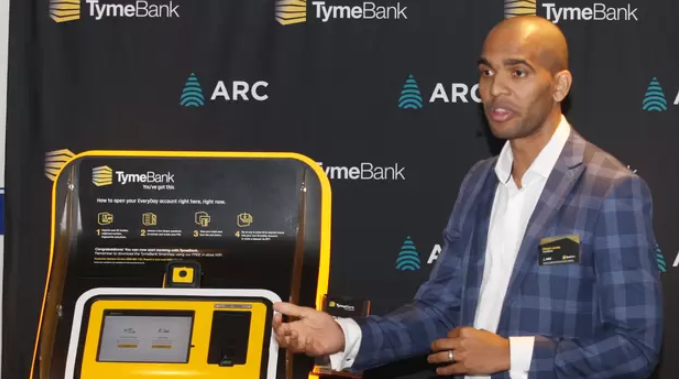
TymeBank, an exclusively digital bank based in South Africa, that disproportionately serves low-income rural customers, has secured $9.5 million (ZAR 169 million) in funding as it set to expand its footprint into Southeast Asia.

The funding round was led by African Rainbow Capital (ARC), a broad-based black-controlled investment company, strengthening its position as a formidable player in the global fintech landscape. ARC, led by billionaire Patrice Motsepe, made this investment at a pivotal moment for TymeBank, which reached profitability in December 2023.

In a statement, ARC highlighted the bank’s strong growth trajectory, with activity rates and deposit growth surpassing expectations. As the fastest-growing digital bank in South Africa, TymeBank’s success has positioned it as a standout player not only in Africa but also in emerging international markets.

Tyme Global, the bank’s Singapore-based holding company, is spearheading the international expansion. In the Philippines, TymeBank’s venture, GoTyme, has already gained significant traction, acquiring 3.58 million customers since its launch in November 2022. GoTyme is on track to reach profitability by late 2025 and serves as a springboard for TymeBank’s planned entry into Indonesia by the end of 2024.

The bank’s international expansion is bolstered by a partnership with the influential Gokongwei family in the Philippines, providing key market entry points in industries such as telecommunications and food manufacturing.

Despite its global ambitions, TymeBank remains focused on its dominance in South Africa, where it continues to support over 50,000 small and medium-sized enterprises (SMEs) through its lending products. Over the year to the end of June, TymeBank deposits have increased by 59% to R6.5bn and merchant credit advances have risen steadily to about R1.8bn. Also, it has leveraged its extensive retail partnerships with Pick n Pay, Boxer, and The Foschini Group (TFG) to create the largest cash-in and cash-out network in the country.

Arguably the fastest-growing bank in South Africa, it expects to hit the 10 million customer mark in the next quarter, having already reached 9.5 million customers by the end of June. Over the year to the end of June, TymeBank deposits increased by 59% to R6.5-billion and merchant credit advances rose steadily to about R1.8-billion.

Management noted that the operational leverage provided by technology was clear net operating income tripled year-on-year while costs increased by 10%. In December 2023, the bank reached break-even and sustained profitability is expected in the coming months.

Looking ahead, TymeBank is eyeing a $150 million Series D funding round as it moves closer to achieving unicorn status. The CEO Coenraad Jonker has also revealed plans for a potential dual public listing on the New York Stock Exchange (NYSE) and Johannesburg Stock Exchange (JSE) by 2028, aiming to secure additional capital and global recognition.

For now, the bank’s focus remains on scaling operations in Southeast Asia, where the demand for digital banking is rapidly increasing, driven by the shift toward cashless transactions and a broader push for financial inclusion. Notably, it’s strategic focus on operational efficiency demonstrated by the tripling of net operating income despite a modest rise in costs has laid the groundwork for sustained profitability.