DD
MM
YYYY

PAGES

DD
MM
YYYY

spot_img

PAGES

Home Blog Page 2891

Floods: Nigeria Approves N350bn for Dams, Irrigation Infrastructure Development

0

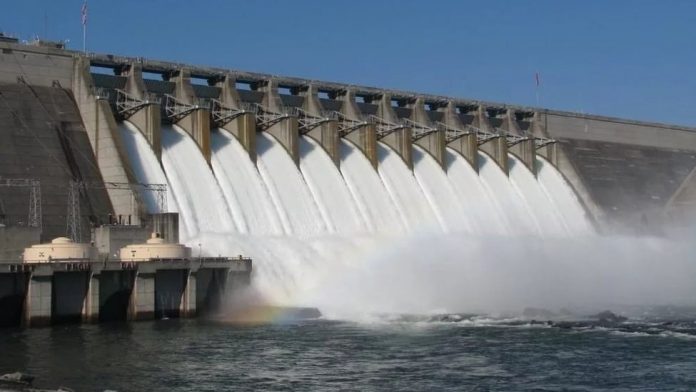
The Nigerian Federal Government, through its Renewed Hope Infrastructure Fund, has approved over N350 billion for the development of dams and the expansion of irrigation facilities across the country.

This decision follows a series of devastating floods, particularly in Maiduguri, Borno State, where recent flooding has displaced thousands of residents. The funds aim to bridge Nigeria’s infrastructure gap, which has long been blamed for the country’s inability to manage floodwaters effectively.

Announcing the approval, the Minister of Budget and Economic Planning, Alhaji Atiku Bagudu, stressed the government’s proactive approach to climate change and flood management. Speaking in Birnin Kebbi, after offering condolences to former EFCC Chairman Abdul-Rashid Bawa, following the passing of his mother, Bagudu explained that the government is taking concrete steps to avert further flood disasters.

“A number of interventions have been approved by the President, in addition to numerous timely releases of Federal Allocation Account money,” Bagudu noted.

He also disclosed that the federal government had allocated N3 billion to each state to mitigate the effects of flooding, confirming that Kebbi State had already received its share of the funds.

This financial commitment is expected to make a significant impact on dam development and irrigation projects, which could prevent future flooding disasters by properly managing water flow across Nigeria.

This move follows a fresh warning by the National Emergency Management Agency (NEMA), about impending floods to be orchestrated by the planned release of water from the Lagdo Dam in Cameroon. Historically, the release of dam waters from Cameroon has led to severe flooding in Nigeria, devastating communities along major rivers.

In a recent statement, NEMA warned that several states, particularly those along the Benue River, could experience severe flooding, which would cause further displacement and destruction of property.

Mustapha Ahmed, Director-General of NEMA, called for immediate action, urging residents of flood-prone areas to evacuate as a precaution. He highlighted that the opening of the Lagdo Dam would increase the water levels in Nigerian rivers, leading to high-risk flooding zones across Adamawa, Benue, Taraba, and Kogi States.

Lack of Infrastructure Blamed for Flooding

Nigeria’s recurrent flooding crisis has been largely attributed to insufficient infrastructure to manage water resources effectively. Over the years, flooding caused by the release of dam water from neighboring Cameroon has wreaked havoc on Nigerian communities, with little done to create adequate dam and irrigation infrastructure. The Alau Dam overflow in Maiduguri earlier this year, which caused widespread flooding, is a prime example of the infrastructure gap that needs to be addressed.

The absence of modern dam infrastructure has left Nigeria vulnerable to the natural consequences of water release from both domestic and foreign sources. This issue has prompted calls from experts and civil society groups for better long-term planning and investment in infrastructure.

N350 Billion Fund: A Potential Solution?

The recently approved N350 billion is seen as a significant step toward addressing Nigeria’s infrastructural deficit. If judiciously utilized, experts believe the fund could provide a long-term solution to Nigeria’s recurring flood crises by financing the development of dams and expanding irrigation facilities across the country.

Bagudu expressed optimism about the impact these infrastructural projects would have on the country, especially as they intersect with other developmental initiatives in agriculture, healthcare, and education.

“The federal government, at the Federal Executive Council last week, approved over N350 billion under the president’s renewed hope infrastructure fund to support dams and expand irrigation facilities,” Bagudu said. “This will go a long way in ensuring that future floods are mitigated by improving water management systems and irrigation infrastructure across the country.”

The recurring issue of flooding in Nigeria, particularly in the country’s northern and central regions, has been a cause for huge concern. Experts have long criticized the country’s lack of preparedness, with many blaming poor infrastructure and inadequate flood management systems. The hope is that the N350 billion fund will not only focus on building new dams but also on expanding the existing ones to accommodate larger water volumes and improve irrigation systems.

However, questions remain about whether the funds will be properly utilized. Nigeria has a history of mismanagement in its infrastructure projects, with several high-profile cases of funds being diverted for personal gain.

As Cameroon prepares to release more water from the Lagdo Dam, Nigeria’s infrastructure—or lack thereof—will be tested once again. The federal government’s actions in the next few months will be crucial in determining whether Nigeria can finally turn the tide against flooding or will continue to grapple with the consequences of underinvestment in infrastructure.
The Evolution of E-commerce

0

Driving past a popular Nigerian transport and logistics company recently, I saw the phrase; “e-commerce cannot work without logistics”. It elicited a smile from me and some further thinking, of course. E-commerce has had what we can rightly consider a fascinating evolution over the last four or five decades, and this period has also been marked by technological advancements, shifting consumer behaviors, and transformative business practices.

There was the 1980s when e-commerce was in its nascent stage; with emerging ideas of electronic transactions and concepts like Electronic Data Interchange (EDI) and the development of online transaction processing systems. At this time, only large corporations and specialized industries used e-commerce, and it was mostly for B2B rather than B2C transactions.

Then came the internet boom of the 1990s, where the launch of the World Wide Web and browsers like Netscape Navigator opened up new possibilities for online shopping. This decade also had the founding of the first e-commerce sites like Amazon in 1994 and eBay in 1995. It was in this decade and with these platforms that businesses started seeing the potential of e-commerce to reach a broader audience, especially when secure online payment systems, like SSL encryption, started making for safer online transactions.

By the 2000s, e-commerce potential expanded with the proliferation of broadband internet the rise of mobile technology, and the resulting faster connections and mobile access. This decade also saw the emergence of Web 2.0, characterized by user-generated content and social media. Platforms like Facebook, Twitter, and YouTube became important tools for marketing and customer engagement, and they finally took e-commerce across borders.

The 2010s were mostly marked with further innovations and integrations to create seamless experiences across offline and online channels. The mobile commerce side of things experienced an explosion with the proliferation of smartphones, and mobile apps. Now in the 2020s, we seem to be experiencing more of a stabilization of all these innovations, and then the introduction of AI and Robotics with enhanced customer service through chatbots, personalized recommendations, and automated inventory management. There is now also social commerce as a term, with the integrated shopping features you now find on Instagram and TikTok, for example.

Altogether, this interesting technological evolution has expanded business reach to unprecedented heights, and even with evolving consumer expectations, it continues to be one success after the other. But as a modern entrepreneur, here is what you should keep in mind if you want e-commerce to provide you with a strategic advantage.

  1. Focus on user experience. It will always be about your consumers at the end of the day. So, whether you are adopting a platform or integrating a new AI to automate some processes, the target is to enhance user experience with user-friendly interfaces, quick load times, seamless navigation, etc. You don’t need a new website design that suddenly makes your checkout button difficult to find. If it doesn’t make the user experience better, then that solution may not be for you. Use data analytics to gain the insights you need into customer behavior, preferences, and trends and apply them in decision-making.
  2. Prioritize Security. This includes the security of transactions and customer data as well. Remember our recent post on cyber security? Well, that is all you need to know on this matter. Make sure you implement measures to detect and prevent fraudulent activities, such as secure payment gateways and monitoring systems. It is critical to building and protecting customer trust.
  3. Optimize Logistics and Fulfillment. Develop a robust supply chain and logistics strategy to handle inventory management, order fulfillment, and shipping efficiently. Consider partnering with reliable logistics providers or investing in fulfillment technologies where possible. You can also offer flexible shipping options to cater to different customer needs.
  4. Embrace Omnichannel Strategies. Create a unified experience across online and offline channels. If you have physical stores, consider implementing click-and-collect services or integrating online orders with in-store pickup.
  5. Also, ensure your operations are within the legal and regulatory frameworks in the zones where you operate. Altogether, it requires a well-thought-out approach, and you need to stay agile and responsive to changes.

Before wrapping this up, I saw a post recently that raised concerns about e-commerce taking entrepreneurs away from exploring their immediate market, to pursue a global audience that may or may not be interested in their products. While this concern seems valid, here is what I think about it. It comes down to your customer persona. Once you have a customer profile, what you need is to focus on the locations where they are. And there is nothing to suggest that they are restricted to one geographical location. Just make sure you are not trying to sell ice to Eskimos and focus on selling your ice instead to those in the hotter regions of the world.

Now, here’s a more entrepreneurial-like response to the concern. While targeting a global audience can offer significant opportunities, it’s crucial to balance that with a strong focus on your immediate market. Here’s my perspective on managing this balance:

1. Assess Market Potential.Before going global, thoroughly assess the demand for your products in your immediate market. If you are not even able to satisfy local demand yet, then maybe you should be more focused on improving your production first. But if you are producing in a certain location because of access to raw materials or labor, and you have confirmed your target market to be in another location or country, you should waste no time getting the product to them.

2. Segment your strategy and prioritize markets. Develop strategies that address both local and global markets. For instance, you could start with a strong local presence and gradually expand globally as your business grows. Identify key international markets that align with your product offerings and have high growth potential. Avoid spreading resources too thin by targeting regions with less immediate relevance.

3. Optimize Logistics. Optimize your logistics and supply chain for your local market, with efficient inventory management, local warehousing, and fast delivery to enhance customer satisfaction. When expanding internationally, use data-driven approaches to optimize global logistics. Invest in scalable logistics solutions that can adapt to varying demands across different regions.

4. Evaluate Costs and Risks. Conduct a thorough cost-benefit analysis before pursuing international markets. Consider factors like shipping costs, customs regulations, and the investment required for market entry. Assess potential risks, such as currency fluctuations, political instability, and legal complexities. Implement risk mitigation strategies to protect your business. Don’t go in headlong before knowing what it entails. It is better to run pilot programs or test markets in international regions before fully committing. This can help gauge interest and adjust strategies accordingly.

While global expansion presents exciting opportunities, it should not come at the expense of neglecting your immediate market. A balanced and sustainable approach would be to leverage local expertise while cautiously exploring international opportunities. It can give you the best of both worlds.

Why Farmers and Most Citizens are Hungry – And How To Fix That in Nigeria

1

At Tekedia Capital, we have funded many agro-businesses in Nigeria, including Winich Farms and Vetsark. And in the process of working with these amazing companies, I have learnt one thing:  Nigeria’s agro-output is not that bad.  What is bad is our capacity to stop wastage in the value chain.

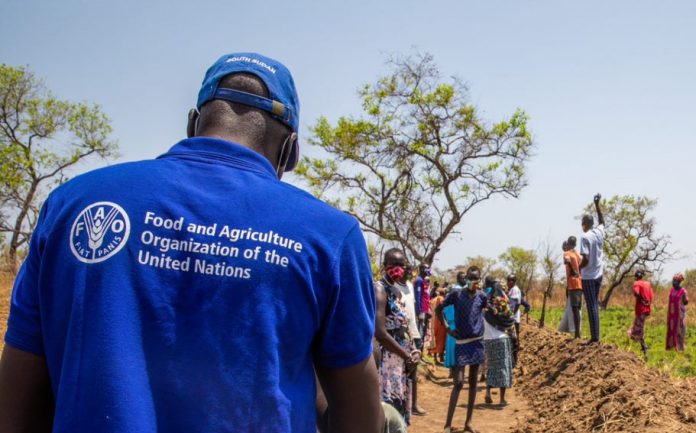
What do I mean? Nigeria does produce a decent amount of tomatoes, yams, etc, but we lose close to 37% (my estimate) of those items. The United Nations’ Food and Agriculture Organisation (FAO) puts that number at 50%: “A Food System/Nutrition Specialist at the Food and Agriculture Organisation (FAO) of the United Nations, Ibrahim Ishaka, has revealed that Nigeria loses around 50 per cent of its agricultural products along the food supply chain. Mr Ishaka disclosed this in an interview with the News Agency of Nigeria (NAN) on the sidelines of an FAO-organised training in Yola on Saturday.” 

So, if you lose 50% of what you produce, you score many own-goals, triggering a situation where farmers are hungry in farming communities. Why is this the case? The typical reason is that we lack adequate storage facilities because we have limited electricity in farming communities.

In the Igbo Nation, this problem is as old as history with the word “unwu” [seasonal farmine] part of the vocabulary.  Unwu is the period between the planting of yam (the king of crops in Igbo mythology) and the harvest period, as during that time, there are limited yams, exacerbated by lack of effective ways to preserve them. In ancestral Igbo, before the advent of packaged food and supermarkets, unwu was famine as the staple food was in short supply. That is why the new yam festival was a big deal then, as it marked the end of the famine period with new yams available.

But why have we not fixed the problem? Of course, we do not have electricity, and most importantly our agriculture policy is heavily planting-focused with limited policies for the harvest time. I have served on the boards of logistics companies and noticed how tomatoes, carrots, etc go to waste simply because trucks are not available to move them to the processing centers or collection areas. 

In other words, during the harvest period, the same governments which provided seeds, fertilizers, herbicides, etc do not remember to provide support to farmers. There are about 100,000 active trucks in Nigeria with Dangote Group controlling about 50% of them. The remaining 50k available are not enough for all, and most times farmers are outbid by many FMCGs; Nigeria has no rail cargo system of value.

From my experience, I posit that most farmers intentionally do not want to scale production because of the supply chain challenges. Of course, they cannot own trucks just to use them once per year! If the policy is altered to include the harvest period where governments also make vehicles, etc available with better coordination from farms to factories and markets, we can reduce waste from 50% to less than 10% and that will improve our food availability by an extra 40%.

Our startups have impeccable data to guide this policy formulation in case Nigeria is interested. Together, we can make farmers richer and that will boost output which will help reduce food scarcity. 

3 Must-Have Altcoins as Bitcoin Approaches $70K: Dogecoin (DOGE), Ripple (XRP) and IntelMarkets (INTL)

0

The crypto market swung high, boosting confidence and sentiment at the same time. Bitcoin (BTC) flew past $65,000 and quickly approaches $70,000. Amid the bullish market conditions, the three must-have altcoins are Dogecoin (DOGE), Ripple (XRP) and IntelMarkets (INTL).

Their upside potential, not to mention budget-friendliness, puts them on course for massive gains, especially INTL. This emerging crypto promises almost 10% ROI in presale and more after its launch—one of the best coins to invest in.

IntelMarkets (INTL): A New Altcoin to Bet on Alongside Dogecoin (DOGE) and Ripple (XRP)

The AI-DeFi altcoin IntelMarkets (INTL) is quickly becoming an investor favorite given its bullish narrative. Its blend of AI with blockchain technology and DeFi drives early demand, pushing the presale past $570,000 in just a few weeks. With a full-blown bull market on the horizon, insiders believe this might be 2024’s best crypto investment.

At a token price of $0.018 in the second stage of the ICO, its entry is lower than most top crypto coins. Similarly, its upside potential is largely unrivaled, primed for a 5,000% rally after listing on Tier-1 exchanges. By providing early access to what might be the next big thing, it is tipped by top experts’ as 2024’s best presale.

Regarding its offering, it will build the first AI-powered trading platform, which will put it at the forefront of the $36 billion global crypto trading market. It will employ different advanced real-time processing tools to improve trading performance. Meanwhile, its trading robots can handle high data volumes at lightning speed while performing rigorous technical calculations from multiple markets in seconds.

Dogecoin (DOGE): On Track for a New Peak

Dogecoin (DOGE), a top altcoin and the first memecoin, is a must-have crypto heading into the year’s final quarter. As Bitcoin skyrocketed, it is one of the week’s top gainers, reclaiming lost price levels.

The Dogecoin price gained 8% on the daily charts. In the past seven days, it soared 15%, trading above the $0.12 mark. Next on its list is flipping the $0.2 resistance, which analysts believe might play out in the coming days.

Meanwhile, a Dogecoin price prediction hints at a rally above $1 before the year’s end—a new all-time high. At its currently low price, it is one of the best cryptos to buy now.

Ripple (XRP): A Sleeping Giant

Ripple (XRP) ends the list, hailed by experts as a sleeping giant. The long-drawn legal battle with the US SEC was at the heart of its bearish woes. But with the court’s final judgment set to force a reversing trend, it is among the best cryptos to invest in.

Amid the market bounce, the XRP price hovers around $0.58, with $0.65 the next price level to be flipped. Boasting significant upside potential, it is a must-have ahead of the anticipated full-blown bull market.

The $1 resistance is expected to be breached in the coming weeks, according to a popular XRP price prediction. Further, a new all-time high is on the cards, positioning it among the best cryptos to invest in. To make the most of the market’s next big leap, XRP is a horse worth backing.

Conclusion

Bitcoin crossing $70,000 will send a ripple effect across the crypto landscape, potentially sparking a bull run. The three altcoins to bet on are Dogecoin (DOGE), Ripple (XRP) and IntelMarkets (INTL). At the same time, to invest in the future of crypto trading, we suggest checking out the INTL presale.

Buy Presale

Website

Telegram

Some Key Policies in Nigeria – Let us Review The Predicted Impacts

0

Time to review those predictions on recent policies:

1. Nigeria floats its currency.

My response: “Nigeria’s floating of its currency, while progressive, will cause severe perturbations in the economy – and a stable state may not come as most experts have predicted” – Ndubuisi Ekekwe, June 2023.

Remark: my postulation remains correct as that policy continues to alter the equilibrium points on many things, at family, state and national levels. Net welfare status is LOSS for most citizens.

2. JP Morgan projects that Naira will settle at N600/$ post-float.

My response: ‘“My perspective: I think JP Morgan may need to review. Whether you float, swim or fly Naira, Naira can only survive if the economy is productive with capacity to produce things (digital, physical, service, etc) to reposition the nation’s balance of payment and trade.”’ – Ndubuisi Ekekwe, June 2023, in a piece titled “Why JP Morgan’s Call on High N600s per US$ Stable State for Naira May Not Happen”.

Remark: Against all the leading global banks and our central bank which projected a stable state of around N700/$1, I am correct since the Naira is about N1,500/$ now.

3. Removal of Fuel Subsidy

My Response: “Nigeria will either pause the full floating of its currency or return back to fuel subsidy” because running both at the same will impoverish millions of citizens – Ndubuisi Ekekwe, July 2023.

Remark: even though the official unemployment rate (5.3%) is better than the rates in Germany and Canada, the government agency also noted that more citizens have moved into poverty, making their analysis illogical.

What was your prediction and how is that playing with reality so far? We have enough data now to evaluate.