DD
MM
YYYY

PAGES

DD
MM
YYYY

spot_img

PAGES

Home Blog Page 297

Jefferies CEO Rich Handler Says Bank Was Defrauded by Bankrupt Auto Parts Maker First Brands Group

0

Jefferies Financial Group CEO Rich Handler said Thursday that the Wall Street investment bank was defrauded by bankrupt auto parts manufacturer First Brands Group, marking the latest fallout from a corporate collapse that has rattled U.S. credit markets.

“I’ll just say this is us personally — we believe we were defrauded,” Handler told analysts and investors during the firm’s investor day, according to a regulatory filing released Friday.

He did not provide specific details about the alleged fraud, but said Jefferies remains confident in the overall business environment despite the episode.

His comments come as the U.S. Department of Justice investigates First Brands Group and as several financial institutions have reported potential losses tied to the company. The auto parts maker filed for bankruptcy protection in late September, listing more than $10 billion in liabilities, sending shockwaves through leveraged credit markets.

Fallout Across Credit Markets

The collapse of First Brands — alongside that of subprime lender and car dealership Tricolor — has deepened concerns in Wall Street’s multitrillion-dollar credit ecosystem, which spans leveraged loans, collateralized loan obligations (CLOs), trade-finance funds, and subprime auto lending.

“I’m not saying there aren’t other issues like this,” Handler said. “I think there’s a fight going on right now between the banks and direct lenders who each want to point fingers at each other and say, ‘It’s your fault, no, it’s your fault.’”

Those remarks point to growing tension between traditional banks and private credit funds, as both sides grapple with defaults that threaten to expose weaknesses in risk management and underwriting standards across the market.

Jefferies’ stock tumbled sharply after First Brands’ bankruptcy filing, though it rebounded 5% on Friday after Thursday’s steep selloff. Analysts at Oppenheimer said the drop was driven largely by “atmospheric” credit concerns rather than by any material financial weakness at Jefferies, noting that credit managers, business development companies (BDCs), and several banks had come under similar pressure.

Jefferies President Brian Friedman stressed that the investment bank’s exposure to First Brands was isolated from its core operations.

“Kind of Chinese Wall 101. Nothing more to be said,” Friedman told investors. “The two have absolutely no relationship and, in fact, the decision in 2019 of the asset management Point Bonita team to engage with First Brands was absolutely independent and disconnected from anything on the investment banking side.”

Friedman said the fund involved was managed by Leucadia Asset Management, a Jefferies subsidiary that oversees alternative investments. Jefferies disclosed earlier this month that Leucadia holds about $715 million in receivables tied to First Brands but reiterated that its direct exposure after potential recoveries is under $100 million.

“We’ve estimated the firm’s direct exposure to the First Brands fallout to be relatively small — comfortably under $100 million,” said Morningstar analyst Sean Dunlop, noting that the potential loss is “readily absorbable” given Jefferies’ capital position.

Broader Sector Ripples

The First Brands bankruptcy has compounded broader credit jitters in the U.S. banking sector. Shares of several regional lenders slumped this week after Zions Bancorporation disclosed a $50 million charge-off in the third quarter, while Western Alliance Bank filed a lawsuit alleging borrower fraud.

The concerns briefly spilled over into European and Asian markets, where investors reacted to fears of contagion in corporate credit. However, U.S. banking stocks later recovered after a series of strong earnings reports reassured investors about the sector’s underlying health.

DOJ Probe Deepens

Meanwhile, the Justice Department’s probe into First Brands is said to be focusing on accounting irregularities and the company’s relationships with key creditors, according to people familiar with the investigation. The inquiry is expected to widen as regulators examine whether the company’s financing structure concealed deeper liquidity problems.

Handler’s acknowledgment of fraud adds a personal dimension to Jefferies’ response and underscores how the First Brands collapse has become a flashpoint for tensions between traditional and private lenders in the $1.6 trillion leveraged-loan market.

Jefferies insists the damage is currently contained. But the episode highlights a larger question looming over Wall Street: whether the boom in complex, high-yield lending over the past decade has left the financial system vulnerable to more hidden risks — risks that may only surface when credit conditions tighten.


Micron to Exit China’s Data Centre Chip Market After 2023 Ban, Citing Irrecoverable Losses and Rising U.S.-China Tech Tensions

0

Micron Technology, the U.S. semiconductor manufacturer, is pulling out of China’s data center chip market after the business failed to recover from Beijing’s 2023 ban on its products in critical infrastructure, Reuters reports, citing two people briefed on the decision.

The move points to the deepening decoupling between the world’s two largest economies in advanced technology sectors and highlights how Washington’s trade restrictions have triggered retaliatory measures from Beijing, reshaping the global semiconductor industry.

Micron was the first major American chipmaker to be directly targeted by the Chinese government, a move widely interpreted as retaliation for U.S. export controls aimed at curbing China’s access to advanced chips and manufacturing equipment. The company’s withdrawal signals that the lingering effects of the ban have rendered its data center operations in China commercially unviable.

Micron shares slipped about 1% following reports of its exit. In a statement to Reuters, the company acknowledged that the data center division had been impacted by the ban and emphasized that it “abides by applicable regulations where it does business.”

Micron will continue to supply chips to two Chinese companies that operate major data centers outside mainland China, including Lenovo, the Hong Kong–listed technology giant. However, its domestic data center business in China will wind down. Micron generated about $3.4 billion — roughly 12% of its total revenue — from mainland China in its most recent fiscal year, with the bulk of that coming from sales to smartphone and automobile manufacturers. Those segments will continue, according to one of the sources.

Industry analysts said the company’s strategic withdrawal reflects a broader realignment of semiconductor supply chains.

“Micron will look for customers outside of China in other parts of Asia, Europe and Latin America,” said Jacob Bourne, an analyst at Emarketer. “China is a critical market, however, we’re seeing data centre expansion globally fueled by AI demand, and so Micron is betting that it will be able to make up for lost business in other markets.”

The company’s exit also comes amid heightened U.S.-China tensions that have persisted since 2018, when then-President Donald Trump imposed sweeping tariffs on Chinese goods and tightened scrutiny on technology transfers. Washington subsequently targeted Chinese tech firms such as Huawei, accusing them of posing national security threats — allegations Beijing and the companies involved have consistently denied.

Micron’s troubles began in May 2023 when China’s cyberspace regulator barred its chips from being used in key infrastructure, claiming the products posed “significant security risks.” The U.S. government responded by calling the move “economic coercion” and defending the security of American chip technologies. Although China has since expanded its domestic chipmaking capacity, the action against Micron marked one of its few large-scale regulatory interventions against a U.S. firm in response to Washington’s sanctions.

The ban has cost Micron dearly in what remains the world’s second-largest market for server memory chips. Chinese investment in data centers surged ninefold last year to 24.7 billion yuan ($3.4 billion), according to a Reuters review of government procurement records. That boom has instead benefited Micron’s global rivals — South Korea’s Samsung Electronics and SK Hynix — as well as Chinese semiconductor firms YMTC and CXMT, which are expanding with heavy state support.

While Micron has struggled to regain its footing in China, the company has simultaneously been buoyed by the explosion in demand for artificial intelligence infrastructure elsewhere. The global buildout of AI-driven data centers has helped offset its losses in China, allowing Micron to post record quarterly revenue this year.

Even so, the company continues to scale down parts of its Chinese operations. Reuters reported that Micron employs over 300 people in its China data center team, though it is unclear how many positions may be affected by the pullout. The chipmaker also laid off several hundred employees in August from its universal flash storage program in China after announcing it would end development of mobile NAND products globally.

However, Micron maintains a significant presence in the country through its packaging and testing facility in Xi’an, one of its largest operations outside the United States.

“We have a strong operating and customer presence in China, and China remains an important market for Micron and the semiconductor industry in general,” the company said in its statement.

For now, Micron’s exit from China’s data center market signals a turning point in the long-simmering tech rivalry between Washington and Beijing. As both powers deepen restrictions on each other’s technology sectors, global semiconductor supply chains are being redrawn. While Chinese chipmakers continue to ramp up local production, American firms are accelerating efforts to diversify markets and reduce supply to China.

The consequence, experts say, is a more fragmented global tech ecosystem — one in which geopolitical considerations increasingly shape where and how advanced chips are produced, sold, and deployed.

44% of Informal Businesses in Nigeria Earn Less Than N20,000 Daily – Moniepoint Report

0

Across Nigeria, one of the most significant yet often overlooked contributors to GDP and employment is the informal sector. Frequently described as the “shadow economy,” it has long been associated with negative perceptions of informality and lack of regulation.

However, when examined through the right lens, the informal economy represents a vast reservoir of untapped potential capable of driving sustainable growth and development across the continent.

According to Moniepoint’s 2025 Informal Economy Report, Nigeria’s informal sector continues to play a central role in economic activity and job creation. The informal economy contributes over 50% of Nigeria’s GDP and employs about 80% of the workforce. With unemployment remaining a major issue in Nigeria, the informal sector absorbs millions who can’t find formal jobs.

However, despite their vital role, Moniepoint reveals that nearly half of these businesses are struggling to make significant daily income. The report stated that 44% of informal businesses in Nigeria earn less than N20,000 ($12) per day, highlighting the persistent financial challenges facing millions of small-scale entrepreneurs who form the backbone of the nation’s commerce. While the median daily revenue falls between N20,000 and N50,000, profits remain modest, with a median profit range of N10,000 to N20,000.

The report further reveals that 70% of these businesses earn less than N50,000 per day a continuation of last year’s trend where higher revenues did not necessarily translate into higher profits.

Gender disparities also persist. Forty-one percent of women-owned businesses earn less than N10,000 in daily profit, compared to 34% of male-owned enterprises. Conversely, 16% of businesses owned by men earn above N50,000 daily, while only 10% of women-owned businesses reach that threshold.

Despite these challenges, the report notes a measure of resilience among informal businesses. About 65% of them have seen an increase in revenue over the past year. However, this growth has not been evenly reflected in profitability, with only 47% reporting a corresponding increase in profits. A significant 79% of businesses also reported rising operational costs, primarily driven by higher supplier prices, transportation expenses, and the depreciation of the Naira.

The median lifespan of informal businesses remains between two and five years. Only 27% have been in operation for longer than five years. Thirteen percent of entrepreneurs have run their businesses for less than a year, while just one in four have lasted beyond five years. Interestingly, only 24% of long-standing businesses (five years or more) are owned by women, compared to 29% owned by men.

Unemployment remains the primary motivation for starting businesses in Nigeria’s informal economy, though this has declined from 52% to 38% compared to last year. The report observed a rise in entrepreneurs driven by passion or a desire to seize emerging business opportunities, a positive indicator of shifting motivations among Nigeria’s informal business owners.

Record-keeping practices are improving, though still largely unstructured. Seventy-five percent of informal businesses claim to track income and expenses, yet 38% admit to doing so mentally without any written records. In terms of financing, most businesses that take loans do so to expand operations, purchasing equipment, renovating spaces, or opening new locations. Others use loans to replenish inventory or cover operational expenses.

Notably, there is a growing trend toward borrowing from formal sources such as digital lenders and microfinance banks. The report also highlights gender differences, showing that women are more likely to borrow from informal sources than men. Savings culture remains strong but has slightly declined. While 92.4% of businesses reported saving money in the previous year, this figure dropped to 74% in 2025.

Cooperatives and digital banks remain the preferred saving channels, though 8% still save informally by keeping cash at home or with trusted individuals. Most businesses (41%) save primarily for expansion, while 24% save to purchase goods. Weekly saving is the most common frequency, practiced by 29% of respondents, aligning with the cooperative model that typically collects funds weekly. Fourteen percent, however, save irregularly, depending on income flow.

The majority (69%) of informal businesses save less than N50,000 per month, and 42% say their savings would sustain them for less than a month if their business income stopped.

Moniepoint’s 2025 report underscores both the challenges and resilience of Nigeria’s informal economy. While rising costs, low profits, and gender disparities persist, there are also signs of gradual formalization, increased financial awareness, and growing engagement with digital financial services.

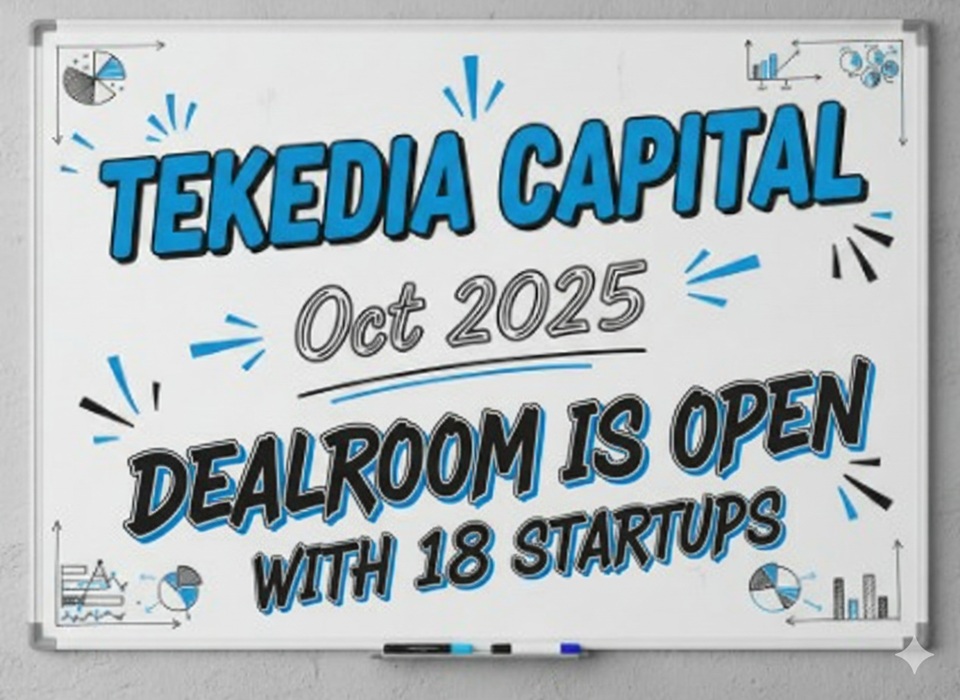
Tekedia Capital Investment Dealroom Is Open with 18 Startups – Join and Invest

0

Good People, Tekedia Capital is very excited to unveil 18 global companies for our H2 2025 investment cycle. These companies cover space tech, quantum computing, finance, AI, fintech, rare earth metal processor, pharmacy tech, lending tech, robotics, trading exchange, drug manufacturing, and more, across economies and markets, from Estonia to US, Kazakhstan to UK, US/Nigeria to Germany, and beyond.

We welcome you to explore these startups here.

The dealroom is open and the companies are listed here. This cycle will close in the first week of November 2025. In the video below, I provide an overview of the startups.

The Wholesome Alternative to Hype Coins: Why Milk & Mocha ($HUGS) Is 2025’s Most Loved Meme Token

0

In a crypto world where meme coins often rise and fall on the wings of hype, one project is winning hearts — not just charts. The Milk & Mocha token ($HUGS) brings sincerity, transparency, and kindness to an industry infamous for flash-in-the-pan trends.

As the year’s top meme coin presale unfolds, $HUGS is emerging as a rare gem — an audited, community-driven ecosystem built on trust, not speculation.

Beyond the Hype: A Different Kind of Meme Coin

Every market cycle spawns a new wave of meme coins — often fueled by influencer buzz and short-lived rallies. Yet, few offer lasting value or transparency. $HUGS, the official token of the globally beloved Milk & Mocha bears, is rewriting that playbook.

Instead of promising overnight riches, $HUGS builds on emotional authenticity. The project channels the positivity and warmth of the Milk & Mocha brand — which already commands a global fanbase of more than 20 million followers — into a sustainable blockchain ecosystem.

The result? A meme token that’s built to endure market cycles by combining fandom, function, and financial integrity. In an age of rug pulls and vaporware, that sincerity is exactly why many see $HUGS as the top meme coin presale of 2025.

Audited and Transparent by Design

One of the biggest differentiators between $HUGS and speculative meme tokens is its unwavering commitment to transparency. All $HUGS smart contracts — from staking to governance to burn mechanisms — have undergone comprehensive audits by leading blockchain security firms.

The team has prioritized full visibility for its community. Every token burn, leaderboard reward, and staking payout is published on-chain and easily verifiable. Holders don’t need to rely on marketing promises; they can see every transaction in real time.

This accountability has made the project stand out in the 2025 meme coin landscape, where too many tokens still operate behind closed doors. As a result, investors are gravitating toward $HUGS not just for its potential upside, but for the peace of mind that comes with verified integrity.

Sustainable Tokenomics for Real Value

The $HUGS economy isn’t designed for pump-and-dump speculation. It’s engineered for steady, deflationary growth. Weekly burn cycles permanently remove unsold or unclaimed tokens from circulation, tightening supply while preserving long-term value.

At the same time, the project rewards genuine participation. Through staking, holders can earn a fixed 50% APY — no lockups, no penalties, just transparent, flexible yield. The reward-and-burn mechanism ensures that incentives don’t lead to runaway inflation.

This balance of reward and scarcity positions $HUGS as one of the few meme coins with real economic discipline. It’s proof that feel-good branding and sound financial architecture can coexist. For many, that makes it the top meme coin presale to watch — a token where emotion and math finally align.

A Token With a Soul: The Milk & Mocha Mission

Behind the charts and contracts lies something even more powerful — heart. The Milk & Mocha bears have always symbolized kindness and connection, and $HUGS carries that spirit into Web3.

Through the HugVotes DAO, token holders decide on everything from NFT collections to which charities receive funding through the project’s Charity Pool. This isn’t philanthropy for marketing’s sake — it’s baked into the blockchain. Every donation is executed on-chain, ensuring transparency while letting the community vote on causes they care about.

It’s this emotional authenticity that’s turning $HUGS into more than a meme coin. It’s a social movement, a digital embodiment of kindness in a market too often defined by greed.

Merch, NFTs, and the Metaverse — The Ecosystem Expands

The Milk & Mocha universe extends far beyond its token. Holders can use $HUGS across a growing ecosystem that includes NFT collectibles, a metaverse of mini-games, and an official merch store.

  • NFT Collectibles: Limited-edition digital artworks that unlock perks like event access or physical merchandise discounts.
  • Metaverse Integration: Play-to-earn experiences where every in-game transaction fuels burns and rewards, ensuring continued deflation.
  • Merchandise Utility: Exclusive token-only drops and loyalty discounts for holders and stakers.

This real-world and digital integration means $HUGS isn’t just a speculative asset — it’s a currency with daily-life utility. It rewards participation, creativity, and community engagement, turning fans into stakeholders in the Milk & Mocha story.

The Future of Wholesome Crypto

In a year dominated by flashy meme tokens and speculative presales, the Milk & Mocha $HUGS token stands apart as a project with purpose. It doesn’t promise the moon; it promises meaning — and delivers it through transparent mechanics, community empowerment, and a deflationary model that rewards holders responsibly.

As investors look for projects that can weather both emotional and market volatility, $HUGS represents a refreshing kind of confidence: one rooted in authenticity.

For those tired of the noise and searching for something built to last — something joyful, ethical, and sustainable — the answer may already be here.

Because sometimes, the top meme coin presale isn’t the loudest or the flashiest. Sometimes, it’s the one that gives you a reason to smile — and a reason to believe. And that’s what $HUGS does best.

Explore Milk & Mocha Now:


Website: ??https://www.milkmocha.com/

X: https://x.com/Milkmochahugs

Telegram: https://t.me/MilkMochaHugs

Instagram: https://www.instagram.com/milkmochahugs/