DD
MM
YYYY

PAGES

DD
MM
YYYY

spot_img

PAGES

Home Blog Page 2974

Court Rules Uber Not An Employer, wipes out over $81.5m in payroll tax assessments levied on the company.

0

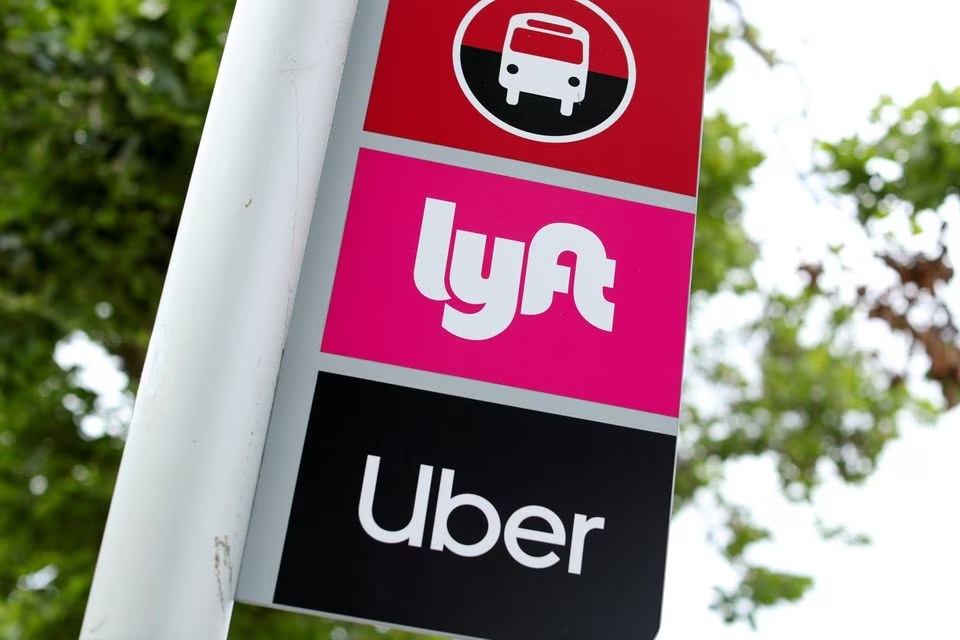
Uber has secured a significant legal victory in Australia, where a New South Wales (NSW) court ruled that the rideshare giant is not liable for millions of dollars in payroll taxes.

The ruling, handed down by NSW Supreme Court Justice David Hammerschlag, concluded that Uber does not directly pay its drivers for their services; instead, passengers themselves are responsible for compensating drivers. This decision effectively wipes out over $81.5 million in payroll tax assessments levied on the company from 2015 to 2020.

The case hinged on the nature of the relationship between Uber, its drivers, and the passengers. Uber has consistently maintained that its platform merely connects riders with drivers, acting as a payment collection agent.

The court’s decision upholds this view, determining that Uber does not pay drivers a wage for their labor.

In his ruling, NSW Supreme Court Justice David Hammerschlag sided with Uber, stating that the company did not pay the drivers but acted as a “payment collection agent.” This meant that Uber simply facilitated the transfer of payments made by riders to drivers but was not responsible for paying drivers a wage.

“It is not Uber who pays the driver,” Justice Hammerschlag said in his decision. “The rider does that. What Uber pays the driver is in relation to the payment Uber has received, not in relation to the work itself.”

The ruling dismissed the state’s payroll tax assessments against Uber and rejected the state officials’ claims that the company owed millions in back taxes, as well as interest.

Uber’s defense revolved around the idea that its platform functions as a marketplace, where drivers and riders contract directly with each other. Uber maintained that the terms of service agreed to by riders when signing up for the app form the basis of this contract, and as a result, drivers are not employees or wage earners under traditional definitions.

This distinction was key to avoiding payroll tax obligations, which are typically levied on businesses that employ workers.

Lawyers for the NSW Chief Commissioner of State Revenue argued that while drivers undoubtedly provided transport services to riders, they also offered a service to Uber, given that the rideshare giant benefits from the transactions facilitated on its platform. This argument was rejected by the court, with Justice Hammerschlag concluding that Uber’s role was limited to processing payments and maintaining the marketplace infrastructure.

This ruling stands in sharp contrast to similar legal battles Uber has fought—and lost—across the globe, particularly in the US, UK, and parts of Europe, where courts have ruled in favor of recognizing Uber drivers as employees rather than independent contractors.

In landmark cases, especially in the UK Supreme Court, drivers were classified as workers entitled to various benefits, including a minimum wage, vacation pay, and health plans. Those rulings have placed significant pressure on Uber to overhaul its business model and offer employee protections for drivers. This shift has affected not just its operations but also its financial outlook.

In the US, particularly in California, Uber has been embroiled in a protracted battle over its drivers’ status, which culminated in the passage of Proposition 22. The legislation allowed Uber and other gig economy companies to continue treating drivers as independent contractors, though it required offering some benefits, such as healthcare subsidies.

In Europe, Uber has faced even stricter scrutiny, with courts ruling that the company has significant control over its drivers, setting conditions that mirror those of an employment relationship. These rulings have forced Uber to recalibrate its strategy in several European countries, either offering benefits or facing steep fines for failing to comply with labor regulations.

The Australian ruling provides a measure of relief for Uber, but it also sets a legal precedent that could have wider implications for other peer-to-peer platforms. By recognizing Uber as a marketplace rather than an employer, the court may pave the way for other gig economy companies to sidestep the costly obligations that come with employee classification.

Companies like Airbnb, TaskRabbit, or DoorDash, which facilitate transactions between service providers and customers, may seek to use this decision to challenge payroll taxes and other regulatory obligations that rely on the notion of employer-employee relationships.

Justice Hammerschlag did acknowledge, however, that the laws applied in this case were devised long before services like Uber existed, suggesting that the legal framework might need updating to adequately address the complexities of modern gig work.

However, while Uber successfully avoided the payroll tax obligations in this case, the NSW state government could still choose to challenge the ruling in a higher court. Additionally, as the ruling pertains specifically to the 2015 to 2020 period, future tax laws could be adapted to better address the unique nature of peer-to-peer and gig economy platforms.

United Arab Emirates Finish Construction of First Nuclear Power Plant

0

The United Arab Emirates (UAE) has marked a significant milestone in the Arab world by completing its first nuclear power plant. This historic development is set to transform the energy landscape of the region, providing a substantial portion of the UAE’s electricity needs and signaling a shift towards cleaner energy sources.

The Barakah Nuclear Power Plant, constructed by the Emirates Nuclear Energy Corporation (ENEC) in Abu Dhabi, represents a major step forward in the UAE’s commitment to diversifying its energy mix and reducing reliance on fossil fuels. The plant is expected to deliver up to a quarter of the UAE’s electricity, significantly contributing to the nation’s goal of achieving net-zero carbon emissions.

The completion of the Barakah Plant is not just a technical achievement but also a strategic move for the UAE. As one of the world’s largest oil producers, the UAE’s pivot towards nuclear energy is indicative of a broader trend in the region to explore sustainable energy solutions. The plant is projected to prevent up to 22 million tons of carbon emissions annually, which is equivalent to removing nearly 4.8 million cars from the roads.

With all four reactors now operational, the Barakah plant is poised to produce 40 terawatt-hours of electricity annually, meeting 25% of the UAE’s energy needs. This is a remarkable feat, considering the hot desert climate of the Gulf state, where air conditioning is essential, and energy consumption is high.

The UAE’s commitment to sustainable energy was further underscored by its hosting of the COP28 summit in 2023, where it pledged to cover half of its energy needs through renewable sources by 2050. The Barakah plant, which cost $22.4 billion, is a testament to the UAE’s dedication to combating climate change and prioritizing energy security for the benefit of its nation and people.

The safety protocols at Barakah are aligned with international best practices and are rigorously overseen by the Federal Authority for Nuclear Regulation (FANR), which ensures the plant’s safety, security, and reliability through robust regulation and oversight. The emergency response plan is regulated, tested, and exercised in coordination with FANR and has been reviewed by the International Atomic Energy Agency (IAEA) as part of the Emergency Preparedness Review (EPREV) in 2015 and again in 2019.

Moreover, the plant’s design and construction have been carried out with a focus on safety and quality, adhering to the standards set by global nuclear authorities. The APR1400 reactors, developed by the Korea Electric Power Corporation (KEPCO), are a testament to this commitment, meeting the highest international standards for safety and performance.

The Barakah Nuclear Energy Plant’s approach to safety extends beyond nuclear concerns, as evidenced by the proactive measures implemented in response to the COVID-19 pandemic. These measures included reducing on-site workforce, establishing remote work protocols, enforcing social distancing, and conducting thermal monitoring and COVID-19 testing in accordance with government guidelines.

As the first commercial nuclear power station in the Arab world, Barakah stands as a beacon of progress and innovation. It is a clear indication that the region is capable of harnessing advanced technologies to meet its growing energy demands while addressing global environmental concerns. The plant’s completion is a significant step on the journey towards net zero, aligning with the global efforts to reduce greenhouse gas emissions and combat climate change.

The Barakah nuclear power plant is not only a source of clean energy but also a symbol of the UAE’s vision for the future—a future where sustainable development and environmental stewardship go hand in hand with economic growth and prosperity. With this bold move, the UAE is leading by example, showing the world that it is possible to achieve energy security and sustainability simultaneously.

The successful completion of the Barakah nuclear power plant is a historic event for the UAE and the Arab world, heralding a new era of clean energy and environmental responsibility. It is a significant achievement that will undoubtedly inspire other nations in the region to explore and invest in alternative energy sources as they navigate their own paths towards sustainable development.

Tinubu Defends Petrol Price Hike, Other Reforms, Says They’re Necessary for Economic Growth

0

President Bola Tinubu has finally broken his silence regarding the recent spike in the price of Premium Motor Spirit (PMS), popularly known as petrol, which has ignited widespread concern and protest across the country.

Speaking to a gathering of Nigerians in China on Friday, Tinubu defended his administration’s decision, explaining that the increase in fuel prices, along with other reforms, is part of a broader strategy aimed at setting Nigeria on a path toward long-term economic growth.

Tinubu’s comments come at a critical moment, as the Nigerian National Petroleum Company Limited (NNPCL) recently raised the pump price of petrol to as high as N855 per liter at its outlets, triggering long queues and public outrage. The price hike has been met with condemnation from many quarters, with several groups and prominent individuals calling for a reversal.

Defending Economic Reforms

In his address, Tinubu pointed out that Nigeria is in the midst of significant reforms and that bold decisions are necessary to navigate the country through its current economic challenges. He argued that while the reforms may seem tough in the short term, they are essential for paving the way for long-term prosperity.

“Nigeria is going through reforms, and we are taking very bold and unprecedented decisions. For example, you might have been hearing from home in the last few days about fuel prices,” the president said, according to his spokesperson, Ajuri Ngelale.

Tinubu stressed that hard decisions are vital for setting Nigeria on the right path, noting that expecting everything to come without sacrifice would only delay meaningful progress.

“What is the critical part to get us there if we cannot make hard decisions to pave the way for a country that is blessed and so talented?

“The more you want everything free, it will become more expensive and long-delayed to achieve meaningful development,” he added, defending the hike as part of a necessary economic strategy.

Public Outcry and Calls for Reversal

The timing of the pump price increase has only added to the frustration among Nigerians, who are already grappling with a deepening inflation crisis. With essential goods and services becoming increasingly expensive, many have argued that the hike in fuel prices only worsens the hardship faced by the general population.

Alhassan Ado-Doguwa, chairman of the House of Representatives Committee on Petroleum Resources (Upstream), was among the voices calling for immediate action. In a statement, Doguwa asked the federal government and NNPCL to reverse the recent hike, stating that Nigerians are already burdened with enough challenges.

“We urge the federal government and, of course, the NNPCL to consider the plight of Nigerians and suspend this recent increase in pump price,” Doguwa said, labeling the move as “unacceptable.” He added that private companies were taking advantage of gaps in the system to make profits at the expense of ordinary Nigerians and warned that such actions could hinder the country’s progress.

Doguwa’s remarks echo the sentiments of many Nigerians who feel that the government’s reforms, while necessary, should not come at such a heavy cost to the populace. Several civic groups have also called on the government to reconsider its stance, arguing that the timing of the hike is especially damaging, given the broader economic hardship in the country.

While the removal of the fuel subsidy was seen as a necessary step to curb wasteful spending and redirect funds to other critical areas, the immediate impact has been a sharp rise in fuel prices, making transportation, goods, and services more expensive.

The controversial decision, which has been delayed for a long time due to its short-term implications, was announced by Tinubu during his inaugural address on May 29, 2023.

Tinubu: “Hard Decisions Are Crucial”

During his speech in Beijing, Tinubu explained that hard decisions are necessary for Nigeria’s development, pointing to China’s infrastructure as a model that Nigeria can emulate if it stays the course. He stated that Nigeria needs to make the kind of difficult choices that will lay the groundwork for future development, noting that quality infrastructure such as roads, electricity, and schools cannot be built without taking some bold economic measures.

“But can we help it? Can we develop good roads like you have here? You see electricity being constant in quantity and quality. You see water supply, constant and running, and you see their good schools,” Tinubu stated. “We are focused, and I have a very good team,” he assured the audience.

The president also mentioned his desire to replicate China’s infrastructure development model in Nigeria, suggesting that the sacrifices Nigerians are currently making could lead to long-term benefits.

While the president has emphasized that the decisions are necessary for sustainable development, critics have reminded him of the role he played in 2012, when former President Goodluck Jonathan removed fuel subsidy, moving pump price from N65 to N140 per liter. Tinubu, who was in opposition then, headed a nationwide protest that forced Jonathan to reverse the decision.

Brace for Higher Prices

Tinubu’s defense of his administration’s reforms is understood to mean that Nigerians should prepare for further fuel price hikes. The president’s remarks come alongside speculations that petrol could soon sell for as much as N1,000 per liter, with market forces driving the prices.

Following the commencement of petrol production from the Dangote Refinery, NNPCL has declared that market forces, not government intervention, will determine petrol prices in the deregulated market. This implies that Nigerians will need to brace for price hikes.

CBN Approves $20,000 Allocation to BDC Operators to Boost Forex Liquidity Amid Naira’s Mixed Performance

0

In a fresh move to address forex liquidity challenges and meet growing demand, the Central Bank of Nigeria (CBN) has approved the sale of $20,000 to each qualified Bureau De Change (BDC) operator at a rate of N1,580 per dollar.

The apex bank announced this in a statement signed by Dr. W.J Kanya, Director of the Trade & Exchange department, detailing the conditions and the expected outcome of the move.

According to the CBN, this initiative is aimed at facilitating “invisible transactions,” a term that refers to payments for services like school fees, medical bills, and personal travel allowances (PTA), which have been under intense pressure due to high demand and dwindling foreign exchange reserves.

To ensure proper compliance and pricing, the CBN mandated that BDCs sell to eligible end-users at a margin not exceeding 1% above the purchase rate of N1,580 per dollar.

The statement reads: “The CBN has approved the allocation of $20,000.00 to each qualified Bureau de Change at an exchange rate of N1,580 per dollar. This measure aims to address the demand for invisible transactions.”

It also clarified that interested BDC operators must deposit funds into CBN accounts to facilitate the purchase of forex.

Mixed Sentiments in the Market

Despite this liquidity injection, the Naira’s performance remains mixed. While the official market showed signs of recovery, the black market continued to depreciate. According to data from FMDQ, the official foreign exchange market saw the Naira appreciate significantly to close at N1,593.32 per dollar on Friday, an improvement from the N1,625.88 rate recorded on Thursday. This represents a notable gain of N32.56 against the dollar in a single trading day.

This upward trend in the official market reflects increased liquidity, suggesting a positive market response to the central bank’s intervention efforts. Additionally, the Naira posted a week-on-week gain of N5.24 compared to last Friday’s exchange rate of N1,598.56 per dollar at the official market, signaling improved sentiment in the formal sector.

However, the Naira’s trajectory in the black market tells a different story. The parallel market, often seen as a barometer of real demand pressures, saw the Naira weaken further to close at N1,665 per dollar on Friday, slipping from N1,660 the day before. This decline highlights the continued struggle for forex liquidity in the informal sector, where higher demand for dollars is significantly suppressing CBN interventions.

The black market saw a week-on-week decline of N20 per dollar. Last week, the Naira traded at N1,645 per dollar, highlighting the growing disparity between the official and parallel markets.

For many Nigerians, especially those reliant on foreign transactions, the black market remains a critical source of forex, given the limited availability of dollars through official channels. Hence, the continued depreciation of the Naira in the parallel market is expected to keep inflationary pressures elevated in the short term.

A Fragile Recovery

The recent appreciation of the Naira in the official market, though encouraging, remains fragile. Analysts warn that the gains may be short-lived unless more sustained measures are put in place to bridge the wide gap between the official and parallel exchange rates. They note that the persistent scarcity of foreign exchange and the volatility of the parallel market indicate that demand pressures remain strong, despite the CBN’s latest interventions.

The forex market in Nigeria has been under immense strain in recent years, compounded by declining oil revenues amid a surge in demand for dollars.

While the CBN’s approval of forex sales to BDCs is seen as a stopgap measure to alleviate immediate pressures, the overarching concern remains whether this move will be enough to bring lasting stability to the market. The reintroduction of BDC allocations marks a shift in CBN’s forex management strategy, given the earlier stance that limited the role of BDCs in favor of formal banking channels.

Mastering Prompt Engineering: Key Tips for Working with AI Models

0

As AI tools like large language models (LLMs) become an integral part of our daily lives, prompt engineering is emerging as a must-have skill. Whether you’re creating content, writing code, or leveraging AI to tackle complex problems, mastering how to effectively prompt these systems can transform your results. I’ve been diving deep into this, exploring courses like this (Deeplearning.ai’s Prompt Engineering for Vision Models) and this (ChatGPT Prompt Engineering for Developers), and experimenting with prompts almost every day.

After attending Anthropic’s AI Prompt Engineering workshop, I realized just how much potential there is to boost productivity with the right techniques. The workshop was filled with valuable insights, and I’m excited to share them with you! Whether you’re new to AI or already experienced with models like Claude or GPT, these tips will elevate your interactions and help you get more out of your AI tools.

1. Be Clear and Precise: When writing prompts, always state tasks clearly and avoid ambiguity. This helps the AI grasp your instructions better and produce more accurate responses.

2. Iterate Rapidly: Don’t settle for your first prompt. Prompt engineering is all about testing and refining your instructions. Try different approaches to see how the model responds.

3. Think Beyond the Usual: Consider how your prompt would perform in unusual or edge-case scenarios. You don’t want it to fail in unexpected ways.

4. Test Imperfect Inputs: Not every user will have perfect grammar or formatting. Test your prompts with realistic, imperfect inputs to see how well the model adapts.

5. Analyze Model Outputs: Carefully study the AI’s responses to ensure it’s following your instructions correctly. You might discover small tweaks to improve clarity.

6. Break Tasks Down: Instead of giving all instructions at once, break tasks into manageable steps. It can help the AI follow your plan more effectively.

7. Consider AI’s “Theory of Mind”: Try to think like the AI. How might it misunderstand your instructions? Be mindful of possible misinterpretations.

8. Use Version Control: Treat your prompt work like code. Keep track of what you’ve tried and how the model responded. It’ll save you time in the long run.

9. Ask for Feedback: Don’t be afraid to ask the model where it’s confused or uncertain. Often, it can give helpful clues on how to improve your prompts.

10. Keep It Simple: Avoid overcomplicating things. Stick to clear, direct instructions without unnecessary layers of abstraction.

11. Balance Edge Cases and Typical Use: While you want to cover edge cases, don’t forget about the standard, primary use cases for your prompts.

12. Consider System-Level Context: Prompts don’t work in isolation. Think about how your input integrates into the larger system, especially when factors like latency or data sources come into play.

13. It’s Not Just About Writing Skills: Good writers don’t always make great prompt engineers. You’ll need logical, clear thinking and a methodical approach to get the best results.

14. Guide Users Towards Real Use Cases: If you’re working with clients or teammates, help them understand how the model responds to real-world inputs versus idealized examples.

15. Practice!: The more you experiment with different prompts and data, the better you’ll understand how the model responds. Get hands-on and familiarize yourself with its quirks!

With these practical tips, you’ll be well on your way to becoming a prompt engineering master. Remember, it’s all about clarity, iteration, and understanding how AI models interpret the world. I’ve found that the more you play around with prompts, the better you’ll get at extracting useful insights from models like Claude and GPT.

If you want to dig deeper into these strategies, check out Anthropic’s recent deep dive on prompt engineering — it’s a must-watch!

Enjoy experimenting, and have a Bonne weekend!

Some Useful Extras

  1. Anthropic prompt engineering docs — https://docs.anthropic.com/en/docs/build-with-claude/prompt-engineering/overview
  2. OpenAI’s Prompt Engineering guide — https://platform.openai.com/docs/guides/prompt-engineering
  3. ChatGPT Prompt Engineering for Developers — https://www.deeplearning.ai/short-courses/chatgpt-prompt-engineering-for-developers/