DD
MM
YYYY

PAGES

DD
MM
YYYY

spot_img

PAGES

Home Blog Page 2996

Dangote Refinery Prepares to Roll Out Fuel, To Supply Solely to NNPC

0

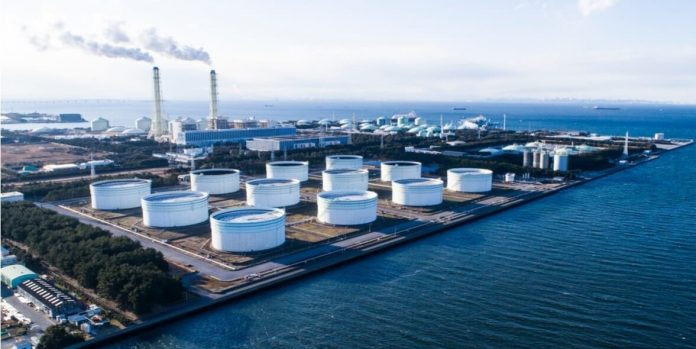
The Dangote Refinery, located in Lagos, has started processing premium motor spirit (PMS), commonly known as petrol, as Nigeria braces for the rollout of its first locally refined fuel.

According to a report from Reuters on Monday, the Nigerian National Petroleum Company (NNPC) Limited will become the exclusive buyer of this petrol, marking a critical step in addressing the nation’s long-standing fuel shortages.

This development comes as the NNPC grapples with significant supply challenges, including debts owed to international oil traders, which have contributed to the recent fuel scarcity. However, while the new arrangement with Dangote Refinery offers hope for improved supply, concerns linger over the expected cost of the product and its affordability.

The 650,000 barrel-per-day petrochemical plant has begun testing its petrol production and is expected to release the product into the market in the coming weeks, according to the report. Vice President at Dangote Industries Limited, Devakumar Edwin, confirmed that the refinery is ready to supply petrol to the NNPC, which will purchase the entire output for domestic distribution.

“We are testing the product (gasoline), and subsequently, it will start flowing into the product tanks,” Edwin said. “If no one is buying it, we will export it as we have been exporting our aviation jet fuel and diesel.”

While Edwin did not specify an exact date for when the petrol would hit the Nigerian market, the refinery’s capacity to process large quantities of fuel is seen as a game-changer for the country’s embattled energy sector. Yet, the looming price issue casts a shadow over the optimism surrounding this new supply source.

NNPC’s Debt Crisis and Supply Woes

This new arrangement could not have come at a better time for NNPC, which has struggled to maintain a steady fuel supply due to mounting debts. The national oil company has recently acknowledged owing international oil traders around $6 billion in subsidy obligations. This debt has caused these traders to halt the supply of imported petrol, exacerbating the fuel shortages in Nigeria.

Despite initially denying these claims, NNPC was forced to admit that its outstanding debts had directly contributed to the disruptions in fuel supply.

In a statement, the company acknowledged the severity of the situation: “NNPC Ltd. has acknowledged recent reports in national newspapers regarding the company’s significant debt to petrol suppliers. This financial strain has placed considerable pressure on the Company and poses a threat to the sustainability of fuel supply.”

However, the NNPC reaffirmed its commitment to ensuring national energy security. It further stated: “In line with the Petroleum Industry Act (PIA), NNPC Ltd. remains dedicated to its role as the supplier of last resort, ensuring national energy security. We are actively collaborating with relevant government agencies and other stakeholders to maintain a consistent supply of petroleum products nationwide.”

The Price Concerns

While the partnership between Dangote Refinery and NNPC holds promise, the potential cost of the locally refined petrol is raising concerns. Some industry experts suggest that the price per liter could reach N1,000, a figure that would strain household budgets across the country. As fuel prices have already surged due to the removal of the government subsidy last year, the anticipated cost of the new petrol could lead to further inflationary pressures, particularly in the transport and logistics sectors.

Analysts say this anticipated cost underscores the complex trade-offs of Nigeria’s energy policies. On the one hand, domestic production of petrol reduces reliance on costly imports and long supply chains, potentially lowering logistics and importation costs for NNPC. On the other hand, without a subsidy to cushion the blow, consumers may find themselves paying more for fuel than ever before, especially as the refinery seeks to operate profitably in a deregulated market.

What This Means for Nigeria’s Energy Sector

NNPC becoming the exclusive buyer of Dangote Refinery’s petrol is expected to alleviate some of the company’s supply issues. By sourcing locally, NNPC would reduce its reliance on international traders, potentially lowering its import bill and stabilizing fuel availability. The collaboration with Dangote Refinery is also expected to cut down on logistics costs, making it easier for local marketers to access the petrol.

However, analysts believe that if the high cost of Dangote’s petrol does materialize, it could offset some of the benefits of local production, leading to continued discontent among consumers already grappling with high living costs.

The Federal Executive Council has recently approved the sale of crude oil to the Dangote Refinery in local currency, on the condition that the refinery will sell its refined petrol to the country in the same currency. This could offer some relief to the NNPC, allowing it to purchase refined products without the added pressure of foreign exchange fluctuations. Nevertheless, the impact on retail prices remains uncertain, with many Nigerians bracing for further price hikes.

The September Effect on Bitcoin

0

As the calendar turns to September, a sense of caution often permeates the cryptocurrency market, particularly for Bitcoin (BTC) traders. This phenomenon, colloquially known as the “September Effect,” refers to the historically bearish performance of Bitcoin during this month. But what does the data say, and how should traders approach September with this in mind?

Historical performance data for Bitcoin reveals a trend of negative returns in September. Notably, Bitcoin’s average and median monthly returns in September have been -4.78% and -5.58%, respectively. This trend is not unique to Bitcoin, as traditional markets have also shown similar patterns in September, often attributed to various economic, psychological, and historical factors.

As of the beginning of September 2024, the market is rife with speculation on whether Bitcoin will continue its bearish trend or break away from historical patterns. With an average return of -5.36% in past Septembers, investors and traders are understandably cautious. However, it’s crucial to consider that past performance is not indicative of future results, and each year brings its unique set of variables that can influence market behavior.

Given the historical data, traders might consider several strategies when approaching the market in September:

Risk Management: Implementing strict stop-loss orders can help protect against potential downturns.
Diversification: Allocating investments across different assets may reduce the impact of Bitcoin’s volatility.
Research: Staying informed about current events and market trends can provide insights that historical data alone cannot offer.
Patience: Sometimes, the best action is inaction. Waiting out the month and observing market trends can be a prudent strategy for the risk averse.

It’s important to note that external factors such as regulatory news, technological advancements, and macroeconomic conditions can significantly influence Bitcoin’s price. For instance, positive developments in blockchain technology or favorable regulatory announcements could counteract the historical September slump.

Bitcoin’s early years were characterized by its use among a small group of enthusiasts and the establishment of the first exchanges. The most notable event was the purchase of two pizzas for 10,000 BTC in 2010, which is celebrated as Bitcoin Pizza Day.

The Rise of Bitcoin (2013-2016): During this period, Bitcoin saw increased public awareness and adoption. The price of Bitcoin surged, reaching parity with the US dollar and experiencing its first major peak at over $1,000 in 2013 before a subsequent crash.

Regulatory Challenges (2017-2018): Bitcoin’s explosive growth in 2017, reaching nearly $20,000, was followed by regulatory challenges and a significant market correction in 2018. This period highlighted the volatile nature of cryptocurrency markets.

Mainstream Acceptance (2019-2021): Bitcoin began to gain mainstream acceptance as institutions started to recognize its potential as a store of value. This led to a new all-time high of nearly $69,000 in November 2021.

Technological Advancements: Over the years, technological improvements such as the implementation of the Lightning Network have aimed to solve scalability issues and improve transaction speeds.

Halving Events: Bitcoin has undergone several ‘halving’ events, where the reward for mining new blocks is halved, effectively reducing the rate at which new bitcoins are generated. These events have historically led to an increase in price due to the reduced supply.

While the “September Effect” presents a compelling narrative backed by historical data, it is not a rule set in stone. Each trading year is a complex interplay of multiple factors, and while history can provide valuable lessons, it should not be the sole determinant of trading decisions. Traders should consider a multifaceted approach that incorporates historical trends, current market analysis, and sound risk management practices to navigate the uncertainties of September trading.

“Cesspool of Endemic Corruption” – Atiku Calls for Listing of NNPCL on Stock Exchange

0

Former Vice-President Atiku Abubakar has once again voiced his concerns over the Nigerian National Petroleum Corporation Limited (NNPCL), describing it as a “cesspool of endemic corruption” and calling for immediate reforms to ensure transparency and accountability.

Atiku, who was the presidential candidate of the Peoples Democratic Party (PDP) in the last election, voiced his concerns through his Media Adviser, Mr. Paul Ibe. He emphasized the importance of listing NNPCL on the stock exchange, arguing that this action would make the company more profitable and accountable.

“The NNPCL is supposed to have been listed on the stock exchange in line with the Petroleum Industry Act. This would make the company more profitable and enhance transparency and corporate governance,” Atiku stated.

He further accused the NNPCL of continuing to serve as the Federal Government’s “ATM,” despite its claims of being a private entity.

“Currently, the NNPCL claims to be private, but this is only a ruse to fool the feeble-minded because it remains the ATM of the Federal Government. Anything short of listing the NNPCL on the stock exchange is nothing but a cosmetic development,” Atiku added.

Atiku also questioned the independence of NNPCL, as mandated by the PIA, pointing to the company’s role in providing political cover for the Tinubu administration’s inconsistent policies on fuel subsidies. He highlighted the lack of transparency in previous arrangements and concessions, which have failed to attract investors due to opaque contract processes.

In a pointed critique of the NNPCL’s operations, Atiku referenced former President Olusegun Obasanjo’s recent revelation that even Shell, one of the world’s leading oil companies, had declined to operate Nigeria’s refineries.

“Former President Olusegun Obasanjo revealed recently that even Shell, one of the world’s wealthiest oil companies, rejected the offer to operate Nigeria’s refineries. This is because the NNPCL has, for years, been a cesspool of endemic corruption,” Atiku stated.

He also noted that over $20 billion spent on refineries in the last 20 years had yielded no significant results, questioning the logic behind trying to make these refineries profitable while still paying petrol subsidies.

“Which businessman will invest in a refinery that has been programmed to operate at a loss?” he asked.

Atiku expressed skepticism about the NNPCL’s current strategies, citing past failures of similar “manage and operate” approaches, such as Manitoba Hydro International’s handling of the Transmission Company of Nigeria and Global Steel Limited’s management of Ajaokuta Steel Company. He noted that these initiatives led to substantial losses and compensation payments, without achieving their intended goals.

“The management and operational approach has not always worked. The Manitoba Hydro International, which was handed the Transmission Company of Nigeria, led to nowhere. Similarly, Global Steel Limited, which was handed the Ajaokuta Steel Company, was not able to make the facility profitable,” Atiku noted. “The contract was questionably revoked by the Umaru Musa Yar’Adua administration, and Nigeria ended up paying Global Steel a compensation of nearly $500m while Ajaokuta remains comatose 17 years later.”

Atiku’s criticism comes on the heels of NNPCL’s recent admission that it owes substantial debts to international oil traders, a fact it had previously denied. For months, NNPC maintained that it did not owe $6.8 billion to these traders, nor was it paying subsidies on petrol, even as fuel scarcity gripped the nation. However, as the crisis deepened, the corporation was forced to acknowledge its financial obligations and the role these debts played in the fuel shortages.

Atiku also took aim at the NNPC’s involvement in ongoing subsidy payments, which he claims are being concealed under the guise of other financial obligations.

In his campaign as the presidential candidate of the Peoples Democratic Party (PDP), the former Vice President had repeatedly vowed to sell off NNPC, citing its pervasive corruption as a significant barrier to Nigeria’s economic development. He argued that privatization was the only way to ensure that the company could operate efficiently and transparently, free from political interference and the entrenched corrupt practices that have plagued it for years.

Atiku urged the NNPCL to avoid repeating past mistakes, particularly in the handling of contract processes, such as the one involving OVH last year, which he described as dubious and ineffective in addressing fuel scarcity. He advised that future contracts be conducted transparently to ensure better outcomes for the country.

Tekedia Capital Takes Position in a US AI-native Insurance Company

0

It promises to become a category-king in the insurance sector, redefining the way insurance systems are built. Tekedia Capital has taken a position, and we are super excited about the promises of our next investment cycle, starting on Oct 7. Good People, it feels great to own a piece of a US AI-native insurance company in this amazing 21st century. Insurance is big, and offers a massive latent opportunity, in our world, which is in a state of flux.

In Nigeria, we will  launch a new company in Q4 2024, and in Q1 2025, a BIG one that could employ at least 100 will arrive. Our vision is to become a 21st century digital conglomerate, for good, for our members.

Tekedia Capital >> building the next Africa through entrepreneurial capitalism.  Become a member here.

European Union Importing more Gas from Russia than from USA

0

In a significant shift in energy dynamics, the European Union has recently been importing more natural gas from Russia than from the United States. This development marks the first time in nearly two years that Russia has surpassed the US as the EU’s primary gas supplier. The implications of this shift are profound, considering the geopolitical tensions and the EU’s long-term energy strategy.

The Numbers Behind the Shift

Recent reports indicate that during the quarter from April to June, the EU imported approximately 12.7 billion cubic meters of natural gas from Russia, slightly more than the 12.3 billion cubic meters imported from the United States. This change comes after a period where the US had been the leading supplier of natural gas to the EU, a status underscored by a significant deal signed in March 2022 aimed at reducing Europe’s reliance on Russian energy.

The EU’s increased imports from Russia come at a time of heightened geopolitical tensions, particularly in light of Russia’s actions in Ukraine. The EU has been actively seeking to diversify its energy sources to reduce dependency on Russian gas. The recent trend of importing more gas from Russia, therefore, raises questions about the effectiveness of these diversification efforts.

The shift in gas imports has strategic implications for the EU’s energy security and its broader foreign policy. Relying more heavily on Russian gas could potentially give Russia greater leverage in political and economic negotiations. Conversely, it also highlights the challenges the EU faces in securing alternative energy sources that are both reliable and sufficient to meet its needs.

Liquefied Natural Gas (LNG) plays a crucial role in the EU’s energy diversification strategy. The EU has imported more LNG from the United States than pipeline gas from Russia for the first time ever, as reported in June, when Moscow reduced its supply to Europe. This indicates a growing importance of LNG in the EU’s energy mix and the potential for further increasing LNG imports to enhance energy security.

For the EU, the path forward involves a delicate balance between securing immediate energy needs and pursuing long-term goals of energy independence and sustainability. The recent increase in Russian gas imports may be a tactical move to navigate current market conditions, but it underscores the need for the EU to accelerate its transition to renewable energy sources and improve energy efficiency.

The EU’s strategy moving forward involves balancing immediate energy needs with long-term goals of energy independence and sustainability. The recent increase in Russian gas imports may be a tactical move to navigate current market conditions, but it underscores the need for the EU to continue its transition to renewable energy sources and improve energy efficiency.

The dynamics of EU gas imports from Russia have significant implications for European energy security. The EU must continue to pursue its diversification and decarbonization goals to ensure a secure and sustainable energy future. The full impact of these shifts in energy supply sources will unfold over time, but the EU’s commitment to energy security and sustainability remains steadfast.

The recent shift in the EU’s gas imports from the US to Russia is a development that warrants close attention. It reflects the complex interplay of market dynamics, geopolitical considerations, and strategic objectives. As the EU continues to navigate these challenges, the decisions it makes today will have lasting impacts on its energy landscape and its position on the global stage. The full implications of this shift remain to be seen, but one thing is clear: the EU’s energy strategy is at a critical juncture, and the choices made now will shape its future for years to come.