DD
MM
YYYY

PAGES

DD
MM
YYYY

spot_img

PAGES

Home Blog Page 3

American Airlines Picks Starlink in Fresh Boost for SpaceX Ahead of Historic IPO

0

American Airlines said Tuesday it will begin installing Starlink satellite internet service on more than 500 narrow-body Airbus aircraft starting early next year, delivering another commercial victory for SpaceX as the Elon Musk-led company prepares for what could become the largest IPO in history.

The agreement deepens Starlink’s growing dominance in the aviation connectivity market and highlights how SpaceX is transforming from a rocket launch company into a sprawling communications and infrastructure giant anchored increasingly by recurring subscription revenue.

Under the arrangement, American Airlines will equip its new Airbus A321XLR and A320neo fleets with Starlink-powered in-flight Wi-Fi. Boeing aircraft are not included in the current agreement, though the deal still represents one of Starlink’s largest airline deployments to date.

The win is strategically significant for SpaceX because it expands Starlink’s foothold in a fiercely competitive aviation internet market long controlled by legacy satellite operators such as Viasat and emerging rivals, including Project Kuiper, formerly referred to as Amazon Leo.

Starlink’s rapid expansion into commercial aviation has become one of the clearest examples of how SpaceX is leveraging its low-Earth-orbit satellite constellation beyond consumer broadband. The company has aggressively pursued airlines, cruise operators, governments, militaries, and enterprise clients as it seeks to build a stable, high-margin global communications platform.

Unlike traditional geostationary satellite providers, Starlink operates thousands of satellites in low Earth orbit, allowing for lower latency and faster broadband speeds. That architecture has made the system particularly attractive to airlines seeking to improve onboard streaming, gaming, video conferencing, and other bandwidth-intensive services that older systems often struggle to support reliably.

The American Airlines deal adds to a growing list of carriers adopting Starlink technology. According to SpaceX’s IPO filing released last week, airlines already deploying or testing Starlink include United Airlines, Southwest Airlines, Qatar Airways, Lufthansa Group, British Airways, and Alaska Airlines following its merger with Hawaiian Airlines.

The aviation push comes at a critical moment for SpaceX as investors scrutinize the company’s financial model ahead of its planned Nasdaq debut under the ticker SPCX.

While SpaceX remains best known for reusable rockets and its long-term Mars ambitions, regulatory filings showed Starlink has become the company’s primary revenue engine. The satellite internet business generated more than half of SpaceX’s revenue last year, roughly $11 billion, according to the company’s S-1 filing.

That revenue diversification is central to investor interest in the IPO. Space launch operations remain capital-intensive and cyclical, while satellite broadband offers recurring subscription income with global scaling potential. Analysts increasingly view Starlink as the core commercial asset underpinning SpaceX’s valuation, which is expected to approach or exceed $1.75 trillion.

The airline connectivity market itself is becoming a major battleground. Demand for high-speed in-flight internet has surged as carriers seek to differentiate premium travel offerings and as passengers increasingly expect ground-like connectivity in the air. Airlines are also viewing Wi-Fi as a broader customer retention and ancillary revenue tool tied to loyalty programs, advertising, and digital services.

For SpaceX, the expansion into aviation strengthens a vertically integrated ecosystem few competitors can replicate. The company designs and launches its own satellites, operates the rocket systems that deploy them, and controls the communications network itself. That structure allows SpaceX to scale capacity more aggressively and potentially price services more competitively than rivals dependent on third-party launch providers.

The agreement with American Airlines also arrives as SpaceX faces mounting investor expectations ahead of its IPO roadshow next month. The company’s filing revealed more than $37 billion in cumulative losses since inception, driven largely by heavy spending on Starship development and AI infrastructure tied to Musk’s xAI operations.

Against that backdrop, every major commercial contract strengthens the narrative that Starlink can evolve into a dominant global communications utility capable of generating enormous long-term cash flow. The latest airline deal is seen as an indication that investors are increasingly buying into that thesis.


$DOGEBALL Is Moving Faster Than $HYPE: Your Last Chance to Enter This Top Crypto Presale Before the Price Hike

0

Do you ever look back at your portfolio and wonder how you missed the exact moment a project transitioned from an unknown idea into a market leader? It is a heavy realization, especially when you watch others capture life-changing gains from assets you had on your watchlist but never pulled the trigger on. The history of crypto is paved with stories of those who hesitated on projects like Hyperliquid (HYPE) when they were still in their early stages. While everyone was busy doubting the decentralized exchange model, a small group of early believers quietly accumulated, eventually watching their positions multiply as the platform became a cornerstone of DeFi infrastructure.

The truth is that regret in this space is almost always a byproduct of waiting for the perfect moment that never arrives. Projects like HYPE succeeded not because they were lucky, but because they solved a massive, specific problem in liquidity fragmentation. The missed opportunity here was not about a lack of information; it was about a lack of conviction at the right time. Every successful cycle offers a fresh chance to identify the next infrastructure-heavy asset before it hits mainstream exchanges, but you must be willing to distinguish between noise and actual utility.

Why DOGEBALL Is Setting A New Benchmark For Utility-Driven Presales

DOGEBALL is moving beyond the standard expectations of a token by integrating a custom Ethereum Layer 2 solution known as DOGECHAIN. This ecosystem is engineered to solve the real-world friction of cross-border finance by combining GameFi and PayFi into one seamless flow. Users can send crypto and have the recipient get fiat directly into their local bank account anywhere in the world, effectively bypassing the delays and high costs of traditional banking and remittance services.

What makes this project different is its focus on tangible application rather than just speculative hype. By offering zero FX fees, sub-second transaction finality, and a specialized offramp for over 30 currencies, it addresses a genuine pain point in the global economy. This is a project designed to function as an actual payment rail, making it a serious candidate for anyone tired of projects that offer nothing but empty promises.

Analyzing The Presale Growth And Potential ROI Of DOGEBALL

The trajectory for the DOGEBALL crypto presale 2026 is currently defined by a disciplined, time-sensitive expansion. With more than 295K raised and 1,000+ participants already on board, the project has transitioned into a 20-stage timed phase where prices increase every Monday at 21:00 UTC. To show their long-term commitment, the team recently burned 4bn tokens—representing 20% of the total presale supply—to ensure scarcity and protect early value.

If you act during the current stage at $0.00065, you are positioning yourself at a significant advantage before the planned launch at $0.015. To put the potential profits into perspective, consider the math: an investment now could lead to a 23x multiplier, which translates to a potential return of 2207%. With the presale stages moving fast and the official exchange launch partnership already secured, the window to get in at these entry-level prices is closing rapidly.

Simple Steps To Join The DOGEBALL Crypto Presale

Participating in this opportunity is designed to be efficient for anyone with a Web3 wallet. You simply need to ensure your MetaMask or Trust Wallet is funded with ETH, USDT, or BNB, then connect to the official DOGEBALL website via their secure dashboard.

Once connected, you select your payment currency, input your contribution, and complete the transaction. Your tokens are then ready to be held, and you can monitor the project’s progress directly through the live presale widget. There is no complex process here; it is a straightforward path for those looking to secure their position before the next price increase occurs this coming Monday.

Conclusion On Strategic Positioning And Future Growth

The reality of the crypto market is that the most significant wealth is often generated by those who act when the rest of the market is still debating. Just as early adopters of HYPE found success by recognizing utility before it became obvious, today’s investors have the same opportunity with the DOGEBALL crypto presale. By integrating a custom L2, near-zero gas fees, and a global fiat offramp, this project is built for long-term relevance.

The upcoming launch, supported by a specialized Web3 partnership, is designed to ensure the token becomes a mainstream utility. Do not let this become another story of “what could have been.” The current stages are designed to reward early action, and with the price rising every week, the opportunity to enter at the lowest possible cost is a time-sensitive window that will not remain open indefinitely.

Find Out More Information Here

Website: https://dogeballtoken.com/

X: https://x.com/dogeballtoken

Telegram Chat: https://t.me/dogeballtoken

FAQs For DOGEBALL Crypto Presale

Which presale crypto is best?

The best presale is one that solves a clear, real-world issue. DOGEBALL is a top choice because it uses its own custom L2 to eliminate the high fees and slow speeds typically found in global remittances and gaming.

Which crypto has 1000x potential?

Assets that build their own essential infrastructure carry the highest growth potential. DOGEBALL is positioned for massive scalability because its token powers an entire ecosystem of gaming and instant payment services.

Is it good to buy presale crypto?

Buying a presale is a smart strategy when the project has an audited contract and clear utility. DOGEBALL is a low-risk, high-value choice because it provides a working, testable L2 blockchain for all its users.

What is the biggest crypto presale in history?

The most successful presales are always ecosystem builders. DOGEBALL follows this model by creating a full-stack gaming and payment environment that fills a massive gap in the current financial market.

Which meme coin will reach $1 in 2026?

Reaching $1 requires strong, consistent utility. DOGEBALL is superior to standard meme coins because it facilitates high-frequency global payments, creating real, organic demand for the token across its entire platform.

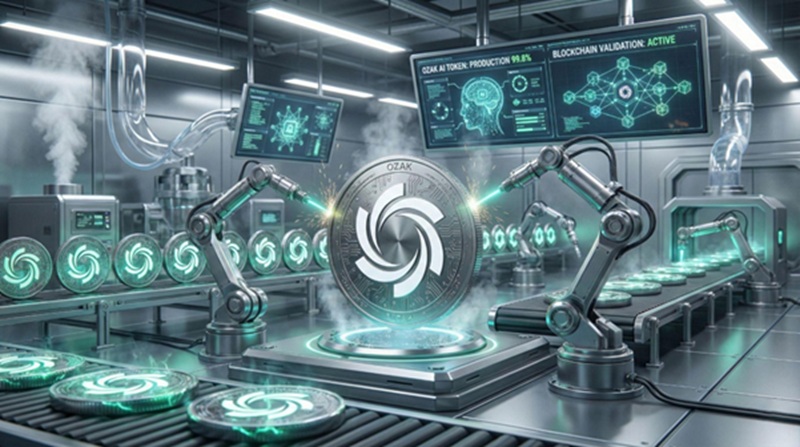
Ozak AI’s Presale Price Gives Long-Term Investors Exposure to 70× Gains Before the First Exchange Candle

0

Before the tokens are listed on the exchanges, the cryptocurrency market has allowed investors to profit greatly from early-stage presale tokens. Currently in its Presale Phase, the early-stage token Ozak AI is gaining significant positive momentum among investors. The token is unique from other AI-based tokens due to its strong presale success growth and advanced AI technology. Even during market crashes and bear markets, the Ozak AI demonstrates positive growth in Presale funding. According to analysts, the token may soon go public, giving early investors a 70x return.

Why the Presale Price Matters So Much

The Ozak AI’s Presale is one of the most talked-about Presale events in the Crypto industry. Ozak AI is currently priced at $0.014 in its 7th Pre-sale phase. The token has raised over 7 million in Presale funding in a short period of time. The Token was launched at the price of $0.001. And now the token has increased 14x in growth from the initial phase to the current phase. This level of growth in a short period of time makes the token stand out as unique from other AI-based tokens. Over 1.2 billion OZ tokens have been sold so far. Analysts predict that the token is going to be listed on the major exchanges soon and will deliver a 70x growth. The Total Supply of Tokens is 10 billion OZ Tokens, with the pre-sale accounting for 30% of the overall supply. 10% for both the team and liquidity. 30% for the community and ecosystem. 20% will be put into the future reserve.

Technology: The Core of Ozak AI’s Explosive Growth

The Ozak AI’s Core technology combines AI and Blockchain to develop AI prediction tools, an Automated research and analytics system, and on-chain intelligence Platforms. Its Prediction Agents use Advanced machine learning (TCNs, transformers, and hybrid deep learning) to predict financial markets, like prices, sentiment, and on-chain activity within 30 milliseconds. The Ozak Streaming Network (OSN) processes and filters the market faster than anyone. The Smart Contract Execution Layer is an automated trade layer that runs on top of the Ozak chain state machine. All of this runs safely inside Ozak Data Vaults, which store and encrypt important training data for speed and transparency. Finally, an advanced prediction agent makes market decisions by utilizing both short-term and long-term memory, allowing it to recall past market crashes and process real-time market data. This makes trading decisions smarter, faster, and more accurate.

How Presale Positioning Creates an Edge Before Charts Exist

Many retailers and new investors began to purchase the Ozak AI token when the exchange’s candle began, and as a result, supply will be constrained, and demand will rise. The token price rises as a result. Therefore, early investors who participate in the presale will already own the token at the extremely low presale price, and they will receive an incredible return on investment if the token price rises. According to investors, the token is almost ready for listing and will go up to $1 on the main exchanges. If the early investors invested $100 in the Current Pre-sale phase at $0.014, then they would secure 7,142 OZ tokens. If the token is listed at $1, then the secured token’s worth would be $7,142 with 71x growth. This shows how the small early investment in Ozak AI at the presale phase would gain an amazing ROI.

Strategic Partnerships Strengthening Ozak AI’s Position

Ozak AI’s rapid growth is not only because of its low presale price and strong technology but also because of its strategic partnerships with Phala and Hive Intel. The partnership between Phala and Ozak AI will enable private, fast data processing for financial forecasting. It provides censorship-resistant AI routing through Redpill. Partnering with Hive Intel, which is a multichain data API, the Ozak AI predictive tools can now analyze the on-chain behavior deeper, which includes NFT, Defi events.

Final Thought

The Ozak AI is the strongest candidate for listing due to its enormous presale momentum, cutting-edge AI technology, and strategic partnerships. According to the analyst, the token is getting close to listing and will be listed at $1. Once it is listed, early investors who join the current presale phase could see a huge 71x increase in value. The tokens have the potential of getting listed in the main ecosystems in the near future. As everyone has witnessed in the past, early presale tokens explode and yield a significantly higher return on investment than more established tokens in the market.


For more information about Ozak AI, visit the links below:

Website: https://ozak.ai/

Twitter/X: https://x.com/OzakAGI

Telegram: https://t.me/OzakAGI

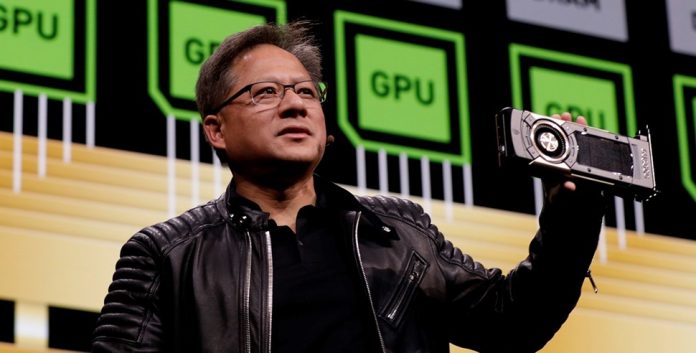
Nvidia’s Jensen Huang says It Won’t Matter What Subject You Studied, AI Will Increase Creativity & Productivity

0

Jensen Huang says parents should stop fixating on which university subjects will remain “safe” from artificial intelligence, arguing that the AI era is more likely to increase the value of human creativity, judgment and communication skills than eliminate them.

Speaking to Singapore’s Channel NewsAsia on Monday, the Nvidia chief executive said the rapid spread of AI across industries would not make traditional fields of study irrelevant, pushing back against growing fears that students must abandon the humanities and creative disciplines to survive in an automated economy.

“I think that it won’t matter,” Huang said when asked what children should study in the AI era. “All the things that used to matter are still things that are going to matter in the future.”

His remarks come as governments, universities and families worldwide struggle to adapt education systems to the rise of generative AI tools capable of writing code, producing essays, generating images, and automating administrative tasks.

The emergence of systems such as ChatGPT, Claude, and Gemini has triggered intense debate about whether students should prioritize technical disciplines like computer science and engineering over subjects seen as more vulnerable to automation.

Huang rejected the idea that young people should simply chase “AI-proof” careers. Instead, he argued students should focus on learning how to use AI to deepen expertise and improve their work, regardless of discipline.

“Whatever you decide is your passion, the only one thing that you have to do is to make sure that you ask yourself: How can AI help elevate my learning, my craft, my purpose?” he said.

The Nvidia chief pointed specifically to journalism, storytelling, design, and the arts as examples of areas where human qualities are likely to remain valuable even as AI systems become more sophisticated.

He said the best interviewers and communicators succeed not merely because they are technically prepared, but because they can react in real time, listen carefully, and engage dynamically with people.

“The ability to tell a story for an audience will remain just as important in the future as it is today,” Huang said.

The comments are notable given Nvidia’s central role in the global AI boom. The company’s graphics processors power many of the world’s leading AI systems and data centers, placing Huang at the center of the technological transformation reshaping industries and labor markets. Yet even as Nvidia benefits from surging AI demand, Huang has consistently framed AI as a productivity-enhancing technology rather than a wholesale replacement for human workers.

He described jobs as collections of tasks, some of which will inevitably be automated.

“A job is like a basket of tasks,” Huang said. “Many of those tasks will be automated. And my sense is that as a result of automation, we can focus on the harder parts of our work.”

That view aligns with the thoughts of technology executives and economists who now argue AI may augment many professions before fully replacing them. Rather than eliminating entire occupations immediately, AI is expected to absorb repetitive and administrative work while increasing demand for higher-level reasoning, creativity, interpersonal communication, and oversight.

Huang also addressed fears that heavy dependence on AI could reduce critical thinking or make people intellectually passive. Drawing comparisons with earlier technological revolutions such as personal computers, smartphones, and the internet, he argued that previous innovations ultimately expanded human ambition and productivity rather than diminishing them.

“Do we find ourselves busier or less busy?” Huang said. “I think the answer is we found ourselves busier.”

His comments come amid growing public anxiety about AI’s effect on education and employment. A number of business leaders and researchers have warned that generative AI could sharply disrupt entry-level white-collar work, particularly in fields involving writing, coding, research, and analysis. At the same time, companies across finance, consulting, media, and technology are increasingly integrating AI into workflows, prompting concerns that workers may struggle to adapt quickly enough.

Huang suggested that uniquely human characteristics may actually become more prized in a world saturated with machine-generated content.

Referencing the Japanese philosophy of “wabi-sabi,” which emphasizes the beauty of imperfection and authenticity, he argued that human originality and emotional connection could become more valuable as AI-generated outputs become widespread.

The emphasis on creativity, communication, and adaptability echoes similar arguments recently made by other prominent business figures. Entrepreneur Scott Galloway has argued that storytelling and relationship-building will become increasingly important in the AI economy, while futurist Peter Diamandis recently said curiosity and adaptability would be among the most valuable skills for younger generations.

For educators and policymakers, Huang’s remarks lend credence to a growing view that the challenge may not simply be teaching technical AI skills, but ensuring students can combine technological fluency with human judgment, creativity, and emotional intelligence. That balance could become increasingly important as AI systems take over more routine cognitive work while leaving people to handle ambiguity, leadership, ethics, and interpersonal engagement.

Ferrari’s First Electric Vehicle ‘Luce’ Sparks Sharp Selloff as Investors and Fans Question Brand Direction

0

Ferrari shares tumbled sharply on Tuesday after the iconic Italian luxury carmaker unveiled its first fully electric vehicle, the Luce, in a high-profile event in Rome, revealing deep investor concerns about the transition to electrification and potential dilution of the brand’s legendary combustion-engine heritage.

The Maranello-based company described the Luce, Italian for “light”, as evoking “clarity and direction,” but the sleek, futuristic design has drawn mixed reactions, with many longtime enthusiasts expressing disappointment on social media. Shares of Ferrari were down as much as 8% intraday before paring some losses to trade around 6.5% lower by midday in London.

The stock has now fallen more than 31% over the past 12 months, reflecting broader pressures on the luxury sector amid softening demand and the costly pivot to electric vehicles.

Ferrari CEO Benedetto Vigna called the launch “a very, very important day” for the company, marking the opening of “a new chapter” in its storied 77-year history. Addressing concerns about alienating core customers while attracting new ones, Vigna told CNBC’s Charlotte Reed: “Look, when you do a new technology, you need always to keep in mind a word that is called respect. Respect of the technology, because when you have a new technology, you need to make sure that that technology is properly represented in the design, so the design must be different.”

He added that the company respects the diverse needs of its clientele: “Ferrari drivers will have the same sensation” as with traditional models, though he acknowledged the electric powertrain produces a different sound. “What is important is the emotion that is being given to the driver.”

The Luce, Ferrari’s first five-seater, can accelerate from 0 to 60 mph in approximately 2.5 seconds and reach a top speed of around 192 mph. It is priced at roughly €550,000 (about $640,000), with customer deliveries expected to begin in the fourth quarter of 2026. The vehicle was developed entirely in-house in Maranello, with design entrusted to LoveFrom, the agency founded by former Apple design chief Jony Ive.

This collaboration has been positioned as a fusion of Ferrari’s performance DNA with cutting-edge aesthetic and technological sophistication.

Market and Fan Backlash

Analysts attributed the share price reaction to a combination of “design hate” and the classic “buy the rumor, sell the news” dynamic, as Ferrari’s stock had rallied significantly in anticipation of the launch.

Michael Field, chief equity strategist at Morningstar, told CNBC: “Ultimately many fans are disappointed that Ferrari is embracing the EV concept, believing it dilutes the supercar brand, which has modelled itself around classic design and raw, combustion-engine power. From an investment perspective, many investors had feared the development of an EV model, on the basis that the research and development costs are materially high, putting a lot of pressure on the brand to recoup these, and potentially diluting investment returns for the business.”

Anthony Dick, an auto analyst at Oddo BHF, described the market’s response as one of the sharpest reactions to a new car design he had seen.

“The market has spoken,” he said.

Social media reaction was swift and largely negative. On X, users compared the Luce’s blue-and-black color scheme to the far more affordable Nissan Leaf. One user quipped about buying “the new Ferrari Luce interior without the exterior,” while others used AI tools like ChatGPT and Grok to generate alternative, more aggressive “batmobile-style” designs they felt better suited the Ferrari brand.

Ferrari’s move comes as other luxury manufacturers, notably Porsche and Lamborghini, have scaled back aggressive EV timelines due to softer-than-expected demand for high-end electric vehicles. This raises questions about whether Ferrari can successfully attract new buyers without alienating its traditional clientele, who prize the visceral experience of naturally aspirated V12 and V8 engines.

The company is betting that the Luce will expand its customer base while maintaining emotional appeal. However, industry analysts are concerned that failure to deliver on performance, sound engineering, or brand cachet could damage Ferrari’s exclusivity and long-term pricing power — key drivers of its historically high margins.

Despite today’s selloff, Ferrari remains one of the most valuable and profitable luxury carmakers globally, with exceptional brand strength and pricing power. The Luce launch is a calculated risk in a rapidly electrifying luxury segment. Analysts believe it’s too early to rule it out, and eventual success could open new markets and customer demographics, particularly in regions with strict emissions regulations.

Failure, however, could erode the brand’s aura and pressure future profitability.

Vigna’s emphasis on “respect” for both technology and customers suggests Ferrari is acutely aware of the tightrope it is walking.