DD
MM
YYYY

PAGES

DD
MM
YYYY

spot_img

PAGES

Home Blog Page 3

Bitcoin Kicks Off The Month of May on A Strong Footing, as Analysts Eye $84K Price Breakout

0

Bitcoin has started May on a strong note, rising nearly 2% after breaking key resistance levels. The crypto asset surged past the $78,000 zone, trading as high as $78,872, spurring bullish optimism.

BTC dropped to a yearly low of $60,000 in February before a significant retracement now eyeing the $79,000 zone. Despite the rough stretch, some analysts say Bitcoin does not need a headline-grabbing catalyst to push higher.

According to crypto analyst Ali Martinez, he says Bitcoin is currently moving within a tight range, with liquidity data showing the market could soon make a strong move toward $84,000.

He wrote on X,

“As the new month kicks off, Bitcoin continues consolidating within a tight range. Meanwhile, we are seeing significant clusters of orders building up, making these the most important levels to watch for large-scale liquidation events. The Overhead Barrier: $80,000. This is the primary psychological and technical ceiling. A massive wall of short-side liquidity has gathered here. Clearing this level could trigger a short squeeze, potentially igniting a rapid expansion toward $84,000.”

As per Martinez prediction, such a move could drive Bitcoin toward the $84,000 level. On the flip side, if Bitcoin fails to break $80,000, traders may watch support levels at $75,000, $73,000, and $70,000 for the next move.

Another popular crypto analyst Michael van de Poppe also shared a bullish view on Bitcoin.  He suggests that Bitcoin may be on the verge of an upward breakout, pointing to a strong start to the month and the likelihood of fresh inflows from Bitcoin ETFs as key drivers of momentum.

He wrote,

This looks to me that we’re going to be breaking upwards. Strong start of the month, highly likely we’ve got new inflows from the ETFs too. This is the standard recipe at the start of the month: new inflows = uptick in price for Bitcoin, then later during the month there’s a slight downtick. The resistance zones that I’m targeting: $86-88K and most likely the 50-Week MA around $93-95K. If latter is hit, we’re done with the bear market, and we’re likely going to be seeing a rally to $93-95K, then $80K next and then the new run towards an ATH in Q3/Q4 of this year.”

He added that if Bitcoin reaches that level, the bear market may be over. In that case, Bitcoin could rally first, then see a healthy correction near $80,000 before making a new push toward an all-time high later this year.

Notably, another major factor supporting Bitcoin is the return of institutional demand. U.S. spot Bitcoin ETF recorded a strong net inflow of $629.9 million on May 1, reversing a three-day outflow trend.

Large players like BlackRock, Fidelity Investments, and Invesco led the inflows. BlackRock’s iShares Bitcoin Trust alone captured a major share of the total capital. This steady inflow is helping absorb selling pressure and creating a stronger price floor for Bitcoin.

Sustained inflows often signal growing confidence among institutional investors, which can, in turn, influence broader market sentiment and attract additional participation.

Outlook

Looking ahead, Bitcoin appears poised to continue its upward movement. A decisive break above the $80,000 level could open the door for a rapid move toward $84,000 and beyond, especially if supported by continued ETF inflows and favorable market sentiment. On the other hand, failure to maintain upward momentum may result in short-term pullbacks toward established support zones.

Overall, while volatility remains a defining feature of the crypto market, the combination of technical strength, liquidity dynamics, and increasing institutional involvement suggests that Bitcoin could be positioning itself for a significant move in the months ahead.

You Can’t Sack Someone Because of AI: China’s Courts Challenge Silicon Valley’s AI Playbook With Landmark Worker Protections

0

A growing series of court rulings in China is threatening to upend one of the technology industry’s most powerful assumptions: that artificial intelligence can rapidly replace human workers with few legal consequences.

In decisions that could reshape the economics of automation globally, Chinese courts have ruled that companies cannot justify layoffs, demotions, or steep salary cuts simply because AI systems have improved efficiency or reduced the need for human labor.

The rulings, emerging from two high-profile labor disputes in Beijing and Hangzhou, are increasingly being viewed as the first major judicial pushback against the corporate use of AI as a cost-cutting weapon. They also place China, the world’s largest manufacturing and electronics hub, at the center of a widening global debate over who should bear the cost of the AI revolution.

At stake is far more than labor policy.

China sits at the core of the global consumer technology supply chain. From smartphones and laptops to networking equipment, batteries, semiconductors, and smart-home devices, many of the products powering the digital economy are assembled or manufactured there. If Chinese courts make large-scale AI-driven workforce reductions legally difficult or financially expensive, the impact could ripple across global production costs, corporate margins, and even inflation in technology hardware.

The latest ruling came from the Hangzhou Intermediate People’s Court in April, where judges sided with a senior technology employee identified as Zhou after his employer attempted to demote him and impose a sharp salary reduction following the deployment of AI systems.

The company argued that automation had fundamentally altered its operational requirements. The court rejected that position outright.

Judges ruled that adopting AI tools does not constitute a “major change in objective circumstances” under China’s Labor Contract Law, the legal threshold employers typically rely on when seeking to modify or terminate contracts.

The reasoning was significant because the court framed AI deployment as a voluntary business strategy rather than an uncontrollable external shock. In effect, the judges argued that corporations choosing to automate cannot treat workers as collateral damage from management decisions.

The Hangzhou case reinforced an earlier judgment issued by courts in Beijing in late 2025 involving a map-data worker named Liu, whose role had been largely automated. In that dispute, the court similarly concluded that technological upgrades did not absolve employers of their labor obligations.

Together, the decisions are establishing what legal analysts describe as an emerging judicial doctrine around AI and employment in China. The doctrine is relatively straightforward: companies pursuing automation must first attempt reassignment, retraining, negotiated restructuring, or other reasonable accommodations before eliminating jobs.

That standard could significantly raise the cost of deploying AI across industries. For years, technology executives and investors have promoted generative AI as a transformative tool capable of slashing labor expenses across coding, customer support, compliance, logistics, manufacturing, and administrative operations.

The expectation of leaner workforces has been one of the primary forces driving massive valuations across the AI sector. But China’s judiciary is now signaling that productivity gains alone may not legally justify workforce reductions.

The ruling happened when governments worldwide are struggling to respond to mounting concerns over AI-related job displacement. Since late 2024, advances in generative AI systems have accelerated fears across white-collar industries that large segments of knowledge work could eventually be automated.

Major technology firms have simultaneously ramped up investments in AI infrastructure while reducing headcount in other divisions, reinforcing concerns that automation is already reshaping labor markets.

But China appears to be attempting a different balancing act. Beijing wants to dominate artificial intelligence strategically while avoiding the social instability that could accompany large-scale unemployment. Maintaining labor stability has become especially important as economic growth slows, youth unemployment remains elevated, and policymakers try to sustain domestic consumption.

The court decisions align closely with that broader political objective. They also expose a growing tension inside China’s economic model. The country is aggressively promoting AI leadership through subsidies, semiconductor investment, robotics development, and industrial automation, yet its legal system is beginning to place constraints on how corporations deploy those technologies domestically.

For multinational firms operating in China, the implications could be significant. Global manufacturers have increasingly looked to AI-powered robotics, machine vision, and automated quality-control systems to reduce reliance on labor-intensive operations. But if companies are legally required to fund retraining, maintain payrolls longer, or negotiate extensive transition arrangements, the savings from automation may narrow substantially.

That could eventually affect pricing across global electronics markets. Industry analysts say the rulings may also influence where companies choose to automate most aggressively. Firms could shift some AI-driven restructuring toward jurisdictions with weaker labor protections, potentially accelerating geographic fragmentation in global supply chains.

The judgments also raise broader questions about the future relationship between AI and labor worldwide. In the United States and much of Europe, debates over automation have largely centered on ethics, productivity, and competitiveness. China’s courts are reframing the issue around legal responsibility and social cost-sharing. The principle emerging from the rulings is that technological progress should not allow corporations to transfer all economic pain onto workers.

Legal experts say that philosophy could gain traction elsewhere as governments confront rising political pressure over automation-driven inequality.

For technology companies, the decisions complicate long-term assumptions about AI economics. The industry has largely treated labor reduction as one of AI’s clearest financial benefits. China’s courts are now effectively arguing that those savings cannot come without obligations.

However, the rulings offer one of the strongest institutional signals yet that automation may not proceed entirely on corporate terms. But the consequences may eventually become visible in the price of everyday technology products.

Spirit Airlines Shuts Down After 35 Years, Leaving Budget Travelers Stranded and Reshaping the U.S. Aviation Market

0

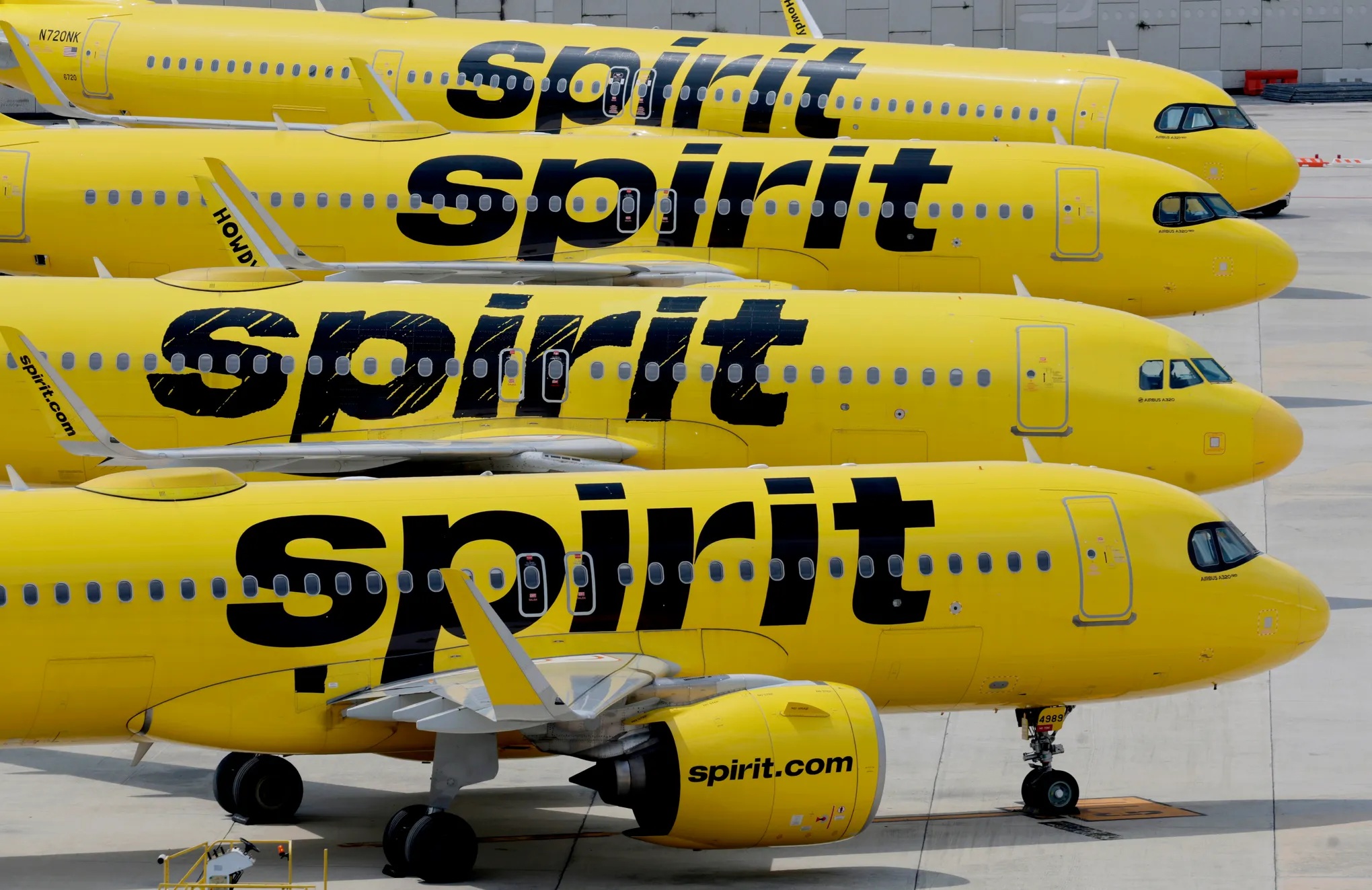
Spirit Airlines has collapsed, abruptly ending one of America’s most recognizable ultra-low-cost carriers, triggering widespread travel disruption, intensifying debate over airline consolidation, and exposing how vulnerable budget aviation has become amid rising fuel costs.

Spirit ceased operations on Saturday after beginning what it described as an “orderly wind-down” of the airline, canceling all flights with immediate effect and telling passengers not to travel to airports. The shutdown strands thousands of travelers across the United States, the Caribbean, and Latin America while marking the most significant U.S. airline collapse since the pandemic-era shakeup of the aviation industry.

The closure also removes one of the few remaining carriers built almost entirely around bare-bones, low-fare travel, a model that helped millions of lower-income Americans access air travel over the last three decades.

Spirit was to many travelers, not merely a discount airline but an economic necessity.

On social media platforms including Reddit and X, customers described the carrier as one of the last viable options for families unable to afford traditional airline pricing.

“They truly were one of the last cheap — ‘get me there as fast and cheap as possible’ — options,” one Reddit user wrote following the shutdown announcement.

Another traveler said the difference between Spirit fares and tickets on larger airlines could exceed $1,000 for a family trip, making vacations and visits to relatives financially impossible without the carrier.

The emotional reaction highlights a broader shift taking place across the U.S. aviation sector. Since the pandemic, airlines have increasingly prioritized premium travelers, loyalty programs, business-class seating, and higher-margin services rather than competing aggressively on low fares. That transition left airlines as Spirit squeezed between rising costs and customers increasingly willing to pay for comfort and reliability.

The airline’s collapse was years in the making, but the recent energy shock tied to the Iran war sharply accelerated its decline. A surge in fuel prices placed enormous pressure on low-cost carriers whose profitability depends on extremely tight margins and high aircraft utilization. Unlike premium airlines that can pass higher costs onto wealthier travelers, ultra-budget carriers have far less pricing flexibility.

Spirit was already weakened by a series of setbacks before fuel markets turned volatile. The company had not reported an annual profit since 2019. A manufacturing defect involving Pratt & Whitney engines grounded a significant portion of its newer fleet, constraining capacity and disrupting scheduling. At the same time, the airline became trapped in a prolonged merger saga that ultimately failed to deliver a lifeline.

In 2022, Spirit initially agreed to merge with Frontier Airlines before JetBlue intervened with a $3.8 billion counteroffer. The Biden administration moved to block the JetBlue acquisition, arguing the merger would reduce competition and lead to higher fares.

A federal judge sided with the Justice Department in January 2024. At the time, then-Attorney General Merrick Garland called the decision “a victory for tens of millions of travelers who would have faced higher fares and fewer choices.”

Former President Joe Biden similarly described the ruling as “a victory for consumers everywhere who want lower prices and more choices.” Now, critics of the decision argue the outcome may have produced the opposite effect.

Transportation Secretary Sean Duffy blamed the previous administration’s antitrust posture for Spirit’s collapse.

“Yet another mess the traveling public has to inherit thanks to the radical policies of Joe Biden and Pete Buttigieg,” Duffy said. “In blocking the JetBlue/Spirit merger in 2024, they turned their backs on the American consumer and our great aviation workforce.”

The Collapse Stirs, Job and Travel Crisis

The collapse is reigniting a longstanding debate in aviation policy: whether it makes sense to preserve competition if weaker carriers cannot survive independently.

Industry analysts say Spirit’s disappearance could strengthen pricing power for larger airlines, particularly on domestic leisure routes where the carrier historically pressured rivals to keep fares low. Budget airlines have long exerted influence beyond their own market share because their ultra-cheap tickets forced competitors to lower prices in overlapping markets. With Spirit gone, travelers may increasingly face higher average fares even when flying on traditional airlines.

The immediate scramble among competitors underscores how important Spirit’s route network had become.

According to the Department of Transportation, airlines including American Airlines, United Airlines, Delta Air Lines, Southwest Airlines, JetBlue, Allegiant Air, Avelo Airlines, and Breeze Airways have begun offering capped fares, emergency discounts, or expanded route coverage for displaced passengers. Frontier Airlines is offering discounts of up to 50% on base fares through May 10, while Allegiant said it would freeze prices on routes previously served by Spirit.

At Orlando International Airport, one of Spirit’s largest operational hubs, departure boards reportedly filled with cancellation notices overnight as passengers searched for alternatives.

The collapse also creates uncertainty for thousands of employees. Pilots, cabin crew, maintenance workers, and operational staff now face a highly competitive labor market, even as other airlines begin recruitment efforts to absorb experienced personnel. Several major carriers have reportedly established dedicated hiring portals for former Spirit workers.

Passengers holding unused tickets, vouchers, or loyalty points face a more complicated situation. Spirit has directed customers into the bankruptcy claims process managed by Epiq, though the Department of Transportation says travelers who paid by credit card should first pursue charge-backs for services not rendered under federal consumer protections.

Travelers with insurance policies covering insolvency may also have claims available. Holders of Free Spirit miles and unused travel credits are likely to be treated as unsecured creditors in bankruptcy proceedings, meaning recovery could be limited or nonexistent.

Beyond the immediate disruption, Spirit’s shutdown may prove to be a defining moment in the post-pandemic restructuring of the airline industry. The economics that once fueled ultra-low-cost aviation are becoming increasingly difficult to sustain amid volatile fuel markets, higher borrowing costs, supply-chain disruptions, aircraft shortages, and growing consumer demand for reliability and comfort.

The Iran war’s impact on global energy prices has already strained airlines worldwide, but carriers operating at the extreme low end of pricing were especially exposed. Fuel is typically among the largest expenses for airlines, and even modest increases can erase profitability for discount operators.

Nvidia CEO Huang Pushes Back Against AI Alarmism, Warns Tech Leaders Against ‘God Complex’ Predictions

0

Jensen Huang is mounting one of the strongest pushbacks yet against the increasingly alarmist rhetoric surrounding artificial intelligence, warning that exaggerated claims from some technology leaders risk creating unnecessary panic around a technology that is rapidly becoming central to the global economy.

Speaking during the “Memos to the President” podcast on Thursday, the Nvidia chief criticized what he portrayed as speculative forecasts about mass unemployment and existential catastrophe, arguing that parts of Silicon Valley have drifted into a culture of hyperbole as competition in artificial intelligence intensifies.

“These kinds of comments are not helpful,” Huang said, referring to predictions that AI could wipe out huge segments of white-collar employment. “They’re made by people who are like me CEOs. Somehow, because they became CEOs, you adopt a God complex and, before you know it, you know everything.”

Although Huang did not directly name individuals, the remarks were widely viewed as a response to warnings by Anthropic CEO Dario Amodei, who has argued that advanced AI systems could eliminate as much as half of entry-level office jobs in coming years.

The exchange highlights a widening philosophical divide inside the AI industry itself. One camp, led by executives and researchers at firms such as Anthropic and several AI safety organizations, argues that increasingly powerful models could destabilize labor markets, cyber defenses and even geopolitical systems if left unchecked. Another camp, represented more openly by Huang, believes the dangers are being overstated in ways that obscure the economic and scientific opportunities AI could unlock.

Huang also dismissed warnings that artificial intelligence could eventually wipe out humanity, calling such predictions detached from technical realities.

“Saying nonsensical things, which are not going to happen, that this is an existential threat to humanity, there’s 20% chance that it’s existential. That’s ridiculous,” Huang said.

The comment appeared to reference remarks by Elon Musk, who claimed there was a “20% chance of annihilation” from AI during an appearance on “The Joe Rogan Experience.”

The increasingly public disagreement among AI leaders comes at a critical moment for the industry. Generative AI has moved from an experimental technology to the center of corporate strategy, national security planning, and capital markets. Governments are racing to secure computing infrastructure, while companies are spending hundreds of billions of dollars building data centers and acquiring AI chips.

Nvidia, whose graphics processing units have become the foundational hardware powering most advanced AI systems worldwide, has been leading that expansion. The company’s explosive rise has turned Huang into one of the most influential voices in the sector, particularly as Nvidia’s chips underpin models developed by OpenAI, Anthropic, Google, Meta, and Microsoft.

That position gives Huang a unique commercial incentive to stabilize the narrative around AI. Investor enthusiasm for artificial intelligence has driven one of the largest spending cycles in technology history, with hyperscalers expected to collectively invest more than $700 billion this year into AI infrastructure, cloud expansion, and advanced semiconductor systems.

Yet concerns about overinvestment and unrealistic expectations have also started surfacing across financial markets. Questions about monetization, energy consumption, labor disruption, and regulatory scrutiny are becoming more prominent as companies struggle to translate AI excitement into consistent commercial returns.

Huang’s comments indicate growing frustration among some executives who fear that fear-driven narratives could eventually provoke aggressive regulation or public backlash against AI deployment.

His remarks also arrive as labor anxiety intensifies globally. Since late 2025, increasingly sophisticated AI coding agents and enterprise assistants have fueled concerns that professional work once considered insulated from automation may no longer be safe. AI systems can now generate software code, summarize legal documents, conduct research, analyze financial data, and automate administrative workflows at speeds previously impossible.

Executives at several AI firms have openly acknowledged that the technology could shrink portions of the workforce. At the same time, companies across banking, consulting, media, and software have accelerated internal AI adoption to cut costs and boost productivity.

But Huang believes the conversation has become too narrowly focused on replacement rather than augmentation.

For years, he has maintained that AI will reshape jobs rather than simply erase them, comparing the current transition to earlier computing revolutions that automated repetitive tasks while creating entirely new industries. Nvidia executives frequently describe AI as a “copilot” technology capable of expanding human productivity rather than eliminating human participation altogether.

That distinction is increasingly important as governments attempt to craft policy responses. Regulators in the United States, Europe, and Asia are debating how to manage AI’s impact on employment, intellectual property, misinformation, and cybersecurity without stifling innovation or competitiveness.

The debate has become particularly intense in cybersecurity and defense circles. Advanced AI models are now capable of identifying vulnerabilities, generating code, and accelerating cyber operations, raising fears among security officials that offensive capabilities may evolve faster than defensive systems.

Also, AI companies themselves are becoming more divided over how aggressively to deploy the technology. Anthropic has generally positioned itself as more cautious on frontier AI risks, emphasizing constitutional AI safeguards and warning about uncontrolled scaling. OpenAI has also repeatedly warned about potential societal disruptions, even as it aggressively commercializes its models.

Huang’s stance places Nvidia more firmly in the pro-expansion camp at a time when governments and corporations are deciding which companies will dominate the next era of computing infrastructure.

His intervention also comes as some of the more catastrophic predictions about AI-driven economic collapse are beginning to face scrutiny. Fears earlier this year that generative AI would devastate the software-as-a-service sector have weakened following stronger-than-expected earnings from enterprise software companies, including Atlassian, Twilio, and Five9.

Those results have reinforced a growing view among investors that AI may initially enhance existing software ecosystems rather than abruptly replacing them.

Even so, economists warn that the full labor impact of AI may not become visible for years. Unlike previous automation cycles focused on factory work, generative AI is targeting cognitive and professional tasks, raising the possibility of disruption across sectors once viewed as protected from technological displacement.

Huang’s remarks ultimately underscore how uncertain the industry remains about AI’s long-term trajectory. While technology leaders publicly compete to build more powerful models, they are increasingly engaged in another battle: shaping public perception of what those systems will ultimately mean for society, labor markets, and economic power.

OPEC+ Reportedly Pushes Ahead With Output Increase amid  Millions of Barrels Trapped by Hormuz Closure

0

OPEC+ is preparing another oil production increase even as the Iran war continues to choke off exports from the Persian Gulf.

Sources familiar with the group’s internal discussions told Reuters that seven core OPEC+ producers have agreed in principle to raise June output targets by roughly 188,000 barrels per day. The decision, expected to be formalized during Sunday’s policy meeting, would mark the third consecutive monthly increase in quotas.

Yet the additional barrels are likely to remain largely theoretical for now. The continuing closure of the Strait of Hormuz, following the outbreak of war between the United States and Iran on February 28, has sharply constrained the ability of Gulf producers to move crude onto global markets. The disruption has affected exports from Saudi Arabia, Iraq, Kuwait, and the United Arab Emirates, the very countries that previously held most of OPEC+’s spare production capacity.

As a result, analysts and traders say the cartel is attempting to project stability and long-term confidence even while actual shipments remain severely impaired.

The seven countries participating in Sunday’s production discussions are Saudi Arabia, Iraq, Kuwait, Algeria, Kazakhstan, Russia, and Oman. The meeting comes only days after the United Arab Emirates announced its exit from OPEC, a major geopolitical shock that further complicates the cartel’s long-term cohesion.

Although the UAE formally left the organization on May 1, the country had been one of the few members capable of meaningfully increasing production in recent years. Its departure weakens OPEC’s collective spare-capacity profile at a moment when energy markets are already under extraordinary strain.

The ongoing war has effectively split the global oil market into two competing realities. On paper, OPEC+ continues to signal that additional supply can be restored gradually to stabilize prices and reassure consuming nations. In practice, however, much of that supply remains stranded due to the security crisis surrounding Hormuz, one of the world’s most critical maritime energy chokepoints. Roughly a fifth of global oil consumption normally passes through the Strait.

Oil executives and commodity traders say even if the waterway reopens in the near term, normalization will not happen quickly. Tankers displaced during the conflict must be repositioned, shipping insurance markets must stabilize, naval security risks must ease, and export backlogs must be worked through before flows return to normal levels.

Some analysts estimate that the process could take months. That lag is becoming increasingly important for financial markets, airlines, manufacturers, and central banks already bracing for the inflationary consequences of prolonged energy disruption.

Crude prices surged above $125 per barrel this week, reaching their highest levels in four years as concerns intensified over tightening supplies of diesel, jet fuel, and petrochemical feedstocks. Several analysts are now warning that global aviation markets could face meaningful fuel shortages within weeks if Gulf exports remain constrained.

The latest OPEC+ increase is slightly smaller than May’s output adjustment because it excludes the UAE’s share following its withdrawal from the group. Still, the symbolic value of the decision appears to matter almost as much as the barrels themselves.

By continuing with scheduled production hikes during wartime conditions, OPEC+ is attempting to present itself as functional, disciplined, and prepared to restore supply once trade routes reopen. The move also helps counter fears that the organization is losing control of the market following the UAE’s departure and escalating geopolitical fragmentation in the Middle East.

Internally, however, the cartel faces mounting pressure. Several producers are already struggling with falling exports and damaged infrastructure. Russia, another key member of the alliance, has reduced output after repeated Ukrainian drone attacks targeted parts of its energy network. Iran’s own oil exports have also come under renewed pressure following a U.S. blockade imposed in April.

According to OPEC’s most recent monthly report, combined output from the broader alliance averaged 35.06 million barrels per day in March, down sharply from February levels. Saudi Arabia and Iraq accounted for some of the largest declines as Gulf export routes became increasingly restricted.

The current crisis is also reshaping the calculations of major consuming economies. Countries in Europe and Asia are accelerating efforts to secure alternative crude supplies from the United States, West Africa, Brazil, and Guyana. Governments are also weighing additional strategic petroleum reserve releases to offset potential shortages if the conflict drags deeper into the summer.

At the same time, the war is reviving long-standing fears about the global economy’s dependence on Middle Eastern energy infrastructure. For years, energy analysts warned that prolonged instability around Hormuz represented one of the largest systemic risks to world markets. The current conflict is now testing that vulnerability in real time.

The production increase expected from OPEC+, therefore, serves less as an immediate supply solution and more as a signal of intent. The cartel is effectively telling markets that additional crude exists and can eventually return. But until shipping lanes reopen and regional security stabilizes, much of the world’s oil capacity will remain trapped behind a geopolitical blockade that no quota adjustment alone can solve.