DD
MM
YYYY

PAGES

DD
MM
YYYY

spot_img

PAGES

Home Blog Page 3

US SEC’s Reliance on Misappropriation Theory Dramatically Expanded Scope of Liabilities on Insider Trading 

0

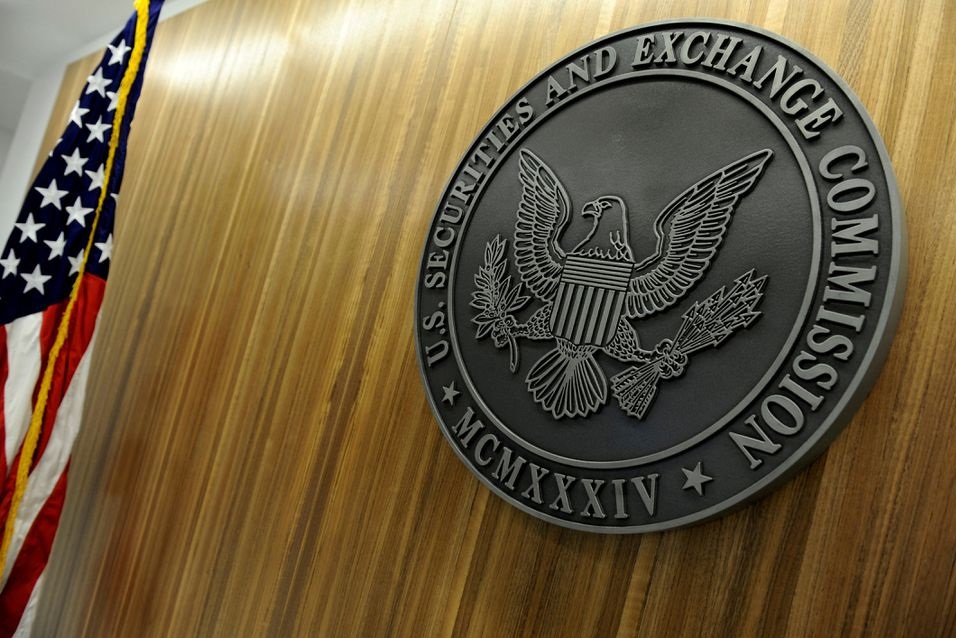
The U.S. Securities and Exchange Commission’s growing reliance on the misappropriation theory has dramatically expanded the scope of who can face liability. Increasingly, the theory is no longer confined to Wall Street bankers or CEOs. It is reaching consultants, political insiders, family members, journalists, and even lawyers themselves.

The misappropriation theory emerged as a powerful legal framework to address a loophole in traditional insider trading law. Under classical insider trading doctrine, liability usually depended on a corporate insider violating a fiduciary duty to shareholders by trading on material nonpublic information.

The misappropriation theory broadened this concept. Instead of focusing solely on duties owed to shareholders, it targets anyone who wrongfully obtains confidential information and trades on it — or tips others to trade — in breach of a duty of trust or confidence.

This expansion fundamentally changed the SEC’s enforcement strategy. Now the question is not simply whether someone works for the company whose stock is traded. The real issue is whether the individual improperly used information entrusted to them. That subtle but important shift has enormous implications for modern professional life.

Lawyers are particularly vulnerable under this framework. Attorneys routinely handle highly sensitive information involving mergers, bankruptcies, regulatory actions, litigation settlements, and strategic corporate decisions. Because lawyers owe strict duties of confidentiality to clients, the SEC can argue that any misuse of such information constitutes securities fraud under the misappropriation theory.

Several high-profile cases over the years have demonstrated this risk. Lawyers have faced allegations for tipping friends, spouses, or business associates about impending deals before public announcements. Even indirect benefits, such as maintaining relationships or exchanging favors, can become evidence of unlawful tipping.

In some cases, prosecutors do not even need proof that the lawyer personally traded securities. Simply sharing confidential information with someone who later profits can trigger liability. What makes the theory especially controversial is its broad and sometimes ambiguous reach.

Critics argue that the SEC’s interpretation effectively criminalizes conduct that may not clearly fit traditional notions of fraud. Unlike theft of physical property, information sharing often exists in gray areas shaped by personal relationships, workplace culture, and informal communications. Determining when a duty of trust exists can become highly subjective.

This uncertainty creates fear across professional industries. Consultants advising corporations, accountants reviewing confidential financials, government officials exposed to policy decisions, and journalists speaking with sources may all worry about crossing invisible legal lines.

The SEC’s increasingly aggressive stance suggests that almost anyone with access to market-moving information could become a target. The rise of digital communications intensifies the problem further. Text messages, encrypted chats, social media interactions, and metadata provide regulators with vast trails of evidence.

Casual conversations that once disappeared into memory can now become exhibits in federal court. In today’s environment, a poorly considered message or informal tip can carry life-altering legal consequences. Supporters of the misappropriation theory argue that strong enforcement is necessary to preserve market integrity.

Financial markets depend on fairness and investor confidence. If privileged actors can secretly profit from confidential information, ordinary investors lose trust in the system. Expanding liability beyond corporate insiders reflects the reality that sensitive information now flows through vast networks of lawyers, advisors, contractors, and intermediaries.

Yet the growing reach of the theory also raises deeper questions about legal predictability and prosecutorial power. As the SEC continues expanding its interpretation of insider trading laws, one message is becoming unmistakably clear: access to confidential information itself may now carry significant legal peril. And increasingly, nobody — not even the lawyers — is safely outside the SEC’s crosshairs.


GameStop CEO Allegedly Banned from eBay Following Announcements of Potential Acquisition Attempt

0

The reported sequence of events in which GameStop CEO Ryan Cohen was allegedly banned from eBay following announcements of a potential acquisition attempt has circulated as a striking example of how corporate signaling, platform governance, and market narrative collide in the digital economy.

Whether interpreted as a literal occurrence or a speculative market rumor amplified through trading communities, the episode highlights the fragile intersection between executive communication and platform-controlled commercial ecosystems. Ryan Cohen, an investor-operator known for his activist role in reshaping GameStop’s strategic direction.

Since taking a leadership position, Cohen has positioned GameStop as more than a traditional brick-and-mortar retailer, attempting to reposition it within digital commerce, blockchain experimentation, and platform-based retail competition. In this context, the alleged announcement of a bid to acquire eBay would represent an extreme escalation of his well-known strategy of challenging entrenched e-commerce incumbents.

GameStop under Cohen, made an unsolicited ~$56 billion bid to acquire eBay at $125 per share. Cohen has a history of activist investing and meme-stock notoriety with GameStop. Cohen listed ~25 personal and related items on eBay, including GameStop store signs, old carpets and fixtures, video games, a pair of socks, a Master Chief statue, a Windows 2000 copy, and more. Each listing reportedly included a signed copy of his takeover proposal letter. He framed it humorously as selling stuff on eBay to pay for eBay. Bids quickly escalated e.g., socks at ~$14k, other items in the thousands.

The reported ban from eBay introduces a second layer: platform sovereignty. Large digital marketplaces such as eBay maintain strict governance frameworks designed to regulate seller behavior, public communications tied to platform value, and perceived market manipulation. If a senior executive publicly signals intent to acquire a platform, even hypothetically, it could be interpreted as disruptive to market stability or misleading to users if not grounded in formal filings.

In such a scenario, a platform response—ranging from account restriction to communication limits—would reflect its attempt to preserve operational neutrality and prevent reputational volatility.

However, the more significant dimension of this narrative is not procedural enforcement but perception. Modern financial ecosystems are increasingly shaped by narrative velocity rather than purely by fundamentals. A single statement from a high-profile executive can propagate across social media, algorithmic trading systems, and retail investor forums within minutes, generating price movement and speculative positioning before verification occurs.

In that environment, the boundary between strategic signaling and market misinformation becomes blurred. If taken as a market thought experiment, the incident underscores how power has shifted in digital capitalism. Executives no longer communicate solely with shareholders through formal channels; they also operate within a real-time attention economy where platforms like eBay, X, and Reddit function as parallel arenas of influence.

The ban in this framing symbolizes the friction between corporate ambition and platform-controlled communication rules. It also raises questions about governance asymmetry. Platforms enforce rules unilaterally, yet executives and corporations can simultaneously influence those same platforms indirectly through capital flows, user behavior, and public sentiment.

This creates a feedback loop in which announcements themselves become market instruments, regardless of their formal validity. Whether the event is interpreted as literal fact or exaggerated market folklore, it reflects a deeper structural reality: modern markets are no longer just exchanges of goods or equity, but contested spaces of narrative control.

In that environment, the actions of figures like Ryan Cohen are not evaluated solely on operational outcomes, but on their capacity to shape perception across interconnected digital systems.

DeepSeek in Talks for its First Funding Round Pegged at $45B

0

The rise of Chinese artificial intelligence startup DeepSeek has become one of the most closely watched developments in the global AI race. Reports that the company is in discussions for its first major fundraising round at a valuation of approximately $45 billion signal a dramatic shift in how investors view China’s ability to compete in advanced AI systems.

In a market increasingly dominated by a handful of American giants such as OpenAI, Anthropic, and Google, Deep Seek’s emergence represents both a technological milestone and a geopolitical statement. Deep Seek gained widespread attention after demonstrating high-performance large language models that rivaled some Western counterparts at a fraction of the training cost.

The company reportedly focused heavily on optimization, efficient model architectures, and lower compute requirements, allowing it to deliver competitive AI performance despite restrictions on advanced semiconductor access imposed by the United States. This efficiency-first strategy immediately captured the attention of investors, governments, and technology analysts worldwide.

The reported $45 billion valuation is remarkable for several reasons. First, it reflects the immense investor appetite surrounding artificial intelligence infrastructure and foundational models. Since the explosive success of generative AI products over the past few years, venture capital firms and sovereign wealth funds have rushed to secure positions in companies capable of shaping the future of computing.

Deep Seek appears to have positioned itself as China’s strongest independent contender in that race. Second, the valuation highlights how AI has become deeply intertwined with national strategic interests. Chinese firms have faced growing pressure from export controls that limit access to advanced GPUs and semiconductor manufacturing tools.

Yet companies like Deep Seek are proving that innovation can continue even under constrained conditions. This has created a perception among investors that Chinese AI companies may become more resource-efficient and potentially more resilient than their Western counterparts.

Artificial intelligence is no longer viewed simply as another software category. Instead, it is increasingly treated as foundational infrastructure similar to electricity, telecommunications, or the internet itself. Investors are now valuing leading AI companies not only on present revenue but also on their potential to dominate future ecosystems involving automation, robotics, finance, healthcare, education, and defense.

If completed, the fundraising round could provide Deep Seek with the capital necessary to expand computing capacity, attract elite engineering talent, and accelerate commercialization efforts. AI development is extraordinarily expensive, particularly at the frontier-model level where companies require massive data centers, specialized hardware, and continuous research investment.

A multibillion-dollar funding injection would strengthen Deep Seek’s ability to compete internationally while supporting China’s broader ambitions for technological self-sufficiency.

At the same time, skepticism remains. Some analysts question whether current AI valuations are sustainable, arguing that enthusiasm around generative AI may be creating speculative bubbles similar to previous technology cycles. Others point to regulatory uncertainty, monetization challenges, and geopolitical tensions that could complicate international expansion for Chinese AI firms.

Deep Seek’s long-term success will depend not only on technical capability but also on its ability to convert research breakthroughs into durable commercial products. Nevertheless, the reported fundraising discussions mark an important moment in the evolution of artificial intelligence. Deep Seek’s rapid ascent demonstrates that the global AI landscape is no longer exclusively dominated by Silicon Valley.

Instead, the competition is becoming increasingly multipolar, with China determined to establish its own champions in the next era of technological innovation.

US Intercepts Iranian Strike Amid Bitcoin Price Swinging Low

0

The fragile balance of power in the Middle East was shaken once again as tensions between the United States and Iran erupted into a dangerous confrontation in and around the Strait of Hormuz, one of the world’s most strategically vital waterways.

Reports that U.S. naval forces intercepted Iranian attacks targeting American Navy cruisers, combined with Iran’s seizure of an oil tanker, sent shockwaves through global financial markets and reignited fears of a broader regional conflict.

The geopolitical escalation immediately spilled into the cryptocurrency market, where Bitcoin briefly plunged below the psychologically important $80,000 level before rebounding as traders attempted to assess the long-term implications of the crisis.

According to U.S. military officials, Iranian forces launched coordinated attacks involving missiles, drones, and fast attack boats aimed at American naval vessels operating near the Strait of Hormuz. U.S. Central Command stated that the attacks were intercepted successfully and that no American ships were damaged.

In response, the United States reportedly carried out retaliatory strikes against Iranian military infrastructure connected to the operation. Iran, however, presented a different narrative. Iranian state media claimed that American naval units came under missile fire after U.S. operations targeted an Iranian-linked tanker.

Tehran accused Washington of violating ceasefire understandings and escalating military pressure in the region. The competing claims reflected the increasingly volatile information war accompanying the physical conflict, where both sides attempt to shape international perception while avoiding a full-scale war.

The Strait of Hormuz remains the center of global concern because nearly one-fifth of the world’s oil supply passes through the narrow maritime corridor. Any disruption in the region has immediate consequences for energy markets, shipping routes, and inflation expectations worldwide. Iran’s seizure of a sanctioned oil tanker in the Gulf of Oman further intensified fears that the conflict could evolve into a wider campaign targeting global energy infrastructure.

Iran has used tanker seizures and maritime pressure tactics as leverage against Western sanctions and military operations. Yet the latest escalation appears more dangerous because it comes amid an already fragile geopolitical environment involving Israel, Gulf states, and growing military deployments in the region. Oil traders immediately reacted to the developments by pushing crude prices higher, reflecting fears that prolonged instability could disrupt supply chains and drive energy costs sharply upward.

Financial markets also responded swiftly. Bitcoin, which has increasingly traded as both a speculative asset and a macroeconomic hedge, briefly fell below $80,000 as investors rushed to reduce risk exposure. Reports indicated that Bitcoin dropped to roughly $79,500 before recovering as traders reassessed the situation.

The decline illustrated how cryptocurrencies, despite their reputation as alternatives to traditional finance, remain highly sensitive to geopolitical uncertainty and shifts in investor sentiment. The selloff revealed a recurring pattern in modern financial markets. During moments of sudden geopolitical stress, investors initially flee from volatile assets, including cryptocurrencies, and move toward safer instruments such as U.S. Treasuries, gold, or cash.

Bitcoin’s rebound afterward demonstrated that many market participants still view digital assets as valuable long-term hedges against instability, inflation, and monetary disruption. The quick recovery also reflected the growing maturity of the crypto market, where institutional investors now play a larger role in stabilizing price action after sharp declines.

Beyond the immediate market reaction, the confrontation highlights the increasingly interconnected nature of geopolitics, energy security, and digital finance. A military clash in the Strait of Hormuz can now influence oil prices, inflation expectations, equity markets, and cryptocurrencies within minutes. In an era of algorithmic trading and globally integrated capital flows, geopolitical risk no longer remains confined to regional politics.

The coming weeks will likely determine whether the latest confrontation becomes another short-lived flashpoint or the beginning of a broader regional escalation. Diplomatic channels remain active, but the situation remains extremely fragile. The events in the Strait of Hormuz serve as a reminder that geopolitical stability remains one of the most important foundations of the global economy.

Nvidia Reveals a $2.1B Investment in IREN as INOD Earnings Beat Exceeding 400%

0

The latest wave of AI-driven market momentum gained even more strength after Nvidia revealed a massive $2.1 billion investment into IREN, while INOD stunned investors with an earnings beat exceeding 400%, sending its stock soaring 40% in premarket trading. Nvidia’s investment into IREN represents far more than a standard equity allocation.

It signals a deepening commitment by Nvidia to secure the infrastructure backbone necessary for the next phase of AI expansion. Over the last two years, Nvidia has become the dominant force in AI hardware thanks to overwhelming demand for its GPUs, which power everything from large language models to enterprise automation systems.

However, as demand for compute accelerates globally, the challenge is no longer simply manufacturing chips. The real bottleneck has shifted toward energy access, data center capacity, and scalable infrastructure capable of supporting hyperscale AI workloads.

IREN, originally recognized for its operations in digital infrastructure and high-performance computing, has increasingly repositioned itself as a key player in AI data center deployment. Nvidia’s multibillion-dollar backing suggests that the company views IREN as strategically positioned to help solve the enormous compute shortages facing the AI sector.

Investors responded immediately, sending IREN shares up 9% in premarket trading as markets interpreted the deal as both a validation of IREN’s business model and a signal of future revenue growth. The timing of the investment is particularly important. AI demand has exploded at a pace that few companies anticipated. Cloud providers, governments, defense contractors, financial institutions, and startups are all competing for access to advanced compute resources.

This has created a modern infrastructure race reminiscent of the early internet era, except the stakes are substantially larger because AI is expected to become deeply integrated into every major industry. Nvidia’s strategy appears increasingly focused on vertically reinforcing the AI ecosystem. Rather than only supplying GPUs, the company is now helping shape the physical infrastructure layer supporting next-generation AI systems.

By investing directly into compute and energy-intensive operators like IREN, Nvidia can help ensure its hardware remains central to the expanding AI economy while also protecting itself from future supply constraints.

At the same time, another company captured Wall Street’s attention in dramatic fashion. Innodata Inc., trading under the ticker INOD, delivered one of the most surprising earnings reports of the quarter. The company reportedly exceeded earnings expectations by more than 400%, triggering a massive 40% premarket surge and igniting renewed enthusiasm around smaller AI-linked firms.

INOD’s performance reflects a broader market realization that the AI boom is not limited to chipmakers alone. Behind every advanced AI model lies a massive ecosystem involving data preparation, annotation, infrastructure optimization, model refinement, and enterprise deployment services. Companies operating in these adjacent layers are increasingly becoming essential beneficiaries of the AI transition.

For years, many of these firms traded with relatively little attention from institutional investors. However, as AI adoption accelerates, Wall Street is beginning to reassess the long-term value of businesses that support AI workflows behind the scenes. INOD’s earnings surprise may therefore represent more than a one-day rally. It could mark the beginning of a broader revaluation of second-tier AI infrastructure and services companies.

The market reaction to both announcements also underscores how aggressively investors are positioning themselves around artificial intelligence. In recent months, capital has continued flowing toward companies tied directly or indirectly to AI growth. From semiconductor manufacturers to power providers and cloud infrastructure operators, nearly every layer of the AI stack is seeing elevated investor interest.

Still, the enthusiasm comes with risks. AI valuations have expanded rapidly, and expectations for future growth are extraordinarily high. Companies are now under intense pressure to deliver meaningful revenue expansion that justifies current market prices. Any slowdown in AI spending, infrastructure deployment, or enterprise adoption could trigger sharp volatility across the sector.

Yet for now, momentum remains firmly on the side of the AI trade. Nvidia’s $2.1 billion investment into IREN and INOD’s explosive earnings beat reinforce the same central narrative: artificial intelligence is no longer a speculative future trend. It is actively reshaping capital markets, corporate strategy, and the global technology economy in real time.