DD
MM
YYYY

PAGES

DD
MM
YYYY

spot_img

PAGES

Home Blog Page 3007

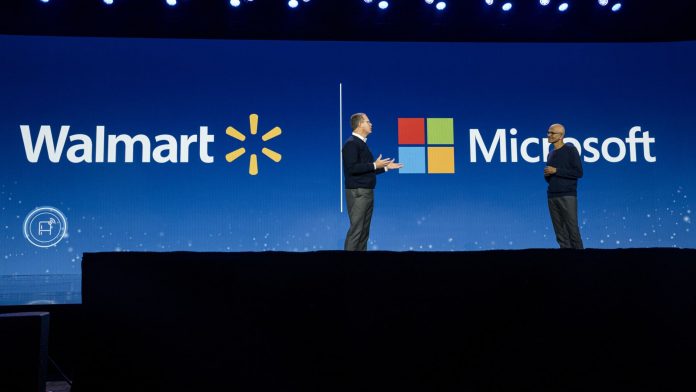
Innovations in Microsoft and Walmart – And Evolutions in AI Utilities

0

In recent developments, the tech giant Microsoft and retail powerhouse Walmart have made significant strides in their respective industries, showcasing a blend of technological innovation and strategic business transformations. Microsoft’s foray into AI integration with its Copilot+ PCs, powered by the Qualcomm Snapdragon X Elite ARM processor, marks a pivotal moment in hardware differentiation and user experience enhancement.

This move underscores the company’s shift from its historical focus on Windows-centric products towards cutting-edge AI-driven solutions under the leadership of CEO Satya Nadella. Concurrently, Walmart has been excelling in e-commerce through an omnichannel retail strategy that emphasizes grocery offerings. This success highlights Walmart’s evolution from a traditional store-centric model to a digitally savvy player adept at meeting modern consumer demands.

The overarching themes at play here encompass not only technological advancements like AI integration and hardware differentiation but also strategic shifts towards omnichannel retail strategies in response to evolving consumer preferences. These recent events reflect broader trends where companies are leveraging AI and innovative hardware capabilities to enhance user experiences while adapting to the digital landscape.

Looking ahead, the future outlook suggests continued innovation in AI integration and hardware capabilities across industries, further convergence of online and offline retail experiences through omnichannel approaches, and ongoing strategic business transformations driven by changing market dynamics. As traditional businesses navigate this digital age, considerations around ethical implications of widespread AI adoption, competitive landscapes within tech and retail sectors, as well as implications for employees and stakeholders remain critical focal points for analysis amidst this era of rapid technological evolution.

  • Microsoft’s recent events have showcased a convergence of various long-term projects, leading to a revitalized Windows experience and hardware differentiation.
  • The introduction of Copilot+ PCs sets a new standard, requiring specific hardware capabilities and offering features like Recall and Cocreator, enhancing user experiences with AI integration.
  • Microsoft’s focus on AI capabilities extends to partnerships with third-party developers, aiming to leverage the potential of Copilot+ PCs for diverse applications.
  • The hardware showcased at the event is based on Qualcomm’s Snapdragon X Elite ARM processor, promising performance comparable to MacBook Air and improved compatibility for x86-compiled apps.
  • Walmart’s e-commerce success story highlights a strategic shift towards an omnichannel approach, leveraging stores for delivery, pick-up, and in-person shopping, with a strong emphasis on grocery offerings.
  • Walmart’s journey to e-commerce dominance involved overcoming challenges rooted in a store-centric model, eventually leading to the integration of online operations with retail for a seamless customer experience.
  • Microsoft’s transformation under CEO Satya Nadella involved shifting focus from Windows-centricity to a services-oriented approach, with AI and compute investments driving the company’s evolution.
  • The strategic decisions made by Nadella, such as demoting Windows and emphasizing services like Azure and Office, have positioned Microsoft as a services company with Windows playing a supporting role.
  • The evolution of Windows under Nadella’s leadership signifies a departure from Windows-centricity towards a more diversified services business, with AI and compute capabilities driving future innovation and differentiation.

Integration

Vertical integration involves companies controlling multiple stages of production or distribution processes to gain a competitive edge. On the other hand, modularization breaks down systems into interchangeable modules for independent development. This dichotomy influences business strategies in fostering innovation and maintaining competitiveness. These companies are playing the games in many ways.

AI and ICT Utilities

The tech industry, dominated by giants like Apple, Google, Facebook, Amazon, and Netflix, is a dynamic landscape where power dynamics and innovation intersect. Recent events such as the controversy surrounding Apple’s iPad ad have brought to light the concept of Aggregation Theory. This theory underscores how the internet has transformed traditional supplier relationships by prioritizing user experience above all else. As technology continues to evolve rapidly, themes of commoditization of services and the impact on creativity and empowerment come to the forefront.

In this context, discussions around AI’s implications on society and human initiative gain significance. AI refers to machines simulating human intelligence processes. The ongoing debate over balancing empowerment with control in a digitally connected world is crucial for understanding the future trajectory of technology.

As we navigate through issues like data privacy regulations impacting tech companies and ethical considerations in product marketing, it becomes evident that collaborative efforts are essential for addressing societal challenges through technology. Looking ahead, advancements in AI and user experience design will shape technological progress while debates around Aggregation Theory’s evolution will continue to influence competition and innovation within the tech industry.

RCO Finance’s (RCOF) Robo Advisor Protects Crypto Traders From Dogecoin (DOGE) Crash

0

Having a solid investing plan is essential in the volatile crypto market, where meme coins like Dogecoin (DOGE) are prone to abrupt and severe price drops. This is where the AI-powered Robo Advisor from RCO Finance can be particularly useful.

But what makes the Robo Advisor valuable, and how can you benefit from it? Let’s explore further.

RCO Finance’s Robo Advisor: Navigating the Crypto Market with Confidence

RCO Finance’s flagship offering, the Robo Advisor has gained widespread attention among crypto traders across all levels. This is because the Robo Advisor’s advanced analytical prowess can help traders identify more reliable and potentially lucrative investment opportunities, enabling them to make well-informed decisions.

Notably, the AI-powered Robo Advisor takes each user’s unique risk profile and investment objectives into account when formulating personalized investment strategies. This allows traders to navigate the cryptocurrency market without undue concern about the potential downsides of volatile altcoins like Dogecoin.

The Robo Advisor’s dynamic methodology allows it to adjust to fluctuations in the market, providing traders with a steady advantage in the extremely volatile realm of cryptocurrency trading. This is particularly significant since the Robo Advisor provides traders with timely trading alerts, informing them when to purchase an asset or lower their leverage.

Compared to traditional financial advisors, who can be hampered by biases, emotions, and inadequate information, the AI-powered Robo Advisor represents a superior alternative. This purpose-built artificial intelligence is better equipped to navigate the platform’s extensive universe of over 12,500 tradeable asset classes and make profitable investments.

Furthermore, the DeFi trading platform also upholds transparency and security standards by leveraging blockchain technology to authenticate and validate all transactions. Through robust and periodic smart contract audits conducted by a reputable security firm called SolidProof, RCO Finance ensures the security and safety of investors’ assets.

RCO Finance: Empowering Traders with User-Friendly Platform

RCO Finance (RCOF) prioritizes accessibility by integrating a Robo Advisor into its intuitive and user-friendly trading platform. This setup allows traders of all levels to easily navigate the platform and tap into sophisticated trading strategies previously reserved for seasoned professionals.

With a global presence and 24/7 availability, RCOF’s decentralized model removes traditional barriers that have hindered individual engagement in the financial system. It also bridges the gap between cryptocurrencies and traditional banking, enabling users to effortlessly leverage their cryptocurrency assets for investments across various markets.

A standout feature of RCO Finance is its DeFi Cards as it grants investors exposure to the rapidly evolving DeFi ecosystem. These cards represent ownership stakes in various DeFi protocols and projects, enabling investors to engage in activities such as lending, borrowing, and earning interest.

By eliminating KYC requirements, RCO Finance (RCOF) ensures traders can retain their anonymity while meeting regulatory standards. The platform also facilitates cross-trading between digital and real-world assets, offering high leverage options of up to 1000x. This feature empowers traders to diversify their portfolios and maximize returns effectively.

RCO Finance: Join the Presale and Experience Crypto Success

RCO Finance’s current token presale has garnered significant attention thanks to its innovative Robo Advisor. In an effort to safeguard cryptocurrency traders against potential market downturns like the recent Dogecoin crash, the platform is offering a 50% discount to users who utilize the promo code “RCOF50” to join the presale.

At its current altcoin price of $0.0344 per token in Stage 2, investors have the opportunity to position themselves for potential returns of up to 1000%. With expectations of a listing price ranging between $0.4 and $0.6, this investment opportunity is exceptionally appealing.

By becoming part of the RCO Finance ecosystem, investors gain exclusive governance rights, enabling them to actively participate in the platform’s decision-making processes. What’s more, participants stand a chance to win up to $100,000 cash prize.

Why delay? You can be the lucky winner. Join RCOF’s presale now!


For more information about the RCO Finance (RCOF) Presale:

Visit RCO Finance Presale

Join The RCO Finance Community


Nigeria Should Lead With Strength And Help Air Peace To Secure Slots in Heathrow Airport

0

Britain has been playing this game for centuries: they come to you pretending they care about your economic advancement. But any day you show signs, they will throw obstacles. If you check, they might have told Nigeria why it must have private sector airlines in a dossier 40 years ago. But now that Air Peace has shown it can do just that, Britain suddenly does not have space for the airline in Heathrow:

“The simmering tensions between Nigeria and the United Kingdom over Air Peace’s access to Heathrow Airport slots have reached a boiling point, with Nigeria’s Minister of Aviation and Aerospace Development, Festus Keyamo, formally lodging a complaint with the UK government. The dispute, which has been escalating over several months, centers around what Nigeria perceives as unfair treatment of Nigerian-based airline, Air Peace, in its efforts to secure landing slots at the UK’s primary airport, London Heathrow”

For all the evil of Abacha, he did one thing right, and we must borrow some of his tactics: tell Britain that Nigeria is a sovereign country and does not need to lodge a complaint. Simply, revoke 100% slots assigned to BA in Lagos, and then return to your village. By the time they get the memo, they will do the needful. Of course, it is also possible that Nigeria does not want to help Air Peace (the scene with Dangote Refinery tells you that anything is possible).

Good People, I do not understand why we have WEAK leaders in Nigeria. Britain is a weakening country that does not really have much leverage against Nigeria. Festus Keyamo: Give them 7 days, and if they do not make the slots available, revote all the slots in Lagos and Abuja! And if you people cannot run Nigeria, make way – I am tired of this leading with weakness we see in Nigeria daily!

Nigeria-UK Aviation Row Deepens as Nigeria Threatens Retaliation Over Heathrow Slot Denial to Air Peace

0

The simmering tensions between Nigeria and the United Kingdom over Air Peace’s access to Heathrow Airport slots have reached a boiling point, with Nigeria’s Minister of Aviation and Aerospace Development, Festus Keyamo, formally lodging a complaint with the UK government.

The dispute, which has been escalating over several months, centers around what Nigeria perceives as unfair treatment of Nigerian-based airline, Air Peace, in its efforts to secure landing slots at the UK’s primary airport, London Heathrow.

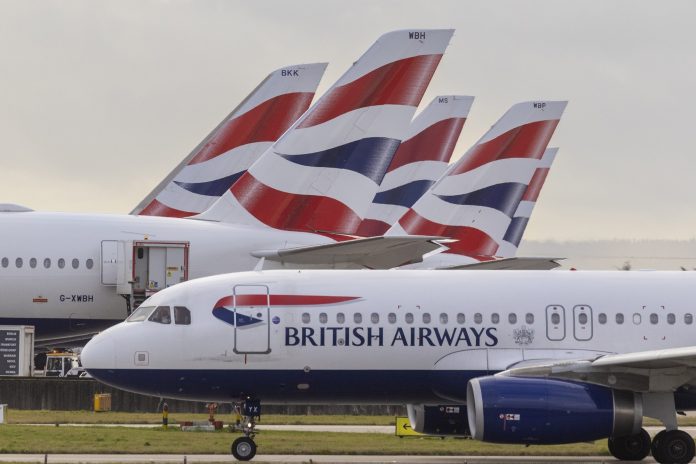
In a letter dated August 1, 2024, and addressed to Louise Haigh, the UK Secretary of State for Transport, Keyamo expressed the Nigerian government’s “displeasure” over the “consistent denial of slot” allocation to Air Peace at Heathrow. He warned that Nigeria might be forced to retaliate by denying British Airways and Virgin Atlantic access to the Lagos and Abuja airports if the situation is not resolved.

Background: Air Peace’s Struggles and Onyema’s Allegations

The conflict over airport slots began to intensify earlier this year. In April 2024, Allen Onyema, the Chief Executive Officer of Air Peace, publicly raised concerns over what he described as unfair competition tactics employed by foreign airlines, particularly on the Nigeria-UK route.

Onyema accused the UK government of deliberately frustrating Air Peace’s efforts to establish a strong presence in the UK by making it difficult for the airline to secure slots at Heathrow, the more desirable of London’s two major airports.

Onyema has argued that these tactics are designed to protect British carriers from competition, thereby maintaining their dominance on the lucrative Nigeria-UK route. “The UK government is doing everything to frustrate our entry into Heathrow,” Onyema stated. “They know that if we get into Heathrow, we will offer competitive fares and better service, which will challenge the monopoly that foreign airlines currently enjoy.”

Air Peace commenced its UK operations in March 2024 but was forced to operate out of Gatwick Airport, the secondary airport that is less convenient for passengers due to its distance from central London. The airline’s repeated requests for slots at Heathrow have been denied, which has led to increasing frustration within the Nigerian government and among the airline’s management.

Keyamo’s Letter: Nigeria’s Demand for Fair Treatment

In his August 1 letter, Keyamo expressed the Nigerian government’s dissatisfaction with the ongoing situation. He highlighted that while British Airways and Virgin Atlantic have been operating from Nigeria’s primary airports in Lagos and Abuja without any restrictions, Air Peace has been consistently denied access to Heathrow.

“The Airline had made consistent efforts in the past to fly into Heathrow Airport from Lagos, but was denied, and only granted approval to fly into Gatwick Airport from Lagos,” Keyamo wrote.

“Following the approval granted the Airline by the Nigerian Government to fly the Abuja-London route, the Airline approached the Slot Office for slot allocation at the London Heathrow Airport, for flight operations planned to commence in November 2024, during the IATA Winter Season. It is highly disheartening that up till this moment, the Airline has not received any favourable response from the Slot Office.”

Keyamo’s letter underlines the principle of reciprocity that underpins the Bilateral Air Services Agreement (BASA) between Nigeria and the UK. He argued that it is “highly unfair” for Nigerian carriers to face such difficulties in securing slots at Heathrow while British carriers enjoy unhindered access to Nigeria’s key airports.

“Therefore, it is necessary for Nigerian designated carriers to enjoy similar reciprocity that British carriers are enjoying,” Keyamo wrote. “It is highly unfair on the side of the British authorities and a discredit to the Nigerian authorities and the Nigerian nation as a whole, for slot allocation to Nigerian carriers to be an issue at all times. We feel totally betrayed by the British authorities for not reciprocating the good gesture of the Nigerian State and its people.”

The Threat of Retaliation

In a stern warning, Keyamo indicated that if Air Peace is not allocated a slot at Heathrow by the next International Air Transport Association (IATA) Winter Season, Nigeria may have no choice but to deny British carriers access to its tier-one airports in Lagos and Abuja. He called for “frank discussions” between the two countries to resolve the issue and ensure that Nigerian airlines receive fair treatment.

“Arising from the foregoing, I wish to emphatically state that if Air Peace is not allocated a slot at the London Heathrow Airport, it might be difficult for British flag carriers to access Nigeria’s tier one airports from the next Winter Season, unless when a frank discussion is opened with us to break the debacle associated with the slot allocation at Heathrow to the Airline and other Nigerian designated airlines,” Keyamo wrote.

The minister’s letter has already been received by the UK High Commission in Abuja, but there has been no official response from the British government as of now. The escalating row could have significant implications for air travel between Nigeria and the UK, one of Africa’s busiest air travel corridors. If Nigeria follows through on its threat, it could disrupt the operations of British Airways and Virgin Atlantic, leading to a potential diplomatic and commercial standoff between the two countries.

The State of Nigerian Oil Refinery Sector in 2024

0

Nigeria, Africa’s largest oil producer, has faced persistent challenges in achieving operational functionality in its oil refineries. Despite the country’s abundant crude oil reserves, the refineries have historically underperformed due to a variety of complex issues.

In 2024, the situation appears to be on the cusp of transformation. The Nigerian Upstream Petroleum Regulatory Commission has reported significant strides in the national liquid hydrocarbon production, with a comprehensive infrastructure connected to numerous fields and export terminals. This development is crucial as it lays the groundwork for a more robust and self-sufficient oil industry.

One of the primary challenges is the aging infrastructure of the refineries. The four main refineries – in Port Harcourt, Warri, and Kaduna – have suffered from years of neglect and underinvestment, leading to a state of disrepair and operational inefficiency. This has resulted in a capacity utilization that hovers between 15 and 25% per annum, far below their installed capabilities.

Another significant hurdle is the financial constraints that limit the ability to perform necessary upgrades and maintenance. The refineries have been operating at a loss, making it difficult to justify the investment needed to revamp them.

Policy and regulatory inconsistencies also pose a challenge. The Nigerian government has issued over 30 licenses for modular refineries, but due to a lack of clarity and consistency in policies, very few have become operational. This uncertainty deters potential investors and complicates efforts to increase refining capacity.

Environmental and health challenges arise from the proliferation of artisanal refineries, especially in the Niger Delta region. These informal operations contribute to pollution and pose significant health risks to local communities.

Furthermore, the removal of fuel subsidies has led to increased fuel prices, impacting the economy and the populace. While this move aims to encourage efficiency and redirect funds towards development projects, it has also been met with public discontent.

The Nigerian government has made commitments to address these issues, including plans to revitalize the existing refineries and the construction of the Dangote Refinery. However, the success of these initiatives will depend on overcoming the aforementioned challenges and ensuring a stable and conducive environment for refinery operations and investments.

Moreover, the much-anticipated Dangote Refinery in Lagos, an over $22 billion investment predicted to produce about 650,000 barrels per day, marks a major step towards self-reliance in fuel production. The delivery of crude oil to this refinery is a positive sign, indicating progress towards operational status. The refinery aims to produce diesel, aviation fuel, liquefied petroleum gas (LPG), and eventually petrol, which could significantly reduce the nation’s dependence on imported refined oil.

The government’s decision to remove fuel subsidies has been a contentious one, leading to a sharp increase in fuel prices. However, this move is part of a broader strategy to redirect funds towards social development projects and encourage efficiency within the oil sector.

Additionally, there’s an ambitious goal set by Nigeria’s Oil Minister to revitalize all four state-owned refineries by the end of the year. The Port Harcourt facility, in particular, is expected to commence operations soon, followed by the Warri and Kaduna refineries. This could mark the end of a long-standing reliance on fuel imports and the beginning of a new era for the Nigerian oil industry.

The journey towards fully functional refineries in Nigeria is fraught with challenges, including infrastructural decay, mismanagement, and financial constraints. However, the current developments suggest a concerted effort to overcome these hurdles and achieve a turnaround that could have far-reaching implications for the country’s economy and energy security.

The focus now shifts to the effective implementation of these projects and the management of the refineries post-completion. If successful, Nigeria could witness a significant reduction in fuel importation, a boost in local employment, and an overall enhancement in the economic landscape.