DD
MM
YYYY

PAGES

DD
MM
YYYY

spot_img

PAGES

Home Blog Page 3040

UK Regulator Proposes a New Approach to Crypto Assets As the DTX Exchange Presale Heats Up With 100x the Potential Returns

0

The Law Commission of England and Wales recently proposed creating a new category for cryptocurrencies as personal property. Its goal is to establish legal protection and recognition for these digital assets, which have become increasingly significant in today’s economy.

Simultaneously, much talk has been about the DTX Exchange (DTX) presale, which has already soared by 100%. Some analysts believe this Stage 2 presale star could be 100x more profitable than any other established cryptocurrency, such as Chainlink (LINK), Optimism (OP), NEAR Protocol (NEAR), or Kaspa (KAS) in 2024.

DTX Exchange (DTX): The Rising Crypto Star

As the legal landscape changes, traders become more interested in the DTX Exchange (DTX) presale. This is because of how well it has been doing and the huge returns it could bring. DTX Exchange has raised over $1.1M so far and is projected to reach $2M before August 31, 2024. Even major influencers like CryptoDexWorld have taken note of it.

This platform could dominate the billion-dollar online trading market as it brings elements from both CEX and DEX into a single hybrid model. Up to 120K asset classes can be accessed through it, such as gold, bonds or cryptocurrencies, while remaining completely private thanks to no sign-up KYC checks.

The centerpiece of DTX Exchange is the DTX utility token. Holding it will give you access to advanced analytics tools and reduced trading fees. Additionally, buying $100 of DTX during its presale will be added to a $1M giveaway. Ten people will walk away with $100K each in this giveaway – a great incentive to buy this crypto.

One DTX costs $0.04 in Stage 2 at the moment. Those who bought it early on are enjoying a 100% ROI. Moreover, this price will see another 50% jump to $0.06 once Stage 3 begins. Market analysts even forecast a jump to $1 for DTX once it hits Tier-1 exchanges in Q3 of 2024 – making it the best crypto to watch this summer.

Chainlink (LINK): New ATH Incoming

Chainlink (LINK) has been riding a bullish wave recently. Over the past year alone, the Chainlink price surged nearly 75%, as per CoinMarketCap data. Major analyst AMCrypto also remains bullish. According to his X post, LINK consolidation is still ongoing and a potential breakout above $21 may come – triggering a rally to a new ATH.

The technical analysis of the Chainlink crypto supports this statement. For instance, LINK trades above its 100 and 200-day EMAs while having four technical indicators in the buy zone. As a result, other market analysts have also made a bullish Chainlink price prediction. They forecast a rise to $17 before the end of Q3 2024 for LINK.

Optimism (OP): Continues Generating Revenue

Optimism (OP) is another crypto making headlines in the crypto market. Recently, Ryan Wyatt of the Optimism collective revealed that it has generated 14.3K ETH in revenue from the sequencer fees that OP Stack chains. Not only that, there are now 26 OP Stack chains in the Optimism Superchain sharing revenue and more are coming.

This promising Optimism news could trigger a rally for this crypto. Speaking of which, the OP value jumped around 1% in the past 12 months. Additionally, seven technical indicators are currently showing green signals for OP. Thus, experts predict a potential surge to $3 within Q3 of 2024 for Optimism.

NEAR Protocol (NEAR): May See an Upward Move

NEAR Protocol (NEAR) has been showing bullish signs. According to CoinMarketCap data, the NEAR Protocol price jumped over 270% on the YTD chart. Crypto analyst Market Watcher also made a bullish statement for this crypto. In his X post, he claims that NEAR should go up from its current level to the $7 level.

This NEAR Protocol price prediction has some merit from a technical analysis perspective. For instance, NEAR trades above its 50 and 100-day EMAs while having seven green technical indicators. As a result, other experts also foresee the NEAR Protocol crypto trading at $6.80 before the end of Q3 2024.

Kaspa (KAS): New ATH Achieved

Another crypto that has been making waves in the market is Kaspa (KAS). CoinMarketCap data shows that the Kaspa price increased nearly 450% in the past year alone. Recently, KAS even hit a new ATH—$0.20. Crypto analyst Max claims KAS is set to get a Tier 1 listing and may soar like Solana did last cycle.

The technical analysis for the Kaspa coin also shows some bullish signs. Notably, KAS is trading above its 50 and 100-day EMAs while having 26 green technical indicators. Due to all these reasons, market analysts predict a surge to $0.28 within Q3 of 2024 in their Kaspa price prediction.

Will DTX Exchange Outshine Chainlink, Optimism, NEAR Protocol and Kaspa?

DTX Exchange is quickly picking up steam with the changing crypto regulatory landscape. This rookie has some advantages over Chainlink, Optimism, NEAR Protocol and Kaspa. For instance, DTX has connections to many flourishing trillion-dollar financial markets like the $133T bonds market as well as a lower market cap than its peers.

To clarify, this rookie will need far fewer new funds for its price to surge while remaining more stable in the long term. Sign up for the DTX Exchange presale to buy this game-changing coin.


Visit DTX Presale

Read Whitepaper

Join the DTX Community

MATIC and Bitcoin Cash (BCH) Holders Have Been Doubling Down On This New Altcoin Set For 200x Gains

0

It is always important for investors to keep up with the latest trends in the cryptocurrency markets which move quickly and can be a roller coaster ride. Holders of Polygon (MATIC) and Bitcoin Cash have been rotating profits recently into a new coin, Rollblock ($RBLK), currently in pre-sale and set to revolutionize the crypto gambling space. Find out why experts are tipping Rollblock for 200X gains in 2024!

Polygon (MATIC) Falls Out Of Crypto Top 20

Polygon (MATIC) holders have watched their portfolios shrink by nearly 6% over the last month, as Polygon’s price has remained in its continued downtrend. Polygon’s market cap has now fallen to just over $5 billion, meaning that Polygon has fallen out of the crypto top 20 coins.

Despite over 1.8 million new Polygon users being detected using on-chain metrics over the last month, Polygon’s price is still facing huge selling and the 100-day moving average in the low $0.60s is bound to present a challenge in the short term.

Bitcoin Cash (BCH) Rallies Above $450

Bitcoin Cash (BCH) has had a bullish month and surprised the market with a show of strength, pumping over 20% over the last 30 days to hit above $450. Bitcoin Cash has since corrected as sellers took the opportunity to take some profit at these levels.

Concerns over the distribution of Mount Gox bankruptcy coins seem to have come to nothing, and Bitcoin Cash traders are turning decidedly bullish here. The Bitcoin Cash uptrend should continue and support lies just below at the 100-day moving average, currently at $426.1. This should act as a springboard to launch Bitcoin Cash back to the April highs above $700 in due course.

Rollblock (RBLK) Olympic Giveaways Entice Investors

Rollblock ($RBLK) has recently seen a huge influx of new investors as over 7000 buyers have now flocked to its pre-sale offering. The stage four coins are currently selling out fast and the RBLK price has recently increased to make yet another new high this month.

Rollblock brings the best of web3 Innovation to the $450 billion online gambling industry. By using the Ethereum blockchain to encrypt and inscribe all financial transactions, Rollblock can vouch for the sanctity of all transactions and remove the risk of that fixing from the platform. Entirely crypto native and so free of invasive KYC checks, new users can sign up by connecting a crypto wallet and depositing major cryptocurrencies such as Bitcoin and Tether USDT.

Over 150 AI-powered games, from poker to slot machines, are on the platform. In-game payouts are made using the native RBLK token. This token is set to explode in price thanks to an innovative revenue share scheme that will see the casino buy back and burn potentially millions of dollars of tokens each week.

This will support price and reinvest in the Rollblock community, as stakers can earn a generous yield of up to 30% risk-free. Nearly $2 million has been pledged so far to this presale, with huge potential for 200x gains this year.

Investors who get on board today can buy tokens for just $0.0175 and can take part in daily Olympic giveaways!

Discover the Exciting Opportunities of the Rollblock (RBLK) Presale Today!

Website: https://presale.rollblock.io/

Socials: https://linktr.ee/rollblockcasino

The Role of Technology in Creating Intuitive and Engaging Casino Interfaces

0
Classy Wooden Shiny Roulette Details in a Casino

Technologies like artificial intelligence and machine learning are significantly redefining the online casino market, spearheading innovations in security measures, personalized services, and gaming experiences. By integrating AI into online casinos, gaming platforms are transforming how they interact with their players and deliver their services. AI and machine learning also give operators a better understanding of their players’ behaviors and interests, reshaping business strategies to maximize the entertainment value for their customers.

Besides AI and machine learning, innovations like augmented reality and virtual reality are bringing a new dimension to casino interfaces, bringing a new level of immersion. Here is a look at the role of technology in delivering intuitive and engaging gambling interfaces as operators strive to maximize the entertainment value of their players.

The evolution of online casinos with cutting-edge technologies

The transformation of online casino interfaces from their early days to the current state highlights the role of technology in delivering engaging gaming experiences. During the early days, these digital gambling platforms offered simple interfaces with a limited selection of classic games and often struggled with technical issues. However, technological innovations have transformed them into sophisticated platforms like Betway, with intuitive interfaces and a broad selection of games that include 3D slots and live dealer experiences.

This transformation is powered by significant improvements in sound, graphics, and user interactivity, making digital casinos more accessible and immersive. As a result, the online casino industry has seen a surge in trust and reliability, especially with leading platforms like Betway Casino Zambia thanks to their commitment to user-friendly experiences, game variety, and security.

How cutting-edge technologies are creating immersive casino interfaces

Here is how innovations like data analytics, artificial intelligence, virtual reality and augmented reality are helping shape the future of the casino market by delivering intuitive casino interfaces and immersive gaming experiences.

Advanced analytics and personalization

Data analytics plays a significant role in developing intuitive casino interfaces by giving operators valuable insights into player preferences and gaming behavior. With advanced data analytic tools, casino operators can track and analyze large data sets in real time. That allows casinos to personalize their interfaces with everything from customized bonuses and promotions to tailored game recommendations. Additionally, data-driven insights help operators to improve their game offerings and optimize their operations.

VR & AR – A new dimension of immersion

Augmented reality and virtual reality are transforming online casino platforms by delivering a new dimension of interactivity, immersion, and entertainment. Virtual reality allows gamblers to dive into a virtual world where they can interact with realistic animations and sound effects. This immersive gaming experience resembles the ambiance of traditional casinos, with virtual slots, tables, live dealers, and other elements.

On the other hand, augmented reality overlays digital elements in the real world. This technology can be used in enhancing live dealer casino games, giving players interactive elements, additional information, and statistics during the gameplay.

Cross-platform compatibility

Cross-platform compatibility means that casino players can access their favorite games like slots, poker, and blackjack through different devices and operating systems. That’s made possible by using technologies like HTML5, which allows casino game developers to optimize the game interfaces for different platforms. That promotes inclusivity and allows players to seamlessly switch between devices without losing their progress. 

FCCPC’s $220m WhatsApp Fine: WhatsApp Reportedly Threatens to Shut Down Operation in Nigeria

0
social media apps

Last month, Nigeria’s Federal Competition and Consumer Protection Commission (FCCPC) imposed a $220 million fine on WhatsApp, citing data privacy violations.

The fine, one of the largest ever levied by the FCCPC, is accompanied by a set of demands that include halting the sharing of user data with other Facebook-owned entities and third parties without explicit user consent. Furthermore, WhatsApp is being asked to provide comprehensive information about its data collection practices and to restore user control over their data usage.

These stipulations have led to growing concerns within Meta, WhatsApp’s parent company, about the feasibility of continuing operations under these constraints.

A WhatsApp spokesperson, in an email to TechCabal, said the development means the chat social media platform may shut down operations in Nigeria.

“We want to be really clear that technically, based on the order, it would be impossible to provide WhatsApp in Nigeria or globally.

“This order contains multiple inaccuracies and misrepresents how WhatsApp works. WhatsApp relies on limited data to run our service and keep users safe, and it would be impossible to provide WhatsApp in Nigeria or globally without Meta’s infrastructure. We are urgently appealing the order to avoid any impact on users,” the spokesperson said.

The potential shutdown of WhatsApp in Nigeria has sparked alarm among the business community. WhatsApp, along with other Meta platforms like Instagram and Facebook, has become a vital tool for businesses, particularly small and medium-sized enterprises (SMEs). These platforms are not just social networking sites; they are essential for marketing, customer engagement, and sales operations.

Nigeria ranks top 10 in WhatsApp users by country, with 51 million users as of February 2024, according to Yahoo Finance.

Many Nigerian SMEs have leveraged WhatsApp’s user-friendly interface and widespread adoption to build their brands and reach customers across the country and beyond.

This unprecedented move has stirred widespread concern among business leaders and analysts, who share the same sentiment with WhatsApp that the stringent penalties and additional demands from the FCCPC could push the platform to consider suspending its operations in Nigeria.

The prospect of losing such a critical communication channel is worrying for many entrepreneurs, who believe it would be catastrophic for many small businesses that have built their customer base and manage most of our interactions through WhatsApp.

Many have described WhatsApp as ‘a lifeline’, especially in an environment where traditional advertising channels can be prohibitively expensive.

Analysts have echoed these concerns, highlighting the broader economic impact that could ensue. The platform’s integration into the daily operations of businesses means that its removal would disrupt not only marketing and sales efforts but also supply chain communications and customer service.

Talking about the impact of WhatsApp exiting the Nigerian market, many pointed to potential losses in business efficiency, increased costs, and reduced customer engagement. It is also noted that it could significantly slow down the pace of digital adoption and innovation within the SME sector.

Moreover, the controversy surrounding the FCCPC’s fine raises questions about Nigeria’s regulatory environment for technology companies. The fine was based on alleged violations of the National Data Protection Regulation (NDPR), enacted by the National Information Technology Development Agency (NITDA) in 2019. However, the NDPR’s legal standing and its application to a case of this magnitude have been called into question by privacy lawyers and industry experts who spoke to TechCabal.

They argue that while the NDPR provides a framework for data protection, its provisions may not be sufficiently robust or clear to justify such a hefty penalty.

“We are too revenue-focused. What is the opportunity cost of $220 million in government coffers?” asked an Industry expert quoted by TechCabal.

This question stems from broader concerns about the proportionality of the fine. Some government officials and industry insiders have suggested that the penalty may be more about revenue generation than data protection.

In response to the development, the FCCPC said in a statement on Thursday that “WhatsApp’s claim that it may be forced to exit Nigeria due to FCCPC’s recent order appears to be a strategic move aimed at influencing public opinion and potentially pressuring the FCCPC to reconsider its decision.”

The watchdog said its “actions are based on legitimate concerns about consumer protection and data privacy and the order is a positive step towards a fairer digital market in Nigeria.” It added that “similar measures are taken in other jurisdictions without forcing companies to leave the market. The case of Nigeria will not be different.”

Delta Air Lines Faces $500m Loss from Massive IT Outage: CEO Ed Bastian Vows Legal Action

0

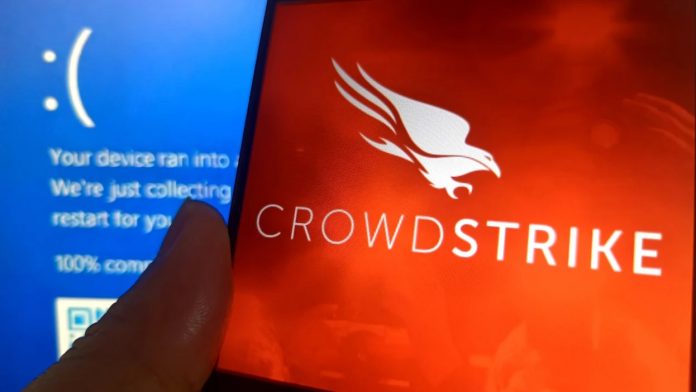
Delta Air Lines is grappling with the fallout from a significant CrowdStrike IT outage that has cost the company approximately $500 million and is set to take legal action.

This figure, disclosed by CEO Ed Bastian, includes lost revenue and the “tens of millions of dollars per day in compensation and hotels” for thousands of affected passengers.

The outage, which occurred earlier this month, led to the cancellation of over 5,000 flights, causing chaos and frustration among travelers and highlighting the airline’s vulnerability to technology failures.

The IT outage began when a routine software update from cybersecurity firm CrowdStrike went awry, disrupting Delta’s operations and taking thousands of Microsoft systems offline globally. According to Bastian, the incident required a manual reset of around 40,000 servers—a massive undertaking that underscored the critical dependence of modern airlines on robust IT infrastructure. The malfunction had a domino effect, crippling Delta’s platforms for matching flight crews with planes and compounding the disruption.

The origins of the issue could be traced back to the integration of CrowdStrike’s software, a decision made by Delta to enhance its cybersecurity defenses. However, during a critical update, a flaw in the software’s deployment caused widespread system failures. This led to a cascading series of outages across Delta’s network, affecting everything from check-in systems to flight scheduling and baggage handling. As the systems went down, Delta was forced to cancel thousands of flights, significantly impacting its operations and leaving passengers stranded.

The scope of the outage was unprecedented for Delta, which prides itself on being a premium airline with a strong track record in profitability and punctuality. The airline’s reputation took a hit as passengers faced long delays, cancellations, and inadequate communication from the airline. The financial repercussions were immediate, with lost ticket sales and the cost of accommodating stranded passengers adding up quickly.

Bastian, speaking from Paris in an interview with CNBC’s “Squawk Box,” expressed the airline’s frustration and the seriousness of the situation. He emphasized the need for rigorous testing and reliability in IT systems that are critical to airline operations.

“If you’re going to be having access, priority access to the Delta ecosystem in terms of technology, you’ve got to test the stuff. You can’t come into a mission-critical 24/7 operation and tell us we have a bug,” Bastian stated, underscoring the critical nature of Delta’s operations and the high expectations placed on its technology partners.

The incident has drawn comparisons to a similar disruption faced by Southwest Airlines during the year-end holidays in 2022 when severe weather compounded by IT failures led to widespread cancellations and delays. In Delta’s case, the outage highlighted how a single point of failure in the IT infrastructure can have far-reaching consequences, affecting thousands of flights and disrupting travel plans for countless passengers.

Delta’s response to the crisis included immediate efforts to restore normal operations and manage the fallout. The airline processed thousands of refunds and reimbursement requests, though it has not disclosed the exact number.

The financial impact, estimated at $500 million, includes not only lost revenue but also the extensive costs associated with compensating passengers and arranging accommodations. This figure aligns with analysts’ estimates and reflects the severe impact of the outage on Delta’s financial performance.

The U.S. Department of Transportation has launched an investigation into the incident. The investigation will likely examine the steps taken by Delta and its technology partners, including CrowdStrike and Microsoft, to safeguard against system failures and ensure continuity of operations.

In response to the crisis, Delta has hired renowned attorney David Boies to pursue legal action against CrowdStrike and Microsoft. Boies, known for his representation of the U.S. government in the landmark antitrust case against Microsoft, brings significant legal expertise to the case.

Bastian indicated that Delta would seek damages not only for the direct costs incurred but also for the damage to the airline’s brand and reputation.

“We have to protect our shareholders. We have to protect our customers, our employees, for the damage, not just to the cost of it, but to the brand, the reputational damage,” he said.

Bastian mentioned that CrowdStrike has so far made no financial offers to assist Delta, aside from providing free consulting advice on dealing with the aftermath. A CrowdStrike spokesperson, in response to inquiries, stated that the company had “no knowledge of a lawsuit and have no further comment.”

The incident, which highlights the interconnectedness of modern technology operations, has sparked discussions within the industry about the need for more stringent testing protocols, better contingency planning, and clearer communication strategies to handle disruptions.

For Delta, the path forward involves not only addressing the immediate operational challenges but also rebuilding trust with customers and stakeholders.