DD
MM
YYYY

PAGES

DD
MM
YYYY

spot_img

PAGES

Home Blog Page 3072

Four DNAs In The Genes of Great Companies [video]

1

At Tekedia Institute, we have identified four characteristics of enduring category-king companies. In your business, you must possess these four traits if you want to deepen your moats and win the competition:

Perceptively innovative: you are always innovating. You never rest, always pushing for better products, services and experiences. You outperform competitors with new solutions for unmet needs.

Evidently inspired: you inspire your users. You are modern, trustworthy and inspirational, you have a larger purpose, helping people live out their own values and beliefs.

Ruthlessly pragmatic: your customers depend on you and you have their backs, making life easier by delivering consistent experiences. You make good on your promises.

Customer obsessed: customers cannot imagine living without you. You know what matters to customers, finding new ways to meet their most important needs.

We add that for online companies, the path to acquiring and compounding your moats come by winning demand through influence and control, over merely providing supply.

For deeper insights on these 4 traits, register for Tekedia Mini-MBA here  https://school.tekedia.com/course/mmba/


Heritage Bank Failure, Unity Bank Merger with Providus, and Audit of Central Bank of Nigeria

1

Act 1, Scene 1: Heritage Bank Collapses

“The Nigeria Deposit Insurance Corporation (NDIC) is hereby appointed as the Liquidator of the bank [Heritage Bank] in accordance with Section 12 (2) of BOFIA, 2020. We wish to assure the public that the Nigerian financial system remains on a solid footing.” – Central Bank of Nigeria, June 2024.

Act 1, Scene 2: Unity Bank Merges with Providus Bank

“The Central Bank of Nigeria (CBN) has granted approval for a pivotal financial accommodation to support the proposed merger between Unity Bank Plc and Providus Bank Limited. This strategic move is designed to bolster the stability of Nigeria’s financial system and avert potential systemic risks,” Central Bank of Nigeria, Aug 2024.

Act 2, Scene 1: Audit of Central Bank of Nigeria since 2011

[Yet to be downloaded …]

Now that many banks are reporting that the FX gains which they trumpeted as a product of genius banking sagacity are all vapours, unrealized, and that means non-taxable on on the retroactive 70% windfall tax ordinance, I call the apex bank to invent better tools, on how it monitors banks. If the banks can suddenly re-allocate assets to NOT pay anything on the windfall tax, wasting “parliamentary time” of Honourables and Distinguished on making new laws, we may need to order bigger CCTVs in those vaults (both physical and virtual)

Central Bank of Nigeria (CBN) Approves N700bn for Merger of Unity Bank and Providus Bank

1

In a move that has caused a stir in Nigeria’s financial industry, the Central Bank of Nigeria (CBN) has approved financial accommodation to facilitate the proposed merger between Unity Bank Plc and Providus Bank Limited.

The announcement, delivered by Mrs. Hakama Sidi Ali, the Acting Director of Corporate Communications at the CBN, is said to be part of efforts to stabilize the nation’s banking sector and avert potential systemic risks.

“The Central Bank of Nigeria (CBN) has granted approval for a pivotal financial accommodation to support the proposed merger between Unity Bank Plc and Providus Bank Limited. This strategic move is designed to bolster the stability of Nigeria’s financial system and avert potential systemic risks,” the statement said.

While the apex bank refrained from disclosing the exact figure of the financial aid, insider sources have revealed that the CBN injected approximately N700 billion into the merger. This colossal financial backing is poised to play a critical role in addressing Unity Bank’s total obligations to the Central Bank and other stakeholders, ensuring the operational stability of the newly merged entity.

While the development has caused a stir, many believe that the funding by the CBN is vital for the financial health and operational stability of the post-merger organization. They note that the fund will be instrumental in addressing Unity Bank’s total obligations to the Central Bank and other stakeholders.

The central bank’s action is grounded in Section 42 (2) of the CBN Act, 2007, which empowers it to take necessary measures to ensure the stability of the financial system.

“It is unequivocal to state that the CBN’s action is in accordance with the provisions of Section 42 (2) of the CBN Act, 2007. This arrangement is crucial for the financial health and operational stability of the post-merger organization,” the statement said.

The CBN emphasized that the arrangement is vital for the financial health and operational stability of the post-merger organization.

“The merger is contingent upon the financial support from the CBN. The fund will be instrumental in addressing Unity Bank’s total obligations to the Central Bank and other stakeholders,” the CBN noted.

To assuage concerns, the CBN clarified that no other Nigerian bank currently faces a situation akin to that of Heritage Bank, which was recently liquidated. The central bank reassured stakeholders of its unwavering commitment to protecting depositors’ interests and ensuring the seamless operation of the banking sector through proactive measures and strategic interventions.

The move comes on the heels of the CBN’s recent revocation of Heritage Bank Plc’s banking license. This drastic step was taken in response to the bank’s persistent financial instability and failure to comply with regulatory requirements, as stipulated under Section 12 of the Banks and Other Financial Institutions Act (BOFIA) 2020.

The CBN said that despite numerous supervisory measures, Heritage Bank’s financial health continued to deteriorate, posing a significant threat to the stability of Nigeria’s financial system. Consequently, the CBN acted decisively to revoke its license, reinforcing public confidence in the banking sector.

“The decision to revoke Heritage Bank’s licence is part of the CBN’s mandate to maintain a sound financial system in Nigeria,” the CBN stated emphatically. “Heritage Bank had failed to adhere to Section 12 (1) of BOFIA 2020, necessitating regulatory intervention. The bank’s continuous underperformance posed a significant threat to financial stability, compelling the CBN to revoke its licence.”

Tekedia General Scholarship Fund Grows with Donations

0

Join me to thank Chinedu Chidolue of The Chidolue Law Firm for funding the future through a generous donation to Tekedia Institute General Scholarship Fund. Our slogan is “our product is knowledge” and our mission is to scale knowledge. Thank you for your generosity.

As always, our non-profit partner, IWB Africa (Ideas Worth Billions), a community of amazing young Africans, will handle the selection of Chinedu Chidolue Scholars. This is the working requirement: “Please kindly apply my little donation towards the brightest applicants that can’t afford the tuition. I once walked in their shoes”.

Every year, hundreds of learners attend our programs FREE through general scholarships funded by citizens and organizations. We thank them and wish them more wins. For Mr. Chidolue, we wish The Chidolue Law Firm, an immigration law firm in the United States, to grow from strength to strength.

Jumia Reports Q2 2024 Financial Results: Revenue Declines Amid Currency Devaluation, But Operational Metrics Improve

0

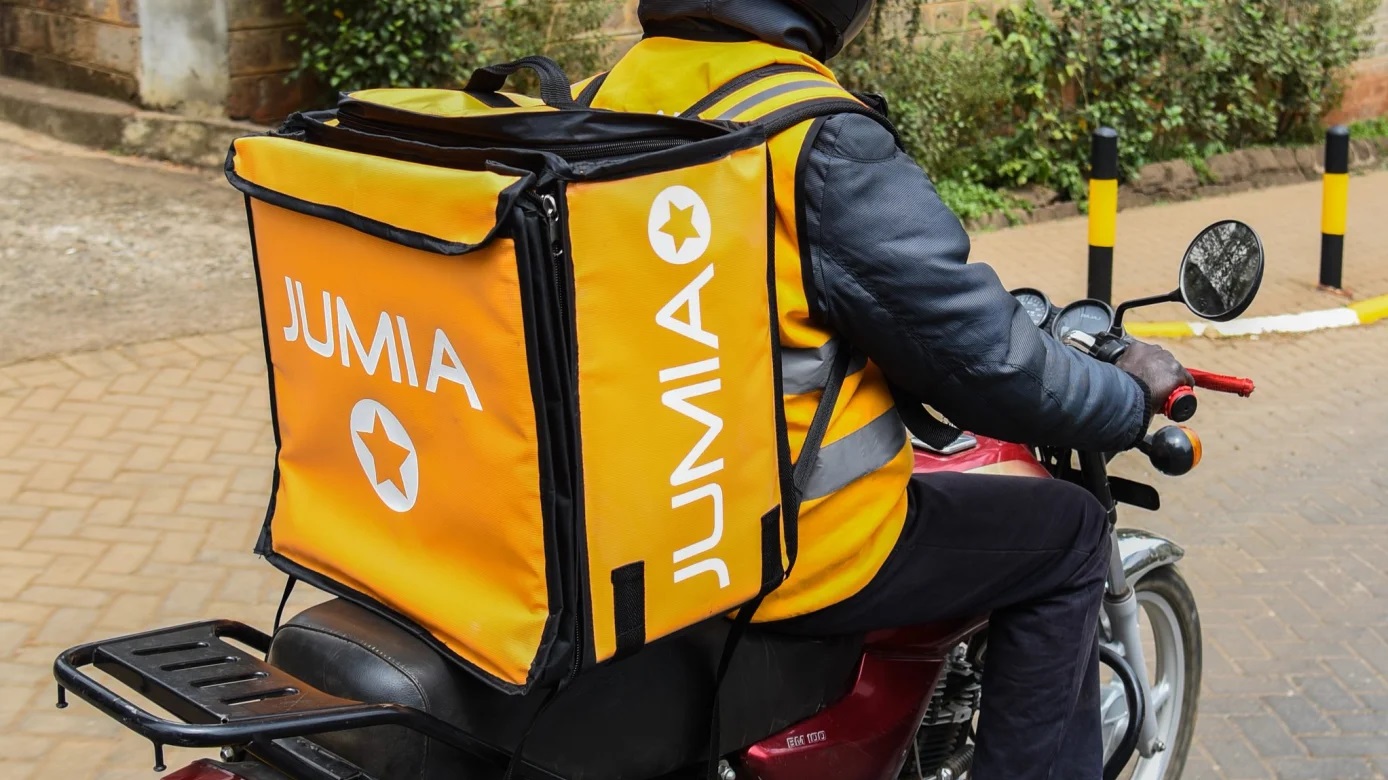
Jumia, a leading e-commerce platform in Africa, has released its financial results for the second quarter of Q2 2024, showing a 17% decline in revenue to $36.5 million, down from $44 million recorded in the same period last year.

Jumia attributed the decline to regional currency devaluations that impacted both Gross Merchandise Value (GMV) and Total Payment Volume (TPV). Despite these challenges, the company reported significant improvements in operational and financial metrics under the leadership of CEO Francis Dufay.

It reported a $20.2 million operating loss a decline, compared to $22.1 million in Q2 of 2023, down 8% year-over-year, and down 5% in constant currency. Adjusted EBITDA loss was $16.3 million, compared to a loss of $18.2 million in the second quarter of 2023, down 10% year-over-year, and down 11% in constant currency. Loss before income tax from continuing operations was $22.5 million in the second quarter of 2024, down 27% year-over-year.

Jumia reported a liquidity position of $92.8 million, a decrease of $8.7 million in the second quarter of 2024 as compared to a decrease of $39.1 million in the second quarter of 2023. Net cash flows used in operating activities was $8.4 million compared to net cash flows user in operating activities of $19.5 million in the second quarter of 2023.

Commenting on the report, the company wrote,

“Jumia delivered another quarter of acceleration in its usage trends along with improved cash efficiency. Continued execution against our strategic priorities drove a 7% year-over-year increase in Orders, while Orders per Customer, excluding JumiaPay app Orders, which do not incur logistics costs, climbed to 2.1 Orders in the second quarter of 2024. GMV improved 35% year-over-year in constant currency and we delivered GMV growth in reported currency in six of our countries in the second quarter, up from five in the first quarter of 2024, a sign that the Jumia’s value proposition continues to resonate with the African consumer.”

Also speaking, Jumia’s CEO Francis Dufay, said the company’s performance this quarter reinforces the belief that its strategy is working. He further noted that the deep understanding of the African e-commerce market as well as its unique asset base and strategy, positions Jumia for growth as the company progresses on its path towards profitability.

Moving forward, Jumia continues to take a disciplined and targeted approach to marketing spend focused on targeting more efficient marketing channels, such as search engine optimization (“SEO”), customer relationship management (“CRM”) and relevant offline local channels while also leveraging its Force network.

As a result of these efforts, Jumia is attracting a stickier and higher quality customer base as evidenced by a 262 basis point year-over-year improvement in repurchase rates in the first quarter of 2024. The company’s cohort analysis indicates that 36% of new customers, who placed an order for a product or a service on our platform in the first quarter of 2024, completed a second purchase within 90 days. This represents an improvement compared to 33% of new customers from the first quarter of 2023, who reordered within 90 days.

Its Fintech arm JumiaPay, recorded significant progress, after it saw its transactions reach 1.9 million, an increase of 31% year-over-year mainly driven by increased penetration of JumiaPay on delivery as well as the implementation of cashback campaigns and incentives conducted in the second quarter of 2024.

On the outlook for the remaining year, Jumia remains committed to reducing its losses and accelerating its progress towards cash efficiency and profitable growth. Based on the positive impact of its growth strategy, it projects an increase in both prefers and GMV in 2024.