DD
MM
YYYY

PAGES

DD
MM
YYYY

spot_img

PAGES

Home Blog Page 3093

N688k Non-refundable Verification Fee: Nigeria Announces Agreement with UAE to Lift Visa Ban on Nigerians 

0

In a significant diplomatic breakthrough, the Federal Government of Nigeria has successfully negotiated with the United Arab Emirates (UAE) to lift the visa ban on Nigerian passport holders.

“As of today, July 15, 2024, Nigerians can now apply for visas to travel to the UAE.” This pivotal announcement was made by Mohammed Idris, the Minister of Information and National Orientation, through his official X (formerly Twitter) handle.

The UAE’s decision to lift the visa ban comes after extensive and productive talks between the Nigerian and UAE governments. Idris said that this development is the result of successful, mutually beneficial negotiations.

However, these discussions have led to the establishment of updated controls and conditions that will facilitate the visa application process for Nigerian passport holders.

“Following successful talks and extensive, mutually beneficial negotiations between the Government of the United Arab Emirates and the Government of the Federal Republic of Nigeria @NigeriaGov, an agreement was reached allowing for the resumption of travel to the UAE for Nigerian passport holders. This agreement includes updated controls and conditions to facilitate obtaining a UAE visa,” stated the Minister in his X post.

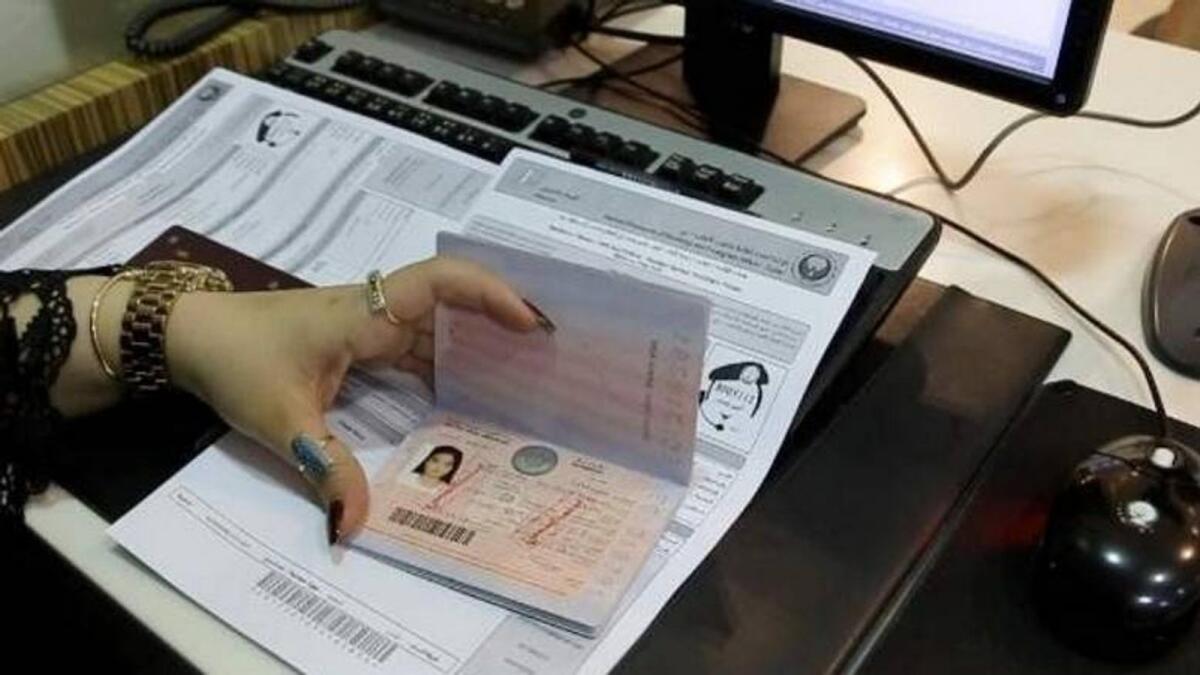
Under the new agreement, Nigerian passport holders must first obtain a Document Verification Number (DVN) before they can apply for a UAE visa. This requirement is part of the updated conditions set by the UAE to ensure all necessary documents are digitally verified and authenticated prior to visa issuance.

However, individuals under the age of 13 are exempt from needing a DVN for their visa applications.

The process for obtaining a DVN and applying for a UAE visa involves several steps. First, Nigerian passport holders must visit the Document Verification Hub and complete the online application form accurately to initiate the DVN process. They are then required to upload necessary documents, including identification documents and travel history, for verification.

Once the documents are submitted, the UAE government will review them, and if approved, the applicant will receive their DVN within five business days. Finally, the obtained DVN can be used to proceed with the UAE visa application.

The lifting of the visa ban marks the end of a restrictive period that began in October 2022, when UAE immigration authorities imposed a visa ban on Nigerian passport holders without providing any reasons for the decision. This ban significantly impacted travel and diplomatic relations between the two countries, causing frustration and inconvenience for Nigerian travelers and businesses.

In response to the visa ban, President Bola Tinubu undertook a working visit to the UAE in the fourth quarter of 2023. His agenda included resolving the visa restrictions for Nigerians and addressing the suspension of Emirates Airlines flights to Nigeria.

During his visit, President Tinubu engaged in discussions with UAE President Mohamed bin Zayed Al Nahyan, leading to an agreement to lift the visa ban on Nigerian travelers.

Following this high-level meeting, Emirates Airlines announced on May 16, 2024, that it would resume operations in Nigeria on October 1, 2024, ending a two-year suspension. This announcement was a significant step towards normalizing relations between the two countries.

However, the delay in officially lifting the visa ban led to considerable public discourse in Nigeria. Government authorities consistently reassured the public that the UAE would soon announce the date for lifting the ban.

In June 2024, the Federal Minister of Aviation and Aerospace Development, Festus Keyamo, confirmed that the UAE government would soon reveal the date for lifting the visa ban. Minister Keyamo explained that although President Tinubu and UAE President Mohamed bin Zayed Al Nahyan had agreed to lift the ban during Tinubu’s September 2023 visit, additional processes were required before implementation.

The lifting of the visa ban and the resumption of Emirates Airlines operations are expected to usher in a new chapter of positive developments in the bilateral relations between Nigeria and the UAE.

The Lifting Came with An Ish

While the lifting has made it possible for Nigerians to once again, travel to the UAE, it has come with a requirement that Nigerians find absurd. The mandatory verification process on the DVN hub requires a non-refundable fee of N688,000, which includes N640,000 for the document verification fee and N48,000 for the 7.5% Value Added Tax.

Nigerians believe the UAE may have nothing to do with the verification fee, and if they do, it is a ploy to keep as many Nigerians as possible away. There is unconfirmed report that the DVN hub is run by a Canadian IT contractor, who many believe may have been contracted by the Nigerian government.

The idea they say, could be to use the opportunity to generate revenue for the government.
Kaspersky Lab to Shut Down U.S. Operations Following Sanctions by Biden Administration

0

Kaspersky Lab, a prominent Russian cybersecurity company and antivirus software provider, announced that it will begin shutting down its operations in the United States starting on July 20, 2024.

This decision follows a series of stringent sanctions imposed by the U.S. government, reflecting heightened tensions and regulatory actions against companies perceived as national security risks.

In an official statement to BleepingComputer, Kaspersky Lab confirmed its decision to shut down and the consequent layoff of its U.S.-based employees. Independent cybersecurity journalist Kim Zetter noted that this move would affect fewer than 50 employees in the United States.

The closure is directly linked to sanctions imposed by the U.S. Treasury Department’s Office of Foreign Assets Control (OFAC), which targeted twelve Kaspersky Lab executives on June 21, 2024. These sanctions froze the executives’ U.S. assets and barred their access until the sanctions are lifted.

Additionally, the U.S. Department of Commerce designated AO Kaspersky Lab, OOO Kaspersky Group (Russia), and Kaspersky Labs Limited (United Kingdom) to its Entity List. This designation effectively prohibits any U.S. business from engaging in transactions with these entities.

“Russia has shown it has the capacity – and even more than that, the intent – to exploit Russian companies like Kaspersky to collect and weaponize the personal information of Americans,” Commerce Secretary Gina Raimondo stated in June.

The prohibition, which takes effect on July 20, will prevent the sale of Kaspersky software to new customers in the US.

The Bureau of Industry & Security (BIS) stated that the decision followed a comprehensive investigation which concluded that Kaspersky’s continued operations in the United States posed a national security risk. The BIS emphasized the potential for the Russian government to influence or direct Kaspersky’s operations, which could not be mitigated through measures short of a total prohibition.

“Today’s Final Determination and Entity Listing are the result of a lengthy and thorough investigation, which found that the company’s continued operations in the United States presented a national security risk—due to the Russian Government’s offensive cyber capabilities and capacity to influence or direct Kaspersky’s operations—that could not be addressed through mitigation measures short of a total prohibition,” stated the Bureau of Industry & Security.

Following these regulatory actions, the Department of Commerce’s BIS banned Kaspersky from selling its software and delivering antivirus updates in the U.S., effective September 29, 2024. This ban underscores the severe cybersecurity risks that U.S. authorities associate with the continued use of Kaspersky products and services.

In response to these escalating restrictions, Kaspersky announced its decision to shut down its U.S. operations. The company said that the Biden administration’s actions had rendered its business in the United States “no longer viable.”

A Kaspersky spokesperson elaborated on this in a statement to BleepingComputer saying: “Starting from July 20, 2024, Kaspersky will gradually wind down its U.S. operations and eliminate U.S.-based positions.

“The decision and process follow the Final Determination by the U.S. Department of Commerce, prohibiting the sales and distribution of Kaspersky products in the U.S. The company has carefully examined and evaluated the impact of the U.S. legal requirements and made this sad and difficult decision as business opportunities in the country are no longer viable.”

The Implications for the U.S. Market and Kaspersky

The U.S. government’s firm stance against Kaspersky Lab reflects broader shifting geopolitical tension involving China and Russia. The sanctions and subsequent shutdown of Kaspersky’s U.S. operations highlight the increasing scrutiny and regulatory measures the U.S. is willing to implement against companies from nations it deems hostile.

This approach is indicative of a larger strategy to protect national security by limiting the influence and operational capacity of foreign entities that could potentially compromise American infrastructure and data.

By targeting Kaspersky, the U.S. is sending a clear message that it will take decisive actions against companies with ties to adversarial governments, particularly in the tech and cybersecurity sectors. This stance has intensified since the enactment of the CHIPS and Science Act, augmented by “Guard Rails” designed to protect American tech capacity.

However, the move could lead to heightened tensions and a further decoupling of technology ecosystems between the U.S. and countries like Russia and China. The implications for other companies from these nations are significant, as they may face similar scrutiny and restrictions, affecting their global operations and market access.

Against this backdrop, Kaspersky Lab, once a leading name in the industry, will now have to contend with the challenges of losing a major market. This could affect the company’s revenue streams, research and development capabilities, and overall competitive standing in the global cybersecurity market.

Moreover, U.S. consumers and businesses that relied on Kaspersky’s products will need to seek alternative solutions, potentially leading to disruptions and increased costs as they transition to new cybersecurity providers.

Kaspersky said “the primary impact of these measures will be the benefit they provide to cyber crime,” adding that “international cooperation between cyber security experts is crucial in the fight against malware, and yet this will restrict those efforts.”

Nigeria’s GMO Foods Debate And Why Our Experts Should Lead It

0

Good People, it is science and we can all learn about GMO foods. I decided to write on GMO foods to deepen the debate. My position remains that what you are banning is already a practice in Nigeria.

Here is the deal: if you can get an interview with the Director of IITA Ibadan to speak on the records, on Nigeria’s progress on GMO, I will cover your travel to Ibadan, from any part of Nigeria, for that interview. IITA is the world’s finest institution on tropical foods. I will also cover another interview with the head of National Root Crops Research Institute (NRCRI). Specifically, the interview should focus on GMO cassava and yams in Nigeria.

I am just an engineer and know nothing about agriculture. Yet, I do not want to rely on commoners like me to make important scientific decisions for the nation. If we poison science in Nigeria, we destroy the future. We can decide not to pursue GMO but it must be done from the angle of thought-leadership. Nigeria is already a GMO nation; click here .

Public Notice of IITA Cassava Confined Field Trial Application

“In accordance with the National Biosafety Management Agency Act 2015 (as amended), requiring public display of any biosafety application, for permit to intentionally release genetically modified organisms (GMOs), for comments, the National Biosafety Management Agency (NBMA) hereby announces a twenty-one (21) day public notice on the display of an application dossier by International Institute of Tropical Agriculture, Ibadan, Oyo State for the Confined field trial of cassava Genetically Modified to increase storage root yield. The display, with effect from 3rd September 2021 to 25th September 2021, is to enable the public to make input that would facilitate informed decision on the application.”

NBMA possibly approved this and IITA possibly did what it had to do. In your interview, ask the experts the results. As I wrote, this GMO thing has been around, and not just an American wonder which just came!

Let us debate with civility and not use “BAN” as a strategy! This is not to say that I support or not support GMO; I just want to defend the scientific process.

What is Going on with the GMO Food Debate in Nigeria?

COPIED Act: US Senate Introduces Bill to Regulate AI

0

The AI boom has been anything but uncontroversial, with copyright lawsuits popping up everywhere. It has also elicited concerns from experts over its rapid growth and use to spread disinformation. Congress has finally stepped in to create a legal definition and framework addressing these concerns.

The US Senate just introduced new legislation called the “Content Origin Protection and Integrity from Edited and Deepfaked Media Act” (COPIED Act). The cringeworthy mouthful of a bill looks to outlaw the unethical use of AI-generated content and deepfake technology. It also aims to regulate the use of copyrighted material in training machine learning models.

Proposed and sponsored by Democrats Maria Cantwell of Washington and Martin Heinrich of New Mexico, along with Republican Marsha Blackburn of Tennessee, the legislation aims to establish enforceable transparency standards in AI development. The senators intend to task the National Institutes of Standards and Technology with developing sensible transparency guidelines should the bill pass.

“The bipartisan COPIED Act, I introduced with Senator Blackburn and Senator Heinrich, will provide much-needed transparency around AI-generated content,” said Senator Cantwell.

The legislation also wants to curb unauthorized data use in training models. Training data acquisition currently lies in a legal gray area. Over the last several years, we have seen arguments and lawsuits regarding the legality of scraping public-facing online information. Clearview AI is likely the biggest abuser of this training method, but it’s not alone. Others, including OpenAI, Microsoft, and Google, have struggled to toe an infinitely fine line between legal and ethical when it comes to training their systems on copyrighted material.

“Artificial intelligence has given bad actors the ability to create deepfakes of every individual, including those in the creative community, to imitate their likeness without their consent and profit off of counterfeit content,” said Senator Blackburn. “The COPIED Act takes an important step to better defend common targets like artists and performers against deepfakes and other inauthentic content.”

The senators feel that clarifying and defining what is okay and what is not regarding AI development is vital in protecting citizens, artists, and public figures from the harm that misuse of the technology could cause, particularly in creating deepfakes. Deepfake porn has been an issue for years now, and the tech has only gotten better. It is telling that Congress has ignored the issue until now. The proposal comes only months after someone used voice-cloning tech to impersonate President Biden, telling people not to vote.

“Deepfakes are a real threat to our democracy and to Americans’ safety and well-being,” said Senator Heinrich. “I’m proud to support Senator Cantwell’s COPIED Act that will provide the technical tools needed to help crack down on harmful and deceptive AI-generated content and better protect professional journalists and artists from having their content used by AI systems without their consent.”

The usual suspects have spoken out in favor of the bill. The Nashville Songwriters Association International, SAG-AFTRA, the National Music Publishers’ Association, RIAA, and several broadcast and newspaper organizations have issued statements applauding the effort.

Meanwhile, Google, Microsoft, OpenAI, and other AI purveyors have remained oddly silent, alluding to the notion that they don’t really want a regulation even though they have been calling for one.

Washington Post reported that a group of whistleblowers at OpenAI have filed a complaint with the Securities and Exchange Commission arguing that the company blocked its staff from warning regulators about the risks its artificial intelligence technology could pose to humanity.

In a seven-page letter obtained by The Washington Post, whistleblowers said the company gave its employees restrictive employment, severance, and nondisclosure agreements. This development signals that AI companies are not ready to address the tech’s antitrust concerns.

As AI technology companies emerge and change, there have been concerns that they are doing so for the wrong reasons. Just days ago, Microsoft relinquished its seat on the board of OpenAI, saying its participation is no longer needed as there are concerns about antitrust violations.

AI regulation has been a big subject that the US has been reluctant to address. While Europe has taken steps to address concerns emanating from the burgeoning technology with the EU AI Act, the US has been dragging its feet. The COPIED Act may be the comprehensive answer to the calls for AI regulation in the US.

Must Buy Altcoins In 2024: Crypto Tokens To Have In Your Portfolio With Huge Earning Potential

0

The dawn of 2024 saw Bitcoin and the whole crypto token market rise to new highs. Monumental milestones like introducing crypto-based ETFs and halving Bitcoin have had analysts predict the beginning of a new bull cycle. Currently, there’s a brief pause in the crypto market, an optimal moment to “buy the dip” and add promising assets to your portfolio.

For weeks, the new crypto GambleFi protocol, Rollblock, has stood out in the top altcoins to buy now. Its ongoing 7-figure presale is in the third stage and the price has gone over 60% for early investors. So, buckle up as we delve into the high-potential best altcoins to add to your portfolio this year.

The Sandbox: Best Altcoin to Unlock the Metaverse From Pixels to Profit

The Sandbox is an Ethereum-based vibrant metaverse and extensive gaming platform that aims to bring blockchain technology to gaming. Since its launch, The Sandbox has remained at the epicenter of decentralized digital representation and so has its native token, SAND.

Although it has lost 26% Year to Date, the renewed interest in the metaverse and digital representation makes SAND the best altcoin investment. Besides, SAND has been gaining momentum on the price chart, with a 17% uptick to $0.33 in the past seven days. Its market valuation sits at $750M as one of the top 90 cryptocurrencies by market cap.

Floki Inu: More than the People’s Crypto

Floki Inu entered the crypto sphere with a special narrative around meme coins’ frenzy as the “People’s Crypto.” Floki sets itself apart with its innovative addition of value-driven utility with meme culture. Like its peers, Floki’s vision was to build an inclusive and decentralized ecosystem for meme and crypto enthusiasts.

What many found incredibly alluring about Floki is its strategic roadmap, which highlights various value-driven utilities around its satirical beginnings. This includes partnerships, NFTs, the Pokemon-inspired Valhalla gaming metaverse, new crypto DeFi products and many more. Despite crypto market volatility, Floki’s 14% uprise in the past seven days shows it’s the best altcoin to weather the bearish storm.

Rollblock: New Crypto GambleFi Protocol Takes Over ICO With Unprecedented Gains

History is repeating itself! The Sandbox set out to redefine virtual reality, and Floki’s rise to greatness shows that innovation is key. The global iGaming market is due for a revolution from its unscrupulous, house-centered past, and Rollblock is making this a reality.

Investors are already flocking to Rollblock’s ingenious narrative, and presale demand has gone through the roof. Essentially, Rollblock is a new crypto and blockchain-powered community-backed GambleFi protocol. The platform combines the best features of traditional casinos with blockchain technology’s ingenuity.

Central to Rollblock’s offering is its RBLK token, which provides access to its inclusive opportunities. The best part is that users can easily get started with their crypto wallets or email and forget intrusive KYC processes. It’s a no-brainer that Rollblock will dominate the iGaming market’s $504 billion market as The Sandbox and Floki Inu did.

Its attractiveness extends to its passive earning streams, including hold-to-earn and revenue-sharing programs. Users can also stake their tokens to earn yield rewards. All these have pushed its presale valuation past an easy $1.1M in ongoing presale while only in stage three.

Since the presale started, the Rollblock token has gone up by an astounding 60%, a show of growing interest in its vision but that’s just the tip! The new crypto is predicted to go an incredible 880%, followed by a 100x surge at launch. The presale price is at an enticingly low $0.0158 but won’t remain there for long. Over 86% of stage three allocation is sold off in record time, so don’t hold back.


Discover the Exciting Opportunities of the Rollblock (RBLK) Presale Today!

Website: https://presale.rollblock.io/

Socials: https://linktr.ee/rollblockcasino