DD
MM
YYYY

PAGES

DD
MM
YYYY

spot_img

PAGES

Home Blog Page 3101

By 2030, Earn $600 Daily with BlockDAG’s X1 Mining App | Cosmos Price Increase & Solana ETF Surge

0

As Cosmos (ATOM) shows bullish momentum, investors are closely monitoring its price to optimize their investments. Meanwhile, excitement over the Solana spot ETF has surged, further boosting Solana’s value.

However, BlockDAG (BDAG) stands out as the best cryptocurrency for the future, thanks to its X1 Miner App. Now live on Apple’s App Store, it features easy onboarding. Users can register within seconds and start mining, potentially earning $600 daily by 2030 when BlockDAG reaches $30, as predicted by analysts. Designed for user experience, BlockDAG is a top choice for digital mining.

Cosmos Price Boosted by New Valence Protocol

Cosmos Hub (ATOM), a leading layer-zero blockchain, has launched the Valence protocol to boost its price. With a valuation of approximately $2.56 billion, Cosmos Hub strengthens its position in the cryptocurrency landscape. The Valence protocol, developed by Timewave, enhances the interchain ecosystem.

Valence works with Cosmos’ Inter-Blockchain Communication (IBC) project, facilitating economic relationships between crypto-native organizations. Its launch promotes mass adoption of the Cosmos ecosystem. Despite recent price declines, Valence is expected to drive growth and adoption.

Surge in Activity Amid Solana Spot ETF Excitement

Solana (SOL) has experienced increased on-chain activity due to excitement over Solana spot ETFs. VanEck and 21Shares have filed for a Solana spot ETF, igniting investor interest and driving Solana’s price up from $124 to $153.

ETFSwap (ETFS) has also emerged as a promising investment opportunity amid the ETF buzz. The growing interest in Solana spot ETFs is expected to push prices higher, with investors eagerly watching for further gains.

BlockDAG’s X1 Miner Boasts Easy Onboarding & Big Earnings

The X1 Miner App is revolutionizing cryptocurrency mining within the BlockDAG ecosystem. The app’s quick registration process allows users to sign up with their phone numbers, granting instant access to mining functionalities. This seamless onboarding eliminates complex setups, enabling anyone to start mining immediately.

By pressing the “Activate BlockDAG X1” button, users can earn 0.83 BDAG coins per hour without draining device resources. Users can mine up to 20 BDAG coins daily, with potential increases through a referral system. Daily engagement prepares users for the transition from Devnet to Mainnet, where mined BDAG coins will become tradable assets, ensuring a secure and optimized mining experience.

In the current Batch 20, BlockDAG has shown impressive growth, with a 1400% increase since the initial batch. It has raised $58.3 million from the sales of 12.2 billion coins and 9,000+ mining rigs. Analysts predict BDAG coins will reach $30 by 2030.

With this price prediction, the X1 Miner App could potentially earn users up to $600 daily by mining 20 BDAG coins, translating to easy and significant profits. The app simplifies entry into cryptocurrency mining while promising substantial future earnings. Its user-centric design and community-driven rewards system make it a key player in digital mining.

Final Say

While Cosmos price attracts attention and Solana spot ETFs excite investors, BlockDAG stands out for mining and investment. The X1 Miner App’s easy onboarding and significant earning potential make it a standout choice. With potential daily earnings of up to $600 when BDAG hits $30 by 2030, BlockDAG offers unparalleled opportunities for both novice and seasoned miners. As the crypto market evolves, BlockDAG’s growth and innovation ensure it remains a leading player in digital mining.


Join BlockDAG Presale Now:

Website: https://blockdag.network

Presale: https://purchase.blockdag.network

Telegram: https://t.me/blockDAGnetworkOfficial

Discord: https://discord.gg/Q7BxghMVyu

 

Rising Food Prices Pushes Nigeria’s Inflation to 34.19% in June 2024

0

Nigeria’s inflation has defied all efforts by the government, rising once again in June to a record 34.19%, according to the latest report from the Nigerian Bureau of Statistics (NBS).

The headline inflation was up from 33.95% in May 2024, marking an increase of 0.24 percentage points within a month and a substantial year-on-year jump of 11.40 percentage points from the 22.79% recorded in June 2023.

The report highlighted that on a month-on-month basis, the headline inflation rate in June 2024 was 2.31%, a 0.17 percentage point rise from the 2.14% recorded in May 2024.

“The percentage change in the average Consumer Price Index (CPI) for the twelve months ending June 2024 over the previous twelve-month period was 30.00%, showing an 8.45 percentage point increase compared to the 21.54% recorded in June 2023,” it said.

Urban areas are feeling the brunt of the inflationary pressures more acutely. The urban inflation rate in June 2024 was 36.55% on a year-on-year basis, 12.23 percentage points higher than the 24.33% recorded in June 2023. On a month-on-month basis, urban inflation rose to 2.46% in June 2024, up from 2.35% in May 2024.

The NBS said, “The twelve-month average for urban inflation was 32.08%, reflecting a 9.70 percentage point increase from the previous year.”

In contrast, rural areas, while still experiencing significant inflation, have slightly lower rates. The rural inflation rate in June 2024 was 32.09% year-on-year, up by 10.71 percentage points from the 21.37% recorded in June 2023.

“On a month-on-month basis, rural inflation increased to 2.17% in June 2024 from 1.94% in May 2024,” the report said. It added that “the twelve-month average for rural inflation was 28.15%, a rise of 7.39 percentage points from June 2023.”

Food inflation remains the most concerning aspect of Nigeria’s economic woes. The food inflation rate in June 2024 was a staggering 40.87% year-on-year, up by 15.62 percentage points from 25.25% in June 2023.

The increase in food prices was driven by rising costs of essential items such as millet, garri, guinea corn, yams, water yams, coco yams, groundnut oil, palm oil, and various fish products.

On a month-on-month basis, the food inflation rate was 2.55% in June 2024, a 0.26 percentage point rise from 2.28% in May 2024.

The NBS attributed this increase primarily to higher prices for groundnut oil, palm oil, water yams, coco yams, cassava, tobacco, fresh catfish, croaker, mudfish, and snails.

Economists have noted that Nigeria’s rising food inflation is a direct consequence of insufficient local food production, with the nation restricting food importation.

The core inflation rate, which excludes the prices of volatile agricultural produce and energy, stood at 27.40% year-on-year in June 2024, up by 7.34 percentage points from 20.06% in June 2023.

“The highest increases were observed in housing rentals, intercity bus journeys, motorcycle journeys, accommodation services, medical consultation fees, laboratory services, X-ray photography, and pharmaceutical products,” the report said.

On a month-on-month basis, the core inflation rate was 2.06% in June 2024, slightly up from 2.01% in May 2024. The average twelve-month annual inflation rate was 24.06% for the twelve months ending June 2024, up by 5.59 percentage points from 18.47% in June 2023.

The NBS report also highlighted significant regional variations in inflation rates. Year-on-year, the highest inflation rates were recorded in Bauchi (43.95%), Kogi (39.91%), and Oyo (39.15%), while Borno (25.90%), Benue (27.52%), and Katsina (29.21%) had the slowest rise. Month-on-month, the highest increases were in Yobe (3.79%), Abuja (3.45%), and Ondo (3.38%), while Nasarawa (0.71%), Osun (1.19%), and Kano (1.27%) recorded the slowest rise.

In terms of food inflation, the highest year-on-year rates were observed in Edo (47.34%), Kogi (46.37%), and Cross River (45.28%), while Nasarawa (34.31%), Bauchi (34.78%), and Adamawa (35.96%) had the slowest rise. Month-on-month, the highest increases were in Yobe (4.75%), Adamawa (4.74%), and Taraba (4.12%), while Nasarawa (0.14%), Kano (0.96%), and Lagos (1.25%) recorded the slowest rise.

In response to the worsening food crisis, the government has been compelled to reverse its earlier decision not to import food. Last week, the federal government announced plans to allow duty-free importation of food items such as maize, rice paddy, and wheat for 150 days to stabilize market prices.

This move, while necessary to address the immediate food shortages, has sparked controversy among local farmers and agricultural associations, who fear it will undermine domestic production efforts.

However, economists believe that the persistent increase in food prices is a clear indicator of the challenges the country faces in local food production. Many note that the Nigerian agricultural sector is struggling to keep up with demand, and this has forced prices to skyrocket.

With headline inflation at 34.19% and food inflation at 40.87%, Nigeria faces a critical challenge in balancing immediate food needs with long-term agricultural sustainability.

Stakeholders in the agricultural sector believe that while the government’s recent decision to allow food imports may offer temporary relief, it underscores the urgent need for a more robust and sustainable approach to food production and economic stability.

They note that investing in agriculture, supporting farmers with better access to resources, and implementing policies that promote self-sufficiency are essential steps to ensure long-term food security and economic stability in Nigeria.

Bitcoin Resumes Upside Momentum, Rallies Above $63,300 Amid Bullish Sentiments

0

The price of Bitcoin has resumed its upside momentum, after it rallied above the $63,000 price, amid bullish market sentiments.

Following its resumption to the upside after trading its lowest at $56,000 price the previous week, analysts predict a bullish rally. On-chain analysts and capital market experts predict the rally to continue for longer periods as Whales, institutional investors, and retail investors have started to buy BTC again.

Also, following the assassination attempt on the former US President and the current Republican presidential candidate Donald Trump, the price of Bitcoin began its rally immediately after the incident. The broader market rally saw a significant jump in prices of ETH, SOL, BNB, and TON.

“Over the weekend, Bitcoin surged over $62,000 as Donald Trump’s chances of reclaiming the White House in November increased, pushing BTC’s price up,” said Edul Patel, CEO of Mudrex.

Notably, over 38,900 crypto traders were liquidated out of $113 million leveraged positions out of which over $90 million were short positions. Bitcoin alone accounted for $47 million in liquidation that occurred in the last 24 hours, according to Coinglass data.

Matrixport predicts BTC buying activity will sustain for a longer period, making it less reliant on macroeconomic events. The forecast came in response to more than $1 billion in inflow into spot Bitcoin ETF in the U.S. in a week. The ETF inflows were closely linked to cooling inflation and slowing labor market in the United States.

It is however worth noting that Bitcoin didn’t climb alone. It pushed up other cryptocurrencies as well, including some Trump-themed tokens that led the surge in PolitiFi meme coins Sunday night.

Super Trump (SSTRUMP) surged by 11.5% in the last 24 hours after lodging a 34.5% rally throughout the past week. MAGA VP (SMVP) climbed by 3.8%, MAGA Coin BSC (SMAGA) was up by 11.2%, and MAGA PEPE (SMAGAPEPE) increased by over 3%. Trump Inu (STINU) also surged by 6%, and even the controversial TrumpCoin ($DIT) saw a spike of 5.5% on the last day.

Major meme coins also saw a significant increase in their prices over the weekend. The largest meme coin by the market cap Dogecoin was up over 3% in the last 24 hours and is currently trading at $0.1176. Meme coins PEPE and Dofwifhat saw the most gains in the last 24 hours with both trading 6% higher.

After a turbulent start to July, the overall sentiment surrounding the broader crypto market has flipped bullish in the last 72 hours. After consecutive macroeconomic indices published in the latest US Non-Farm Jobs and Consumer Price Index (CPI) data, resurgent bull traders switched towards an optimistic outlook for an imminent Fed rate cut. 

Michael Saylor, co-founder of MicroStrategy business intelligence giant, which has become a leader in accumulating Bitcoin over the past four years, making it part of its development strategy, has addressed the crypto community with a bullish BTC tweet.

He recently tweeted “Don’t miss the flight”. Saylor has been a strong advocate for Bitcoin’s bullish movement, urging traders to acquire more BTC.

Fuelled by positive headwinds from anticipated US Fed rate, and crypto-friendly candidate Donald Trump’s lead in the US 2024 Presidential Elections race, Bitcoin has emerged as one of the biggest gainers amid the current bullish market phase. In conclusion, Bitcoin’s recent price action and technical indicators point towards a bullish outlook with a viable target of $65,000.

The Nigeria’s Malthusian Challenge As It Plans to Import Food

0

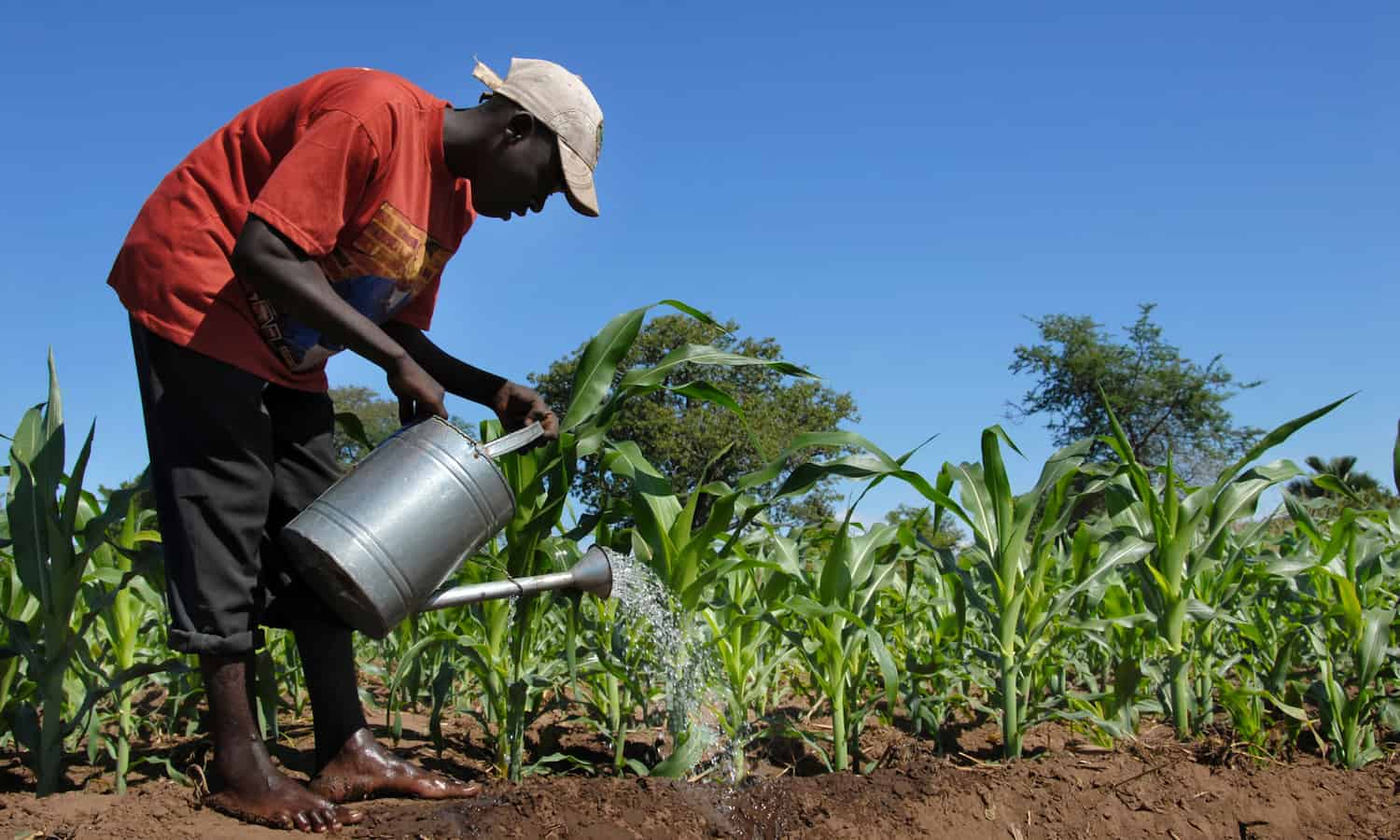
“Nigeria cannot rely on the importation of food to stabilize prices. Nigeria should be producing more food to stabilize food prices while creating jobs and reducing foreign exchange spending, which will further help stabilize the Naira,” – Dr. Akinwunmi Adesina, President of the African Development Bank

This is simply unfortunate considering the enormous resources the Buhari administration pumped into Nigerian agriculture.  If those funds could not turn things around, we are in real trouble.

Personally, I have expected that with all the efforts of the last government, on agriculture, that we could check agriculture DONE. But here, now we are to import to eat, it seems we might have funded briefcase farmers! Let me wish Nigeria good luck on this Malthusian challenge where the population rate is growing faster than food availability.

Dr. Akinwunmi Adesina, President of the African Development Bank (AfDB), has expressed deep concerns about Nigeria’s move to import duty-free food, labeling it as “depressing” and warning against its potential long-term consequences.

Nigeria is grappling with a severe food crisis compounded by inflation rates soaring to 41%. This dire situation has sparked intense debate over the federal government’s policy to import food to stabilize prices.

Speaking at the Council of Anglican Provinces of Africa retreat in Abuja, Dr. Adesina noted that relying on food imports is not a sustainable solution for Nigeria’s food security issues.

Nigeria cannot import its way out of food insecurity – AfDB President

Nigeria cannot import its way out of food insecurity – AfDB President

0

Dr. Akinwunmi Adesina, President of the African Development Bank (AfDB), has expressed deep concerns about Nigeria’s move to import duty-free food, labeling it as “depressing” and warning against its potential long-term consequences.

Nigeria is grappling with a severe food crisis compounded by inflation rates soaring to 41%. This dire situation has sparked intense debate over the federal government’s policy to import food to stabilize prices.

Speaking at the Council of Anglican Provinces of Africa retreat in Abuja, Dr. Adesina noted that relying on food imports is not a sustainable solution for Nigeria’s food security issues.

“Nigeria cannot rely on the importation of food to stabilize prices. Nigeria should be producing more food to stabilize food prices while creating jobs and reducing foreign exchange spending, which will further help stabilize the Naira,” Adesina stated.

He further stressed, “Nigeria cannot import its way out of food insecurity. Nigeria must not be turned into a food import-dependent nation.”

Dr. Adesina highlighted the vast potential of Africa’s food system, pointing out that Africa holds 65% of the world’s remaining uncultivated arable land. This land is crucial for feeding an estimated 9.5 billion people by 2050.

“It is clear therefore that unless we transform agriculture, Africa cannot eliminate poverty,” Adesina insisted.

He noted that the food and agriculture market in Africa is projected to reach $1 trillion by 2030, underlining the importance of leveraging agricultural resources to transform rural areas and diversify economies.

Last week, Nigeria’s Ministry of Agriculture announced plans to allow duty-free importation of food items such as maize, rice paddy, and wheat for 150 days. This measure aims to stabilize food prices in the market but contradicts President Tinubu’s earlier stance that Nigeria should produce its own food rather than rely on imports.

However, this policy shift has drawn criticism, particularly from local farmers’ associations.

The President of the All Farmers Association of Nigeria (AFAN) warned that food importation would erode the gains made in rice, maize, and wheat production. Similarly, the Rice Farmers Association of Nigeria (RIFAN) urged the federal government to support local rice farmers instead of resorting to imports.

The Escalating Food Crisis

The Nigerian food crisis has defied all efforts by the federal government, resulting in an unaffordable cost of food. Food prices in Nigeria have skyrocketed over the past year, with food inflation just over 40%, pushing millions into poverty and hunger.

An estimated 32 million people are expected to face severe hunger and malnutrition this year. The price of a 50kg bag of rice has surged significantly, reaching over N90,000. Year-on-year, the price of 1kg of loose rice has increased by almost 170%, according to the National Bureau of Statistics (NBS) Food Price Watch.

The government’s efforts, such as the closure of borders by the past administration helped increase local production, but it has not been enough to meet the demand.

The Deputy Chairman of AFAN, Lagos chapter, Mr. Shakin Agbayewa, highlighted that local production can only meet 57% of the 6.5 million metric tons of rice consumed annually in Nigeria.

“In Nigeria today, we consume close to 6.5 to seven million metric tons of rice on a yearly basis. Unfortunately, our local production is about 57 per cent, thanks to the closure of the border by the past administration. We still have a shortfall of about 43 percent,” he said.

As part of its food import plan, the government will move imported rice paddy to idle rice mills across the nation to increase supply and reduce prices. However, this move has sparked further debate about the best approach to achieving food security.

Over the years, the government’s initiative to restrict food import has failed to boost local food production due to multifaceted challenges ranging from insecurity to lack of sustainable farming techniques.

While Dr. Adesina focuses on long-term agricultural development, some economists who weighed in on the issue, warned that given the current hunger crisis emanating from insufficient local food produce, the government must allow food importation in the short term.

“He is making a policy statement but he called the food crisis ‘temporary’. The food crisis is beyond temporary, I dare say it’s now a national security issue. I don’t want imports, same way I don’t want to take an injection in my bum, but it is what it is,” economist Kalu Aja stated.