DD
MM
YYYY

PAGES

DD
MM
YYYY

spot_img

PAGES

Home Blog Page 3123

ECOWAS Tasks Senegal’s President with Persuading Burkina Faso, Mali and Niger to Return to the Bloc

0

In a fresh move to prevent further fragmentation within the Economic Community of West African States (ECOWAS), Senegalese President Bassirou Diomaye Faye has been appointed as the envoy to engage with the military leaders of Mali, Niger, and Burkina Faso.

This decision was made during the bloc’s summit held in Abuja, Nigeria, on Sunday.

The move follows the formalization of the Alliance of Sahel States (AES) during the weekend. The leaders of Mali, Niger, and Burkina Faso have formalized their cooperation through a treaty signed in Niamey, Niger’s capital. This new confederation is aimed at strengthening political and economic ties among these countries, which have experienced military coups and significant political instability.

After formalizing their alliance on Saturday, the junta leaders from the three nations firmly rejected the notion of rejoining ECOWAS. This decision is seen as a significant setback for the regional bloc, which has been striving to restore democratic governance and curb the spread of violence in West Africa.

The leaders accused ECOWAS of failing its mandate and being influenced by non-African powers. They emphasized their commitment to consolidating their union under the AES, which they view as a more sovereign and effective regional organization.

Niger’s military leader, General Abdourahmane Tchiani, was particularly vocal, describing ECOWAS as a threat to their states. He advocated for the AES as a people’s alliance that operates independently of foreign influences.

“We are going to create an AES of the peoples, instead of an ECOWAS whose directives and instructions are dictated to it by powers that are foreign to Africa,” Tchiani stated.

He called for the AES to be a sovereign community that stands as a credible alternative to existing regional groupings.

Compounded by ECOWAS Sanctions and Threats of Military Action

The situation escalated when ECOWAS decided to impose sanctions on Mali, Niger, and Burkina Faso following their respective military coups. These sanctions, which included economic restrictions and travel bans, aimed to pressure the junta leaders into restoring civilian governance.

However, rather than yielding positive results, the sanctions have deepened the rift between the military regimes and the regional bloc. ECOWAS even went as far as to threaten military action against the three countries if they did not comply with demands to return to democratic rule, further straining relations.

The withdrawal of these three countries from ECOWAS has deepened the divisions within the organization. ECOWAS, recognized as the primary political authority among its 15 member states, now faces unprecedented challenges. The decisions made by Mali, Niger, and Burkina Faso highlight a critical juncture for the bloc, as it attempts to navigate these internal fractures.

The Role of President Faye

President Bassirou Diomaye Faye’s recent election is believed to make him a unique and strategic choice for this delicate negotiation. Unlike other ECOWAS leaders, he was not involved in the imposition of sanctions or the threats of military intervention, positioning him as a party, with whom the military leaders hold no grudge. It is believed that his fresh mandate and lack of direct involvement in the punitive measures against the three nations give him a potential advantage in fostering dialogue and rebuilding trust.

Agreements and Leadership within AES

The leaders of Mali, Niger, and Burkina Faso have signed agreements covering non-aggression in security matters and cooperation in economic, monetary, and social domains. Under the new arrangement, Mali will assume the presidency of the AES for the first year, while Burkina Faso will host the organization’s parliamentary summit.

The tri-country meeting and the formation of the AES occurred just a day before an ECOWAS summit in Nigeria, where regional heads of state are scheduled to convene. The challenge for ECOWAS now lies in addressing the concerns of the departing nations and finding a way to maintain unity and cooperation within the region.

Despite the strategic appointment of President Faye, analysts believe the move is likely to face significant challenges. This is because the junta leaders of Mali, Niger, and Burkina Faso appear resolute in their decision to forge their own path, independent of ECOWAS. Also, their commitment to the AES and the rhetoric from their leaders suggest a strong desire to create a new framework for regional cooperation that is free from what they perceive as external manipulation.

However, Faye’s mission to persuade the military leaders to reconsider their stance on ECOWAS membership will be crucial in determining the future stability and integration of West Africa. Many believe that the outcome of his diplomatic efforts could either pave the way for renewed regional cooperation or cement the schism, leading to a more fragmented and potentially unstable geopolitical landscape in the Sahel region.


CAC Extends Registration Deadline for PoS Operators in Nigeria to September

0
CAC

The Corporate Affairs Commission (CAC) has extended the deadline date for point-of-sale (PoS) operators in Nigeria to September 5, 2024.

This was announced by the commission in a statement signed by its management, announcing a 60-day extension, from the initial deadline date of 7th July 2024.

The CAC disclosed that the extension was to give sufficient time to operators particularly those in remote areas who might have encountered network challenges to register and continue with their businesses.

This new extension comes with a stern warning that operators who fail to meet the new deadline date, will face a penalty and risk losing their business.

The CAC said,

“The Corporate Affairs Commission wishes to notify Fintech Operators also known as Point of Sales (PoS) Operators that the initial deadline of 7th July 2024 given for the registration of sole agents, Super Agents, and Agents has been extended for sixty days beginning from 7th July 2024 to the 5th September 2024.

“This is to give sufficient time to operators particularly those in remote areas who might have encountered network challenges to so register and continue with their businesses. Operators who fail or refuse to register at the end of the extended deadline run the risk of losing such businesses and prosecution for aiding and abetting criminal activities.”

Backstory

Recall that in 2013, the Central Bank of Nigeria (CBN) launched agent banking and point-of-sale systems to increase financial inclusion in the country. 

The financial system which aided in financial inclusion as well as easing financial transactions was however ravaged by fraudulent cases.

This spurred the CBN in January this year, to collaborate with the Association of Mobile Money and Banking Agents of Nigeria (AMMBAN) to create a new feature on PoS terminals to flag fraudulent transactions.

To further mitigate the increased fraud cases, two months ago, the CAC announced that PoS agents of major fintech in Nigeria including OPay, Palmpay, and Moniepoint, among others, have been given a deadline of July 7, 2024, to register their business.

The Registrar-General of the commission Hussaini Magaji, who announced this said this was the agreement with the PoS operators after a meeting in Abuja.

According to him, the registrations align with the legal requirements and the directives of the Central Bank of Nigeria, to safeguard the businesses of fintechs and customers and strengthen the economy. He elaborated on the benefits of registration, emphasizing that it goes beyond taxation to encompass access to loans, legality, and compliance with regulatory requirements.

The action backed by Section 863, Subsection 1 of the Companies and Allied Matters Act, CAMA 2020 as well as the 2013 CBN guidelines on agent banking aims to safeguard businesses and strengthen the economy.

It also came against the backdrop of frequent fraud incidents involving PoS terminals and plans to stop trading in cryptocurrency or any virtual currency by the Central Bank of Nigeria.

It was reported in 2023 that PoS terminals accounted for 26.37 percent of fraud incidents, according to a fraud report by the Nigeria Inter-Bank Settlement System Plc.

Meanwhile, PoS agents have reacted to the order asking them to register with the CAC. While some agents agreed with the CBN, many said it would place more burden on the operators, especially those in rural communities.

High Volatility vs. Low Volatility Slots: Understanding the Differences

0

Slot volatility refers to the frequency at which a slot machine gives a win to a player and the amount won each time. A high variance slot is one that gives a high figure of winning over a long period of time while a low volatility one gives small winning over a short period.  Sites such as vulkan vegas casino offer both options depending on the stakes the user wants to play at.

How to Determine a Slot Volatility

Every slot machine has the capability of having high or low volatility. It could also be medium, medium to high, or medium to low variance. Here are some tips to discover what each machine has:

  • Provided on the machine: some casinos provide this information on their site for the players to see. So you simply click on the information tab against the machine and you can find it
  • Google the specific machine: this is a good way to find the fluctuation however, it is advisable to check several sites just to be certain the information is correct.
  • Test out the machine: before wagering any real money, you play several test rounds on the slot to determine how often and how big a win you get. This will give you an idea of what type of gadget you are working with.
  • Bet amount: most high-variance machines limit the amount you can bet. This is because the win is quite large. It follows that the casino will want to control how much you can bet at a time. The lower ones allow for bigger amounts in line with the low returns per round.
  • Returns received: the high variances ones will allow for jackpots among other big reward systems. Conversely, the lower do not have these features.

Both the fluctuation slots have their attractive qualities. It is up to the wager to determine what type of thrill they seek before playing.

Differences in Variance

Volatility is also referred to as variance and the two terms are often used interchangeably to mean the same thing. As stated, the variance index can differ from one gadget to the other. It is up to the gambler to employ smart gambling techniques to be able to make the most winnings. Some of the main differences include:

  • The amount of winnings: high fluctuations in the slot machine will result in a high amount of money won by the punter. Thus when you wager and come up with a big winning, it is likely that your slot has an increased fluctuation index. On the other hand, should you keep getting small amounts of winning then you are playing on a machine with a reduced fluctuation index.
  • Duration of winning: a slot gadget that results in a win within a short period of time will be a low-volatility one. This is because the time spent between bets is relatively low before you are rewarded. Alternatively, should you play for a long time before getting a win, then the machine will be an increased fluctuating one.

How to Select the Variance Suitable to You as a Player

When placing bets at a punting house, everyone wants to win the most amount they can get away with. Understanding the different types of gadgets available to you will help you maximize the returns on your bankroll. Factors to consider include:

Risk appetite: the elevated variance games are preferable for an experienced punter. This is the type of player who can hold out and endure a period of no wins while knowing a big win is coming. On the other hand, if you have a small risk appetite it is advisable to focus on the low variance slots to enjoy the more frequent wins.

Bankroll size: for the wagers who are willing to bet on a sizable amount of money, then the increased variance slots would be more attractive. While those with a small amount are better suited to play on the low volatility games.

Purpose of playing: professional gamblers play to win big and recoup their bets from the casinos. Hence if you are a professional, you probably have tactics in place on how to maximize returns from your punts. You can therefore comfortably play on an elevated fluctuation gadget and wait out your returns. However, for the casual gambler seeking excitement and entertainment only you should probably focus on the low-level fluctuations just so that you do not risk losing all your money. Furthermore, you are probably playing for entertainment purposes hence hearing the winning chimes go off every so often will be a great motivation for you to continue wagering.

When punting, always make an informed decision to ensure you maximize your bets and get as much winnings from the experience as possible.

Japanese Metaplanet’s Strategic Bitcoin Play

0

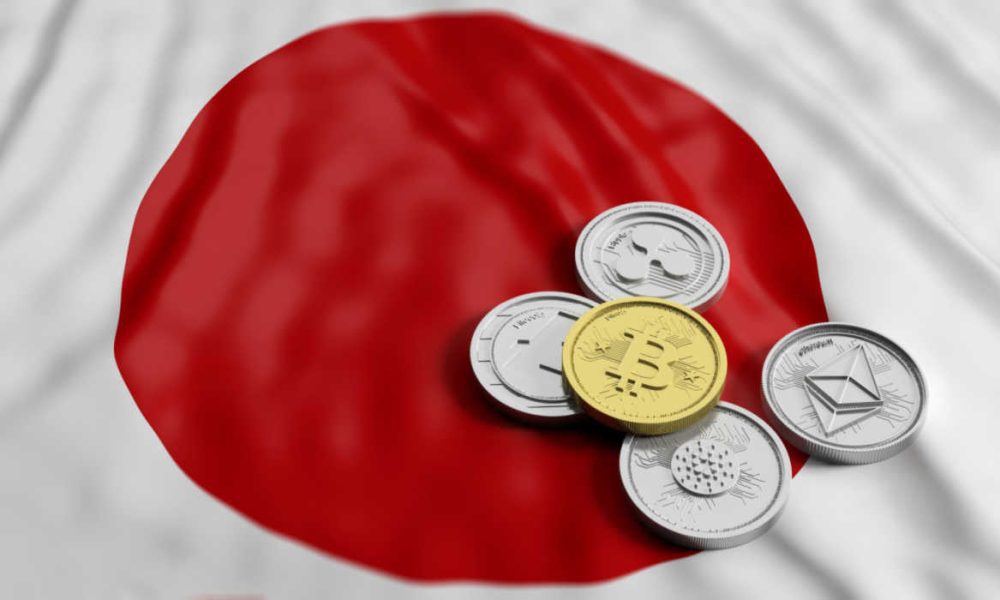
In the dynamic world of cryptocurrency, strategic corporate maneuvers can create ripples across the market. A prime example of this is the bold move by Metaplanet, a Japanese firm that has recently made headlines with its significant investment in Bitcoin. This decision marks a pivotal moment in the integration of cryptocurrency into traditional corporate finance strategies in Japan.

Metaplanet, originally a budget hotel operator known as Red Planet Japan, has pivoted to become a Web3 developer, embracing the potential of blockchain technology. In a striking move, the company has added $6.56 million in Bitcoin to its balance sheet. This decision was driven by a desire to minimize exposure to the Japanese yen, which has been weakened by Japan’s prolonged low-interest-rate environment. The yen’s diminished status as a key global currency has prompted companies like Metaplanet to seek alternative assets like Bitcoin as a hedge against inflation and a tool for macroeconomic resilience.

The company’s strategy mirrors that of MicroStrategy, a Virginia-based software developer that began accumulating Bitcoin in 2020. MicroStrategy’s approach has been to use Bitcoin as an alternative to holding cash, viewing it as a hedge against inflation. Metaplanet’s adoption of Bitcoin follows a similar rationale, aiming to provide long-term capital appreciation for the company and its shareholders.

Metaplanet’s Bitcoin play is not just about diversifying assets; it’s also about seizing the digital market in Japan. By committing an initial ¥1 billion ($7.5 million) to Bitcoin, the company is positioning itself at the forefront of Japan’s digital economy.

This move is particularly significant given the preferential tax structure in Japan for crypto investments, which offers Japanese investors a more favorable environment to engage with cryptocurrencies. This aggressive investment strategy has led to Metaplanet being referred to as “Asia’s MicroStrategy,” highlighting the company’s commitment to integrating Bitcoin into its financial portfolio.

The company’s stock, however, has experienced volatility, with a significant drop following a decrease in Bitcoin prices. Despite this, Metaplanet’s shares remain significantly higher than at the beginning of 2024, indicating a strong market interest in their cryptocurrency strategy.

Metaplanet’s innovative approach to Bitcoin investment not only showcases the potential for digital assets to play a role in corporate finance but also signals a shift in the Japanese corporate landscape towards embracing Web3 technologies and cryptocurrency. As the digital market continues to evolve, Metaplanet’s Bitcoin play could pave the way for other firms to consider cryptocurrency as a viable component of their financial strategies.

The impact of Metaplanet’s investment has been palpable, with the company’s stock price soaring by 90% following the announcement. However, the volatile nature of Bitcoin’s price has also led to fluctuations in Metaplanet’s stock value. Despite these market dynamics, Metaplanet’s aggressive Bitcoin buying has earned it the moniker “Asia’s MicroStrategy,” highlighting its commitment to integrating cryptocurrency into its financial strategy.

Metaplanet’s Bitcoin acquisition is a clear indication of the growing acceptance of cryptocurrencies in corporate Japan. It reflects a broader trend of companies exploring digital assets as part of their treasury management. This strategic play by Metaplanet could pave the way for other Japanese firms to consider cryptocurrency as a viable component of their financial portfolios.

As the landscape of corporate finance continues to evolve, the intersection of traditional business and cryptocurrency will likely become more prevalent. Metaplanet’s Bitcoin play is a testament to the transformative power of digital currencies and their potential to redefine corporate asset management. It will be intriguing to watch how this integration progresses and what it means for the future of corporate investments in Japan and beyond.

The Umpire of Crypto Taxation is Booming

0

The landscape of cryptocurrency taxation is undergoing significant changes, reflecting the growing integration of digital assets into the global financial system. As governments around the world grapple with the challenges and opportunities presented by cryptocurrencies, regulatory bodies are stepping up to establish clear tax guidelines.

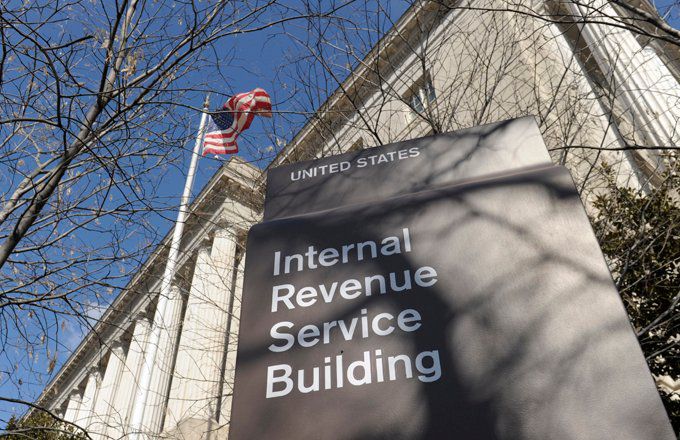
In the United States, the Internal Revenue Service (IRS) has finalized new regulations for crypto tax reporting, set to take effect in 2026. These regulations are part of a broader effort to standardize the reporting of gains from digital assets, akin to traditional financial instruments. The move aims to simplify tax compliance for crypto users and crack down on tax evasion, which has been a concern in the decentralized nature of digital currencies.

The finalized regulations stipulate those custodial platforms, such as exchanges that hold customer assets, will be required to provide standardized 1099 forms to both investors and the IRS. This aligns with the practices of banks and traditional brokerages, fostering a more transparent tax reporting process. However, decentralized platforms that do not hold assets directly are currently exempt, highlighting the unique challenges that the crypto industry presents to tax authorities.

The response from the crypto community to these new regulations has been mixed. While some view it as a necessary step towards legitimizing and stabilizing the market, others express concerns over the potential overreach and the difficulties in enforcing compliance among decentralized operations. The debate underscores the complexity of regulating a technology that inherently resists centralized control.

The tax implications of staking cryptocurrencies are becoming increasingly important as more investors engage in this activity. According to recent guidance from the IRS, staking rewards must be included in gross income for the taxable year in which the taxpayer acquires dominion and control of the awarded cryptocurrency. This means that when you receive new tokens as a reward for staking, you are required to report their fair market value as income on the date you gain the ability to transfer, sell, or use those tokens.

The process of staking involves committing your cryptocurrency to support a network and validate transactions, and in return, you earn rewards. These rewards are akin to earning interest on a savings account or dividends from stocks. However, unlike these traditional financial instruments, the tax treatment of staking rewards has been less clear until recently.

With the new IRS ruling, it’s evident that staking rewards are treated similarly to mining rewards, which have been taxable upon receipt for some time. This clarity helps taxpayers understand their obligations and ensures that they remain compliant with tax laws. It’s important for participants in staking to keep detailed records of their transactions, including the date and fair market value of any rewards received, to accurately report their income.

Despite the controversies, the establishment of clear tax rules is seen by many as a positive development for the industry. It provides a framework for investors to accurately report their transactions and could potentially lower the barrier to entry for new participants wary of the uncertain tax implications of crypto investments.

As the “umpire” of crypto taxation continues to evolve, it is clear that the dialogue between regulators and the crypto community will be crucial in shaping a fair and effective tax system for digital assets. With public hearings and comment periods allowing for industry input, there is an opportunity for a collaborative approach to regulation that balances the need for oversight with the innovative spirit of the crypto world.

The booming interest in crypto taxation reflects a maturing market that is increasingly intersecting with traditional financial systems. As this trend continues, it will be interesting to observe how the regulatory landscape adapts to accommodate the unique characteristics of digital assets while ensuring fairness and compliance in taxation.