DD
MM
YYYY

PAGES

DD
MM
YYYY

spot_img

PAGES

Home Blog Page 3141

A Bill for Creation of Etiti State in the South-East Scales First Reading in Nigeria’s House of Representatives

0

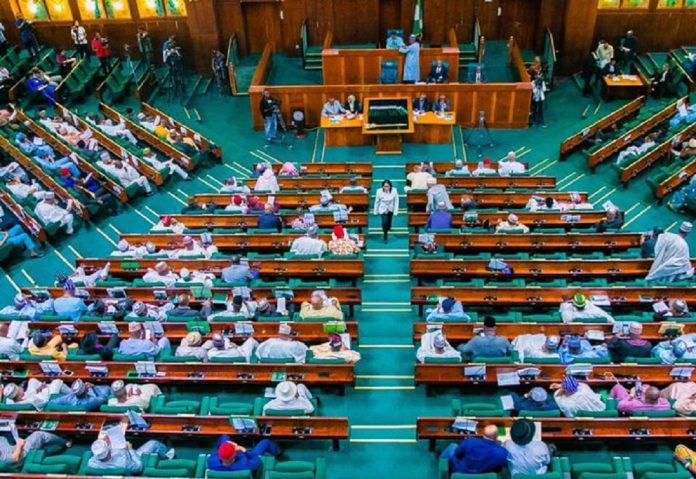
A bill proposing the creation of Etiti State in Nigeria’s South-East geo-political zone was read for the first time during a plenary session in the House of Representatives on Tuesday.

Sponsored by five members of the House—Amobi Ogah, Miriam Onuoha, Kama Nkemkama, Chinwe Nnabuife, and Anayo Onwuegbu—the bill seeks to carve out the new state from the existing Abia, Anambra, Ebonyi, Enugu, and Imo states.

The proposed Etiti State would encompass 11 local government areas (LGAs) drawn from the five states, with its capital to be located at Lokpanta. The bill aims to amend three sections of the 1999 Constitution, altering the number of states from 36 to 37, and adding “Etiti” to the list of states following Enugu. Additionally, it seeks to reassign the relevant LGAs from their current states to the new state.

The LGAs affected include:

  1. Abia: Isuikwuato and Umu-Nneochi
  2. Anambra: Orumba North and Orumba South
  3. Ebonyi: Ivo and Ohaozara
  4. Enugu: Aninri, Awgu, and Oji River
  5. Imo: Okigwe and Onuimo

The Struggle for Six South-East States

For years, the Southeast has been advocating for the creation of an additional state, arguing that the region’s status as the only zone with five states among Nigeria’s six geopolitical zones has led to significant federal allocation disparities. This imbalance has cost the region trillions of naira and spurred renewed calls for equitable state distribution.

The last state creation in Nigeria occurred in 1996 under the regime of the late General Sani Abacha. Since then, the Southeast has consistently demanded another state.

Ohanaeze Ndigbo Worldwide, the apex Igbo socio-cultural organization, has been a vocal proponent of this cause. It said the creation of a new state in the southeast will not only correct the imbalance in state allocation that has historically relegated the zone to a lesser status but also pave a new path for Ndigbo in the Nigerian polity.

Chief Emmanuel Iwuanyanwu, President-General of Ohanaeze Ndigbo, reiterated this demand at a retreat in Enugu in April, expressing dissatisfaction with the 1999 Constitution and threatening legal action if the federal government fails to create an additional state.

Legislative and Constitutional Hurdles

The challenge of creating a new state in the region, among other things, has been largely attributed to the rigidity of the 1999 constitution.

Creating a new state in Nigeria involves a rigorous constitutional process. Section 8(i) of the 1999 Constitution stipulates that a request for state creation must be supported by at least a two-thirds majority of representatives from the Senate, the House of Representatives, the House of Assembly, and local government councils from the area demanding the new state.

Furthermore, the proposal must be approved in a referendum by a two-thirds majority of the area’s populace, followed by a simple majority approval from all states of the federation and a two-thirds majority approval in both houses of the National Assembly.

In recognition of the challenges associated with state creation, delegates at the 2014 National Conference recommended amending the constitution to simplify the process. They specifically endorsed the creation of an additional state in the Southeast to promote reconciliation, equity, and justice. The conference suggested that state creation should ensure parity between geopolitical zones and be based on the economic viability of the proposed state, considering its natural and human resources, land, and water mass.

The introduction of the Etiti State bill follows the recent passage of the South-East Development Commission Bill through its third reading in the House of Representatives. The National Assembly’s ongoing efforts to amend the 1999 Constitution aim to address long-standing issues, including the perceived marginalization of the Southeast region.

While the journey towards creating Etiti State is fraught with legislative and constitutional challenges, the bill’s progression to its first reading marks a significant milestone. This development has rekindled hope that the Southeast’s persistent call for a new state may finally be answered, potentially rectifying historical imbalances and fostering greater regional equity.

BlockDAG’s $2M Giveaway and Tech Magic: Are Solana and Fantom Yesterday’s News?

0

Solana’s price forecast appears promising, showing signs of an upward trend. Meanwhile, the Fantom Foundation is launching initiatives on its primary blockchain platform. Nonetheless, BlockDAG (BDAG) is capturing attention as the standout cryptocurrency in the current bull run.

It utilizes a Proof of Work consensus model and Directed Acyclic Graph (DAG) technology, achieving transaction speeds between 10,000 and 15,000 per second. Now priced at $0.014 in its 19th batch after a stunning 1300% rise, BlockDAG has successfully raised $55.2 million and sold over 11.9 billion coins, positioning itself as the premier crypto presale of the year.

Fantom Foundation’s $120M Sonic Fund Initiative

The Fantom Foundation has designated 200 million FTM tokens, worth around $120 million, for its Sonic Labs Innovator Fund. This fund supports the transition of projects to the new Sonic network, a primary blockchain with a secondary layer bridging to Ethereum, which facilitates exceedingly rapid transactions.

Established by Andre Cronj with precise financial strategies, the fund seeks to draw developers of decentralized applications (dApps) and infrastructure providers without increasing the total supply of FTM tokens. Moreover, the Fantom Foundation is integrating existing developers into the Sonic platform and has announced a community-focused airdrop initiative, aimed at revitalizing the network and significantly enhancing its growth and adoption.

Solana Price Prediction: Potential Rise to $171

In recent developments, Solana’s price has spiked, reaching $136.36, even amid market uncertainties caused by Bitcoin dropping below $60,000. The Solana market is characterized by a descending triangle pattern influenced by Bitcoin’s volatility, yet the $130 support level remains intact, having been tested multiple times in the last 3.5 months.

After momentarily reaching the 200-day SMA, which typically offers strong support, the price rebounded. With a 135% increase in trading volume over the last day, investor interest in Solana is growing. Current predictions suggest Solana could climb to $171, a 25% increase, unless it breaks support levels, which could lead to a fall to $98, $87, or $56.

BlockDAG: Leading the Crypto Presale with 1300% Increase

BlockDAG (BDAG) has quickly become a major player in the presale market with its cutting-edge technology and attractive investment opportunities. By combining a Proof of Work consensus mechanism with DAG architecture, BlockDAG ensures rapid, secure, and scalable transaction processing. Its smart contract development platform, compatible with the Ethereum Virtual Machine (EVM), introduces a groundbreaking approach to distributed ledger technology.

BlockDAG offers multiple revenue streams including a Coin Investment Strategy that benefits from early price increases, Mobile Mining that allows users to earn around 20 BDAG Coins daily via a mobile app, and dedicated mining units. Furthermore, Trade Miners support leveraging BDAG Coin miners on third-party platforms post-presale, broadening investment appeal and reducing risks.

Generating significant excitement in the cryptocurrency community, BlockDAG’s $2 million giveaway is drawing widespread participation with over 84,630 entries and counting, and less than 40 days left to join.

BlockDAG’s current price stands at $0.014 in Batch 19, reflecting a 1300% surge, with $55.2 million raised and 11.9 billion BDAG coins sold. This positions BlockDAG significantly ahead of Solana and the new projects by Fantom Foundation in terms of investment potential.

Conclusion

As Solana’s price predictions continue to be favorable and the Fantom Foundation advances its blockchain projects, BlockDAG is emerging as the standout cryptocurrency in the current market surge. With its advanced technology merging speed, security, and scalability, alongside a significant $2M giveaway and diversified income avenues, BlockDAG is establishing itself as a top market contender.

Invest in the BlockDAG Presale Now:

Presale: https://purchase.blockdag.network

Website: https://blockdag.network

Telegram: https://t.me/blockDAGnetwork

Discord: https://discord.gg/Q7BxghMVyu


No economic growth will happen in Nigeria unless interest rate comes down – Dangote

2

Alhaji Aliko Dangote, one of Africa’s most prominent businessmen, addressed Nigeria’s rising interest rates, making comparisons with other countries, especially in North America, Europe, and Africa, facing similar of different economic challenges.

The Chairman of the Dangote Group, noted that economic growth in Nigeria will remain elusive unless the current bank interest rate of 30% is reduced. He made this assertion during his keynote address at the 2024 summit of the Manufacturers Association of Nigeria (MAN) held in Abuja.

Dangote pointed out that the inflation-driving interest rate hikes in major advanced economies such as Europe and the United States differs significantly from the inflation experienced by developing countries, particularly in Africa. He highlighted that the unique economic challenges faced by these nations require a different approach to interest rate policies to foster growth and development.

He attributed the inflation in North America and Europe to the massive cash transfer programs implemented by governments during the COVID-19 pandemic in 2022. According to Dangote, around $18 trillion was disbursed to individuals and businesses during this period, leading to an oversupply of money chasing a limited supply of goods.

“Mr. Vice President, I know that today we are battling with very high interest rates. This interest rate is now saying that we should fight inflation. I’m not an economist, I’m just a local businessman,” said Dangote.

He elaborated, “The other countries, why did they jack up interest rates during COVID-19? The G7 countries pumped money into their economies to the tune of 18.9 trillion. So in their economies, there was so much of money chasing few goods. This means that everything is going to go up.”

Dangote pointed out that unlike North America and Europe, African economies did not implement such significant cash transfer programs during the pandemic.

“During COVID, we didn’t do anything at all. The only thing we did was food palliative and I’m talking about Africa in general,” he noted.

As a result, African countries did not experience the same inflationary pressures stemming from excess liquidity, but they are now facing other economic challenges, he explained.

Speaking about Nigeria’s current high interest rate, Dangote stated that it is responsible for economic stagnation.

“Right now, at 30%, there is no way anybody can create jobs because we are actually stifling growth. So interest rate can remain at 30% but no growth will happen unless that interest rate comes down,” he asserted.

The Central Bank of Nigeria (CBN) has hiked interest rates by a combined 750 basis points over three consecutive Monetary Policy Committee (MPC) meetings, raising rates from 18.75% to 26.25%.

World Bank’s Warning on Monetary Policy Measures

Supporting Dangote’s assertion, the World Bank warned the CBN in early June that recent monetary policy measures, including raising interest rates, may not effectively curb inflation as anticipated by analysts. In its latest report, “Global Economic Prospects,” which outlines the economic outlook for 2024 and 2025, the World Bank highlights the risks of the policies, particularly the potential ineffectiveness of the CBN’s monetary tightening measures in controlling inflation.

Despite an aggressive increase in interest rates by a combined 750 basis points since the beginning of the year, inflation remains a persistent issue. Central bank Governor Yemi Cardoso, in his first Monetary Policy Committee (MPC) meeting, raised the interest rate by 600 basis points from 18.75% to 22.75%. Subsequent hikes have pushed the rate further to 26.25%. The bank also increased the Cash Reserve Ratio (CRR) of banks to 45%, one of the highest rates globally.

These measures were aimed at taming inflation, but the results have been underwhelming. Inflation rose from 29.90% in January 2023 to 33.95% in May 2024, defying expectations that higher interest rates would slow it down.

Various stakeholders, including members of the Nigerian business community such as the Centre for the Promotion of Private Enterprise (CPPE), the Nigerian Association of Chambers of Commerce, Industry, Mines, and Agriculture (NACCIMA), and the Manufacturers Association of Nigeria (MAN), have criticized the CBN’s approach. They argue that the high interest rates are ineffective in combating inflation and instead harm the real economy by raising the cost of accessing capital.

Economists have also pointed out the contradictions in the CBN’s strategy. While the bank is increasing the MPR to combat inflation, other policies appear to counteract these efforts. This highlights the complexity and potential ineffectiveness of relying solely on monetary policy to address inflation in Nigeria’s unique economic context.

The Need to Protect Local Industries

Furthermore, Dangote called for greater protection of local industries, especially in manufacturing, which has been in decline since the 1970s. He emphasized that attracting foreign direct investment is heavily dependent on strong local investment. He cited examples from around the world, where countries that publicly support free trade often enact policies to protect and promote their local industries, turning them into national treasures.

“The only way to attract foreign direct investment is local investment,” he stated, pointing to the success stories of the West, China, and India.

Sony Group to Launch Cryptocurrency Exchange S.BLOX in Japan

0

In a bold move that marks a significant shift in the financial technology landscape, Sony Group has announced its entry into the cryptocurrency market with the launch of a new crypto exchange in Japan. This strategic venture comes after Sony’s acquisition of Amber Group’s local subsidiary, Amber Japan, which has been rebranded to S.BLOX Co.

The new exchange, S.BLOX n Japan, is set to revitalize the crypto trading platform previously known as WhaleFin, aiming to create a robust presence for Sony in the burgeoning Bitcoin and crypto space. This initiative is not Sony’s first brush with Web3 technologies, as the conglomerate has previously engaged in partnerships and investments within the startup ecosystem to explore the potential of blockchain and non-fungible tokens (NFTs).

Sony’s involvement in Web3 incubation programs and its patent filing for the transfer of NFTs across games and consoles have laid the groundwork for this latest development. The launch of S.BLOX signifies Sony’s commitment to integrating its vast array of business subsidiaries to add value to the crypto exchange and leverage the synergies within its corporate structure.

Other tech giants are not far behind, with companies like Microsoft, Amazon, Google, Apple, and Facebook exploring various applications of blockchain technology and digital currencies. These companies are leveraging their vast resources and technological prowess to develop new platforms and services that integrate cryptocurrencies, thereby expanding their business models into this new financial paradigm.

Financial institutions and payment processors, such as PayPal and Square, have also made significant strides in adopting cryptocurrency, offering services that allow for the use of digital assets in everyday transactions. This move has been instrumental in bringing cryptocurrencies into the mainstream, making them more accessible to the general public.

Moreover, the entertainment and retail sectors are joining the crypto revolution, with AMC Theatres and Whole Foods among the companies that now accept cryptocurrency as a form of payment. This trend is indicative of the growing acceptance of digital currencies as a legitimate and convenient payment method across various industries.

The influx of these major companies into the cryptocurrency market is not only a testament to the sector’s potential but also a catalyst for further innovation and adoption. As the crypto space continues to evolve, it will be interesting to see how these and other companies shape the future of digital finance.

The decision to enter the cryptocurrency market aligns with Sony’s innovative ethos and its history of adapting to technological advancements. By restarting the crypto exchange Whalefin, Sony is poised to offer a new application that caters to the needs of modern traders and crypto enthusiasts. The move also reflects Sony’s recognition of the growing importance of digital assets and their potential to transform various industries.

As the world watches, Sony’s Group S.BLOX exchange is set to become a pivotal player in Japan’s crypto market, potentially influencing the global financial technology sector. With Sony’s reputation for quality and innovation, the crypto community eagerly anticipates the unique offerings and user experience that S.BLOX will bring to the table.

Digitalizing Libraries on the Blockchain

0

The digital age has brought about transformative changes in how we access and manage information. One of the most promising developments in this realm is the application of blockchain technology to library services. Blockchain, at its core, is a decentralized ledger that records transactions in a secure and tamper-proof manner. This technology has the potential to revolutionize library management by enhancing security, increasing efficiency, and providing a new level of transparency in the handling of digital assets.

Blockchain technology can be particularly beneficial for libraries in several ways. Firstly, it can increase the capacity of the entire network. For example, a supercomputer created by Stanford University, which is used for medical research, is an instance of how blockchain can enhance the computational capacity of an institution. Secondly, the immutable nature of blockchain ledgers ensures that once data is recorded, it cannot be altered without the consensus of the network. This is crucial for maintaining the integrity of library records and protecting against unauthorized changes.

Here are some of the exciting applications that could redefine the future of libraries:

Community-Based Collections: Blockchain could enable libraries to create shared collections of objects, tools, and services, fostering a community-based approach to resource sharing.

International Financial Transactions: With blockchain-based currencies, libraries could facilitate international financial transactions, making it easier to manage subscriptions and access to global databases and resources.

Interlibrary Loan and Voucher Systems: Blockchain can streamline interlibrary loans by creating a secure and efficient voucher system for tracking and managing the exchange of books and materials between libraries.

Credentialing and Verification: Libraries could use blockchain to verify credentials, such as information literacy, and authenticate educational achievements and certifications.

Moreover, blockchain technology can facilitate faster settlement of transactions. In the context of libraries, this means quicker and more convenient access to books and other resources for consumers. The decentralized system of blockchain also allows for the secure storage and access of digital assets over the internet, which is essential for the management of e-books, articles, and multimedia resources.

The application of blockchain in libraries is not without its challenges. Issues such as financial constraints, technical complexities, and security concerns need to be addressed. However, with proper training and support from decision-makers, these hurdles can be overcome, paving the way for a more efficient and secure library system.

Several pilot projects and case studies have demonstrated the potential of blockchain in library management. The Public Libraries 2020 initiative in Europe, for instance, explores blockchain-based solutions for decentralized cataloging and archival preservation. By distributing cataloging tasks across a network of participants, libraries can ensure redundancy and integrity in their metadata records, thereby safeguarding cultural heritage for future generations.

As libraries continue to adapt to the digital age, blockchain emerges as a powerful tool in their arsenal. It offers a way to manage digital assets securely, track lending transactions transparently, and authenticate rare materials. By embracing blockchain, libraries can redefine the boundaries of digital preservation and intellectual property management, ensuring that they remain vital repositories of knowledge and innovation in the information ecosystem.

Digitalizing libraries on the blockchain presents an exciting opportunity to enhance the way libraries operate. It is a step towards a future where information is preserved and accessed in the most secure, efficient, and transparent manner possible. As this technology continues to mature, it will undoubtedly play a significant role in shaping the libraries of tomorrow.