DD
MM
YYYY

PAGES

DD
MM
YYYY

spot_img

PAGES

Home Blog Page 3161

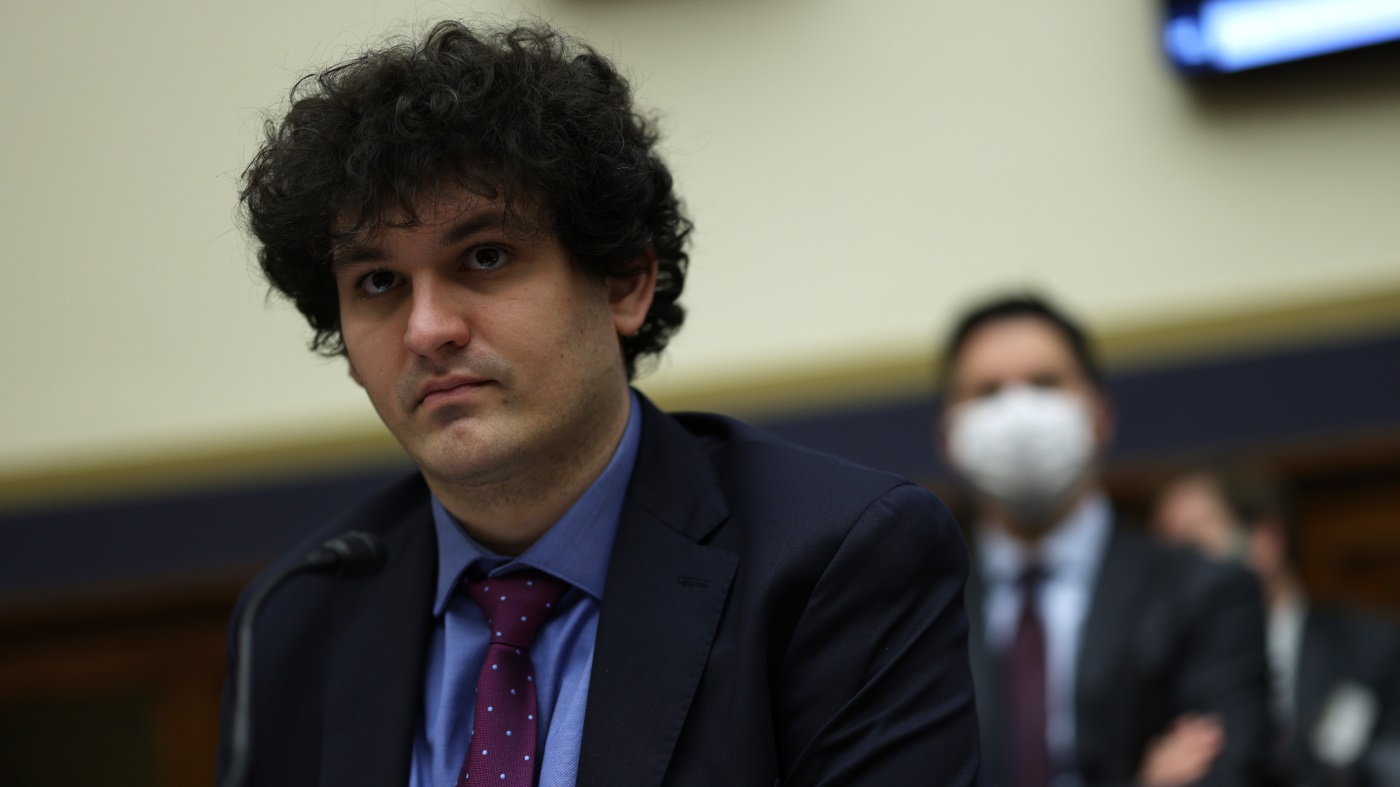
FTX Co-founder Sam Bankman-Fried Sentenced to 25 Years in Prison

0

FTX Co-founder Sam Bankman-Fried, who was convicted of stealing billions of dollars from customers has been sentenced to 25 years in prison.

After a two-hour court hearing today, the presiding judge Lewis Kaplan disclosed that Bankman knew all along what he was doing was criminal but downplayed the possibility of being caught.

Kaplan opened the hearing by going through sentencing guidelines, stating that he rejected the defense’s argument that there “was no loss” as a result of the fraud at FTX.

He further stated that Bankman-Fried committed perjury numerous times during his testimony in the trial, listing three specific occasions but saying that there were many more he could have added.

Bankman-Fried in response, admitted to the judge that he made a lot of mistakes, but maintained that his crypto firm FTX had the ability to repay customers when it collapsed.

He painted the fall of FTX as mismanagement and veered into what he saw as issues around the handling of its bankruptcy.

Meanwhile, in a rebuttal, Judge Kaplan rejected Bankman-Fried’s argument that customers could be paid back. He compared the former billionaire to “a thief who takes his loot to Las Vegas,” saying that Bankman-Fried was not entitled to leniency by trying to use his winning to pay back what he stole.

Prosecutors said Bankman-Fried had cost customers, investors, and lenders over $10 billion by misappropriating billions of dollars to fuel his quest for influence and dominance in the crypto industry, and had illegally used money from FTX depositors to cover his expenses, which included partying, purchasing luxury properties in the Caribbean, expensive trips and alleged bribes to Chinese officials.

The prosecutors said,

“The defendant victimized tens of thousands of people and companies, across several continents, over a period of multiple years. He stole money from customers who entrusted it to him; he lied to investors; he sent fabricated documents to lenders; he pumped millions of dollars in illegal donations into our political system; and he bribed foreign officials. Each of these crimes is worthy of a lengthy sentence”

One of the victim of FTX’s fraud who gave a statement in court, said that he suffered every day as a result of Bankman-Fried’s fraudulent actions.

In a defense, Bankman-Fried’s attorney, Marc Mukasey, argued that his client never intended to intentionally commit harm to investors. Rather, he described Bankman-Fried as an “awkward math nerd” who loves video games and animals.

Bankman-Fried crypto exchange company FTX was valued at $32bn before it went bankrupt in 2022. His crypto exchange grew to become the second largest in the world with $10-$15bn traded daily. The FTX platform had around a million registered users, ranging from institutional traders, family offices and crypto-native investors.

Sam Bankman-Fried has been sentenced to 25 years in federal prison for defrauding customers and investors of the FTX cryptocurrency exchange — one of the biggest white-collar crimes in history. At his sentencing hearing Thursday in Manhattan, the 32-year-old said he was “sorry about what happened at every stage” of FTX’s headline-making implosion. Explaining his reasoning for the sentence, Judge Lewis Kaplan said there is “not a trivial risk” that Bankman-Fried “will be in a position to do something very bad in the future.” He also ordered a forfeiture of more than $11 billion.

Naira Strengthens to N1,300/$1, Signals Optimism Amid Sustainability Concerns

0

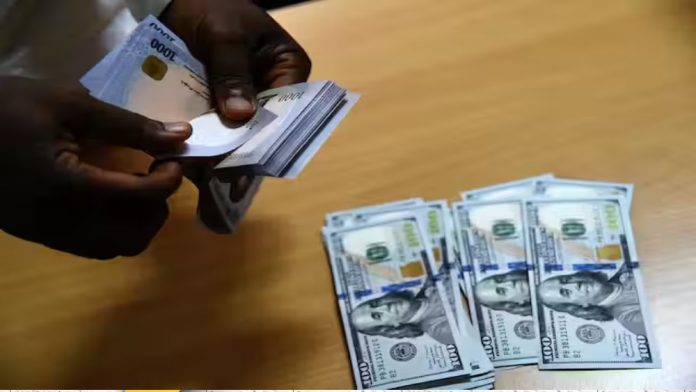
The Nigerian Naira showcased its strongest performance in over eight weeks as it closed at N1,300/$1 on Wednesday, marking a significant uptick in its value against the US Dollar.

Data obtained from the Financial Markets Dealers Quotations (FMDQ) revealed this positive momentum, which was echoed in the parallel market where exchange rates ranged between N1,250 and N1,300 for both cash transactions and inflow-related transfers.

According to the FMDQ, Wednesday’s closing exchange rate of N1,300.43 represents the currency’s most robust showing since January 26, 2024, when it closed at N891.9/$1. The day witnessed a fluctuation in rates, with the intra-day high hitting approximately N1,460/$1, while the intra-day low settled at N1,200/$1. Moreover, the total turnover for the day stood at $416 million, marking the highest forex volume recorded since February 6, when it reached $465 million.

The improved exchange rate can be attributed to several monetary policies implemented by the Central Bank of Nigeria (CBN), primarily centered around higher interest rates for Open Market Operations (OMO) bills and Treasury bills. Recent Treasury bills auctions saw interest rates climbing to 21.5%, attracting over N1.5 trillion in allocations. Higher interest rates are typically interpreted as measures to combat inflation while attracting foreign capital inflows.

Furthermore, the CBN has revised its forex policies, allowing the exchange rate to be determined by market forces and resuming the sale of forex to Bureau De Change (BDC) operators. The apex bank sold $10,000 to BDCs at an exchange rate of N1,251/$1, further bolstering the currency’s strength.

Will the rally be sustained?

While the current naira gain yields a positive outlook, there is concern about whether it will be sustained. The gains are largely tied to the CBN’s subsidized supplies to BDCs at N1,251/$1. The subsidy is believed to emanate from the increase in Nigeria’s foreign reserve, put at $35 billion by the CBN.

However, the growth of the foreign reserve is significantly tied to Nigeria’s oil output, which has continued to record decline over the past eight years – mainly because of oil theft and oil installations vandalism. The situation is expected to affect as much as 25% of the nation’s oil production.

The Minister of State Petroleum Resources (Oil), Heineken Lokpobiri, acknowledged the challenge, noting that Nigeria has in the last five years slowed down investments.

“We are the lowest in the world, if you talk of investment to reserves ratio, Nigeria is 25 per cent. Nigeria is the least in the world. Between 2017 and 2022, if you look at the figures, Nigeria’s investments compared to our reserves are 25 per cent. There is something we are not doing right,” he said.

Recently, Nigeria’s OPEC quota was reduced from 1.742 million barrels per day (mbpd) to 1.38mbpd. However, the country is still struggling to meet this quota, with daily production averaging 1.3 million barrels per day.

The CBN said earlier in the year that it expects revenue from oil to nosedive in 2024.

Against this backdrop, it is believed that the foreign reserve where the current CBN’s subsidized FX supplies to the BDCs are coming from will witness a decline in the long run. Analysts said that as long as the subsidy is coming from the FX reserve, the naira will eventually lose its gains.

Let Us Discuss Workplace Collaboration and Automation

0

“If you want to go fast, go alone, but if you want to go far, go together” is an African proverb. Largely, in the market system, the process of combining factors of production requires doing many things together. And among the factors of production, Labour (the human system) is very evidential. That Labour is the People within the anchors of firms: Processes, Tools and People.

Join us in the next few minutes as one of the finest zen-masters in this game of collaboration teaches in Tekedia Institute. He is a multi-winning Microsoft MVP, first-class graduate, tech prodigy, and a young man who is always smiling! Olanrewaju Oyinbooke is coming to class; get ready to learn.

Thur, March 28 | 7pm-8pm WAT | Workplace Productivity, Collaboration, and Automation – Olanrewaju Oyinbooke, COSMOS| Zoom link

This is the Tekedia Mini-MBA; your career is our mission. Pick a seat here 

MicroStrategy’s Bitcoin Bet: A Bold Move Pays Off

0

MicroStrategy (NASDAQ:MSTR) is an American company known for its business intelligence and data management software. It was established in 1989, and over the years, it has emerged as a frontrunner in its field. Recently, MicroStrategy stock has surged, catching the eye of investors. The reason for this growth is the company’s bold strategy of investing in cryptocurrencies (particularly in Bitcoin).

In August 2020, MicroStrategy made headlines by announcing a $250 million investment in Bitcoin. Since then, it has upped the ante, acquiring an additional $425 million and later, a staggering $15 billion worth of Bitcoin. This strategic pivot towards cryptocurrencies has piqued investor interest, with many recognizing MicroStrategy’s savvy grasp of the market and its potential for growth.

On March 26, the company’s market capitalization reached a new historical high of $31.85 billion. Fueling this surge was MicroStrategy’s recent purchase of 9245 BTC on March 19, totaling around $623 million. With a Bitcoin portfolio comprising over 214,246 BTC (equivalent to more than 1% of all Bitcoins currently in circulation), MicroStrategy’s aggressive investment approach has paid off handsomely. The company’s shares significantly increased their value and updated the historical maximum twice in March alone. Investors no longer view MicroStrategy solely as a software developer but also as a cryptocurrency holding company, which adds allure to its shares.

Maintaining support levels is crucial for sustaining this growth trajectory. The previous all-time high (ATH) of $1,800 serves as a critical benchmark. A breach below this level could trigger a rapid decline, and the intermediate support of $1600 won’t be able to stop it. In this case, there’s a possibility of testing the $1300 mark before stabilizing within a horizontal channel between $1,800 and $1,900. However, future announcements of Bitcoin purchases could inject fresh momentum into MicroStrategy’s stock.

So, why did MicroStrategy decide to invest in cryptocurrency? The main reason was the company’s desire to diversify its investment portfolio and hedge against inflation. Bitcoin’s decentralized nature, immune to central bank interventions and government regulators, provides a safeguard against economic upheaval.

The company’s prospects look promising. Its investment strategy underscores its willingness to embrace technological shifts and risk — as Bitcoin gains traction as an alternative asset, MicroStrategy stands to benefit. With its investment strategy yielding positive outcomes thus far, the company appears poised for continued success in both the cryptocurrency and business intelligence spheres.

Nigeria Data Protection Commission (NDPC) Launches Investigation Into Over 400 Privacy Breach Cases Linked to Loan Apps

0

The Nigeria Data Protection Commission (NDPC) has launched an investigation into over 400 privacy breach cases linked to loan apps.

The commission made this known via its recently released 2023 annual report while noting that its ongoing investigations have revealed that these loan apps are overly intrusive.

“They generally violate the principles of Data Protection and privacy because they have access to contacts, pictures, messages, etc, of data subjects”, the commission stated.

The NDPC is therefore seeking a ban on mobile numbers found to have been used by lenders to breach the privacy of their customers.

Acknowledging that privacy breaches by loan apps are a systemic problem, the commission said it is also adopting a systemic solution by working with other regulators and third-party platforms being used by lenders.

It said,

“Over 400 cases of privacy breaches involving shadowy loan sharks are being addressed at the systemic level. The Commission has now drafted the Nigeria Data Protection Act-General Application and Implementation Directive (NDPA-GAID) which addresses the abetment of data breaches, the need for data ethics and privacy by design and by default among others.

“Under abetment, the third-party platforms through which data privacy breaches take place will now be required to deny access to those who use their platforms for privacy breaches. Organizations, particularly communication networks should be willing to restrict or ban telephone lines that are implicated in privacy violations”.

The NDPC added that it is also collaborating with regulators under the Joint Enforcement and Regulatory Taskforce to sanitize the digital lending space, calling for more stringent laws to safeguard consumers from such unethical practices.

It further noted that the Federal Competition and Consumer Protection Commission (FCCPC) now requires lending companies to obtain data protection clearance from NDPC before operation.

It is worth noting that the issue of digital lenders otherwise known as loan apps, unlawfully obtaining the private data of consumers over defaultment of loans, has continued to be an issue of concern, due to the incessant rate at which it has continued to occur.

In recent times, these platforms have resorted to unprofessional measures of harassment, cyberbullying, and breach of data privacy of their customers who may have defaulted in their loan(s) repayment.’ In light of these events, personal data protection and privacy have become issues of great concern for a number of stakeholders.

The Federal Competition & Consumer Protection Commission of Nigeria (FCCPC) in a bid to sanitize the lending space has on several occasions delisted digital money lenders (DMLs) for violating customer privacy.

Despite the Nigeria Data Protection Bill 2023 which was signed into law on the 14th of June 2023 by President Bola Ahmed Tinubu, such unethical practices have continued to take place, as some stakeholders and  commissions have swung into action to come up with new regulations that would address the challenges around breach of private data by loan apps.