DD
MM
YYYY

PAGES

DD
MM
YYYY

spot_img

PAGES

Home Blog Page 3170

NACCIMA Raises Concerns Over CBN’s MPR Hike; Says It Will Cripple Nigeria’s Private Sector

0

The Nigerian Association of Chambers of Commerce, Industry, Mines and Agriculture (NACCIMA) has voiced its apprehension regarding the recent hike in the Monetary Policy Rate (MPR) by the Central Bank of Nigeria (CBN), cautioning that such a move could have adverse effects on the country’s private sector.

In a press release issued on Tuesday, the president of NACCIMA, Dele Oye, expressed deep concern over the decision to increase the MPR to 24.75%, alongside raising the Cash Reserve Ratio (CRR) to 45%. Oye warned that these adjustments could potentially unleash severe repercussions on private enterprises operating within Nigeria.

“The increase in MPR to 24.75% and Cash Reserve Ratio to 45% will have severe repercussions on private businesses in the country. The private sector has been sidelined from the decision-making process of the apex bank,” he stated.

Moreover, Oye noted that NACCIMA had previously communicated its reservations to the CBN governor regarding the initial MPR hike to 22.75%, in a letter dated March 13, 2024. The association’s stance remains firm, contending that such policies could inadvertently trigger inflationary pressures, compelling businesses to escalate prices of goods and services to mitigate the escalated borrowing costs.

NACCIMA enumerated four primary concerns regarding the implications of the MPR hike:

Increase in the Cost of Borrowing: Existing loans would incur higher interest rates, thereby elevating the cost of capital for businesses. This scenario discourages entrepreneurial endeavors and expansion plans critical for economic growth and employment generation.

Restricted Credit Availability: With the augmentation of the CRR, banks’ lending capacity is further constrained. This exacerbates the prevailing challenges faced by the private sector, characterized by limited access to finance.

Pass-Through Effects on Inflation: Elevated interest costs borne by businesses necessitate passing on these expenses to consumers through elevated prices for goods and services. Such a phenomenon can contribute to inflation rather than mitigate it.

Stifling Economic Growth: Constricted monetary conditions might precipitate diminished investment and consumption, pivotal drivers of economic expansion. This could potentially impede economic recovery and undermine prospects for prosperity.

In light of these concerns, NACCIMA proffered recommendations to the CBN governor, advocating for a nuanced and targeted approach aimed at alleviating liquidity constraints within the public sector, while mitigating adverse impacts on the private sector.

“Our recommendation is that the CBN should pursue a more nuanced and targeted approach, focusing on mechanisms that specifically address the liquidity issues in the public sector without placing undue burden on the private sector,” Oye said.

“Additionally, policy directions should be clear and communicated on a quarterly basis, with a robust stakeholder engagement strategy to ensure that the views and concerns of the private sector are considered in policy formulation.”

The apprehension voiced by NACCIMA echoes concerns raised earlier in March when the association penned a missive to Cardoso regarding the MPR and CRR increments, and their ramifications on private enterprises within the country.

At that time, the CBN had raised the MPR to 22.75% from 18.75%, while maintaining the liquidity ratio at 30%. NACCIMA had advised adopting a more comprehensive strategy in combating inflation, proposing alternative measures such as issuing FAAC allocation in vouchers, implementing zero-coupon stabilization, resolving custom import duty issues, and initiating a corporate bond refinancing program.

However, Cardoso, speaking of these concerns, assured that the current tightening measures would not be prolonged and would be relaxed upon substantial improvements in the economy concerning inflation and exchange rates. He said there is collaboration between fiscal and monetary policies to achieve sustainable economic outcomes.

He stated, “While the increase in interest may have tendencies of strangulating the economy, with the foreign exchange rate coming down, that also helps to moderate it overall.”

“And I said earlier, you would expect that this would not be too long drawn at least I would hope so. We are getting towards a situation where the exchange rate, it is moderating, and we are expecting it to moderate and then it find a level which quite frankly is sustainable. This would involve huge collaboration with the fiscal side because a lot of that cannot just rely on the monetary side alone.”

Central Bank of Nigeria Raises Interest Rate to 24.75%, Urges Banks to Expedite Action on Recapitalization

0

The Central Bank of Nigeria (CBN) has implemented significant adjustments to its monetary policy stance, including a notable increase in the Monetary Policy Rate (MPR), which now stands at 24.75%, marking a 200 basis points rise from the previous rate of 22.75% set in February.

This decision was announced by Central Bank Governor, Mr. Olayemi Cardoso, following the conclusion of the Monetary Policy Committee (MPC) meeting on Tuesday.

While the MPR saw a substantial hike, the CBN opted to maintain the Cash Reserve Ratio (CRR) for commercial banks at 45%. However, the CRR for merchant banks was adjusted upward from 10% to 14%. Additionally, the liquidity ratio of banks remains unchanged at 30%.

In a significant change to its policy framework, the CBN also modified the asymmetric corridor from +100/-700 to +100/-300 around the MPR. This adjustment aims to provide greater flexibility in monetary policy implementation while maintaining price stability.

Reacting to the decision, financial analysts expressed mixed views on its potential impact on the economy. While some welcomed the move as necessary to curb inflationary pressures, others raised concerns about its potential adverse effects on small and medium-sized enterprises (SMEs) and overall economic growth.

“As inflation is up the CBN has raised rates as expected. However, raising interest rates kills the local economy. The question today is how much economic growth can be sacrificed to reduce inflation,” Kalu Aja said.

Many economists have urged the central bank to lower interest rates, cautioning that further increases could exacerbate the slowdown in economic activities. They argue that high interest rates could constrain borrowing and investment, stifling economic growth and job creation.

The decision to hike interest rates occurred against the backdrop of a surge in broad money supply in Nigeria. As of February 2024, Nigeria’s broad money supply (M3) reached a historic high of N95.56 trillion, marking a staggering 79.29% increase from the previous year. This surge reflects a substantial year-on-year growth of N42.26 trillion and a 1.96% increase from the preceding month of January 2024 and has been fingered as a contributor to inflation.

In addition to the surge in broad money supply, Nigeria’s Money Supply (M2) also reached a historical high of N93.9 trillion in February, up from the previous record of N92.8 trillion established in January 2024. These developments denote the significant liquidity in the Nigerian economy, posing challenges for monetary policy management.

The trajectory of the broad money supply (M3) in Nigeria underscores its considerable upward momentum in recent years and reflects a key measure of economic liquidity. This metric includes both net foreign assets and net domestic assets and provides a comprehensive overview of the country’s monetary dynamics.

Ms. Emem Usoro, CBN Deputy Governor of the Operations Directorate, highlighted the correlation between broad money supply and inflation during the MPC meeting in January, noting that both have moved almost in tandem.

“Notably, broad money and inflation have moved almost in tandem as broad money supply (M3) expanded by 18.25% at the end of January 2024. This growth was ascribed to a rise in other deposits, transferable deposits, and securities other than shares, by 26.55%, 4.73%, and 99.98%, respectively.

“From the asset side, Net Domestic Asset (NDA) contributed significantly to broad money growth while Net Foreign Asset (NFA) subdued growth in broad money. The steady rise in inflation has resulted in negative real interest rates,” she said.

Meanwhile, the CBN has directed deposit money banks in the country to expedite actions to increase their capital base. Cardoso emphasized the importance of strengthening the financial system against potential risks, urging banks to accelerate their recapitalization efforts.

He said although the MPC also reviewed developments in the banking system and noted that the industry remains safe, sound, and stable, there is a need for the bank to sustain its surveillance and ensure compliance of banks with existing regulatory and macro-potential guidelines.

“The MPC also enjoined the banks to expedite actions on the recapitalization of banks to strengthen the system against potential risks in an increasingly globalized world,” he said.

It would be recalled that in November 2023, at the 58th Annual Bankers’ Dinner of the Chartered Institute of Bankers of Nigeria (CIBN), Cardoso announced the CBN’s intention to embark on a new round of bank recapitalization for Deposit Money Banks (DMBs).

Addressing the Policy Advisory Council on the National Economy, Cardoso highlighted President Bola Ahmed Tinubu’s ambitious target of achieving a Gross Domestic Product (GDP) of $1 trillion by 2030. This target underscores the government’s commitment to drive economic growth and development over the next decade.

Cardoso emphasized the need to recapitalize the banks so that they can play their role in developing Nigeria’s economic growth over the next seven years.

Analysts Are Bullish on Bittensor (TAO) and Cronos (CRO) Crypto but BlockDAG Storms Crypto News as a Top 10 Crypto to Invest in

0

The recent surge in Bitcoin’s price, reclaiming the $71,000 level after a correction, may signal that its pre-halving retracement has concluded. However, analysts remain cautious, drawing parallels to past market cycles and anticipating a potentially larger retracement before the halving.

That being said, BTC and other major coins are in a significant uptick and analysts project further growth. Notably, Bittensor (TAO) and Cronos (CRO) cryptos are forecasted to blow up in April 2024. In the presale market, BlockDAG (BDAG) has emerged as a formidable player, pioneering its innovative X-series mining rigs which can generate up to 100$ in daily passive income.

Cronos (CRO) Crypto News

The price of Cronos (CRO) experienced a significant boost, surging 25.62%% over the last seven days, following the announcement of the Titan Upgrade, a major development poised to enhance the blockchain’s transaction speed and performance.

Set to be implemented on March 26, 2024, the Titan Upgrade aims to introduce substantial improvements, including faster transaction processing and enhanced node and RPC performance, which are expected to streamline operations and improve user experience.

Bittensor Price Prediction

The Bittensor price prediction suggests a significant bullish trend in the short to long term. As of the current analysis, Bittensor (TAO) price is predicted to rise by 225.87%, reaching $2,044.72 by April 24, 2024.

The sentiment around Bittensor is overwhelmingly bullish, supported by a high Fear & Greed Index indicating extreme greed. Over the last 30 days, Bittensor has seen 50% green days and experienced a volatility of 6.82%. For the longer term, predictions for 2025 and 2030 also indicate a continued upward trend.

BlockDAG Touted Among Top 10 Cryptos to Invest in

BlockDAG (BDAG), a recent newcomer to the crypto scene, has seen a remarkable rise in investor interest after its keynote address premiered on the iconic digital displays of Tokyo’s Shibuya Crossing. The keynote debut led to a jaw-dropping influx of investment into the project’s presale, topping $8.8 million at press time.

BlockDAG’s key products include BDAG coins, BlockDAG crypto payment card, and its environmentally friendly X-series mining rigs. The BlockDAG card, which will be accepted at more than 38 million outlets worldwide, enables users to make purchases using BDAG coins along with other major cryptos, including Ethereum, Bitcoin, and Solana. Furthermore, BDAG coins can be mined with the X-series rigs, offering the potential for $1 to $100 in daily passive income.

In response to the overwhelming early investor interest and the over $8.8 million raised quickly, BlockDAG, which is currently priced at $0.0025 in the fourth batch, has announced a $2 million mega giveaway for 50 lucky community members. To participate in the giveaway, participants are required to follow BlockDAG’s social media channels, submit their wallet address, increase winning chances by completing all quests, and invite friends for additional entries.

The Final Call

Cronos (CRO) crypto is poised for substantial growth thanks to its upcoming Titan Upgrade. Bittensor (TAO) displays a bullish outlook, with Bittensor price predictions forecasting  $2,044.72 by April 24, 2024, and further gains anticipated through 2025 and 2030.

In the presale scene, BlockDAG (BDAG) is highlighted among the top 10 cryptos for April 2024, following a $8.8 presale haul fuelled by a viral keynote address in Tokyo.


Join BlockDAG Now!

Website: https://blockdag.network

Presale: https://purchase.blockdag.network

Telegram: https://t.me/blockDAGnetworkOfficial

How Mobile Money is Transforming Savings Across Africa

0

The rise of mobile money across Africa in the past few years is revolutionizing savings across the continent, ushering in a transformative era of financial inclusion.

With the increased rate of mobile phone penetration and access to the internet, millions of people are now able to access financial services conveniently and affordably, highlighting a significant shift toward formal savings enabled by mobile money.

Mobile money has democratized access to savings accounts, allowing individuals from all socioeconomic backgrounds to participate in formal financial systems. This inclusion is particularly impactful for marginalized communities, such as women, rural dwellers, and low-income earners, who may have been excluded from traditional banking services in the past.

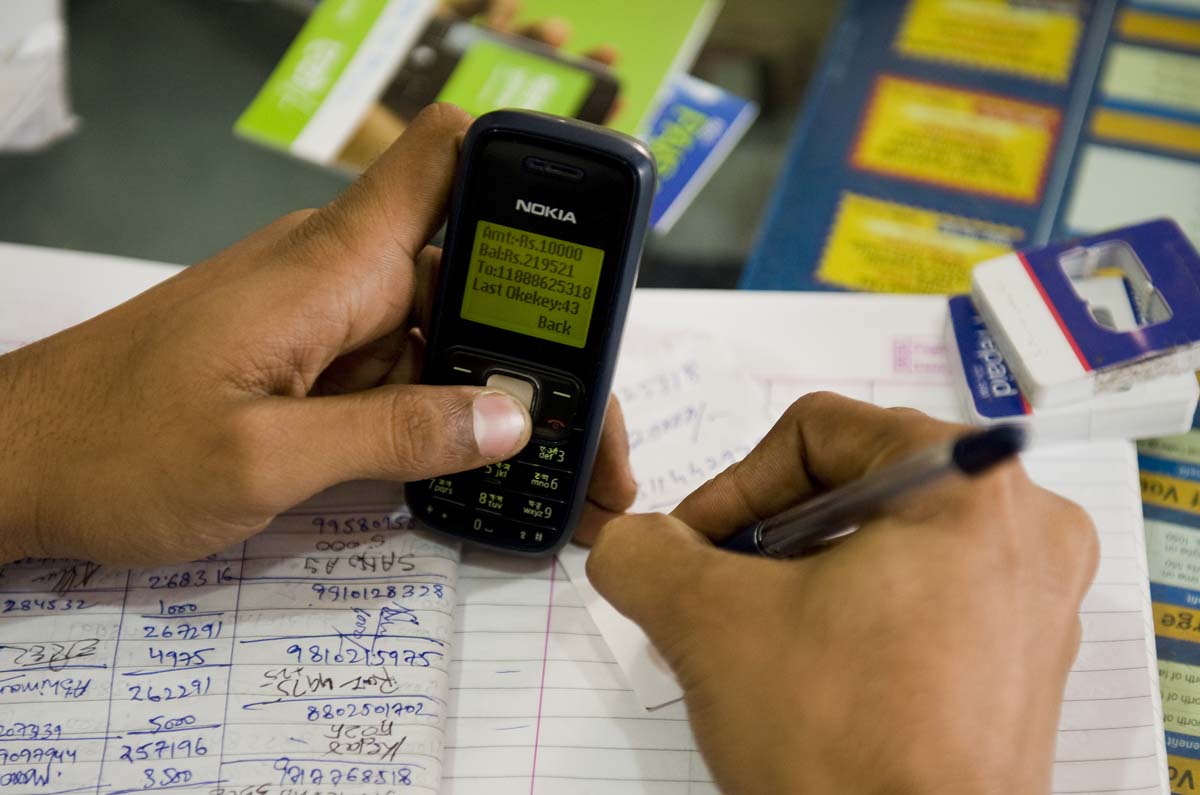
It offers users convenience, which eliminates the need for physical bank branches and long queues, making it easier for people to save money. With a few taps on their phones, users can deposit and withdraw funds and even set up automated savings plans.

Also, it offers users flexibility, enabling them to choose from various savings products tailored to their needs, such as basic savings accounts fixed deposits, or even mobile-based investment platforms. This flexibility empowers individuals to manage their savings according to their financial goals.

Here are some additional ways mobile money is influencing the savings culture in Africa:

Entrepreneurship and Investment: Mobile money savings can serve as a foundation for entrepreneurship and investment. By accumulating savings over time, individuals can access capital to start small businesses, invest in education or vocational training, or participate in income-generating activities that contribute to their long-term financial stability.

Financial Security Nets: Mobile money serves as a financial security net for many Africans, especially during times of economic uncertainty or emergencies. By saving money on mobile money platforms, individuals can create a safety net to fall back on in case of unexpected expenses, health emergencies, or loss of income.

Microsavings: Mobile money makes it possible to save even small amounts of money regularly, known as microsavings. This practice encourages a savings habit among individuals who may have limited disposable income, as they can incrementally build their savings over time, no matter how small the amount.

It is worth noting that Mobile money has had a more dramatic effect on saving practices in some countries across Africa compared to others. In Kenya for example, the share of adults who saved money was about 70% in both 2017 and 2021.

However, the share who saved formally increased in that time by 18 percentage points to 45% in 2021. This means that almost 70% of savers use an account, including 35% of savers (almost a quarter of all adults) who only use their mobile money account to save.

According to a 2023 GSMA report, women have particularly benefitted from the convenience that mobile money offers for saving. In Senegal, for instance, only 6% of women Saved using a traditional bank or similar financial institution account as of 2021, around four times more women chose mobile money.

Similar trends were observed in Kenya, Uganda, and Zambia, where the share of women saving via mobile money accounts was more than double that of women using banks or similar accounts.

Mobile money offers a convenient and essential alternative to women who may otherwise find it difficult to travel to a bank due to transport costs, family responsibilities, or social norms. Earlier editions of Global Findex found that before mobile money became available, even women with traditional bank accounts relied ‘on semi-formal saving methods.

The appeal of mobile money lies in its ability to facilitate frequent  sometimes daily, low-value savings deposits through a cost-effective and convenient model. This effectively breaks down the barriers of cost, distance, and convenience that many customers face.

While mobile money accounts may not always incorporate formal savings features, the landscape is evolving, Innovative models are also emerging, aimed at digitizing semi-formal savings.

This includes a mobile phone, regulations that encourage interoperability between MPs and interest-bearing accounts, as well as stronger consumer protections to ensure that mobile savers have avenues for recourse in case of fraud or mistakes.

Overall, mobile money is playing a transformative role in shaping savings behavior in Africa by making financial services more accessible, affordable, and inclusive. As the adoption of mobile money continues to grow, it holds the potential to drive widespread economic empowerment and prosperity across the continent.

The Trump’s $4.5 Billion TRUTH in NASDAQ

1

Diamond Bank gave us some books to read in the training school, as the bank turned engineers, accountants, pharmacists, linguists, etc, into bankers. And by the time we completed the 3-month Diamond Bank training program, we understood money, capital and banking. One of those books is The Richest Man in Babylon. If you read that, among others, you will get one message: it makes sense to use experts on things you know nothing about.

Yes, like him, hate him, but if your desire is to add more digits in the bank account, Donald Trump is the deal. Did you know that he has just added about $4.5 billion through his own social media ecosystem, Truth Social: “Shares of Donald Trump’s social-media company surged 16% on their first day of trading, boosting the presidential candidate’s fortune… [to] roughly $4.5 billion”.

Legends – anywhere they go, they find how to extract value. Today, Donald Trump is about to be rewarded with $3 billion for Truth Social: “Shareholders voted to approve Trump Media’s merger with a blank-check company, following years of legal and regulatory obstacles. Trump will own a dominant stake in a public company, with shares worth more than $3 billion at current market prices.”

We rant here, post day and night, but one businessman with deal sagacity has created a $3 billion fortune in less than 4 years from social media!

People, respect those who sabi. Trump knows how to make money! From banning him from Twitter and Facebook to him becoming platform-less, the man figured out how to pick $4.5 billion on the way. You would then ask: if they had not banned him, would these $billions have been unlocked by him? People, do not make your best customer take revenge against you! Simply, Truth Social and the Trump media empire are now vectors in the world of Twitter, Facebook, etc.

That said, Trump is not my type of politician; I will not ask him to teach me politics, despite his results, but when it comes to making money, he has my respect for his financial deal sagacity!

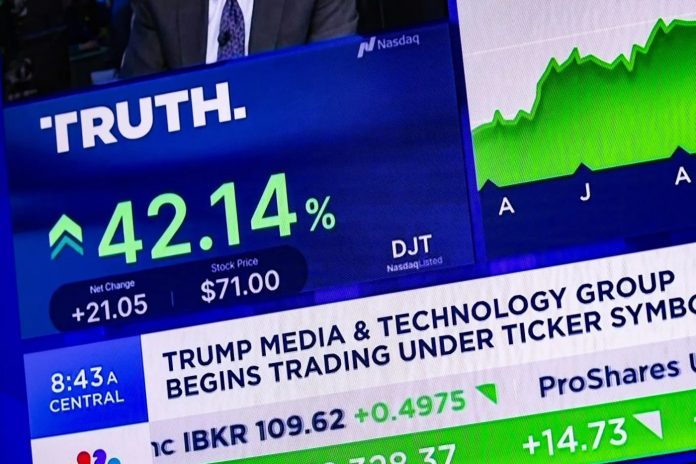
Shares of Donald Trump’s social media company rose about 16% in the first day of trading on the Nasdaq, boosting the value of Trump’s large stake in the company as well as the smaller holdings of fans who purchased shares as a show of support for the former president.

Trump Media & Technology Group Corp. merged Monday with a blank-check company called Digital World Acquisition Corp. Trump Media, which runs the social media platform Truth Social, has now taken Digital World’s place on the Nasdaq stock exchange.

Shares closed at $57.99, up 16.1%, giving the company a market value of $7.85 billion. At one point the stock was up about 59%. Trump holds a nearly 60% ownership stake in the company, now worth about $4.6 billion.