DD
MM
YYYY

PAGES

DD
MM
YYYY

spot_img

PAGES

Home Blog Page 3185

N64m Per Annum: Nigerian House Approves Salary Increment for Judicial Officers

0

The House of Representatives has given its stamp of approval to President Bola Tinubu’s proposal to enhance the salaries and allowances of judicial officers.

This move, aimed at revitalizing the judicial sector and bolstering the integrity of the judiciary, comes amidst longstanding concerns about the need for judicial reform and the eradication of corruption within the legal system.

The approved bill, seeking to review the salaries and allowances of the country’s judicial officers, represents a significant departure from previous remuneration structures. Under this legislation, substantial increases in compensation have been allocated to various positions within the judiciary, including the Chief Justice of Nigeria (CJN) and justices of the Supreme Court.

According to the provisions outlined in the bill, the CJN is slated to receive an annual salary package totaling N64 million. This comprises a basic salary of N13.5 million annually, supplemented by regular allowances amounting to N51.2 million. Similarly, the President of the Court of Appeal is earmarked to receive an annual compensation package of N62.4 million, with justices of the Supreme Court set to earn N61.4 million annually.

The breakdown of the CJN’s salary package reveals a monthly basic salary of N1.1 million, complemented by regular allowances covering various expenses such as personal assistants, hardship, entertainment, utilities, outfit, journal subscriptions, medical expenses, long service allowance, and legal researchers. Additionally, the CJN is entitled to benefits such as a motor vehicle loan of N53 million, leave allowances, and estacodes for foreign trips.

Similarly, justices of the Supreme Court are to benefit from significant increases in their remuneration, with annual allowances totaling N52.6 million, encompassing basic salary and regular allowances.

The salary and allowance structures for other justices within the judiciary mirror similar increments, with Chief Judges of various courts and their counterparts at the state level slated to receive comparable compensation packages.

The Chief Judge of the Federal High Court, President of the National Industrial Court, Chief Judge of FCT High Court, Grand Kadi FCT Shariah Court of Appeal, President of FCT Customary Court, Chief Judge of State High Court, Grand Kadi State Shariah Court of Appeal, and President State Customary Court of Appeal are entitled to the same salaries and allowances.

For this category, the annual basic salary is N7.9 million, and N42.3 million is allocated as annual regular allowances. Additionally, severance gratuity and motor vehicle loans are set at N23.9 million and N31.9 million, respectively.

But will it end corruption in the judiciary?

While the envisaged salary increases hold promise in ameliorating the financial standing of judicial officers, concerns linger regarding their potential efficacy in curbing corruption within the judiciary. Despite the implicit intent of bolstering judicial integrity through enhanced financial incentives, the endemic nature of corruption within the Nigerian judicial system underscores the multifaceted challenges that necessitate a comprehensive approach.

The specter of corruption within the judiciary is intricately intertwined with Nigeria’s political and ethnic interests, as noted in recent allegations levied by retired Justice Musa Dattijo.

Late last year, Dattijo alleged that the exclusion of justices from the southeast and north-central zones from the Supreme Court bench is deliberate. He said, in view of post-election tribunals, the situation was orchestrated by the CJN to shape the outcome of electoral tribunals.

“To ensure justice and transparency in presidential appeals from the lower court, all geo-political zones are required to participate in the hearing. It is therefore dangerous for democracy and equity for two entire regions to be left out in the decisions that will affect the generality of Nigerians. This is not what our laws envisage,” he said.

Dattijo’s assertions denote concerns about the purported manipulation of judicial appointments to sway electoral outcomes, underscoring broader anxieties surrounding equity and transparency in the judiciary’s adjudicative functions.

Transparency advocates said addressing systemic issues that perpetuate corruption within the judiciary requires a multifaceted approach, which means that merely increasing salaries may not suffice in fostering a truly impartial and transparent judicial system. Structural reforms, coupled with robust anti-corruption measures, are said to be essential to upholding the rule of law and restoring public trust in Nigeria’s judiciary.

Stakeholders have called for a holistic approach to judicial reform, encompassing not only remuneration but also measures to enhance transparency, accountability, and professionalism within the judiciary. They said by prioritizing these reforms, Nigeria can bolster the integrity of its judicial system and uphold the principles of justice and fairness for all citizens.
Central Bank of Nigeria (CBN) Report Reveals N193B Lost, N418.9B Doubtful in Intervention Loans

0

A recent report released by the Central Bank of Nigeria (CBN) has shed light on the status of intervention loans disbursed by the bank, revealing concerning figures. Out of the total loans amounting to N10.3 trillion disbursed as intervention, N193 billion has been declared lost, while another N418.9 billion remains doubtful.

The report, last updated in September 2023, provides a detailed breakdown of the bank’s intervention funds over the years. It highlights that of the N10.3 trillion disbursed, N4.4 trillion has been repaid, leaving approximately N5.8 trillion outstanding. Some loans are tenured, meaning their principal repayments are scheduled for future dates.

However, the report notes that only N969.8 billion of the outstanding amount was past due, with some loans having repayment tenures extending beyond 2023. Consequently, the percentage of repayments to amounts due is calculated at 75.8%.

Further analysis in the report reveals that N289 billion of the loans are performing, N67.9 billion are classified as substandard, and N418.9 billion are labeled doubtful, with N193.9 billion declared lost.

The apex bank’s governor, Yemi Cardoso, has criticized the intervention funds initiated under the leadership of his predecessor, Godwin Emefiele, contending that the bank failed to implement the interventions appropriately.

In a significant shift in approach, the CBN announced last December a suspension of applications for new loans under its development finance intervention funds program. This suspension marks a departure from the central bank’s previous emphasis on development finance interventions.

Moreover, Deposit Money Banks have been tasked with the recovery of previously granted loans under the scheme, affecting more than 4.6 million farmers and over 1,358 projects that have benefitted from various initiatives over the years.

Cardoso has expressed intentions to steer the CBN away from development finance interventions, prioritizing its core mandate of ensuring price and monetary stability. A circular issued by the CBN in December outlined the bank’s transition towards limited policy advisory roles supporting economic growth.

“In furtherance of the Central Bank of Nigeria’s new policy thrust focusing on its core mandate of ensuring price and monetary stability, the Bank has commenced its pullback from direct development financing interventions,” a circular issued in December by the CBN said.

“Accordingly, the CBN would be moving into more limited policy advisory roles that support economic growth.

“In consideration of the above, the CBN wishes to inform you that it has stopped accepting new loan applications for processing under any of its existing intervention programmes and schemes.”

Under Emefiele’s tenure, the CBN delved into encouraging backward integration through initiatives like the Anchor Borrowers Programme (ABP), which saw over N1.09 trillion lent to millions of farmers nationwide. In total, the CBN disbursed more than N5.25 trillion to individuals and companies across various sectors.

Cardoso views this as a deviation from the central bank’s core mandate, resulting in a lack of clarity in the relationship between fiscal and monetary policies, among other challenges. He argues that the CBN’s engagement in quasi-fiscal activities diverted resources away from its primary objectives and ventured into areas where expertise was limited.

“Hitherto, the CBN had strayed from its core mandates and was engaged in quasi-fiscal activities that pumped over N10 trillion in the economy through almost different initiatives in sectors ranging from agriculture, aviation, power, youth and many others. These clearly distracted the Bank from achieving its own objectives and took it into areas where it clearly had limited expertise.”

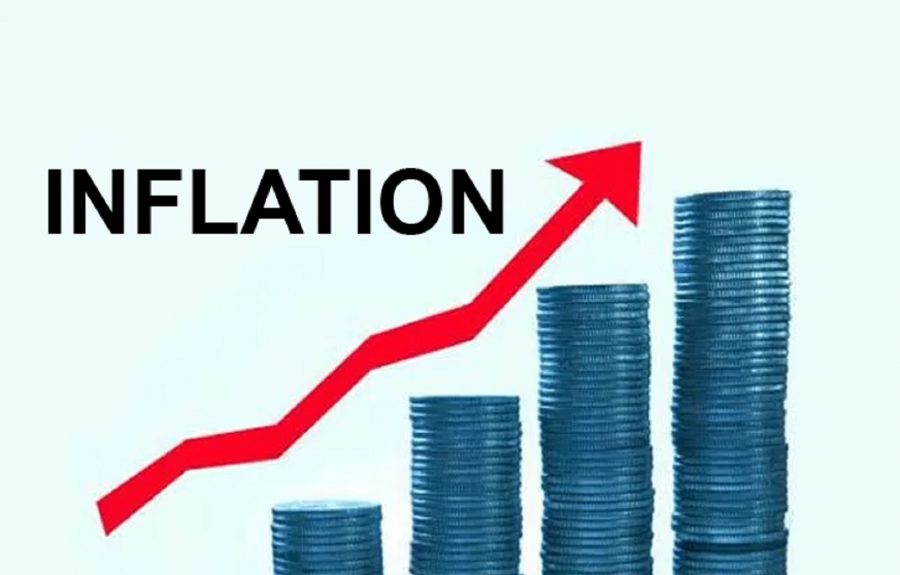
Nigeria Braces for Inflation Surge, CBN Projects 32.63% Rate in March 2024

0

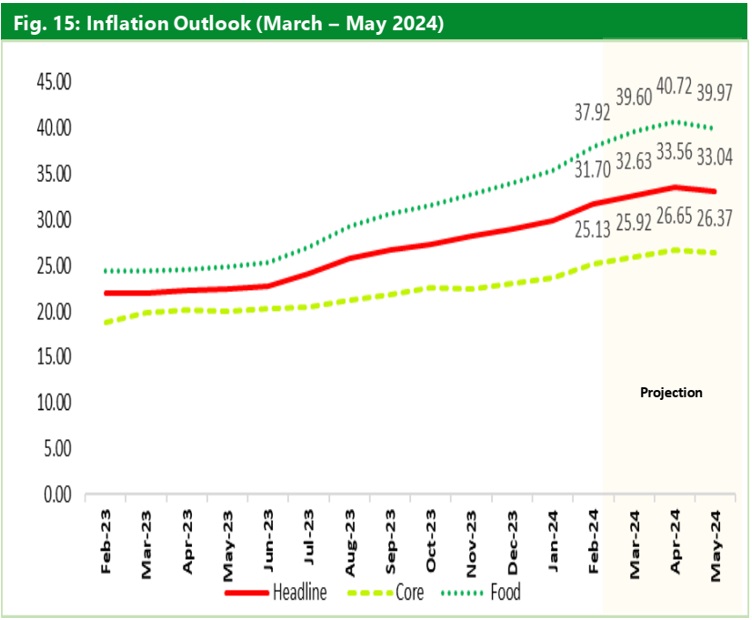
Muhammad Sani Abdullahi, Deputy Governor of the Economic Policy Directorate at the Central Bank of Nigeria (CBN), presented projections indicating a substantial rise in headline inflation. Abdullahi disclosed these forecasts during the CITI-CEEMA Macro Conference held in London on March 20, 2024.

Drawing from insights shared during Abdullahi’s presentation, the anticipated surge in inflation, expected to soar to 32.63% in March 2024, is ascribed to three critical factors: escalated energy costs, the reverberations of exchange rate fluctuations, and persistent concerns surrounding insecurity.

Abdullahi’s presentation noted the following drivers of inflation:

High Energy Prices: The removal of fuel subsidies has triggered a ripple effect, leading to escalated expenses across various sectors including household utilities, transportation, and production costs.

Exchange Rate Passthrough: The depreciation of the naira, influenced by market-determined exchange rate policies, is anticipated to exert a passthrough effect on domestic prices, amplifying inflationary pressures.

Insecurity: Lingering security challenges have disrupted food production activities, coinciding with the conclusion of the harvest season. Additionally, inflated costs of farm inputs further exacerbate the inflationary trend, particularly in the food sector.

Despite the somber outlook, the CBN remains cautiously optimistic, foreseeing a potential reversal in the inflation trajectory commencing from May 2024. This optimism is underpinned by a strategic framework designed to mitigate inflationary pressures through various initiatives.

Key measures outlined by the CBN to combat inflation include the adoption of an Inflation Targeting Framework, enhanced communication strategies, and a pivot towards a more stringent monetary policy stance.

Notably, the Monetary Policy Rate (MPR) has been subject to a significant hike of 400 basis points, soaring to an unprecedented 22.75%. Simultaneously, the Cash Reserve Ratio (CRR) has been adjusted upwards to 45%, from the previous 32.5%. Furthermore, adjustments have been made to the asymmetric corridor surrounding the MPR, signaling a robust approach to managing inflation expectations.

In light of persistent inflationary pressures, in February 2024, Nigeria’s headline inflation rate surged to 31.70%, marking a notable increase from 29.90% recorded in January 2024. This surge persisted despite the robust adjustment of the Monetary Policy Rate (MPR), highlighting the entrenched structural impediments within Nigeria’s economy.

Murtala Sabo Sagagi, a member of Nigeria’s Monetary Policy Committee (MPC), noted the limitations of traditional monetary policy tools in addressing systemic issues such as insecurity and food shortages.

Sagagi’s remarks underline the need for a comprehensive approach including economic and social rejuvenation to effectively tackle Nigeria’s inflationary challenges. Experts have warned that without addressing these underlying issues, any monetary policy adjustments may yield limited results in controlling inflation rates.

With Nigerians barely surviving under the current inflation rate, economists warn that inflation at 32.63% will come with dire implications, permeating various facets of the economy. Such high inflation rates, they say, erode purchasing power, exacerbate poverty levels, and hamper economic growth.

In addition to businesses facing heightened uncertainty, leading to reduced investment and job creation, they warn that vulnerable populations, particularly those on fixed incomes, will be forced to bear the heightened brunt of soaring prices, further exacerbating income inequality.

However, they advised that addressing these challenges requires a multi-pronged approach, encompassing both monetary and fiscal measures, alongside structural reforms to address underlying vulnerabilities.

How To Invest Smartly; Investing is Recruiting Assets

0

The Igbo Nation says “Uwa bu ahia” which means, literally, that the world is a marketplace. And in markets, frictions are fixed by providing products and services which customers buy from producers. The whole global thesis of business is anchored on the constructs that products and services must be created to overcome frictions which customers have.

But how do you create products and services? You need to build businesses which are the vehicles through which those products and services are created.

Join me at Tekedia Mini-MBA LIVE today as I discuss Why, How, What, etc to do, as resources are mobilized to create those businesses which are necessary to bring equilibrium in the marketplace. Join us here

Sat, March 23 | 7pm-8.30pm WAT | Fundamental Investing Principles and Philosophies – Ndubuisi Ekekwe, Tekedia Capital | Zoom link

Investing is Recruiting Assets

The best time to audition for a great job is when there is no advertised job. And the best time to build a fundraising pipeline is when you are “not fundraising”.

A job recruiter has limited space available for the top talent. Similarly, an investor has limited assets the person could acquire, limited by the available capital. So, what can we learn from recruiting when we’re investing?

Join me at Tekedia Institute in an hour as we examine the fundamental principles and  philosophies of investing

Anticipating A 5,000X ROI: BlockDAG Sets Its Sights On Outshining Bitcoin Cash And Surpassing Aptos’s Market Stability In 2024

0

As the cryptocurrency landscape evolves, Bitcoin Cash and Aptos are making strides with innovative derivatives and resilience against market volatility. However, BlockDAG is setting a new standard with its transformative presale, offering unparalleled growth potential. With a structured approach across 45 batches, BlockDAG presale ensures equitable participation and promising returns.

As it enters its fourth batch, the success of its presale is already evident, with substantial funds raised and a significant price increase anticipated in the next batch. BlockDAG is redefining investment opportunities in the crypto market. 

Revolutionizing the Future with Bitcoin Cash

Coinbase Derivatives is introducing an innovative venture into the Bitcoin Cash sector by planning to offer cash-settled futures contracts for Bitcoin Cash (BCH) starting April 1, 2024. This initiative by Coinbase could redefine these assets as commodities, sidestepping regulatory challenges, and has sparked widespread market interest.

This development is significant, reshaping perceptions of cryptocurrency regulatory classifications and illustrating the sector’s evolving sophistication and institutional appeal. The anticipation surrounding this Bitcoin Cash development promises to boost market liquidity and attract substantial investor engagement, signifying a bullish outlook for this cryptocurrency. 

Aptos Demonstrates Strength Against Bitcoin’s Volatility

Aptos has been mirroring Bitcoin’s price movements with remarkable resilience, often diverging to achieve significant gains. Despite Bitcoin’s recent dips, Aptos has remained robust, with a 16% price increase noted since March 14, contrasting with Bitcoin’s 12% decrease. This indicates Aptos’ capacity to maintain its momentum independently of Bitcoin’s fluctuations, highlighting its strong market presence.

BlockDAG: Transforming Investment Returns in 2024

BlockDAG is emerging as a transformative force in the crypto market, with analysts forecasting a 5,000x growth potential. Its low presale price point and the anticipation of substantial returns by 2024 position it as a formidable competitor in the cryptocurrency industry, launched from the altcoin market.

With a carefully structured presale across 45 batches, BlockDAG ensures equitable participation opportunities, offering investors a chance to partake in the forthcoming financial upturn. This presale strategy not only promises significant returns but also fosters a collaborative community, enhancing the investing experience and supporting early backers with promising liquidity and trading prospects.

BlockDAG’s ongoing presale is in its fourth batch, with BDAG coins being offered at the competitive price of $0.0025. The ongoing presale has seen swift sales, with 250 million out of the available 800 million coins already sold in a matter of hours. As the presale enters its fifth batch, the price will see a substantial increase of 50% to $0.003. The presale’s success is notable, with over $7.3 million raised so far.

Concluding Thoughts

While Bitcoin Cash and Aptos are making notable advancements in their respective areas, BlockDAG stands out as a game-changer in the cryptocurrency market. Its well-orchestrated presale is not only attracting significant investment but also paving the way for exponential growth. As BlockDAG continues to sell out quickly in its presale phases, it is clear that investors are recognizing its potential as a major player in the future of digital currencies. With its innovative approach and promising prospects, BlockDAG is poised to revolutionize the investment landscape in the cryptocurrency sector.


Join BlockDAG Presale Now:

Website: https://blockdag.network

Presale: https://purchase.blockdag.network

Telegram:https://t.me/blockDAGnetworkOfficial

Discord: https://discord.gg/Q7BxghMVyu