DD
MM
YYYY

PAGES

DD
MM
YYYY

spot_img

PAGES

Home Blog Page 3198

What Nigeria Can Learn On How The US Approaches The MicroStrategy Business Model

1

These Americans are just unique in the way they do things. Imagine one company holding around 214,246 bitcoin, valued in $billions, in an asset class the nation’s top private-sector banker (JP Morgan’s Dimon) has called “pet rock”, and the nation’s investing legend (Buffett) has called a “probably rat poison squared.”

In engineering, they have this curve they call gaussian distribution curve where at the center, you have massive concentration but at the edges, they have few things (bell shape like). Companies like MicroStrategy play near the edges and in the end, America can cover all parts of that distribution. Yes, if bitcoin turns out just fine, America is well represented to benefit.

I am not a bitcoin person, but I respect how you can have a mix of everything in an economy. I do hope one day, Nigeria can offer us the option to have the capacity to cover every space in the gaussian curve, instead of asking all of us to follow a rectangular shape where we all must be boxed to think in the same way! Indeed, as that happens, the government must engineer policies that will make the economy resilient to avoid catastrophic impacts.

(Not telling anyone to buy coins; just commenting on the benefits of having radical, cool, hot, etc, minds in an economy, with rights to win and lose in a free market system)

MicroStrategy Vigorously Adding Bitcoin to its Balance Sheet

Fidelity, Grayscale adds Ethereum Staking on ETF Applications

0

In recent years, the financial landscape has witnessed the advent of a new investment vehicle: Ether Spot Exchange-Traded Funds (ETFs). These innovative products offer investors exposure to Ether, the native cryptocurrency of the Ethereum blockchain, without the need for direct ownership of digital assets.

Fidelity and Grayscale, two of the most prominent financial services corporations, have recently taken a significant leap in the cryptocurrency domain by filing for Ethereum staking on their Ether ETF applications. These moves signal a growing confidence in Ethereum’s potential and a commitment to integrating blockchain technology into traditional investment vehicles.

An Ether Spot ETF is designed to track the price of Ether closely, allowing investors to buy shares in the ETF through traditional brokerage accounts. This eliminates the complexities associated with purchasing and storing cryptocurrencies directly. The “spot” aspect refers to the ETF’s investment in actual Ether tokens at current market prices, as opposed to derivative contracts.

Ethereum staking involves holding funds in a cryptocurrency wallet to support the operations of a blockchain network. It is essentially a way to earn interest on one’s digital assets. By incorporating Ethereum staking into their ETFs, Fidelity and Grayscale are not only providing a platform for investors to gain exposure to Ethereum but also offering a means to participate in the network’s security and success.

Ethereum staking is a process that involves committing your Ether (ETH) to the Ethereum 2.0 network to support operations and security. As a staker, you’ll participate in transaction validation (similar to mining) on the new proof-of-stake (PoS) blockchain. In return for your service, you earn rewards in the form of additional ETH.

The shift from proof-of-work (PoW) to PoS is a significant change for Ethereum as it moves towards a more energy-efficient and scalable blockchain. Staking is at the heart of this transition, providing a way for users to actively participate in the network’s security and governance.

The decision by these financial giants to embrace Ethereum staking comes at a time when the cryptocurrency market is experiencing unprecedented growth. Ethereum, in particular, has seen a surge in popularity due to its smart contract capabilities and its pivotal role in the burgeoning field of decentralized finance (DeFi).

Fidelity’s and Grayscale’s Ether ETF applications with staking options reflect their belief in Ethereum’s long-term value proposition. It also demonstrates their willingness to innovate and adapt to the evolving landscape of digital assets. As regulatory frameworks around cryptocurrencies continue to develop, Fidelity and Grayscale’s pioneering efforts may well set a precedent for other institutions looking to explore similar avenues.

The integration of Ethereum staking into Fidelity’s and Grayscale’s Ether ETF applications is a bold step forward for both companies. It underscores their foresight in recognizing the importance of blockchain technology and its potential impact on the financial industry. As they await approval from regulatory bodies, the crypto community watches with keen interest, anticipating the potential ripple effects this could have on the market at large.

As the Ethereum network continues to grow and find new applications through decentralized finance (DeFi) and non-fungible tokens (NFTs), the potential for Ether Spot ETFs seems promising. They offer a bridge between traditional finance and the burgeoning world of cryptocurrencies, potentially leading to broader adoption and integration.

Ether Spot ETFs represent a significant step forward in cryptocurrency investment products. They provide an accessible path for investors looking to diversify their portfolios with digital assets while mitigating some of the risks associated with direct cryptocurrency ownership.

Immutable, Polygon, King River and KeyRing secures funding

Immutable, Polygon and King River team up to raise $100 million for web3 gaming fund.

Immutable, Polygon, and King River have joined forces in an ambitious endeavor to secure a substantial $100 million investment for the burgeoning Web3 gaming sector. This strategic alliance aims to catalyze innovation and growth within the industry, leveraging each entity’s unique strengths to foster a thriving ecosystem for decentralized gaming experiences.

Immutable, renowned for its pioneering work in creating scalable blockchain solutions, brings to the table its expertise in non-fungible tokens (NFTs) and digital asset infrastructure. Polygon, with its efficient and versatile multi-chain system, offers a platform that ensures swift and cost-effective transactions. King River Capital, a seasoned venture capital firm, provides the financial acumen and industry insights necessary to navigate the complex landscape of technology investments.

Together, these three powerhouses are poised to revolutionize the Web3 gaming space. Their $100 million fund will serve as a launchpad for innovative game developers who are eager to explore the possibilities of blockchain technology. By offering financial support and strategic guidance, Immutable, Polygon, and King River aim to unlock new levels of creativity and engagement in games that leverage the trustless, transparent nature of decentralized networks.

The collaboration underscores a shared vision among the partners: to create a world where gaming transcends traditional boundaries, empowered by the security and freedom of blockchain technology. As this fund takes shape, it is set to become a cornerstone of support for developers who dare to reimagine gaming’s future.

Keyring, a pioneering financial technology firm, has successfully secured a substantial $6 million funding round to further unlock the potential of decentralized finance (DeFi) for institutional investors. This significant capital injection will enable Keyring to enhance its cutting-edge platform, which aims to bridge the gap between traditional financial institutions and the burgeoning DeFi sector.

The DeFi movement has been gaining momentum, offering a permissionless and transparent financial ecosystem built on blockchain technology. However, despite its rapid growth, DeFi has remained largely inaccessible to institutional players due to concerns over security, compliance, and complexity. Keyring’s innovative solutions are designed to address these challenges, providing institutions with the tools they need to safely and efficiently navigate the DeFi landscape.

With this latest round of funding, Keyring plans to expand its team of experts, invest in research and development, and forge strategic partnerships within the industry. The company’s mission is to demystify DeFi for institutions, enabling them to participate in this revolutionary shift in finance with confidence.

As Keyring embarks on this exciting new chapter, it remains committed to its vision of making DeFi an integral part of the institutional investment portfolio. With a strong foundation and a clear roadmap for growth, Keyring is well-positioned to lead the charge in integrating DeFi into mainstream finance.

Japanese Pension Fund Seeks Information on Bitcoin

0

The Government Pension Investment Fund (GPIF) of Japan, known as the world’s largest pension fund, has recently expressed interest in gathering detailed information on Bitcoin. This move signifies a potential shift in the fund’s investment strategy and reflects the growing interest in cryptocurrency as a legitimate asset class. This decision marks a significant shift in the perception of cryptocurrency as a viable asset class for institutional investors.

The Government Pension Investment Fund (GPIF), which has $1.4 trillion in assets under management, requested data on potential investment diversification tools such as bitcoin and precious metals like gold, which the company considers illiquid and does not currently hold, it said Tuesday.

The fund, which manages retirement savings for millions, is now exploring the potential benefits and risks associated with Bitcoin investments. The inquiry comes amid growing interest in digital currencies from mainstream financial entities and signals a possible new trend in retirement fund management.

As digital currencies continue to gain traction in the global financial market, the GPIF’s inquiry into Bitcoin underscores the need for traditional financial institutions to understand and possibly integrate new forms of investment into their portfolios. With Japan being one of the leading nations in terms of technological advancement and cryptocurrency adoption, the GPIF’s interest could pave the way for other institutional investors to follow suit.

The GPIF manages approximately $1.4 trillion in assets and its decision to seek information on Bitcoin could have significant implications for the cryptocurrency market. If the fund decides to allocate even a small percentage of its assets to Bitcoin, it could drive up demand and potentially increase the digital currency’s price.

However, such a move would not be without its risks. Bitcoin and other cryptocurrencies are known for their volatility, and there are concerns about regulatory changes that could affect their value. The GPIF’s approach to this new asset class will likely be cautious, with a focus on thorough research and risk assessment.

As part of their due diligence, the pension fund is examining various aspects of Bitcoin, including its market performance, security measures, and regulatory environment. The fund’s management is also considering how Bitcoin might fit into their broader investment strategy, which traditionally focuses on more conservative assets.

This move could pave the way for other large-scale investors to consider cryptocurrencies as part of their portfolios. However, it also raises questions about market volatility and the long-term stability of digital assets.

The GPIF’s interest in Bitcoin is a testament to the cryptocurrency’s growing acceptance among mainstream financial entities. It remains to be seen how this will impact the fund’s investment strategy and what ripple effects it may have on the broader financial market.

The pension fund’s interest in Bitcoin underscores the need for clear and comprehensive information on cryptocurrencies. As the financial world evolves, it’s becoming increasingly important for institutional investors to understand and navigate the complexities of this emerging asset class.

For the time being, GPIF invests in domestic bonds, domestic stocks, foreign bonds, foreign stocks, private equity, real estate and infrastructure. While the pension fund is seeking information about bitcoin, there’s no guarantee it will choose to invest in the world’s largest cryptocurrency once the evaluation is completed.

MicroStrategy Vigorously Adding Bitcoin to its Balance Sheet

0

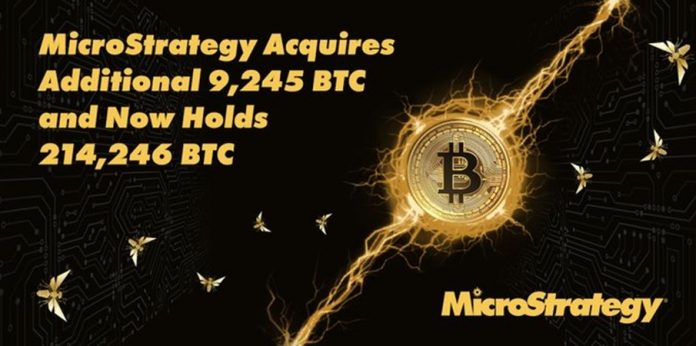
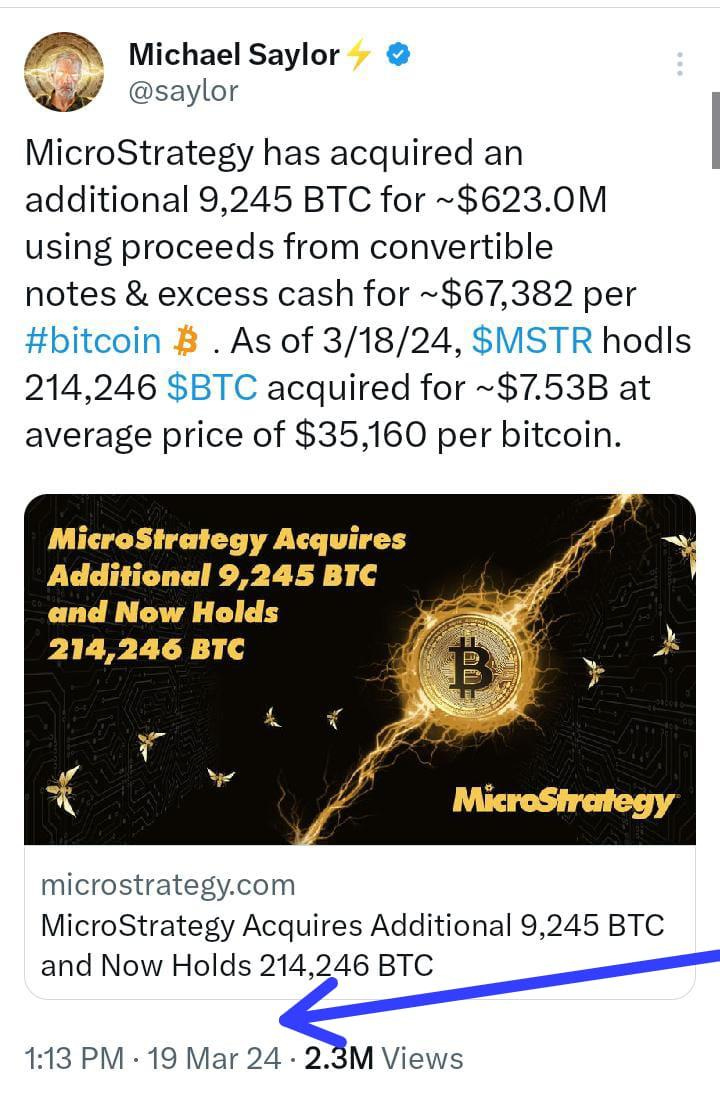
MicroStrategy buys 9245 Bitcoins.

MicroStrategy, the business intelligence company, has recently made a significant addition to its cryptocurrency portfolio by purchasing an additional 9245 bitcoins. This acquisition further cements MicroStrategy’s position as one of the leading corporate holders of bitcoin, showcasing their strong belief in the long-term value of this digital asset.

MicroStrategy’s approach to storing Bitcoin is a critical aspect of its investment strategy, ensuring the safety and security of its digital assets. The company utilizes a combination of cold storage and advanced cryptographic techniques to safeguard its Bitcoin holdings.

The company’s CEO, Michael Saylor, has been a vocal advocate for bitcoin, often citing its potential as a store of value and a hedge against inflation. With this latest purchase, MicroStrategy’s total holdings amount to an impressive sum, reflecting their strategic commitment to integrating bitcoin into their treasury reserves.

As the cryptocurrency market continues to evolve, MicroStrategy’s investment strategy highlights the growing acceptance of digital currencies as a legitimate component of a diversified corporate investment portfolio. Their continued investment in bitcoin signals confidence in its future and a willingness to embrace innovative financial instruments. This strategic move is driven by several factors that align with the company’s vision and the broader market trends.

Firstly, MicroStrategy assesses Bitcoin as a dependable store of value and an attractive investment asset with more long-term appreciation potential than holding cash. Given the current economic environment characterized by uncertain inflation prospects, Bitcoin presents an alternative to traditional assets such as gold.

Secondly, MicroStrategy’s adoption of Bitcoin is a response to the growing acceptance of cryptocurrencies as legitimate financial assets. By increasing its Bitcoin holdings, MicroStrategy is capitalizing on the early stages of what it perceives as a long-term trend towards digital currency adoption.

Thirdly, this strategy serves as a hedge against fiat currency devaluation. With central banks around the world engaging in significant monetary expansion, there’s a justifiable concern over the diminishing purchasing power of fiat currencies. Bitcoin’s capped supply counters this inflationary risk.

Lastly, MicroStrategy believes that their Bitcoin investment will attract new investors who are looking to gain exposure to cryptocurrencies without directly purchasing or holding them. This could potentially drive up the company’s stock price and shareholder value.

MicroStrategy’s rigorous addition of Bitcoin to its balance sheet is a multifaceted strategy aimed at value preservation, capitalizing on new financial trends, hedging against inflation, and attracting cryptocurrency-focused investors.

Furthermore, MicroStrategy has established strict governance policies and operational procedures that dictate how Bitcoin transactions are initiated, executed, and recorded. This ensures that all movements of the cryptocurrency are monitored and managed with the highest level of scrutiny.

By prioritizing security through these measures, MicroStrategy demonstrates its commitment to protecting its substantial Bitcoin investment and maintaining investor confidence in its cryptocurrency strategy.

This move by MicroStrategy may encourage other companies to consider the potential benefits of adding cryptocurrencies to their own investment strategies. As more organizations observe MicroStrategy’s proactive approach to bitcoin investment, we may see an increase in corporate adoption of cryptocurrencies, potentially leading to greater stability and maturity in the market.

Flutterwave Named Fast Company’s Most Innovative Company for Europe, Middle East and Africa 2024

0

Flutterwave, the African fintech giant, has been named Fast Company’s Most Innovative Company for Europe, Middle East and Africa in 2024. This prestigious recognition is a testament to Flutterwave’s relentless pursuit of innovation and excellence in the fintech space.

Since its inception, Flutterwave has been at the forefront of revolutionizing the payment systems across the continent. With a vision to simplify payments for endless possibilities, Flutterwave has developed a platform that allows businesses to make and accept payments anywhere in Africa. Their technology serves as a bridge between Africa and the global economy, enabling seamless transactions in multiple currencies.

The impact of Flutterwave’s innovation is evident in its expansive growth and the increasing number of businesses that rely on its platform for their operations. The company’s commitment to providing solutions tailored to the African market has made it an indispensable tool for businesses looking to expand their reach across borders.

Flutterwave has developed a platform that allows businesses to make and accept payments anywhere in Africa. This innovative solution provides a seamless and secure payment gateway for companies looking to expand their reach across the continent. With Flutterwave’s platform, businesses can easily manage transactions in multiple African currencies, ensuring a smooth and efficient payment process for both the business and its customers.

Firstly, its robust infrastructure is designed to support a seamless cross-border payment experience, which is critical in today’s globalized economy. Unlike many of its competitors, Flutterwave offers a single API that enables businesses to process payments anywhere in Africa.

Another aspect where Flutterwave diverges from others is its commitment to security and compliance. With PCI-DSS Level 1 certification and adherence to strict regulatory standards, Flutterwave ensures that customer data and transactions are protected with the highest level of security.

Furthermore, Flutterwave’s user-centric approach is evident in its intuitive user interface and user experience (UI/UX) design. The platform is built with the end-user in mind, making it easy for individuals and businesses to navigate and complete transactions with minimal friction.

In addition to these factors, Flutterwave’s diverse range of payment options sets it apart. It supports over 150 currencies and multiple payment methods, including bank transfers, mobile money, and card payments, catering to the varied preferences of consumers across different regions.

Lastly, Flutterwave’s partnership strategy amplifies its reach and effectiveness. By collaborating with various financial institutions, technology companies, and merchants, Flutterwave has created an expansive network that benefits all stakeholders involved in the payment processing ecosystem.

Flutterwave’s differentiation lies in its comprehensive approach to payment processing, which encompasses ease of use, security, versatility, and strategic partnerships. These elements collectively contribute to Flutterwave’s reputation as a trailblazer in the fintech industry.

The platform’s robust infrastructure is designed to handle high volumes of transactions with utmost reliability, making it an ideal choice for businesses of all sizes. By leveraging Flutterwave’s payment platform, businesses can tap into the growing African market, providing their services to a wider audience while also benefiting from the platform’s advanced security measures and dedicated support team.

Flutterwave’s recognition by Fast Company highlights the company’s role not only as a leader in the fintech industry but also as a catalyst for economic growth and development in the region. As Flutterwave continues to break barriers and set new standards, it remains dedicated to empowering businesses and facilitating economic prosperity throughout Europe, Middle East, and Africa.