
DD
MM
YYYY

PAGES

DD
MM
YYYY

spot_img

PAGES

Home Blog Page 32

Saudi Arabia and Qatar Sign Landmark High-Speed Rail Agreement

0

Saudi Arabia and Qatar formalized an agreement to construct a high-speed electric passenger railway linking Riyadh and Doha, marking a significant step in Gulf cooperation and infrastructure development.

The deal was signed during Qatari Emir Sheikh Tamim bin Hamad Al Thani’s official visit to Riyadh, where he met with Saudi Crown Prince Mohammed bin Salman.

The signing ceremony involved Saudi Minister of Transport and Logistic Services Saleh Al Jasser and Qatari Minister of Transport Sheikh Mohammed bin Abdulla bin Mohammed Al Thani, occurring on the sidelines of the eighth Saudi-Qatari Coordination Council meeting.

The 785 km line will connect King Salman International Airport in Riyadh to Hamad International Airport in Doha, with intermediate stops in the Saudi cities of Hofuf (Al-Ahsa) and Dammam. Trains will operate at speeds exceeding 300 km/h, reducing the journey between the capitals to approximately two hours—down from the current 6–7 hours by road.

The network is projected to serve over 10 million passengers annually and is expected to be completed within six years. The project is anticipated to create around 30,000 direct and indirect jobs during construction and operations, boosting sectors like trade, tourism, and logistics.

It aligns with Saudi Vision 2030 and Qatar National Vision 2030, emphasizing sustainable transport and regional integration. This agreement symbolizes the deepening ties between the two nations, which were strained by a 2017–2021 diplomatic blockade led by Saudi Arabia and allies over Qatar’s foreign policy.

Relations normalized in January 2021 at the Al-Ula summit, leading to frequent high-level meetings and joint initiatives, including on Gaza ceasefire efforts and regional security. The rail project is part of wider pacts signed during the visit, covering defense, investment, food security, media, and cybersecurity.

Social media on X reflects enthusiasm for the project, with users highlighting its role in Gulf connectivity and economic growth, emphasizing the strategic alignment with national visions and job creation. This development could pave the way for further GCC-wide rail networks, enhancing mobility across the Arabian Peninsula.

Saudi Vision 2030: Diversify Saudi Arabia’s economy away from oil dependency, develop public service sectors (education, health, infrastructure, recreation, tourism), and create a vibrant society with strong Islamic values and national identity.

A Vibrant Society Strong roots in Islamic principles and national pride. Healthy lifestyle, cultural heritage, entertainment, and sports. Increase household spending on culture/entertainment from 2.9% to 6%, raise life expectancy from 74 to 80 years, triple number of UNESCO heritage sites

A Thriving Economy More job opportunities for citizens especially women and youth. Increase private-sector contribution to GDP. Attract foreign direct investment (FDI). Develop non-oil sectors: tourism, entertainment, mining, logistics, manufacturing, renewable energy.

An Ambitious Nation Effective, transparent, and accountable government. Responsible public spending and fiscal sustainability. Empowering citizens through e-government and anti-corruption measures.

Saudi Vision 2030 remains the kingdom’s central roadmap and continues to evolve with annual progress reports and new initiatives like the recent Shareek program to attract $3 trillion in private investment by 2030.

Vision 2030 has already transformed Saudi society and economy more in nine years than in the previous five decades, with many social and economic targets achieved ahead of schedule, though the most ambitious mega-projects are still mid-construction.
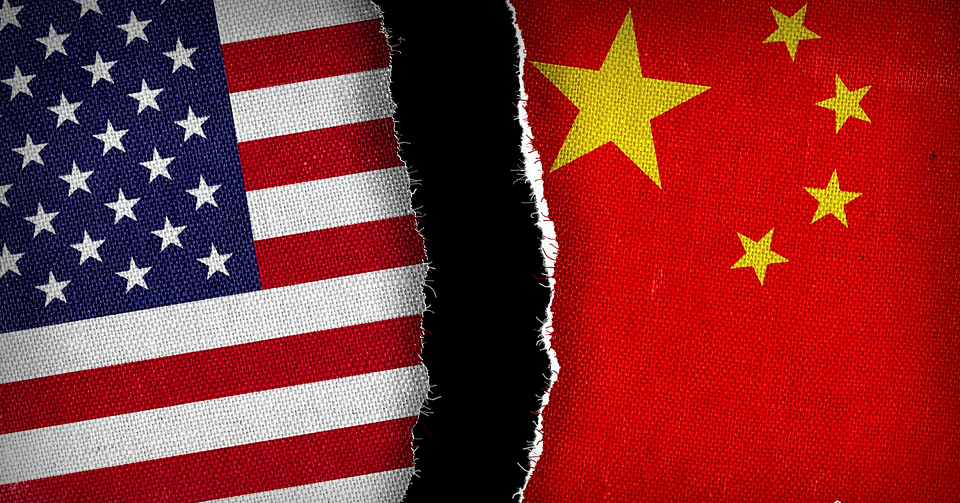

Background of US-China AI Chip Tensions

0

The global race for AI dominance has intensified US-China tech rivalry, with semiconductors like Nvidia’s GPUs at the center.

Under previous Biden-era export controls enforced through the US Department of Commerce’s Bureau of Industry and Security, sales of advanced AI chips to China were heavily restricted to curb Beijing’s military and surveillance capabilities.

Nvidia responded by developing compliant versions like the H20 chip, but these were less powerful and came with revenue-sharing deals. The H200, launched in 2023 as an upgrade to the H100, offers significantly higher performance—nearly six times that of the H20 for AI training tasks—making it a prized asset.

On December 8, 2025, President Donald Trump announced via Truth Social that the US would permit Nvidia to export H200 chips to “approved customers” in China and other countries, marking a reversal of stricter Biden policies.

Exports require vetting by the Commerce Department for national security. Sales of Nvidia’s more advanced Blackwell (B200) and upcoming Rubin chips remain banned. The US government will receive a 25% surcharge on H200 sales up from 15% on prior chips, framed by Trump as a win for jobs, manufacturing, and taxpayers.

Trump stated he informed Chinese President Xi Jinping, who “responded favorably.” This follows Nvidia CEO Jensen Huang’s recent Capitol Hill meetings with Trump. Similar terms will apply to competitors like AMD and Intel, potentially opening a $10-20 billion market in China for US firms.

Nvidia hailed the move as a “thoughtful balance” that supports American competitiveness without fully ceding ground. Shares rose ~2% initially on the news but pared gains later.

On December 9, 2025, reports emerged that Beijing is preparing to impose its own restrictions on H200 imports, effectively curbing widespread access even after Trump’s approval. According to sources familiar with the matter.

Chinese regulators are exploring “limited access” mechanisms, requiring buyers like data centers, AI firms to obtain government approval before purchasing. This could prioritize state-owned enterprises or align with national security reviews.

The move aligns with China’s “Made in China 2025” strategy and recent bans on foreign chips in new state-funded data centers. Beijing aims to triple domestic AI chip production by 2026, reducing reliance on US tech amid retaliatory tariffs and export curbs.

Customs has also tightened semiconductor import checks, delaying shipments. Analysts note Beijing’s concerns over potential US “backdoors” in chips, alongside a desire to boost local players like Huawei whose Ascend chips are gaining traction.

This dual-layer restriction—US export controls plus Chinese import limits—could blunt the deal’s impact. As Swissquote Bank’s Ipek Ozkardeskaya noted, it may not significantly boost Nvidia’s China revenue unless extended to newer lines like Blackwell.

For Nvidia ($NVDA): China accounts for ~13% of Nvidia’s revenue, but restrictions have forced pivots to compliant chips. The H200 approval could add $5-10 billion annually if unhindered, but Chinese limits might cap it at vetted buyers. Stock dipped 0.4% post-FT report.

AMD and Intel stand to gain similarly, but critics like Council on Foreign Relations’ Chris McGuire warn it risks eroding US AI leadership by accelerating China’s domestic tech. Coinciding with the news, US authorities busted a $160M ring smuggling H100/H200 GPUs to China, seizing $50M+ in hardware—highlighting enforcement gaps.

This tit-for-tat could spur EU and Asian allies to tighten their own controls, while boosting Huawei’s market share in China. Trump’s move eases one barrier but meets another from Beijing, underscoring the fragile US-China tech detente.

Watch for formal Chinese guidelines in the coming weeks, which could further shape AI supply chains.

ECOWAS Declares Regional State of Emergency as Coups Spread and Nigeria Leads Rapid Intervention in Benin

0
Empty white clear flag waving against clean blue sky, close up, isolated with clipping path mask alpha channel transparency

The Economic Community of West African States has formally declared a state of emergency across the region, a rare step that underscores how badly the security and political landscape has deteriorated following a wave of coups, mutinies, and attempted takeovers in recent months.

Omar Touray, president of the ECOWAS Commission, announced the decision on Tuesday at the 55th session of the Mediation and Security Council at the ministerial level in Abuja. He told delegates that the pattern of attacks on democratic institutions shows that West Africa has reached a breaking point and can no longer proceed as though these events are isolated cases.

Touray said the rising turmoil demands “serious introspection on the future of our democracy and the urgent need to invest in the security of our community.” His remarks came only days after soldiers in the Benin Republic attempted to seize power, a mutiny that unfolded less than a month after military officers in Guinea-Bissau took control of government buildings and halted the electoral process.

Gunfire erupted across several neighborhoods in Cotonou on Sunday as heavily armed officers appeared on state television to announce the dissolution of national institutions under a group calling itself the Military Committee for Refoundation, led by Colonel Tigri Pascal. They declared the suspension of the constitution and announced the closure of land, air, and maritime borders. The soldiers claimed that worsening insecurity in northern Benin and the alleged neglect of fallen troops compelled them to strike.

The coup attempt did not last long. Benin’s President Patrice Talon confirmed that loyal forces regained control within hours, helped by immediate military assistance from Nigeria. In a televised address, he expressed condolences to the families of victims and promised that hostages held by fleeing mutineers would be recovered.

The intervention unfolded through air and ground operations executed at Talon’s request. Presidential spokesperson Bayo Onanuga said President Bola Tinubu ordered the Nigerian Air Force to enter Benin’s airspace and help eject the mutineers from key locations, including the national broadcaster and a military camp where they had regrouped. Sources told PREMIUM TIMES that Nigerian fighter jets conducted targeted drops of explosives to scare off the coup plotters, while army battalions from Ikorodu, Badagry, and Owode in Ogun State were mobilized across land borders.

The Nigerian presidency later explained that the operation was conducted under Benin’s coordination and in line with the ECOWAS protocol guiding rapid responses in defense of constitutional order.

“The government also requested Nigerian ground forces, strictly for missions approved by Benin’s command authority, in support of protecting constitutional institutions and containing armed groups,” the presidency said.

ECOWAS itself endorsed the intervention and ordered the deployment of a regional troop with personnel from Nigeria, Sierra Leone, Côte d’Ivoire, and Ghana. The bloc condemned the attempted takeover as “a subversion of the will of the people of Benin.”

Nigeria’s Chief of Defense Staff, General Olufemi Oluyede, confirmed that the armed forces acted entirely on Tinubu’s directive.

“Ours is to comply with the directive of the Commander-in-Chief,” he said, noting that all requested deployments were executed.

Tinubu praised the military after order was restored, saying the operation showed their commitment to defending democratic institutions across the region.

The speed of the response is said to have helped prevent what could have become another prolonged crisis in West Africa, a region that has seen a string of successful coups in Mali, Burkina Faso, Niger, and Guinea since 2020. Although Benin had gone nearly half a century without a military takeover, analysts say the sharp rise in insurgent attacks in the country’s northern region has created underlying tension.

President Talon has been in office since 2016 and is expected to leave office next April. Political analysts say the attempted mutiny, though short-lived, reinforces wider anxieties about institutional resilience ahead of leadership transitions across West Africa.

The instability also sharpened tensions with the Alliance of Sahel States, a bloc formed by Mali, Burkina Faso, and Niger after they split from ECOWAS. The AES accused Nigeria of violating its airspace after a Nigerian military transport plane landed in Burkina Faso on Monday. The alliance announced that its air defenses were on maximum alert and authorized to neutralize any unauthorized aircraft.

Nigeria maintained that the incident was unrelated to the events in Benin. Nigerian Air Force spokesperson Ehimen Ejodame said the C-130 aircraft made a precautionary landing in Bobo-Dioulasso due to a technical concern detected shortly after takeoff from Lagos on a flight to Portugal. He said the landing followed standard aviation protocols and was lawful. The crew and nine military passengers remain safe, though AES officials prevented the aircraft from departing immediately.

The Senate in Abuja has now granted Tinubu’s request to dispatch troops officially for what the president described as a peace-keeping mission in Benin. Senate President Godswill Akpabio read the request during Tuesday’s plenary before it was approved unanimously.

At the ECOWAS meeting, Touray warned that elections have become “a major trigger of instability” in the region, citing patterns of political manoeuvres that undermine democratic norms. Several countries, including Guinea, Benin, Gambia, and Cape Verde, are set to hold elections soon, raising concerns about whether current tensions will spill over into the polls.

He added that ECOWAS must negotiate new terms of security cooperation with the AES, especially because terrorist groups continue to attack borders shared with the breakaway states.

“We must pool our resources to confront the threats of terrorism and banditry, which operate without respect for territorial boundaries,” he said.

Touray urged the council to defend unity within ECOWAS at a moment when external pressures, internal fractures, and recurring coups are testing the foundations of the bloc more severely than at any other point in recent years.

While the Benin coup attempt collapsed quickly, the broader pattern shows a region struggling to contain a spiraling mix of political volatility, armed insurgency, tense civil-military relations, and diplomatic rifts between ECOWAS and its former members in the Sahel. West Africa now enters a period of heightened uncertainty under a formal regional state of emergency, with rising demands on Nigeria and a narrowing space for democratic stability across the sub-region.

Ozak AI Approaches Final Presale Stages as Analysts See 950% Surge After First Exchange Listing

0

Ozak AI is swiftly emerging as one of the most highly awaited AI-driven crypto launches in the present cycle, merging advanced artificial intelligence with DePIN to develop a next-generation infrastructure protocol. In the final stages of the presale, analysts now forecast that Ozak AI could yield up to a 950% surge shortly after its maiden major exchange listing-a projection supported by growing investor demand, an expanding set of partnerships, and a scalable intelligence framework designed to achieve long-term mainstream adoption.

Presale Acceleration in Phase 7

The momentum at Ozak AI is heating up during Stage 7, with a presale price of $0.014, marking one of the most aggressively growing AI presales this year. With 1,016,094,677.01 $OZ already sold and a total raise of $4,825,363.40, the project is inching closer toward sellout conditions. Analysts note that Ozak AI has already multiplied several times over from its early-stage valuation, breaking past the threshold that many projects experience prior to their high-demand listings on tier-one exchanges. The project still maintains a target listing price of $1.00, an ambitious yet increasingly realistic benchmark as adoption ramps up.

Why Analysts Expect Ozak AI to Rally After Listing

The projected 950% surge is rooted in Ozak AI’s multi-layered architecture that blends AI models, decentralized infrastructure, and cross-chain interoperability. Its AI-powered infrastructure enhances automation, predictive analytics, and decision-making across blockchain environments, while the DePIN foundation delivers scalable compute capacity without central dependencies. This dual-layer system is strengthened by token utilities such as staking, governance rights, and ecosystem expansion, all of which create sustainable value demand.

Security remains a defining factor behind the bullish outlook. Ozak AI recently completed an extensive audit through Sherlock DeFi, which found zero unresolved issues giving investors and analysts confidence in the protocol’s long-term reliability, especially as it prepares for exchange integration.

Partnership Momentum Strengthening Analyst Confidence

A critical driver of analyst optimism lies in Ozak AI’s rapidly expanding partnership network. Its collaboration with Hive Intel (HIVE) introduces access to high-velocity blockchain data covering wallet analytics, NFT behavior, DeFi trends, and transaction patterns empowering Ozak AI’s predictive models with deeper accuracy. Through its partnership with Weblume, Ozak AI integrates real-time market intelligence directly into the Web3 creation layer, allowing developers to deploy AI-powered dashboards and dApps without complex engineering requirements.

The protocol’s ecosystem is further enhanced by its partnership with Meganet, a bandwidth-sharing network boasting over 6.5 million nodes. This alliance dramatically strengthens the infrastructure layer by offering greater distributed compute power and reduced processing overheads. Analysts view this as a major advantage ahead of exchange listings, as scalability is a key factor evaluated by major platforms. Ozak AI’s collaboration with SINT adds yet another layer, an integrated system enabling instant auto-execution of market signals across cross-chain agents and AI-driven workflows.

Together, these partnerships paint a picture of a project ready for operational scale, making Ozak AI a top contender for early listing consideration in 2025.

Conclusion: Why Analysts Expect a 950% Jump Post-Listing

With its presale approaching completion, a growing suite of high-value partnerships, a transparent audited framework, and a global expansion strategy already underway, analysts increasingly agree that Ozak AI could witness a dramatic appreciation once it hits its first major exchange. The projected 950% surge is not merely speculative; it reflects the alignment of demand, technology, infrastructure, and real-world utility that Ozak AI has built with precision. As it moves closer to concluding its presale, the project now stands at the threshold of what could become one of the most defining AI token launches of the 2025 cycle.


For more information about Ozak AI, visit the links below:

Website: https://ozak.ai/

Twitter/X: https://x.com/OzakAGI

Telegram: https://t.me/OzakAGI

7 Ways to Tell if Your THCA Product Is Legit

0

THCA products have taken over the cannabis industry, and no one’s complaining. THCA or tetrahydrocannabinolic acid is a naturally occurring, non-psychoactive cannabinoid found abundantly in raw, live cannabis plants. You can consume it via vapes, flowers, topicals, or dabs.

That said, not all THCA products are legit. In many U.S. states, there is no regulatory body overseeing the production and sale of cannabinoid-based products, which is why fake THCA products exist. The good news? There are some ways to tell if your THCA product is legit. Let’s take a closer look at seven of these ways:

1.      Check for Third-Party Lab Reports (COAs)

A Certificate of Analysis or COA is arguably the best way to verify the quality of a THCA product. A legit product always, always has a batch-specific COA. A reputable brand will provide COAs from a verified third-party lab. Check the following things on the certificate: THCA% listed, total THC present, containment testing, including heavy metals, pesticides, and residual solvents.

2.      Scan the QR Code

In addition to COAs, you can also scan the QR codes printed on the back of THCA products. The link should lead you to the lab results on a verification page. If the QR code takes you to a generic website or an unrelated link, it’s best to take your business elsewhere. A brand making it hard to verify the batch you’re verifying is a huge red flag.

3.      Assess the Ingredient List

You should also assess the ingredient list of your THCA product, typically published on its packaging. Whether you’re buying hemp pre-rolls or THCA cartridges, make sure the following ingredients are not on the list: vitamin E acetate, ECT oil, PG/VG/PEG, or artificial sweeteners.

4.      Smell the Product and Consider the Texture

Another common way to tell if a THCA product is legit is to smell it. Natural THCA flowers have a rich, earthy, or fruity scent. They don’t smell like hay or chemicals. Next, consider the texture. Real THCA flowers feel sticky, but not overly wet or dry.

5.      Consider Packaging Quality

The packaging tells a lot about your THCA product. For instance, authentic packaging usually has tamper-evident seals, lot or batch numbers, manufacturer and expiration dates, and proper labeling. If the print quality is poor or the packaging has spelling mistakes, you might be holding a fake THCA product.

6.      Assess Online Presence

This is a no-brainer. Assessing the online presence and reputation of the cannabis brand you’re buying from is super important. The same goes for retailers.

A reputable cannabis retailer and dispensary like Delta8 Resellers has a user-friendly website with numerous THCA products. They have lab reports, which ensure transparency and confidence. A legit brand also has an established social media presence, so users can know more about their sourcing and manufacturing processes.

7.      Read Independent Customer Reviews

Lastly, you can read independent customer reviews of different cannabis retailers and dispensaries that offer THCA products. Legit brands have verified buyer reviews, a history of consistent products, and excellent customer service.

Conclusion

Ensuring that your THCA product is legitimate is essential for both safety and quality. By checking for third-party lab reports, scanning QR codes, reviewing ingredient lists, and assessing the smell and texture, you can quickly spot red flags. Packaging quality, brand transparency, and independent customer reviews also play a vital role in confirming authenticity. With these seven practices, you can protect yourself from counterfeit products and enjoy THCA with confidence. Taking the time to verify your purchase not only safeguards your health but also supports reputable brands that prioritize transparency and consumer trust.