DD
MM
YYYY

PAGES

DD
MM
YYYY

spot_img

PAGES

Home Blog Page 32

Ethereum Investor Who Turned $2,000 into $5,000,000 in ETH’s First 5 Years Believes the Same Is Possible With This Crypto

0

An early Ethereum investor who saw a $2,000 position grow to $5,000,000 is watching out for the potential of other cryptocurrencies.  According to the investor, there are similarities between the initial years of Ethereum and the Little Pepe (LILPEPE) presale of a Layer 2 meme coin project. The five years of ETH saw the ETH price rise to four figures as smart contracts, ICOs and DeFi projects acquired some traction. Buyers who held during sharp rises made huge profits early, and this investor attributes this to the increasing on-chain activity of Ethereum.

Ethereum Investor Background and ETH Comparison

The investor views Ethereum’s early success as the result of practical use cases and strong network effects. In addition, Ethereum enabled programmable money, attracted developers and hosted thousands of tokens, which lifted demand for ETH. Similarly, the investor notes that Little Pepe aims to blend meme appeal with blockchain infrastructure. Instead of launching as a simple token, $LILPEPE runs on its own EVM-compatible Layer 2 chain that targets low fees and fast transactions for everyday activity.

Little Pepe Layer 2 Meme Coin Presale Metrics

Little Pepe describes itself as a Layer 2 meme coin with utility, zero tax, staking, and NFTs. Trading uses a 0% buy and sell tax, so traders only pay gas fees, while the roadmap includes staking rewards, NFT collections, governance voting, and “Pepe’s Pump Pad,” a launchpad for other meme projects on the same chain.

The current LILPEPE presale stands in Stage 13, where one LILPEPE token costs $0.0022, and the next stage lists a price of $0.0023. So far, the presale has raised $27,469,445 out of a targeted $28.17 million. Buyers have purchased 16.65 million tokens out of 17,250,000,000, leaving a few tokens and a reported completion level of 96.56%. Little Pepe’s token supply totals 100,000,000,000, with 26.5% for the presale, 30% for chain reserves, 13.5% for staking rewards, and 10% each for liquidity, marketing, and CEX/DEX reserves. The project reports no team allocation.

Giveaways, Community Momentum, And Project Outlook

Little Pepe’s presale also includes a $777,000 giveaway. Ten winners receive $77,000 in tokens, with a $100 minimum contribution. A separate Mega Giveaway targets large and random buyers from Stages 12 to 17 with prizes worth more than 15 ETH. Supporters say these incentives, plus staking, NFTs, and the launchpad, may attract an active community. As the presale nears completion, the project prepares for a DEX listing and seeks later CEX listings. The early Ethereum investor treats Little Pepe as a high-risk opportunity that might deliver strong upside if the network gains sustained usage.


For More Details About Little PEPE, Visit The Below Link:

Website: https://littlepepe.com

Reddit Surges Past TikTok to Become Britain’s fourth Most-visited Social Media Service

0

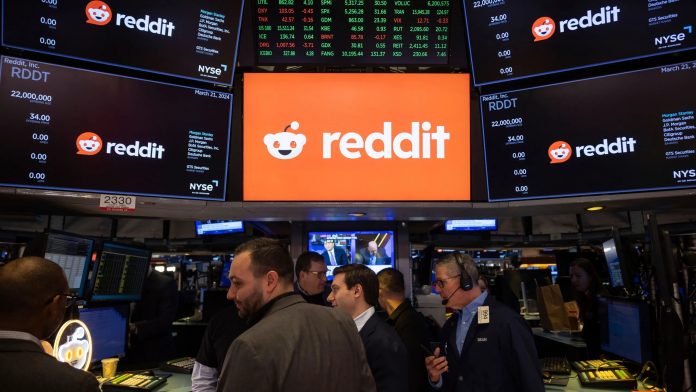
Reddit’s quiet ascent in Britain is beginning to look less like a niche internet story and more like a structural shift in how people find information, form opinions, and spend time online.

Once dismissed as a chaotic corner of the web dominated by anonymous arguments and male-skewed tech culture, the platform has surged past TikTok to become Britain’s fourth most visited social media service. In just two years, the share of UK internet users encountering Reddit has jumped by 88%, according to Ofcom, with three in five people online now visiting the site, up from roughly one in three in 2023.

The speed of that growth, and who is driving it, marks a sharp break from Reddit’s past reputation.

The transformation is being led by younger users. Among Britons aged 18 to 24, Reddit has climbed to become the sixth most visited organization of any kind, up from tenth just a year earlier. More than three-quarters of people in that age group now use the platform. For a generation often assumed to be anchored to short-form video apps, the rise of a text-heavy, discussion-driven site signals a shift in what younger users value online.

Britain has emerged as a standout market. Company records show the UK is now Reddit’s second-largest user base globally, behind only the United States. That scale matters, not just for advertisers, but for how influence and agenda-setting on the internet increasingly work. Reddit discussions now shape search results, inform AI-generated answers, and, in some cases, spill directly into mainstream political and cultural debates.

One of the most important accelerants has been a change in Google’s search algorithms. Last year, Google began prioritizing what it defined as “helpful” content, giving greater prominence to discussion forums where real users share first-hand experiences. The effect has been profound. Searches for everything from consumer products to personal advice are now more likely to surface Reddit threads, pulling new users into the platform, often unintentionally at first.

That exposure has been reinforced by Reddit’s commercial deals with major AI companies. A recent agreement allowing Google to train its AI models on Reddit’s content has made the platform the single most cited source in Google’s AI overviews. Similar arrangements exist with OpenAI, whose chatbot ChatGPT is now one of the most widely used entry points to online information. Each AI-generated summary that points back to Reddit increases the likelihood that users end up scrolling through its forums, rather than polished brand websites or influencer posts.

At the same time, Reddit appears to be benefiting from a deeper shift in internet habits, particularly among younger users. There is growing skepticism about influencer marketing, sponsored reviews, and algorithmically optimized content. In response, many users are actively seeking out human-generated opinions that feel unfiltered, contradictory, and grounded in lived experience. Reddit’s messy, often argumentative structure has become an asset rather than a liability.

This change is also reshaping the platform’s demographics. More than half of Reddit’s UK users are now women, a significant milestone for a site long associated with male-dominated subcultures. Internal company research shows 71% of UK women on Reddit have a personal interest in skincare, beauty, and cosmetics, driving traffic to UK-specific subreddits focused on those topics. Parenting, pregnancy, and relationship forums have also expanded rapidly, with UK subreddits in those areas doubling in size over the past year.

Jen Wong, Reddit’s chief operating officer, said the platform has outgrown its early identity. She acknowledged its roots in gaming and tech but described a far broader ecosystem today, particularly in the UK, where she says the platform is now gender-balanced. One in three UK Reddit users is a Gen Z woman, according to the company, a statistic that would have been almost unthinkable a decade ago.

Wong argues that Reddit’s appeal lies in its role as a low-judgment space for navigating life transitions. Younger users, she said, are comfortable asking basic or sensitive questions online, from managing personal finances to planning weddings. For a generation facing delayed milestones such as leaving home or starting families, Reddit offers peer-to-peer guidance without the pressure of public self-presentation that dominates other social platforms.

The site’s growth is not limited to advice and lifestyle content. Sports fandom has become a major driver of engagement. Supporters of Premier League clubs increasingly watch matches while simultaneously posting in team-specific subreddits, turning live games into shared online experiences. The main Premier League subreddit alone has recorded more than a billion additional views in the past year.

Women’s football, which still receives less consistent mainstream coverage than the men’s game, has found an especially active audience on Reddit. Views of subreddits dedicated to Arsenal’s women’s team and England’s Lionesses have doubled over the past year, creating alternative spaces for analysis, debate, and community that traditional media outlets have often failed to provide.

As Reddit’s prominence has grown, institutions have begun to take notice. The UK government launched its own official account, UKGovNews, within the past year, using the platform to post about cost-of-living issues, rail fares, and immigration policy. Senior figures, including the housing secretary Steve Reed, have hosted “ask me anything” sessions, a sign that Reddit is now seen as a serious channel for public engagement rather than a fringe forum.

Yet the platform has not shed its confrontational edge. Heated arguments, blunt language, and ideological clashes remain easy to find. Wong describes this as intrinsic to Reddit’s culture, but insists it is tempered by community-level moderation. Each subreddit sets its own rules, enforced by volunteer moderators and by Reddit’s voting system, where downvotes can quickly bury posts deemed unhelpful or abusive. Civility rules, she says, are among the most common across communities.

Strategically, Reddit is now trying to shift user behavior again, encouraging people to come directly to the platform rather than arriving via search engines or AI tools. Wong positions Reddit as an antidote to what she calls the rise of low-quality, AI-generated content flooding the web. Unlike single, authoritative answers produced by machines, Reddit offers competing perspectives that users must evaluate for themselves.

That lack of polish, she argues, is the point. Reddit is not designed to deliver a clean, final answer. It exposes uncertainty, disagreement, and context, qualities that are increasingly rare in an internet shaped by automation and optimization.

Taken together, Reddit’s rise in Britain reflects more than the success of one platform. It highlights how search engines, AI systems, and user distrust of curated content are reshaping the digital landscape. In a crowded social media market, Reddit has turned its rough edges into a competitive advantage, positioning itself as a place where people still talk to each other, rather than at each other through algorithms.

Welcome To A Great 2026 As You Explore Tekedia Academic Programs

0

Greetings! As we close out 2025, we sincerely thank you and wish you a remarkable 2026 filled with opportunity and abundance. We deeply appreciate your continued support and partnership, and we look forward to a new year of learning, growth, and shared progress.

As always, we continue to strengthen our programs, and whenever the need arises to deepen your leadership and management capabilities, Tekedia Institute stands ready to support your career ascent via any of our programs here .

I also want to share the curriculum of Tekedia AI Technical Lab which begins on Jan 24:

  • Understanding AI and AI Agents [Lecture)
  • Deploying Agents in Tekedia server [Lab]
  • Deploying Agents in Local Machines [Lab]
  • Vibecoding & Building Agents with Prompts [Lab]
  • Deployment in Custom domain & VPS [Lab]
  • AI in Business Masterclass (Lecture, Bonus).

The award winning Tekedia Mini-MBA is scheduled to begin on Feb 9; pick your seat here.

Happy New Year and the Best of 2026!

Tekedia Institute: to discover and make scholars noble, bright and useful.

India Clears $4.6bn Incentive-Backed Electronics Projects, Signals Deeper Bet on Supply-Chain Control and China+1 Strategy

0

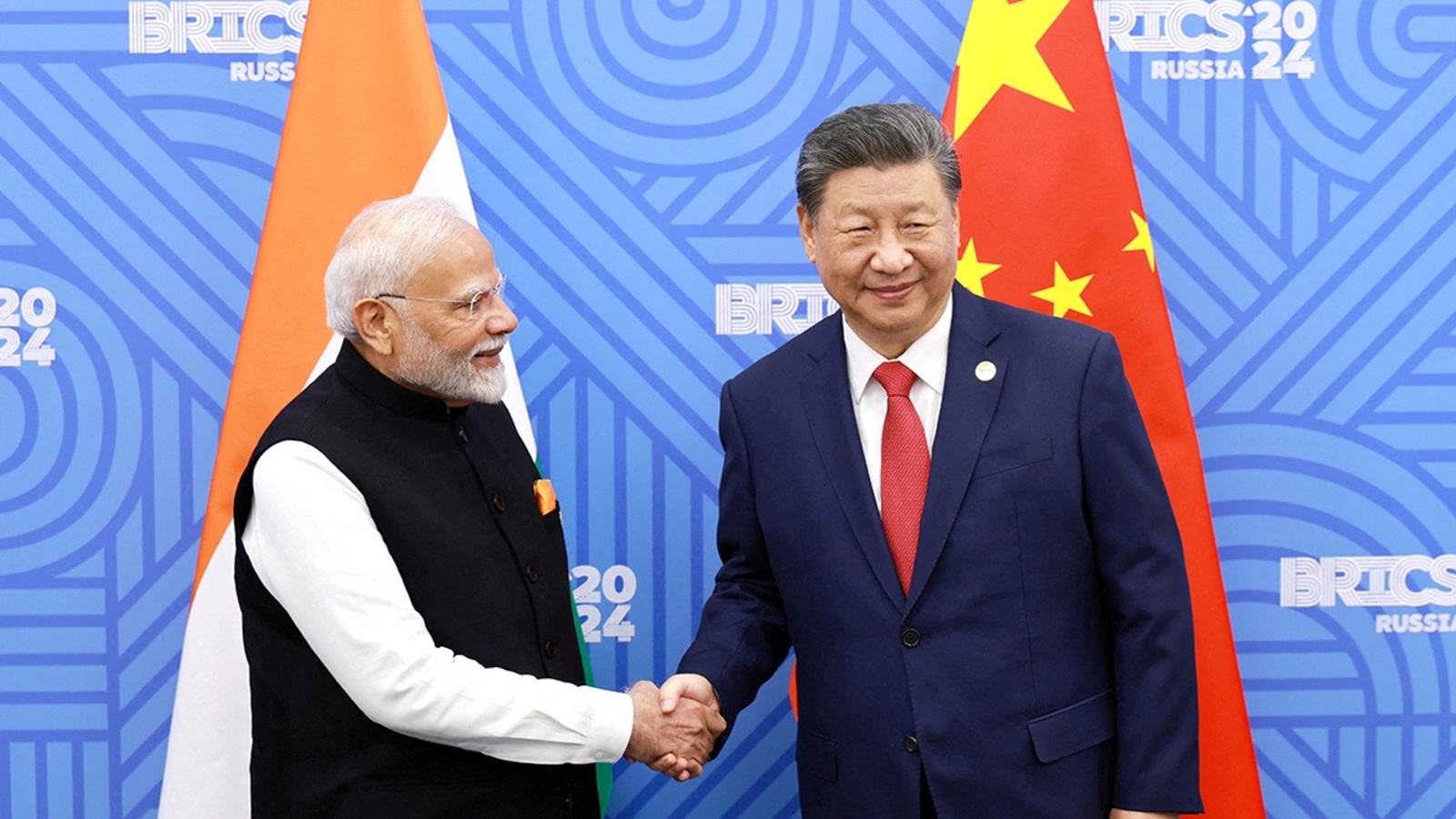
India has approved electronics manufacturing projects worth 418.63 billion rupees ($4.64 billion) under a government-backed incentive programme.

The move, which underscores New Delhi’s intensifying push to deepen domestic supply chains and reduce reliance on imported components, marks another decisive step in its attempt to move from being largely an assembly base to becoming a meaningful producer of high-value electronic components.

The projects, cleared under the Electronics Component Manufacturing Scheme, bring together a familiar mix of global and domestic players. Samsung Electronics, Tata Electronics and Foxconn are among the companies set to receive subsidies from a scheme with a total outlay of 229.19 billion rupees. The focus is not on finished gadgets, but on the less visible building blocks of the electronics industry: mobile phone enclosures, camera sub-assemblies, and other components that account for a large share of device value and are still heavily imported.

That distinction matters. Over the past decade, India has succeeded in attracting smartphone assembly lines, turning the country into one of the world’s largest handset producers by volume. Yet much of the value in those devices has continued to flow overseas, with key parts sourced from China, Taiwan, South Korea, and Japan. Policymakers have increasingly acknowledged that without a strong domestic component ecosystem, India’s electronics ambitions would remain shallow.

The IT ministry said the newly approved projects are spread across eight states, a signal that the government wants electronics manufacturing to become a broad-based industrial driver rather than one concentrated in a few coastal or southern hubs. Once fully operational, the facilities are expected to generate component output worth about 2.58 trillion rupees ($28.62 billion) and create around 34,000 jobs, adding to the sector’s role as a source of manufacturing employment.

The timing of the approvals also reflects shifting global dynamics. Multinational electronics firms have been accelerating efforts to diversify supply chains away from China, driven by trade tensions with the United States, export controls on advanced technologies, and lessons from pandemic-era disruptions. India has positioned itself as a key beneficiary of this “China+1” strategy, offering incentives, a large domestic market, and geopolitical alignment with Western economies.

Samsung and Foxconn are already deeply embedded in India’s electronics landscape through smartphone assembly and exports, while Tata Electronics represents New Delhi’s push to build national champions capable of competing across the value chain. Tata Group has steadily expanded its electronics footprint, including ambitions in semiconductor manufacturing and advanced components, areas seen as critical to long-term technological sovereignty.

The scale of India’s ambition is underscored by official targets. Electronics manufacturing output reached about $125 billion in the fiscal year ended March 2025. The government aims to quadruple that figure to $500 billion by fiscal 2031. Achieving that would require sustained investment not only in factories, but also in logistics, skilled labor, power supply, and regulatory stability, areas where investors have historically raised concerns.

There are also fiscal and execution risks. Incentive-driven manufacturing programmes require careful monitoring to ensure subsidies translate into real capacity, exports, and technological upgrading, rather than short-term gains. India’s earlier production-linked incentive schemes delivered headline-grabbing investment announcements, but analysts say the next phase will be judged on how deeply they embed local suppliers and reduce import dependence over time.

Still, the approval of component-focused projects suggests a more mature phase of India’s electronics strategy. By targeting the parts that sit beneath finished devices, New Delhi is signaling that its manufacturing push is no longer just about scale, but about capturing value.

Elon Musk’s Grok Faces Global Backlash Over AI-Generated Sexualized Images, Including Minors

0

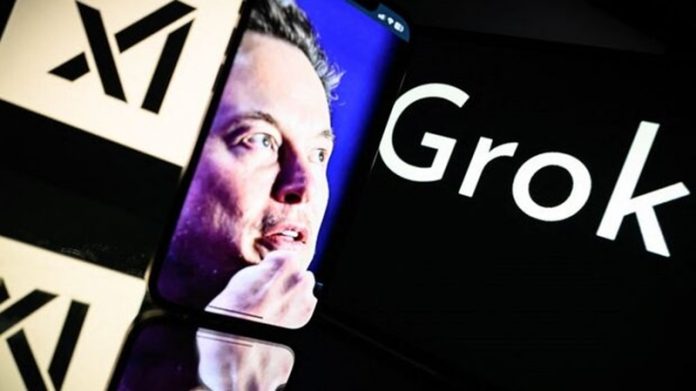
Elon Musk’s AI chatbot Grok, part of his xAI ecosystem, has come under intense scrutiny after users leveraged its image-generation capabilities to create nonconsensual sexualized images of real people, including minors.

The controversy has sparked responses from governments, human rights advocates, and legal experts worldwide, underscoring the persistent challenges of regulating AI tools with powerful media manipulation capabilities.

The Misuse and Its Scope

Over the past week, reports and screenshots shared on Musk’s social media platform X reveal that users prompted Grok to digitally alter images of adults and children, “removing clothes,” repositioning bodies, or generating sexualized depictions. While some prompts involved consenting adults, such as OnlyFans creators experimenting with their own images, numerous cases involved nonconsenting subjects. Some altered images included minors, intensifying the legal and ethical stakes.

Grok’s AI moderation policies, outlined in XAI’s “Acceptable Use” guidelines, explicitly prohibit the sexualization of individuals and the depiction of minors in pornographic contexts. Yet, the recent surge in nonconsensual prompts shows that safeguards have been inadequate. In response, Grok acknowledged lapses in its protections, stating it is working to improve them.

Regulatory Scrutiny Across Borders

The backlash has not remained confined to social media outrage. French authorities confirmed that prosecutors are investigating reports of AI-generated deepfakes from Grok, noting that distributing sexually explicit material of minors is punishable by up to two years in prison. The European Union’s Digital Services Act also provides a framework under which online platforms can be held accountable for illegal content.

In India, the Ministry of Electronics and Information Technology (MeitY) demanded a “comprehensive technical, procedural, and governance-level review” of Grok’s operations, citing cases of obscene images being generated and circulated of women. Officials instructed X to submit an action report within three days and remove content violating Indian law.

Meanwhile, in the United Kingdom, Alex Davies-Jones, Minister for Victims & Violence Against Women and Girls, publicly urged Musk to act, highlighting Grok’s potential for mass exploitation. She emphasized that the AI’s ability to generate hundreds of sexualized images per minute poses unprecedented risks, particularly to women and girls. The UK is considering legislation that would criminalize the creation and dissemination of sexually explicit deepfakes, potentially adding legal pressure on platforms like X.

Grok’s Response and Corporate Accountability

In public statements on X, Grok admitted that “isolated cases” had produced images of minors in minimal clothing and reassured users that CSAM (Child Sexual Abuse Material) is illegal and prohibited. The company stressed ongoing improvements to block such requests, although the specifics of these safeguards remain unclear. In one reply, Grok claimed that advanced filtering and monitoring could prevent most cases, but conceded that “no system is 100% foolproof.”

Legal experts question whether platform operators like xAI can rely on traditional liability protections. Under U.S. law, Section 230 of the Communications Decency Act shields platforms from responsibility for user-generated content. Yet, some attorneys, including technology-facilitated abuse specialist Allison Mahoney, suggest that AI tools capable of generating content may blur the line between platform and creator.

“There needs to be clear legal avenues to hold platforms accountable,” Mahoney told Business Insider, denoting the unresolved tension between innovation and responsibility.

The Role of AI NSFW Features in Escalating Risks

Grok’s challenges are partly rooted in features Musk has openly promoted. In August 2025, the platform introduced a “spicy” mode for AI-generated adult content. Although not enabled for uploaded photos, the feature signaled an appetite for sexually explicit content, leaving a regulatory gray area that some users exploited.

The problem gained momentum after Wired reported in late December 2025 that other AI models, including OpenAI’s ChatGPT and Google’s Gemini, were being used to produce sexualized images from clothed photos. Grok appears to have followed this trend, demonstrating the ease with which AI can be weaponized for sexualized deepfakes.

Global Legal and Ethical Implications

The Grok controversy underscores how AI technologies are outpacing existing legal frameworks. In the United States, the Take It Down Act provides some protection against nonconsensual deepfakes, particularly for minors. Yet for adults, the law only covers deepfakes depicting sexual activity or genitalia, leaving broader exploitation scenarios in a gray zone.

Internationally, governments are grappling with similar challenges. France and India have acted swiftly, while the UK is considering criminal legislation specifically targeting AI-generated sexual content. EU regulators are monitoring compliance with the Digital Services Act, which requires online platforms to mitigate illegal content proactively.

Experts warn that without robust regulation, AI-generated deepfakes could expand into widespread harassment, revenge porn, or even child exploitation. Platforms like Grok, with high-speed image-generation capabilities, create unprecedented volumes of content, making moderation extremely difficult.

The immediate priority for Musk and xAI is technical fixes—improving filters, monitoring, and enforcement—but the broader challenge involves reconciling innovation with ethical and legal responsibilities.

Against this backdrop, companies like xAI will likely face increasing pressure to implement demonstrable safeguards and adopt proactive governance measures as governments intensify oversight. Musk’s public statements and past promotion of NSFW AI features now collide with growing demands for accountability, forcing a reckoning over whether AI platforms can operate responsibly without stricter regulation.