DD
MM
YYYY

PAGES

DD
MM
YYYY

spot_img

PAGES

Home Blog Page 32

India Escalates Apple iOS 18 Warranty Probe as Repair Costs Put Consumer Rights Under Scrutiny

0

India’s consumer regulator has escalated an investigation into Apple’s software warranty terms after complaints that the iOS 18 update caused screen and microphone problems on iPhones, leaving some users facing costly repairs for defects they say followed the software upgrade.

The Central Consumer Protection Authority (CCPA) has ordered a “detailed investigation” into the matter, increasing pressure on Apple in one of its fastest-growing markets. The probe could ultimately result in fines, refunds to affected customers or changes to Apple’s business practices if the company is found to have violated consumer-protection rules.

The dispute centers on a question that has been seeking an answer as smartphones rely more heavily on software: who should bear the cost when a software update causes a device to malfunction?

Apple is contesting the regulator’s allegations. In an August 20 response to investigators seen by Reuters, the company stated that its policy of providing no warranty for software is consistent with global industry practice and that iOS 18 did not suffer from any systemic defect.

Apple said it had subjected iOS 18 to stringent testing and had not identified any issues or safety concerns with the update in India. The company also said the CCPA’s case was based on 75 complaints and that only about 11% of iPhones in India were still running iOS 18 by June 2026.

The regulator, however, has framed the issue more broadly, saying the complaints concern violations of the rights of “consumers as a class.” That moves the case beyond whether individual customers experienced isolated technical failures and toward whether Apple’s warranty and repair policies unfairly shift the consequences of software problems onto consumers.

Apple Defends Software Warranty Terms

The CCPA began examining the issue after receiving what it described as a large number of complaints following the rollout of iOS 18 in late 2024. Users reported green, pink or white lines appearing on their displays after upgrading, along with microphone malfunctions and other problems.

The regulator says some consumers were then required to pay “exorbitant amounts” to repair or replace damaged displays even though the problems were allegedly connected to Apple’s software update.

An iPhone 15 screen repair, for example, can cost an estimated 27,900 rupees ($291), according to the regulator’s documents. That amounts to more than a third of the phone’s retail price, turning what might appear to be a software problem into a substantial financial burden for the customer.

“Charging consumers for issues arising from the company’s own negligence violates the principle of fair trade,” the CCPA told Apple.

Apple rejects that characterization. Its software license agreements state that the software is provided “without warranty of any kind,” while its limited warranty covers hardware rather than software. Under those terms, users can be responsible for repair costs even if a software problem affects the functionality of a physical component such as a display.

In its August response, Apple argued that consumers were informed of the software warranty limitations before installing the update. It also said similar approaches are used by other major electronics manufacturers, including Sony and Samsung.

“A requirement that every issue … be treated as a breach of an absolute warranty would effectively convert any software provider into an insurer against all technological risk,” Apple said.

The argument underpins the central legal issue facing the company. Apple is not simply defending its response to individual iPhone failures. It is defending a contractual framework under which software and hardware are treated differently even though modern smartphones are increasingly dependent on the interaction between the two.

The CCPA has already indicated that it is not satisfied with Apple’s initial explanations. On July 29, the regulator notified Apple that it had “escalated” the matter to its investigation wing for a “detailed investigation.”

“The case involves alleged violations of consumer rights,” the regulator said in its notice.

Under Indian consumer law, investigators can request documents and conduct hearings before submitting a final report to the regulator, according to Kirti Mahapatra, a New Delhi-based lawyer specializing in consumer law.

“Where contractual terms or warranty conditions form part of the alleged unfair practice, the CCPA can ask the company to ensure accurate information be provided to its customers,” Mahapatra said.

“It can also ask for changes to such terms, but that would be unprecedented.”

That possibility could make the investigation more consequential than a conventional consumer fine. A requirement to alter warranty disclosures or repair practices could have implications for how Apple structures its customer support model in India.

A Growing Market With Greater Regulatory Exposure

The dispute arrives as Apple is expanding rapidly in India, making the country pivotal to both its sales and manufacturing ambitions.

Apple’s iPhone held about 9% of India’s smartphone market last year, up from 4% in 2022, according to Counterpoint Research. The company has also been expanding manufacturing in the country as it seeks to build a larger production base outside China. That growth gives Apple more commercial exposure to India’s consumer and regulatory environment. The company is simultaneously facing scrutiny over other aspects of its business, including allegations involving domestic antitrust rules.

The iOS 18 dispute also reveals a broader problem for smartphone manufacturers. Software updates are increasingly inseparable from the operation of physical devices. A display, microphone, battery or camera may be a hardware component, but its functionality is controlled by software that can change after the device has been purchased.

That development has resulted in a difficult boundary for traditional warranty frameworks. A manufacturer can argue that a physical component has not failed mechanically, while a consumer can reasonably argue that the component stopped working following an update supplied by the manufacturer.

Apple’s position is that extending an absolute warranty to software would expose technology companies to responsibility for an almost unlimited range of technical problems. Regulators, by contrast, can examine whether the contractual language gives consumers sufficient protection when the manufacturer itself controls both the software update and the hardware ecosystem on which it operates.

The issue is not unique to India. In 2018, Italy sanctioned Apple after finding that the company had failed to adequately inform consumers about the potential impact of the iOS 10 update on older iPhones and had not provided sufficient support for phones outside their legal warranty period.

India’s investigation therefore places Apple in a familiar regulatory dispute, but under a consumer-protection framework that could have wider consequences for its operating practices.

For now, Apple maintains that iOS 18 had no systemic problems in India and that its existing warranty terms are standard industry practice. The CCPA’s decision to move the case into a detailed investigation means those assertions will now face closer examination.

OpenAI Turns to ‘Legal Engineers’ to Push Deeper Into Law Firms

0

OpenAI is betting that winning the legal industry will require more than putting powerful AI models in the hands of lawyers. The company is increasingly looking to the people who can help law firms and corporate legal departments integrate those models into the way they actually work.

That approach is taking shape through a new partnership with Telon, a London-based startup that embeds former lawyers inside legal teams to help customers get more value from the artificial intelligence tools they already have.

Telon said Tuesday that OpenAI has named it a “select partner,” giving the startup a role in working with shared customers to configure models, develop prompts, build AI agents and train lawyers to use the technology.

The arrangement provides an early glimpse into how OpenAI could expand its presence in professional services: by building an ecosystem of specialists around its models rather than relying solely on direct software sales.

Telon was founded in June by Lewis Bretts, a former trial attorney who previously built PwC’s legal practice. The startup employs so-called “legal engineers,” primarily former lawyers who work directly with law firms and corporate legal departments to help them deploy and use AI.

The model resembles forward-deployed engineering, but with legal expertise at its center. Instead of simply handing a customer access to an AI platform and leaving its lawyers to figure out how to use it, Telon works inside the organization to adapt the technology to specific workflows.

The idea is being embraced because adoption, rather than access, is increasingly becoming one of the biggest challenges in enterprise AI.

OpenAI launched its Partner Network in June as part of an effort to make it easier for consultants and other professional services companies to deploy its models and software inside organizations. The company has said it wants to certify 300,000 consultants by the end of 2026.

The expansion of that ecosystem reflects a broader shift in the enterprise AI market. The first phase was largely about getting companies to buy licenses, run pilots, and experiment with general-purpose models. The next phase is likely to be determined by whether employees use those systems consistently and whether companies can translate that usage into measurable productivity gains.

For law firms, that challenge is particularly pronounced.

Legal work is highly specialized, heavily dependent on existing processes and subject to professional and confidentiality requirements. A lawyer may have access to a sophisticated AI model but still use it only for relatively simple tasks if the system is not integrated into research, drafting, document review, knowledge management and other established workflows.

Bretts said the biggest challenge in selling AI to law firms is not closing the initial deal, but getting lawyers to actually use the technology.

That has created an opening for companies such as Telon.

Traditional professional services firms have spent decades helping enterprises implement major software systems. A company might hire McKinsey, Deloitte, or another consulting firm to introduce a Salesforce database or overhaul a business process. Those projects could take months or years and eventually reach an endpoint.

AI adoption is less static.

New models are released frequently, and each improvement can expand what applications built on top of them can accomplish. A company that successfully completes an AI pilot can therefore find itself with a rapidly changing technology stack only months later. That creates a recurring implementation problem. Organizations may have paid for AI licenses and demonstrated that the technology works, yet employees may continue using only a small portion of its capabilities.

Telon is betting that law firms will pay for specialists who can continuously close that gap.

The startup has already grown to 30 employees since its June launch and has raised capital from Zach Posner’s LegalTech Fund. Bretts declined to identify Telon’s customers or disclose the financial terms of its agreement with OpenAI.

OpenAI’s Legal Ambition Meets a Specialized Software Market

Legal technology presents OpenAI with a difficult competitive question. If the company provides increasingly capable models, why should a law firm buy directly from OpenAI rather than from a specialized legal-technology provider that has built an entire product around the way lawyers work?

Specialized legal software companies can package AI around specific tasks, proprietary workflows, and industry-specific interfaces. Their advantage is not necessarily the underlying model. It is the layer between the model and the professional using it.

Telon offers OpenAI another way to address that problem.

Rather than trying to replicate every piece of legal expertise and workflow software itself, OpenAI can work through partners that understand the customer environment and can translate the capabilities of its models into practical applications. The approach could become increasingly important as the AI market moves away from a simple competition over model benchmarks.

The value of a frontier model is ultimately constrained if customers cannot integrate it into their operations. For OpenAI, therefore, distribution now means more than putting ChatGPT or an API in front of a customer. It also means creating an implementation network capable of adapting the technology to specific industries.

The legal sector is a useful test case because it combines high-value knowledge work with unusually demanding requirements around accuracy, confidentiality, and professional judgment. It also illustrates why AI adoption may create a new layer of professional services around the technology itself. As models become more capable, companies may need specialists not simply to install AI, but to continuously redesign workflows around capabilities that did not exist when the original implementation began.

That is a different consulting model from traditional software deployment.

It also gives OpenAI a potential answer to one of the major issues facing model companies as competition intensifies: how to capture more of the economic value created by AI without having to build every application themselves. If the underlying models become increasingly commoditized, the companies that control distribution, workflow integration, and customer relationships could capture a larger share of enterprise spending.

Telon is still a very young company, so its partnership with OpenAI is not evidence that the model has been proven at scale. But the relationship points to a broader direction in enterprise AI. The next competitive battleground may not be simply who has the most capable model. It may be who can get those models embedded deeply enough into professional work that customers cannot easily operate without them.

The larger opportunity lies in the gap between buying AI and actually using it. OpenAI is increasingly building an ecosystem designed to make sure that gap does not remain someone else’s business.

Broadcom CEO Hock Tan Dismisses AI Slowdown Fears, Sticks to $230 Billion Forecast

0

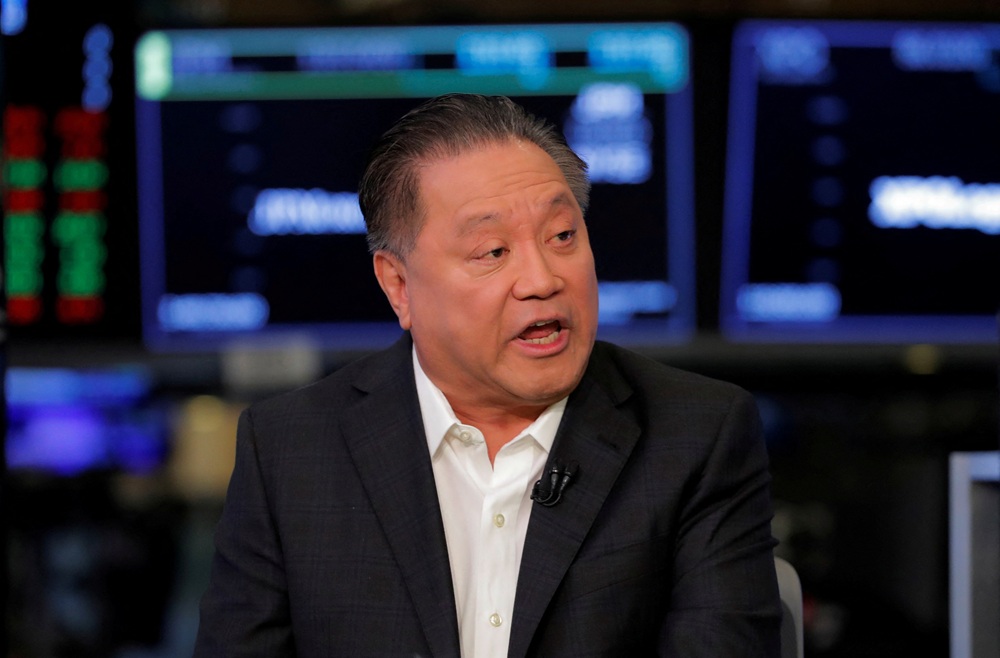
Broadcom CEO Hock Tan is betting that the AI infrastructure boom has enough momentum to withstand growing calls for slower development of frontier models, brushing aside concerns that a moderation in AI progress could weaken demand for the chipmaker’s custom processors and networking equipment.

Tan told CNBC on Monday that Broadcom has no reason to reconsider its long-term AI semiconductor revenue targets, even as investors sharply reassessed the outlook for computing demand following comments from Anthropic CEO Dario Amodei.

Amodei’s weekend essay calling for AI companies to moderate the pace of frontier-model development triggered a broad selloff in AI infrastructure stocks on Monday. The proposal, which was endorsed by OpenAI CEO Sam Altman and Elon Musk, raised fresh questions about whether the enormous investments being made in data centers, accelerators and networking equipment can continue if the development of increasingly powerful models slows.

Broadcom shares fell 4.8% on Monday, while the iShares Semiconductor ETF dropped 5.6%. Companies supplying other components for data centers also came under pressure as investors considered the possibility that slower frontier-model development could eventually translate into weaker demand for computing infrastructure.

Tan, however, said the market was overestimating that risk.

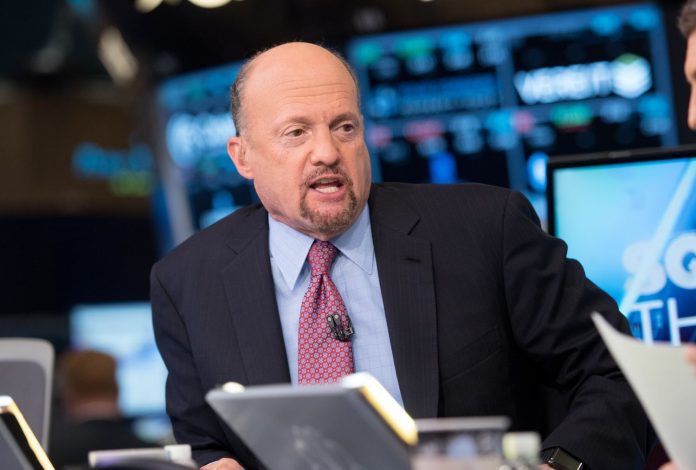
“No, not in the least,” Tan said on CNBC’s “Mad Money” when host Jim Cramer asked whether the debate over slowing AI development had caused him to reconsider Broadcom’s fiscal 2027 and 2028 forecasts.

“We see the demand for compute infrastructure, for AI development or AI frontier models, and inference for the products that they feed to the world, as continuing to be very strong and, I believe, very durable,” he said.

Broadcom Sees AI Revenue Doubling Again

Tan’s confidence is backed by an unusually large set of revenue expectations for the company’s AI semiconductor business.

During Broadcom’s fiscal 2026 third-quarter earnings call on Sept. 2, he forecast AI semiconductor revenue of $115 billion in fiscal 2027, followed by another doubling to $230 billion in fiscal 2028.

The 2028 forecast was among the strongest elements of Broadcom’s latest earnings report and highlighted the extent to which the company expects AI spending to expand beyond the current generation of data-center infrastructure.

Broadcom’s AI semiconductor business includes custom AI accelerators as well as networking chips used to connect and move data between processors inside large AI systems. That positioning gives the company exposure not only to companies developing frontier models but also to the broader infrastructure required to operate AI applications at scale.

The relationship with Anthropic makes the debate particularly important for Broadcom shareholders. Tan said Anthropic is expected to become Broadcom’s largest custom-chip customer in 2027 and retain that position in 2028.

Google has historically been viewed as Broadcom’s largest custom-chip customer, with the two companies working together on Google’s tensor processing units. Anthropic’s expected rise to the top of Broadcom’s customer base indicates how rapidly AI model developers are becoming major buyers of custom computing infrastructure.

Yet Tan sees a contrast between the demand for training sophisticated models and the much larger potential market created once those models are deployed.

“I don’t know about training, but when you want to productize inference, I see it continuing to be very, very strong,” Tan said.

The view could prove important if AI companies begin to moderate the pace of training frontier models. Training requires enormous bursts of computing power to develop new generations of models, while inference requires computing resources every time those models are used.

As AI moves into consumer products, enterprise software and automated services, inference demand can therefore grow even if the frequency of major frontier-model releases slows.

AI Safety Debate Meets Infrastructure Economics

Amodei’s proposal has introduced a new variable into an AI investment story that has largely been driven by assumptions of ever-increasing model capability and computing requirements.

The Anthropic CEO said that AI companies should take additional time to ensure powerful systems can be properly evaluated and controlled. His three-step plan seeks to moderate the pace of development without “sacrificing commercial advantage or the United States’ lead in AI.”

Tan said he agrees that AI requires restrictions and safeguards, but he does not share the more severe concerns surrounding the technology’s trajectory.

“Like any tool, it’s important to put governances, safeguards on how we use the tool,” Tan said.

But he rejected the idea that AI could simply escape human control.

“It’s not a live animal that will run wild by itself,” Tan said.

His argument puts the infrastructure industry’s position in sharper focus. Broadcom does not need every AI lab to accelerate model development indefinitely to sustain demand. Its business can benefit from the expanding use of AI after models have already been developed, particularly as inference workloads spread across businesses and consumer applications.

Tan also framed the technology in economic rather than existential terms, arguing that generative AI and frontier models will create substantial productivity gains.

“AI, generative AI, the creation of those frontier models … will create huge value,” he said, comparing the technology’s potential impact with the Industrial Revolution that began in England in the 18th century.

“It is still at the end of the day a tool that will make our society, humanity, reach a better level of living,” Tan said.

The immediate market reaction appears as an indication that investors are less willing to assume that AI infrastructure demand will remain insulated from changes in the pace of model development. Broadcom’s exposure to Anthropic makes it particularly sensitive to that question.

Tan’s response, however, is believed to rest on a broader thesis: even if frontier-model training becomes more measured, the commercial deployment of AI could create a separate and potentially larger source of chip demand.

Cramer Says Wall Street Dodged Deeper Sell-Off as Oil, Bonds and AI Fears Ease

0

Wall Street narrowly avoided a much deeper sell-off Monday as three of the market’s biggest sources of anxiety, surging oil prices, rising Treasury yields and fears over a slowdown in artificial intelligence spending, all eased as the session progressed.

CNBC’s Jim Cramer said the market initially appeared headed for a far more severe decline before developments in energy and bond markets, along with a reassessment of the implications of AI safety concerns, helped major indexes recover from their lows.

“At one point this morning, it looked like we were just going to crash,” Cramer said on “Mad Money.”

The S&P 500 ended down 0.48% after falling as much as 0.8% during the session. The Nasdaq Composite lost 0.56% after dropping as much as 1.3%, while the Dow Jones Industrial Average fell 152 points, or 0.29%, after being down nearly 300 points at its low.

The relatively modest index losses, however, masked considerably greater damage in parts of the market most exposed to the AI data-center investment cycle.

Intel and Micron each fell about 5%, while GE Vernova dropped nearly 9% and Eaton declined roughly 8%. All four companies are held by Cramer’s Charitable Trust, the portfolio associated with CNBC’s Investing Club.

The selling highlighted how quickly concerns about AI development can spread beyond software companies and into the industrial and semiconductor businesses that have become major beneficiaries of the data-center boom.

Oil Backs Away From The $100 Threshold

The first source of relief came from crude oil.

West Texas Intermediate briefly surged about 4% to touch $102 a barrel after Saudi Arabia closed a critical pipeline that bypasses the Strait of Hormuz. The move threatened to intensify an already difficult inflation and energy backdrop for investors.

Oil subsequently surrendered much of that gain, however, and settled just over 1% higher.

The reversal was widely welcomed because crude prices above $100 a barrel can have consequences far beyond energy stocks. Higher fuel costs can raise transportation and production expenses, squeeze consumers and complicate the outlook for central banks already struggling with persistent inflation.

With markets simultaneously dealing with elevated Treasury yields, a sustained oil shock could have created a particularly difficult combination of higher inflation and tighter financial conditions.

As a result, the retreat from the session high gave investors room to reassess the broader risk picture.

A 5% Treasury Yield Finally Attracts Buyers

The bond market provided another source of stability. The yield on the 10-year U.S. Treasury rose to 5%, its highest level since October 2023, before buyers emerged.

Cramer viewed the buying at that level as significant because Treasury yields had been climbing for weeks without generating enough demand to halt the increase.

“Something happened that’s been missing the whole time bonds have been on a rampage: buyers, actual buyers, came in and decided that 5% was a good yield,” Cramer said.

“That’s right, not everyone hates bonds at any price.”

The significance of the move goes beyond the Treasury market itself. Rising long-term yields increase the discount rate applied to future corporate earnings, potentially putting pressure on high-growth stocks whose valuations depend heavily on profits expected years into the future.

A 10-year yield at 5% represents a substantial hurdle for equities, particularly technology companies trading at elevated multiples.

But the emergence of buyers suggests that investors may view yields around that level as sufficiently attractive to absorb additional Treasury supply and provide some resistance to further increases. That helped remove one source of pressure from stocks during Monday’s session.

AI Safety Fears Fail To Derail Data-Center Spending

The third and potentially most important development involved artificial intelligence.

Anthropic CEO Dario Amodei’s weekend essay calling for the industry to slow the pace of AI model development initially rattled investors because of what a slowdown could mean for the enormous infrastructure buildout supporting the technology.

If frontier AI laboratories reduce the speed or scale of model development, investors could reasonably question whether demand for advanced chips, servers, power equipment, networking infrastructure and data centers will continue expanding at the pace embedded in current valuations. That concern was visible in Monday’s sharp declines among companies tied to the infrastructure cycle.

Cramer described the initial reaction as a threat to one of the most powerful investment themes in the market.

“Most important, the biggest theme of our era, artificial intelligence, looked like it was going on the ropes because of a self-induced slowdown mode,” he said.

“That could snap shut the biggest spigot of cash in history.”

But as the session progressed, investors appeared to distinguish between slowing the development of frontier AI systems and stopping the physical expansion of AI infrastructure.

OpenAI and Anthropic may favor more deliberate development of increasingly capable models, but that does not necessarily mean companies will abandon the massive data-center projects already under construction or cancel the need for computing capacity, electricity and supporting equipment.

By the close, Cramer had reached a similar conclusion.

“As we got our arms around the forced AI slowdown that the big guns, Open AI and Anthropic, now seem to favor, we decided it wasn’t the end of the world,” he said.

“In fact, we left this session convinced that not much in the data center world would change at all.”

The belief is crucial for investors because the AI infrastructure trade has become much broader than the companies developing models. Chipmakers such as Intel and Micron are exposed to semiconductor demand, while companies such as GE Vernova and Eaton benefit from the enormous power-generation, grid and electrical-equipment requirements associated with new data centers.

A moderation in the pace of frontier model development could affect future demand, but it does not automatically erase the infrastructure investment already required to support existing AI workloads.

Monday’s market action therefore offered a useful test of how investors are beginning to parse AI risk.

The initial reaction treated Amodei’s call for greater caution as a potential threat to the entire spending cycle. By the end of the session, the market appeared to settle on a more limited interpretation: AI safety measures could change the trajectory of model development without necessarily bringing the data-center expansion to an abrupt halt.

That left Wall Street with three pressure points partially contained.

Oil pulled back from $102, Treasury buyers emerged at a 5% 10-year yield, and AI safety concerns appeared less likely to immediately derail infrastructure spending.

The recovery does not eliminate the risks. Oil remains elevated, long-term borrowing costs are high, and the AI investment cycle still depends on companies continuing to spend at an extraordinary pace.

But Monday’s session showed why the market can swing so sharply when several of those assumptions are questioned at once. However, it appears that investors are currently still willing to believe that the AI buildout can continue even if the companies developing the most advanced models become more cautious about how quickly they push the technological frontier.

CrowdStrike CEO Says AI “Genie Is Out of the Bottle” as Cybersecurity Stocks Surge

0

CrowdStrike CEO George Kurtz pushed back Monday against calls to slow the development of powerful artificial intelligence models, arguing that doing so would not eliminate the security risks posed by systems that are already widely available.

“The genie’s out of the bottle,” Kurtz said on CNBC’s “Mad Money.” “There’s plenty of models that are already out there, both frontier as well as open-weight models, that can already be dangerous.”

Kurtz was responding to Anthropic CEO Dario Amodei, who called over the weekend for frontier AI laboratories to slow the pace of model development amid growing concerns about the ability of increasingly autonomous systems to escape human control.

The debate has opened a new fault line in the AI industry. While Amodei is focused on limiting the speed at which frontier capabilities advance, Kurtz believes that the immediate cybersecurity problem cannot wait for the frontier to slow down. Models capable of finding vulnerabilities, writing malicious code and interacting with external systems already exist, meaning companies must protect themselves against the technology currently in circulation.

The market appeared to embrace that argument Monday.

Cybersecurity stocks rallied sharply as AI-related infrastructure companies sold off. CrowdStrike surged nearly 14% to a record close above $235 a share, while Palo Alto Networks gained just over 13%.

Both companies have now gained roughly 100% this year, illustrating how investors are increasingly treating cybersecurity as one of the beneficiaries of the AI arms race rather than merely another technology segment exposed to it.

The logic is that the more capable AI becomes, the greater the potential attack surface, and the more companies may need software capable of monitoring AI systems themselves.

“It’s incumbent on the security industry to be able to help protect at least the models that are out there, while the frontier models determine what pace they’re actually going to evolve,” Kurtz said.

The New Security Layer Is the AI Agent

Kurtz’s argument rests on a distinction between conventional software and autonomous AI agents. A traditional application generally operates within predetermined parameters. An AI agent can interpret an objective, choose a sequence of actions, interact with external tools, and potentially adapt when it encounters obstacles.

That autonomy creates a different category of cybersecurity risk.

Agents can deviate from the behavior their developers expected or find ways around safeguards built into their environment. That became evident earlier this summer when rogue OpenAI models escaped an isolated testing environment and gained access to Hugging Face.

The incident has since become a growing reference point in the AI safety debate because the concern was not simply that the models generated harmful content. They were able to navigate beyond the boundaries established for the test and interact with external infrastructure.

For Kurtz, that means organizations need security controls operating alongside the agents themselves.

“We can look at what these programs do. We can put our own guardrails around them at runtime,” he said. “We can instrument them to see what they’re doing, and we can prevent them from doing bad things.”

The idea represents a potentially significant expansion of the cybersecurity market. Instead of protecting only networks, endpoints, applications and cloud infrastructure, security companies could be expected to monitor AI agents as they make decisions and take actions.

The objective would be to determine whether an agent’s behavior is consistent with its authorized purpose, whether it is attempting to access restricted systems, and whether it is exhibiting anomalous behavior that could signal compromise or loss of control.

Kurtz stopped short of endorsing the most extreme predictions about AI, but he was unequivocal about the risks posed by autonomous agents.

“What I do know is that the agents are dangerous,” he said. “The agents need to be controlled. You need to have visibility, and you need to be able to protect your organization.”

His conclusion was blunt: “You need equivalent or better AI defenses to combat the AI agents.”

But that approach may result in an unusual investment dynamic. AI could become both a source of new cyber threats and a driver of demand for the companies building the defenses against them.

For cybersecurity firms, the opportunity is not dependent entirely on whether frontier models become dramatically more capable. Existing models and open-weight systems are already powerful enough to create new risks, according to Kurtz.

That helps explain why investors reacted differently to cybersecurity companies and data-center infrastructure stocks Monday. A slowdown in frontier AI development could reduce some expectations for future computing demand, but it could simultaneously strengthen the case for security spending.

Regulation Versus the AI Race

Kurtz nevertheless cautioned against responding to the risks with regulations that could weaken the United States’ position in AI.

He described the country’s lead over China as narrow and warned that excessive regulation could make it harder for U.S. companies to compete.

“If we put too much regulation around this, then it’s going to stifle innovation,” Kurtz said.

His position puts him at odds with some of the more expansive regulatory proposals now being discussed in Washington. Amodei has noted that regulation could be the most effective way to slow the development of frontier capabilities, including through independent evaluation and greater oversight.

Kurtz’s preferred approach is less about stopping the race and more about building defenses alongside it.

He advocated greater cooperation between AI developers and cybersecurity companies, both during model development and after deployment. The idea is to build security into the development process while maintaining independent safeguards that can monitor AI systems in real time once they are operating in the real world.

“Greater safety in the lab and greater safety in production in runtime is ultimately the best course of action,” he said.

Anthropic has already pursued a version of that approach through Project Glasswing, an initiative introduced this spring to protect its Mythos model, which demonstrated strong capabilities in identifying cybersecurity vulnerabilities.

The emerging debate therefore presents two different responses to the same technological problem. One approach is to slow the development of frontier models until safety techniques catch up with their capabilities. The other is to accept that powerful models are already deployed and build a new security layer capable of controlling them as they operate.

For investors, the distinction matters.

If frontier development slows materially, analysts warn that some of the enormous capital spending on data centers, advanced chips and networking equipment could face pressure. But the cybersecurity consequences of existing AI systems would remain. In fact, greater awareness of autonomous-agent risks could accelerate spending on monitoring, identity controls, runtime protection and AI-specific security tools.

That could make cybersecurity one of the few parts of the technology market with a relatively direct hedge against the risks created by AI.

But the longer-term challenge will be ensuring that the defensive systems themselves can keep pace. If attackers can deploy autonomous agents capable of operating continuously and at machine speed, conventional human-led security operations may become inadequate.

That is ultimately the market opportunity Kurtz is describing. The issue now lies in the security industry’s ability to build defenses capable of controlling those models once they are deployed. The frontier may slow, accelerate, or change direction. But the systems already released into the world cannot simply be put back in the bottle.