DD
MM
YYYY

PAGES

DD
MM
YYYY

spot_img

PAGES

Home Blog Page 3209

Tekedia Faculty Dr. Leonard Azimoh Speaks with Energy! On Energy Mix in Africa

0

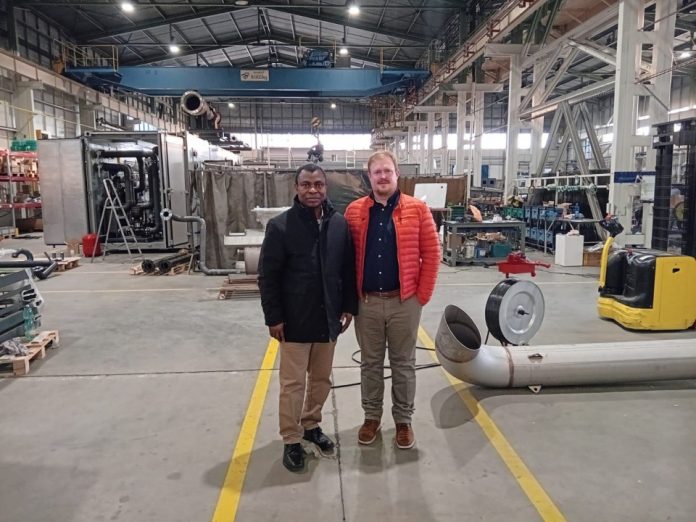
He developed Tekedia Institute’s course on Energy Economics and Future, which has provided foundational models which many energy entrepreneurs and professionals have used to model things in their missions. In a recent interview with Energy!, Dr. Leonard Azimoh explains his vision on Nigeria and Africa, on their GasTec generators:

“Our gas generator uses Natural Gas, LPG and Hydrogen as fuel sources. Our country is blessed with an abundance of natural gas. This makes the gas generator suitable for our environment since our oil and gas sector has been fraught with the flaring of natural gas over the years. With our gas generator, the flared gasses will be put to meaningful use.” Read the full interview here.

Nigeria needs an energy mix to deal with our energy paralysis. Our Faculty is available to provide guidance on how your company can execute your energy playbook.

Information Security and Digital Forensics at Tekedia Institute

0

Join us as we discuss information security and digital forensics at Tekedia Institute. This is a very important course in Tekedia Mini-MBA as we understand the importance of digital security in the age of digitization.

Our Faculty, Dr. Francis Nwebonyi, before he moved to the academia world was securing the integrity of autonomous vehicles for BMW Group’s future diving machines. He is an IAM Engineer (Identity and Access Management Engineer) and holds a PhD in Computer Science with focus on Network and Information Security from Universidade do Porto. An exponential geek and a brilliant educator.

Join us at the best school here.

Nigeria’s Bureau of Statistics Reports Significant N1.20tn Rise in VAT Collections amid CIT Decline in Q4 2023

0

The National Bureau of Statistics (NBS) unveiled a comprehensive analysis on Friday, March 15, shedding light on the remarkable surge in Value Added Tax (VAT) collections alongside a noticeable decline in Company Income Tax (CIT) for the fourth quarter of 2023 (Q4 2023).

According to the detailed report titled “Value Added Tax (Q4 2023),” VAT collections exhibited a robust growth rate of 26.61%, rising from N948.07 billion in Q3 2023 to an impressive N1.20 trillion in Q4 2023. The report meticulously outlined the breakdown of VAT payments, with local contributions totaling N630.00 billion, Foreign VAT Payments standing at N326.27 billion, and import VAT making a significant contribution of N244.04 billion during the quarter.

Quarter-on-quarter analysis conducted by the Bureau highlighted substantial growth rates in specific sectors, with agriculture, mining, and quarrying sectors experiencing the most significant surge at 63.75%, closely followed by other services activities at 61.98%. Conversely, activities of extraterritorial organizations and bodies recorded the lowest growth rate at -19.44%, trailed by financial and insurance activities at -8.46%.

In terms of sectoral contributions to VAT collections, the report delineated the top three sectors, with manufacturing leading the charge at 13.24%, followed by information and communication at 10.02%, and mining and quarrying at 7.91%. Conversely, undifferentiated goods- and services-producing activities of households for their own use recorded the least share at 0.00%.

The report also provided a comprehensive perspective on the year-on-year growth in VAT collections, revealing a staggering surge of 72.12% in Q4 2023 compared to the corresponding period in 2022.

In a parallel report titled “Company Income Tax Q3 2023,” the NBS illuminated a contrasting trend in CIT, indicating a decline of -35.40% on a quarter-on-quarter basis for Q4 2023. The aggregate CIT for the period was reported at N1.13 trillion, down from N1.75 trillion in Q3 2023. The report delved into the breakdown of CIT payments, with local contributions amounting to N533.93 billion and Foreign CIT Payment contributing N596.10 billion during the quarter.

Quarter-on-quarter growth rates across sectors varied significantly, with electricity, gas, steam, and air conditioning supply registering the highest growth rate at 79.65%, followed closely by construction at 57.86%. Conversely, activities of Information and Communication, and Public administration and defense, compulsory social security experienced the lowest growth rates.

In response to the shifting revenue dynamics, Wale Edun, the Minister of Finance and Coordinating Minister of the Economy, shared insights into the Nigerian government’s proactive measures to enhance revenue and economic growth.

Edun noted the adoption of a comprehensive restructuring of revenue streams, leveraging technology for seamless and efficient revenue collection processes, and automatic deductions from revenue-generating agencies and government-owned enterprises.

“We no longer wait for reconciliation with revenue-generating agencies and Government Owned Enterprises (GOEs) as was the practice in the past. Instead, we now deduct automatically from source to plug leakages,” he elaborated, outlining the government’s proactive approach.

The minister elaborated on the seamless and digital nature of revenue collection processes, ensuring that the federal government receives its dues promptly and efficiently, without the need for cumbersome reconciliation processes.

“Each day now, a federal government enterprise earns revenue, government checks, and immediately it takes it seamlessly, automatically, and digitally. So there is no issue of there may be a discussion later as to let us reconcile and so forth,” he said.

MainOne Faces Three-Week Repair Timeline After Subsea Cable Cut

0

MainOne, a prominent digital infrastructure service provider in West Africa, has disclosed that repairing its undersea submarine cables may require approximately three weeks.

This announcement comes in the wake of major cuts to undersea submarine cables on Thursday, disrupting internet traffic across significant parts of the continent.

According to MainOne’s statement, the repair process entails a meticulous series of steps, each adding to the complexity of the task at hand. The company highlighted the need for an additional two to three weeks for a vessel to transport the necessary spares of submarine cables from Europe to West Africa, compounding the already extensive repair duration.

“First identify and assign a vessel, the vessel has to retrieve the necessary spares required for repair, and then sail to the fault location to conduct the repair work,” it said.

MainOne’s woes originated from an external incident resulting in a critical cut on its submarine cable system in the Atlantic Ocean, just offshore from Cote D’Ivoire along West Africa’s coastline. The company emphasized its reliance on the Atlantic Cable Maintenance and Repair Agreement (ACMA) to facilitate the repair process efficiently.

“We have a maintenance agreement with Atlantic Cable Maintenance and Repair Agreement (ACMA) to provide repair services for the submarine cable,” stated MainOne in its official statement. “The affected section of the submarine cable will have to be pulled from the seabed onto the ship where it will be spliced by skilled technicians.”

The implications of the network outage were profound, extending far beyond MainOne’s operational sphere. A preliminary report by NetBlocks, a prominent internet monitoring organization, shed light on the extensive impact of the undersea cable cuts across Africa. Thirteen countries bore the brunt of the disruption, experiencing varying degrees of internet blackout and business standstill.

Countries like Nigeria, Lesotho, and South Africa reported relatively low internet impact, with connectivity ranging from 72 percent to 82 percent, according to NetBlocks’ preliminary findings. Businesses in these countries were mildly affected compared to those in severely impacted nations.

However, the picture was grim for other nations caught in the turmoil. Cote d’Ivoire, Liberia, Benin Republic, Ghana, and Burkina Faso were among those hit hardest by the internet disruptions. The severity of the impact varied, with some countries experiencing connectivity plummeting to as low as four percent, leaving businesses paralyzed and citizens grappling with the digital blackout.

The arduous repair process ahead means that the affected nations in West Africa face an uncertain period of internet instability, with damaging impacts on their economies, businesses, and everyday lives.

In addition to MainOne Service, another Nigerian indigenous telecommunications company, Globacom, operates the Glo-1 submarine cable, spanning 9,800km and connecting seven African countries along the West African coast. Notably, it remains the only submarine cable unaffected by the recent damage caused by cable cuts.

Experts have expressed concerns regarding the cause of these cuts and the anticipated timeline for repairs, which currently remains uncertain. This situation, they said, presents the opportunity to address the risks associated with relying solely on one source of digital infrastructure for broadband connectivity.

The Minister of Communications, Innovation, and Digital Economy, Mr. Bosun Tijani, has disclosed Nigeria’s aim to bolster its broadband infrastructure through $2 billion investments. Against the backdrop of the undersea cable cuts, there is a clear need to utilize Nigeria’s Communication Satellite technology as a backup to fortify the nation’s digital infrastructure.

BlockDAG Keynote Hints at a New Era for Crypto Mining: ETH & Ronin Investors Rush to Buy BDAG Coins For 100x Gains

0

As the cryptocurrency market is experiencing a significant boom, Ethereum (ETH) has seen a massive surge. At the same time, Ronin has reached new all-time highs, showcasing a remarkable increase in value. While these established currencies enjoy a bullish trend, the spotlight has shifted to BlockDAG (BDAG). This newcomer’s ongoing presale, which has entered its third phase, has captivated investors, drawing significant attention with over $4.8 million raised so far.

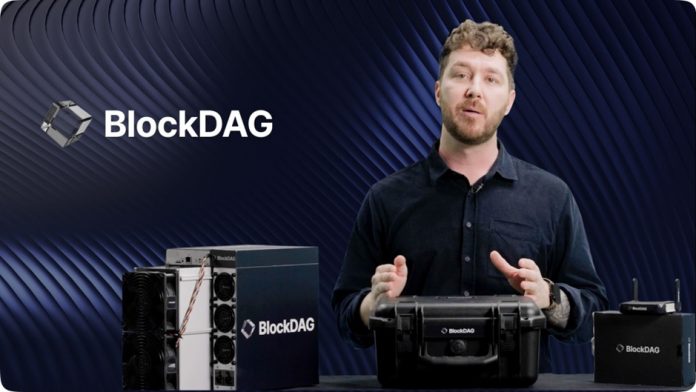
The surge in interest towards BlockDAG’s presale can be attributed to the viral success of its keynote video. This keynote highlights BlockDAG’s exceptional mining capabilities, positioning it as a game-changer that aims to democratise mining for all cryptocurrency enthusiasts. As we witness a resurgence in the crypto industry, it’s essential to consider the potential impacts and opportunities that Ethereum, Ronin, and BlockDAG present for investors moving forward.

Can Ethereum Hit All-Time High?

Amid Bitcoin reaching a new high above $70,000, Ethereum‘s surge past $4,000 has sparked speculation about its ability to surpass its all-time high of $4,891.70 set in November 2021. With a 60% increase in the last 30 days, Ethereum remains a focal point for investors eager to see if it can achieve another milestone.

However, the uncertain outlook for a Securities and Exchange Commission-approved Ethereum ETF, particularly the decision on VanEck’s application due by May 23, adds a layer of anticipation. Despite regulatory hurdles, optimism persists about Ethereum’s potential to hit a new all-time high, underscoring its significant role in the cryptocurrency market.

Ronin Crypto’s Recent Recovery

In recent trading sessions, Ronin crypto has initiated a rebound after experiencing a series of declines over three consecutive sessions. There’s a silver lining despite a bearish sentiment in the short term, where the 20-day Exponential Moving Average (EMA) support level was breached.

Buyers’ efforts to stabilise Ronin crypto’s price around the 50-day EMA mark have successfully prevented further declines. Importantly, Ronin crypto’s current price remains above its prior swing low of $2.44. This indicates that its long-term trajectory maintains a bullish outlook. This resilience underscores Ronin Crypto’s potential for sustained growth despite temporary setbacks.

BlockDAG Presale Crosses $4.8M as Keynote Goes Viral

BlockDAG’s keynote video immediately captured widespread attention upon its release, significantly boosting the momentum of BlockDAG’s presale to unprecedented levels. Shortly after the keynote was made public, the second batch of BlockDAG’s presale sold out, amassing an impressive $4.8 million and marking a swift ascent from its inception. BlockDAG is now in its batch 3 presale, priced at $0.002, a considerable increase from the prices of previous batches.

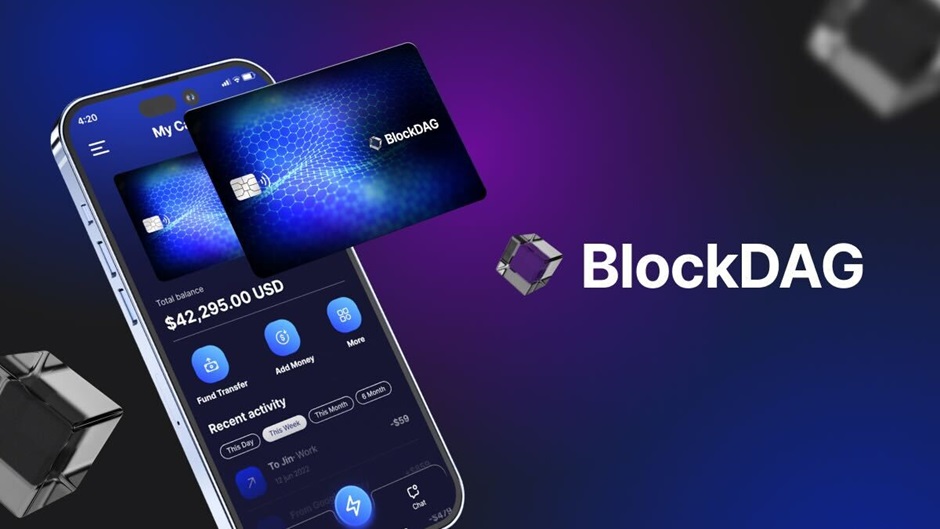
The keynote has gained the attention of crypto enthusiasts not only for the BDAG coins but also for BlockDAG’s multifunctional cryptocurrency payment card and its groundbreaking range of crypto miners, from the X1 to X100 models. The keynote unveils all these products and miners, designed for the dual benefits of mobile convenience and practical home mining, demonstrating BlockDAG’s dedication to making digital currency accessible and maintaining high standards in the fast-paced world of digital finance.

Key Takeaways

As the crypto market forecasts a promising future for many cryptocurrencies like Ethereum and Ronin, BlockDAG has emerged as a newcomer, capturing the spotlight with its mining capabilities and the potential for a 10,000x return on investment for investors. The release of BlockDAG’s keynote video has positioned it as a formidable player in the cryptocurrency arena, challenging established leaders with its advanced technology. Amidst this success, BlockDAG sets its sights on ambitious objectives driven by a clear and compelling vision. At the same time, investors view BlockDAG as their prime opportunity to achieve substantial wealth through remarkable gains.


Invest in the BlockDAG Presale Now:

Website: https://blockdag.network

Presale: https://purchase.blockdag.network

Telegram: https://t.me/blockDAGnetworkOfficial

Discord: https://discord.gg/Q7BxghMVyu