DD
MM
YYYY

PAGES

DD
MM
YYYY

spot_img

PAGES

Home Blog Page 3211

5 Best Cryptos For The Next Bull Run, Explosive Price Surge: BlockDAG, Bitcoin, XRP, Solana, and Toncoin

0

In navigation for the ascending cryptos, BlockDAG has taken centre stage with its dazzling Moon Keynote. The introduction of the X1 Miner app has revolutionized mobile mining, catapulting BlockDAG into the spotlight.

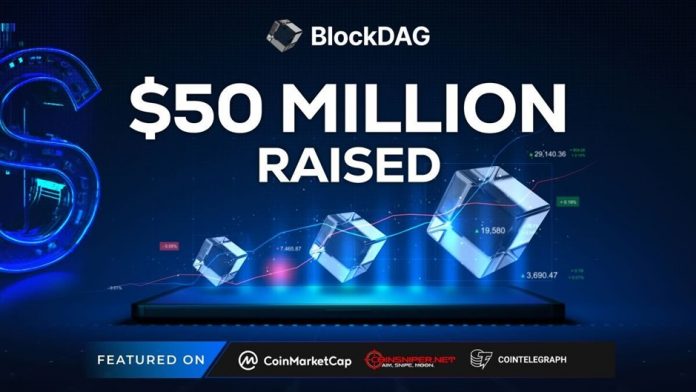
The presale success, with over $50.6 million raised and 11.5 billion BDAG coins sold, underscores its market dominance. As we explore the landscape of the 5 Best Cryptos for the Next Bull Run, BlockDAG’s innovative strides set it apart from Bitcoin, XRP, Solana, and Toncoin.

1. BlockDAG Bull Run after Moon Keynote

 In the grand theatre of cryptocurrency, a spectacle unfolded under the moonlight’s glow. BlockDAG, a visionary in the blockchain realm, stepped onto the stage with its Moon Keynote. The air was electric with innovation as they unveiled the X1 Miner app, a masterpiece of technology now gracing Android and Apple platforms, weaving efficiency into the fabric of crypto mining.

The audience, a global collective of crypto enthusiasts and investors watched as BlockDAG spun a tale of staggering success: a presale triumph that amassed over $50.6 million, selling more than 11.5 billion BDAG coins. Each coin, a promise of potential priced at $0.0122 in batch 18, soared in value by an impressive 1120% from its inception, a testament to BlockDAG’s magnetic allure and market genius.
But the tale didn’t stop there. Amidst the backdrop of innovation, a Testnet was announced for mid-August, a prelude to the mainnet that promised rigorous bug hunting. The ongoing presale, pulling in $500k daily, was projected to balloon to $5 million, buoyed by an exclusive partnership with Plus Wallet.

With every word, BlockDAG painted a future where it stood as a titan among the five best cryptos for the next bull run, and early investors could find themselves riding the crest of a 30,000x return on investment post-Mainnet launch to reach $20 by 2027.

2. Predicting a Bullish Turn for Bitcoin

Recent shifts in global central bank policies, mainly the easing of monetary policies and rate cuts by major economies, signal a promising environment for the growth of cryptocurrencies like Bitcoin.

These policy changes are expected to inject new vitality into the crypto market, making Bitcoin a standout candidate among the five best cryptos for the next bull run.

3. XRP Poised for Growth in the Crypto Market

XRP, developed by Ripple Labs, is uniquely designed to make fast, cost-effective cross-border payments. It uses a consensus ledger rather than a conventional blockchain, which enables quicker transaction speeds.

Despite regulatory challenges, a positive outcome in its legal dealings could boost its market standing. XRP’s role as a bridge currency in global transactions makes it one of the five best cryptos for the next bull run, offering promising investment potential.

4. Solana: A Prime Candidate for the Next Crypto Surge

Thanks to its Proof of History consensus mechanism, Solana has quickly become a key player in the blockchain arena. It is distinguished by its high transaction throughput and low costs. This technology enables rapid processing that is suitable for high-frequency trading, gaming, and decentralized finance applications.

It offers a robust alternative to Ethereum’s congested network. As the market anticipates a bull run, Solana’s SOL token is poised to gain substantially. It is one of the five best cryptos for the next bull run and a smart choice for investors.

5. Toncoin: A Promising Player for the Next Crypto Boom

Toncoin, born from the Telegram team, is set to revolutionize decentralized applications with its capacity to handle massive transaction volumes at minimal costs.

With a strong base rooted in the extensive Telegram community, Toncoin is uniquely positioned for quick adoption and scalability.

As the market anticipates a bull run, Toncoin emerges as one of the five best cryptos for the next bull run.
BlockDAG and the Future of Crypto Investments

BlockDAG’s visionary approach and technological advancements place it at the forefront as the crypto market gears up for a bull run, with predictions of BDAG reaching $20 by 2027 and the potential for a 30,000x return on investment, BlockDAG offers unparalleled opportunities. Alongside other promising contenders like Bitcoin, XRP, Solana, and Toncoin, BlockDAG stands tall among the 5 Best cryptos for the next bull run, ready to deliver substantial gains for early investors.


Invest in the BlockDAG Presale Now:


Website: https://blockdag.network

Presale: https://purchase.blockdag.network

Telegram: https://t.me/blockDAGnetworkOfficial

Discord: https://discord.gg/Q7BxghMVyu
Russia’s Interactions with North Atlantic Treaty Organization (NATO)

0

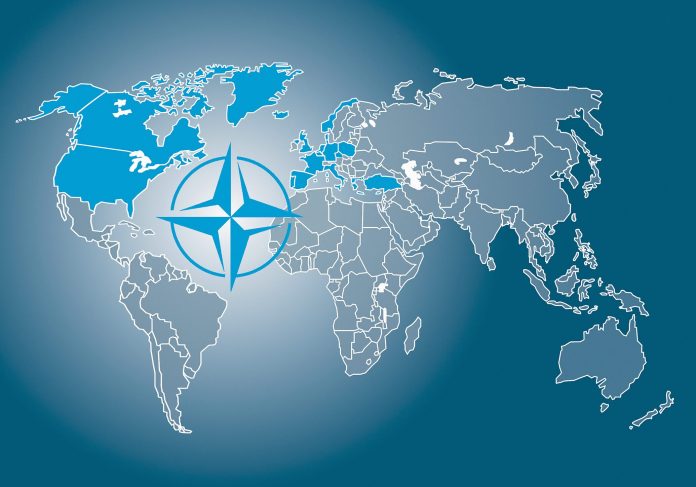
The topic of Russia’s actions in relation to NATO is a complex and sensitive subject that involves international relations, security concerns, and geopolitical strategies. It is important to approach such topics with a balanced perspective, recognizing the various viewpoints and the potential implications of the actions taken by any nation on the global stage.

In recent times, the relationship between Russia and NATO has been marked by significant tension. The situation has escalated due to various incidents and political maneuvers, which have raised concerns about the stability and security of the international community. It is crucial to understand that the dynamics between Russia and NATO are not only about military confrontations but also involve economic sanctions, diplomatic negotiations, and the broader context of international law and order.

The international community, including experts in diplomacy, security, and conflict resolution, continues to monitor the situation closely. They advocate for dialogue and peaceful resolution of conflicts, emphasizing the importance of maintaining global peace and preventing any form of escalation that could lead to unintended consequences.

Here are some specific events that have contributed to the rising tensions:

Russia’s Invasion of Ukraine: NATO has condemned Russia’s invasion of Ukraine, which began in 2022, as a brutal and unprovoked act of aggression against an independent, peaceful, and democratic country. This invasion has been a central point of contention, with NATO providing unprecedented levels of support to Ukraine.

Annexation Attempts: NATO also condemns Russia’s illegal attempt to annex four regions of Ukraine – Donetsk, Luhansk, Kherson, and Zaporizhzhia – in September 2022, which has been described as the largest attempted annexation of European territory by force since the Second World War.

Suspension of the NATO-Russia Council: In response to Russia’s aggressive actions against Ukraine and the illegal annexation of Crimea, NATO suspended all practical civilian and military cooperation with Russia in April 2014, while keeping open channels of political and military communication.

Diplomatic Mission Suspensions: Russia suspended its diplomatic mission to NATO and closed the alliance’s office in Moscow following NATO’s expulsion of Russian diplomats over espionage allegations.

Military Posturing and Rhetoric: Russia’s military posture and rhetoric, including the use of conventional, cyber, and hybrid means against NATO member countries and partners, have been perceived as aggressive actions undermining the rules-based international order.

Western-supplied Weapons to Ukraine: Tensions further escalated when NATO allies, such as the US and Germany, allowed Ukraine’s military to use Western-supplied weapons to strike targets inside Russia, leading to accusations from Russia of provoking a new level of tension.

It is the responsibility of the media, analysts, and the public to stay informed and considerate of the complexities involved in such international matters. Discussions and reports should be based on verified information and should contribute to a constructive dialogue aimed at finding sustainable solutions.

For those interested in further exploring this topic, there are numerous resources available that provide detailed analyses and updates on the current state of affairs between Russia and NATO. These resources offer insights into the historical context, the strategic interests at play, and the efforts being made to address the challenges that arise from such a multifaceted relationship.

The subject of Russia’s interactions with NATO is a reminder of the delicate balance that exists in international relations. It underscores the need for continuous engagement, mutual understanding, and a commitment to peace and security by all parties involved. The hope is that through concerted efforts and responsible actions, a path towards stability and cooperation can be achieved.

BlockDAG Secures Top Spot on CoinSniper, Coin Value Surges 1120% as Solana Nodes and Dogecoin Adjust

0

Solana nodes have shown resilience, while the Dogecoin price has been adjusting to market shifts, reflecting investor sentiment. Amidst this, BlockDAG stands out significantly, having secured a top position on CoinSniper after its Keynote 2. This event catalyzed an impressive 1120% surge in value, propelling the presale to surpass the $50 million mark, currently standing at $50.6 million. Positioned as the best crypto investment, BlockDAG captivates global attention with its strategic innovations, setting the stage for transformative impacts on the crypto landscape.

Solana’s Validation Costs and Future Prospects

Recent discussions have highlighted the significant expenses associated with operating Solana nodes. It costs about $65K annually to run a Solana validator node, a stark contrast to Ethereum’s one-time cost of 32 ETH for validators, not accounting for additional operational expenses.

While Solana nodes currently lag behind Ethereum in terms of cost efficiency due to the lack of an aggregated messaging system like Ethereum’s BLS scheme, plans are underway to adopt a similar approach. Solana founder Anatoly Yakovenko has expressed intentions to implement a system that could potentially reduce costs and streamline operations. This development could change the dynamics of Solana nodes, making them more competitive.

Analyzing Dogecoin’s Recent Market Trends

The Dogecoin price has experienced a noticeable downward trend, starting with a significant 7% drop on June 7th. This movement reduced its value from approximately $0.16 to $0.148. As the market continued to adjust, the Dogecoin price further slipped to about $0.144 by June 10th, marking an additional decline of 1.4%.

Currently, the Dogecoin price is around $0.141, following another 2% decrease. This series of declines has positioned Dogecoin below its short-moving average, turning it into a resistance point around the $0.15 mark. Additionally, the Relative Strength Index (RSI) falling below 40 suggests a strong bearish trend in the market.

BlockDAG Ascends: A Benchmark in Crypto Innovation

BlockDAG’s recent Keynote 2 has catapulted it to prominence, securing a top position on the CoinSniper list and reinforcing its burgeoning stature in the cryptocurrency arena. This milestone underscores the project’s global influence, igniting discussions and excitement worldwide, ultimately leading to its recognition on CoinSniper. Such widespread acclaim reflects BlockDAG’s capacity to engage and inspire the international crypto community.

During the keynote, BlockDAG unveiled critical updates that captivated the global crypto audience, including a well-defined rewards structure for miners. It was announced that miners would accumulate BDAG coins for each block mined, with the rewards set to decrease over time through several halving events. This structured incentive system demonstrates BlockDAG’s dedication to fostering long-term engagement and stability within its network, underscoring a commitment to innovation and strategic growth.

The resonance of Keynote 2 not only enhanced BlockDAG’s reputation but also significantly bolstered its presale efforts, with the coin’s value skyrocketing by 1120% to reach $0.0122 by the 18th batch. So far, the presale has amassed a remarkable $50.6 million, showcasing robust investor confidence and a bullish outlook for the best crypto investment.

BlockDAG’s swift fundraising of $3 million shortly after Keynote 2 began has set the stage for reaching a significant $600 million goal. This rapid accumulation of funds highlights the strong market demand and investor trust in BlockDAG’s forward-looking initiatives and its potential as a leading player in the crypto market.

Final Verdict

As Solana nodes contend with high operational costs and Dogecoin faces downward price trends, BlockDAG emerges as the standout with its presale crossing $50.6 million. This surge, fueled by Keynote 2’s innovations, not only places BlockDAG at the forefront of CoinSniper but also solidifies it as the best crypto investment, showcasing its potential far beyond its competitors in the current presale phase.


Invest in the BlockDAG Presale Now:

Presale: https://purchase.blockdag.network

Website: https://blockdag.network

Telegram: https://t.me/blockDAGnetwork

Discord: https://discord.gg/Q7BxghMVyu
Implications of Nigeria Backing Down on Charges Against Binance Executive

0

The recent development in the case against a Binance executive in Nigeria has sent ripples through the financial and legal sectors, both within the country and internationally. Nigerian officials have dropped some of the charges against Tigran Gambaryan, a detained Binance executive, although he still faces prosecution.

This moves by Nigeria’s Federal Inland Revenue Service (FIRS) to drop tax charges against Binance executives has significant implications for the cryptocurrency industry and the legal precedents concerning international finance and taxation.

Firstly, the decision to drop charges could be seen as a gesture towards a more favorable environment for cryptocurrency operations in Nigeria. It may signal a shift in the government’s approach to regulating digital currencies, which have been under scrutiny for their potential to bypass traditional financial systems and controls. The initial charges, which included allegations of tax evasion and failure to file tax returns, highlighted the challenges governments face in tracking and taxing transactions within the cryptocurrency space.

Nigeria has become a focal point for cryptocurrency investments, a development that has caught the attention of the global financial community. This trend is driven by a combination of factors that make the country a fertile ground for digital currency transactions.

Firstly, Nigeria has a young, tech-savvy population that has embraced the digital revolution with open arms. With over 22 million cryptocurrency holders, representing about 10% of its population, Nigeria boasts a significant number of individuals who are familiar with and interested in digital currencies.

Secondly, the economic landscape of Nigeria has played a crucial role. The country has faced severe inflation and foreign exchange controls, which have eroded the purchasing power of the Nigerian Naira. In response, many Nigerians have turned to cryptocurrencies as a hedge against inflation and currency depreciation, seeking to preserve their wealth in a more stable and decentralized form of currency.

The recent decision by Nigerian authorities to drop tax evasion charges against Binance executives has significant implications for the cryptocurrency industry and the regulatory landscape in Nigeria. This move comes after a period of legal uncertainty for Binance.

The dismissal of these charges by the Federal High Court in Abuja represents a notable shift in the Nigerian government’s approach to cryptocurrency regulation and enforcement. Previously, the Federal Inland Revenue Service (FIRS) had accused the executives of tax evasion, which had led to heightened tensions between the Nigerian government and the cryptocurrency community.

The dropping of these charges could signal a more favorable environment for cryptocurrency operations in Nigeria, potentially encouraging innovation and investment in the sector. However, the dismissal of these charges could signal a shift in the regulatory landscape for digital currencies in Nigeria. It raises questions about the balance between fostering innovation and enforcing regulatory compliance.

However, it is important to note that while the tax evasion charges have been dropped, the executives still face money laundering charges from Nigeria’s Economic and Financial Crimes Commission (EFCC), with court proceedings set to resume on June 20. The initial charges, which included allegations of tax evasion, had put a spotlight on the regulatory environment surrounding cryptocurrencies in Nigeria.

The case against the Binance executives has been closely watched by the international community, as it touches upon broader themes of cryptocurrency regulation, international cooperation, and the challenges of navigating complex tax laws in a digital age. The Nigerian government’s decision to drop the charges may be interpreted as a move towards a more favorable stance on cryptocurrency operations.

Nigeria’s Inflation Rises to 33.95% in May 2024 Despite CBN’s Monetary Policy Tightening

0

In May 2024, Nigeria’s headline inflation rate rose to 33.95%, up from 33.69% in April 2024, according to the latest Consumer Price Index (CPI) published by the Nigerian Bureau of Statistics (NBS).

This increase of 0.26 percentage points highlights the persistent inflationary pressures in the country, marking its highest rate in 28 years.

Year-on-year, the headline inflation rate increased by 11.54 percentage points, from 22.41% in May 2023 to 33.95% in May 2024. Despite this annual rise, the month-on-month inflation rate showed a slight decrease, falling to 2.14% in May 2024 from 2.29% in April 2024. This indicates a slower rate of increase in the average price level for May compared to April.

The twelve-month average CPI ending May 2024 saw a significant rise of 29.06%, a 7.86 percentage point increase from the 21.20% recorded in May 2023. This data reflects the broader inflationary trends affecting the Nigerian economy over the past year.

“The percentage change in the average CPI for the twelve months ending May 2024 over the average of the CPI for the previous twelve-month period was 29.06%, showing a 7.86% increase compared to 21.20% recorded in May 2023,” the NBS said.

Urban inflation in May 2024 was notably higher, reaching 36.34% year-on-year, up from 23.74% in May 2023. On a month-on-month basis, urban inflation fell slightly to 2.35% from 2.67% in April 2024. The twelve-month average for urban inflation was 31.07%, up from 21.95% in the previous year.

Rural inflation also increased, hitting 31.82% year-on-year in May 2024, compared to 21.19% in May 2023. Month-on-month, rural inflation saw a marginal rise to 1.94% from 1.92% in April 2024. The twelve-month average for rural inflation was 27.27%, higher than the 20.50% recorded in May 2023.

“The corresponding twelve-month average for the Urban inflation rate was 31.07% in May 2024. This was 9.12% points higher compared to the 21.95% reported in May 2023,” the NBS data said.

Food inflation soared to 40.66% year-on-year in May 2024, significantly higher than the 24.82% recorded in May 2023. The increase was driven by rising prices in key food items such as semovita, oatflakes, yam flour, garri, beans, Irish potatoes, yams, palm oil, vegetable oil, stockfish, mudfish, crayfish, beef, chicken, pork, and bush meat. However, on a month-on-month basis, food inflation decreased to 2.28% from 2.50% in April 2024. The twelve-month average for food inflation was 34.06%, up from 23.65% in May 2023.

The NBS noted that “The average annual rate of Food inflation for the twelve months ending May 2024 over the previous twelve-month average was 34.06%, which was 10.41% points increase from the average annual rate of change recorded in May 2023 (23.65%).”

Core inflation, excluding volatile agricultural products and energy, stood at 27.04% year-on-year in May 2024, up from 19.83% in May 2023. This was driven by increases in the prices of rent, intercity bus journeys, taxi rides, accommodation services, and medical services. Month-on-month, core inflation also fell to 2.01% from 2.20% in April 2024. The twelve-month average core inflation rate was 23.45%, higher than the 18.11% recorded in May 2023.

The CPI report also highlights regional variations in inflation rates. Bauchi recorded the highest year-on-year inflation rate at 42.30%, followed by Kogi at 39.38% and Oyo at 37.73%. Conversely, Borno, Benue, and Delta had the slowest year-on-year inflation rises at 25.97%, 27.74%, and 28.67%, respectively. Month-on-month, Kano saw the highest increase at 4.24%, while Ondo, Kwara, and Yobe recorded the slowest rises at 0.57%, 1.19%, and 1.24%, respectively.

Food inflation was highest in Kogi at 46.32%, followed by Ekiti at 44.94% and Kwara at 44.66%. The slowest rises were in Adamawa, Bauchi, and Borno at 31.72%, 34.35%, and 34.74%, respectively. On a month-on-month basis, Gombe, Kano, and Bayelsa saw the highest increases in food inflation, while Ondo, Yobe, and Adamawa recorded the slowest rises.

Why Efforts to Curb the Tide Are Not Yielding Results

Nigeria’s inflation rate continues to rise despite various efforts by the government to stabilize the economy. This persistent rise in inflation is a significant cause of concern for both policymakers and the general populace, as it compounds the economic hardship faced by many Nigerians.

The Nigerian government, through the Central Bank of Nigeria (CBN), has implemented several measures to curb inflation. One of the key strategies has been the continuous raising of interest rates. The CBN has repeatedly increased the Monetary Policy Rate (MPR) to reduce money supply and curb inflationary pressures. Higher interest rates are intended to make borrowing more expensive, thereby reducing consumer spending and slowing down inflation.

However, despite these efforts, inflation has continued to rise.

In recent advisories, the World Bank has warned that simply raising interest rates and other monetary tightening measures are insufficient to curb inflation in Nigeria. The global financial institution has pointed out that Nigeria’s inflation is driven by structural issues that cannot be addressed by monetary policy alone. The World Bank has advised the Nigerian government to focus on the underlying factors contributing to inflation.

One of the main drivers of inflation in Nigeria is insecurity, particularly in the northern regions of the country. Insecurity has severely inhibited farming activities, leading to disruptions in food supply and consequent increases in food prices. The rise in food inflation, which stood at 40.66% year-on-year in May 2024, is a clear indication of how critical the agricultural sector is to the overall inflation picture.

The frequent attacks by insurgent groups and bandits have made it difficult for farmers to cultivate and harvest crops, reducing food production and driving up prices.

To effectively tackle inflation, the Nigerian government has been advised to address these core issues. Experts said that improving security in farming regions is paramount to boosting agricultural productivity and stabilizing food prices. In addition to security, the government has been reminded of the need for investment in agricultural infrastructure, support for farmers, and policies that enhance food supply chains.

The government has also been urged to enhance economic diversification and reduce dependency on oil revenues. Economists advised that by developing other sectors such as manufacturing and services, the economy can become more resilient and less vulnerable to external shocks.

Diversification efforts would not only create jobs but also help stabilize the economy, thereby reducing inflationary pressures, they said.

They further said that fiscal policies need to be aligned with these structural reforms, emphasizing that government spending should prioritize critical infrastructure, healthcare, education, and economic projects that can stimulate sustainable growth and development.