DD
MM
YYYY

PAGES

DD
MM
YYYY

spot_img

PAGES

Home Blog Page 3219

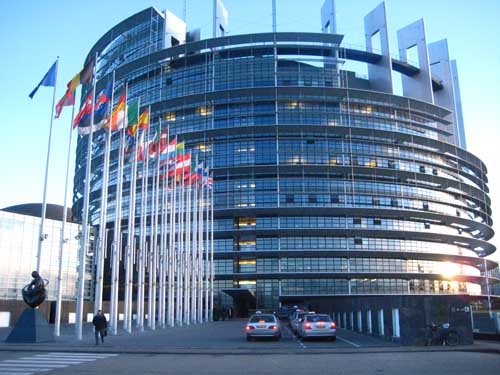
European Union Lawmakers Pass World’s First Major Act to Regulate AI

0
European Commission

The world’s first major act to regulate Artificial Intelligence (AI) has been passed by European Lawmakers after the parliament on Wednesday approved the regulatory ground rules to govern the technology.

The legislation is a comprehensive framework designed to ensure AI is developed and used in a responsible and ethical manner.

Also, the act is poised to reshape how businesses and organizations in Europe use AI for everything from healthcare decisions to policing. It imposes blanket bans on some “unacceptable” uses of the technology while enacting stiff guardrails for other applications deemed “high-risk.”

The president of the European Parliament, Roberta Metsola, described the act as trailblazing, saying it would enable innovation while safeguarding fundamental rights.

She wrote via a social media post,

Artificial Intelligence is already very much a part of our lives. Now, it will be part of our legislation too.”

Also commenting on the act, the European commissioner for internal market, Thierry Breton wrote on X, “Europe is now a global standard-setter in AI”.

Legal professionals described the act as a major milestone for international AI regulation, noting that it could pave the path for other countries to follow suit.

Meanwhile, Dragos Tudorache, a lawmaker who oversaw EU negotiations of the agreement, lauded the agreement but noted that the biggest hurdle remains implementation. He described the AI Act as not the end of the journey, but rather, the starting point for a new model of governance built around technology.

The new act imposes a ban on certain AI applications that threaten citizens’ rights, which includes biometric categorization systems based on sensitive characteristics and untargeted scraping of facial images from the internet or CCTV footage to create facial recognition databases.

Also, AI that manipulates human behavior or exploits people’s vulnerabilities will be forbidden. Companies such as OpenAI that produce powerful, complex, and widely used AI models will also be subject to new disclosure requirements under the law.

Reports reveal that the regulation is expected to enter into force at the end of the legislature in May, after passing final checks and receiving an endorsement from the European Council. Implementation will then be staggered from 2025 onward.

Following concerns surrounding bias, discrimination, and data privacy, amongst others as regards the use of AI technology, governments of several European nations have before now rolled out regulatory laws to guide the use of AI.

With major elections set to take place in different nations across the globe, these Governments fear the possibility of deepfake forms of artificial intelligence that generate false events, including photos and videos being deployed in the lead-up to a swathe of key global elections this year.

In a bid to curb some irregularities in the technology, some AI backers are already self-regulating to avoid disinformation. Tech giant company Google earlier this week, announced that it will limit the type of election-related queries that can be asked on its Gemini chatbot, saying it has already implemented the changes in the U.S. and India.


Nigerian Identity Verification Company Youverify Secures $2.5 Million in Pre-Series Funding

0
Fund, money cash dollar

Youverify, a Nigerian company specializing in identity verification and anti-money laundering (AML) solutions for banks and startups, has secured a pre-series A funding round of $2.5 million.

The pre-Series A investment from Elm includes a strategic partnership to help Youverify streamline AML compliance for businesses, bolster global risk intelligence, and expand its products into new markets.

Speaking on the investment, VP of Elm Investment, Fahad bin Issa Ibrahim Al-Shathry said,

We are excited to partner with Youverify, a company that shares our vision for leveraging technology to solve critical challenges faced by businesses today. This collaboration is a testament to our dedication to collaborating with exceptional founders through investing in a budding technology ecosystem not only in the Kingdom of Saudi Arabia but also globally to drive efficiency, security, and trust.”

Since 2022, Youverify has expanded its real-time business verification coverage to 145 jurisdictions across 48 countries. Additionally, the platform offers coverage for real-time individual verification, including credit history and national identity numbers, in 46 countries.

The company currently serves commercial customers in only 12 countries. Across these countries, the startup processes 4 million monthly applications for over 3,500 businesses with 800 active clients.

This marks a significant increase from the 400 businesses and 5 million application processes per year recorded in 2022. Additionally, the platform’s capacity to verify IDs has expanded from 400 million to 5 billion people, as well as 600 million businesses across various industries such as gaming, travel, healthcare, and telecommunications.

Youverify compliance solutions help customers reduce fraud losses by over 60%, positively impacting company financials. The company’s clients experience more than a 50% reduction in the number of false positives through customizable rules and intelligent algorithms.

The surge in financial services across Africa has drawn increased attention from regulators. Reports indicate that transactions totaling $116 billion will occur through digital payment channels this year, necessitating stringent measures to combat identity theft and fraud.

Accordingly, there’s a growing emphasis on transparency in financial regulations and the enhancement of strategies for AML and Know Your Customer (KYC) through the adoption of regulatory technologies (regtech). Africa expects to follow suit as the demand for regtech solutions rises globally.

In a bid to enhance anti-money laundering compliance, Youverify has stepped up its platform to regulate the payments space.

Notably, detecting suspicious activities or potential fraud goes beyond monitoring transactions, with Youverify’s AI-powered solution, it monitors all data of interest beyond transactions with options for customizations based on industry needs.

Youverify clients experience more than 50% reduction in the number of false positives through customisable rules and intelligent algorithms.

The company’s CEO Odegbami stresses that collaborating with regulators across various markets has honed Youverify’s proficiency in compliance and cultural sensitivity.

AI Poses Some Risks That Could Lead to Human Extinction, Says Report Commissioned by US State Department

0

The US Department of State has set its sights on the potential risks posed by artificial intelligence (AI), commissioning an exhaustive report from AI startup Gladstone, aimed at unraveling the merits and demerits of the emerging technology.

Released on Monday, the 284-page dossier serves as a clarion call, warning of the perilous consequences, including the potential end to humanity, that could ensue from the unchecked advancement of AI technology.

“At Gladstone, we have meticulously examined the trajectory of AI development and its implications for society,” stated Jeremie Harris, CEO of Gladstone. “Our findings are deeply concerning, suggesting that the advent of AGI could usher in a new era of existential threats unparalleled in human history.”

The report, initiated in October 2022, aims to assess the risks of AI weaponization and the loss of control over advanced AI systems. It noted that some of the risks could “lead to human extinction.”

Drawing insights from 200 industry stakeholders and analyzing historical precedents, Gladstone’s research sheds light on the profound challenges ahead.

“AGI represents a paradigm shift in technological capabilities,” explained Edouard Harris, CTO of Gladstone. “We must confront the reality that these systems could be weaponized in ways that pose grave risks to global security.”

One of the primary concerns outlined in the report is the potential for AI weaponization across multiple domains, including biowarfare, cyber-attacks, disinformation campaigns, and autonomous weaponry. Jeremie Harris highlighted the urgent need to address cyber threats, which he identified as a particularly acute risk.

“Cyber attacks orchestrated by AI systems could wreak havoc on critical infrastructure, destabilizing economies and threatening lives,” warned Jeremie Harris. “We cannot afford to underestimate the destructive potential of such technology.”

In addition to the risk of weaponization, the report underscores the perilous prospect of losing control over advanced AI systems. The emergence of AGI, capable of surpassing human intelligence, raises profound ethical and existential questions.

“Ensuring human oversight and control over AI systems is paramount to prevent unintended consequences,” emphasized Edouard Harris. “Failure to do so could lead to mass casualties and global destabilization.”

The report’s findings have elicited diverse responses from experts in the field, who spoke to BI, reflecting a spectrum of viewpoints on the risks and benefits of AI development. Robert Ghrist, associate dean at Penn Engineering, expressed cautious optimism about the future of AI but stressed the importance of vigilance.

“While the potential of AI is immense, we must approach its development with a keen awareness of potential risks,” remarked Ghrist. “Balancing innovation with safeguards is essential to harnessing the full potential of AI for societal benefit.”

However, some experts share a more pessimistic outlook, echoing the report’s concerns about the existential threats posed by AGI. Geoff Hinton, a leading figure in deep learning, warned of the possibility of human extinction within the next few decades.

“The unchecked development of AGI poses an existential threat to humanity,” cautioned Hinton. “We must heed the warnings and take decisive action to mitigate these risks before it’s too late.”

Despite the alarm raised by Gladstone’s report, not all experts agree on the appropriate response. Lorenzo Thione, an AI investor, cautioned against overreacting to the potential risks, advocating for a balanced approach that fosters innovation while addressing concerns.

“While we must take AI risks seriously, we must also avoid stifling innovation with excessive regulations,” argued Thione. “Finding the right balance is crucial to navigating the complex challenges posed by AI.”

In response to the report’s recommendations, which include the establishment of AI safety regulations and international cooperation, opinions among experts diverge. Artur Kiulian, an AI analyst, questioned the feasibility of regulatory solutions and emphasized the need for adaptive strategies.

“While regulation is important, we must also recognize the limitations of top-down approaches in a rapidly evolving landscape,” remarked Kiulian. “Flexibility and innovation are essential to effectively addressing AI risks.”

David Krueger, an AI researcher at Cambridge University, echoed the call for proactive measures to mitigate AI risks but stressed the importance of global cooperation.

“Addressing AI risks requires international collaboration and coordination,” asserted Krueger. “Only through collective action can we navigate the challenges posed by AGI and ensure a safer future for humanity.”

However, the Gladstone report has amplified calls for AI regulation, especially as the US policymakers and stakeholders drag their feet in developing a framework that will guide the emerging technology. With its potential to reshape society in profound ways, the warning from the Gladstone report buoys several other calls on the authorities to address concerns of potential harm that decisions AI development may impact on humanity.

The Return of Aigboje Aig-Imoukhuede To Access, And the Mission of Founders

0

Access Bank’s parent company (Access Holdings) is largely a “startup” now with the untimely passing of Herbert Wigwe. With no succession plan in place, any leader would likely struggle before all the stakeholders. So, to manage the paralysis, the Board has to return to a known vector, a co-founder, who had served as the banking unit’s CEO. So, it did not come as a surprise that Access Holdings has chosen Aigboje Aig-Imoukhuede as its chairman: “Following extensive consultations with key stakeholders, the holdco board decided to invite Mr Aig-Imoukhuede to the helm of governance”.

Founders have more bandwidth to try new ideas, win or make mistakes than professional managers, because they are assumed, as being founders, they are entwined within the interest of the mission they started. What could fire a professional manager could be accepted for a founder. In Facebook’s Meta, any manager would have gone during the company’s voyage into metaverse, but Mark Zuckerberg, being founder-CEO, was untouched.

It comes down  to a new vision and executing that vision for Access Bank: “I am thrilled to be back in active service to the Access Group ecosystem. I am confident that working with our directors, our exceptional team of executives and our best-in-class banking and finance professionals, we will deliver outstanding value to our esteemed stakeholders,” Mr Aig-Imoukhuede said.

Destination: the banks of the future will be tech companies which offer banking services, and not necessarily banks which use technology in their operations. Aig-Imoukhuede has to lead Access into that future. Good luck.

As a returning founder, in a banking institution with a broken succession, he needs to craft a new mission, especially during this time of an economic miry clay in Nigeria.

Best Altcoins 2024: BlockDAG Presale Gains Traction, 5000x ROI Attracts Investors from ADA and Polkadot

0

Crypto platforms like Cardano (ADA) and Polkadot (DOT) have sparked interest due to their innovative approaches and promising prospects. Amid this landscape, a new contender, BlockDAG, emerges in the cryptocurrency presale niche, stirring excitement and optimism.

This article delves into how Cardano and Polkadot are shaping investor optimism and why BlockDAG Network (BDAG) could be your gateway to significant returns, focusing on keywords such as Cardano (ADA) trading, best altcoins under $1, and Polkadot (DOT) price, along with variations like crypto presales.

Cardano (ADA): The Scalable and Secure Option

Cardano, often dubbed the “Ethereum Killer,” is carving a niche with its peer-reviewed, research-first approach to blockchain technology. Its native token, ADA, trades below $1 but has seen a recent surge, marking a 24% increase in the past week. Such momentum indicates its potential climb towards the $5 mark, making it an attractive prospect for those engaged in Cardano trading.

Cardano’s emphasis on scalability, interoperability, and sustainability positions it as a frontrunner in the race for blockchain supremacy, offering a robust platform for smart contracts and dApps that captivate the community’s imagination and investor interest.

Polkadot (DOT): The Interoperability Maverick

Polkadot distinguishes itself through its sophisticated governance and parachain auction mechanisms, which bolster network security and promote innovation. Despite the recent fluctuation in Polkadot’s price, which saw a notable increase to $11.31, the platform’s technological advancements and governance improvements suggest a robust future.

This price movement, mirroring the overall market’s volatility, represents a minor fluctuation in Polkadot’s ongoing progress in transforming blockchain interoperability and governance. This development provides an intriguing story for investors keenly observing Polkadot’s price for potential investment opportunities.

The Irresistible Appeal of BlockDAG

BlockDAG is shaping up as a standout player in the crypto presale market with its well-structured 45-batch approach, drawing inspiration from the Kaspa protocol. Having already raised over $4.4 million in its 3rd batch, BlockDAG’s third batch offers an attractive entry point at $0.002, signaling its commitment to inclusivity and rewarding early supporters with potential returns of up to 10,000x.

Additionally, a 20% allocation in the presale pool for this batch underscores BlockDAG’s appreciation for its participants, providing discounted coin prices as a gateway for newcomers and an alternative for those looking beyond established mining brands.

Beyond its presale achievements, BlockDAG’s allure is amplified by its innovative technology, a roadmap poised for market dominance, diversified income avenues, and a pledge to environmental sustainability, presenting a socially responsible investment choice.

Final Thought

While Cardano and Polkadot continue to attract attention with their innovative solutions and market potential, BlockDAG emerges as a noteworthy contender in the cryptocurrency presale arena. With its strategic presale structure and commitment to technological innovation and inclusivity, BlockDAG not only offers a unique entry point for investors but also presents a compelling case for those seeking diverse and potentially rewarding investment opportunities in the evolving blockchain landscape.


Invest in the BlockDAG Presale Now:

Website: https://blockdag.network

Presale: https://purchase.blockdag.network

Telegram:https://t.me/blockDAGnetworkOfficial

Discord: https://discord.gg/Q7BxghMVyu