DD
MM
YYYY

PAGES

DD
MM
YYYY

spot_img

PAGES

Home Blog Page 3243

Heritage Bank License Revocation: Shareholders Call For Thorough Investigation

0

In the wake of the Central Bank of Nigeria (CBN) revocation of Heritage Bank License, some shareholders have called for thorough investigation of the bank’s management.

Boniface Okezie, National Coordinator of the Progressive Shareholders Association, emphasized on the need to investigate the bank to restore confidence in the banking sector.

Speaking with Punch, he said,

“What is the fate of some other banks in the sector? Are they strong and viable? They should tell us. The management should be called for questioning. Those who ran the bank aground should be called for questioning. It is not enough that NDIC should liquidate.

“There must be a probe to recover people’s money. What assets does the bank have? CBN should probe the collapse of the bank so that others can learn. This is not good enough, something has to be done to arrest the situation.”

Recall that the CBN revoked the Heritage bank’s license, stating that such move was necessitated because the board management have not been able to improve the bank’s financial performance.

The CBN also cited the bank’s persistent financial instability as a critical factor, endangering the nation’s financial system.

Also, calling for probe of the bank, National coordinator of the Independent Shareholders Association of Nigeria, Moses Igbrude urged for the CBN not to let the matter slide. He said getting to the root cause of the revocation of the bank’s license was necessary to prevent such issue from happening again.

Meanwhile, the Nigeria Deposit Insurance Corporation (NDIC) has announced plans to pay the bank’s customers who have less than 5 million in their bank account first, while other customers will be paid once the bank’s assets have been sold. The decision to appoint the NDIC as the liquidator of Heritage Bank further underscores the severity of the situation.

Notably, in a series of posts made on X posts, Labour Party presidential aspirant in the last election, Peter Obi said the closure of the bank will have “a far-reaching impact” on the economy.

He wrote,

“The latest CBN’s revocation order on Heritage Bank’s operating license and subsequent appointment of NDIC as liquidator of its assets though affirmed by the regulators as necessary at this point to enhance financial stability, has a  far-reaching impact on the bank’s depositors.

“Given the harsh economic realities in the country now, I will urge the federal government via NDIC to ensure immediate payment of all depositors in Heritage Bank in full to help alleviate the prevailing hardship the people are going through in the country. Many individual savers and SMEs are already groaning under severe negative effects of the economy and already living in abject poverty. These depositors depend on the savings they have in the now-liquidated bank to survive.”

He further stated that anything short of immediate and full payment can create panic in the banking sector which the already fragile economy cannot afford.

Atiku Abubakar Accuses Tinubu Administration of Secretly Diverting Public Funds Through Fuel Subsidy

0

Atiku Abubakar, the presidential candidate of the Peoples Democratic Party (PDP) in the 2023 election, has accused President Bola Tinubu’s administration of clandestinely diverting public funds through secret fuel subsidy payments.

In a statement released on Thursday, Abubakar expressed concerns over the lack of transparency and the administration’s refusal to disclose the amounts being spent on subsidies, which he claims is detrimental to attracting investments in Nigeria’s oil sector.

Abubakar criticized the Tinubu administration for maintaining a secretive fuel subsidy regime, alleging that this approach is a continuation of the opaque governance style Tinubu employed while managing Lagos State. He emphasized the need for transparency and accountability, particularly given Tinubu’s dual role as President and Petroleum Minister.

“Tinubu has brought the shady nature of running Lagos to the federal level. He claims subsidy is gone, but his Special Adviser on Energy, Olu Verheijen, says they are intervening from time to time, while his Finance Minister, Wale Edun, described subsidy removal as an ‘ongoing process’,” Abubakar stated.

He further pointed to a document authored by the Coordinating Minister of the Economy detailing subsidy payments, which has since been disavowed by its authors, as evidence of the administration’s duplicity.

Despite public declarations that fuel subsidies have been removed, reports from both the World Bank and the International Monetary Fund (IMF) indicate that Nigeria continues to pay petrol subsidies. Abubakar highlighted these reports to underline the ongoing subsidy payments, noting that this contradiction undermines the administration’s credibility.

A leaked document surfaced earlier this week, revealing that the Nigerian government not only paid subsidies last year but has also allocated over N5 trillion for subsidies in 2024. The document projects that “At current rates, expenditure on fuel subsidy is projected to reach N5.4trillion by the end of 2024. This compares unfavourably with N3.6 trillion in 2023 and N2.0 trillion in 2022.”

This document casts doubt on the administration’s public stance and raises questions about the transparency of its financial practices. The leak has fueled suspicions that public funds are being diverted without proper accountability.

“For a man who claims to be on a mission to attract foreign direct investment, it is ironic that he cannot see that his policy flip flops and lies are capable of dissuading investors. He must come clean on this subsidy issue since he doubles as petroleum minister,” Abubakar argued. He called on the Tinubu administration to be forthright about its policies and their outcomes, stressing the need for transparency and accountability to the Nigerian public.

Abubakar further accused the administration of diverting funds meant for the Federation Account, which should be shared with states and local governments, without accountability. He urged the National Assembly to investigate the matter thoroughly instead of focusing on trivial issues, emphasizing their responsibility for oversight and warning that history would judge them harshly if they failed to act.

“The National Assembly needs to be alive to its responsibilities, especially in the area of oversight. Posterity will not be kind to members of the National Assembly if they continue to look the other way while daylight robbery is taking place,” Abubakar concluded.

The accusations by Atiku Abubakar bring to the forefront ongoing concerns about transparency and governance in Nigeria, highlighting the critical need for clear and accountable management of public resources.

The apparent contradictions between the administration’s public statements and the actual financial practices revealed by international reports and leaked documents are believed to underline a level of insincerity capable of spooking investment interests in Nigeria.

BlockDAG’s Dashboard Activity Skyrockets as Presale Gains $3M Overnight, Outshining QNT and APE’s Uptick 

0

BlockDAG’s leaderboard saw significant action as it quickly gathered $3 million overnight, bringing the total presale to a staggering $46.4 million, energized by the hype surrounding its redesigned dashboard and X1 mining app. This outstanding achievement elevates BlockDAG as a leader in the cryptocurrency market, particularly with Quant’s recent downturn and the growing excitement over ApeCoin’s potential surge. The substantial activity from major investors and the success of the presale have hastened the timeline for the mainnet launch, advancing it by four months earlier than planned.

ApeCoin Poised for Growth

Anticipation for ApeCoin’s value surge is high, with projections pointing to substantial growth by 2030 due to increased acceptance and integration into global markets. Prices are expected to fluctuate between $15.64 and $19.15, with an average potential price of $16.21, promising a bright future as adoption widens.

QNT Faces Market Challenges

Currently, Quant is feeling the pressure, trading below crucial support levels and trend lines, signaling possible further declines unless it stabilizes soon. The bearish sentiment is reinforced as the 21-day SMA dips below the 50-day SMA, indicating potential downtrends unless support rallies.

BlockDAG’s Nightly Presale Success

The flurry of activity on BlockDAG’s updated dashboard was palpable as whale transactions propelled a $3 million increase in its presale in just one night. The dashboard’s overhaul has transformed it into a comprehensive hub for transaction management, purchase monitoring, and referral optimization, enhancing user interaction and financial management within a unified, intuitive interface.

The dashboard’s “Fresh Updates” section and “Current Rank” feature actively engage users by providing timely data and visual progress indicators, encouraging active participation and strategic investment. The integrated wallet system further streamlines financial operations, enhancing security and efficiency.

BlockDAG’s forward-thinking extends to its mining innovations. The launch of the X1 mining app beta on mobile platforms introduces user-friendly crypto mining, accommodating both novice and seasoned miners. Meanwhile, the robust X100 miner, boasting a 2 TH/s hash rate and 1800W power usage, allows for the daily mining of up to 2,000 BDAG coins, proving highly profitable with over $3.1 million in sales from 7352 units sold.

These advancements have significantly boosted BlockDAG’s presale efforts, now in its 17th batch priced at $0.011 per coin. With over $46.4 million raised and more than 11.1 billion coins sold, BlockDAG is on track to potentially deliver an unprecedented 30,000x ROI, according to industry experts.

Final Thoughts

As QNT struggles and ApeCoin’s eyes grow, BlockDAG sets itself apart with substantial dashboard enhancements and sophisticated mining technologies, establishing itself as a prime investment choice in the crypto market. With strategic developments and solid financial backing, BlockDAG offers an enticing opportunity for investors aiming for extraordinary returns. Poised for a significant breakout, BlockDAG’s projected 30,000x ROI marks it as a revolutionary force in the future of cryptocurrency.


Join BlockDAG Now!

Website: https://blockdag.network

Presale: https://purchase.blockdag.network

Telegram: https://t.me/blockDAGnetworkOfficial

Discord: https://discord.gg/Q7BxghMVyu

Why Investors Are Selling Off Banking Stocks in Nigeria Stock Exchange

0

The job of a central bank does not include improving the stock market, and specifically the banking sector index. But if you study the policies of the central banks, traders can model how stocks will perform overtime. 

When the Central Bank of Nigeria (CBN) published the guidelines for the new recapitalization of Nigerian banks, I noted that markets could become inefficient where capital is designed to have “tiers” based on originations. Adam Smith in his invisible hands theory cautioned against that. So, if you structure your recapitalization to prefer people in New York, London, etc to invest in Nigerian banks (they export USD to Nigeria, but have to convert to Naira, to buy the equities which are sold in Naira), you are creating a tiered system. 

The zenith of any efficient market is when Naira from New York, London, Umuahia, Kano, Ife, Jos, Nairobi, Moscow, etc all have equal weights.  But when fudge factors are introduced to rank capital based on source, you destroy a market. 

Since that CBN announcement, the banking index has been going down. Recall my warning: “Remember, you cannot afford to annoy those currently investing in the Nigerian stock exchange (NGX), even as you hope for the Londoners, New Yorkers, etc to come. I have spoken as a village boy; I yield to the wiser people!”

According to Premium Times, the bleeding continues: “Sell-offs in Tier-one banking stocks on Tuesday extended losses on the Nigerian Exchange Ltd. (NGX). Notably, investors lost N38 billion or 0.07 per cent, as the market capitalisation which opened at N56.069 trillion, closed at N56.031 trillion.” This is not unexpected as I noted in my original piece that many current investors would be diluted, and to avoid that, many will dump bank stocks.

Yet, post recapitalization, massive value will return as these banks will have more war chests for deals, and they will make money.  “Uwa bu ahia’ [the world is a marketplace] and beating it is what we exist for!  The best have alpha moments, and when they do, you address them as “unu abiala” [have you people come?] even though only one man is standing there. Yes, in this marketplace, when men and women hit alpha in big ways, you address them in plural as they have ascended beyond singular pronouns.

Bank Recapitalization in Nigeria Could Make Capital Inefficient Through Exclusion of Retained Earnings

AgriTech Innovations in Florida’s Farming Landscape

0

Florida’s agriculture has been the cornerstone of the state’s economy, contributing over $160 billion annually. This Southeastern state largely owes its agricultural success to the diverse and temperate climate, which allows for the thriving production of around 300 commodities. The south of Florida is perfect for growing juicy tomatoes and iconic citrus fruits, providing ample sunlight, while its northern parts are more favorable for grain and fiber crop types.

This agricultural production powerhouse spans nearly ten million acres and is home to over 44,000 farms, which supply most of the U.S. and the world with fresh produce. Over the years, Florida’s name became synonymous with fresh tomatoes, sweet corn, sugarcane, and Valencia oranges, and for a reason: the state is only outpaced by California in terms of national vegetable production and grows 45% of all the country’s citruses.

Nevertheless, it’s not always sunny in Florida’s agricultural landscape – the state’s croplands have declined over the past decades due to economic drivers, weather calamities, and increased competition with urban development. Against all odds, the production has held up against the blows and shown sustained growth so far, which makes us wonder: What’s helping local farmers stay afloat? The answer is increased efficiency achieved by using state-of-the-art technologies and innovative solutions, including satellite crop monitoring and field-specific crop type classification. In this article, we’ll explore the unique challenges faced by Florida growers and the role of technologies in tackling them.

The Challenges and Struggles of Florida’s Agriculturists

Cultivating crops in Florida has never been easy. Over history, farmers have had to deal with severe freezes in winter, devastating hurricanes in summer and autumn, and tough diseases all year round. Rising air temperatures and sea levels driven by climate change have added a couple more challenges for crop growers, such as erratic rainfall, increased intensity of extreme weather events, and water quality deterioration. Let’s briefly overview the major vulnerabilities faced by Florida’s agriculture and where they originate.

Freeze probability

Don’t get fooled by Florida’s notorious mild winters, considered the state’s primary agricultural asset, which favors lavish production of winter vegetables and citrus types of crops. The probability of cold snaps is in the local climate’s DNA. It has not once taken a toll on crops in various parts of the state, gradually pushing growers to move citrus groves from the Orlando area further to the south, e.g., Polk County.

Hurricanes, tornadoes and floods 

From mid-August to late October, the peak of hurricane season, Florida farmers monitor tropical cyclone activity, keeping their fingers crossed that the weather will be kind. Strong wind gusts and flooding caused by torrential rains directly damage crops, soils, and farm infrastructure, disrupting agricultural cycles, exacerbating soil erosion and nutrient loss, polluting water bodies, and accounting for whopping economic losses. The most recent hurricanes, Ian (category 5) and Idalia (category 3), which hit Florida in 2022-23, inflicted $1 billion and $450 million in agricultural damage, mainly affecting field crops, iconic citruses, and vegetables.

As a peninsular state with a 1,200-mile-long coastline, Florida is inherently vulnerable to tropical storms brewing in the Atlantic and Gulf of Mexico – it’s where most of them make their first landfall, not sparing a single county. The bad news is that the intensity and scale of these weather calamities are only expected to increase in the coming years.

Florida also hosts a record-breaking number of tornadoes per 10,000 square miles, outpacing even the infamous Oklahoma, although they aren’t as intense.

Climate change: air temperatures and precipitation

Climate projections suggest that Florida farmers must brace themselves for less favorable growing conditions brought by climate change. Rainfall will become more unpredictable, and temperatures will keep rising alongside CO2 concentrations.

A lot of Florida’s crops have already been cultivated at above-optimal temperatures. With a couple more degrees on top of that, crop growth will likely decrease, and so will the crop yields. Rising air temperatures typically shrink crop cycles, robbing plants of the precious time they need to capture resources. Further down the line, heated air reduces fruit and grain set, culminating in critical loss of pollen viability. The point of failure due to heat stress varies with crop types: peanuts and soybeans are more heat-tolerant, while tomatoes and bean crops sustain most damage from rising temperatures. Identifying crop stress early and either planting more heat-loving varieties or moving the production northward will remain key strategies for upkeeping agricultural production.

Variability is the middle name of Florida’s precipitations, which strains farmers as proper crop development heavily relies on adequate moisture levels throughout the season. Under future climate scenarios, torrential rains will remain the main contributors to precipitations. Still, their increased intensity will likely leave less of that moisture available for use by crops due to the poor water-holding capacity of local soils. This will lead to increased irrigation demand exacerbated by a drier climate. Higher odds of saltwater intrusion into aquifers supplying irrigation water due to rising sea levels might worsen things for Florida farmers.

Pests and diseases

As one of the wettest states, Florida is an idyll for pests and diseases that flourish in heat and humidity. Local farmers have a long record of fighting against diseases that target the state’s signature crops – citruses. Having withstood the blow from citrus canker, they now face a new plague called citrus greening.

In the 20 years since the first registered case in Florida, the disease spread by a bug has ravaged the state’s groves, decreasing citrus production by 75%, doubling cultivation costs, and driving many farmers out of business. Despite years of research, no cure has been found so far, and infected groves have been massively eliminated to stop the outburst. Some recent experiments with antibiotic injections and genetic breeding provide a glimpse of hope for raising the once-thriving Florida’s citrus production from the ashes.

Role of Satellite Technologies in Elevating Florida’s Farming

Hotter seasons leading to lower crop yields, rising pest and disease pressure on crops, and intensified hurricanes and rainfall, affecting water availability, place crop and weather monitoring front and center in adaptation strategies.

Satellites offering an in-depth look at vegetation, soils, and water bodies from space lend farmers a helping hand to facilitate decision-making. By leveraging remote sensing technology and the wealth of information it provides about fields and crops via such specialized software as EOSDA Crop Monitoring, agriculturalists achieve streamlined farm operations, efficient resource use, and enhanced crop productivity – think higher profitability.

An average farm size in Florida is 200 acres, making it ideal for satellite-based observations across a range of applications aimed at maximizing crop production sustainably. 

  • Precision irrigation: Given the impressive diversity of crops grown in Florida and the fact that every crop type has individual water needs and heat tolerance, keeping tabs on soil and leaf moisture is essential for adjusting irrigation to prevent heat and water stress. EOSDA Crop Monitoring platform provides precipitation data and satellite-based measurements of moisture in and around crops, enabling variable-rate irrigation to ensure every drop goes exactly where it’s needed.
  • Crop rotation: Growing crops in specific sequences is a tried-and-tested method of elevating productivity and building immunity to pests and diseases. Widely recommended by the USDA as a practice against hurricane damage for most of Florida’s commodities, crop rotation benefits soil health and minimizes the risk of nematode infestations and pathogen attacks in waterlogged fields inaccessible due to hurricanes.

With EOSDA Crop Monitoring, farmers can generate field productivity maps based on a series of satellite images to assess the nutrient availability and efficiency of their crop rotations. Moreover, EOS Data Analytics, the satellite analytics provider behind the platform, offers custom crop classification for fields of nearly any size (7 acres and more), which can be used to fill the gap in crop rotation data for previous growing seasons.

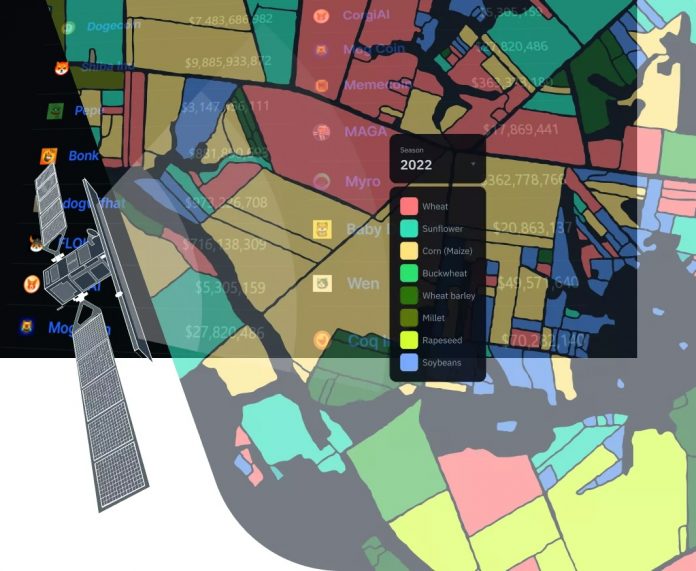
  • Crop classification: Tracking crop rotations is just one of the many applications of crop type maps generated from satellite imagery. They can reveal insights into regional, national, and global trends in crop production for companies engaged in food processing, farm input or equipment production. EOS Data Analytics marries accurate satellite data with machine learning algorithms to deliver the classification of field crops, forage, oil, fiber crops, and other cultivated varieties with up to 90% accuracy.

To Florida’s agricultural stakeholders and policy-makers, crop classification using remote sensing is a workable tool for gaining insight into the state’s food security and its issues. Accurate maps of crop types improve crop yield predictions, reveal how farmers make crop choices and growing decisions, and power the understanding of how various crops interact with environmental factors.

Advancing Sustainable Practices from Space

Sustainable production powered by data and technology is critical to withstanding the current agricultural challenges. Around 88% of farmers in Florida have already implemented some of the best practices powered by satellite data and analysis, including:

  • High-residue cover cropping: The use of high-biomass winter cover crops (rye, wheat, black oats, etc.) reduces soil erosion, improves water infiltration, and slows down moisture loss via evaporation, which is especially crucial in dryland regions;
  • Conservation tillage: Leaving at least 30% of the soil surface covered with crop residue is known to increase the amount of water available to plants while also reducing soil erosion and enhancing water infiltration – a major advantage for Florida’s soils with poor water-holding capacity and low soil organic content;
  • Sod-based rotation: Planting perennial grasses (e.g., bahiagrass) for several consecutive years between row crops (e.g., peanuts and cotton) builds resilience to droughts through higher water infiltration rates and lower soil bulk density.
  • Precision irrigation: By individually managing field zones within variable-rate irrigation, crop producers can reduce the risk of crop failure, avoid water losses, and prevent groundwater contamination.

Satellite data analytics solutions like EOSDA Crop Monitoring support the existing adaptation strategies to help Florida’s crop growers minimize risks associated with increasingly unpredictable weather and enhance input use efficiency. By equipping farmers with accurate and timely insights into crop health, soil moisture, nutrient availability, and other critical production variables, satellites pave the way for sustainable and resilient agriculture where reliable data drive each growing choice and decision.


Author:

Rim Elijah

Rim Elijah holds a double degree in business administration and political science from Stockholm University. As a VP of Sales, she oversees all aspects of business model development and implementation and the growth of the company’s global coverage. She has successfully established a number of strategic partnerships with an emphasis on sustainable solutions in Australia, Africa, and Asia.