DD
MM
YYYY

PAGES

DD
MM
YYYY

spot_img

PAGES

Home Blog Page 3273

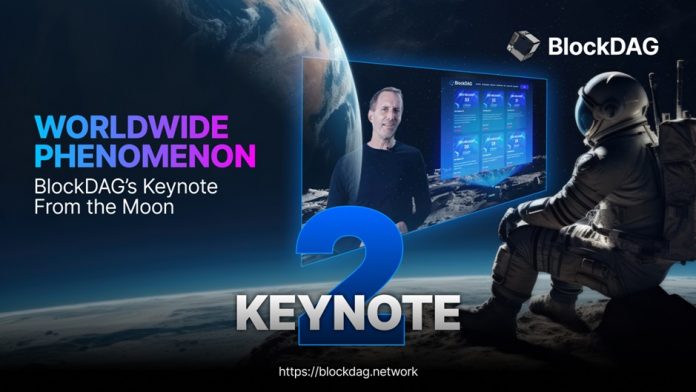
Global Crypto Frenzy: BlockDAG’s Keynote 2 Helps BDAG Aim for $10 by 2025 Amid Ripple vs SEC and Solana Whale Surge

0

In the ongoing Ripple vs SEC legal showdown, Ripple has moved to seal documents related to the SEC’s demand for penalties. At the same time, Solana has kicked off the year robustly, with forecasts suggesting a significant rise by mid-year, capturing the interest of Solana whales looking for major gains.

BlockDAG has established itself as a rapidly expanding cryptocurrency. Following the launch of the Moon Keynote 2, the presale of Batch 17 coins at $0.011 each saw the total sale of over 10.8 billion coins, amassing revenue that exceeded $42.4 million. This stellar presale performance has set BlockDAG on a trajectory to potentially reach a $10 valuation by 2025, highlighting its bright future in the crypto market.

Ripple vs SEC: Debate Over Sealing Sensitive Documents

In the ongoing Ripple vs SEC saga, Ripple supports its plea to seal certain legal documents that discuss penalties proposed by the SEC, which could amount to $2 billion related to XRP sales. Ripple counters several of the SEC’s claims and stresses that outdated contractual details could negatively impact future dealings.

Ripple asserts its shift away from over-the-counter transactions, focusing instead on its On-Demand Liquidity service. It also seeks to keep its financial details private, arguing they’re unrelated to the SEC’s historical claims.

Excitement Around Solana as Prices Fluctuate in 2024

Solana’s 2024 adventure started with a bang, launching at $78.14 and experiencing a significant rise by March. Yet, a sudden 42% decline later that month lowered its value dramatically.

By May, Solana had bounced back, showing a price increase. Experts foresee more growth by the end of the second quarter. Amid these developments, Solana Whales are keeping the excitement alive, with investors on the lookout for the next major breakthrough. The cryptocurrency market is still vibrant, with Solana emerging as a key player.

BlockDAG Keynote 2 Ignites $41.9 Million Presale

The unveiling of Keynote 2 has sparked renewed excitement among the cryptocurrency community, markedly boosting BlockDAG’s price forecasts. Originally presented in Tokyo, the first Keynote set an ambitious price target of $0.05. With the release of Keynote 2, expectations have rocketed to $10 by 2025, solidifying BlockDAG’s elevated status in the crypto sphere.

The fervor from its presale achievements is palpable, with coins from Batch 17 being snapped up at $0.011 apiece. Having sold over 10.8 billion coins and generating revenues exceeding $42.4 million, this success underscores growing investor trust and commitment to BlockDAG’s innovative direction. As enthusiasm escalates, these price predictions are increasingly seen as credible, mirroring the expanding confidence in BlockDAG’s prospects.

Furthermore, BlockDAG offers a variety of passive income options within its well-established blockchain ecosystem. Investors can leverage coin investment strategies that appreciate in value as BlockDAG continues to develop. Mobile mining also converts smartphones into convenient mining devices, offering an accessible method to accumulate rewards.

Scalable ASIC-based mining units provide a straightforward passive income source, which users can also resell after the launch for potential gains. Moreover, a 10% referral rewards program and unique presale privileges provide additional opportunities for financial benefits.

Final Verdict

With Ripple focusing on its liquidity products post the SEC legal updates and Solana whales stirring market excitement, BlockDAG distinctively advances with innovative passive income solutions and a rapid presale pace. Selling Batch 17 coins at $0.011 each generated over $42.4 million, affirming BlockDAG’s position as a swiftly ascending crypto. Projected to reach $10 by 2025, BlockDAG’s future in the crypto world appears exceptionally promising.


Join BlockDAG Now!

Website: https://blockdag.network

Presale: https://purchase.blockdag.network

Telegram: https://t.me/blockDAGnetworkOfficial

Discord: https://discord.gg/Q7BxghMVyu

Airdrop Frenzying keeps Popping amid Dwindling Inflations in Nigeria

0

In the bustling digital landscape of Nigeria, a phenomenon known as “Airdrop Frenzy” has been gaining momentum. This trend involves the distribution of free tokens, often as part of a promotional campaign by blockchain projects, to a wide array of recipients. These airdrops are designed to create buzz, distribute tokens to potential users, and incentivize participation in the burgeoning crypto economy.

Airdrops, in the cryptocurrency context, refer to the distribution of digital tokens or coins, usually for free, to numerous wallet addresses. They serve as a promotional strategy for new projects or as rewards for loyal users. In Nigeria, this practice has gained momentum, capturing the attention of both seasoned investors and the general public. The allure of obtaining free tokens, which have the potential to appreciate in value, has led to what is described as ‘airdrop frenzying’.

This frenzy is not without reason. Stories circulate of individuals reaping substantial rewards from participating in these airdrops. For instance, the Notcoin project, a recent crypto airdrop, has been a source of significant earnings for some, with reports of a Nigerian man making N9 million from claiming Notcoin airdrops. Such success stories fuel the frenzy further, encouraging more participation in the hope of similar fortunes.

The allure of airdrops in Nigeria can be attributed to several factors. Firstly, the concept of receiving something of value for free is universally appealing. In the context of Nigeria’s economic landscape, where inflation rates have soared to 33.69% in April 2024, the prospect of obtaining free digital assets is particularly enticing. The inflationary pressures have eroded the purchasing power of the naira, making alternative forms of value storage, such as cryptocurrencies, increasingly attractive.

Moreover, the digital literacy rate in Nigeria is on the rise, with a growing number of individuals becoming familiar with cryptocurrency and blockchain technology. This has led to a heightened interest in airdrops as a means to participate in the digital economy without the need for significant capital investment. The success stories circulating on social media, where individuals have reportedly made substantial gains from participating in airdrops, only fuel the frenzy further.

However, this frenzy is not without its challenges. The volatility of the cryptocurrency market means that the value of airdropped tokens can fluctuate wildly. Participants must navigate the risks associated with these assets, which can include price volatility, regulatory uncertainty, and the potential for scams. Despite these risks, the enthusiasm for airdrops persists, driven by the hope of financial gain and the excitement of being part of a cutting-edge technological movement.

The phenomenon of airdrop frenzy in Nigeria is a reflection of the broader global trend towards digitalization and the search for alternative economic systems. It highlights the innovative spirit of Nigerians and their willingness to embrace new technologies. As the country grapples with economic challenges, such as high inflation rates and currency devaluation, the appeal of airdrops and the broader crypto economy is likely to continue growing.

As we observe this trend, it is crucial for participants to exercise due diligence and for regulators to provide clear guidelines to protect consumers. The balance between fostering innovation and ensuring consumer protection will be key to the sustainable growth of the crypto economy in Nigeria and beyond.

The airdrop frenzy in Nigeria is a multifaceted phenomenon, rooted in economic realities and propelled by the promise of digital wealth. It serves as a testament to the adaptability and resilience of Nigerians in the face of economic adversity, and it underscores the transformative potential of blockchain technology in emerging markets.

Despite Pump.fun Previous Exploit, Memes on Solana Surges

Meanwhile, the Solana blockchain has recently demonstrated a remarkable resilience in the face of adversity, with its meme coin sector experiencing a significant surge despite a security breach at Pump.fun. This incident, which involved a former team member exploiting the platform, resulted in halted trading and a loss of $1.9 million.

However, the meme coin market on Solana remained unfazed, showcasing a robust rally with tokens like DogeBoy (DOGB) soaring by nearly 210%, and others like Pepe Trump (PTRUMP) and Maga VP (MVP) also registering substantial gains.

The Pump.fun platform, which facilitates the creation and trading of meme coins, was compromised through a ‘bonding curve’ exploit. The attacker utilized flash loans to manipulate token prices, borrowing SOL from the money market Drift and moving liquidity from Pump.fun’s pools, which should only be possible with an authorized wallet.

This led to suspicions of a private key compromise or an inside job. In response to the exploit, Pump.fun redeployed their smart contracts, adjusted their bonding curve, and waived platform fees for a week to mitigate the impact on users.

Despite the exploit, the meme coin sector on Solana has shown remarkable growth, with coins like MANEKI, UpSideDownCat (USDC), and Chipi (CHIPI) witnessing significant increases in their market cap. This growth is indicative of the robustness of the Solana ecosystem and the continued interest in meme coins within the cryptocurrency community. The incident at Pump.fun serves as a reminder of the inherent risks in the meme coin market, highlighting the importance of security and due diligence for investors.

The Solana blockchain’s ability to maintain its dominance and attract positive market movement amid such challenges is a testament to its underlying technology and the confidence it inspires among investors. As the blockchain and cryptocurrency landscape continues to evolve, the resilience and adaptability demonstrated by Solana will likely play a crucial role in its ongoing success and influence within the industry.

The incident at Pump.fun, where a former team member exploited the platform, resulted in halted trading and a significant loss of funds. However, the swift response from the Pump.fun team and the community’s support have demonstrated the strength and unity of the Solana network. The platform’s recovery measures, including deploying new smart contracts and waiving platform fees, have helped stabilize the situation and restore confidence among users.

This event has highlighted the potential risks associated with trading meme coins, but it also showcases the potential for significant gains. Investors are drawn to the high-risk, high-reward nature of these assets, and the Solana blockchain provides a fertile ground for such ventures. With its high-performance capabilities and growing ecosystem, Solana is proving to be a formidable force in the blockchain space.

The Pump.fun surge is just one example of how the Solana blockchain is shaping the future of decentralized finance. As the platform continues to evolve and innovate, we can expect to see more exciting developments and opportunities arise. The Solana blockchain’s dominance is not just on display; it’s setting the stage for a new era of blockchain technology.

Nigerian Fintech Zone Launches Blockchain-Powered PoS Solution to Deliver Frictionless Payments

0

Nigeria and Africa’s fast-growing fintech company Zone has announced the launch of its blockchain-powered Point of Sales (PoS) solution to deliver frictionless payments.

The PoS is built on the latest version of its next-generation payment infrastructure. The launch of the product highlights the company’s advancement in enhancing the African payment landscape.

As the first regulated blockchain network for payments in Africa, Zone is pioneering decentralized solutions that cater to cross-border transactions and various currencies.

The product is poised to enhance transaction reliability through direct routing of transactions to issuers, same-day settlement for beneficiaries and their financial institutions, and a robust framework eliminating chargebacks and chargeback fraud. One key thing to note is that Zone can implement direct transaction routing to issuers without violating regulatory guidelines on inter-bank payments.

Speaking on the launch of the PoS solution, the CEO of Zone Obi Emetarom stated that the launch of the product is geared towards enhancing financial inclusion and improving the seamless transfer of funds.

In his words,

“Today marks a pivotal moment not just for us at Zone, but also for the Financial Institutions we enable, and the esteemed customers they serve. Our PoS Payment Gateway Product is a commitment to financial inclusion and the digital future of all payments in Africa.

“With this new offering, we are excited to have taken yet another major step towards our vision for a world where individuals and businesses can make and receive instant payments to and from anyone in the world, through any payment method and in any currency.”

Some key features of Zone’s PoS payment gateway;

Direct Card Routing: Zone connects acquirers directly to issuers through its decentralized payment switching network. This architecture optimizes the PoS transaction route and eliminates failure points thereby guaranteeing increased speed and reliability of each transaction for the benefit of merchants, agents, and cardholders alike.

• No Chargebacks: Zone’s advanced PoS payment gateway eliminates chargebacks and chargeback fraud on PoS terminals by auto-refunding customers for unsuccessful transactions and auto-declining fraudulent chargebacks in real-time – thereby building a foundation of trust and satisfaction among all parties involved.

Same-Day Settlements: Settlement of payments from PoS terminals using Zone is effected on the same day and separately for each transaction, ensuring faster availability of funds for both agents and merchants alike, and making it easy to determine when value has been received for every transaction.

In November of 2022, Appzone evolved to become Zone; Africa’s first layer-1 Blockchain network and decentralized infrastructure for payment in Fiat money and digital currencies.

Zone allows participating institutions to connect directly with each other and perform payment transactions without an intermediary while completely automating settlement, reconciliation, and dispute management.

Notably, the absence of an intermediary or middleman in Zone’s architecture saves participating institutions money, enhances reliability, and eliminates reconciliation delays. Zone’s purpose is to maximize financial inclusion and accelerate economic prosperity.

Performance of US Spot Bitcoin ETFs vs. Ethereum ETFs

0

The U.S. Spot Bitcoin ETFs have been witnessing a remarkable trend of positive daily inflows for the past three weeks, indicating a growing investor confidence in the cryptocurrency market. This sustained inflow trend is a significant indicator of the market’s sentiment towards Bitcoin, suggesting that investors are seeing value in holding Bitcoin through ETFs despite the volatile nature of cryptocurrencies.

Spot Bitcoin ETFs, unlike their futures counterparts, are backed by the actual holdings of Bitcoin, providing direct exposure to the performance of the cryptocurrency. This has been an attractive proposition for investors who are looking for a more secure and regulated way to gain exposure to Bitcoin without having to hold the cryptocurrency directly.

The trend of inflows into U.S. spot Bitcoin ETFs is not just a flash in the pan but a part of a larger narrative of cryptocurrency acceptance and integration into the traditional financial ecosystem. Major financial institutions like BlackRock, Fidelity, and the Grayscale Bitcoin Trust have been leading the charge, showcasing the increasing institutional interest in cryptocurrency investments.

Moreover, the recent surge in inflows could also be attributed to the broader financial market’s recovery, as investors diversify their portfolios to hedge against inflation and currency devaluation. The inflows into spot Bitcoin ETFs reflect a strategic investment approach, leveraging the potential high returns of Bitcoin while mitigating the risks associated with direct cryptocurrency purchases.

In the United States, the approval of spot Bitcoin ETFs marked a pivotal moment for investors, offering a direct investment opportunity in Bitcoin without the complexities of managing digital wallets or private keys. The performance of these ETFs has been noteworthy, with reports indicating substantial inflows, suggesting a strong investor appetite for Bitcoin exposure through traditional investment vehicles.

On the other hand, Ethereum ETFs, which followed the path paved by Bitcoin ETFs, have also seen significant developments. The approval of Ethereum ETFs by the U.S. Securities and Exchange Commission (SEC) led to a considerable amount of Ether being withdrawn from centralized exchanges, hinting at a shift in investor preference towards regulated investment products.

Comparing the performance of Bitcoin and Ethereum ETFs reveals a dynamic and fluctuating market. Bitcoin ETFs have experienced both inflows and outflows, reflecting the volatile nature of the cryptocurrency market. For instance, while some Bitcoin ETFs have seen net inflows, others have reported outflows, underscoring the diverse strategies and performances within the sector.

Ethereum ETFs, despite the excitement around their approval, have had a mixed performance. The price of Ether remains below its all-time high, indicating that the market’s response to these ETFs is still stabilizing and investor sentiment is cautious.

Investors considering cryptocurrency ETFs must weigh the potential for high returns against the inherent risks associated with digital asset investments. The performance of U.S. spot Bitcoin and Ethereum ETFs serves as a testament to the growing integration of cryptocurrencies into mainstream finance, yet it also highlights the need for due diligence and a clear understanding of market trends.

The positive inflow trend also underscores the importance of regulatory clarity and the role it plays in investor confidence. As regulatory frameworks around cryptocurrencies continue to evolve, the market is likely to see more such products that offer a bridge between traditional finance and the emerging digital asset class.

The continuous positive daily inflows into U.S. spot Bitcoin ETFs are a testament to the growing investor appetite for Bitcoin and the maturing of the cryptocurrency market. With the backing of major financial players and a favorable regulatory environment, spot Bitcoin ETFs are poised to play a pivotal role in the mainstream adoption of Bitcoin as a legitimate and valuable asset class.

Global Crypto Ownership Surges as 6.8% People Globally Own Digital Currencies – Report

0

A recent report highlights a significant increase in global crypto ownership, with 6.8% of the world’s population owning digital currencies.

The increase in the number of digital currency owners, is up from 420 million in 2023, to 562 million in 2024, with Asia at the forefront of this growth with crypto ownership rising from 268.2 million to 326.8 million, a 21.8% increase.

The continent is followed closely by North America, with ownership rising from 52.1 million to 72.2 million, representing a 38.6% increase.

The report further highlights that cryptocurrency ownership in South America surged from 25.5 million to 55.2 million, a 116.5% increase. Europe also saw significant growth, with numbers rising from 30.7 million to 49.2 million, a 60.3% increase.

Africa experienced a moderate rise from 40.1 million to 43.5 million, an 8.5% increase. In Oceania, interest more than doubled, growing from 1.4 million to 3.0 million, a 114.3% increase.

The surge in the rate of global crypto ownership reflects growing interest and adoption of cryptocurrencies worldwide. A report by Binance stated that the surge in global crypto adoption is a result of several factors which include; Imminent crypto bull run, governmental developments, and media attention.

It is understood that the crypto market is currently in a bull run, after completing the fourth halving in April, which is usually followed by a surge in the price of Bitcoin. Bull runs have tended to peak within 12-18 months (late 2013, late 2017, early 2021) before entering bear markets.

Quantitative models forecast that the bull run could last 12-18 months and bring even greater returns than the epic 2021 rally. For example, the Stock-to-Flow model predicts Bitcoin could reach over $100,000 in the next cycle peak. This implies nearly a higher gain from the previous year’s lows. With the bull run already in motion, it has sparked both crypto and non-crypto enthusiasts to fund their wallets in anticipation of a Bitcoin price rally.

Also, the increase in the number of crypto global owners is linked to the approval of spot Bitcoin ETFs by the US Securities and Exchange SEC, which has increased institutional investor interest, with several major companies offering crypto services.

A spot bitcoin ETF allows investors to gain exposure to the price movements of bitcoin on a registered national exchange rather than through a cryptocurrency exchange and without the technical hurdles associated with holding cryptocurrencies.

ETFs also allow investors to avoid the management and other fees charged by investment trusts that hold bitcoin. Now that spot bitcoin ETFs have been approved and are being offered by many of the leading brokerage firms, investors who were previously hesitant to invest in bitcoin are now testing the waters of cryptocurrencies by investing in an ETF, which could lead to further adoption of crypto assets generally.