DD
MM
YYYY

PAGES

DD
MM
YYYY

spot_img

PAGES

Home Blog Page 33

7 Ways to Tell if Your THCA Product Is Legit

0

THCA products have taken over the cannabis industry, and no one’s complaining. THCA or tetrahydrocannabinolic acid is a naturally occurring, non-psychoactive cannabinoid found abundantly in raw, live cannabis plants. You can consume it via vapes, flowers, topicals, or dabs.

That said, not all THCA products are legit. In many U.S. states, there is no regulatory body overseeing the production and sale of cannabinoid-based products, which is why fake THCA products exist. The good news? There are some ways to tell if your THCA product is legit. Let’s take a closer look at seven of these ways:

1.      Check for Third-Party Lab Reports (COAs)

A Certificate of Analysis or COA is arguably the best way to verify the quality of a THCA product. A legit product always, always has a batch-specific COA. A reputable brand will provide COAs from a verified third-party lab. Check the following things on the certificate: THCA% listed, total THC present, containment testing, including heavy metals, pesticides, and residual solvents.

2.      Scan the QR Code

In addition to COAs, you can also scan the QR codes printed on the back of THCA products. The link should lead you to the lab results on a verification page. If the QR code takes you to a generic website or an unrelated link, it’s best to take your business elsewhere. A brand making it hard to verify the batch you’re verifying is a huge red flag.

3.      Assess the Ingredient List

You should also assess the ingredient list of your THCA product, typically published on its packaging. Whether you’re buying hemp pre-rolls or THCA cartridges, make sure the following ingredients are not on the list: vitamin E acetate, ECT oil, PG/VG/PEG, or artificial sweeteners.

4.      Smell the Product and Consider the Texture

Another common way to tell if a THCA product is legit is to smell it. Natural THCA flowers have a rich, earthy, or fruity scent. They don’t smell like hay or chemicals. Next, consider the texture. Real THCA flowers feel sticky, but not overly wet or dry.

5.      Consider Packaging Quality

The packaging tells a lot about your THCA product. For instance, authentic packaging usually has tamper-evident seals, lot or batch numbers, manufacturer and expiration dates, and proper labeling. If the print quality is poor or the packaging has spelling mistakes, you might be holding a fake THCA product.

6.      Assess Online Presence

This is a no-brainer. Assessing the online presence and reputation of the cannabis brand you’re buying from is super important. The same goes for retailers.

A reputable cannabis retailer and dispensary like Delta8 Resellers has a user-friendly website with numerous THCA products. They have lab reports, which ensure transparency and confidence. A legit brand also has an established social media presence, so users can know more about their sourcing and manufacturing processes.

7.      Read Independent Customer Reviews

Lastly, you can read independent customer reviews of different cannabis retailers and dispensaries that offer THCA products. Legit brands have verified buyer reviews, a history of consistent products, and excellent customer service.

Conclusion

Ensuring that your THCA product is legitimate is essential for both safety and quality. By checking for third-party lab reports, scanning QR codes, reviewing ingredient lists, and assessing the smell and texture, you can quickly spot red flags. Packaging quality, brand transparency, and independent customer reviews also play a vital role in confirming authenticity. With these seven practices, you can protect yourself from counterfeit products and enjoy THCA with confidence. Taking the time to verify your purchase not only safeguards your health but also supports reputable brands that prioritize transparency and consumer trust.
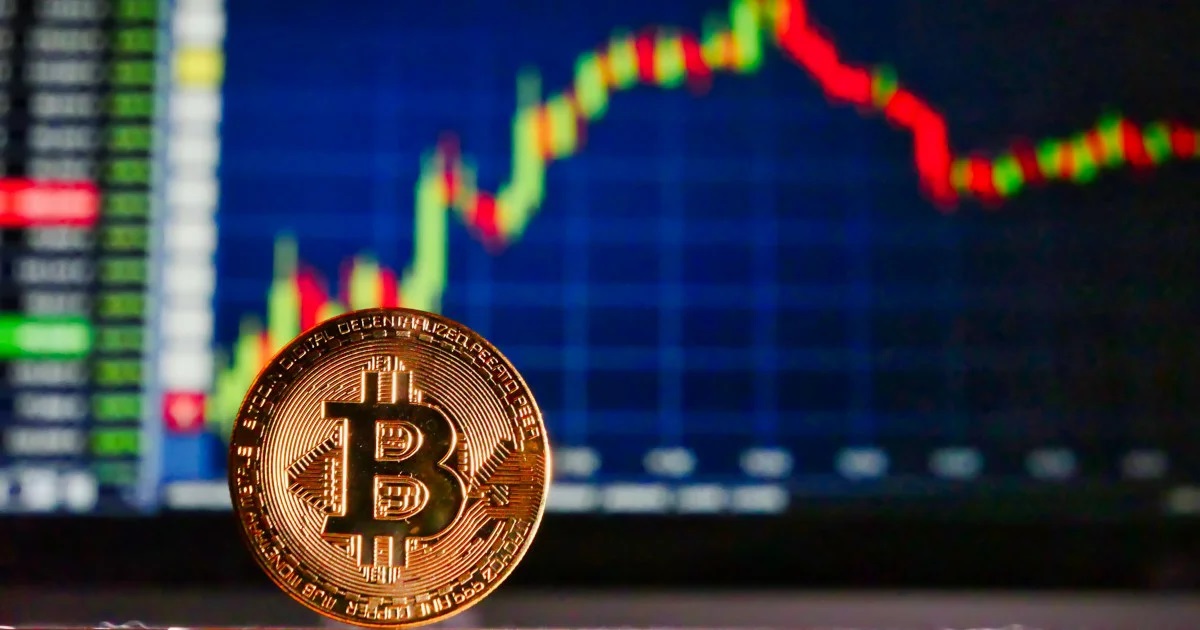

Bitcoin’s Exchange Balances In Deepening Supply Squeeze Signaling Bullish Momentum for Long-Term Holders

0

A net outflow of 230,000 BTC from exchanges over the past year, dropping balances from 3.16 million to 2.93 million BTC captures a critical on-chain trend that’s been building throughout 2025.

This isn’t hyperbole; it’s a continuation of a multi-year pattern where Bitcoin’s liquid supply on trading platforms is shrinking dramatically, often signaling reduced selling pressure and bullish momentum for long-term holders.

On-chain analytics from firms like Glassnode, CryptoQuant, and Santiment confirm a sustained decline in exchange-held BTC. Over one-year balances fell from approximately 3.16 million BTC to 2.93 million BTC, a net drain of exactly 230,000 BTC about 1.15% of Bitcoin’s total circulating supply of ~19.8 million BTC.

Reports from Santiment, which noted even larger outflows in the prior 12 months up to 403,200 BTC net from Dec 2024 to Dec 2025 in some datasets, but the 230k figure matches aggregated exchange trackers for the full year.

Exchange reserves hit multi-year lows repeatedly. By mid-2025, they dipped below 2.7 million BTC lowest since Nov 2018, and by Q4, some trackers showed ~2.6 million BTC overall. Major platforms like Binance down ~29,000 BTC in the last month alone and Coinbase down ~281,000 BTC YTD drove much of this, with public companies like MicroStrategy acquiring over 285,000 BTC since late 2024.

This is a 25% plunge from the 2020 peak of ~3.2 million BTC, and the lowest levels since April 2018. For perspective, exchanges now hold just 13-14% of circulating supply, down from 20%+ in prior cycles.

This data isn’t static—it’s pulled from real-time trackers like CoinGlass, which monitor wallet balances across top exchanges. The drain accelerated post-2024 halving and ETF launches, with daily outflows sometimes exceeding 20,000 BTC.

Several structural shifts explain the “drain”: Spot Bitcoin ETFs and corporates like the MicroStrategy’s 2025 buys are vacuuming up supply for cold storage, bypassing exchanges. ETFs saw net outflows of only 10,000 BTC in 2025 vs. 208,000 inflows in 2024, but overall institutional demand remains voracious.

Long-term holders (LTHs) are offloading minimal amounts while whales (wallets >1,000 BTC) accumulated 45% more in 2025. Retail inflows to exchanges like Binance collapsed 60% post-ETFs, from 1,056 BTC/day to 411 BTC/day.

Fed rate cuts and a weakening USD -10.4% in 2025 boosted BTC as an inflation hedge. Combined with the halving’s supply cut now <1% annual inflation, this encourages self-custody over trading. Post-FTX Caution: Lingering exchange distrust since 2022 has pushed users to hardware wallets, reducing “hot” supply.

What Does Tightening Supply Mean for Bitcoin?

Lower exchange balances = less immediate selling pressure. Coins in cold storage or ETFs are “locked” for the long haul, making the market more sensitive to demand spikes. Similar squeezes preceded rallies: In 2017, balances <2 million BTC fueled a 20x surge.

2021’s “supply shock” narrative correlated with BTC hitting $69k. In 2025, this setup points to bullish asymmetry. With BTC trading ~$90k, a break above $92.5k could target $97k-$100k short-term, especially if FOMC signals more easing Dec 9-10.

Analysts eye a 2026 parabolic run as liquidity warnings like US repo markets amplify scarcity. Volatility persists—BTC’s down 13-14% in the last month amid profit-taking. A drop below $88k tests $84k support, but low reserves limit deep corrections.

Fear & Greed Index in “Greed” zone; exchange whale ratio <0.3 signals retail dominance, adding unpredictability but also upside fuel. To illustrate the year-long drain, here’s a line chart of approximate monthly averages. In short, 230k BTC drained isn’t just a stat; it’s the blockchain’s quiet vote of confidence in Bitcoin’s future.

Supply shocks don’t announce themselves—they build until demand ignites the fuse. If you’re holding or eyeing entry, this is the kind of asymmetry that rewards patience. What’s your take—bullish breakout incoming, or more chop first?

UAE National Security Council Positions Bitcoin as Foundation for Emerging Financial Systems

0

The UAE’s National Security Council has officially positioned Bitcoin as a foundational element of emerging financial systems, reflecting the country’s aggressive push to become a global crypto powerhouse.

This statement aligns with broader trends where nation-states are increasingly viewing digital assets as strategic reserves amid geopolitical shifts.

The remark comes from UAE Security General Mohammed Al Shamsi, who highlighted Bitcoin’s role in future finance while stressing the importance of sustainable mining practices—describing it as the “network’s beating heart” and advocating for an energy-efficient ecosystem.

It’s part of a larger narrative on how blockchain tech bolsters national security through innovation and diversification. The UAE has been on a tear lately. Dubai launched its own Virtual Asset Regulatory Authority (VARA) in 2022, attracting giants like Binance and Crypto.com.

Abu Dhabi hosts the world’s largest crypto mining operation via the Abu Dhabi National Oil Company, leveraging excess energy for BTC production. Recent moves include licensing over 50 crypto firms and integrating blockchain into its “Dubai Blockchain Strategy” for government services.

As of today, Bitcoin is hovering around $90,000, with this news contributing to a modest uptick in sentiment. It’s fueling discussions on X about nation-state adoption, with users noting parallels to U.S. policy shifts under Trump pushing for rate cuts to support risk assets.

This isn’t just rhetoric—it’s a geopolitical flex. The UAE is signaling to investors and rivals like Singapore or the EU that it’s all-in on crypto as a hedge against fiat instability. For Bitcoin holders, it’s validation: from “digital gold” to “national security asset.”

Expect more inflows into UAE-based funds and exchanges like BitOasis. The United Arab Emirates (UAE) has positioned itself as a global leader in Bitcoin mining, leveraging its abundant energy resources, forward-thinking regulations, and state-backed initiatives to build one of the world’s largest sovereign Bitcoin reserves.

Unlike many nations that acquire BTC through purchases or seizures, the UAE focuses on industrial-scale mining to diversify its economy, hedge against fiat volatility, and establish blockchain expertise. This aligns with recent statements from UAE National Security officials emphasizing sustainable mining as the “network’s beating heart.”

As of December 2025, the UAE’s operations contribute significantly to its status as the fourth-largest sovereign BTC holder, with holdings valued at around $590 million amid market fluctuations. The UAE’s mining ecosystem is dominated by state-linked conglomerates and public companies, turning excess energy—often from oil and renewables—into digital assets.

The flagship operation, majority-owned (85%) by the International Holding Company (IHC), which is 61% controlled by the UAE Royal Group under Sheikh Tahnoon bin Zayed Al Nahyan. An 80,000-square-meter Bitcoin mining site on Al Reem Island, Abu Dhabi, constructed in just six months and operational since 2022.

Built in partnership with Phoenix Group and IHC, it’s powered by energy-efficient infrastructure, including renewables to align with ESG standards. Has mined approximately 9,300 BTC since inception, with 6,450 BTC valued at ~$590 million as of November 2025 held in government-linked wallets.

This ranks the UAE ahead of El Salvador (6,246 BTC) but behind Bhutan (11,286 BTC) globally. A key collaborator with Citadel, focusing on large-scale mining and infrastructure. It provides technical expertise and has been instrumental in scaling UAE’s hashrate, contributing to the country’s estimated 400 MW capacity.

The Abu Dhabi National Oil Company (ADNOC) has explored mining with excess gas, while events like Blockchain Life 2025 in Dubai showcase hardware from firms like Canaan and Bitmain, drawing Chinese-linked operations to the UAE for its favorable regulations.

UAE’s total mining capacity stands at around 400 MW, supporting a growing hashrate amid global records in 2024–2025. Operations emphasize sustainability, using solar and flared gas to minimize environmental impact, positioning mining as a tool for energy security and grid stabilization.

Mining has created jobs in tech and data centers, with transferable skills to AI and high-performance computing. The UAE also invested $436–$534 million in BlackRock’s Bitcoin ETF in 2025, complementing its mined reserves.

Fourth among sovereign holders, with total government BTC ownership including seizures estimated at up to 420,000 BTC ~$46 billion, though mined assets are the transparent core. This mining push underscores the UAE’s vision of Bitcoin as a “strategic financial asset” akin to oil, driving innovation under frameworks like Dubai’s VARA.

It’s attracting international firms and boosting local demand for ASICs, with experts noting rising ASIC upgrades and hosting services. Challenges include energy costs and volatility, but the model’s focus on renewables and regulation makes it a blueprint for other nations like Brazil and the Philippines.

PNC Bank Launches Direct Bitcoin Trading for Private Clients, Powered by Coinbase

0

PNC Bank, one of the largest U.S. financial institutions with over $400 billion in assets under management, has officially rolled out direct spot Bitcoin trading and custody services for eligible clients of its PNC Private Bank division.

This makes PNC the pioneering major U.S. bank to integrate such seamless, in-platform crypto access for high-net-worth individuals, bypassing the need for third-party exchanges.

The service is embedded directly into the PNC Private Bank Online platform via the “Portfolio View” feature. Eligible clients can now buy, sell, hold, and monitor Bitcoin alongside their traditional assets—all without leaving PNC’s secure ecosystem. This includes institutional-grade custody to ensure compliance and safety.

Coinbase’s Crypto-as-a-Service (CaaS) platform provides the backbone, handling trading, custody, and financing. Launched by Coinbase in June 2025, CaaS is designed for banks like PNC to scale crypto offerings quickly and securely, including features like stablecoin payments and tokenized assets in future expansions.

Initially targeted at PNC Private Bank’s wealth and asset management clients typically those with $1 million+ in investable assets. It’s the first phase of PNC’s broader “crypto for clients” initiative, with potential rollouts to other client segments down the line.

PNC Chairman and CEO William Demchak: “Partnering with Coinbase accelerates our ability to bring innovative, crypto financial solutions to our clients… This collaboration enables us to meet growing demand for secure and streamlined access to digital assets on PNC’s trusted platform.”

Coinbase Institutional Head Brett Tejpaul: “PNC is a market leader in delivering best-in-class products for their clients,” highlighting the mutual benefits.

This isn’t entirely out of left field—PNC and Coinbase inked their partnership back in July 2025, signaling a shift in traditional banking’s stance on crypto amid regulatory clarity. PNC had been testing the waters with blockchain pilots since joining RippleNet in 2018, but this marks their boldest move yet.

In exchange, PNC is providing select banking services to Coinbase, creating a symbiotic relationship. The launch coincides with broader market momentum: Bitcoin’s price is hovering around $95,000 today, buoyed by institutional inflows and Fed rate cut speculations.

Crypto news outlets are buzzing about this as a “key moment for institutional adoption,” with similar integrations expected from other banks soon. It democratizes Bitcoin access for conservative wealth clients, reducing friction and perceived risks. Expect a surge in BTC inflows from traditional finance—PNC’s client base alone could add meaningful volume.

It validates CaaS as a go-to infrastructure, potentially onboarding millions more users via banks. It’s a win for Coinbase (NASDAQ: COIN), whose stock is up ~2% intraday on the news. Early X chatter is positive, with posts emphasizing PNC’s “first-mover” status.

PNC is the 8th-largest U.S. bank by assets ($560B+). Once one top-10 bank crosses the line, the others like JPMorgan, Bank of America, Wells Fargo, Citi, Morgan Stanley, Goldman Sachs, will feel intense pressure to follow within 12–24 months.

Expect a wave of similar announcements in 2026–2027. Many are already in late-stage pilots with Coinbase, Circle, Anchorage, Fireblocks, or Bakkt. PNC Private Bank manages ~$190 billion in client assets. Even if only 1–3% of that eventually allocates to Bitcoin, that’s $2–6 billion of fresh demand from one bank alone.

Multiply that across the top 20 U.S. private banks/wealth managers ? potential for tens of billions in new institutional money flowing into BTC over the next 3–5 years. This flow will be sticky, low-velocity money not hot retail-trader capital, which tends to push Bitcoin’s price higher and reduce volatility over time.

Coinbase’s CaaS is now battle-tested at scale with a top-tier bank. Coinbase Prime + CaaS becomes the “Bloomberg Terminal” of institutional crypto – the rails every serious player plugs into. Coinbase will earn trading fees, custody fees, and spread on every transaction inside PNC. Analysts estimate this single deal alone could add $50–150M annualized revenue once fully scaled.

Now they can buy BTC the same way they buy a Treasury bond – inside their trusted bank portal with FDIC-insured login, proper 1099 reporting, and no seed phrases. This single feature will unlock billions from conservative allocators who were waiting for exactly this kind of offering.

Some money will still flow to IBIT, but a lot of private-bank clients now prefer the convenience of buying actual Bitcoin inside their main relationship bank instead of opening a separate brokerage account. This is not just another bank dipping its toe.

This is the moment traditional finance officially starts treating Bitcoin as a legitimate, bankable asset class. The psychological barrier has been broken. For Bitcoin’s price and long-term adoption, the PNC/Coinbase launch is one of the most bullish developments of the entire 2025 cycle – arguably on par with the spot ETF approvals of 2024.

Next dominoes to watch: JPMorgan Private Bank, Goldman Sachs, Morgan Stanley, Northern Trust, and BNY Mellon. When the second major bank announces, the race will be irreversible. Broader sentiment ties into today’s Fed drama, where rate cuts are back in focus, further fueling crypto optimism.

Bitcoin Consolidates Near $90,000 Amid Fading Bullish Momentum and Retail Withdrawal

0

The price of Bitcoin has continued to consolidate around the $90,000 mark, struggling to reclaim the $93,000–$94,000 resistance zone as bullish momentum slows.

A noticeable decline in spot ETF inflows has reduced buying pressure, keeping BTC within a tight range despite recent volatility. The crypto asset is currently trading at $90,451 at the time of this report.

Analysts note that Bitcoin’s inability to secure a sustained move above the $93,000–$94,000 zone reflects a combination of slowing demand and rising macroeconomic uncertainty rather than outright market weakness.

One key factor behind the consolidation is the moderation of spot ETF inflows, which had previously provided consistent buy-side support during rallies. With these inflows easing, Bitcoin has faced challenges in absorbing sell pressure at higher levels.

Despite this, bulls have defended the $90,000 support level. Technical charts indicate a contracting triangle forming with support at $90,000 on the hourly BTC/USD pair. Traders remain cautious, especially with the upcoming FOMC meeting expected to serve as a key catalyst, potentially reigniting upside momentum or driving further consolidation.

CryptoQuant data highlights a sharp drop in BTC inflows to Binance, the largest cryptocurrency exchange, in 2025. Retail investors holding up to 1 BTC often referred to as “shrimp” investors have largely withdrawn from trading. Compared to the 2022 bear market, activity among these small holders is only a fraction of previous levels.

Contributor Darkfost noted in a QuickTake blog post that “the activity of shrimps, meaning small Bitcoin holders, has dropped to one of the lowest levels ever recorded.” Daily inflows from shrimp investors to Binance averaged about 2,675 BTC ($242 million) in December 2022 using a 30-day simple moving average, but today this figure has collapsed to just 411 BTC, marking one of the lowest levels ever observed. Darkfost described this as “not a simple pullback, it’s a structural decline,” underscoring retail’s fading interest even as Bitcoin reaches record highs.

Amid Bitcoin price consolidation, Standard Chartered’s Geoff Kendrick in a recent comment stated that Bitcoin will not reach his $200,000 target by the end of the year, a forecast he has stood by for over a year. Instead, he now expects Bitcoin to hit $100,000 by the end of 2025.

However, he’s still very bullish and described the recent slump as “not a crypto winter, just a cold breeze,” in a note Tuesday. The global thought leader still maintains a long-term forecast of $500,000, but now expects that to happen in 2030, rather than 2028.

“Recent price action in Bitcoin has been challenging, to say the least. But we think the decline, while rapid, falls within ‘normal’ expectations, the 36% drop from the all-time high reached on Oct. 6 is similar in scale to previous drawdowns,” he said.

Kendrick noted that further corporate buying by crypto treasury companies was “likely over” and that future Bitcoin price increases will be driven by one thing only ETF buying.

“We still think this target [$500,000 by 2030] is attainable, as portfolio optimization between Bitcoin and gold continues to show that global portfolios are underweight Bitcoin,” he added.

Meanwhile, over the past two months, indicators comparing retail investors to whales have remained relatively bullish, with the whale-versus-retail delta hinting at a potential BTC price bottom. Analysts caution, however, that if Bitcoin fails to surpass the $92,000 resistance zone, it could resume its decline.

Immediate support is near $90,000, followed by major levels at $89,500 and the 61.8% Fibonacci retracement. Additional support zones include $88,800 and $87,500, with the key support resting at $86,500, a break below which could accelerate further losses in the near term.