
DD
MM
YYYY

PAGES

DD
MM
YYYY

spot_img

PAGES

Home Blog Page 33

Gold Crosses $4600, Silver Crosses $83 Amid Broader Precious Metals Performance

0

Precious metals are surging to new all-time highs right now. As of mid-January 2026, gold has indeed crossed $4,600 per troy ounce with peaks reported around $4,620–$4,630 in recent sessions, while silver has surpassed $83 and pushed even higher reaching records above $85–$86 in spot trading.

This marks explosive gains driven by a perfect storm of factors: Intensified uncertainty over U.S. Federal Reserve independence — A criminal probe/ grand jury subpoenas from the Trump administration’s Department of Justice targeting Fed Chair Jerome Powell related to congressional testimony on Fed building renovations has sparked widespread concerns about political interference in monetary policy.

Powell publicly accused the administration of harassment tied to interest-rate disagreements, eroding confidence in U.S. institutions and boosting safe-haven demand. Escalating protests and unrest in Iran with potential for wider conflict and U.S. involvement, ongoing U.S.–Venezuela tensions, and broader global instability are fueling flight-to-safety flows into gold and silver.

Expectations for continued Federal Reserve rate cuts in 2026 despite a likely hold in January, a weaker U.S. dollar, low real yields, and persistent inflation hedging play a big role. Gold surged over 64% in 2025 its best since 1979, while silver posted its strongest year on record up ~147%.

Silver’s outperformance lately stems from its dual role as a safe-haven asset and an industrial metal like solar, electronics, EVs, with tight supply deficits persisting for years and added pressure from export restrictions in major producers like China. Current spot levels Gold: Hovering ~$4,580–$4,600/oz after pulling back slightly from Monday’s highs amid some profit-taking.

Silver: ~$85–$86/oz still near records after a massive multi-day run. These are live market moves, so prices fluctuate by the minute—check real-time sources like Kitco, BullionVault, or APMEX for the latest tick. Analysts from banks like JPMorgan, HSBC, and Goldman Sachs see potential for gold to push toward $5,000 in 2026 if these pressures persist, with silver’s volatility potentially amplifying gains or corrections.

The ongoing concerns over Federal Reserve independence—intensified by the Trump administration’s DOJ criminal investigation into Chair Jerome Powell related to his congressional testimony on Fed headquarters renovations—are significantly impacting financial markets right now.

This probe, which Powell has publicly described as “unprecedented” and tied to political pressure for lower interest rates, has sparked widespread fears that the Fed’s autonomy could erode. Historically, central bank independence is a cornerstone of stable monetary policy: it allows decisions based on economic data rather than short-term political demands.

Any perceived loss of credibility could lead to higher long-term inflation expectations, as investors might anticipate looser policy to appease the executive branch.

Safe-haven surge in precious metals: Gold and silver have rallied sharply as investors seek protection from institutional uncertainty and potential inflation risks. Gold spot price: ~$4,583–$4,590/oz after hitting a record above $4,620–$4,630 earlier this week, with minor pullback today amid some profit-taking.

Silver spot price: ~$85.50–$86/oz near all-time highs, up strongly on its leveraged sensitivity to risk-off flows and industrial demand. These moves reflect classic flight-to-safety behavior, amplified by geopolitical tension in Iran protests/U.S. involvement risks, Venezuela/U.S. friction.

Equities have shown volatility, futures slid initially on the news but steadied, the U.S. dollar has weakened slightly eroding some “exorbitant privilege” appeal, and Treasury yields have seen minor steepening in parts of the curve as markets price in potential long-term inflation or borrowing cost risks.

Bond market signals: Long-term yields could face upward pressure if independence concerns persist, raising borrowing costs economy-wide e.g., mortgages, corporate loans. Short-term, expectations for Fed easing remain, but the drama adds noise.

Fed Policy Outlook Amid These Concerns

The Fed’s next meeting is January 27–28, 2026, where it is widely expected to hold rates steady at the current 3.50%–3.75% range—odds of a cut are very low, around 5–16% per market pricing. This follows three 25-bp cuts in late 2025, with policymakers signaling a pause to assess data.

Looking further into 2026: Consensus from Fed dots, economists, and futures markets points to 1–2 additional 25-bp cuts total, likely starting mid-year in April/June and possibly another later in September/December. Drivers include moderating inflation still above 2% target, labor market softening— unemployment ~4.4–4.6%, and ~2% GDP growth expectations.

Political factors (new chair nomination post-Powell’s May term end, potential Board shifts) could influence dovishness, but most analysts expect the Fed to prioritize data over pressure to avoid credibility damage. If independence fears escalate via aggressive new leadership or interference, it risks higher long-term yields/inflation, hurting growth-sensitive assets.

Conversely, if the Fed weathers this as many believe its structure allows, policy stays data-driven, supporting gradual easing. Overall, this is a high-uncertainty environment—precious metals are thriving as hedges, while equities/bonds remain cautious.

Digital Asset Products Record over $450M of Outflows Last Week

0

The crypto market is showing signs of cooling investor sentiment in early 2026, based on the latest data from CoinShares’ weekly digital asset fund flows report covering the week ending around January 10-12, 2026.

Digital asset investment products such as ETFs and ETPs from providers like Fidelity, Grayscale, and Ark recorded net outflows of approximately $454 million last week reports cite figures around $454M. This marks a sharp reversal:It followed strong early-year inflows of about $1.5 billion in the first few trading days of 2026.

A subsequent four-day streak of outflows totaled roughly $1.3 billion, nearly wiping out those initial gains. Bitcoin-linked products bore the brunt, with ~$405 million in redemptions. Ethereum saw ~$116 million in outflows. Smaller outflows hit multi-asset, Binance, and Aave products. Short-Bitcoin products also saw $9.2 million outflows, indicating reduced bearish leverage.

Regionally, the United States drove the negativity with ~$569 million in outflows, likely tied to fading hopes for a Federal Reserve interest rate cut in March. Hotter macro data resilient services, labor market, sticky inflation reduced expectations, prompting risk-off behavior. In contrast: Germany led inflows at ~$58.9 million.

Canada ($24.5M) and Switzerland ($21M) also saw positive flows. Notably, some altcoins bucked the trend with inflows: XRP: ~$45.8 million. Solana: ~$32.8 million. Sui: ~$7.6 million. This suggests selective rotation rather than a full exit from crypto, with investors shifting toward certain altcoins amid caution on majors like BTC and ETH.

Separately, retail interest in crypto appears subdued. Viewership of cryptocurrency-related content on YouTube has dropped to its lowest levels since January 2021— early bear market phase post-2021 peak. Analysts and creators like Benjamin Cowen of ITC Crypto, Tom Crown, Jesus Martinez describe this as a prolonged “bear market” in social engagement since 2021, with no return to prior hype highs.

The decline accelerated over the past three months and spans platforms, not just YouTube or X. Factors cited include: Retail fatigue from scams, pump-and-dump schemes, and underwhelming returns e.g., BTC reportedly down ~7% in 2025 in some commentary. Shift toward macro assets/commodities that outperformed crypto in 2025.

Institutional dominance driving price action this cycle, with less retail FOMO. These trends align with a market where institutional flows via products remain significant but volatile, while retail participation via content consumption stays depressed—potentially signaling a quieter, more mature phase rather than broad abandonment.

AuM in these products hovered around $180-182 billion recently, down from peaks but still elevated historically. Keep an eye on macro updates (Fed signals) and any altcoin momentum for shifts.

This positive flow for XRP contributed to a selective rotation among altcoins, with similar inflows into Solana ($32.8M) and Sui ($7.6M), while majors like Bitcoin and Ethereum faced heavy redemptions. Cumulatively, XRP ETFs have seen inflows surge to around $1.3-1.4 billion in early 2026 alone, building on launches in late 2025 and driving strong trading volumes.

The introduction of spot XRP ETFs in late 2025 has been a primary catalyst, enabling easier institutional access and absorbing significant supply. These products have attracted consistent inflows, with recent daily additions ranging from $10-50 million, pushing cumulative figures toward $1.4 billion in just the first few weeks of 2026.

Institutions like BlackRock and Franklin Templeton are increasingly viewing XRP as a regulated wrapper for exposure to tokenized assets and cross-border efficiency, leading to rebalancing and portfolio allocations. This isn’t speculative; it’s driven by mandates for risk-managed diversification, with ETFs forcing buys on inflows and creating a “supply shock” as XRP is pulled from spot and OTC markets.

Analysts note that under-allocation to XRP is now seen as a risk, especially as competitors ramp up exposure. Post-SEC resolution in prior years, XRP has benefited from a clearer regulatory path, positioning it as a “safe” altcoin for institutions wary of enforcement risks.

Crypto-friendly U.S. policies under the current administration, including potential bank charters for Ripple, have further boosted confidence. This clarity has flipped sentiment bullish, with XRP framed as a “breakout trade” for 2026 due to its non-security status and alignment with global standards.

Broader macro liquidity expectations—tied to potential Fed easing and improved sentiment—have amplified this, drawing inflows even amid Q4 2025 dips. XRP’s core strength lies in its utility for cross-border payments via Ripple’s On-Demand Liquidity (ODL), which is expanding through new bank partnerships in Asia and Europe.

Investors are increasingly valuing this over pure speculation, with XRP positioned as a global exchange layer for faster, cheaper settlements. Upcoming XRPL upgrades in 2026—such as native lending, privacy features, and better programmability—are expected to enhance DeFi and tokenized asset capabilities, attracting more institutional flows.

Real-world asset (RWA) tokenization is a major driver, with XRPL as the “original RWA chain” drawing interest from giants like JPMorgan and SBI for building capabilities now. This utility narrative has led to steady demand, with inflows holding up better than peers during market stress.

Exchange balances for XRP are at multi-year (7-8 year) lows, creating supply tightness as institutions hoard via ETFs and lockups in DeFi. Circulating supply is shrinking while demand rises, amplified by everyday XRPL usage not directly impacting price as much as these lockups.

This has fueled a “supply shock” scenario, where inflows exacerbate upward pressure, especially as old and new whales including ETFs accumulate. Technical structures like ascending triangles and double bottoms on longer timeframes signal potential breakouts, drawing more capital.

Amid waning confidence in U.S. markets e.g., reduced Fed rate cut odds, capital is rotating from overexposed majors like BTC and ETH into undervalued altcoins like XRP for its “cheaper rails” and settlement efficiency. XRP is seen as a targeted alternative, outperforming in early 2026 with price gains of 25-30% in the first week, driven by renewed risk appetite and altcoin outperformance during BTC rallies.

Geopolitical factors e.g., Middle East tensions, oil supply disruptions are pushing institutions toward neutral, fast-settling assets like XRP for liquidity in stressed scenarios. This rotation is institutional-led, with XRP’s role in tokenized FX and DeFi making it a foundation for repricing.

Overall, these drivers reflect a maturing narrative for XRP: shifting from hype to fundamentals like utility, regulation, and institutional plumbing. While retail engagement remains low as seen in broader crypto content viewership dips, institutional flows could sustain momentum, potentially leading to parabolic growth if bank adoption accelerates in 2026.

Risks include macro reversals— persistent inflation or delays in XRPL upgrades, but current trends point to XRP as a standout in a volatile market.

Nigeria Introduces Comprehensive Crypto Tax Framework to Formalize Digital Asset Market

0

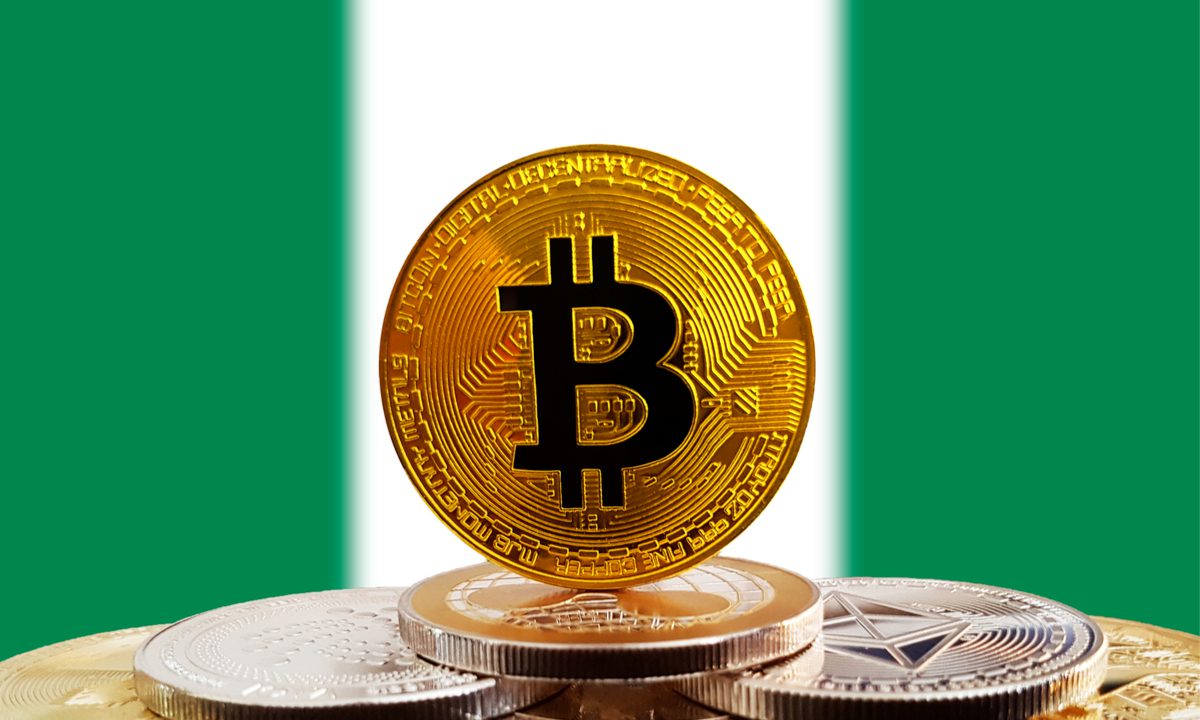
Nigeria has introduced a new cryptocurrency taxation framework under the Nigerian Tax Administration Act (NTAA) 2025, set to take full effect in 2026.

The law formally integrates digital assets into the national tax system by linking crypto transactions to Tax Identification Numbers (TINs) and National Identification Numbers (NINs), marking a significant step toward regulating the country’s rapidly expanding crypto market.

Under the new framework, all cryptocurrency transactions must be tied to verified identities. Virtual Asset Service Providers (VASPs), including exchanges and brokers, are required to register with tax authorities, conduct strict Know Your Customer (KYC) checks, and submit monthly transaction reports.

They must also retain customer and transaction records for a minimum of seven years, while large or suspicious transactions are to be reported to the Nigerian Financial Intelligence Unit (NFIU). Non-compliance may attract fines of up to ?10 million or lead to license revocation.

Rather than monitoring blockchain activity directly, the government will rely on VASPs to track and report crypto transactions. This approach enables regulatory oversight while maintaining blockchain security and aligns Nigeria with global standards such as the OECD’s Crypto Asset Reporting Framework (CARF), effectively positioning the country within the international crypto compliance system.

This new cryptocurrency taxation framework comes as Nigeria has become one of Africa’s top crypto adopters according to Chainalysis 2025 Global Adoption Index.

The West African country remains one of the fastest-growing cryptocurrency markets globally, with transaction volumes estimated at $92.1 billion between July 2024 and June 2025.

Recall that in February 2021, the Central Bank of Nigeria (CBN) directed banks and other financial institutions to stop facilitating crypto-related transactions. This effectively cut off crypto exchanges from the formal banking system, even though crypto trading itself was not made illegal for individuals. The move was driven by concerns around money laundering, terrorism financing, fraud, and consumer protection.

However, this position began to soften in late 2023, when the CBN issued new guidelines allowing banks to open and operate accounts for Virtual Asset Service Providers (VASPs), under strict conditions. This marked a shift from an outright restriction to a regulated engagement model.

The new crypto tax framework under the NTAA 2025 (effective 2026) builds on this regulatory shift. Instead of banning crypto activity, the government is now moving toward formalization, oversight, and taxation, bringing digital assets into the official financial and tax system.

Notably, profits made from crypto deals in Nigeria won’t attract the old 10% capital gains tax. Instead, they will be treated as chargeable gains under personal income tax, with rates climbing as high as 25%. This new rule will put crypto earnings squarely in the same tax bracket as other personal and corporate incomes.

With the high rate of crypto adoption in the country, taxation of crypto related activitives could generate substantial revenue, supporting the government’s goal of increasing its tax-to-GDP ratio from below 10% to 18% by 2027 and reducing dependence on oil revenues.

Outlook

The Nigeria Crypto Tax Law 2026 establishes a transparent and enforceable structure that connects digital assets to real-world identities. It is expected to enhance market credibility, encourage formal participation, and support long-term sector growth reshaping the country’s cryptocurrency landscape while strengthening government revenue generation.

Africa’s Start-up Funding in 2025: The Big Four Still Dominate, Kenya Emerges as Top Destination

0

In 2025, Africa’s start-up ecosystem continues to tell a familiar story. The continent’s “Big Four” Nigeria, Kenya, Egypt, and South Africa still continue to command the lion’s share of venture capital.

According to a recent report by Africa: The Big Deal, these four countries accounted for 82% of all start-up funding, a figure that has remained remarkably consistent since 2019, fluctuating between 80% and 86%.

This dominance is striking given that the Big Four represent only about 30% of Africa’s population and roughly 40% of its nominal GDP. Their share of funding in 2025 was identical for both equity and debt, each standing at 82%.

However, a different picture emerges when the focus shifts from total capital raised to the number of start-ups securing funding. While 64% of all ventures raising money in 2025 were based in the Big Four, their dominance becomes more pronounced at higher deal sizes. About 81% of start-ups raising $10 million or more were headquartered in these four countries.

This proportion dropped to 69% for those raising between $1 million and $10 million, and further to 56% for start-ups raising between $100,000 and $1 million. This suggests that while the Big Four continue to dominate large-ticket deals, entrepreneurial activity is more geographically dispersed at smaller funding levels.

Performance of The Big Four

Kenya

Kenya emerged as the top destination for start-up funding in 2025, nearly reaching the $1 billion mark, an achievement not seen in any single African market since 2022. The East African country accounted for almost one-third of all funding raised across the continent.

Overall funding in Kenya grew by 52% year-on-year. Debt financing made up 60% of the total ($582 million), while equity funding ($383 million) nearly doubled. Much of this growth was driven by large energy-focused ventures such as d.light, Sun King, M-Kopa, Burn, and PowerGen.

Despite this strong capital inflow, the number of ventures raising at least $100,000 fell by 23% year-on-year to 75, the weakest performance among the Big Four on this metric.

Egypt

Egypt followed in second place, raising $614 million, which represented 20% of the continent’s total. Funding in the country also grew by 51% year-on-year, split almost evenly between equity and debt.

The country ranked second in terms of debt funding, with $278 million, accounting for 24% of Africa’s total debt financing. A total of 61 start-ups raised at least $100,000 in Egypt in 2025.

South Africa

South Africa ranked third, with funding rising by 51% year-on-year to reach $600 million, or 19% of the continental total. Unlike Kenya and Egypt, South Africa’s funding was overwhelmingly equity-based, with over 90% ($545 million) coming from equity rounds.

This made it the largest equity market on the continent, accounting for 29% of Africa’s total equity funding. The number of ventures raising at least $100,000 surged to 83, a 63% year-on-year increase, moving the country to second place on this metric.

Nigeria

Nigeria traditionally one of Africa’s strongest start-up markets, underperformed in 2025. It was the only Big Four country to record a decline in total funding, which fell by 17% year-on-year to $343 million. Its share of total continental funding dropped from 19% in 2024 to just 11% in 2025, the lowest level recorded since tracking began in 2019.

Equity, which made up 83% of Nigeria’s total funding, declined by 22%. Despite this, Nigeria still led the continent in the number of ventures raising at least $100,000, with 86 start-ups, even though this figure represented a 14% year-on-year decrease.

Beyond The Big Four Market

Outside the dominant region, only two markets surpassed the $100 million mark in 2025. Senegalranked fifth with $157 million, largely driven by Wave’s $137 million debt round. Benin followed in sixth place with $100 million, almost entirely from Spiro’s single $100 million round.

Several other countries formed a strong middle tier, with funding between $10 million and $100 million. These included Morocco ($58 million) and Tunisia ($37 million) in North Africa; Ghana ($56 million), Togo ($31 million), Côte d’Ivoire ($28 million), and Mali ($18 million) in West Africa; and Rwanda ($25 million) and Uganda ($22 million) in East Africa.

An additional eight countries attracted between $1 million and $10 million, while six others recorded minimal deal activity. However, in 26 African countries, no deal above $100,000 could be identified, highlighting the persistent unevenness of the continent’s start-up ecosystem.

When ranked by the number of ventures raising at least $100,000, the landscape looked different. After the Big Four, Ghana, Morocco, Tunisia, Tanzania, Rwanda, and Uganda rounded out the top ten, showing that entrepreneurial momentum is more widely distributed than capital volumes might suggest.

Regional Trends

At a regional level, Eastern Africa led in total funding raised in 2025, capturing 34% of the continent’s total. This was followed by Western Africa (24%), Northern Africa (23%), Southern Africa (19%), and Central Africa (0.1%). This distribution closely mirrored 2024, though Western Africa slipped slightly due to Nigeria’s weaker performance.

Over a longer horizon, the regional balance has shifted significantly. In 2021, Western Africa dominated with 48% of total funding, far ahead of Southern Africa (23%), Northern Africa (14%), and Eastern Africa (14%). By 2025, Eastern Africa had emerged as the leading region in funding value.

However, in terms of the number of ventures raising at least $100,000, Western Africa remained in front in 2025, with 29%, followed by Eastern Africa (27%), Northern Africa (23%), Southern Africa (18%), and Central Africa (2%).

Outlook

While the Big Four continue to dominate Africa’s start-up funding landscape, especially in large deals, the broader ecosystem shows signs of diversification.

Smaller rounds and growing entrepreneurial activity in non-Big Four markets suggest that innovation is spreading more widely across the continent even if capital remains heavily concentrated at the top.

Jensen Huang Pushes Back Hard Against AI ‘Doomerism,’ Warning Fear Is Undermining Innovation and Safety

0

ChatGPT became the fastest-growing app when it was launched in 2022, spearheading generative artificial intelligence on its way to becoming the most valuable chatbot. However, the meteoric rise of AI has been shadowed by controversies, including a surge of public anxiety.

Fears about mass job losses, misinformation, and even civilizational collapse have dominated debates around AI’s future. Nvidia CEO Jensen Huang says that narrative has become excessive — and counterproductive.

Speaking on the No Priors podcast, Huang framed what he called the “doomer narrative” as one of the most damaging forces shaping the AI conversation today. For Huang, whose company supplies the chips that power much of the global AI ecosystem, the issue is no longer just about technical capability, but about how fear is influencing policy, investment, and public trust.

“One of my biggest takeaways from 2025 is the battle of the narratives,” Huang said, describing a widening divide between those who believe AI can broadly benefit society and those who argue it will erode economic stability or even threaten human survival.

He acknowledged that both optimism and caution have a place, but warned that repeated end-of-the-world framing has distorted the debate.

“I think we’ve done a lot of damage with very well-respected people who have painted a doomer narrative — end-of-the-world, science fiction narratives,” Huang said.

While conceding that science fiction has long shaped cultural imagination, he argued that leaning too heavily on those tropes is “not helpful to people, not helpful to the industry, not helpful to society, and not helpful to governments.”

A not-so-subtle rebuke of AI rivals

Although Huang did not name specific individuals, his comments echo earlier public clashes with leaders of other major AI firms — most notably Anthropic CEO Dario Amodei. In June last year, Amodei warned that AI could eliminate roughly half of all entry-level white-collar jobs within five years, potentially pushing unemployment toward 20%. Huang responded at the time that he “pretty much disagree[d] with almost everything” Amodei had said.

That disagreement appears to go beyond economics and into philosophy and policy. On the podcast, Huang argued that AI companies should not be urging governments to impose heavier regulation, saying corporate advocacy for stricter rules often masks competitive self-interest.

“No company should be asking governments for more AI regulation,” Huang said. “Their intentions are clearly deeply conflicted. They’re CEOs, they’re companies, and they’re advocating for themselves.”

The subtext is clear: Huang sees some calls for regulation as an attempt by early AI leaders to lock in advantages, slow rivals, or shape rules in their own favor, rather than a neutral effort to protect society.

Regulation, geopolitics, and the China fault line

The rift between Nvidia and Anthropic has also played out in geopolitics. In May 2025, both companies took opposing stances on U.S. AI Diffusion Rules that restrict exports of advanced AI technologies to countries including China. Anthropic has supported tighter controls and stronger enforcement, highlighting cases of alleged chip smuggling.

Nvidia pushed back sharply, dismissing claims that its hardware had been trafficked into China through elaborate schemes. Huang has repeatedly argued that overly restrictive export controls risk weakening U.S. competitiveness without meaningfully slowing global AI development.

For Huang, this feeds into a broader concern: that fear-driven policymaking, fueled by apocalyptic rhetoric, could end up doing more harm than good.

One of Huang’s most pointed warnings was that relentless pessimism about AI could actually increase risks rather than reduce them. He argued that fear discourages investment in the very research and infrastructure needed to make AI systems safer, more reliable, and more socially useful.

“When 90% of the messaging is all around the end of the world and pessimism,” Huang said, “we’re scaring people from making the investments in AI that make it safer, more functional, more productive, and more useful to society.”

In Huang’s view, safety does not come from paralysis or blanket restriction, but from sustained development, testing, and deployment — all of which require capital, talent, and public confidence.

An industry divided from within

Huang is not alone among tech leaders expressing frustration with the tone of the AI debate. Microsoft CEO Satya Nadella has criticized what he sees as dismissive conversations that reduce AI output to “slop,” while Mustafa Suleyman, head of Microsoft’s AI division, described widespread public criticism of AI as “mind-blowing” late last year.

Yet the backlash is rooted in tangible outcomes, not just abstract fear. Estimates suggest that more than 20% of YouTube content now consists of low-quality or spam-like AI-generated material, while layoffs tied to automation and AI adoption continue to ripple through media, tech, and customer service roles. For many workers, skepticism reflects lived experience rather than science fiction.

Based on Huang’s remarks, the disagreement is no longer simply about how fast AI should advance, but about who gets to define its risks, who shapes regulation, and whether caution is a necessary brake or an overreaction that could blunt progress. The Nvidia CEO believes the danger lies in allowing fear to dominate the conversation. He argues that excessive pessimism risks slowing innovation, weakening competitiveness, and ironically making AI less safe in the long run.