DD
MM
YYYY

PAGES

DD
MM
YYYY

spot_img

PAGES

Home Blog Page 3366

Tesla announces plans to lay off an additional 601 employees in California

0

In a continuation of its global workforce reduction strategy, Tesla has announced plans to lay off an additional 601 employees in California, according to a notice filed with the state government. 

This move is part of a broader series of job cuts that began a month ago, driven by declining sales and increasing price competition in the electric vehicle market.

The latest round of layoffs will affect workers at Tesla’s facilities in Palo Alto and Fremont, starting within 14 days beginning on June 20, 2024, as indicated in the company’s Worker Adjustment and Retraining Notification (WARN) notice.

Tesla’s CEO, Elon Musk, announced on April 15 that the company would reduce its global workforce by more than 10%. At the end of 2023, Tesla employed over 140,000 people worldwide. Musk’s broader vision reportedly includes slashing up to 20% of the company’s headcount, according to sources familiar with the matter.

Impact on Workforce and Operations

The electric vehicle maker has been steadily reducing its workforce across various divisions, including significant cuts in its advertising unit. Last month, Tesla revealed it would lay off 6,020 employees in California and Texas. This followed earlier layoffs of 285 employees at its Buffalo, New York facilities, which are integral to the labeling team for its Autopilot driver assistance software and the production of fast-charging equipment.

The latest layoffs come on the heels of the firing of 500 employees responsible for expanding Tesla’s Supercharger network, a critical infrastructure for the company’s electric vehicles. Despite the layoffs, Musk announced plans to invest over $500 million in expanding the Supercharger network this year. This investment is crucial as the company continues to promote its Superchargers, which can add up to 200 miles of range to a Tesla vehicle in just 15 minutes.

Historical Context and Future Plans

Tesla’s recent layoffs are part of a recurring pattern. In addition to the current workforce reduction, the company has also seen significant cuts in previous years: about 3.5% of its staff in 2022, 3,000 workers in 2019, and roughly 9% of the workforce in 2018.

Tesla’s challenging year is reflected in its share price, which has dropped approximately 26% year-to-date. The company also reported lower-than-expected delivery numbers in early April, marking the first time it has underperformed in deliveries since 2020.

However, given the strategic importance of the Supercharger network, concerns have arisen over the implications of laying off workers in this division. In response, Musk has initiated rehiring efforts to mitigate the impact on the network’s expansion and ensure the company meets its infrastructure goals.

In 2024, Tesla is undergoing significant restructuring to adapt to market pressures and competitive challenges. The additional layoffs in California are part of Tesla’s broader strategy to streamline operations and reduce costs amid falling sales and heightened competition. 

However, with substantial investments planned for critical infrastructure like the Supercharger network and efforts to rehire key workers, Tesla aims to balance its workforce reductions with strategic growth initiatives.

The ongoing job cuts underscore the volatility and competitive nature of the electric vehicle market, amid the downturn in China – one of Tesla’s largest markets – following increased competition from domestic EV makers such as BYD, which toppled Tesla in production for the second year in January. 
Nigeria’s Inflation Rate Climbs to 33.69% in April 2024

0

Nigeria’s headline inflation rate surged to 33.69% in April 2024, a 0.49% increase from March 2024’s rate of 33.20%, according to the latest data from the Nigerian Bureau of Statistics (NBS). 

This record rise in the inflation rate, which underscores the persistent economic challenges facing the nation, has dashed the hope of millions of Nigerians expecting a drop in the cost of goods and services.

On a year-on-year basis, the headline inflation rate in April 2024 was markedly higher, showing an increase of 11.47 percentage points from the 22.22% recorded in April 2023. This sharp rise highlights the escalating cost of living and the impact of various economic factors over the past year.

While the year-on-year inflation showed a steep rise, the month-on-month headline inflation rate in April 2024 was 2.29%, a decrease of 0.73% from the 3.02% recorded in March 2024. This indicates a slowdown in the rate of price increases compared to the previous month.

The NBS report also noted, “The percentage change in the average Consumer Price Index (CPI) for the twelve months ending April 2024 over the average of the CPI for the previous twelve-month period was 28.10%, reflecting a 7.28% increase compared to 20.82% recorded in April 2023.”

Urban and Rural Inflation

Urban areas experienced a sharper increase in inflation. In April 2024, the urban inflation rate stood at 36.00%, a 12.61 percentage point increase from 23.39% in April 2023. On a month-on-month basis, urban inflation was 2.67%, slightly lower than March 2024’s 3.17%. The twelve-month average for urban inflation was 30.02% in April 2024, compared to 21.50% in April 2023.

Rural areas also saw significant inflationary pressures. The rural inflation rate in April 2024 was 31.64% on a year-on-year basis, up by 10.50 percentage points from 21.14% in April 2023. Month-on-month, the rural inflation rate decreased to 1.92% in April 2024 from 2.87% in March 2024. The twelve-month average for rural inflation was 26.38%, compared to 20.18% in April 2023.

Food Inflation

Food prices continued to drive inflation. The food inflation rate in April 2024 reached 40.53% year-on-year, significantly higher than the 24.61% recorded in April 2023. The NBS said the increase was driven by rising prices of essential items such as millet flour, garri, bread, wheat flour, yam, cocoyam, various oils, dried fish, beef, and several fruits and beverages.

On a month-on-month basis, food inflation in April 2024 was 2.50%, a decrease from the 3.62% recorded in March 2024. The NBS attributed the monthly decline to slower increases in prices for items like yam, potatoes, beer, and various beverages and oils.

The average annual food inflation rate for the twelve months ending April 2024 was 32.74%, a 9.52 percentage point increase from the 23.22% recorded in April 2023.

Core Inflation

Excluding volatile agricultural products and energy, core inflation stood at 26.84% year-on-year in April 2024, up by 6.87 percentage points from 19.96% in April 2023. Significant price increases were observed in housing rentals, urban transportation, and medical services. On a month-on-month basis, core inflation was 2.20% in April 2024, down from 2.54% in March 2024. The twelve-month average core inflation rate was 22.84%, compared to 17.70% in April 2023.

Regional Inflation Variations

Inflation rates varied significantly across different states. Kogi recorded the highest year-on-year inflation rate at 40.84%, followed by Bauchi (39.91%) and Oyo (38.37%). Borno (26.09%), Benue (27.53%), and Taraba (28.69%) had the lowest year-on-year inflation rates. Month-on-month, Lagos experienced the highest increase at 4.52%, while Kano (0.30%), Ebonyi (0.97%), and Adamawa (1.25%) saw the slowest rises.

Food inflation also showed regional disparities. Kogi had the highest year-on-year food inflation rate at 48.62%, with Kwara (46.73%) and Ondo (45.87%) following. Adamawa (33.61%), Bauchi (33.85%), and Nasarawa (34.03%) had the lowest rates. On a month-on-month basis, Lagos led with a 4.74% increase, while Kano (0.47%), Adamawa (0.98%), and Zamfara (1.50%) had the slowest rises.

The rising inflation rates in Nigeria reflect ongoing economic challenges, including food supply disruptions and increased costs of living. With the rates making life unaffordable for most Nigerians, policymakers face the pressing task of addressing these inflationary pressures to stabilize the economy and mitigate the impact on citizens. 

The significant variations in inflation rates across regions also highlight the need for targeted measures to address local economic conditions, especially food production and the high cost of transportation. 

Earlier this month, the Governor of the Central Bank of Nigeria, Olayemi Cardoso, identified the government’s large-scale purchases of food items for distribution as palliatives to vulnerable citizens as a contributor to the soaring food inflation in the country.

Nigerian Government’s Plan To Utilize N20 trillion from Pension Funds for Infrastructure Development Is Bad Policy

1

Another evolution as the Nigerian government plans to utilize N20 trillion from pension funds for infrastructure development: “Critics, including Atiku Abubakar, raised concerns about the legality and potential risks to retirees’ savings, while Finance Minister Wale Edun defended the plan as a means to unlock funds for development. The move sparked a debate on balancing economic growth with the security of pension funds.”

Let me add my voice as we did when the last administration wanted to go after the same funds. First, the Nigerian government has no exogenous  or endogenous capacity to return this fund back to pensioners if it is allowed to use it. The Pension fund does not belong to the government, and public pension managers cannot listen to the government on their investment thesis. 

Unless we can see the data which shows that giving this special vault to the federal government over other investment asset classes is superior on returns, safety,  and other indicators, we condemn this move. The government should just forget this fund and look for other alternatives.

I call the federal government to pause this initiative because it is anti-people and Nigerians do not support it. For years, the pension funds have been buying federal government securities; let it just end there. But going at this scale, to fund infrastructure, will be terrible. 

The pension managers should resist such pressures and stand for workers. If the government needs funds to fund infrastructures, it should do what other countries do: improve rule of law and make Nigeria safer for infrastructure investments. If you do those, private companies will take over these infrastructure burdens. 

In America, companies own train lines, bridges, etc, because there are strong property rights. Nigeria should make such possible, and not where you get a building permit, and you build, then in ten years, another government will come and tear down the same building even though a previous one gave you a permit to build. Who will invest in infrastructure when you see how some state governments are bulldozing properties left and right? 

If Nigeria focuses on fixing those matters, private funds will come to build our infrastructures since it is clear the government has no kobo.

President Bola Ahmed Tinubu virtually commissioned three major gas infrastructure projects on May 15, 2024, aimed at boosting economic growth and promoting the use of Compressed Natural Gas (CNG). The projects include the Anoh Gas Processing Plant, Anoh – OB3 Gas Pipeline Project, and the AHL Gas Processing Plant 2. The government has mandated the use of CNG vehicles by its officials and is encouraging the establishment of CNG refueling units across the country. Additionally, the Federal Executive Council approved an initiative to transform Nigeria’s infrastructure and housing sector through private partnerships, and the government is eyeing N20 trillion from the pension fund for infrastructure development.

Nigeria’s e-Payment Transactions Decline to N79.85trn in April 2024

0

According to a report by the Financial Derivatives Company Limited (FDC), electronic payment transactions in Nigeria recorded a decline of N79.85 trillion in April 2024, marking a decrease of 93.1% from N88.04 trillion recorded in the preceding month.

While Cheque transactions increased by 10.68 percent to N290.36 billion in April from N262.35 billion in March, the report revealed that NIBSS Instant Payment (NIP) transactions experienced a 9.31% decline to N75.32 trillion in April, down from N83.05 trillion in March.

Additionally, transactions via the Nigeria Interbank Settlement System Electronic Fund Transfer (NEFT) dropped by 9.07% to N3.42 trillion in April, compared to N3.76 trillion in the preceding month. Point of Sales (PoS) transactions also experienced a significant decline, falling by 15.35 percent to N811.77 billion compared to N958.99 billion in March.

It is worth noting that the decline in April e-payment transactions is coming after consecutive increases in the first three months of this year. The consistent growth witnessed month-on-month underscored the burgeoning prominence of e-payment solutions in Nigeria’s financial landscape, signifying a shift towards greater digitalization and efficiency in financial transactions.

In the first quarter (Q1) of 2024, e-payment transactions surged to N234 trillion, marking an 89.3 percent increase from the N123.8 trillion recorded in the same month.

Meanwhile, experts note that the decline in e-payment transactions in April is attributed to reduced customer spending, as well as delayed discretionary purchases and consumers opting for lower-value transactions. Notably, the value of transactions is predicted to decline further in May, due to the reduction in consumer spending and business activities.

Small businesses and consumer goods firms are facing heavy disruption in their supply chain and operational costs due to inflation, currency risk, removal of fuel subsidies leading to a significant increase in energy costs, and scarcity of foreign exchange.

In recent times, revenues and business forecasts are set to suffer short-term pressures, declines, and low or no profits. Because the Nigerian economy is largely import-driven, the unstable foreign exchange rate continues to generate higher import bills for many of these companies.

This saw inflation reach 32 percent year-on-year in February 2024, driven mainly by food price inflation of 38 percent and loose financial conditions. Inflation has remained a major challenge for Nigerians and continues to worsen the operations of businesses in the country.

The International Monetary Fund (IMF) expects Nigeria’s inflationary pressure to ease to 26 percent this year. Daniel Leigh, division chief of the research department at IMF, said inflation in the country would drop alongside global inflationary pressures estimated to decline from 2.8 percent at the end of 2024 to 2.4 percent at the end of 2025. With continued monetary tightening, inflation is projected to gradually decline to 24 percent year-on-year at end-2024.

As Bitcoin Holds Steady, New Players in DeFi Show Promising Signs of Surge

0

The cryptocurrency market is experiencing relative stability, with Bitcoin’s price holding steady despite ongoing regulatory concerns and economic uncertainties. This stability provides a much-needed respite for investors navigating the turbulent crypto waters.

Beneath the surface, the decentralized finance (DeFi) sector transforms dynamically. Innovative and adaptable solutions, like RCO Finance, are emerging and offer a promising future for this space.

Bitcoin’s Stability Amidst a Surging DeFi Ecosystem

Despite the overall cryptocurrency market witnessing significant fluctuations, Bitcoin has managed to maintain a notable level of stability.

This steadiness comes at a time when the decentralized finance (DeFi) sector is experiencing rapid growth, introducing a wave of alternative cryptocurrencies and stablecoins.

Notably, Bitcoin’s market dominance has seen a slight decline, now at 63.4%, a trend observed over the past year.

This shift underscores the growing interest and investment in the DeFi ecosystem and alternative crypto assets, beginning to carve out substantial niches within the larger market.

As of April 2024, Bitcoin’s average price was $62,446.15, with a 2.5% estimated growth. This stability is particularly significant when considering Bitcoin’s historical volatility, which includes remarkable fluctuations such as its rise to over $30 in 2011, a dip and recovery to surpass $1,000 in 2013, a dramatic surge in 2017 to reach an all-time high of $19,850, followed by a descent into the “crypto winter” in 2018.

RCO Finance: A New Player in the DeFi Arena

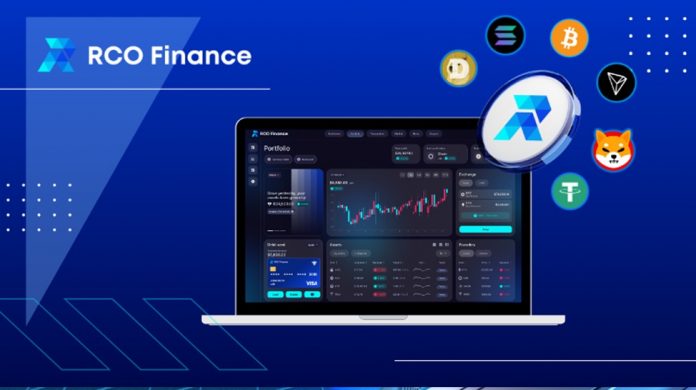
Amidst this growth, new players like RCO Finance are making their mark. RCO Finance is a DeFi trading platform that bridges the distance between cryptocurrency and traditional stocks, allowing customers to invest in shares powered by Ethereum’s blockchain era.

With the platform’s user-friendly interface and tested security measures, this approach draws many investors seeking to expand their portfolios.

The AI trading platform also offers an all-in-one RCOF token that unlocks diverse advantages and functionalities within the RCO Finance environment.

This token isn’t just about trading – it’s your ticket to exclusive, high-return pools that offer opportunities beyond the everyday market.

Users can enjoy discounted transaction costs and token price reductions and have a say in relative governance decisions.

The platform’s approach to tokenization not only empowers investors with greater autonomy and lower fees but also aligns with their commitment to full decentralization, leveraging AI to maximize returns and enhance trading decisions.

Institutional Adoption and Innovative Solutions Driving DeFi Growth

DeFi is booming, and a big reason why is that major institutional players like PayPal are getting on board. We can see this shift in the growing number of Bitcoin whales (addresses with large Bitcoin holdings) and the recent green light for spot Bitcoin ETFs, boosting institutional confidence and opening up exciting new investment opportunities.

Developing modern DeFi answers on systems like RCO Finance, especially Layer 2 scaling and superior tokenization projects, expands blockchain abilities and fosters new use instances.

The diversification and development of the crypto world are critical because they spark new thoughts and encourage more people to use it.

Conclusion

Bitcoin is holding steady, but decentralized finance (DeFi) is buzzing with exciting new developments. More and more investors in the crypto space are getting attracted to potential players like RCO Finance, who bring a larger spectrum into the scene.

The RCOF token presale, currently priced at $0.0127, has been a success. Over 6 million tokens were sold, gathering nearly $75,000.


For more information about the RCO Finance (RCOF) Presale:

Visit RCO Finance Presale

Join The RCO Finance Community