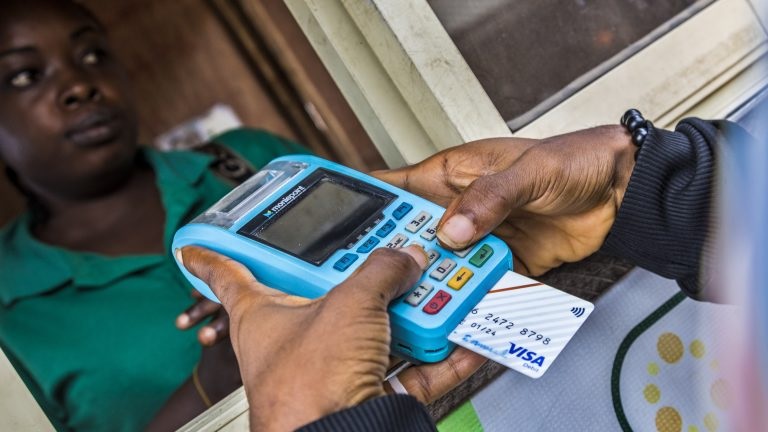
Naira became a “commodity” when Nigeria scaled POS agency banking. When that happened, the Naira, among other features, became a “product” or “service” which could be purchased and resold for “gain”. That is not new since we exchange US dollars for Naira and vice versa, but in this case, you are exchanging digital Naira for cash, and vice versa, within the context of the same currency. Endogenously, it means there are many frictions in the availability, velocity and transmissibility of Naira for POS agents to have imposed a fee to fix them.
Simply, the construct of Naira as a national currency is not well optimized at the distribution and availability phases. Otherwise, people cannot be selling Naira as yam, garri or course. Whenever that POS agent imposes that fee, Nigeria has failed you, and diminished the elemental value of Naira since you are using Naira to buy Naira!
People, if you compound that POS agent fee over months, that 1% or whatever becomes a HUGE amount the society is wasting. That is an additional cost on production of goods and services in that local community where everyone is losing 1% of value to “deposit” or “withdraw” Naira.
[I know it does not affect the big men and women of Nigeria, unlike the 0.5% cybersecurity levy (a bad policy I must add)! But people do pay N10 to collect N1,000 in cash from POS agents. Have you forgotten?]
Remember: the people who invented POS did it to enable payment of goods and services, not for intra-currency exchange, via forms. But in Nigeria, we made the Naira the goods and services, and we’re exchanging them with 2 million POS agent “businesses”.
Good People, the history of money is deep; from the cowry era to the barter era – and to the electronic era. Yes, humans have always figured out how to exchange goods and services for value. And across centuries and kingdoms, the quest for improving the efficiency of that exchange has remained. A moment came in 7th century China when the Tang dynasty invented paper currency. Later on, the Song dynasty in the 11th century made it popular. The Mongol Empire and Yuan dynasty scaled it. The trajectory to frictionless exchange has never stopped.
POS agency banking is vital to Nigeria’s economy since the traditional banking services remain limited. But do not think we are not paying a huge fee for depending on selling and buying Naira to function across local communities!
Naira became a “commodity” when Nigeria scaled POS agency banking. When that happened, the Naira, among other features, became a “product” or “service” which could be purchased and resold for “gain”. That is not new since we exchange US dollars for Naira and vice versa, but in… pic.twitter.com/mvx11zdbBD
— Ndubuisi Ekekwe (@ndekekwe) May 12, 2024