
DD
MM
YYYY

PAGES

DD
MM
YYYY

spot_img

PAGES

Home Blog Page 34

What Political Rally Photos Really Tell Us About the 2026 Osun Governorship Election

0

As Osun State gradually moves towards the 2026 governorship election, political campaigns are becoming increasingly visible, not only on the streets but also across social media. One of the most common ways political parties seek to demonstrate their strength is by sharing photographs of campaign rallies. Within minutes of a rally ending, competing political camps flood Facebook, X, WhatsApp and Instagram with images claiming to have attracted the largest crowd.

Recently, photographs from the All Progressives Congress (APC) rally in Ife and the Accord Party rally in Iwo sparked precisely this debate. Supporters of both parties confidently declared victory in the contest of numbers. Yet the more important question is not which party filled more streets, but whether photographs alone can answer that question. The simple answer is no.

A photograph captures a moment, but it does not necessarily capture the whole reality.

The APC rally photograph presents what appears to be an enormous gathering stretching along a major road. Taken from a very high position, the image allows viewers to see the crowd occupying a large section of the town. Buildings, roads and surrounding landmarks provide a sense of scale, making the gathering appear almost endless. For many observers, the immediate conclusion is that the APC attracted an overwhelming number of supporters.

The Accord rally photograph tells a different story. Instead of focusing on the length of the crowd, the camera is positioned much closer to the people. Faces are clearly visible, supporters appear tightly packed together, and the dominant yellow campaign caps create a striking visual identity. Rather than communicating geographical spread, the image communicates unity, enthusiasm and energy.

Both photographs are impressive. Both succeed in projecting political strength. However, they achieve this in different ways.

This is where citizens must become more careful consumers of political information.

Political campaign photographs are rarely taken by chance. Every decision, including where the photographer stands, the angle of the camera, the height from which the image is taken and the exact moment the photograph is captured, can shape how people interpret the event. A photograph taken from a rooftop can make a gathering appear much larger than one taken from street level. A tightly cropped image can remove empty spaces and create the impression that the crowd is denser than it actually is. Similarly, taking photographs when attendance is at its peak naturally produces a more dramatic image than taking them before or after the main event.

None of these practices necessarily amount to deception. They are simply part of modern political communication.

Political parties understand that elections are fought not only through policies and campaigns but also through public perception. Images of large crowds send a powerful message that many people support the party and that its campaign is gathering momentum.

This matters because people often associate popularity with credibility. When citizens repeatedly encounter images of overflowing streets, they may begin to believe that a particular candidate is becoming the inevitable winner. This perception can influence undecided voters who prefer to identify with a campaign that appears to be gaining widespread acceptance.

However, rally attendance and electoral support are not the same thing.

Many people attend political rallies for reasons that have little to do with how they will eventually vote. Some attend out of curiosity. Others are mobilised by community leaders or local political structures. Traders continue their businesses around rally venues, while some people simply accompany friends or relatives. Others come to witness the excitement that accompanies major political events.

A crowded rally should therefore never be interpreted as direct evidence of future electoral success.

Political history offers many examples of candidates who attracted enormous crowds but failed to win elections. It also provides examples of candidates whose rallies appeared modest but who eventually secured victory at the polls. Elections are determined by the number of valid votes cast, not by the number of people visible in campaign photographs.

Another important point is that photographs often show what campaign teams want the public to see while leaving out what they do not want people to notice. Images rarely reveal how long supporters remained at the venue, whether they travelled from neighbouring communities, or whether they stayed until the end of the programme. They cannot tell us whether those present are registered voters, whether they are eligible to vote in that particular constituency, or whether they genuinely intend to vote for the party whose rally they attended.

In other words, photographs capture visibility rather than voting intention.

This does not make rally photographs unimportant. On the contrary, they provide useful insights into how parties organise themselves, mobilise supporters and project their public image. They reveal campaign energy, organisational capacity and the ability to command public attention. These are meaningful indicators in any election.

Nevertheless, they represent only one part of a much broader picture.

To understand the true state of an election, citizens should also pay attention to party structures across local governments, the quality of candidates, campaign messages, voter registration patterns, public opinion surveys, previous election results, grassroots engagement and the issues that matter most to voters. Collectively, these factors provide a more reliable indication of electoral prospects than a single photograph circulating on social media.

As the race for the 2026 Osun governorship election gathers pace, competing parties will continue to showcase impressive images designed to inspire confidence among supporters and persuade undecided voters. More photographs claiming record breaking attendance will appear. More comparisons between rallies will circulate online. More debates about which party attracted the larger crowd will dominate political conversations.

Instead of asking, “Which rally was bigger?”, perhaps citizens should ask a different question: “What is this image trying to make me believe?”

That question encourages a more thoughtful approach to political communication. Democracy is strengthened not when people accept every campaign image at face value, but when they examine it carefully, place it in context and recognise that every political photograph is part of a broader effort to shape public opinion.

Peter Schiff: Why AI Destroying More Jobs Than It Creates Is Actually Good News

0

Economist and gold advocate Peter Schiff has argued that artificial intelligence destroying more jobs than it creates should not be viewed as a crisis, but as a sign of economic progress.

Far from fearing mass job losses, Schiff views them as a natural and positive outcome of genuine economic progress.

In a post on X, he wrote,

“Of course AI will destroy more jobs than it creates, that’s progress. It means humans won’t have to work as much, as more of what we need will be produced by machines. But for those who still need or want to work, better-paying employment opportunities will become available.”

Schiff’s post suggests that for too long employment has been treated as an end in itself rather than a means to produce what society needs. He argues that when machines powered by AI take over more production, humans don’t have to work as much.

In essence, more goods and services are produced with less human effort and time. That according to him is the very definition of rising living standards and increasing abundance.

Also, for those who still need or want to work, better opportunities await. The remaining jobs will be higher-skilled, more productive, and better compensated. AI handles the routine and repetitive tasks, elevating the value of human creativity, judgment, and innovation.

Workers who adapt will see their earnings rise precisely because each hour of human labor becomes far more effective when amplified by intelligent technology.

Public reaction to Peter Schiff’s comments was divided, with users on X offering sharply contrasting views on artificial intelligence’s impact on jobs and the broader economy.

Some commenters questioned Schiff’s argument, pointing to the long-held belief that new technologies ultimately create more jobs than they eliminate. Others expressed deep skepticism about the distribution of AI’s benefits.

Check out some comments on X,

@MesoWx wrote,

“Absolutely none of the billionaires working AI will do a thing to help those hurt. They will buy elections and power to make that so. Only until so many are hurt we rise and execute the wealthy will things get better.”

@MrM1rr0r wrote,

“Highly doubt this is correct. AI is a double-edged sword that will cut down many and will only benefit monetarily those that control it.”

@Matt wrote,

“Disagree. Humans want to work.  But things that used to be “hobbies” will become “work”.  Work will look different because of AI, which is progress.”

@Harry Plendl wrote,

“I disagree. It’s going to allow for events to occur faster, meaning, the death of bureaucracy and fraud. Authentication will be instantaneous, authorization will be granted or revoked instantaneous, & results will be looped back to the decision makers in minutes versus months.”

@Mark Bennett wrote,

“I don’t know about this. If productivity doubles, you can either get the same output with half the number of people or double the output with the same number of people.  Who’s to say it won’t go the latter?”

The Impact of Artificial Intelligence on Jobs

The advent of artificial intelligence (AI) has profoundly impacted the employment landscape, raising concerns about potential job displacement.

The International Monetary Fund (IMF) noted that AI will impact 40% of global jobs, with many roles at risk of replacement. Although AI increases productivity, especially in automation and services, it also eliminates jobs in repetitive and routine tasks.

The rise of generative AI tools such as ChatGPT, Gemini, Claude, and Microsoft Copilot has demonstrated the technology’s ability to perform tasks once considered exclusive to humans.

From writing reports and analyzing data to generating software code and assisting with customer service, AI is becoming a valuable workplace assistant across numerous industries.

This growing capability has fueled concerns that machines could replace large segments of the workforce. However, most labor experts argue that AI is more likely to transform jobs than eliminate them.

McKinsey Global Institute says that at the global average level of adoption and absorption and advances in AI implied by their simulation, AI has the profound impact of delivering additional global economic activity of around $13 trillion in the foreseeable future and by 2030, or about 16% higher cumulative GDP compared with today.

It further added that by 2030, the average simulation shows that some 70% of companies will have embraced the AI revolution and adopted at least one type of AI technology.

However, the greatest risks associated with artificial intelligence may not stem from the technology itself, but from the policies and governance frameworks that shape how it is developed, deployed, and regulated.

While AI is inherently a tool designed to augment human capabilities, poorly designed regulations, inadequate oversight, and inconsistent governance can amplify its negative consequences and limit its potential to deliver broad societal benefits.

Experts increasingly argue that technology is neither inherently beneficial nor harmful; rather, its impact depends on the decisions made by governments, businesses, and institutions.

Outlook

Artificial intelligence is expected to remain one of the defining forces shaping the global economy over the next decade.

While debate continues over whether AI will ultimately create more jobs than it eliminates, there is broad agreement that it will fundamentally transform the nature of work.

Ultimately, the long-term impact of AI is unlikely to be determined by the technology alone. As Peter Schiff argues, automation has historically been associated with economic progress and rising productivity.

Whether that progress translates into broadly shared prosperity will depend on how policymakers regulate the technology, how businesses distribute its gains, and how effectively workers adapt to changing labor market demands.

New York’s Moratorium Could Redefine the Future of AI Infrastructure

0

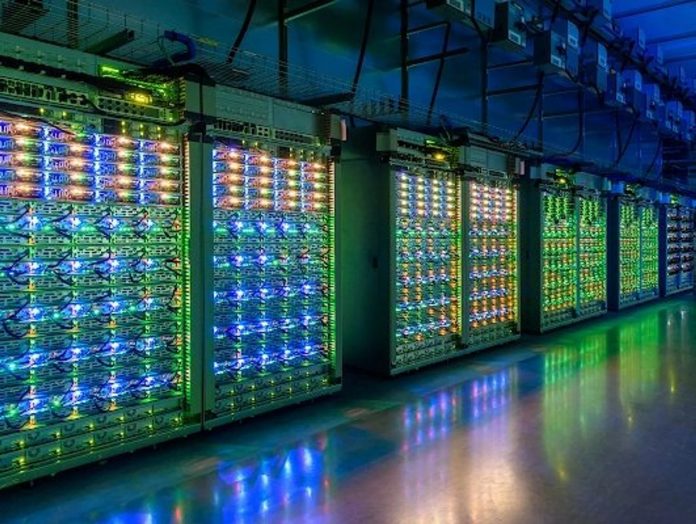
New York is poised to become the first U.S. state to enact a statewide moratorium on the construction of new artificial intelligence data centers, a move that reflects growing concerns about energy consumption, environmental sustainability, and the broader societal costs of the AI boom.

As artificial intelligence technologies continue to expand at an unprecedented pace, governments around the world are grappling with how to balance innovation with infrastructure limitations and climate commitments. New York’s proposed action represents one of the boldest regulatory responses yet to the rapidly growing AI industry.

The surge in generative AI applications, including large language models and advanced machine learning systems, has triggered an enormous increase in demand for computational power.

Training and operating these systems require vast networks of data centers equipped with high-performance chips and massive cooling systems. Industry analysts estimate that AI-related electricity consumption could multiply several times over the next decade, placing significant strain on regional power grids.

New York officials argue that the state’s energy infrastructure may not be prepared to accommodate a wave of new AI-focused facilities. Data centers already account for a growing share of electricity consumption across the United States, and AI facilities consume considerably more power than traditional cloud computing centers.

Policymakers fear that unchecked expansion could undermine New York’s ambitious climate goals, including its commitment to reducing greenhouse gas emissions and increasing reliance on renewable energy sources.

Environmental advocates have largely welcomed the proposed moratorium.

They contend that large-scale AI data centers require enormous amounts of electricity and water, potentially increasing carbon emissions and placing additional pressure on local resources. Some communities have also expressed concerns about noise pollution, land use, and the potential for rising energy costs for residential consumers.

The proposed measure is not necessarily intended as a permanent ban on AI infrastructure. Instead, supporters describe it as a temporary pause designed to give regulators time to assess the long-term implications of the industry’s rapid growth.

During the moratorium period, state agencies would likely conduct studies on energy demand, environmental impact, grid resilience, and potential regulatory frameworks that could enable sustainable development.

The proposal has also sparked criticism from technology companies and business groups. Industry leaders warn that restricting AI data center construction could discourage investment and weaken New York’s competitiveness in one of the world’s fastest-growing sectors.

The AI industry is expected to generate billions of dollars in economic activity and create thousands of high-paying jobs in engineering, construction, and information technology.

Critics argued that a statewide moratorium could push companies to relocate projects to neighboring states with more favorable regulatory environments. Such an outcome could result in New York missing out on significant tax revenues and technological leadership opportunities.

Some business advocates believe that the state should focus instead on modernizing its energy infrastructure and accelerating renewable energy deployment to accommodate AI-driven growth. The debate in New York highlights a broader global challenge.

Nations and regions worldwide are increasingly confronting the immense energy requirements associated with artificial intelligence. From Europe to Asia and North America, policymakers are beginning to examine whether existing power grids can sustain the AI revolution without compromising climate objectives.

If enacted, New York’s moratorium could establish an important precedent for other jurisdictions. It may encourage states and countries to adopt more comprehensive regulations governing AI infrastructure development, emphasizing sustainability and responsible resource management.

At the same time, it underscores the difficult balancing act between fostering technological innovation and protecting environmental and societal interests. New York’s proposed moratorium reflects a critical moment in the evolution of artificial intelligence.

As AI continues to reshape economies and industries, governments will increasingly be forced to confront the hidden infrastructure costs of the technology. The decisions made today could determine whether the AI revolution proceeds in a manner that is both economically beneficial and environmentally sustainable.

Corporate Leaders Push Back Against Proposed Dividend Restrictions

0

Businesses across the United States are intensifying their lobbying efforts against a Senate proposal that would place new restrictions on corporate stock buybacks and dividend payments.

The proposal, which is being debated as part of broader economic and tax reforms, has sparked concerns among major corporations, industry groups, and investors who argue that limiting these financial tools could undermine business confidence and weaken capital markets.

Stock buybacks and dividends have long been central mechanisms through which companies return profits to shareholders. Through buybacks, corporations repurchase their own shares from the market, reducing the number of outstanding shares and often increasing earnings per share.

Dividends, meanwhile, provide direct cash payments to investors, rewarding them for their ownership and encouraging long-term investment.

Supporters of the Senate proposal argue that excessive buybacks prioritize shareholder gains over productive investment. Critics of corporate buyback practices have frequently pointed to instances where companies spent billions repurchasing shares while limiting wage growth, reducing investment in research and development, or cutting jobs.

Some lawmakers contend that corporate profits should be directed toward expanding production, improving worker compensation, and strengthening economic resilience rather than boosting stock prices. Business organizations, however, strongly disagree with this approach.

Industry groups argue that stock buybacks and dividends are legitimate financial tools that help companies manage excess capital efficiently. They maintain that restricting these practices could make U.S. companies less competitive globally and discourage investment in American firms.

Corporate executives also warn that such measures could create uncertainty in financial markets. Investors often view dividend payments and buyback programs as signals of corporate health and confidence in future earnings.

If companies lose flexibility in distributing capital, analysts fear that investor sentiment could weaken, potentially leading to reduced valuations and increased market volatility.

The debate comes at a time when U.S. corporations are navigating an increasingly complex economic environment marked by elevated interest rates, geopolitical tensions, and concerns about slowing growth. Many companies have relied on buybacks to support shareholder returns during periods of market uncertainty.

Limiting these activities, business leaders argue, could remove an important tool for maintaining investor confidence. Business associations have therefore urged the Senate to reconsider the proposal.

They argue that imposing restrictions may inadvertently penalize responsible companies that use buybacks and dividends as part of balanced capital allocation strategies. They contend that many pension funds, retirement accounts, and ordinary investors depend on dividend income and share-price appreciation generated through buyback programs.

On the other hand, advocates for reform insist that the growing scale of corporate repurchases warrants greater scrutiny. In recent years, U.S. companies have spent trillions of dollars on stock buybacks, prompting concerns that financial engineering has increasingly taken precedence over long-term investment.

Proponents of tighter regulations believe that redirecting even a portion of these funds toward innovation, infrastructure, and workforce development could produce broader economic benefits.

The outcome of the Senate debate could have significant implications for corporate America and financial markets.

If the proposal advances, companies may need to reassess their capital allocation strategies and explore alternative methods of rewarding shareholders. Conversely, if business lobbying efforts succeed, the current framework governing buybacks and dividends is likely to remain largely intact.

The dispute highlights a broader policy question facing the United States: should corporate profits primarily serve shareholders, or should they be steered toward wider economic and social objectives?

As lawmakers continue deliberations, the answer could shape the future relationship between corporate governance, investor interests, and economic policy in the years ahead.

Wall Street’s Trading Machine Powers Record Bank Profits in Q2

The second quarter of 2026 has once again demonstrated the remarkable resilience and adaptability of America’s largest financial institutions. The five biggest U.S. lenders collectively generated approximately $49 billion in profits during the quarter, delivering one of the strongest earnings performances in recent years.

What makes these results particularly striking is that the profits did not primarily come from traditional banking activities such as issuing mortgages, business loans, or consumer lending. Instead, the earnings surge was driven by trading operations, investment banking, and gains from strategic investments.

Leading the pack was JPMorgan Chase, which reported a record quarterly profit of $21.2 billion, representing a remarkable 41% increase compared with the same period a year earlier. The banking giant benefited from heightened market volatility, strong client activity, and a significant one-time gain from its longstanding investment in Visa.

The bank recorded $12.1 billion in trading revenue alone, underscoring the increasing importance of capital markets activities to modern banking profitability.

A major contributor to JPMorgan’s exceptional results was a $4.6 billion boost stemming from its historical stake in Visa.

This gain highlights how strategic investments made years ago can continue to provide substantial returns, reinforcing the importance of diversified revenue streams in today’s financial environment. Chief Executive Jamie Dimon has repeatedly emphasized the necessity of maintaining multiple business lines capable of generating income across different economic cycles, and the latest results appear to validate that strategy.

Goldman Sachs also delivered an extraordinary quarter, posting the best earnings performance in its history. The investment banking powerhouse reported earnings of $20.98 per share on revenue of $20.34 billion, surpassing analyst expectations.

Goldman’s success was largely fueled by booming trading activity, particularly in equities and fixed income markets, as investors repositioned portfolios amid changing interest-rate expectations and geopolitical uncertainties.

The strong performance of these institutions reflects broader shifts within the banking sector. In previous decades, traditional lending represented the backbone of bank profitability.

Today, large financial institutions increasingly resemble diversified financial ecosystems, deriving significant income from wealth management, trading desks, asset management, advisory services, and technology-driven financial products.

Continued volatility in global markets created opportunities for trading divisions to profit from increased client activity. Geopolitical tensions, shifting monetary policy expectations, and rapid developments in artificial intelligence and technology sectors encouraged institutional investors to rebalance portfolios, leading to higher transaction volumes.

Ordinary lending activities remained relatively subdued. Elevated interest rates and cautious consumer behavior have limited borrowing demand in certain sectors. Businesses have also remained selective in seeking new financing, preferring to preserve liquidity amid economic uncertainty.

As a result, the traditional banking model of collecting deposits and extending loans played a less prominent role in generating profits.

These earnings results also raise important questions about the future structure of the financial system. The increasing dependence on trading and market-related activities could make large banks more sensitive to swings in market sentiment and financial conditions.

While diversified revenue streams provide resilience, they may also expose institutions to new forms of risk if market activity slows significantly. The second-quarter earnings season has reinforced one clear reality: America’s largest banks have evolved far beyond their traditional roles as lenders.

They now function as complex financial conglomerates capable of generating enormous profits from global capital markets. With a combined $49 billion in quarterly earnings, the biggest U.S. lenders have once again proven that Wall Street’s trading machine remains one of the most powerful engines of profitability in modern finance.

The Future of German Manufacturing After 177,000 Industrial Job Losses

0

Germany’s industrial sector is facing one of its most difficult periods in decades, with the country losing approximately 177,000 industrial jobs in 2025 as economic weakness, high energy costs, and global competition continue to reshape Europe’s largest economy.

The employment decline highlights the deep structural challenges confronting German manufacturing, long regarded as the backbone of the nation’s economic success.

For decades, Germany built its economic model around a powerful industrial base driven by automobile manufacturing, machinery, chemicals, and engineering exports.

Companies such as Volkswagen, Siemens, BASF, and BMW helped establish Germany as a global industrial powerhouse. However, the economic environment has changed dramatically in recent years, exposing vulnerabilities in this export-oriented model.

One of the primary drivers of the job losses is the prolonged weakness in global demand. Slowing economic growth in China, Germany’s largest trading partner for many industrial goods, has significantly reduced export orders.

At the same time, higher interest rates across major economies have dampened investment activity, limiting demand for machinery and industrial equipment produced by German firms. The energy crisis that followed geopolitical tensions in Europe has also played a significant role.

German industries have historically relied on affordable energy supplies to maintain their competitiveness. The sharp increase in energy costs after disruptions in natural gas supplies severely affected energy-intensive sectors such as chemicals, metals, and heavy manufacturing.

Many companies have responded by reducing production, delaying investments, or shifting parts of their operations to regions with lower energy costs. The automotive sector, one of Germany’s most important employers, is undergoing a profound transformation as the global industry transitions toward electric vehicles.

While this shift presents long-term opportunities, it has also resulted in significant short-term disruptions. Electric vehicles require fewer components and less labor compared to traditional combustion-engine cars, leading manufacturers and suppliers to streamline operations and cut jobs.

Automation and digitalization are further contributing to the employment slump. Advances in artificial intelligence, robotics, and industrial automation are increasing productivity but simultaneously reducing the need for certain categories of labor.

Many manufacturers are investing heavily in smart factories and advanced production systems to remain competitive, accelerating structural changes in the labor market.

The impact of these job losses extends beyond factories and industrial centers.

Reduced employment weakens consumer confidence, lowers household spending, and places additional pressure on regional economies that depend heavily on manufacturing activity. Several German states with strong industrial bases are already witnessing slower economic growth and rising concerns about long-term employment prospects.

German policymakers are increasingly under pressure to address these challenges. Calls are growing for comprehensive industrial policies aimed at reducing energy costs, encouraging innovation, and supporting workforce retraining programs.

Business leaders have also urged the government to simplify regulations and provide stronger incentives for investment in emerging industries such as semiconductors, renewable energy technologies, and artificial intelligence.

Despite the gloomy outlook, many analysts argue that Germany still possesses significant strengths.

Its world-class engineering expertise, highly skilled workforce, and robust industrial infrastructure provide a strong foundation for future recovery. However, adapting to changing global economic realities will require substantial reforms and strategic investments.

The loss of 177,000 industrial jobs in 2025 serves as a stark reminder that Germany’s economic model is undergoing a major transition. Whether the country can successfully reinvent its industrial base while preserving its manufacturing leadership will likely determine its economic trajectory for years to come.

Germany Eyes New Maritime Launch Locations to Boost Commercial Space Industry

Germany’s emerging sea-launch rocket project is increasingly looking beyond the North Sea as Europe seeks to strengthen its independent access to space in an era of rising geopolitical tensions and intensifying competition in the global space industry.

The initiative, led by German aerospace startups and supported by government agencies, reflects Europe’s growing determination to reduce reliance on foreign launch providers and establish a more resilient space infrastructure.

Europe’s space ambitions have largely depended on launch facilities in French Guiana through the European Space Agency (ESA). However, recent disruptions, including delays in the Ariane 6 program and geopolitical uncertainties affecting international partnerships, have highlighted the need for additional launch capabilities.

Germany’s sea-launch concept has emerged as one of the innovative solutions designed to address these concerns.

The project centers on the idea of launching small and medium-sized rockets from floating platforms positioned in maritime areas. Initially, the North Sea was considered an attractive location due to Germany’s proximity, existing maritime infrastructure, and relatively accessible logistics.

The concept mirrors successful international examples, such as sea-based launch systems that provide flexibility in orbital trajectories and reduce risks to populated regions. However, the North Sea presents several challenges.

The region experiences harsh weather conditions, including strong winds, heavy seas, and unpredictable storms that could complicate launch schedules and increase operational costs. The dense maritime traffic and environmental regulations governing the area pose additional obstacles for sustained commercial rocket activities.

As a result, project planners and policymakers are now examining alternative launch locations beyond the North Sea. Potential options include more remote maritime zones and partnerships with other European nations that possess favorable coastal conditions.

These alternatives could offer calmer waters, reduced shipping congestion, and broader launch windows, enabling more efficient and commercially viable operations. Germany’s growing interest in independent launch capabilities is also driven by the rapid expansion of the global small-satellite market.

Demand for satellite deployment has surged due to advancements in Earth observation, telecommunications, climate monitoring, defense applications, and internet connectivity services. Private companies and governments alike are seeking faster and more flexible access to orbit, creating significant opportunities for new launch providers.

German startups, including several emerging aerospace firms, have been developing small launch vehicles capable of delivering payloads into low Earth orbit.

The sea-launch project could provide these companies with a dedicated platform to commercialize their technologies and compete with established players from the United States and Asia. A successful launch ecosystem would not only strengthen Germany’s space sector but also contribute to Europe’s broader technological sovereignty.

The initiative also carries strategic implications for national security and economic resilience. Space assets have become increasingly critical for communications, navigation, weather forecasting, and military operations.

Ensuring reliable access to space is now regarded as a strategic necessity rather than merely an economic opportunity. By investing in alternative launch infrastructure, Germany aims to position itself as a key contributor to Europe’s future space independence.

Substantial challenges remain. Building a sea-launch system requires significant investment, regulatory approvals, environmental assessments, and coordination among multiple stakeholders.

Technical risks associated with rocket development and offshore operations also continue to pose uncertainties. Despite these hurdles, Germany’s sea-launch ambitions represent a bold step toward expanding Europe’s presence in the rapidly evolving space economy.

The North Sea demonstrates a pragmatic approach to overcoming geographical and operational limitations while pursuing long-term strategic objectives. If successful, the project could mark the beginning of a new chapter in European space access, providing Germany and its partners with greater flexibility, competitiveness, and autonomy in the global race to space.