DD
MM
YYYY

PAGES

DD
MM
YYYY

spot_img

PAGES

Home Blog Page 3492

BlockDAG’s Upcoming Moonshot Keynote Video Unveiled as Presale Peaks at $17.9M & DOGE20 Presale Ends

0

Scavenging for riches, what’s a better place than the moon?
Supported by a magnificent marketing team, BlockDAG surprises never end. Presale continues to magnatecially pull investors’ attention, through reaching new heights of $17.9 Million, selling over 7.6 Billion Coins in its ninth batch. On the other side of the narrative, the DOGE20 Presale ends, benefiting the Bitcoin Halving event. This move signifies luck, unlike BlockDAG which depends on dedication, and investors feel they do not want to waste this chance. 

DOGE20 Presale Ends Taking Advantage of Bitcoin Halving Buzz

The DOGE20 presale ends ahead of schedule, amassing excitement and anticipation among the cryptocurrency community. Originally set to close on April 20, the team concluded the presale early, adjusting the claim date to April 18 at 10 AM UTC. This shift propels DOGE20 onto decentralized exchanges two days sooner than planned, a maneuver bound by luck aiming to capitalize on the buzz surrounding Bitcoin’s halving and Doge Day.

BlockDAG Plans, Executes & Achieves

 BlockDAG’s presale is shattering expectations, with its latest round pricing coins at just $0.005 and total sales soaring past $17.9 million. The enthusiastic uptake of over 7.6 billion coins speaks volumes about the never-ending demand for this intriguing project. Offering a finite supply capped at 150 billion coins, BlockDAG makes ends meet by maintaining value and sustainability, mirroring Bitcoin’s approach with annual halving events, and without relying on outer circumstances.

During this initial presale phase, investors better be reserving seats as BlockDAG has strategically released 50 billion coins, about a third of its total cache, at attractive prices to lure early backers. This lay the pillars of BlockDAG’s early market footprint and stirs significant investor engagement.

Additionally, a notable 14.8 billion coins, representing about 15% of the total meant for community initiatives, are set aside to fuel educational programs and community-driven events. This thoughtful allocation underscores BlockDAG’s commitment to fostering a knowledgeable and vibrant user base, because BlockDAG wants people to know how to invest, rather than investing Blindly.
DogeCoin Presale Ends Stirring Investors Towards BlockDAG

The foresight displayed by ending the DOGE20 presale early piques the interest of investors looking for greener, more versatile alternatives like BlockDAG which leverages the historical surges seen after Bitcoin’s previous halvings.

As the market anticipates this launch, the DOGE20 presale ends, positioning Dogecoin20 in a competition with BlockDAG as Ethereum’s promising new contender, ready to exploit the reduced Bitcoin supply and heightened demand that typically follows a halving event.

This early conclusion of the DOGE20 presale is an endavour for the project to maximize its early market presence, promising a potentially explosive debut amidst favourable crypto options and the results shall speak for themselves.

BlockDAG Has No Mercy When It Comes To Profit

Rendirng the skies of Las Vegas with a neon glow at the iconic Sphere, BlockDAG unveiled its DAG Paper V2, captivating an audience eager for innovation and forecasting an exhilarating potential of 30,000x returns.

This bold revelation was soon followed by an enthralling teaser: a keynote video from the moon, setting a new standard for ambition in the cryptocurrency sphere. BlockDAG is redefining accessibility in tech development with its pioneering low-code and no-code platforms, making it a haven for both seasoned developers and novices dreaming of creating the next big meme coin or decentralized application.

BlockDAG Offers a Second Chance

Currently trading in its ninth batch at $0.005, and soon escalating to $0.006, BlockDAG’s valuation is on a meteoric rise, demonstrating an unravelling 500% growth since its launch. This trajectory is part of a grand vision that places BlockDAG on a path to achieving a $600 million valuation by 2024, with aspirations of hitting a $10 mark by 2025, epitomizing a transformative journey in everyone’s life.
Invest in the BlockDAG Presale Now:

Website: https://blockdag.network

Presale: https://purchase.blockdag.network

Telegram: https://t.me/blockDAGnetworkOfficial

Discord: https://discord.gg/Q7BxghMVyu
Nigeria’s Fuel Subsidy Is Back At Scale

1

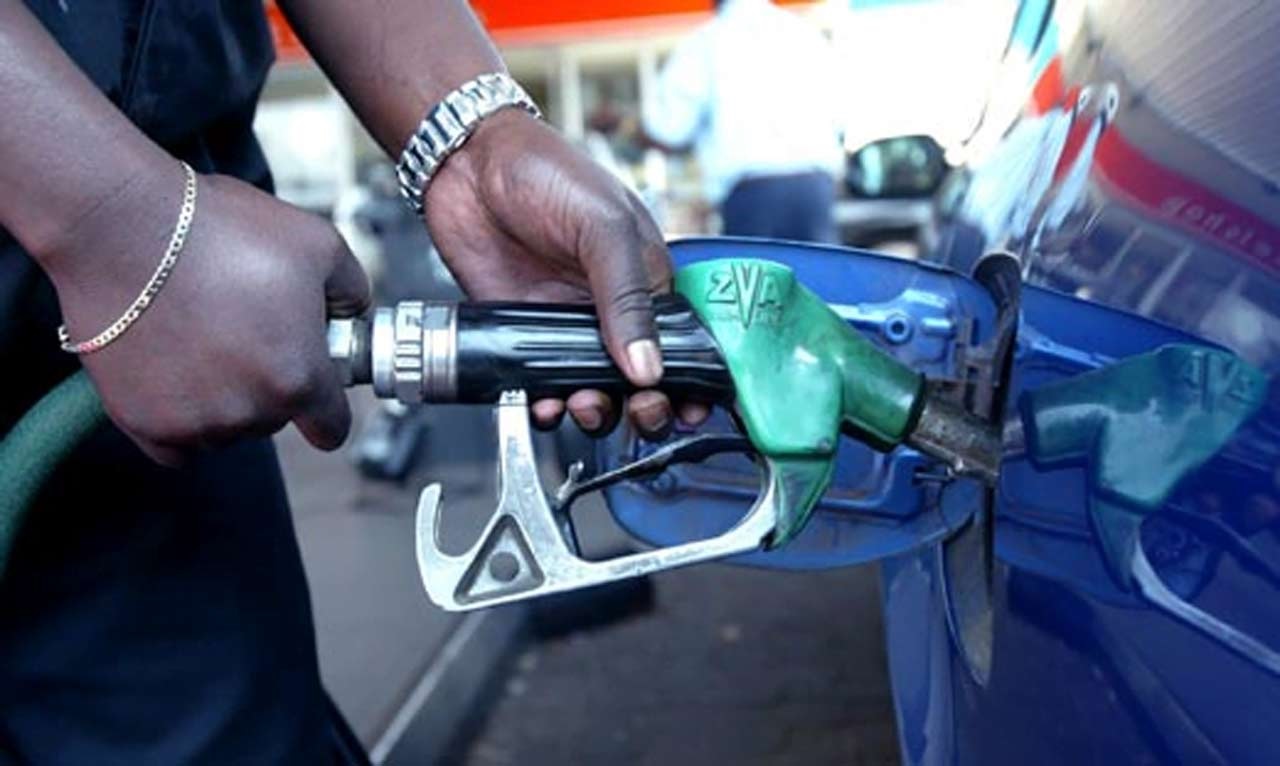
On July 28, 2023, I wroteNigeria will either pause the full floating of its currency or return back to fuel subsidy within 6 months.” The fuel subsidy has since returned at scale. Here are my sources:

Source #1: “Asiwaju  ( President Bola Tinubu) announced withdrawal of fuel subsidy on 29th May , but believe it or not , fuel subsidy is back , we’re spending more now, about N8 trillion on subsidy than before 29th of May…But as I also said earlier during my presentation, the removal of fuel subsidy by the present administration is another good policy by President Tinubu.

“I have always supported withdrawal of fuel subsidy. But as you can see, in the course of implementation, the government has now realized that the subsidy has to be back, because right now, we are paying a lot of money amounting to trillions of naira for subsidy even more than before, because the impact has been seen and the packages of support that will reduce the impact have not been effective in reducing the impact, and so, the federal government has to backpedal by subsidizing petrol. “ – Nasir El-Rufai, former governor of Kaduna State on AriseTV

Source #2: “When Mr. President came May last year, one of the things he said is that Subsidy is gone. And truly subsidy was gone because immediately the price of fuel moved from 200 to 500 per liter. At that point truly, subsidy was gone. During that period, Dollar was exchanging for N460, but a few weeks later, the government devalued the exchange rate. And Dollar moved to about N750. At that point, subsidy was beginning to come back.

“The moment the two markets officially closed, officially the market went to about N1,300. At that point, that conversation was out of the window. Subsidy was fully back on petrol. If you want to know where petrol should be, just look at where diesel is. Diesel is about N1,300 and petrol is still selling for N600.

“So I can tell you for free that there there is at least N400 or N500 liters subsidy on petrol today. If you look at our daily consumption, say 40 million liters, and we’re spending N500 per liter, that is about N20 billion every day, N600 billion every month and 7.2 trillion yearly depending on how we look at it. So, subsidy is definitely back on petrol,” CEO of Rainoil Limited, Gabriel Ogbechie.

Our call has been validated. My position in July 2023 was that it was IMPOSSIBLE for the government to keep petrol price at a free market rate when Naira was floated. Only one could work at a time to avoid a vicious loop of negative continuum. This is simple AO Lawal O’Level Economics on inelastic products.

Good People, even at a full production capacity of Dangote Refinery, Nigeria will continue to subsidize fuel, because petrol is a huge product in Nigeria with the middle class families and their generators. Indeed, you can draw a correlation on how a faded rail system facilitated the destruction of Nigerian roads, until we have electricity from the national grid, petrol will remain in the family budgets.

The Question of Whether Bitcoin is Considered Money is Complex and Multifaceted

0

Bitcoin, is often heralded as the first decentralized cryptocurrency, introduced to the world by an anonymous entity known as Satoshi Nakamoto. The core idea behind Bitcoin is its operation on a peer-to-peer network where transactions are verified through cryptography and recorded on a public distributed ledger, the blockchain, without the need for central oversight.

Bitcoin has been a topic of discussion since its introduction in 2009. It operates independently of a central bank and uses peer-to-peer technology, where transactions are managed, and bitcoins are issued collectively by the network. Bitcoin is often referred to as cryptocurrency due to its encryption techniques used to regulate the generation of units and verify the transfer of funds.

The question of whether Bitcoin is considered money is complex and multifaceted. Money traditionally has three functions: it serves as a medium of exchange, a unit of account, and a store of value. Bitcoin, by design, fulfills these roles to a certain extent. It can be used to purchase goods and services where it is accepted, it can be divided into smaller units known as Satoshi’s, and it has the ability to store value over time.

However, the acceptance of Bitcoin as a form of money varies across different jurisdictions. Some countries have embraced it, with El Salvador becoming the first country to recognize Bitcoin as legal tender. On the other hand, its status as money is still debated among financial institutions and governments, with some arguing that cryptocurrencies do not possess all the needed characteristics of traditional money.

Bitcoin’s volatility is often cited as a challenge to its function as a stable store of value. Its price can fluctuate widely, which may deter some users and businesses from adopting it as a regular form of currency. Despite this, Bitcoin has a growing community of users and has sparked the development of thousands of other cryptocurrencies.

Whether Bitcoin is money is subject to interpretation and depends on one’s definition of money. It certainly has characteristics of money and functions as such within certain communities and marketplaces. However, its recognition as official currency or legal tender is not universal, and its role in the future of financial transactions remains to be fully determined.

However, the decentralization of Bitcoin is a complex subject. While the proof of work system allows anyone with the necessary computing power to contribute to transaction verification, concerns have been raised about the concentration of mining power in the hands of a few large players, which could potentially lead to centralization pressures.

Additionally, the possibility of a 51% attack, where a single group could control the majority of mining power, poses a risk to the network’s decentralized nature. Despite these challenges, Bitcoin remains a significant experiment in decentralized digital money, with ongoing discussions about its scalability and governance.

April Indicates 38% Increase in Funds Invested in the Crypto Industry

0

The first quarter of 2024 has been a testament to the dynamic nature of the crypto venture capital landscape. After a two-year period of cautious investment strategies and a bearish market sentiment, the industry is witnessing a remarkable resurgence. This shift is not just a fleeting change but a substantial rebound that is breaking the downtrend observed since the peak in late 2021.

A report from early April indicates a 38% increase in funds invested in the crypto space, coupled with a 49% rise in the number of projects receiving funding. These figures are not just numbers; they represent a renewed confidence among investors and a bullish outlook for the future of cryptocurrencies and blockchain technology.

Leading the charge in this investment surge are crypto-native venture capital firms such as Andreessen Horowitz Crypto, OKX Ventures, Multicoin Capital, Paradigm, and Polychain. These firms have dominated the investment sphere, marking a shift from previous quarters where banks and non-crypto VCs were more prevalent.

The areas attracting these investments are diverse, ranging from decentralized finance (DeFi) and social finance (SocialFi) to Bitcoin layer-2 solutions. Web3 gaming and AI-integrated blockchain technologies are also seeing significant venture capital attention, indicative of the market’s appetite for groundbreaking developments in the crypto space.

This resurgence is attributed to several factors, including landmark legal victories, burgeoning interest in DeFi platforms like Solana, and a general increase in demand for cryptocurrencies following regulatory approvals in the US. The competitive landscape has created a founder-friendly environment where entrepreneurs wield greater leverage in fundraising endeavors, leading to accelerated deal-making and spiked valuations.

Ethereum continues to be the top choice for VC-funded projects, hosting over 50 initiatives, followed closely by Solana with 40 projects. The popularity of meme coin initial coin offerings (ICOs) on Solana’s platform has contributed to its growth, while Polygon and Bitcoin also continue to attract VC-funded projects, albeit with a slight drop in relative position.

The first quarter of 2024 has not only seen a recovery in the amount of funding but also in the sentiment of the investors. There is a careful optimism in the air, reminiscent of the enthusiasm seen in the early days of crypto’s mainstream adoption. The crypto venture capital landscape is brightening, and if this trend continues, we may be on the cusp of a new era of growth and innovation in the crypto industry.

The resurgence of crypto venture capital is a clear indicator of the industry’s resilience and potential for growth. It reflects the evolving nature of investment focus and the emerging trends shaping the industry. As we move forward, it will be interesting to see how this renewed vigor translates into tangible advancements and contributions to the broader financial ecosystem.

2024 Africa Wealth Report: Henley & Partners Projects Millionaire Growth of 65% in Next Decade

0

Amidst its immense diversity and complex socio-economic fabric, the African continent is carving out a formidable presence in the global wealth arena with the number of millionaires and billionaires in the continent rising significantly.

The latest edition of the Africa Wealth Report for 2024, a collaborative effort between Henley & Partners and New World Wealth, unveils a compelling narrative of Africa’s burgeoning wealth landscape.

With a staggering investable wealth tallying at USD 2.5 trillion, coupled with a projected surge of 65% in its millionaire populace over the forthcoming decade, Africa emerges as a pivotal player in the global economic narrative.

In its ninth iteration, the annual report meticulously dissects Africa’s high-net-worth individuals (HNWIs), revealing a current count of 135,200 individuals boasting liquid investable assets exceeding the USD 1 million mark. Furthermore, the continent boasts 342 centi-millionaires and an impressive cohort of 21 billionaires. Although compared to other continents, Africa still lags, mainly due to its multifaceted challenges obstructing economic growth.

Among the challenges are currency depreciation and underperforming stock markets.

“Currency depreciation and underperforming stock markets have chipped away at Africa’s wealth compared to global benchmarks,” notes Dominic Volek, Group Head of Private Clients at Henley & Partners. “The South African rand fell 43% against the US dollar from 2013–2023, and currencies in most other African countries also performed poorly compared to the dollar over the past decade.”

Volek added that currencies in most other African countries also performed poorly compared to the dollar over the past 10 years, with dramatic depreciations of over 75% recorded in Nigeria, Egypt, Angola, and Zambia.

Echoing Volek’s sentiment, Andrew Amoils, Head of Research at New World Wealth, noted the impact of migration on Africa’s wealth trajectory.

“Approximately 18,700 high-net-worth individuals have left Africa over the past decade,” Amoils reveals. “Most of these individuals have relocated to countries such as the UK, the USA, Australia, and the UAE.”

Nevertheless, Africa remains a crucible of opportunity, boasting some of the world’s fastest-growing markets. The ‘Big 5′ wealth markets – South Africa, Egypt, Nigeria, Kenya, and Morocco – stand as a testament to Africa’s economic vibrancy, commanding over 56% of the continent’s millionaires and over 90% of its billionaires, according to the report.

Despite facing challenges over the past decade, including a 20% decline in its millionaire population, South Africa still boasts the largest population of HNWIs in Africa. With 37,400 millionaires, 102 centi-millionaires, and 5 billionaires, South Africa leads the continent in terms of wealth concentration. Egypt follows closely behind with 15,600 millionaires, 52 centi-millionaires, and 7 billionaires.

Nigeria ranks third with 8,200 HNWIs, followed by Kenya with 7,200 millionaires, Morocco with 6,800, and Mauritius with 5,100. Algeria, Ethiopia, Ghana, and Namibia are the top 10 wealthiest countries in Africa, with varying numbers of HNWIs ranging from 2,300 to 2,800. Despite economic challenges, these countries continue to attract and sustain affluent populations, contributing to their positions as key players in Africa’s wealth growth.

Moreover, burgeoning economies such as Mauritius, Namibia, and Zambia are poised to witness exponential growth in their millionaire populations over the next decade.

Renowned South African political commentator Justice Malala noted Africa’s economic prowess, projecting Sub-Saharan Africa as the second-fastest-growing region globally in 2024, trailing only behind Asia.

The growth prospect has opened room for Africa to expand its leadership role globally. With Africa expected to claim 11 out of the 20 fastest-growing economies globally, African leaders are clamoring for greater representation in international decision-making forums.

“With Russia, China, the USA, and the EU all jostling for favor on the continent, African leaders have become more emboldened and are demanding a seat at the top tables. These will come with closer relationships between continental leaders and other “middle powers” such as India, Turkey, Argentina, and Saudi Arabia. Already, Ethiopia and Egypt have joined the BRICS grouping and the African Union has become a permanent member of the G20. Previously, only South Africa was in these exclusive clubs,” said Malala.

He added that with growth projected at 4% by the IMF, Sub-Saharan Africa will be the second-fastest–growing region in the world in 2024, after Asia.

Though the wealth comes from many sectors of the continent’s economy, real estate stands out – with some cities claiming the lion’s share of the growth.

In real estate, Johannesburg and Cape Town emerged as veritable bastions of wealth, with promising growth trajectories witnessed in cities such as Kigali, Windhoek, and Marrakech.

Louisa Mojela and Nontobeko Ndhlazi of WIPHOLD extol Africa’s allure for investment, attributing its appeal to a youthful demographic dividend and rapid urbanization.

In luxury real estate, Cape Town reigns supreme, closely followed by Grand Baie in Mauritius and select cities in South Africa and Morocco. Berry Everitt, CEO of the Chas Everitt International property group, notes Africa’s allure in the global luxury real estate arena, propelled by a burgeoning demand fueled by demographic and urbanization trends.

However, Africa’s economic mobility is stifled by passport limitations, constraining citizens’ ability to traverse international boundaries for business and investment endeavors.

According to the report, only two African passports, those of Mauritius and Seychelles, grant their holders access to more than 50% of global GDP without requiring a visa in advance. This is despite Africa being home to some of the most open nations in the world based on the Henley Openness Index, which measures visa-free access to other countries. While many African countries are open in terms of visa-free access, the economic power and influence associated with global GDP access remain limited for most African passport holders.

“Africa tops the list of rejections with 30% or one in three of all processed applications being turned down, even though it had the lowest number of visa applications per capita. This was 12.5% higher than the global average,” said Mehari Taddele Maru, part-time professor at the School of Transnational Governance and Migration Policy Centre.

“The rejection rates for African applicants for Schengen visas are generally 10% higher than the global average, three times higher than the highest rejection rate, and ten times higher than for US-Americans. Despite justifications based on security or economic concerns, the European visa system clearly demonstrates apparent bias against African applicants.”

However, the report noted that Africa is ascending in the global wealth echelons – underpinning a continent on the precipice of transformation, brimming with opportunities for discerning investors. It however emphasized the need for friendly immigration policies as investment migration is emerging as a potential further mechanism to accelerate Africa’s economic growth.

“By offering residence and citizenship by investment opportunities, African countries can attract vital foreign capital, stimulate job creation, and foster knowledge transfer,” said Volek.