
DD
MM
YYYY

PAGES

DD
MM
YYYY

spot_img

PAGES

Home Blog Page 3534

The Language Of Football: Decoding The Unspoken Communication On The Pitch

0

Unmasking the hidden language of football beyond words, exploring body language, hand signals, and eye contact as powerful tools for communication and strategy.

The Silent Language of Football: Decoding Nonverbal Communication on the Pitch

Beyond the crowd’s roar and the shouts of coaches, a silent language unfolds on the football pitch. This is the language of non-verbal communication – a complex system of gestures, body language, and eye contact players use to convey tactical instructions, express emotions, and build on-field synergy. To truly understand the beautiful game, we must deconstruct this silent language and appreciate its profound impact on gameplay. And every fan will be helped with this by the soccer live scores and soccer prediction of any match.

Body Language: A Window to the Mind

A player’s posture, movements, and facial expressions offer valuable insights into their tactical intentions and emotional state. A clenched fist might indicate frustration, while a relaxed posture could suggest confidence. A raised eyebrow could be a call for attention, while a furrowed brow might betray worry. By deciphering these subtle cues, teammates can anticipate plays, react to changes in strategy, and adapt to the game’s flow.

  • Open arms: Strikers often use this gesture to signal teammates to pass the ball into their path or create space for themselves.
  • Pointing: A player pointing towards a specific pitch area can instruct their teammates to move to that space or focus their attack in that direction.
  • Shrugs: Shrugging shoulders can signify confusion or frustration, indicating that a player needs more information or doesn’t understand the current strategy.

Hand Signals: A Tactician’s Tool

Hand signals are vital for coaches to communicate instructions and tactics from the sidelines. These signals can be simple gestures, such as a raised fist to indicate an aggressive press, or more complex sequences that convey intricate tactical maneuvers. By using hand signals, coaches can provide real-time adjustments and ensure their players align with the game plan.

  • Closed fist: This signal often signifies a defensive strategy, calling for players to close down space and mark their opponents tightly.
  • Circle with fingers: This gesture can indicate that players should move the ball around quickly and keep possession.
  • Number signals: Coaches often use their fingers to signal specific formations or set-piece plays.

Eye Contact: The Power of Connection

The way players look at each other can reveal a wealth of information about their on-field relationships and understanding. A direct gaze can convey confidence and trust, while averted eyes might suggest hesitation or doubt. By understanding the subtle nuances of eye contact, players can build stronger connections, anticipate each other’s movements, and execute plays with greater precision.

  • Direct eye contact: This can be used to assert dominance, show leadership, or confirm a teammate’s understanding of a tactical instruction.
  • Avoiding eye contact: This might indicate nervousness, lack of confidence, or disagreement with the current strategy.
  • Eye contact followed by a nod: This is a powerful nonverbal confirmation, indicating that both players are on the same page and ready to execute a specific action.

The Power of the Unspoken

Understanding the silent communication in football allows us to more fully appreciate the game’s complexity and beauty. It reveals the intricate web of communication that exists between players, coaches, and even the crowd, highlighting the importance of teamwork, trust, and shared understanding. Beyond the technical skills and athletic prowess, this silent language truly sets exceptional players and teams apart.

Silent Strategy: Decoding the Unspoken Language of Football’s Depths and Dramas

The language of football is not limited to spoken words. In fact, the unspoken communication, the subtle gestures and unspoken messages often hold the key to understanding the game’s actual depth and drama. By appreciating this silent language, we can elevate our appreciation for the beautiful game and gain a deeper understanding of the tactical nuances that make football such a compelling and captivating sport.
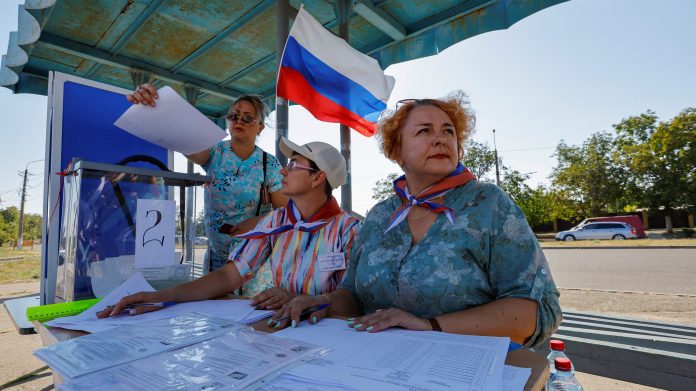
Elections in Transition: Russia’s Democratic Process Unveiled

0

We, the multinational people of the Russian Federation, united by a common fate on our land, establishing human rights and freedoms, civil peace and accord, preserving the historically established State unity, proceeding from universally acknowledged principles of equality and self-determination of peoples, revering the memory of ancestors who have passed on to us their love for the Fatherland and faith in good and justice, reviving the sovereign statehood of Russia and asserting the firmness of its democratic basis, striving to ensure the well-being and prosperity of Russia, proceeding from the responsibility for our Fatherland before present and future generations, recognizing ourselves to be a part of the world community, do hereby adopt THE CONSTITUTION OF THE RUSSIAN FEDERATION.

This section of the 1993 Constitution (as amended in 2020) emphasizes the need of solidarity, patriotism, and group responsibility for the advancement of the Russian Federation. Russia is a democratic, federative, law-based state with a republican system of government, according to the Constitution. The three branches of government are the legislative, executive, and judicial. The president is elected to serve a six-year term and is eligible for reelection for a second term. The upper chamber Federation Council and the 450-seat State Duma make up the Federal Assembly.

Our analyst examines the constitution with the aim of revealing the country’s democratic process as people go to the polls in 2024 for the presidential election. In summary, the framework provides a basis for understanding the historical context of presidential elections in Russia and can be applied to anticipate key elements and dynamics in the upcoming 2024 presidential election. It underscores the democratic foundation, legal framework, and role of key institutions in shaping the electoral process.

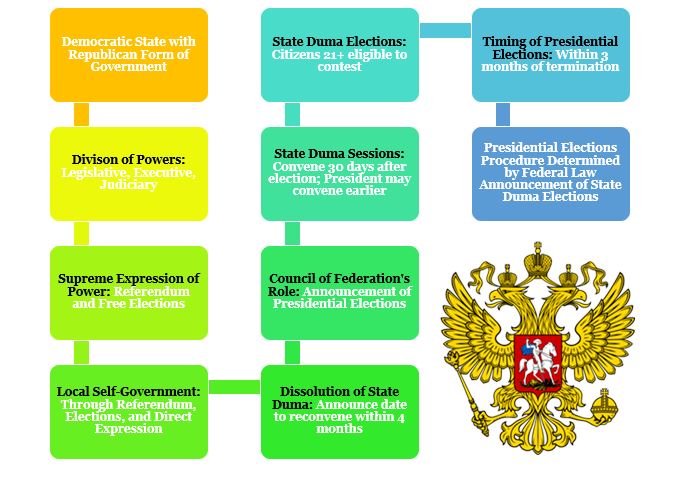
Exhibit 1: Russia’s democratic framework according to Constitution

Russia 2024
Source: Russian Federation Constitution, 1993; Our Analyst’s Conceptualisation, 2023

Democratic Foundation. Russia is declared a democratic state with a republican form of government. The Constitution emphasizes the importance of human rights, civil peace, and accord.

Division of Powers. State power is divided among the legislative, executive, and judicial branches.

Supreme Expression of Power. The supreme direct expression of the power of the people is through referendums and free elections, as stated in Article 3(3) of the Constitution.

Presidential Elections. The procedure for presidential elections is determined by federal law, as per Article 81(4). The President announces elections to the State Duma in accordance with the Constitution and federal law (Article 84).

Timing of Presidential Elections. Presidential elections are to be held within three months of the early termination of the presidential office (Article 92(2)).

State Duma Elections. Any Russian citizen aged 21 or older with the right to participate in elections may be elected as a deputy of the State Duma (Article 97).

State Duma Sessions. The State Duma convenes its first session 30 days after the election, but the President may convene it earlier (Article 99(2)).

Council of Federation’s Role. The Council of Federation is responsible for the announcement of presidential elections (Article 102(e)).

Dissolution of State Duma. In case of dissolution, the President announces the date of elections so that a newly-elected State Duma may be convened not later than four months after the dissolution (Article 109(2)).

Local Self-Government. Local self-government is exercised through referendums, elections, and other forms of direct expression of citizens’ will (Article 130(2)).

Previous Presidential Elections

Democratic Tradition. Russia, as per its constitution, follows a democratic process in electing its president. Previous elections have been held in accordance with these democratic principles.

Federal Law Influence. The procedure for presidential elections being determined by federal law implies that changes in election processes may occur over time based on legal amendments.

Role of Council of Federation. The Council of Federation has been historically involved in the announcement of presidential elections, emphasizing a centralized authority in the electoral process.

2024 Presidential Election

Legal Framework. The 2024 presidential election will likely adhere to the existing constitutional framework and any relevant changes in federal laws governing the electoral process.

Council of Federation’s Role. The Council of Federation’s involvement in announcing the election suggests a continued role in shaping the electoral landscape for the upcoming 2024 election.

Potential for Amendments. Given the flexibility implied by “determined by federal law,” there could be potential amendments or changes to the election procedure leading up to the 2024 election.

Democratic Principles. The emphasis on democratic values in the constitution is likely to be a key factor in shaping the discourse around the 2024 election, underscoring the importance of free and fair elections.

Public Participation. The mention of referendums and direct expression of citizens’ will in local self-government indicates a broader commitment to public participation, which may be reflected in the 2024 election process.

Notable Provisions of Lagos State Physical Planning Regulations On Planning and Renovation Permits

0

Land Law :- Notable Provisions Of The Lagos State Physical Planning Permit Regulations On Planning & Renovation Permits.

In light of the recent spate of demolitions carried out by the Lagos State government, away from the politics of it all, it is important that to be sure that before acquiring a piece of land and developing, a clear understanding of the provisions of the physical planning laws of the state should be had by a buyer.

This article will be looking at important provisions of the Lagos State Planning Permit Regulations & will be focused on the topics of :-

– Planning Permits.

– Renovation Permits.

What do the regulations say on applications for planning permits?

– Any person, be it an individual or corporation, or government agency intending to carry out any development on any land within the state shall make an application to the Lagos State Physical Planning Permit Authority (LASPPPA) for a grant of a planning permit for such development.

– All physical developments in the state shall have an approved planning permit.

– All planning permits to be granted shall be within the context of an approved operative development plan (master/local plan) where available. Where there is no operative development plan, an application shall be considered on the result of the planning information application process.

What is the procedure for applying for a planning permit?

– Applications for development shall be made as appropriate by the developer in a regulatory form prescribed by LASPPPA .

– Applications are to be accompanied by :-

1). 1 set of architectural drawings.

2). Duly signed survey plans.

3). Land Title Documents.

– A duly completed application form shall be submitted by the applicant or through appointed registered professionals in the building industry to the authority, with the following documents :

1). 1 survey plan copy with relevant survey reference number.

2). 5 sets of screened architectural drawings of the proposed development prepared, signed, sealed and stamped by an architect registered to practice in Nigeria which shall include the site plan indicating details including the following :-

a). Area covered by the subject site.

b). The beacon numbers or pillars indicating the property boundary and linear dimensions.

c). Land Use Planning & Analysis Reports (LUPAR).

d). Front, rear, left & right side elevations of the building, the height, floor levels & others that may be required.

What are the provisions of the regulations on renovation permits?

Alteration, Addition & Repair

– No building shall be renovated in the state without renovation permits granted by the LASPPPA.

– Applicants shall be issued letters of renovation permits subject to satisfying certain conditions as specified in the regulations.

– Any person intending to renovate a building shall before carrying out such renovation, submit to the authority an application, stating the details of renovation and evidence or previous planning permits if any. The process shall attract 25% of the prevailing processing fees.

Alterations & Addition

– No building shall be altered or added or redeveloped in the state without planning permits from the authority through an application containing details which include :

a). As-built drawings

b). The proposed alterations, repair, development, drawing & super-imposed on the as-built drawing.

c). A certificate of structural fitness within indemnities issued by a registered civil/structural engineer.

d). A civil or structural engineer’s undertaking to supervise the alteration, addition or repairs. 

Land Law :- Requirements For Fencing & Demolition Permits In Lagos State

This article will be focused on fencing and demolition permits in Lagos state & their requirements as prescribed by the Lagos State Physical Planning Permit Regulations/”The Regulations” (LASPPPA). 

What are the provisions of the regulations on fencing permits?

– No fencing work shall be allowed on any land in the state without a permit from LASPPPA.

– Any person who intends to carry out fencing work shall submit the following documents :-

a). An application & drawings (architecture and/or structural designs).

b). 1 sun-print survey plan of the subject site.

c). Evidence of title documents.

d). Receipts of prescribed fee payments.

– A fence line shall be recessed by a minimum of 900mm from the front property boundary for purposes of landscaping/beautification.

– The front fence line shall be made of a maximum of 3.0 mtrs consisting of 1.5 meters solid wall from ground level and remaining height shall be a minimum of 1 meter see-through made of any material.

– The party walls between adjacent properties shall maintain a maximum height of 3 meters from existing road level.

What are the provisions of the regulations on demolition permits?

– Any developer who intends to demolish any existing structure shall apply in writing to the authority for the issuance of a demolition permit as provided in these regulations.

– No site with existing structure shall be demolished in the state without a demolition permit granted by the authority to remove the structure.

– Any intending applicant for a demolition permit shall submit an application to LASPPPA accompanied with the following documents :- 

a). evidence of title documents;

b). photographs of existing structures.

What is the applicable fee for demolition permits?

– Regulatory demolition permit fees in Lagos State are charged at 250 Thousand Naira.

What are the provisions of the regulations on Land Use Zones & Complementary uses?

– The following shall be permissible developments under the regulations in all the approved Land Use Zones as specified therein.

The “Libelous” Publications Of Mr Francis Van Lare: Taking Legal Steps!

1

A seventy-year-old Nigerian man has been on the lips of bloggers and netizens for the past one week now. The man by the name “Francis Van Lare” in celebration of his seventieth birthday published on his Facebook wall the names of all the women he alleged to have had sex with since he started engaging in sexual activities from the 1960s. 

Some of the names he published looked familiar because he didn’t just publish first names, he published both the first and last names of the persons. 

Some persons who claimed they are the bearers of the names he published are threatening to sue him for libelous defamation but this is why the suit for libel from some of the women against Mr Francis Van Lare may likely not succeed in the court of law. 

What then is libel? Libel is a “published” “false statement” that is “damaging” to a person’s reputation. Once it is a written or published defamation it becomes a libel but it is merely spoken or verbal, it is slander. 

For a suit of libel to succeed in court it must be; 

  1. Published 
  2. It must be a false statement 
  3. It must be damaging to one’s reputation or defamatory 
  4. It must not just be a mere opinion expressed as an opinion. 
  5. It must be specifically addressed to a particular person or group of persons

This is to say that for a claimant suit to succeed, the statement must be written or published, the statement must be seen to be damaging to the claimant’s reputation, the statement must be false and it must not be an opinion and it must be addressed to or about a specific person and not a generalized statement. 

For instance, if I post or publish that Mr John Doe is a thief, for Mr John Doe to successfully bring a suit for libel against me, there must not be any evidence or proof showing that Mr John Doe have stolen before or that he is truly a thief; if my statement of him being a thief is true then he cannot succeed in an action for Libel against me because my statement is not false. Again, if I post on my wall a generalized statement that I have slept with Mrs Jane Doe, anybody or everybody bearing the name “Jane Doe”, cannot bring up an action against me because I did not specify the Jane Doe I’m talking about even though my statement could be false and defamatory to every Jane Doe out there. 

Back to the Facebook publication of Mr Francis Van Lare; As already highlighted that one of the core ingredients of libel or slander is that the defamatory statement must be addressed to a particular individual. If Mr Francis Van Lare published on his wall that he has slept with Mrs Jane Doe, and one Mrs. Jane Doe decides to sue Mr Francis Van Lare for libel, Mr Francis Van Lare’s defense could be that he never referred to that particular Mrs Jane Doe as there are a lot of persons bearing Mrs Jane Doe. So a claimant must show that the libel was addressed to him or her specifically. 

So most of the ladies threatening to sue may not succeed in the libel claim because it will be difficult for them to show in court that the is truly theirs and not any other person out there because those names, although common and popular names are not exclusive to anybody but the case will be different if after publishing the names of the ladies and he went further to add other personal details to specify the ladies he is referring to.

Libel is both a civil wrong and a crime in Nigeria. If convicted, it is punishable with a 1-2 years jail term as provided in section 375 of the criminal code act

Robinhood Expanding its Crypto Trading services to Customers in Europe

0

Robinhood, has announced that it is expanding its cryptocurrency trading services to customers in the European Union. This means that EU residents can now buy and sell Bitcoin, Ethereum, Dogecoin and other digital assets on Robinhood’s app, without paying any commission fees.

Robinhood is a leading online brokerage platform that offers commission-free trading of stocks, options, cryptocurrencies, and more. The company has attracted millions of users, especially young and novice investors, who value its ease of use, gamified features, and social media presence.

According to a press release, Robinhood will launch its crypto trading services in the UK, Germany, France, Spain, Italy, and the Netherlands in early 2024. Customers in these countries will be able to buy and sell cryptocurrencies such as Bitcoin, Ethereum, Dogecoin, and more, with zero commission fees and instant settlement. They will also be able to access real-time market data and news on crypto assets through the Robinhood app.

Robinhood’s crypto trading services are already available in the US, where the company has over 10 million customers and more than $20 billion in assets under custody. The company claims that it is one of the largest and fastest-growing crypto platforms in the US, with over 6 million crypto traders in 2021.

Robinhood’s expansion to Europe is part of its global vision to empower millions of people to participate in the financial system. The company believes that crypto is a key driver of financial inclusion and innovation, and that it can help create a more equitable and sustainable world.

“We’re thrilled to bring our crypto trading services to Europe, where there is a huge demand and enthusiasm for crypto,” said Vlad Tenev, co-founder and CEO of Robinhood. “We believe that everyone should have access to the tools and information they need to invest in the future of money. We’re excited to join forces with our European customers and partners to make this vision a reality.”

However, Robinhood has also faced significant criticism and scrutiny from regulators, lawmakers, and customers over its business practices, policies, and role in the recent market volatility.

The company said that it wants to make crypto investing more accessible and affordable for everyone, regardless of their location or financial background. Robinhood also claimed that it offers some of the best prices in the market, as it sources liquidity from multiple venues and passes the savings to its customers.

Robinhood’s move into the EU market comes amid growing demand for crypto assets in the region, as well as increased regulatory scrutiny and competition. The company said that it has obtained the necessary licenses and approvals from the relevant authorities, and that it complies with the highest standards of security and compliance.

Robinhood’s crypto trading service is currently available in 10 EU countries: Austria, Belgium, Denmark, Finland, France, Germany, Ireland, Italy, Spain and Sweden. The company said that it plans to add more countries and currencies in the future, as well as more features and functionality to its app.

Robinhood’s crypto trading service is separate from its stock trading service, which is only available in the US. The company said that it is working on bringing its stock trading service to the EU as well but did not provide a specific timeline or details.

Robinhood is one of the most popular and controversial online brokers in the US, where it has attracted millions of young and novice investors with its commission-free and gamified platform. However, it has also faced criticism and lawsuits for its role in the GameStop saga earlier this year, as well as for its frequent outages, customer service issues and alleged market manipulation.