DD
MM
YYYY

PAGES

DD
MM
YYYY

spot_img

PAGES

Home Blog Page 3594

BlockDAG Sets the Stage for Unprecedented 30,000x Growth Amid 2024 Ethereum Uncertainty and XYO Challenges

0

As we journey through 2024, the financial terrain of investments is rapidly evolving, particularly within the cryptocurrency sector. The spotlight shines on Ethereum’s price behavior, XYO’s market prognosis, and notably, BlockDAG‘s remarkable ascent as a pioneering force in DeFi innovation. With a presale achievement of over $13.5 million and a $2 million mining initiative, BlockDAG’s detailed blueprint in its latest white paper V2 outlines an ambitious 30,000x ROI potential, heralding an exhilarating chapter in cryptocurrency’s progress.

Ethereum’s 2024 Forecast: A Precarious Balance

The Ethereum market in 2024 is navigating through a maze of volatility, with pivotal prices set at $3,700 and $3,200 delineating its course. This precarious position, highlighted by fluctuating trade volumes, hints at a possible bearish descent, shadowed by losses observed in mid-March.

However, should Ethereum surge beyond $3,700, this bearish narrative could pivot to a bullish uptrend. The crypto community remains on high alert, attuned to Ethereum’s price movements in 2024, which are critical indicators of its forthcoming market direction.

XYO’s Challenging Trajectory: A Closer Look

Initially riding a wave of bullish optimism, XYO’s ascent from $0.00350 to $0.01600 soon encountered turbulence, hinting at a looming decline. Current analyses predict a difficult road for XYO, with the asset slipping beneath crucial support levels and the essential EMA bands, reinforcing the bearish forecast.

Despite earlier gains, XYO’s path is marred by technical indicators like the MACD and RSI, which reveal a stark absence of substantial buying pressure, essential for overturning the downward trend. A resurgence of buying interest could spearhead a recovery, aiming for a target rebound price of $0.01200.

BlockDAG: Redefining the Crypto Investment Landscape

BlockDAG’s surge in the crypto market is unmistakable, with its presale amassing over $13.5 million. Its progress through successive phases, particularly the notable batch 7, reflects its escalating market value. The anticipation surrounding its potential 10,000x ROI, buoyed by the release of white paper v2, casts BlockDAG in a bullish light.

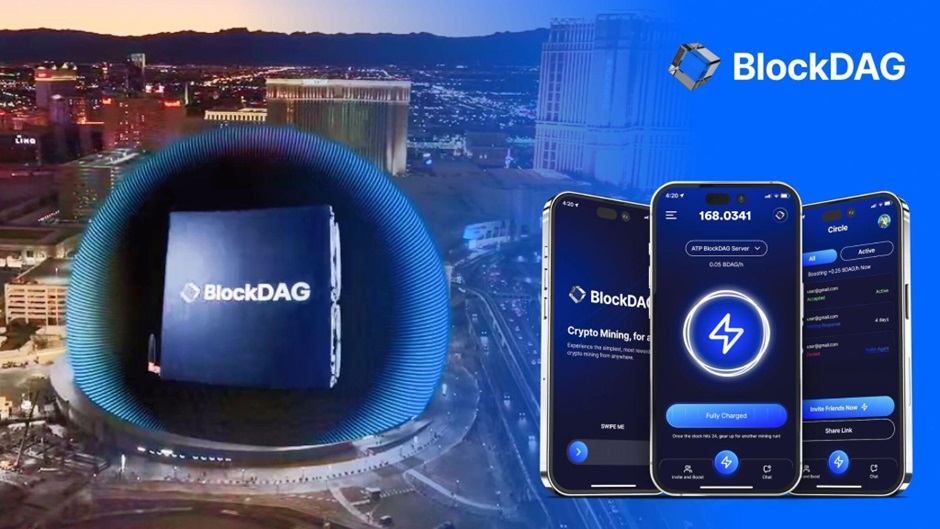
BlockDAG revolutionizes the approach to crypto mining with its X1 mobile application, allowing users to mine BDAG coins daily. This strategy broadens mining accessibility, inviting a diverse group of enthusiasts to partake in the digital economy’s growth.

At the core of BlockDAG’s ecosystem lies BDAG, facilitating transactions and network participation. Its role is pivotal, fostering a dynamic community of users, validators, and developers, all contributing to the network’s vitality.

Drawing parallels with the historic ascents of Bitcoin and Kaspa, BlockDAG’s potential for a 30,000x increase post-launch, although speculative, is rooted in its novel technological foundation. This potential places BlockDAG as a standout investment prospect.
Conclusive Insights

The crypto landscape 2024 presents a mixed bag – Ethereum’s unpredictability, XYO’s downturn, and BlockDAG’s ascendancy as a must-watch DeFi player. With its sophisticated mining solutions and a successful $13.5 million presale, BlockDAG positions itself for explosive growth, spotlighted by its presale success and a promising 30,000x ROI, as outlined in its visionary white paper v2. Amid the flux of cryptocurrency markets, BlockDAG stands out as a beacon of innovation and a compelling investment opportunity in the digital finance sphere.


Buy BlockDAG Now

Website: https://blockdag.network

Presale: https://purchase.blockdag.network

Telegram: https://t.me/blockDAGnetworkOfficial

Discord: https://discord.gg/Q7BxghMVyu
High Interest Rates on Central Bank of Nigeria’s Treasury Bills Squeezing Private Sector, LCCI Laments

0

In a statement released on Friday, the Lagos Chamber of Commerce and Industry (LCCI) expressed deep concern over the adverse effects of the high-interest rates on the Central Bank of Nigeria’s (CBN) Treasury bills.

The Director-General of LCCI, Dr. Chinyere Almona, noted the detrimental impact these rates are having on the private sector, redirecting funds away from business expansion and development.

Dr. Almona acknowledged the CBN’s efforts in curbing inflation and stabilizing the exchange rate but stressed the importance of achieving these objectives without stifling private sector growth. She particularly highlighted the plight of Small and Medium Enterprises (SMEs).

“The recent hikes in the MPR have directly translated into higher interest rates, making it more expensive for businesses to access credit for working capital, expansion, and sustainability.

“We have consistently advised that rate hikes alone will not curb inflation without resolving challenges of the real sector of the economy,” she said.

While acknowledging that high interest rates may attract both foreign and local investors to government treasuries, she lamented the consequences of funds being diverted away from the private sector.

“The real sector has demonstrated the capacity to create more jobs, manufacture products for consumption and export, and sustain the industrial base of the economy.”

“While we understand that high-interest rates attract Foreign Portfolio Investments and local investors to treasury bills and bonds, we lament the drying up of funds away from the private sector to government treasuries,” she said.

In addition to concerns about interest rates, Dr. Almona also addressed the issue of electricity subsidies. While recognizing the potential for attracting foreign investment through realistic pricing, she expressed worry over the disproportionate burden placed on businesses due to unreliable service provision despite increased tariffs.

She advocated for a comprehensive metering initiative to ensure accurate billing for all electricity consumers.

The backdrop to these concerns lies in the CBN’s aggressive sale of Treasury bills since the first quarter, with interest rates ranging between 19% and 22%, nearly aligned with the Monetary Policy Rate (MPR) of 24.75%. This move was aimed at mopping up excess liquidity in the economy to curb inflation.

According to analyses, the CBN is expected to spend approximately N1.01 trillion in interest rates to defend the naira.

The LCCI’s position stands in support of calls by economic experts on the urgent need for a balanced approach by the CBN, one that addresses inflationary pressures without stifling private sector growth. They have called for collaborative efforts between monetary authorities and stakeholders to create an enabling environment for sustainable economic development.

NERC Directs DisCos to Clarify Tariff Changes, Imposes Heavy Fine on Abuja DisCo

0

In a bid to ensure transparency and fairness in electricity billing practices, the Nigerian Electricity Regulatory Commission (NERC) has issued directives to all Electricity Distribution Companies (DisCos) regarding the implementation of the April 2024 Supplementary Multi-Year Tariff Order.

The new tariff order empowers DisCos to implement A N225 kilowatt per hour tariff for Band A customers, entitled to at least 20 hours of electricity supply per day.

The directives, outlined in a circular signed by Abba Terab, Market Competition, and Rates DGM, mandate DisCos to provide clarity to affected customers and adhere to specific guidelines.

According to the circular, DisCos are required to implement the following updates:
1. Maintain ONLY the newly approved Band A feeders listed in the April 2024 supplementary orders for vending to prepaid customers and billing for postpaid customers.
2. Post the schedule of approved Band A feeders affected by the rate review on their websites.
3. Set up a portal on their websites by April 10, 2024, allowing customers to check their current Bands by entering their meter or account numbers.
4. Refund customers wrongly billed at the new rate through energy tokens no later than April 11, 2024, and provide evidence of compliance by April 12, 2024.
5. Ensure compliance with the requirements listed above, with ongoing monitoring by the Commission and support provided to stakeholders as needed.

The issuance of these directives follows reports of non-compliance by Abuja Electricity Distribution Plc (AEDC), which implemented the new tariff order for all bands of electricity customers under its jurisdiction. As a consequence, NERC levied a heavy fine of N200 million on AEDC for violating the Order and failing to adhere to prescribed customer band classifications for tariff billing.

“AEDC has been fined ?200,000,000 (Two Hundred Million Naira) for failure to comply with the prescribed customer band classifications for the tariff billing,” NERC said in a statement.

NERC said its decision to take enforcement action against AEDC underscores its commitment to protecting consumer rights and ensuring equitable practices within Nigeria’s electricity sector. The Commission’s thorough review and customer feedback revealed that AEDC had applied the new tariff to all customer bands, contrary to the Order’s provisions aimed at promoting fair billing practices.

In response to NERC’s enforcement action, AEDC is mandated to reimburse all customers in Bands B, C, D, and E who were billed above the allowed customer categories/tariff bands provided in the Order.

Additionally, AEDC must reimburse affected customers through the provision of balance customer tokens at applicable rates, with all reimbursements to be issued by April 11, 2024.

Furthermore, AEDC is required to file evidence of compliance with the directives by April 12, 2024.

The newly announced electricity tariff has generated a lot of backlash from many corners of the country, with many decrying it as oppressive and insensitive, given the current poor economic situation of the Nigerian people.

The primary issue revolves around the inadequate power generation of the nation, currently at approximately 4,000MW, which falls significantly short of meeting the demand for a stable electricity supply to consumers. Against this backdrop, consumers in Band A are worried that they might not receive the service they are paying for.

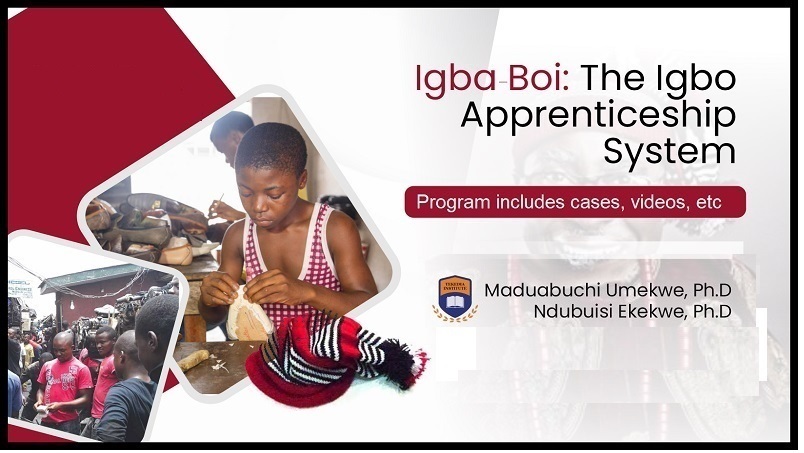
Explore Tekedia Igba-Boi: The Igbo Apprenticeship System program

0

The Tekedia Institute Igba-Boi: The Igbo Apprenticeship System program is designed to run for 8 weeks, and is structured to prepare learners on the mechanics of the Igbo business worldview philosophy of entrepreneurial stakeholder capitalism where everyone rises, and not just a few. The program includes pre-recorded videos, written materials, and business cases.

As the world looks for how to manage the disruption in global economies as a result of technology which has increased economic inequality, Igba-Boi offers a new path for nations towards a global “onye aghara nwanne ya” [do not leave your brethren behind] under a belief system of stakeholder primacy.

“The Igbos in Africa have been practicing for centuries what is today known as stakeholder capitalism”, we wrote in Harvard Business Review. In Tekedia Institute, we recognize that as the Umunneoma Economics (economics which works for all), and it looks more promising than the Adam Smith Economics.

This program will provide the tools, processes and elements necessary to not just understand Igba-Boi, but practice it in markets, in modernized ways. We invite governments, schools, associations, associations, organizations, etc, to register stakeholders. Individuals can also register anytime.

Learn more here.

Global Funding Crunch: Africa Tech VC Funding Plummets by 51% YoY in Q1 2024

0
Fund, money cash dollar

In a recent report by BD funding tracker, Africa’s tech venture capital (VC) funding faced a significant setback in the first quarter (Q1) of 2024, with a staggering 51% year-over-year decline.

Venture capital funding in the African tech start-up ecosystem has steadily declined driven partly by rising interest rates, and global geopolitical tensions which have impacted investor confidence.

In Q1 2024, startups on the continent raised a total of $369 million across 64 publicly announced deals. Equity funding, traditionally dominant, accounted for 67% of deals, with debt funding closing up 14.90% and undisclosed mixed deals.

In an unexpected twist, the mobility sector emerged as the funding leader in Q1 2024, commanding a 31.17% share with merely six deals. Nigerian mobility startup Moove played a pivotal role in this dominance, single-handedly attracting $110 million, constituting 30% of all Q1 funding for African startups, accomplished through two deals, one equity and one debt.

Other sectors saw modest shares, with Cleantech accounting for 13% funding with just eight deals, followed by health tech (10.89%) with just seven deals and fintech clinching 7.78% with 11 deals.

Africa’s “big four”, Nigeria, South Africa, Egypt, and Kenya continued their dominance in terms of funding, capturing 91.22% of the total funding in the region for Q1 2024.

According to the report, based on the number of deals, early-stage funding dominated Q1 2024, with accelerators, pre-seed, and seed rounds accounting for 27 deals worth a combined $38.5 million.

This focus on early-stage ventures contrasts sharply with the later stages -pre-Series A, Series A, and Series B, where just sight rounds secured $144.2 million. A significant portion, $185.8 million, was raised across 36 undisclosed rounds.

Following the decline in investments in Africa, this has led to a drop in the valuation of companies, as well as startups resorting to consolidation. This was followed by at least 29 mergers and acquisitions (M&A) in Q1 2024 with approximately seven exits.

While several others tried to keep the business afloat, by downsizing the workforce and implementing other measures, some startups could not absolve the pressure of the funding crunch and were forced to close shop.

On a global scale, Global venture funding reached $66 billion in the first quarter, up 6% quarter over quarter but down 20% year over year (YoY).

AI continued to stand out as a leading sector for investment in the first quarter. Companies in the AI sector raised $11.4 billion in Q1 or around 17% of global funding.

With the VC funding decline, many startups across the globe are hoping that the gradual opening of an IPO window and the prospect of interest rate cuts later this year will finally encourage VCs to be less stingy with their capital.