DD
MM
YYYY

PAGES

DD
MM
YYYY

spot_img

PAGES

Home Blog Page 36

AI Warnings Add to Oil, Bond and Fed Risks as Stocks Face a Rougher Fall

0

A sudden shift in the artificial intelligence narrative is adding to a volatile mix of macroeconomic pressures threatening to unsettle U.S. stocks, with investors confronting renewed oil inflation, rising Treasury yields and the growing prospect of a Federal Reserve rate hike this week.

Warnings from Anthropic CEO Dario Amodei and OpenAI CEO Sam Altman that the industry may need to slow the development of powerful AI models have struck the market at an uncomfortable moment. For years, investors have rewarded companies pouring money into AI infrastructure on the assumption that rapidly rising computing demand will translate into years of earnings growth.

That trade is now facing a more complicated test.

The latest safety warnings have introduced a new question into an already expensive AI investment cycle: whether the industry can continue increasing spending at its current pace while policymakers, researchers and even leading executives become more concerned about the risks of pushing frontier models too quickly.

The reaction was particularly severe among chipmakers, which are among the biggest financial beneficiaries of the AI boom. South Korea’s SK Hynix and Samsung fell about 6% and 5%, respectively, in Asian trading, while the weakness extended into U.S. markets.

Shortly after Monday’s opening bell, the S&P 500 was down 0.55% at 7,615.16, the Dow Jones Industrial Average had fallen 0.28%, or 148.91 points, to 52,424.38, while the Nasdaq 100 was down 1.27% at 28,996.28.

Among major technology companies, SK Hynix ADRs fell about 7%, Intel dropped 6%, Micron lost 6%, AMD declined 5%, Samsung fell 5%, Broadcom was down 4%, and Nvidia slipped 2%.

The selling suggests investors are becoming less willing to treat every increase in AI spending as automatically positive for technology valuations.

AI Trade Meets a Much Tougher Macro Environment

The latest AI concerns began gaining momentum last week after Anthropic researcher Jacob Coxon announced his resignation and warned that AI researchers were “gambling with our lives,” reflecting broader concerns that more sophisticated systems could pose serious risks to humanity later this decade.

Other researchers subsequently raised similar concerns, prompting Amodei to call for a slower pace of development over the weekend. Altman agreed in a post on X, saying, “We need to pace the frontier.”

Altman also said an OpenAI IPO this year would now be “ill-advised,” adding another layer to the debate because a public listing would expose the company’s enormous AI spending and development decisions to substantially greater shareholder scrutiny.

Microsoft appeared to move in a similar direction Monday by publishing a provisional code of conduct that would establish guardrails around the development of future AI models.

For markets, however, the timing may be more important than the individual announcements.

Technology stocks are confronting the AI debate while investors are already dealing with three major macroeconomic pressures.

Oil prices have surged as fighting in the Middle East threatens energy supplies. Brent crude rose another 4% Monday to above $109 a barrel, while West Texas Intermediate climbed 4% to about $104. The latest move followed new fighting and Saudi Arabia’s decision to shut a pipeline designed to bypass the Strait of Hormuz.

Higher crude prices threaten to revive inflation precisely when investors had been hoping for monetary-policy relief. A prolonged energy shock could raise transportation, manufacturing and consumer costs while squeezing corporate margins.

The second pressure is the bond market.

The benchmark 10-year U.S. Treasury yield was around 4.98% Monday, approaching the psychologically important 5% level. Rising energy prices have contributed to expectations for higher interest rates, while persistent concerns over the U.S. government’s fiscal position have also encouraged investors to demand greater compensation for holding long-dated debt.

A $6 billion Treasury buyback of long-dated securities failed to stop the sell-off.

Higher yields are important for technology stocks because they increase the discount rate applied to future earnings. That can put pressure on companies whose valuations depend heavily on profits expected years into the future, even when their underlying businesses continue to grow.

That makes the current market environment uncomfortable for the AI trade. Investors are simultaneously questioning the pace of AI spending and facing a higher cost of capital.

The third pressure is the Federal Reserve.

Markets are now pricing in roughly a 90% probability of a 25-basis-point rate increase at this week’s policy meeting, up sharply from about 33% a month ago, according to CME FedWatch.

Investors will therefore be watching Wednesday’s decision and Fed Chair Kevin Warsh’s remarks for indications of how the central bank intends to respond to the combination of stronger energy prices, inflation risks and financial-market stress.

The result is a potentially self-reinforcing cycle. Higher oil prices push inflation expectations higher, higher inflation raises the prospect of tighter monetary policy, tighter policy supports higher bond yields, and higher yields put pressure on equity valuations. But simultaneously, AI safety concerns are challenging the growth assumptions supporting some of the market’s most heavily valued technology companies.

Economist David Rosenberg said the deterioration is already becoming visible. The S&P 500 has lost about 1% over the past month, while the Dow and Russell 2000 are trading below their 50-day moving averages, suggesting weaker near-term momentum.

He also pointed to deteriorating market breadth, meaning fewer stocks are participating in the market’s gains.

“In any event, we have reached a new chapter in this story,” Rosenberg wrote of the AI trade, explaining that higher bond yields could cause the previously broad bullish narrative to reverse.

The concentration of the market’s gains makes that risk more significant. If technology stocks weaken materially, the impact may not remain confined to the technology sector because many areas of the S&P 500 have become increasingly correlated with the performance of large technology companies.

Jefferies analysts also noted that the semiconductor sector was already under pressure before the latest AI warnings. The iShares Semiconductor ETF had fallen about 20% from its recent high and was down another 5% Monday morning.

Bank of America, meanwhile, raised its year-end S&P 500 target slightly to 7,400 but still saw that level as representing about 3% downside from current prices.

“There will likely be a better entry point for S&P 500,” the analysts wrote, drawing comparisons with the 1970s, when markets faced inflationary pressure, currency concerns, Federal Reserve tightening and an oil embargo.

That historical comparison carries an important warning. BofA noted that the bear market of that period produced a decline of more than 40% and a sharp compression in price-to-earnings multiples. The present market is not a repeat of the 1970s, but the comparison illustrates why investors are becoming more sensitive to the interaction between inflation, interest rates and valuations.

The AI debate could ultimately prove to be temporary if companies continue producing strong earnings from their investments in computing infrastructure and AI applications. But the market no longer has the luxury of evaluating AI spending in isolation.

Investors are now asking whether enormous capital expenditures will generate sufficient returns while the cost of capital is rising and regulators and technology executives are becoming more cautious about the pace of development. That makes Wednesday’s Fed decision particularly important. A hawkish message could reinforce pressure from oil and bonds, while any indication that policymakers remain concerned about growth could provide some relief.

Either way, the market enters the week with several sources of risk pointing in the same direction. The AI boom has not necessarily ended, but the assumption that it can continue driving valuations higher regardless of the macroeconomic backdrop is facing a much tougher test.

Michael Burry Says AI Chiefs’ Calls to Slow AI Development Are “Self-Serving”

0

Michael Burry, the investor made famous by “The Big Short,” has accused the leaders of major U.S. artificial intelligence companies of using warnings about AI’s potential to destroy humanity to strengthen their own market positions and boost the perception of their power ahead of potential public listings.

Burry’s comments came after Anthropic CEO Dario Amodei called on the AI industry to “slow the pace” of technological development, arguing that risk prevention needs more time to catch up with rapidly advancing AI capabilities.

OpenAI CEO Sam Altman, xAI CEO Elon Musk and Alphabet’s Google DeepMind chief Demis Hassabis subsequently expressed support for Amodei’s position, producing an unusual moment of agreement among leaders whose companies are otherwise competing aggressively to build more capable AI systems.

Burry, however, sees a different motivation.

“Let’s all take a moment to understand how self-serving it is for OpenAI, Anthropic and other execs of big hyperscalers to talk of slowing things down,” he wrote in a late Sunday post on X.

He laid out four arguments for his view. First, Burry said he does not believe today’s large language models are on a path toward artificial general intelligence, arguing that “LLMs are not AI and won’t be AGI.”

Second, he said a slowdown would benefit established AI companies by limiting the ability of smaller competitors to catch up.

Third, Burry argued that portraying AI as an existential threat contributes to the “hype & puffery” surrounding the technology, which can ultimately support public-market valuations.

Finally, he suggested that calls for a deliberate slowdown could provide “cover for real uncontrollable slowing growth.”

The comments turn the AI safety debate into a question not only of technology and existential risk, but also of corporate incentives.

Burry Sees An IPO Motive Behind AI Safety Warnings

Writing separately on his Substack, Cassandra Unchained, Burry argued that executives at Anthropic and OpenAI are supporting slower AI development partly “to increase the perception of their power before their IPOs.”

His argument is particularly pointed because frontier AI companies have accumulated extraordinary private valuations while spending enormous sums on computing infrastructure, talent and model development. A public offering would expose those valuations to a much broader group of investors, making expectations about future growth more consequential.

Burry has been one of the more prominent skeptics of the financial structure surrounding the AI boom. He has warned about excessive infrastructure investment, aggressive accounting practices, hidden debt, and transactions in which capital effectively circulates among companies within the same AI ecosystem.

Against that backdrop, his suggestion that safety rhetoric could influence AI valuations is consistent with his broader criticism of the sector’s financial model.

Burry also said he does not believe systems such as Anthropic’s Claude or OpenAI’s ChatGPT will develop “true capacity for reason,” arguing that there is therefore little immediate reason to fear an extinction-level outcome from current large language models.

The disagreement is significant because Burry is challenging an argument being advanced by some of the industry’s most influential executives at a moment when concerns about frontier AI capabilities are becoming more public.

Amodei’s call followed warnings from former researchers about the pace at which frontier laboratories are developing increasingly autonomous systems. Former OpenAI and Anthropic researcher Jacob Coxon said the two companies were “racing straight to self-improving superintelligence and gambling with our lives.”

Another Anthropic researcher, Evan Hubinger, said he personally puts the probability that AI could “kill all humans” at more than 10% within the next decade.

Those are individual assessments rather than an established scientific consensus, but they have added to growing scrutiny of the industry’s development race.

Wall Street Is Already Pricing The AI Race

The debate is no longer confined to researchers and technology executives. Investors have begun responding to the possibility that AI development could face greater constraints.

AI-related stocks fell sharply on Monday after the latest warnings. Nvidia, the world’s most valuable public company and one of the central suppliers of the computing infrastructure required to train and operate advanced AI models, fell 3% in premarket trading.

Intel, Micron and SK Hynix also dropped more than 5%.

The reaction illustrates the financial sensitivity of the AI ecosystem to assumptions about continued expansion. Nvidia’s business depends heavily on demand for accelerators used by AI developers and data-center operators. Memory manufacturers such as Micron and SK Hynix have also benefited from the enormous hardware requirements associated with AI infrastructure.

A meaningful slowdown in frontier model development could therefore affect much more than the laboratories themselves. It could ripple through semiconductor manufacturers, data-center operators, cloud providers, networking companies and the energy infrastructure being built to support AI computing.

That helps explain why Burry’s criticism has attracted attention. If the leading AI companies voluntarily slow development, the consequences would extend throughout an industry that has been built around the expectation of rapidly increasing compute demand.

Washington Wants The Opposite

The safety argument is also running into political pressure. President Donald Trump said over the weekend that “very negative forces” were behind what he described as apocalyptic discussions about AI. He said the worst outcome “won’t happen” and emphasized that the United States must beat China in the AI race. That puts Washington’s priorities in direct tension with the most cautious interpretation of Amodei’s proposal.

The U.S. government has strong incentives to preserve its lead over China in advanced AI, while American technology companies have billions of dollars invested in maintaining that lead. Slowing frontier development could reduce some safety risks, but it could also create opportunities for competitors to move ahead.

This is the central problem Burry is highlighting.

A voluntary slowdown only works as a competitive strategy if major players slow together. If OpenAI, Anthropic and other U.S. laboratories restrain themselves while rivals continue advancing, the companies that comply could surrender technological and commercial ground.

At the same time, if every company is encouraged to move as quickly as possible because of competitive pressure, safety research may struggle to keep pace with the capabilities being developed. The result is an uncomfortable conflict between two incentives: the incentive to move fast and capture the economic value of AI, and the incentive to avoid developing systems whose risks may eventually exceed the ability of their creators to control them.

Burry’s intervention adds another layer by questioning whether the companies making the warnings can be trusted to define the appropriate speed themselves. His record gives the argument additional weight among investors. He became famous for correctly betting against the U.S. housing market before the financial crisis and has spent much of the past year publicly criticizing the economics of the AI boom and highlighting what he sees as signs of overinvestment.

But his skepticism does not settle the underlying safety question. Whether current large language models can ultimately produce artificial general intelligence, whether more capable systems could become uncontrollable, and how likely an extinction scenario might be remain deeply contested questions.

What Burry has put squarely on the table is a different question: who benefits when the companies at the center of the AI race tell the world that the race itself needs to slow down?

That question will matter more if Anthropic and other frontier AI laboratories approach the public markets. Investors will have to assess not only the technological claims and safety risks, but also whether the industry’s warnings, growth projections, and competitive strategies are sometimes serving the same corporate interests.

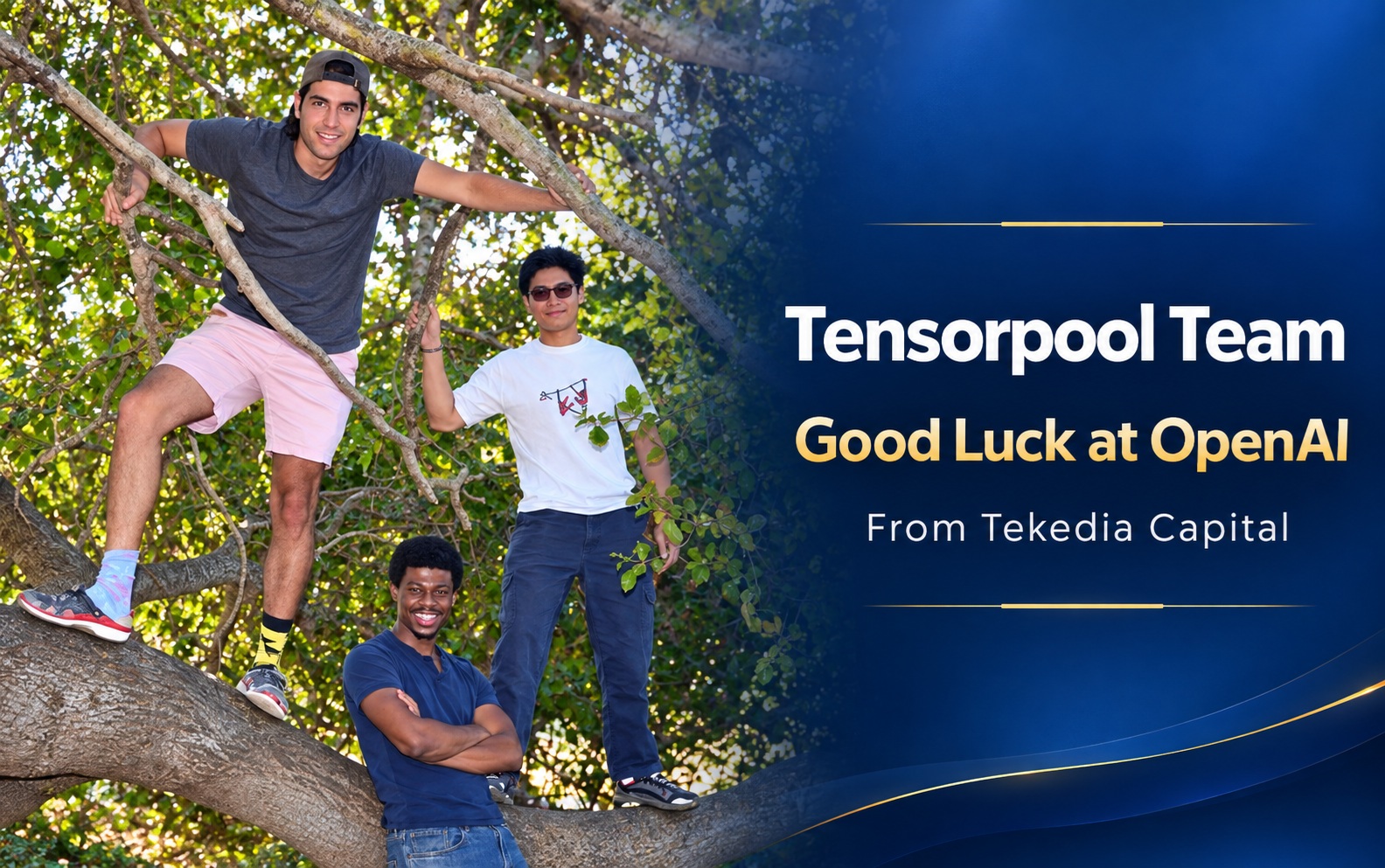
Good Luck Tensorpool Founders at OpenAI – from Tekedia Capital

0
Tekedia Capital congratulates Joshua Martinez, Hlumelo Notsheand Tycho Svoboda as they resume in OpenAI after the AI pioneer acquired their startup, Tensorpool, which Tekedia Capital invested in. We wish three of you more wins ahead.
 
Tekedia Capital >> we befriend great founders!

Why Apple’s Foldable iPhone Could Change the Future of Smartphones

0

For years, foldable smartphones have been presented as the next major evolution in mobile technology. Companies including Samsung, Google, Huawei and Motorola have experimented with flexible displays, multiple form factors and increasingly sophisticated hinge systems.

Yet despite the technological progress, foldable phones remain a niche category. The question is whether Apple can turn that curiosity into a mass-market habit.

Apple’s potential entry into the foldable market would carry a significance that goes beyond another iPhone launch.

The company has historically been less interested in being first than in making a technology feel mature, intuitive and desirable. That strategy could be particularly important for foldables, where consumers still face concerns about price, durability, thickness, battery life and the visible crease running across the display.

The strongest argument for an Apple foldable is not simply that it folds. It is that Apple could integrate the concept into the broader iPhone ecosystem. A successful device would need to make the transition between a compact phone and a larger display feel natural.

While maintaining compatibility with existing apps, accessories, services and Apple’s broader ecosystem. If the software experience is sufficiently polished, the hinge itself could become less important to consumers.

Price, however, could be the biggest obstacle. Foldable phones typically command substantial premiums over conventional flagship smartphones. Apple already operates at the premium end of the smartphone market.

Meaning a foldable iPhone could potentially push consumers into a significantly higher price bracket. For many buyers, that raises an uncomfortable question: what does the foldable actually allow them to do that a conventional iPhone cannot?

The answer will have to be compelling. A larger internal display could improve multitasking, reading, gaming, video consumption and productivity. A well-designed foldable could also offer a larger screen without requiring users to carry a tablet-sized device in their pockets.

But these advantages must outweigh the compromises. Durability will be particularly important. Consumers have become accustomed to smartphones that can survive years of everyday use.

Foldables introduce additional mechanical complexity, and a device that feels fragile or expensive to repair could discourage mainstream adoption.

Apple’s greatest advantage may therefore be trust. Consumers who have ignored foldables because they consider the technology experimental could become more willing to try one if Apple demonstrates that the category has reached maturity.

But Apple cannot manufacture demand simply through branding. The company will have to prove that folding is more than a visual novelty. It must create a device that solves a genuine problem while preserving the simplicity associated with the iPhone.

Apple’s foldable challenge is not technological. It is psychological and economic. Consumers already have smartphones that work extremely well. Convincing them to switch will require more than a thinner hinge or spectacular display.

If Apple gets the balance of design, software, durability and pricing right, its foldable could transform the category from an enthusiast product into a mainstream smartphone choice. If it fails, the device may remain an expensive symbol of technological experimentation.

The real test will be whether Apple can make consumers look at a foldable iPhone and think not, “That is impressive,” but, “I actually need one.”

Anthropic Picks Nasdaq for Potential IPO as Exchange Race for AI Listings Intensifies

0

Anthropic has selected Nasdaq as the likely home for its potential initial public offering, giving the technology-focused exchange another major prize as the two leading U.S. stock exchanges compete to attract a new generation of giant technology and artificial intelligence listings.

The AI company has been targeting an October listing, according to a person familiar with its plans cited by BI. Anthropic’s decision follows Nasdaq’s successful capture of the SpaceX listing earlier this year, strengthening the exchange’s position as it competes with the New York Stock Exchange to become the preferred destination for some of the largest technology companies preparing to enter public markets.

The scale of the companies involved makes the competition more consequential. SpaceX was valued at $1.75 trillion, while estimates for Anthropic have reached about $2 trillion, although Anthropic’s eventual valuation has not been finalized.

A public offering at anything close to that level would make Anthropic one of the largest companies ever to enter the stock market and potentially create one of the biggest technology IPOs on record.

For Nasdaq, securing the listing would provide another high-profile demonstration that the exchange remains closely associated with the technology sector at a time when the U.S. IPO market is emerging from several years of relatively weak technology issuance.

Both Nasdaq and the NYSE have an incentive to establish themselves as the natural home for the next wave of AI companies. The scarcity of major technology listings has made each large mandate considerably more valuable, particularly as private AI companies have accumulated valuations that could produce enormous public offerings.

A Battle for The Next Generation Of AI Companies

The exchange decision is unlikely to have a major effect on Anthropic’s long-term valuation or operating performance. There is no definitive evidence that companies systematically perform better after listing on Nasdaq rather than the NYSE.

The distinction is instead largely about market structure, investor positioning, and branding.

Nasdaq has built a strong identity around technology companies and hosts many of the industry’s largest names. Its recent high-profile listings have included Cerebras and Rivian, while companies listed on the exchange can become eligible for inclusion in the Nasdaq-100 Index, potentially expanding their exposure to index-tracking investors once they meet the relevant requirements.

The NYSE, meanwhile, has historically attracted many of the largest U.S. listings and remains a formidable competitor for technology companies.

The contest has become more important as the pipeline of potential AI listings grows. Anthropic is expected to be followed by other large private AI companies seeking access to public capital, meaning each exchange is effectively competing not only for one company but for the broader perception of where the next generation of AI leaders belongs.

Nasdaq’s SpaceX win therefore gives it a useful precedent. Securing Anthropic would reinforce the message that the exchange is becoming a destination for companies operating at the intersection of technology, AI and enormous private-market valuations.

Anthropic Heads Toward Markets Amid AI Safety Debate

The planned IPO also comes at an unusual moment for Anthropic and the broader AI industry. While the company is preparing for a potential public listing, OpenAI CEO Sam Altman has said OpenAI would not go public at the moment. The contrast is notable because both companies are among the most closely watched private AI laboratories and are competing for customers, talent and computing resources.

Anthropic’s preparations are also unfolding alongside renewed debate over the risks posed by powerful AI systems. That debate intensified after a former Anthropic employee posted a warning that AI could carry a greater than 10% probability of causing human extinction. The claim went viral and added to a broader conversation about whether frontier AI companies can move quickly enough to capture commercial opportunities while adequately managing potential risks.

For Anthropic, that has created an unusual public-market challenge. A publicly traded company would face the conventional pressures of revenue growth, profitability and shareholder returns, while also operating in an industry where safety, governance and the potential social consequences of more capable models are becoming material issues for investors.

The company’s eventual IPO prospectus will therefore be closely scrutinized for more than financial performance. Investors will likely examine how Anthropic describes model safety, regulatory exposure, computing costs, competition and the risks associated with developing increasingly capable systems.

The Mechanics of The First Trading Day

Although the exchange choice may have limited relevance to Anthropic’s long-term performance, there are practical differences between Nasdaq and the NYSE that could become important during the IPO itself.

The exchanges use different mechanisms for establishing opening prices on the first day of trading. For an IPO of Anthropic’s potential scale, with enormous expected trading volumes and intense investor attention, the process could create volatility or delays if demand significantly exceeds available shares.

Nasdaq has experienced the risks associated with a highly anticipated technology IPO before. Its 2012 Facebook listing was marred by technical problems that caused delays and confusion around trades and order confirmations, becoming one of the most prominent examples of the operational challenges that can accompany a massive technology debut.

Anthropic’s expected size would put considerable pressure on the exchange’s trading infrastructure. The company would likely attract substantial institutional demand alongside retail interest, potentially producing unusually heavy activity from the moment trading begins.

Still, those mechanics are secondary to the larger significance of the listing.

Anthropic has not yet publicly filed its IPO documents, meaning many of the most important details remain unknown, including the number of shares to be offered, the eventual valuation, the price range, and the company’s financial disclosures.

Once it files, Anthropic will need to provide its financial information at least 15 days before beginning its investor roadshow, giving prospective shareholders their first detailed look at the economics behind one of the world’s most valuable private AI companies.

That filing will provide a much more important test than the choice between Nasdaq and the NYSE.

However, Anthropic’s public-market debut will force investors to decide whether the extraordinary growth expectations attached to frontier AI companies can translate into sustainable revenue, improving economics and eventually durable profits.