DD
MM
YYYY

PAGES

DD
MM
YYYY

spot_img

PAGES

Home Blog Page 3600

GlobalX filed an Amendment to its Bitcoin Spot ETF; BlackRock Says it Did not file for a Spot XRP ETF with SEC

0

GlobalX, a leading provider of exchange-traded funds (ETFs), has recently filed an amendment to its proposed Bitcoin Spot ETF with the U.S. Securities and Exchange Commission (SEC). The updated filing reveals some new details about how the fund would operate and what risks it would entail for investors.

According to the filing, the GlobalX Bitcoin Spot ETF would track the performance of the world’s largest cryptocurrency by market capitalization, based on the spot prices of various bitcoin platforms. The fund would not invest directly in bitcoin, but rather in a subsidiary that would hold bitcoin and transact with third-party custodians and service providers.

The filing also states that the fund would use a “fair value” methodology to determine the net asset value (NAV) of its shares, which would reflect the prevailing market prices of bitcoin across different platforms. The fund would also employ a “liquidity provider” to facilitate the creation and redemption of shares, as well as to provide liquidity in the secondary market.

The GlobalX Bitcoin Spot ETF is one of several bitcoin-related ETFs that are awaiting approval from the SEC, which has repeatedly delayed or rejected such proposals in the past. The SEC has expressed concerns about the potential for fraud, manipulation, and lack of transparency in the bitcoin market, as well as the adequacy of investor protection and regulatory oversight.

However, some analysts believe that the SEC may be more receptive to bitcoin spot ETFs than to bitcoin futures ETFs, which are based on derivatives contracts rather than actual bitcoins. Bitcoin spot ETFs may offer more direct exposure to the underlying asset, lower fees, and less counterparty risk than bitcoin futures ETFs.

The GlobalX Bitcoin Spot ETF is expected to trade on the NYSE Arca under the ticker symbol GBTC. The fund has not yet announced its launch date or expense ratio. Investors who are interested in gaining exposure to bitcoin through an ETF should carefully read the fund’s prospectus and understand the risks involved before investing.

BlackRock has not filed for a Spot XRP ETF

Contrary to some rumors circulating online, BlackRock, the world’s largest asset manager, has not applied for a Spot XRP exchange-traded fund (ETF) in the US, a spokesperson for the company told The Block.

The speculation started after a document filed with the Securities and Exchange Commission (SEC) on November 14, 2023, showed that BlackRock had requested to launch an ETF that would invest in bitcoin futures contracts. Some XRP enthusiasts interpreted this as a sign that BlackRock was also interested in launching a similar product for XRP, the native cryptocurrency of the Ripple network.

However, this is not the case, according to the spokesperson. “BlackRock has no plans to launch a Spot XRP ETF at this time,” they said in an email. “The document filed with the SEC only pertains to a bitcoin futures ETF, which is still subject to regulatory approval.”

A CF would allow investors to gain exposure to the price movements of XRP without having to buy or store the actual tokens. Such a product would require the SEC to approve the listing and trading of XRP on a regulated exchange, something that has not happened yet.

The SEC is currently in a legal battle with Ripple, the company behind XRP, over whether XRP is a security or not. The agency alleges that Ripple and its executives sold unregistered securities worth over $1.3 billion through an ongoing initial coin offering (ICO). Ripple denies the charges and argues that XRP is a currency, not a security.

The outcome of the case could have significant implications for the future of XRP and its ecosystem. If the SEC wins, Ripple could face hefty fines and restrictions on how it can distribute and use XRP. If Ripple wins, it could clear the way for more regulatory clarity and innovation in the XRP space.

Until then, however, investors who want to bet on XRP will have to do so through other means, such as buying the tokens directly from exchanges or brokers or using derivatives such as futures or options. A Spot XRP ETF remains a distant possibility for now.

Ford Motor Company is investing R5.2B into its South African Silverton Plant

0
[#Beginning of Shooting Data Section] Nikon D800 2020/12/10 11:45:53.50 Time Zone and Date: UTC-5, DST:ON Lossless Compressed RAW (14-bit) Image Size: L (7360 x 4912), FX Lens: VR 70-200mm f/2.8G Artist: Eric Perry Photo Copyright: 322012 Focal Length: 75mm Exposure Mode: Aperture Priority Metering: Matrix Shutter Speed: 1s Aperture: f/14 Exposure Comp.: +1.3EV Exposure Tuning: ISO Sensitivity: ISO 100 Optimize Image: White Balance: Color Temp. (3140K), 0, 0 Focus Mode: Manual AF-Area Mode: Single AF Fine Tune: OFF VR: OFF Long Exposure NR: OFF High ISO NR: ON (Normal) Color Mode: Color Space: Adobe RGB Tone Comp.: Hue Adjustment: Saturation: Sharpening: Active D-Lighting: OFF Vignette Control: OFF Auto Distortion Control: OFF Picture Control: [SD] STANDARD Base: [SD] STANDARD Quick Adjust: 0 Sharpening: 3 Contrast: 0 Brightness: 0 Saturation: 0 Hue: 0 Filter Effects: Toning: Map Datum: Dust Removal: 2014/11/28 22:06:46 Image Comment: Eric Perry [#End of Shooting Data Section]

Ford Motor Company has announced a major investment of R5.2 billion equivalent to $281.6M in today’s mid-market rates on its Silverton production plant in South Africa. This is part of the company’s strategy to expand its global manufacturing footprint and increase its market share in the region.

The investment will enable the plant to produce the new Ranger pickup truck, which is expected to launch in 2024, as well as other models for the local and export markets. The plant will also become more environmentally friendly, with a solar power system and a water recycling facility.

The investment will create 1,200 new jobs at the plant, as well as support thousands of indirect jobs in the supply chain and related industries. Ford Motor Company has been operating in South Africa since 1923 and has a long history of contributing to the country’s economic development and social welfare. The company is committed to providing high-quality products and services to its customers, as well as supporting the communities where it operates.

Some of the ways that Ford supports local communities are:

Providing education and training opportunities for its employees and their families, as well as for young people who aspire to join the automotive industry. Supporting local entrepreneurs and small businesses through its supplier development program, which helps them access finance, technology, and markets.

Investing in community development projects that address social issues such as health, education, safety, and environmental sustainability. Partnering with local NGOs and government agencies to implement initiatives that benefit the society at large.

The Silverton production plant is one of Ford Motor Company’s most advanced and efficient facilities in the world. It has a capacity of 200,000 vehicles per year and employs over 4,000 people. The plant produces vehicles for both the domestic and export markets, including Europe, the Middle East, and Africa. The plant is also home to Ford’s first-ever Ranger Raptor, a high-performance off-road vehicle that has been well received by customers and critics alike.

The new investment will further enhance the plant’s capabilities and competitiveness, as well as support Ford Motor Company’s vision of becoming a leader in smart mobility solutions. The company aims to deliver innovative products and services that meet the changing needs and preferences of its customers, while also reducing its environmental impact and improving its social responsibility.

The investment will also strengthen Ford Motor Company’s partnership with the South African government and other stakeholders, who have been supportive of the company’s growth and development in the country.

The partnership aims to expand Ford’s production capacity in South Africa, where it currently operates two plants that produce the Ranger pickup truck and the Everest SUV for domestic and export markets. The investment will also enable Ford to introduce new models, such as the Ranger Raptor and the Transit van, and to increase its local content and supplier base.

The partnership is not only beneficial for Ford and South Africa, but also for the broader region and the continent. South Africa is part of the African Continental Free Trade Area (AfCFTA), which covers 54 countries and 1.3 billion people. By investing in South Africa, Ford is positioning itself to take advantage of the growing demand for vehicles and mobility solutions in Africa, as well as to contribute to the integration and development of the African market.

The partnership also reflects Ford’s commitment to sustainability and social responsibility. Ford has pledged to achieve carbon neutrality by 2050 and to support the transition to electric vehicles. The investment in South Africa will help Ford to improve its energy efficiency, reduce its emissions, and increase its use of renewable energy sources. Moreover, Ford will work with the south African government and other stakeholders to support education, skills development, health care, and community empowerment initiatives.

Commerzbank Granted Crypto Custody License in Germany as Judge Rejects Binance-US and SEC’s requests

1

Germany’s fourth-largest bank, Commerzbank, has received a license from the German Federal Financial Supervisory Authority (BaFin) to offer crypto custody services to its clients. This is a significant milestone for the bank, which has been exploring the potential of blockchain technology and digital assets for several years.

Commerzbank is one of the first major banks in Germany to obtain such a license, which allows it to store and manage cryptocurrencies on behalf of its customers. The bank plans to launch its crypto custody service in 2024, after completing the necessary technical and regulatory preparations.

The bank’s CEO, Manfred Knof, said that the license reflects Commerzbank’s commitment to innovation and digital transformation. He added that the bank sees crypto assets as an important part of the future financial system and wants to provide its clients with access to this emerging asset class.

Commerzbank’s crypto custody service will target both institutional and retail investors who are interested in diversifying their portfolios with cryptocurrencies. The bank will offer a range of crypto products, such as Bitcoin, Ethereum, and stablecoins, as well as security tokens and other digital assets that comply with German law.

The bank will also leverage its expertise in blockchain technology to provide other value-added services, such as tokenization, smart contracts, and decentralized finance (DeFi). Commerzbank has been involved in several blockchain projects in the past, such as issuing a digital bond with Continental AG and Siemens AG and testing a blockchain-based payment system with Deutsche Bahn.

Commerzbank’s crypto custody license is a sign of the growing acceptance and adoption of cryptocurrencies in Germany and Europe. The bank joins other German financial institutions that have obtained similar licenses, such as Solaris Bank, Finoa, and Bankhaus von der Heydt. The bank also follows the footsteps of other global banks that have entered the crypto space, such as BNY Mellon, Standard Chartered, and DBS.

Judge rejects Binance-US and SEC’s request for privacy in Lawsuit.

A major development in the ongoing legal battle between Binance US and the Securities and Exchange Commission (SEC) has occurred, as a federal judge denied both parties’ requests to keep certain documents confidential. The judge ruled that the public interest in the case outweighs the privacy concerns of the parties involved.

The case stems from the SEC’s allegations that Binance US, a subsidiary of the global cryptocurrency exchange Binance, violated securities laws by offering unregistered digital asset securities to US investors. The SEC claims that Binance US failed to register its products as securities or seek an exemption from registration, and that it misled investors about the risks and rewards of investing in crypto.

Binance US denies the allegations and argues that its products are not securities, but rather commodities or currencies that are outside the SEC’s jurisdiction. Binance US also contends that it complied with all applicable laws and regulations, and that it provided adequate disclosures to its customers.

Both parties have filed motions for summary judgment, asking the court to rule in their favor without a trial. As part of the motions, they also submitted various documents as evidence, such as internal communications, financial records, marketing materials, and regulatory filings. However, they also asked the court to seal some of these documents, claiming that they contain sensitive or confidential information that could harm their business interests or privacy rights if disclosed to the public.

The judge, however, rejected their requests and ordered them to file redacted versions of the documents within 14 days. The judge stated that the parties failed to show a compelling reason to seal the documents, and that the public has a right to access them under the First Amendment and the common law. The judge also noted that the case involves matters of significant public interest and importance, such as the regulation of cryptocurrencies and the protection of investors.

The judge’s decision is a setback for both Binance US and the SEC, as it exposes their internal workings and strategies to public scrutiny. It also increases the pressure on them to reach a settlement or face a trial that could have far-reaching implications for the crypto industry.

Crypto Exchange Startup, Due Network, Expands to Nigeria to Enhance International Payments

0

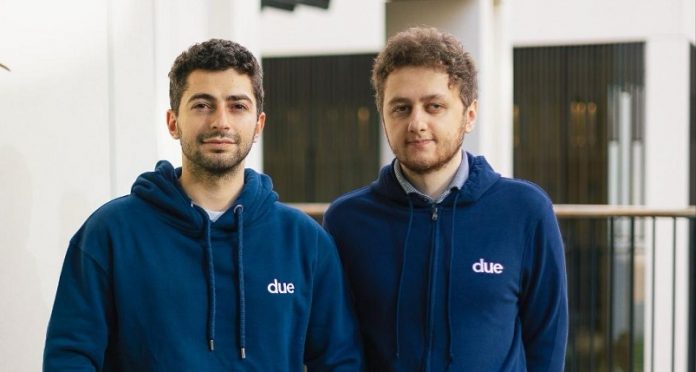
Due Network, a crypto payments startup that provides borderless accounts and cross-border payments through its decentralized non-custodial platform, has expanded its operations to Nigeria to enhance international payments.

The startup announced its launch in Nigeria with a vision to reshape and address the challenges with international payments through stablecoins and blockchain technology.

Due’s decision to enter the Nigerian market aligns with the Network’s mission to democratize access to digital assets and provide a reliable platform for users to navigate the complexities of international payments.

Powered by open and interoperable decentralized ledger protocols, Due will enable its Nigerian customers to use Naira to add/hold digital US Dollars and Euros in their accounts, which can be used to send/receive funds across Sub-Saharan Africa.

Also, the  network provides multi-currency accounts, global transfers/remittances, and merchant acquiring for businesses and individuals.

Speaking on Due’s launch in Nigeria, Co-founder/CEO Robert Sargsian said,

“We want to be a driving force in transforming how the global economy runs. Our vision is a future where money is truly global, permissionless, and inclusive. The global payments ecosystem is riddled with inefficiencies. Receiving funds from overseas, paying international vendors, or even moving intracompany funds across countries is expensive, slow, and hard to access. We are here to challenge that”.

Sargsian added that one of the outstanding features of Due Network is that it offers clients direct control over their assets, being a decentralized non-custodial platform.

This implies that Nigerian customers can maintain complete control and custody over their funds on the Due platform. No intermediaries, not even Due can access the client funds in any way, providing the account holders with direct and unobstructed access without any restrictions or dependencies.

Notably, Due recently announced its $3.3 million Seed round to further develop Due’s technology and expand its fiat currency connectivity to more markets. The network’s waitlist is now live with an initial launch slated for later this month, focused on key corridors connecting Sub-Saharan Africa, the UK, EA, and the US, with expansion into Latin America (e.g. Mexico, Brazil) and Asia-Pacific (e.g. Hong Kong, Singapore) scheduled for Q1 2024.

Established in 2022, Due is a London-based Fintech startup with a vision to reshape international payments through stablecoins and blockchain technology. The company provides multi-currency accounts, global transfers/remittances, and merchant acquiring for businesses and individuals.

With the Due Platform, users can open borderless accounts in a matter of minutes and make/receive payments across 50+ markets using your preferred payment methods.

After onboarding onto Due, users can add money to their account, make and accept payments, send and receive international transfers, and manage all their funds all under one roof at a fraction of the costs of traditional solutions.

By establishing a presence in Nigeria, Due Network aims to contribute to the financial inclusion initiatives within the country, empowering individuals and businesses to overcome traditional banking limitations.

Microsoft Rebrands Bing Chat to Copilot in A Move Towards ChatGPT Rivalry

0

Less than a year after Microsoft’s ambitious foray into the realm of artificial intelligence with Bing Chat, the tech giant has announced a major rebranding effort. The familiar Bing Chat interface integrated into Bing search results, Microsoft Edge, and Windows 11 is being rebranded as Copilot, according to a recent report by TheVerge.

The decision to shift away from the Bing Chat branding comes on the heels of OpenAI’s revelation that a staggering 100 million people are engaging with ChatGPT on a weekly basis. While Microsoft initially positioned its AI efforts as a response to Google’s dominance in search, it appears the company is now setting its sights on the success of ChatGPT.

Colette Stallbaumer, General Manager of Microsoft 365, clarifies the shift, stating, “Bing Chat and Bing Chat Enterprise will now simply become Copilot.”

The move follows Microsoft’s earlier decision to adopt the Copilot name for its chatbot within Windows 11. Microsoft is evidently keen on establishing Copilot as the go-to option for both consumers and businesses in the competitive AI assistant market.

With the rebranding, Copilot is presented as the free version of Microsoft’s AI chatbot, with Copilot for Microsoft 365 (previously Microsoft 365 Copilot) designated as the paid option. The free Copilot service will continue to be accessible in Bing and Windows, now also having its dedicated domain at copilot.microsoft.com, mirroring the structure of ChatGPT.

For user access, business accounts will log into Copilot with an Entra ID, while consumers will require a Microsoft Account. Currently, Microsoft Copilot is officially supported only on Microsoft Edge or Chrome, and on Windows or macOS.

Microsoft initially introduced Bing Chat earlier this year, describing it as an “AI-powered copilot for the web.” Since then, the Copilot branding has been applied to various AI initiatives, with GitHub initially using the name last year.

This rebranding marks a departure from Bing as the main entry point for Microsoft’s AI endeavors. Nevertheless, Microsoft insists that Bing remains an integral part of Copilot.

“Bing remains a prominent brand and technology powering many Copilot experiences while continuing to be a leader in the search industry,” Caitlin Roulston, Director of Communications at Microsoft, said in a statement to The Verge.

The move away from Bing raises questions about the success of Microsoft’s initial push for AI search. Satya Nadella, Microsoft’s CEO, had previously expressed a desire to make Google “dance,” characterizing the search giant as an “800-pound gorilla.”

However, nearly 10 months after the Bing Chat launch, Google still maintains over 91 percent market share, as reported by StatCounter. The evolution of Copilot and its competition with ChatGPT could reshape Microsoft’s position in the AI landscape in the coming months.