DD
MM
YYYY

PAGES

DD
MM
YYYY

spot_img

PAGES

Home Blog Page 3657

Drawing Parallel with Saudi Arabia on economic diversification, as non-oil sector contributes 95.30% to Nigeria’s GDP

0

Recent data from the Nigeria Bureau of Statistics underlines the urgent need for economic diversification, as the contribution of the non-oil sector to GDP experienced a slight decrease, albeit with positive growth.

The non-oil sector contributed approximately 95.30% to Nigeria’s GDP in the last three months of the year. Key industries such as finance, telecommunications, agriculture, trade, construction, manufacturing, and real estate have been instrumental in driving this growth.

The percentage falls below the 95.66% recorded in the fourth quarter of 2022 but exceeds the 94.52% noted in the third quarter of 2023.

During the quarter in review, the non-oil sector witnessed a growth of 3.07% in real terms. Although this growth rate was 1.37% points lower than that observed in the same quarter of 2022, it was 0.32% points higher than the growth recorded in the third quarter of 2023.

On an annual basis, the growth rate of the non-oil sector for 2023 stood at 3.04%, marking a decrease from the 4.84% growth rate observed in 2022.

Drawing parallel with the economic diversification push of Saudi Arabia

Nigeria, endowed with vast natural resources, has long relied heavily on its oil sector, a dependency that poses significant risks to its economic stability.

Drawing parallels with Saudi Arabia, another oil-dependent nation, provides valuable insights into the imperative for diversification. Saudi Arabia, recognizing the vulnerabilities associated with oil dependency, began the ambitious Vision 2030 initiative to reduce reliance on oil revenues. This initiative aims to foster growth in non-oil sectors such as tourism, entertainment, technology, and renewable energy.

For instance, Saudi Arabia has invested heavily in developing its tourism industry, promoting historical and cultural sites, and hosting international events like the Formula 1 Grand Prix. Additionally, the kingdom has made significant strides in advancing renewable energy projects, aiming to generate 50% of its energy from renewable sources by 2030.

In Nigeria, the informal sector plays a crucial role in employment, with a significant portion of the population engaged in self-employment. However, challenges such as low taxation, weak regulatory frameworks, unfair competition, and disregard for standards hinder its full potential. Despite these challenges, the informal sector remains a vital component of the economy, reflecting the structure dominated by micro, small, and medium-sized enterprises (MSMEs).

Addressing taxation and revenue generation has been advocated as pivotal for Nigeria’s economic diversification efforts. Economists said with a low tax-to-GDP ratio, currently at 10%, there is a pressing need for comprehensive tax reforms to increase revenue streams.

The government constituted a committee for tax reforms last year, signaling its intent to bridge the tax-to-GDP ratio gap. The government’s aim to raise this ratio to 18% within the next three years aligns with broader efforts to reduce dependence on oil revenues.

But economists have also called for diversification beyond taxation, touting technology and agriculture as untapped alternative sources of revenue for Nigeria.

By diversifying its economy with a focus on tech and renewable energy, the oil-rich Saudi kingdom is setting the pace. The kingdom’s diversification endeavors offer valuable lessons for Nigeria.

Economists said that by prioritizing investment in non-oil sectors, enhancing regulatory frameworks, promoting entrepreneurship, and fostering innovation, Nigeria can mitigate the risks associated with oil dependency and stimulate sustainable economic growth. However, they noted that achieving these goals requires decisive action, strong leadership, and collaboration between the public and private sectors.

Nigeria stands at a critical juncture where economic diversification is imperative for long-term prosperity and resilience. It is believed that by learning from Saudi Arabia’s experiences, the African giant can chart a path towards a more diversified and sustainable economy, reducing vulnerability to oil price fluctuations and fostering inclusive growth for its citizens.
Egypt Secures Monumental $35 Billion Investment Deal with UAE As Nigeria Waits On

0
Fund, money cash dollar

On Friday, Egypt made headlines with a groundbreaking $35 billion investment agreement with the United Arab Emirates (UAE) aimed at developing the Ras El Hikma peninsula.

This transformative deal signifies a new chapter of economic resurgence and foreign investment attraction for Egypt, potentially serving as a blueprint for Nigeria in its own forex and investment challenges.

According to Reuters, the deal struck with ADQ, one of Abu Dhabi’s prominent sovereign investment funds, is poised to inject $35 billion into Egypt’s economy over the next two months, with future projections soaring up to $150 billion.

The initiative intends to metamorphose the Ras El Hikma peninsula into a dynamic nexus of investment zones, residential complexes, commercial precincts, and tourism and leisure facilities, with groundbreaking slated to commence in 2025.

The announcement of this monumental pact has sparked fervent optimism in the markets, as evidenced by the surge in Egypt’s sovereign dollar bonds prior to the official disclosure. Notably, bonds with maturities extending beyond 2047 observed a surge of more than 3 cents in the dollar, marking their highest trading level in about a year, as per Tradeweb data.

The strategic location of Ras al-Hikma, approximately 200 km west of Alexandria, already renowned for its upscale tourist resorts and pristine beaches, positions it as an ideal candidate for this ambitious development endeavor.

However, beyond its immediate economic ramifications, this deal represents a significant stride for Egypt in its protracted battle against a lingering economic crisis characterized by a chronic foreign currency deficit, escalating debt burden, and sustained pressure on the Egyptian pound.

Despite these challenges, Egypt’s commitment to economic stability and growth has been described as steadfast. The country’s engagement with the International Monetary Fund (IMF) for a $3 billion financial support package and its proactive adoption of economic reforms, including transitioning towards a flexible exchange rate regime, attest to its resolute approach to addressing economic hurdles.

This landmark development draws parallels with Nigeria, the largest economy in Africa, and its economic aspirations. Last September, following President Bola Tinubu’s visit to the UAE, the Nigerian government announced the establishment of a comprehensive framework with the UAE, entailing investments worth billions of U.S. dollars across multiple sectors, including defense and agriculture, by the UAE government’s investment arms.

However, five months on, Nigerians await the fruition of these agreements, including the lifting of visa bans on Nigerians. This delay has been attributed to lingering investor skepticism and waning confidence in Nigeria, despite its shared economic realities, such as high inflation and forex shortages, with Egypt.

The Photos you Paid your Photographer to Snap You do not Belong to You; they Belong to the Photographer

0

Intellectual property (IP) rights law is quite interesting and most times controversial: An intending husband and wife hire a photographer and pay the photographer handsomely to come and cover their wedding. By common sense, the husband and wife are right to assume that since they have paid the photographer, every picture of theirs snapped by the photographer ought to legally belong to them. But no, that’s not what the law says; the law says that though you have paid the photographer, though it is your image that was snapped by the photographer, those pictures legally belong to the photographer and not the couple.

The same goes when a family invites a photographer to come to their house and snap them family photos for their family portrait, same goes when a parent(s) invites a photographer to come and capture the images of their infant. That your family portrait, that your child’s image captured by the photographer belongs to the photographer and not you or your child. In fact, by law, before you do anything with those wedding pictures or family portraits, you need to seek the consent of the photographer or else he has the right to commence an action against you for copyright infringement. 

Cases like these have gone to court and the courts have all agreed that the photographer owns the copyright of every picture taken by him with his camera even though he has been paid for the photos. The landmark case that must always be mentioned whenever image copyright in Nigeria is being discussed is the case of BANIRE V. NTA STAR TV (CA/A/345/2017).

In the above case, Ms Banire, a photographer/videographer brought legal action against NTA Star TV because NTA Star TV used her images for outdoor advertisements on billboards mounted all around Abeokuta and Akure without her consent and authorization. This, she claimed, amounted to infringement of her copyright on those images. NTA TV stars, on the other hand, raised the defence that they acquired and paid for those pictures, although through a third party, hence, they did not infringe on Ms Banire’s copyright to the images. 

On appeal, the appellate court held that the law has afore provided in Sections 10 and 51 of the Copyright Act, that it is that it is the photographer and not the person in the image that owns the copyright to the picture. His Lordship, Justice Muhammed Baba Idris (JCA), reiterated “What is evident from the above provision is that the person who is a muse or the person in the photograph is not in fact the author and therefore he/she does not own copyright in the photograph. Rather it is the person who took the photograph that is the author.”

The only time when a person who has been snapped or who pays for the photos can own the copyright in those images is when there has been a transfer of copyright ownership in writing from the photographer to the person or when the photographer signs a release form, releasing the intellectual properties in those images to the person. 

Creating and Executing Strong Business Vision – Tekedia Live Tomorrow

0

What is your business Vision? And how does that Vision drive the Mission to it? It is easier to assemble the best to accomplish challenging tasks than to pursue something boring.

Indeed, you can recruit more talented people for a journey to the moon, than to go and dig a ground, because going to the moon is more challenging, and also more exciting. Think about it: nearly every kid will like to work for NASA over one tunnel-boring company because NASA inspires.

In this lecture, I will explain how crafting a winning Vision can help you to attract and retain the best, and in that process, you can win the market. Aspirational vision with a purpose built into it will activate all the necessary factors of production, from capital to labour, and beyond, at scale.

“I want to organize the world’s information” is more inspiring than “I am building a website to store data”. I want “to build a digital human community for all people in the world” is better than “I am creating a website where people share photos and videos”.

What is your business vision? How can you create a great one? Join me tomorrow at Tekedia Mini-MBA Live as I teach on “Creating and Executing Strong Business Vision”.

BlockDAG Becomes a Global Phenomenon with Its Batch 2 Yielding 50% Profit, Steals the Spotlight From Polkadot and TRON

0

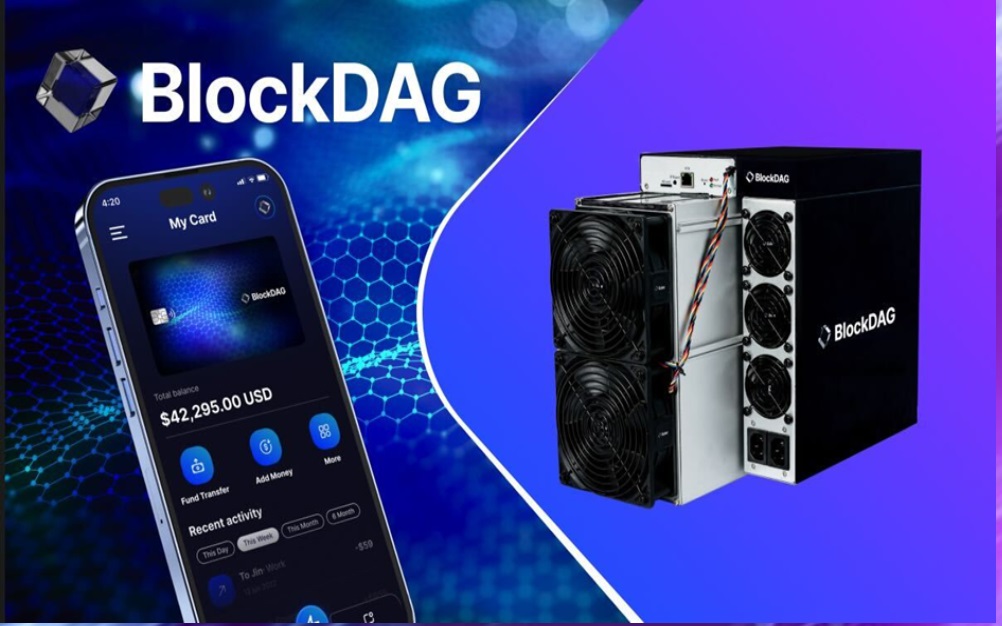
The crypto world is quite unpredictable with swift price changes. These price changes coincide with different events in the crypto industry. While there is a surge in Polkadot’s (DOT) price, TRON’s (TRX) future appears to be uncertain. In addition to these events, BlockDAG (BDAG) reached the milestone of raising $1 million in 24 hours. Following this achievement, the presale quickly progressed to batch 2, giving early contributors a 50% ROI on their initial investment. The BDAG team has confirmed the successful raise of $1.5 million in its ongoing second batch so far.

Polkadot (DOT) Prices Jump Over 6%

Analysts anticipate further growth as Polkadot jumped by over 6% in the last seven days. This comes as the Polkadot ecosystem’s circulating liquidity increased, following the announcement that over 766,000 DOT had been liquid-staked on Bifrost. At the same time, Code4rena and Polkadot Assuance Legion joined forces to strengthen security.

The partnership pushed the DOT price to climb as high as $7.27 before stabilising at around $7. This means DOT has gained 6.30% in a week. On top of that, DOT is predicted to gain more adoption while Code4rena and Polkadot Assurance Legion improve Polkadot’s security. 

TRON’s (TRX) Future in Ambiguity

TRON Network (TRX) stands out as a promising coin with immense potential. The coin gained attention lately when it passed the $0.10 threshold, a development that has prompted a flurry of conversations among analysts and investors alike. However, the network has faced a strong pushback, raising questions about its future growth. In light of this pivotal point, ambiguity prevails whether TRON is doomed to crash.

The blockchain platform is currently struggling at a resistance price of $0.118, this is not just a number. It depicts a huge psychological and market hurdle that needs to be passed for TRON to sustain its bullish momentum.

Even with all current obstacles, TRON is still a very promising project. Due to the high transaction throughput that its blockchain is intended to accommodate decentralised applications (dApps), find it to be a compelling platform. Moreover, TRON is a notable project in the crypto world due to its dedication to building a decentralised network and its ongoing efforts to improve scalability and user experience.

BlockDAG Emerges As A Strong Contender 

BlockDAG (BDAG) emerges as a standout contender with its organised presale strategy consisting of 45 batches, giving all users an equal opportunity to participate and maximise their gains. Starting price for batch 1 of BDAG was $0.0010, and progressing to the subsequent batches, the final launch price will be $0.05. This is a 5000% ROI.

Currently in batch 2 of its presale, each BDAG coin is priced at $0.0015 which means that the investors who purchased the coin at $0.0010, ended up getting 50% ROI within days of investment. Based on this high ROI potential, BlockDAG appears to be the next chapter in the crypto narrative.

In contrast to other proof-of-work (PoW) blockchains like Bitcoin and Kaspa, BlockDAG introduces its presale, allowing users to capitalise on early-batch opportunities. Investors can participate in its ongoing presale to avail nearly 5000% ROI by the end of this year!

In a world where cryptocurrencies have become a common mode of transactions, the most dynamic ones have forged their identities through their continuous efforts and constant updates. On that note, BlockDAG proves that it is here to stay!

The initial stages of crypto projects have proved pivotal, playing an important role in shaping the industry. BlockDAG batch 1 presale gathered $1 million within a day and has successfully entered its batch 2 and has quickly raised $1.5 million. While presale investments may not be the norm, the allure of attractive benefits down the road cannot be ignored. Presales provide a unique opportunity to experience and anticipate upcoming developments from mining to trading. The evolution of rewards in the market mirrors the dynamic and competitive nature of the crypto world.


Join BlockDAG Presale:

Website: https://blockdag.network

Presale: https://purchase.blockdag.network

Telegram: https://t.me/blockDAGnetworkOfficial

Discord: https://discord.gg/Q7BxghMVyu