DD
MM
YYYY

PAGES

DD
MM
YYYY

spot_img

PAGES

Home Blog Page 3672

Global Investment in Fintech Plunged by 42% in 2023 – KPMG

0

A recent KPMG report has revealed that the global investment in Fintech plunged to a five-year low of $113.7 billion in 2023.

This reveals a 42% decline from the $196.3 billion reported in 2022, representing the weakest result since 2017.

The number of funding deals also considerably shrank, with capital being spread across a total of 3,973 deals compared to 6,397 deals seen in 2022.

According to the report, high inflation rate, high-interest rates, and geopolitical tension, coupled with declining valuations, have forced investors to tighten their purses and have deterred their confidence from pumping money into the fintech sector.

The US retains the top spot for the most fintech funding received by a huge margin, bringing in $24 billion across 1,530 deals, followed by the UK in second place at $5.1 billion and India in third with $2.5 billion. The UK’s $5.1 billion worth of funding in 2023 was spread across 409 deals, compared to $14.6 billion across 592 deals the previous year, reflecting a 65% drop from 2022.

India occupied the third position, with the country seeing fintech investment worth $2.5 billion last year, while Singapore was fourth with $2.2 billion of funding, and China fifth with $1.8 billion. The value of the top five biggest deals globally in 2023 was over $9 billion, or about 18% of total global investment in the space.

On the other hand, the Asia-Pacific region experienced the steepest decline, with investment plunging from $51.3 billion in 2022 to $10.8 billion. Europe, the Middle East, and Africa (EMEA) also experienced a steep drop, from $49.6 billion to $24.5 billion. Investment in the Americas region showed resilience but still dropped from $95.4 billion to $78.3 billion.

Global venture capital investment slumped, year-on-year from $88.8 billion to $46.3 billion, and between the first and second half of 2023 ($27.5 billion to $18.8 billion).

Property technology and insurance technology were the only major fintech areas to experience a year-on-year increase in investment. Proptech rose from $4.1 billion to $13.4 billion, and insurtech grew from $5.9 billion to $8.1 billion. The report also found that seed and early-stage fintech funding reached record highs in terms of deal count, indicating sustained investor interest in testing new business models.

Looking ahead, investment is expected to remain low in the initial months of 2024, with a potential rebound later in the year amid expected interest rate decreases. The report also emphasized the likelihood of increased merger and acquisition activity, because investors may seek to capitalize on deeply discounted, distressed assets.

The analysis by KPMG concluded that a shift towards profitable and sustainable business models would be crucial for fintech companies to thrive in the long term.
Nigerian lawmakers introduce bill to move government back to parliamentary system

0

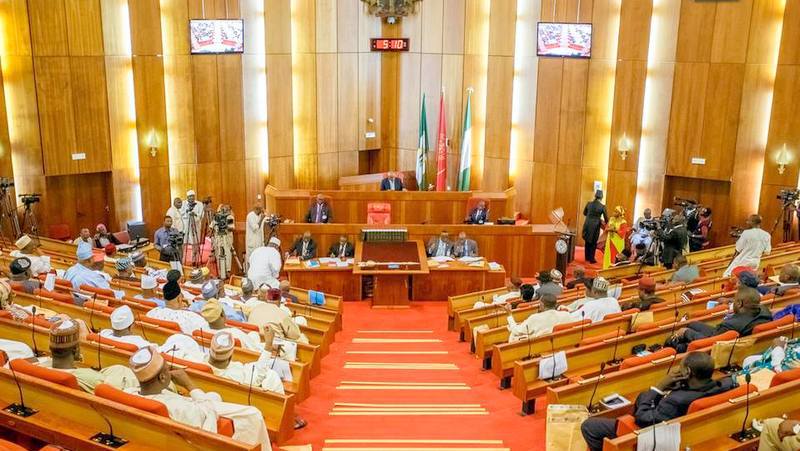
The House of Representatives has taken a significant stride towards the overhaul of Nigeria’s governmental structure, as a group of 60 lawmakers push for a transition from the current presidential system to a parliamentary one, reminiscent of Nigeria’s First Republic.

Led by the Parliamentary Group, the lawmakers introduced three constitution alteration bills during Wednesday’s plenary session. These bills, titled ‘Constitution of the Federal Republic of Nigeria, 1999 (Alteration) Bill, 2024’ (HB.1115, HB.1116, and HB.1117), mark a pivotal moment in Nigerian political discourse, setting the stage for a potential shift to a parliamentary system by 2031.

Briefing journalists on the bill sponsored by the Minority Leader, Kingsley Chinda (PDP, Rivers), Abdulsamad Dasuki, the spokesperson for the Parliamentary Group, elucidated the rationale behind the proposed transition, citing concerns over the exorbitant costs associated with the presidential system and the concentration of power in the hands of the executive.

“No wonder the Nigerian President appears to be one of the most powerful Presidents in the world,” Dasuki said.

“Over the years, the imperfections of the Presidential System of Government have become glaring to all, despite several alterations to the constitution to address the shortcomings of a system that has denied the nation the opportunity to attain its full potential.

“Among these imperfections are the high cost of governance, leaving fewer resources for crucial areas like infrastructure, education, and healthcare, and consequently hindering the nation’s development progress, and the excessive powers vested in the members of the executive, who are appointees and not directly accountable to the people,” he said.

The proponents of the parliamentary system argue that its reinstatement would foster accountability, responsibility, and responsiveness in governance, thereby curbing excessive expenditure and enhancing development initiatives in critical sectors such as infrastructure, education, and healthcare.

The proposed parliamentary system bears resemblance to Nigeria’s governance structure during the First Republic, characterized by a prime minister as the head of government. In contrast to the presidential system, where the executive branch operates independently of the legislature, the parliamentary model intertwines the executive and legislative branches, promoting closer collaboration and expeditious decision-making.

Nevertheless, skepticism abounds regarding the feasibility and efficacy of this transition. Critics point to historical precedents, highlighting how the parliamentary system contributed to political polarization during the First Republic, ultimately paving the way for military intervention. The concern persists that without sufficient safeguards, a return to parliamentary governance may reignite divisions within Nigerian society.

Furthermore, the timing of the proposed legislation raises eyebrows, with some viewing it through the lens of political expediency. The proposed transition coincides with the end of President Bola Tinubu’s constitutionally mandated tenure in 2031, prompting speculation about ulterior motives driving the lawmakers’ agenda.

It is noteworthy that the proponents of this transition encompass members from both the ruling All Progressives Congress (APC) and the main opposition Peoples Democratic Party (PDP), indicating a cross-party consensus on the need for systemic reform.

As the debate surrounding Nigeria’s governance structure intensifies, it becomes imperative to weigh the potential benefits of transitioning to a parliamentary system against the inherent risks and challenges. While proponents advocate for enhanced accountability and efficiency, detractors caution against repeating past mistakes and exacerbating political divisions.

Ultimately, the efficacy of any governmental system lies not solely in its structure but in the integrity, competence, and commitment of its leaders.

Good leadership advocates said that addressing Nigeria’s leadership deficit necessitates comprehensive reforms beyond mere structural changes, focusing on institutional strengthening, anti-corruption measures, and inclusive governance practices. Only through concerted efforts to cultivate a culture of transparency, meritocracy, and civic engagement can Nigeria realize its full potential and overcome its persistent challenges in governance.

Dasuki said the group is seeking to ignite a conversation about the lack of effectiveness of the current presidential system.

“The bills presented today seek a return to the system of government adopted by our founders, which made governance accountable, responsible, and responsive, and ultimately less expensive,” he said.

Comments from our Tekedia Mini-MBA co-learners

1

In the next coming weeks, we will be welcoming 7,000 final year students from many universities through multiple partnerships we’ve developed with some schools. These schools have prepared the students at the highest levels. Yet, there is something unique about Tekedia Institute: we engineer new perspectives which lead to better career advancements and business growths.

(If you want your final year students to spend 3 months with us before they graduate into our amazing world, please connect with Eyitayo Adeleke,.)

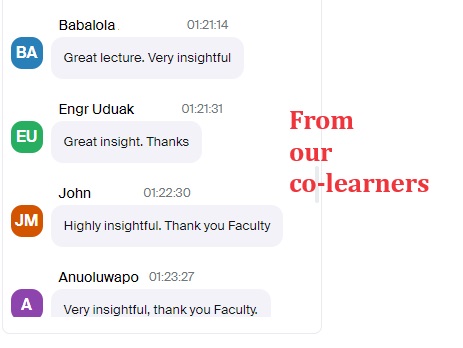
Tekedia Institute shapes and reshapes the business worldview of our co-learners. We put a lot of effort into delivering great programs. I read all comments and feedback after all sessions; here are samples from today’s lecture.

Tekedia Mini-MBA >> our mission is Your Success.

Tekedia AI Lecture Companion powers The Great Lectures

0

While in Nigeria during Christmas, I noticed that our academic programs in Tekedia Institute could be given new distribution channels to help more people. Simply, the cost of data to watch a 60-minute video is a burden in Nigeria for many. A Tekedia Mini-MBA edition has more than 150 hours of video! So, I started thinking about how to fix that friction. I decided to tap into the powers of artificial intelligence (AI) to assist.

Upon return to the United States, I set up environments to build an AI model which could understand me, beyond just a mere translation, but with “memory” to understand my business viewpoint. Good People, I souped dozens of previous videos, and after two weeks of training, the outcome is Tekedia AI.

Tekedia AI understands me. If I speak for two hours, it can understand, transcribe and summarize, with 98% accuracy, within context because after hours of videos, it knows me. Last week, after a class, I uploaded our video, injected it into Tekedia AI, and within minutes, a summary came out. We shared it with our co-learners and amazingly, after days, no one complained. So, we got it right.

Tekedia AI Lecture Companion will anchor our newly launched Tekedia WhatsApp School, enabling us to summarize video/audio sessions besides written courseware. With it, I can deliver a video-, audio-based class for hours, and send the summary to people via WhatsApp. They can always go back to the videos.  

Register for The Great Lectures from Tekedia WhatsApp School which begins April 1, and experience how tech is accelerating impactful learning.

Tekedia WhatsApp School Launches “The Great Lectures”; Register for Maiden Edition, Starting April 1

It’s Time, Nigerian Leaders Must Lead to Avert Catastrophe

1

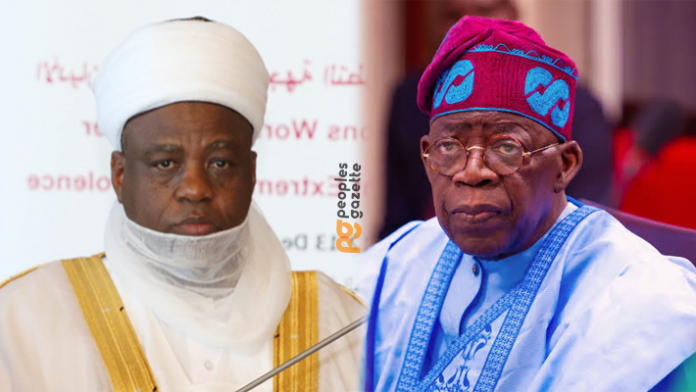
“It is getting to a level that traditional leaders could no longer pacify the people from revolting against government and political leaders that are supposed to find solutions to their lingering socio-economic plight…We have reached that level, people are very agitated, people are hungry, they are angry, but they still believe there are people who can talk to them, they believe in some of their Governors, some other traditional rulers and some  of their religious leaders, fortunately some of us double as traditional and religious leaders.”- Sultan of Sokoto, Muhammad Sa’ad Abubakar-led Northern Traditional Council

Nigerian leaders (economic, political, religious, etc) must wake up. Yet, I do posit that there is even “no hunger” in Nigeria at the moment. At least farmers farmed last year before the current acceleration of insecurity. Largely, no farming is going on in Benue (the food basket of the nation), Nassarawa, etc right now. By November this year, Nigeria will experience severe economic turbulence since the harvest will be so low that  food prices will hit new records, if our leaders FAIL to lead.

More so, the increase in fuel price and FX paralysis have made many farmers poorer to the extent many cannot afford farm inputs. So, we have a double whammy and many of these issues are own-goals scored by Nigeria against itself.

Our leaders should not trivialize Nigeria’s current trajectory and even protests will not change anything. I hope Mr. President can call a global press conference for two hours, and explain in his own words what he plans to do, to change the current path.  It is that moment to lead, for those who sought for the job. The 11am phone is ringing – and Nigeria waits for answers.