DD
MM
YYYY

PAGES

DD
MM
YYYY

spot_img

PAGES

Home Blog Page 3736

First Live Transaction on Collateral Settlement conducted between JPMorgan, BlackRock and Barclays

0

JPMorgan, one of the largest banks in the world, has announced that it has successfully completed the first live transaction using its blockchain-based collateral settlement platform, called Collateral Central. The platform aims to streamline and automate the process of moving and managing collateral across multiple clearing houses, custodians, and counterparties.

Collateral Central is a platform that connects borrowers and lenders in a decentralized and transparent way. It allows borrowers to use their crypto assets as collateral to get loans in stablecoins, and lenders to earn interest by supplying liquidity to the platform.

Collateral is an asset or a guarantee that is pledged by a borrower to secure a loan or a derivative contract. It serves as a protection for the lender or the other party in case of default or non-performance. Collateral management is a complex and costly process that involves multiple parties, systems, and jurisdictions. It requires constant monitoring, reconciliation, and optimization of the collateral positions to ensure that they meet the regulatory and contractual requirements.

JPMorgan’s Collateral Central platform leverages blockchain technology to create a shared ledger that records and tracks the collateral movements and balances in real-time. It also enables smart contracts that automate the calculation and execution of margin calls, collateral substitutions, and interest payments. The platform reduces operational risks, errors, and delays, while increasing transparency, efficiency, and liquidity.

The first live transaction on Collateral Central was conducted between JPMorgan, BlackRock and Barclays, two of the leading participants in the global derivatives market. The transaction involved a bilateral repurchase agreement (repo), which is a short-term loan secured by collateral. The platform facilitated the exchange of U.S. Treasury bonds as collateral between the two banks, as well as the settlement of interest payments.

JPMorgan said that the transaction demonstrated the potential of blockchain technology to transform the collateral management industry, which is estimated to handle over $10 trillion worth of assets globally. The bank also said that it plans to onboard more clients and partners to Collateral Central in the coming months, as well as to expand its capabilities and features.

The first step to use Collateral Central is to create a wallet that supports the platform, such as MetaMask or Trust Wallet. Then, you need to deposit some crypto assets to your wallet, such as ETH, BTC, or any ERC-20 token. These assets will serve as your collateral when you want to borrow stablecoins from the platform.

The next step is to connect your wallet to the Collateral Central website and choose the amount and type of stablecoin you want to borrow. The platform will automatically calculate the interest rate and the collateral ratio for your loan. The interest rate is determined by the supply and demand of each stablecoin on the platform, and the collateral ratio is the percentage of collateral value over loan value. For example, if you want to borrow 100 USDC with a collateral ratio of 150%, you need to deposit 150 USDC worth of crypto assets as collateral.

The platform will then lock your collateral in a smart contract and send you the stablecoins to your wallet. You can use the stablecoins for any purpose, such as paying bills, trading, or investing. You can also repay your loan at any time by sending back the stablecoins plus interest to the platform. The platform will then unlock your collateral and return it to your wallet.

If you are a lender, you can also use Collateral Central to earn passive income by supplying liquidity to the platform. You just need to deposit some stablecoins to your wallet and connect it to the Collateral Central website. Then, you can choose which stablecoin pool you want to join and how much you want to deposit. The platform will then send your stablecoins to a smart contract and start accruing interest based on the borrowing demand of each stablecoin.

You can withdraw your stablecoins plus interest at any time by sending a request to the platform. The platform will then send your stablecoins back to your wallet from the smart contract.

Collateral Central is a platform that aims to provide a simple and secure way for crypto users to access liquidity without selling their assets. It also offers an opportunity for stablecoin holders to earn interest by lending their coins to the platform. By using smart contracts and blockchain technology, Collateral Central ensures that all transactions are transparent and trustless, and that users have full control over their funds.

JPMorgan is not the only bank that is exploring the use of blockchain technology for collateral management. In 2019, Deutsche Bank and Commerzbank completed a pilot project using distributed ledger technology (DLT) to automate the settlement of securities lending transactions. In 2020, BNP Paribas and Credit Suisse executed a live cross-border collateral swap using DLT. These initiatives show that blockchain technology has the potential to revolutionize the way financial institutions manage their collateral and optimize their capital.

IMF World Economic Outlook predicts soft landing as fears of widespread Recession Fades

0

The International Monetary Fund (IMF) has released its latest World Economic Outlook report, which forecasts a moderate slowdown in global economic activity in 2023. The report projects that the world economy will grow by 3% this year, down from 3.6% in 2022, but still above the historical average of 2.8%. The IMF attributes the deceleration to the fading effects of fiscal stimulus, supply chain disruptions, and persistent inflation pressures in some countries.

Emerging market and developing economies are projected to have a modest decline in growth from 4.1 percent in 2022 to 4.0 percent in both 2023 and 2024. Global inflation is forecast to decline steadily, from 8.7 percent in 2022 to 6.9 percent in 2023 and 5.8 percent in 2024, due to tighter monetary policy aided by lower international commodity prices. Core inflation is generally projected to decline more gradually, and inflation is not expected to return to target until 2025 in most cases.

Monetary policy actions and frameworks are key at the current juncture to keep inflation expectations anchored. Chapter 2 documents recent trends in inflation expectations at near- and medium-term horizons and across agents. It emphasizes the complementary role of monetary policy frameworks, including communication strategies, in helping achieve disinflation at a lower cost to output through managing agents’ inflation expectations. Given increasing concerns about geoeconomic fragmentation, Chapter 3 assesses how disruptions to global trade in commodities can affect commodity prices, economic activity, and the green energy transition.

Risks to the outlook are more balanced than they were six months ago, on account of the resolution of US debt ceiling tensions and Swiss and US authorities’ having acted decisively to contain financial turbulence. The likelihood of a hard landing has receded, but the balance of risks to global growth remains tilted to the downside. China’s property sector crisis could deepen, with global spillovers, particularly for commodity exporters.

Amid rising debt service costs, more than half of low-income developing countries are in or at high risk of debt distress. There is little margin for error on the policy front. Central banks need to restore price stability while using policy tools to relieve potential financial stress when needed.

However, the report also highlights some positive developments, such as the widespread availability of vaccines, the resilience of consumer spending, and the recovery of trade and investment. The IMF expects that these factors will help prevent a sharp downturn or a prolonged stagnation in the global economy.

The report also analyzes the risks and challenges facing the global economic outlook, such as the uncertainty surrounding the evolution of the COVID-19 pandemic, the divergence in policy responses and economic performance across regions, and the potential spillovers from financial market volatility and geopolitical tensions.

The IMF urges policymakers to adopt a balanced and coordinated approach to address these issues, while also advancing structural reforms and strengthening multilateral cooperation. The report emphasizes that achieving a more inclusive, sustainable, and resilient growth path will require addressing long-standing challenges such as climate change, inequality, and digitalization.

The global recovery from the COVID-19 pandemic and Russia’s invasion of Ukraine remains slow and uneven. Despite economic resilience earlier this year, with a reopening rebound and progress in reducing inflation from last year’s peaks, it is too soon to take comfort. Economic activity still falls short of its pre-pandemic path, especially in emerging markets and developing economies, and there are widening divergences among regions.

Several forces are holding back the recovery. Some reflect the long-term consequences of the pandemic, the war in Ukraine, and increasing geoeconomic fragmentation. Others are more cyclical in nature, including the effects of monetary policy tightening necessary to reduce inflation, withdrawal of fiscal support amid high debt, and extreme weather events.

The World Economic Outlook is a semiannual publication that provides analysis and projections of the global economy and its major regions. The report is based on data and information available as of October 10, 2023.

Binance froze cryptocurrency accounts associated with Hamas amid lowering Margin Pairs on some Coins

0

In a major blow to the Palestinian militant group Hamas, Israeli police announced on Monday that they had frozen several cryptocurrency accounts linked to the organization. The accounts, which were used to fund Hamas’s activities in the Gaza Strip and the West Bank, were traced and blocked with the assistance of Binance, one of the world’s largest cryptocurrency exchanges.

According to a statement by the Israeli police, the operation was carried out by the cyber unit of the Lahav 433 anti-fraud division, in cooperation with the national security agency Shin Bet and the Israel Tax Authority. The police said they had identified and seized more than 150 cryptocurrency accounts, wallets and addresses that received donations from Hamas supporters around the world.

The police also said they had uncovered a complex network of websites and social media platforms that Hamas used to solicit donations in various cryptocurrencies, such as Bitcoin, Ethereum and Dogecoin. The donations were then transferred to the accounts that were controlled by Hamas operatives in Turkey and Gaza.

The police estimated that Hamas had raised tens of millions of dollars through this scheme, which was launched in early 2019 after the group faced a severe financial crisis due to the blockade imposed by Israel and Egypt on Gaza. The police said that the cryptocurrency donations enabled Hamas to bypass the banking system and the international sanctions imposed on it as a designated terrorist organization.

Binance, which is based in the Cayman Islands and has offices in several countries, confirmed that it had cooperated with the Israeli authorities in their investigation. A spokesperson for Binance said that the exchange had a “zero-tolerance policy” for illicit activity on its platform and that it was committed to “working with regulators and law enforcement agencies to safeguard the interests of our users and the broader industry.”

The spokesperson also said that Binance had implemented “robust compliance and security measures” to detect and prevent suspicious transactions, such as advanced identity verification, blockchain analysis and cyber threat intelligence.

The freezing of Hamas’s cryptocurrency accounts is not the first time that Israel has targeted the group’s online fundraising efforts. In August 2019, the Israeli military said it had hacked into a website run by Hamas’s military wing, the Qassam Brigades, and exposed its Bitcoin donation campaign. The military said it had also sent warning messages to potential donors, alerting them that they were exposing themselves to legal action and cyber attacks by supporting Hamas.

Hamas has not yet commented on the latest Israeli operation, but it is likely that the group will try to find new ways to raise funds through cryptocurrency or other means. Hamas has been engaged in a long-running conflict with Israel, which has intensified in recent months following a series of violent clashes and rocket attacks.

Binance is lowering minimum order sizes for some of its spot and margin trading pairs to 1USDT.

Binance, the world’s leading cryptocurrency exchange, has announced that it is reducing the minimum order sizes for some of its spot and margin trading pairs to 1USDT. This means that traders can now execute orders with smaller amounts of capital, allowing them to diversify their portfolios and access more opportunities in the crypto market.

The new minimum order sizes apply to the following trading pairs:

BTC/USDT

ETH/USDT

BNB/USDT

ADA/USDT

DOGE/USDT

XRP/USDT

DOT/USDT

SOL/USDT

LUNA/USDT

AVAX/USDT

The change will take effect on October 15, 2023, at 00:00 AM (UTC). Traders who have open orders below the new minimum order sizes will not be affected by this update. However, they will not be able to modify or cancel their orders until they meet the new requirements.

Binance said that the decision to lower the minimum order sizes was based on user feedback and market demand. The exchange aims to provide more flexibility and convenience for its users, especially those who are new to crypto trading or have limited funds. By lowering the barriers to entry, Binance hopes to attract more users and increase the liquidity and depth of its markets.

Binance also reminded its users to trade responsibly and be aware of the risks involved in crypto trading. The exchange advised its users to do their own research, use proper risk management tools, and follow the platform’s rules and regulations.

Binance is constantly improving its products and services to offer the best trading experience for its users. The exchange has recently launched several new features and initiatives, such as:

Binance NFT Marketplace, a platform for buying and selling digital collectibles and artworks. Binance Pay, a peer-to-peer payment service that supports multiple cryptocurrencies and fiat currencies.

Binance Earn, a suite of products that allows users to earn passive income from their crypto assets. Binance Smart Chain, a blockchain network that supports smart contracts and decentralized applications. Binance Charity, a non-profit organization that uses blockchain technology to empower social good.


Tekedia Capital Demo Day Video Now Available for the 10 Startups; Join and Co-Invest

0

We have posted the Tekedia Capital Demo Day video in the investment board. The ten startups were live, pitched, and took questions from our members. Join Tekedia Capital Syndicate to have access to the pitch decks, Tekedia Capital overview videos and the full demo day video session as recorded on Oct 14, 2023.

Tekedia Capital offers a specialty investment vehicle (or investment syndicate) which makes it possible for citizens, groups and organizations to co-invest in innovative startups and young companies in Africa and around the world. Capital from these investing entities are pooled together and then invested in a specific company or companies.

Membership Fee of $1,000 for 4 Investment Cycles

Pay for your 4-cycle membership fee. The fee provides access to 4 investment cycles of Tekedia Capital deal flow. We typically do 2-3 cycles per year (i.e. 12 months). After payment, our team will give you access to the deal flow board.

(If after 4 cycles, you can decide not to renew. Yet, you will continue to receive updates on your prior investments. But we will not provide access to new startup deal flows.)

A payment of $1,000 (or Naira equivalent) is required to join. Learn more and join our community here 

50 years ago, Nigeria was Refining Fuel locally

0

Nigeria is a country blessed with abundant natural resources, especially crude oil, which accounts for about 90% of its export earnings. However, despite its oil wealth, Nigeria remains one of the poorest and most underdeveloped countries in the world. How did this happen?

How did Nigeria go from being a regional leader in refining fuel locally to being dependent on importing petroleum products from abroad? The answer lies in the greed and inefficiency of its leaders, who have plundered the nation’s resources for their own selfish interests, while neglecting the welfare and development of the masses.

Nigeria started refining fuel locally in 1965, when it commissioned its first refinery in Port Harcourt. By 1979, Nigeria had four refineries with a combined capacity of 445,000 barrels per day, enough to meet its domestic demand and even export some surplus. However, since then, Nigeria’s refineries have suffered from mismanagement, corruption, sabotage, and lack of maintenance. As a result, they operate at a fraction of their capacity, or are shut down completely. According to the Nigerian National Petroleum Corporation (NNPC), Nigeria’s refineries operated at an average of 15.4% capacity utilization in 2020.

Meanwhile, Nigeria’s domestic demand for petroleum products has increased over the years, as its population and economy have grown. According to the NNPC, Nigeria consumed an average of 57.44 million liters of petrol per day in 2019. To meet this demand, Nigeria has resorted to importing petroleum products from abroad, spending billions of dollars annually on fuel subsidies and importation costs. According to the International Monetary Fund (IMF), Nigeria spent about $5.2 billion on fuel subsidies in 2019.

But today, Nigeria is shamelessly exporting crude oil and importing petroleum products. It spends billions of dollars every year on fuel subsidies and imports, while its refineries are either shut down or operating at a fraction of their capacity. Nigeria is losing money, jobs, and opportunities to grow its economy and improve its infrastructure.

How did this happen? The main reason is corruption. Nigeria’s leaders have looted the oil revenues, leaving little for investment and maintenance. They have also neglected the refineries, allowing them to decay and become obsolete. They have failed to build new ones or upgrade the existing ones. They have also sabotaged the efforts of private investors who wanted to build refineries in Nigeria.

Another reason is political instability. Nigeria has experienced several coups, civil wars, and ethnic conflicts since its independence in 1960. These have disrupted the oil sector and created insecurity and uncertainty for investors and operators. They have also led to environmental degradation and human rights violations in the oil-producing regions, where militants and activists have fought against the government and oil companies.

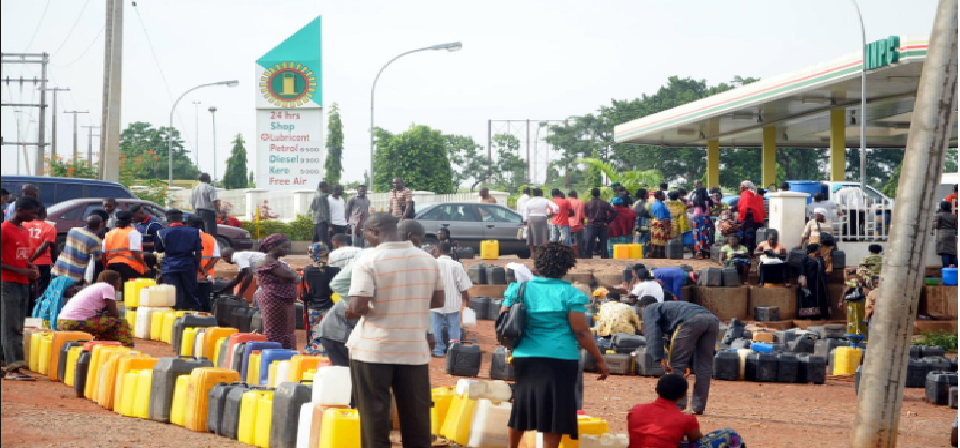
The result is that Nigeria is suffering from a chronic fuel increase and scarcity that affects every aspect of its society. Nigerians have to endure long queues at filling stations, frequent power outages, high transport costs, and low productivity. They also have to cope with inflation, poverty, unemployment, and poor public services.

This is unacceptable and unsustainable. Nigeria’s leaders have to wake up and take responsibility for their actions. They have to reform the oil sector and make it transparent, accountable, and efficient. They have to revive the refineries and encourage private participation. They have to diversify the economy and reduce dependence on oil. They have to invest in education, health, infrastructure, and security.

Nigeria has the potential to be a great nation, but it needs visionary and honest leaders who can harness its resources for the benefit of its people. Nigerians deserve better than what they have been getting for the past 50 years.