DD
MM
YYYY

PAGES

DD
MM
YYYY

spot_img

PAGES

Home Blog Page 3737

Iraq to ban all cash withdrawals in US Dollars

0

In a surprising move, the Iraqi government announced on Thursday that it will ban all cash withdrawals in US dollars from banks and ATMs across the country. The decision, which will take effect from November 1, is aimed at curbing the black market and stabilizing the exchange rate of the Iraqi dinar, according to a statement from the Central Bank of Iraq (CBI).

The CBI said that the US dollar has been widely used in Iraq for illegal activities, such as money laundering, terrorism financing, smuggling and tax evasion. The CBI also claimed that the dollarization of the economy has undermined its monetary policy and weakened its ability to control inflation and interest rates.

The ban will not affect electronic transactions or transfers in US dollars, nor will it affect the availability of foreign currency for legitimate purposes, such as imports, travel and education. The CBI said that it will provide sufficient amounts of Iraqi dinars to meet the demand for cash withdrawals and ensure price stability.

However, the announcement has sparked mixed reactions from economists, bankers and ordinary citizens. Some have welcomed the move as a necessary step to restore confidence in the national currency and reduce dependence on foreign reserves. Others have criticized it as a hasty and risky measure that could trigger a liquidity crisis, a currency devaluation and social unrest.

The US dollar has been widely used in Iraq since the 2003 invasion that toppled Saddam Hussein’s regime. The dollar became a safe haven for many Iraqis who lost trust in the dinar amid political instability, violence and corruption. The dollar also facilitated trade and remittances with neighboring countries and the rest of the world.

According to the CBI, the US dollar accounts for about 20% of the total cash in circulation in Iraq, or about $10 billion. The CBI has been trying to reduce this share by gradually increasing the supply of dinars and imposing restrictions on dollar transactions. However, these efforts have faced challenges from a weak banking sector, a large informal economy and a volatile security situation.

The ban on cash withdrawals in US dollars is expected to have significant implications for the Iraqi economy and society. On one hand, it could help fight illicit activities, enhance transparency and accountability, and strengthen the CBI’s role as a regulator and supervisor of the financial system.

On the other hand, it could create difficulties for businesses and individuals who rely on cash for their daily transactions, especially in remote areas where banking services are limited or nonexistent. It could also increase the demand for alternative currencies, such as the euro or the Turkish lira, or even cryptocurrencies, such as bitcoin or Ethereum.

The success or failure of this policy will depend largely on how well it is implemented and communicated to the public. The CBI will need to coordinate closely with other government agencies, banks and civil society organizations to ensure a smooth transition and avoid any disruptions or confusion.

The CBI will also need to monitor the impact of this policy on key economic indicators, such as inflation, exchange rates, growth and employment. The CBI may need to adjust its policy accordingly if it detects any negative or unintended consequences.

The ban on cash withdrawals in US dollars is a bold and unprecedented move by the Iraqi government. It reflects its determination to reform its economy and regain its sovereignty. However, it also entails significant risks and challenges that require careful planning and execution. The ultimate goal is to create a more stable, prosperous and inclusive Iraq for all its people.
X Removes Story Headlines And Links of Articles Shared on The Platform

0

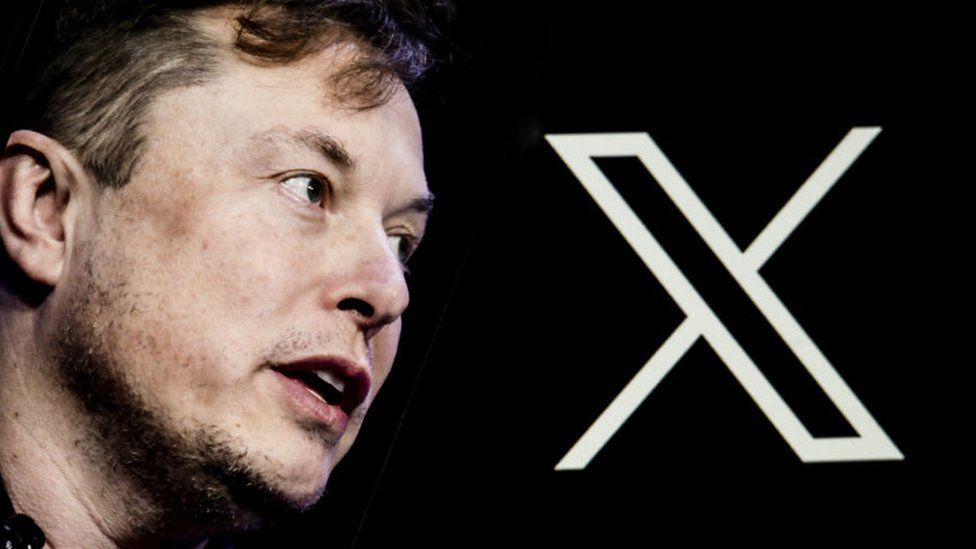
Elon Musk-owned microblogging social platform X (formerly called Twitter), has removed story headlines and links to articles shared on the platform.

Links posted on X now appear as the image included in the article, as well as text in the left-hand corner of the image noting the domain of the link.

Several users have expressed concerns that the recent development will only make it tough to understand what a content is about, until they click it which can often be unnecessary.

Check Out some Users reaction;

@SheldonTarpey wrote,

“I really dislike how unclear it is whether something is an article or an image now. I feel like this was designed to generate more clicks and show X as a better traffic driver than it actually is. Obvs this will all still show up in the dwell time and bounce rate but still”.

@MikeJViggiano wrote,

“It is much cleaner it just is frustrating that I now have no idea what I am or am not opening. 90% of twitter for me is scrolling for articles and that makes this much more challenging”.

@MarvinDigeorgio wrote,

Musk doesn’t want people to read actual news, so he removed news links and headlines to reduce the possibility that they will. Musk is a right-wing propagandist. Disinformation is his tool”.

@journeyman56 wrote,

“I’m wondering how this will impact traffic for news sites? Also, what’s the motivation?  In some ways it encumbers brands and messaging and news voice but in others, might open up more traffic via curiosity? I admittedly thought it was just a picture until I clicked”.

The change was made on Wednesday for iOS and desktop users, while Android and the website continue to show the headline alongside the image.

The move to remove links and headlines of articles on the X platform has been in the works since August this year, when Musk announced the move in an attempt to drive up subscription of the app’s premium service.

However, Musk said the latest change was for “aesthetic” reasons, as news and other links now appear only as pictures with no accompanying text.

Announcing the change, Musk wrote,

https://x.com/elonmusk/status/1693843680904216619?s=46&t=5SnxbL3wcwgpHjfK1_oo8g

“This is coming from me directly. Will greatly improve the esthetics [sic]”.

Musk has reportedly been focusing on boosting engagement on the platform, and in an attempt to do so, he has been asking users to post more content on X.

He has also urged journalists to create their brand and post directly to X and earn revenue through the platform, which could be another reason for him to remove links shared on the platform that could take users away to a different website.

There are speculations that the move may be an attempt to drive people to sign up for X’s premium service. With the shortened links, users could be inclined to include more text along with their posts. The premium service allows a single post of up to 25,000 characters.

It is however not clear how these changes will affect advertisers on the platform, which Musk claimed in July had 540 million monthly users.

With the changes, Musk is pitching X as a more relevant platform for content creators as he gears towards making the platform an everything app.

Ledger announces Partnership with Sotheby, As Opensea introduces Opensea Studio

0

Ledger, the leading provider of hardware wallets for cryptocurrencies, has announced a strategic partnership with Sotheby’s, the world’s largest auction house. The partnership aims to enhance the security and trust of digital art transactions on the blockchain.

According to a press release, Ledger will provide its Ledger Vault technology to Sotheby’s, enabling the auction house to store and manage its NFTs (non-fungible tokens) in a secure and scalable way. Ledger Vault is a multi-authorization governance platform that allows institutions to manage their digital assets with the highest level of security and efficiency.

The partnership will also allow Sotheby’s to offer its clients the option to receive their NFTs directly on their Ledger hardware wallets, giving them full ownership and control over their digital assets. Ledger hardware wallets are the most trusted devices for storing and transacting cryptocurrencies and NFTs, as they protect the private keys from hackers and malware.

Charles Stewart, CEO of Sotheby’s, said: “We are thrilled to partner with Ledger, the leader in crypto security, to offer our clients a best-in-class solution for storing and managing their NFTs. As the demand for digital art continues to grow, so does the need for a secure and reliable way to ensure its authenticity and provenance. Ledger’s technology will help us provide our clients with the highest level of service and confidence in this new market.”

Pascal Gauthier, CEO of Ledger, said: “We are honored to partner with Sotheby’s, a prestigious institution with a rich history and expertise in the art world. This partnership is a milestone for the adoption of blockchain technology and NFTs, as it demonstrates how they can bring more value and innovation to the art industry. By leveraging Ledger’s security and infrastructure, Sotheby’s will be able to offer its clients a seamless and secure experience for buying and selling digital art on the blockchain.”

Opensea Introduces Opensea Studio

Opensea, the leading marketplace for non-fungible tokens (NFTs), has announced the launch of Opensea Studio, a new platform that aims to make NFT creation and distribution easier and more accessible for artists, developers and brands. Opensea Studio is designed to provide a comprehensive suite of tools and services for NFT creators, including:

A user-friendly interface that allows anyone to create, mint and sell NFTs on Opensea without coding or technical knowledge.

A flexible smart contract framework that supports various NFT standards, such as ERC-721, ERC-1155 and EIP-2981, as well as custom features and functionalities.

A robust API that enables developers to integrate Opensea Studio with their own applications and platforms, such as games, social media and websites.

A curated marketplace that showcases the best NFT collections and projects created with Opensea Studio, as well as provides discovery and promotion opportunities for creators.

A community of support and education that offers guidance, feedback and resources for NFT creators of all levels and backgrounds.

Opensea Studio is currently in beta and invites are being sent out to select creators who have expressed interest in the platform. According to Opensea, the goal is to open up the platform to the public in the near future and to empower more people to participate in the NFT ecosystem.

Opensea CEO Devin Finzer said in a blog post: “We believe that NFTs are not just a new way of collecting digital art, but a fundamental shift in how we create, share and monetize our creative work. With Opensea Studio, we want to lower the barriers to entry and make NFT creation accessible to anyone with an idea and a vision.”

Opensea Studio is the latest initiative by Opensea to expand its offerings and reach in the NFT space. Earlier this year, the company raised $100 million in a Series B funding round led by Andreessen Horowitz, valuing it at $1.5 billion. It also acquired Dibbles, a platform that allows users to buy and sell fractions of NFTs, and launched Opensea Labs, a research and development arm that explores new possibilities for NFTs.

NAFDAC Guidelines for The Clearing of Imported Donated Items at Ports of Entry in Nigeria

0

The Guidelines of the National Agency For Food and Drug Administration and Control (NAFDAC) for the clearing of Imported Donated Items at Ports of Entry in Nigeria (forming the focus of this article) are for the interest of the general public and in particular importers of donated products into Nigeria.

It is necessary to emphasize that, no regulated product shall be manufactured, imported,advertised, offered for sale, distributed or used in Nigeria unless it has been registered in accordance with the provisions of NAFDAC Act CAP N1 (LFN) 2004, other related legislations and the accompanying Guidelines.

The notable provisions of these guidelines are as follows:

Documentation For Clearance

– Applicants intending to clear donated items should submit an application letter on the company’s letter head addressed to the Director-General, NAFDAC.

– The following information should be attached to the application letter;

  1. A Single Goods Declaration (SGD) Form
  1. A Commercial invoice
  1. PAAR (Pre-Arrival Assessment Report)
  1. A Form M
  1. A Bill of Lading/Airway Bill
  1. Packing List
  1. Letter of Undertaking stating that the product(s) will not be sold used until satisfactory laboratory report is out. The letter should also state that in event of the product(s) being  substandard or illegally imported, or unfit for human consumption, the product(s) will be forfeited to the Federal Government for destruction.
  2. Evidence of approval from Director General, NAFDAC to import donation items.
  1. Photocopy of payment advice.

10.Photocopy of NAFDAC Receipt of payment.

Physical Examination

– Physical examination of the consignment should be conducted by NAFDAC with other relevant goovernment agencies at the port of Entry or Importer’s premises warehouse where applicable.

– Samples of the imported product shall be drawn during physical examination by NAFDAC inspectorsand forwarded to the relevant NAFDAC laboratory for analysis.

Release Of The Consignment From The Port of Entry

– The finished pharmaceutical product should be granted second endorsement for release to the importer’s warehouse within 24 hours of sample collection.

– The Finished Pharmaceutical Product can only be marketed and used after a satisfactory laboratory evaluation.

Tariff

As advised by NAFDAC.

Notes

– The importation of unapproved donated items should be regarded as a violation.

– Imported donated items must be limited to the number and quantity of the product approved.

– Approval for importation can be obtained through a written application submitted to the Director-General,NAFDAC on the donor’s letter head paper, stating the following:

  1. The profile of the donor
  1. The purpose of the donation
  1. The target population
  1. The list of regulated products indicating the batch numbers, appropriate date markings and quantity
  2. No donated item must be sold or distributed for sale to the public
  1. The following conditions must be met for issuance of approval :
  • Regulated products shall have a minimum of 6 months shelf life on arrival at any of the designated ports.
  • Regulated products on Federal Government Import Prohibition List as published by the Nigerian Customs Service.
  • Permits shall be obtained for restricted and controlled regulated products from the relevant directorates.

Timelines

– The timeline for cost assessment and issuance of payment advice is Ten (10) minutes.

– The timeline for issuance of 1st Endorsement is Thirty (30) minutes.

– The timeline for Physical inspection as determined by the Joint Task Force is Two (2) hours.

– The timeline for issuance of 2nd Endorsement is Fifteen (15) minutes.

Collapsed Buildings; The Devil Did Not Do This!

0

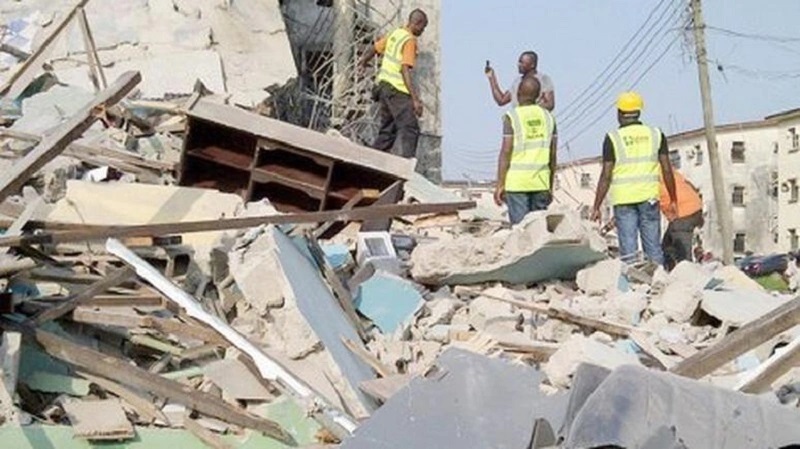
News broke out earlier this week that one of the branches of arguably the largest church in Nigeria collapsed killing the resident pastor of the church and other worshippers sustaining grave injury in Makurdi, Benue state. 

When it has to do with religious settings like this the first person to accuse is the devil. The default response will be some religious mantra like, “It is the work of the devil but the devil has failed the battle”. Expectedly, this was the response of the pastors of the church and other members. 

Honestly, I am not oblivion of the forces of dark supernatural powers and their activities, I have seen it at work on numerous occasions and religiously and spiritually speaking the collapse of a large church building like that and the occurrence of other despicable evils could be the work of the devil but after cussing out the devil and all the accusations we will have to go back to the drawing board and analyze facts and logic on why a large church building like that collapsed. 

Building collapsing is becoming the order of the day in Nigeria; residential buildings and commercial complexes are always caving in, especially in big cities like Lagos and Abuja but a church building with thousands of active daily worshippers who could have been the victims collapsing is highly nerve-racking. Just imagine if the building had collapsed on a Sunday or during a weekly church service, hundreds of people could have died and the survivors could have blamed the devil and prayed that affliction should not rise again the second time. 

I still cannot forget about a building that collapsed close to my area here in Abuja earlier this year when I witnessed many dead people being excavated from the debris of the collapsed building. Some of us wrote petitions to the Federal Capital Territory Development Agency (FCDA) and even to the FCT minister himself asking him to launch an active investigation on the cause of that collapse but we are yet to hear of what has been done about that especially if the developers and the contractors have been made to face the music of the law and steps that has been taken to ensure that incidents like that do not occur regularly hence why anytime I see or hear from the news that a building collapsed it is always traumatizing for me because most of the reason why some of these buildings do collapse is just sheer carelessness and negligence of the builders, the contractors and the development agencies contrary to the accusation that it is devil’s handwork.

We may continuously accuse the devil but the devil did not actually or directly cause them. Someone somewhere approved a building without doing a proper inspection; some developer somewhere did bribe a development control agent so as to overlook some irregularities; someone somewhere used substandard materials for the building, someone somewhere failed to properly supervise the ongoing building process, someone somewhere wanted to cut cost and used a bag of cement to get tonnes of bricks more than it was due. These were not the devil, these are human beings; believe me, the devil did not do it. 

Building control agencies really need to step up their games. It is now a national crisis that the federal government will have to take charge and declare a state of emergency on building collapses and set up active task forces to monitor buildings; vet and approve new buildings, insist on standards and quality control and demolish old buildings that pose risks. 

Builders also need to stop using cheap or substandard materials or trying so much to cut costs or to get more for less. These are human lives that we are using to gamble like this. If your budget as a builder is two million naira, please build a house that is worth two million naira. Trying to build a house that is worth ten million naira on a two-million naira budget is dangerous. You cannot use one bag of cement to get a hundred or even more bricks of blocks. It may save immediate cost for you but the future threat could be devastating and when it happens, everyone will blame the devil.