DD
MM
YYYY

PAGES

DD
MM
YYYY

spot_img

PAGES

Home Blog Page 3740

Binance, Patrick McHenry, US SEC, Coinbase, Ripple and other Crypto News

0

Binance, will be updating the Monitoring Tag list of tokens on October 4, 2023. The Monitoring Tag is applied to tokens that do not meet its minimum standards or have been identified as having potential compliance or security risks. They Crypto exchange stated it has conducted comprehensive review of the tokens listed on Binance and have decided to add more tokens to the Monitoring Tag list based on their platform criteria.

The updated list will be published on binance website and app. Please note that the Monitoring Tag does not necessarily imply that a token will be delisted, but it does indicate that users should exercise caution when trading or holding such tokens.

Patrick McHenry, a Republican congressman from North Carolina who has been a vocal critic of Gary Gensler, the chair of the Securities and Exchange Commission, has been appointed as the speaker pro tempore of the House of Representatives. The speaker pro tempore is the second-highest ranking officer of the House, after the speaker, and presides over the chamber in the speaker’s absence.

McHenry has clashed with Gensler over his regulatory approach to cryptocurrencies, which McHenry argues is too restrictive and stifles innovation. McHenry has also accused Gensler of being biased against certain types of financial products, such as exchange-traded funds and non-fungible tokens. McHenry said he was honored by the appointment and vowed to use his position to advance a pro-growth agenda that supports American businesses and investors.

In a major victory for Ripple, the US District Court for the Southern District of New York has denied the Securities and Exchange Commission’s (SEC) motion to appeal a ruling that granted Ripple access to the SEC’s internal communications on how it determines whether a cryptocurrency is a security. The judge ruled that the SEC’s arguments were not persuasive, and that the discovery was relevant to the fair notice defense raised by Ripple. The judge also stated that the public interest in the case was high and that the SEC’s disclosure obligations were not unduly burdensome.

The policies of President Joe Biden are the root cause of the inflation crisis that is plaguing America, according to a US Senator. The Senator delivered a speech on the Senate floor, in which he accused Biden of creating a “man-made disaster” that is affecting millions of Americans. He said that Biden’s spending plans and tax hikes are hurting the economic recovery from the pandemic and causing prices of goods and services to soar across the country. He called on Biden to change his direction and adopt a more fiscally responsible approach to governing.

Chainalysis, a leading provider of blockchain intelligence solutions, has announced a major restructuring that will affect more than 15% of its staff. The decision, which will result in the layoff of 150 employees, is part of the company’s strategy to adapt to the changing market conditions and customer needs.

Kraken, one of the leading cryptocurrency exchanges in the world, has announced that it will offer trading for US-listed stocks on its platform. This means that users of Kraken can buy and sell shares of companies such as Apple, Tesla, Amazon, and Netflix using cryptocurrencies or fiat currencies. Kraken claims that this service will provide more access and liquidity to the stock market, as well as more opportunities for diversification and arbitrage. Kraken will partner with a regulated broker-dealer to facilitate the trading of US stocks, which will be available 24/7 and with low fees.

Several financial institutions, such as VanEck and Proshares, have launched new products that track the performance of Ethereum, the second-largest cryptocurrency by market capitalization. These products, known as Ethereum Futures ETFs, allow investors to gain exposure to the price movements of Ethereum without having to buy or store the digital asset directly. Ethereum Futures ETFs are regulated by the Securities and Exchange Commission (SEC) and trade on major stock exchanges like the NYSE and Nasdaq.

Coinbase, one of the leading cryptocurrency exchanges in the world, has announced that it will offer futures trading to its customers outside the US. This move is expected to increase the liquidity and accessibility of the crypto market, as well as provide more opportunities for hedging and speculation. Futures trading allows traders to bet on the future price movements of an asset, without having to own it.

Coinbase said that its futures platform will support Bitcoin, Ethereum, Litecoin, Bitcoin Cash, and other popular coins. The platform will also offer margin trading, which enables traders to borrow funds to amplify their returns or losses. Coinbase said that it has obtained regulatory approvals from various jurisdictions, including the UK, Germany, Japan, and Singapore, to operate its futures trading service. The company added that it will comply with all local laws and regulations, and that it will implement strict security and compliance measures to protect its customers and their funds.
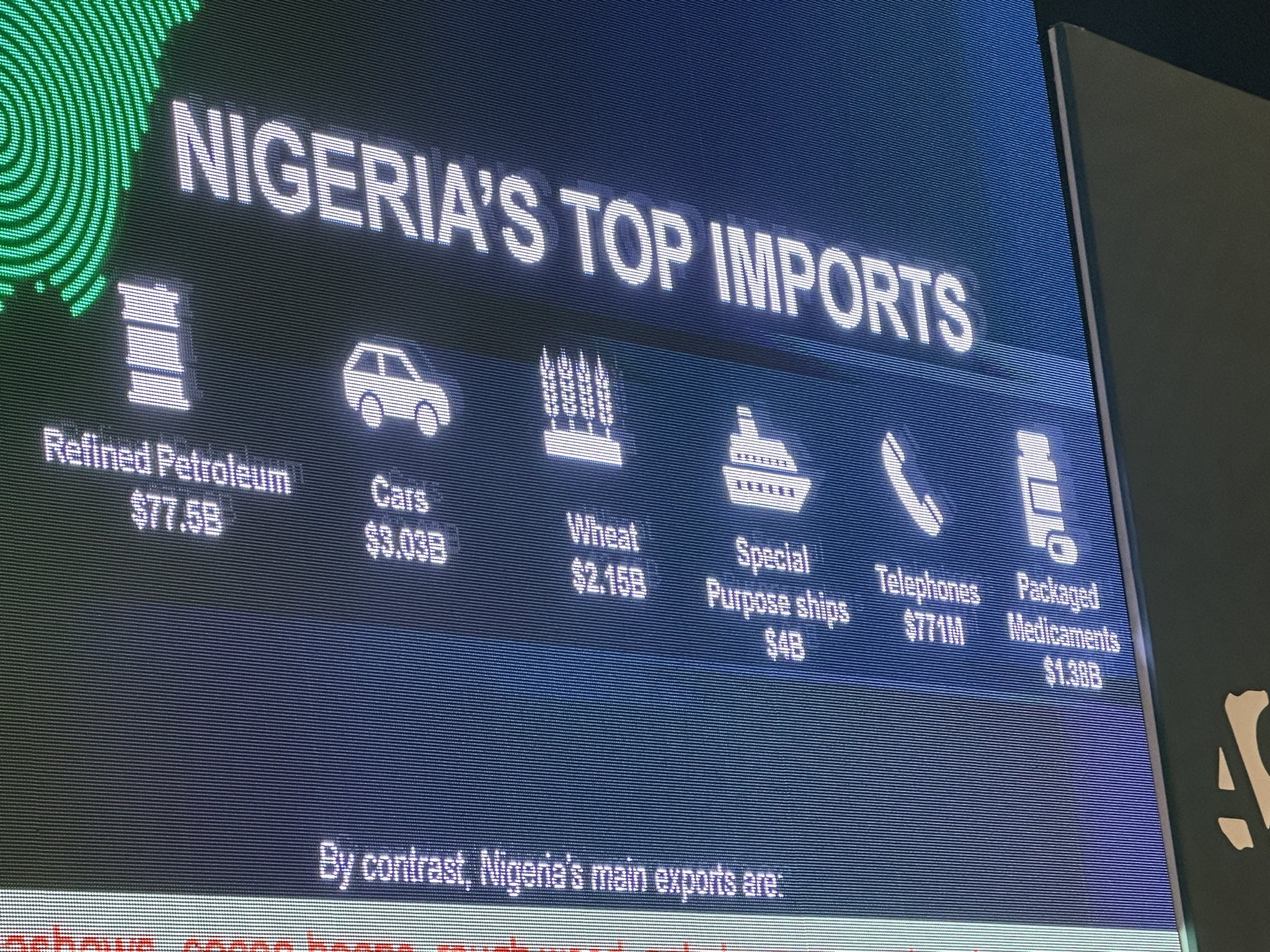

The Importation of Goods Into Nigeria, How To Obtain a SONCAP Certificate

0

Commercial Law :- The Regulatory Requirements For The Importation of Goods into Nigeria

This article will be focused on the regulatory procedures involved in securing a permit for the importation/bringing in of goods into Nigeria which is primarily under the jurisdiction of the Nigerian Customs Service in collaboration with other government agencies.

It should be noted that no item or product can be legitimately brought into Nigeria without the regulatory clearance of the Customs Service.

These procedures are thus itemized as follows:

Confirmation of Goods

– This involves carrying out an enquiry to ensure the goods planned for importation do not fall under the prohibition/restricted goods list of the Nigerian Customs Service.

Incorporating an Importation Company in Nigeria & Registering the company as an importer with the Federal Inland Revenue Service (FIRS)

– FIRS registrations for the purpose of paying all importation-related taxes, levies and duties are to be done via Tax Identification Numbers (TINs).

Procuring a Product Certificate or PC

– Product Certificates are given by the Standards Organization of Nigeria (SON) to exporting/selling companies of the goods to be imported through agents known as accredited firms.

– The aim of a PC is to affirm that the SON is satisfied about the quality of goods to be imported.

– A PC is important for the purpose of final importation clearance by the Nigerian Customs Service.

Submit a procured e-Form M

– An e-Form M is usually procured from an authorized dealer (a bank) 

from the Nigerian Trade Portal and once filled, is to be submitted along with a set of required attached documents which must be marked either valid or invalid for foreign exchange (FX).

– A due diligence check must be done by the importer or its legal counsel to ensure that the goods to be imported are valid for FX. This means that if invalid, import transactions in the goods will be barred from access to the official Nigerian FX market.

– Where the importation of certain goods discovered to be invalid for FX, the importing company will then be required to prepare written statements and documentation stating the source of the FX it will procure on its own for Importation (this is in itself an Anti-Money Laundering procedure).

Onward Submission of the e-Form M to the Customs Service For Registration. 

– This stage will also involve a thorough review of supporting documents attached to the e-Form M.

Obtaining a SONCAP Certificate

– SONCAP (Standards Organization of Nigeria Conformity Assessment Program) Certificates are to be procured alongside other clearances from accredited firms. SONCAP Certificate procurement procedures will be the focus of my next article.

The procurement of a Pre-Annual Assessment Report

– This is granted by the Customs Service and requires among other documentation, an e-Form M, Shipping documents, a PC, a certificate of origin is will be submitted with a Pre-Annual Assessment Report form . 

Customs Clearance Proper

– Which involves sending documentations which include a Single Goods Declaration (SGD) , the Pre-Annual Assessment Report to the trade portal and paying the required import duties and tariffs to the NCS.

The NAFDAC Regulations on Permits For The Importation of Narcotic Drugs, Psychotropic Substances & Drug Precursors into Nigeria

Rendered effective from 01/06/2018, the National Agency For Food and Drug Administration and Control (NAFDAC) passed the narcotic drug guidelines for the interest of the public and in particular, importers of narcotic drugs, controlled /Psychotropic Substances & Drug Precursors into Nigeria.

It should be noted that no product containing narcotic and controlled substances shall be manufactured, imported, exported, advertised, sold, distributed or used in Nigeria unless it has been registered under the NAFDAC act and the necessary import and clearance permits have been obtained where applicable.

This article will be focused on the steps involved in securing a NAFDAC permit for narcotic drug importation.

Step 1 – Documentation

– Applicants are required to fill the FG Single Window for trade-provided forms for a permit to import narcotic drugs, psychotropic substances and drug precursors .

– The following documents are documents are required to be attached for a successful submission of the form:-

a). An application signed by the superintendent pharmacist of the company on the company’s letter head addressed to the NAFDAC containing :-

  1. The name of substances to be imported
  1. The quantity of substances to be imported (in Kilograms)
  1. The country of origin
  1. Name and address of the manufacturer
  1. Name and address of the supplier
  1. Valid annual license of the superintendent pharmacist to practice
  1. Valid certificate of registration/retention of premises
  1. Proforma invoice

Step 2 – Processing of Permit

– Upon satisfactory documentation, the importing company is to liaise with the Inspection & Monitoring division of the directorate for inspection, NAFDAC, of  her facility (this is not applicable to new applicants).

– A permit to import will be processed for a satisfactory application.

– For unsatisfactory applications/documentations, a compliance directive will be issued to the company.

Step 3 – Collection of Permit

– This involves collecting from the Nigerian Customs Service, endorsed permits to import Narcotic drugs.

Step 4 – The payment of applicable Tariffs

Timeline for processing of import permit applications for narcotic drugs – 5 working days.

It should be noted that:-

– A failure to submit adequate documents may lead to considerable delays in processing the application.

– A failure to respond promptly to compliance directives will lead to suspension of further processing of the application.

– Allocation of controlled substances is based on availability.

– Submission of fake documents will be considered as a violation and may result in regulating action and/or prosecution.

How To Obtain a SONCAP Certificate for Goods Importation into Nigeria

SONCAP Certificate applications and issuances fall under the jurisdiction of the Standards Organization of Nigeria (SON) which is empowered by law to provide the regulatory framework for determining the appropriate standards for the manufacture and sale of products as well as publishing regulatory information  regarding production and service minimum quality indicators.

Under the Standards Organization of Nigeria Conformity Assessment Program (SONCAP), certain goods are as a matter of fact required to be assessed/checked to ensure conformity with approved production/manufacturing standards before clearance for importation into Nigeria and are typically evidenced as validly cleared by certificates issued on behalf of SON via accredited agent firms.

This article will be looking at the procedures involved in procuring this certificate which are as follows:-

Procurement of a Product Certificate (PC) :- This is a major requirement for products and is also issued by the SON and a pre-condition for the issuance of a SONCAP Certificate.

It should be noted that 3 categories of Product Certificates exist based on validity according to importation frequency in the following order:-

  1. PC 1 ( For one-time importers) 

– Validity period – 6 months

  1. PC 2 ( For occasional importers)

– Validity period – 1 year

  1. PC 3 (For frequent importers)

– Validity period – 1 year

How long does it take to process an application for a PC?

This takes 3-7 working days.

What are the requirements for procuring a PC?

Some of the requirements for processing a PC include:-

  • An application letter.
  • A quality declaration from the manufacturer.
  • A sample/picture of the product.

– Making an application proper for a SONCAP Certificate using the PC:- A SONCAP Certificate is to be linked to a PC which will be attached to a SONCAP Certificate application.

Requirements for a SONCAP aplication include the following :-

  • A SONCAP aplication letter
  • An e-Form M
  • A Completed Request for Certificate Form
  • A valid PC
  • A Tax Identification Number
  • A proforma invoice.

The Quest to Nigeria’s Development | FUTO Alumni Biennial Lecture

0

Two things remain catalytic in the advancement of nations: Adam Smith’s postulation of the “invisible hands”, making a case that in mercantilist systems, a free market will always deliver – and Pythagoras’ universality of “numbers”, positing centuries ago the power of data and technology. Yes, to compute and make sense of numbers, you invent technologies. And within a free market system, you can deploy those technologies and tools , entwined with People and Processes, to solve problems in societies. Q.E.D.

The Alumni of Federal University of Technology Owerri (FUTO), my alma mater and Africa’s finest technical university (lol), will hold its The Biennial Lecture 2023 on Oct 19, 2023 at 10:00 AM at Admiralty Conference Center, Ahmadu Bello Way, VI, Lagos. It is rated FREE for all to attend.

In the last BLS edition, I was privileged to deliver the keynote lecture. Mr. Ed Ubong, former Managing Director of Shell Nigeria Gas Limited, will do it this time, under the chairmanship of Dr. Ernest Ndukwe, Chairman of MTN Nigeria and pioneer CEO of NCC. All the speakers are on click.

The Lecture Series is about big vision and this edition will not be different. Go here and pick your seat (100% FREE)

Why Does Bitcoin Use Energy?

0

Bitcoin is a decentralized digital currency that operates on a network of computers around the world. Unlike traditional currencies, bitcoin does not rely on a central authority or intermediary to validate transactions and issue new coins. Instead, bitcoin uses a system called proof-of-work, where participants (called miners) compete to solve complex mathematical puzzles and earn rewards in the form of new bitcoins and transaction fees.

Bitcoin, the most popular cryptocurrency, has been hailed as a revolutionary innovation that could transform the global economy. But there is a dark side to this digital gold: its enormous energy consumption. According to the Cambridge Bitcoin Electricity Consumption Index, Bitcoin consumes more electricity than many countries, such as Argentina, Sweden, or the Netherlands. In fact, if Bitcoin were a country, it would rank 25th in the world in terms of electricity usage.

Mining is also how new bitcoins are created and distributed. The first node that solves a puzzle gets rewarded with a certain number of bitcoins. This creates an incentive for more people to join the network and compete for the rewards. However, as more nodes join, the puzzles become harder and harder to solve, requiring more and more energy.

Proof-of-work is a way of ensuring that the transactions recorded on the bitcoin ledger (called the blockchain) are valid and irreversible. It also makes it difficult for anyone to manipulate or attack the network, as they would need to control more than half of the computing power (called the hash rate) to do so. This is known as the 51% attack problem.

However, proof-of-work also has a downside: it consumes a lot of energy. According to some estimates, the annual energy consumption of the bitcoin network is comparable to that of some countries, such as Argentina or Norway. This raises concerns about the environmental impact of bitcoin, especially as its price and popularity increase.

Why does proof-of-work use so much energy? The answer lies in the difficulty adjustment mechanism, which ensures that the average time between blocks (the units of data that make up the blockchain) is about 10 minutes. As more miners join the network and increase the hash rate, the puzzles become harder to solve, and vice versa. This means that the network always adjusts to maintain a constant level of difficulty and energy consumption, regardless of how many miners are active.

The difficulty adjustment mechanism is essential for the security and stability of the bitcoin network, but it also means that there is no limit to how much energy it can use. As long as there is an incentive for miners to participate (i.e., they can make a profit from mining), they will continue to invest in more powerful and efficient hardware and consume more electricity. This creates a positive feedback loop that drives up the energy demand of bitcoin.

There are some ways to reduce the energy consumption of bitcoin, such as using renewable sources of electricity, improving the efficiency of mining hardware, or switching to a different consensus mechanism, such as proof-of-stake, where participants stake their coins instead of using their computing power. However, these solutions are not without challenges and trade-offs, and they would require significant changes to the protocol and the network.

Bitcoin uses energy because it relies on proof-of-work to secure and maintain its decentralized network. This is a fundamental feature of its design, but also a major source of criticism and controversy. Whether the benefits of bitcoin outweigh its costs is a matter of debate and perspective.

Bitcoin is undoubtedly a remarkable innovation that has many benefits and potentials. But it also poses a serious threat to the environment and the climate. As Bitcoin enthusiasts and investors, we have a responsibility to be aware of this issue and to seek ways to mitigate it. Otherwise, we may end up paying a high price for our digital wealth.

Digital jobs from Apple, Google and Intel are Beckoning, says President Ruto

0

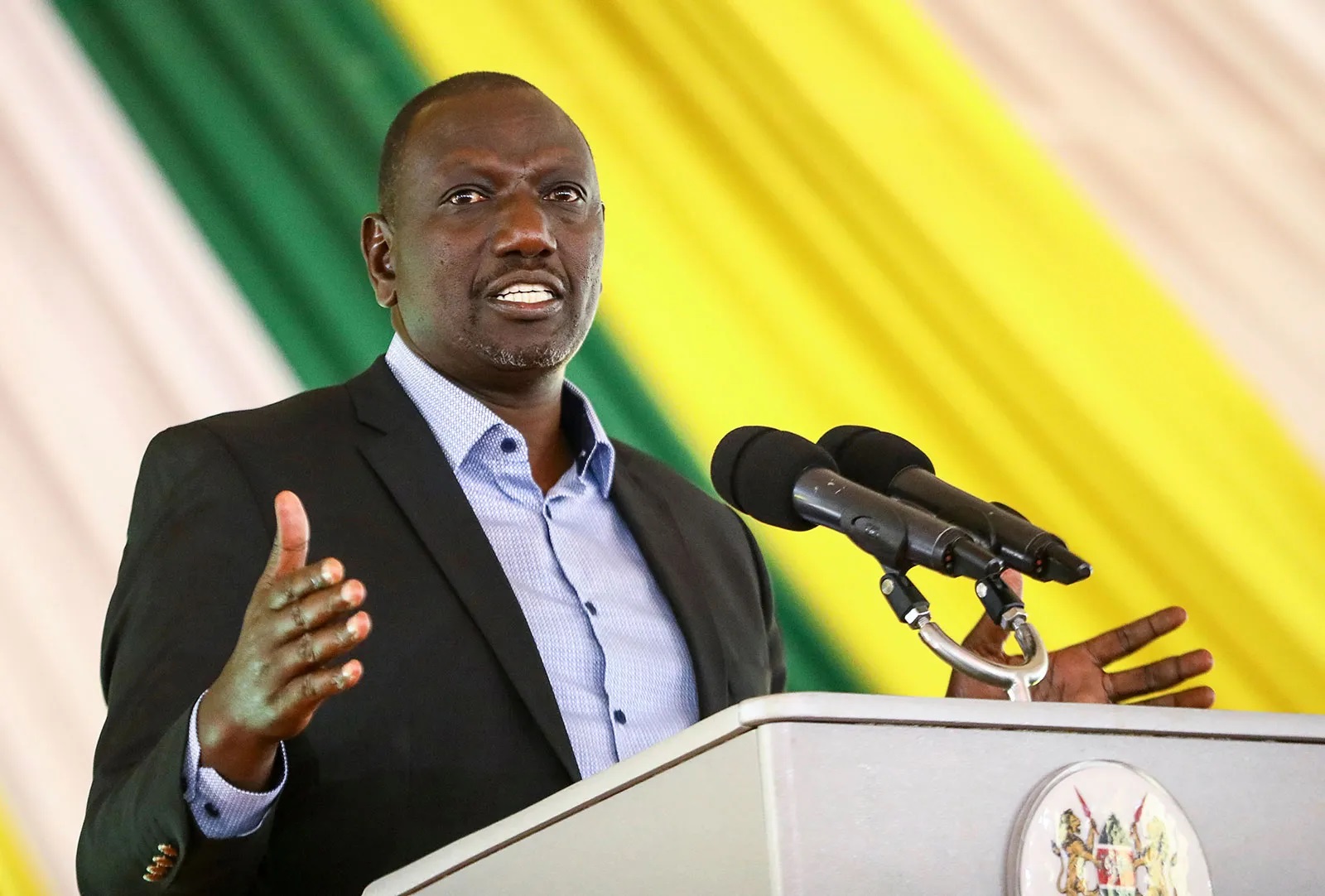
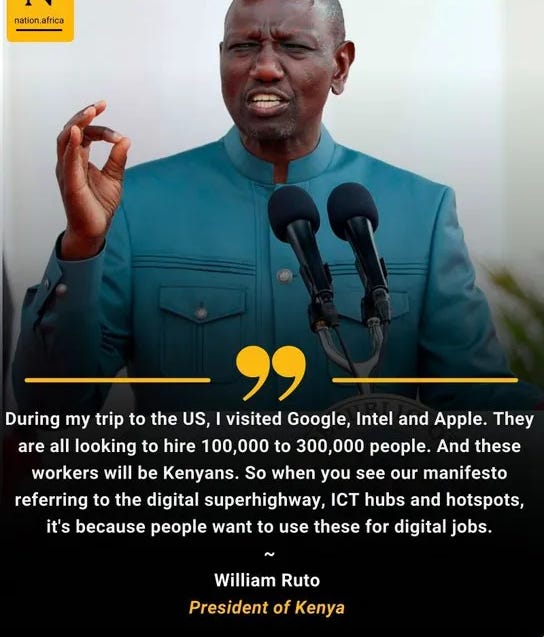
In a recent interview with the BBC, President William Ruto of Kenya revealed his ambitious plan to create millions of digital jobs for the youth in his country. He said that he has been in talks with some of the world’s leading tech companies, such as Apple, Google and Intel, to invest in Kenya and provide training and employment opportunities for the young generation.

Digital transformation is the process of using technology to improve the efficiency, effectiveness and accessibility of various services and sectors. It is a key component of Ruto’s vision for Kenya, as he aims to create a more prosperous, inclusive and innovative nation. In this blog post, we will explore some of the benefits of Ruto’s digital transformation agenda to Kenyans.

President Ruto said that he believes that Kenya has the potential to become a hub for innovation and technology in Africa, and that he wants to harness the talent and creativity of the Kenyan people. He said that he has been inspired by the success stories of other African countries, such as Rwanda and Ghana, that have embraced digital transformation and attracted foreign investment.

One of the main benefits of digital transformation is that it can enhance the delivery of public services, such as health, education, agriculture and security. By leveraging technologies such as cloud computing, artificial intelligence, blockchain and internet of things, Ruto plans to improve the quality, affordability and availability of these services to all Kenyans. For example, he intends to implement a universal health coverage scheme that will use digital platforms to register, verify and monitor beneficiaries, as well as to facilitate payments and claims.

He also wants to digitize the education system by providing online learning materials, digital libraries and smart classrooms. Additionally, he aims to modernize the agriculture sector by using drones, sensors and big data to optimize crop production and market access. Furthermore, he hopes to enhance the security and safety of Kenyans by deploying smart surveillance systems, biometric identification and e-government services.

Another benefit of digital transformation is that it can boost the economic growth and development of Kenya. By embracing technology, Ruto wants to create a more competitive, productive and diversified economy that can generate more jobs, income and opportunities for Kenyans. He envisions a digital economy that will support various sectors such as manufacturing, tourism, trade and finance. For instance, he plans to establish a digital industrial park that will host local and international technology companies and startups.

He also intends to promote digital tourism by creating online platforms that will showcase Kenya’s attractions and culture. Moreover, he aims to facilitate digital trade by simplifying customs procedures and reducing transaction costs. Additionally, he hopes to foster digital finance by enabling mobile money interoperability and expanding financial inclusion.

A third benefit of digital transformation is that it can foster social cohesion and empowerment among Kenyans. By adopting technology, Ruto wants to create a more connected, informed and engaged society that can participate in decision-making and governance processes. He believes that digital transformation can enhance democracy, transparency and accountability in Kenya. For example, he proposes to use social media and other online platforms to communicate with Kenyans and solicit their feedback on various issues. He also plans to implement an e-voting system that will allow Kenyans to cast their ballots electronically. Furthermore, he aims to empower marginalized groups such as women, youth and persons with disabilities by providing them with digital skills, tools and opportunities.

Apple is looking for senior software engineers to work on its iCloud platform. You will be responsible for designing, developing and maintaining scalable and reliable cloud services that power millions of devices and applications. You should have at least five years of experience in developing distributed systems using Java, C++, Python or similar languages, as well as a strong knowledge of cloud computing technologies, such as AWS, Azure or GCP.

Google is seeking data scientists to join its Google Cloud team. You will be working on cutting-edge projects that leverage Google’s massive data and computing resources to solve real-world problems for customers and partners. You should have a PhD or equivalent degree in computer science, statistics, mathematics or a related field, as well as a proven track record of conducting original research and publishing papers in top-tier journals or conferences.

Intel is hiring product managers to lead its artificial intelligence (AI) products portfolio. You will be defining the vision, strategy and roadmap for Intel’s AI products, such as processors, accelerators, software frameworks and tools. You should have at least three years of experience in product management or related roles, as well as a deep understanding of AI technologies, markets and trends.

Ruto said that he is aware of the challenges and risks that come with digitalization, such as cybercrime, data privacy and digital divide. He said that he is committed to ensuring that the digital economy is inclusive, secure and sustainable, and that he will work with the relevant stakeholders to develop policies and regulations that protect the rights and interests of the citizens.

President Ruto said that he hopes that his vision for a digital Kenya will inspire other African leaders to follow suit and join the global digital revolution. He said that he is confident that by working together, Africa can achieve its full potential and become a force for good in the world.